Born To Run | Chapter And Verse

I tell you, moving house knocks it out of you. Still, sometime between my birthday a couple of weeks back and popping it back up on a new shelf, I found the time to tear through Bruce Springsteen’s autobiography Born To Run (it was never going to be called anything else, was it?).

It is an absolute blast to read. Written completely solo and without the assistance of a ghost-writer, the voice is clearly that of Bruce – at times cuttingly honest, at others poetic and then written as though delivering a sermon from the stage on the LIFE SAVING POWERS OF ROCK AND ROLL!!! (yes, the caps-lock button is Bruce’s friend). Contained within its five hundred or so pages is the story of how a young man from a poor, working class family in the town of Freehold, New Jersey, fell in love with music, got a guitar, learned how to make it talk, refined his craft and cracked the code. It’s fascinating and joyous stuff.

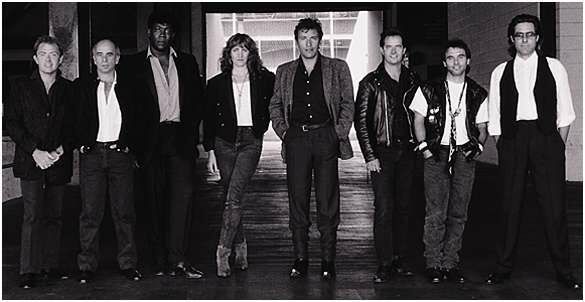
This being a memoir / auto-biography, the story is going to be somewhat one-sided. This is Bruce’s version. So while in Born To Run, Bruce describes the recording of Tunnel Of Love, for example, by writing that Bob Clearmountin ‘tidied up’ his playing so it sounded as if he knew what he was doing, it’s Peter Ames Carlin’s 2012 Bruce that fills the picture out by pointing out that Bruce and Bob actually used samplers, drum machines and synths to create a lot of the music and then bought in members of the band to “beat the machine” – if they did the part was recorded, if not… well not every member of the E-Street featured and not every member of the band were impressed by the process but then Bruce is the Boss, a fact he gently underlines on a number of occasions in the pages of his own book; “I’d declared democracy and band names dead after Steel Mill. I was leading the band, playing, singing and writing everything we did. If I was going to carry the workload and responsibility, I might as well assume the power”.
estreetband4

The part of the book that deals with the period before the release of Born In The USA is both the largest and juiciest. There’s a wealth of information about the source of Bruce’s art, his influences and his decisions. These were lean times – it wasn’t until after The River tour that Bruce had anything resembling financial success thanks to lawsuits and recording costs inflated due to his infamous perfectionism – and there’s a huge amount of detail as to what drove him to take certain choices with his music. While there’s no real breakdown of what inspired each and every song (that already exists in Songs) there’s a great amount of revelations to be found.

born-to-run-9781501141515_hrBruce is surprisingly candid when it comes to more personal elements too. I was a little surprised by some of his descriptions of his fellow E-Streeter’s – especially the late Danny Federici – but then his undeniable love for these band-members is also evident as his heartbreak at their passing.

Many of the column inches covering this book in the press have been at pains to mention that Mr Springsteen is equally revealing when it comes to his struggles with depression. Having managed to suppress what he describes as a consequence of the same mental plagues suffered by his father through years of working and touring, Bruce’s own depression came jumping up into his face . He is very open with his fight with and its effect on both him and his loved ones. As a fellow sufferer of that Black Dog it’s inspiring to read. His relationship with his father as a young man – while hinted at in song – is revealed in a much deeper and, at times, darker light and there’s a real sense of emotion and release when, post diagnosis with Paranoid Schizophrenia, Bruce’s father becomes a softer man and the two find some form of closure.

Part of not embracing the full ‘rock star lifestyle’ means that there’s not a huge amount of rock star stories to be found here and you’d be forgiven for skimming a go-nowhere Frank Sinatra story or those chapters (yep) dedicated to horse riding and Bruce’s equestrian escapades. Indeed, post-USA the structure is more vignettes than linear bio and some of those don’t really feel all that vital but, then, Bruce spent the larger part of that time period between E-Street lives building and raising his family and seeking a sense of calm that had previously alluded him so I’d hardly argue that this is a fault.

But there is still plenty to enjoy in the latter section of the book including  some real eye-openers even post-USA. Bruce shines a little more light on the ‘missing’ album from the period between ‘Streets of Philadelphia’ and Greatest Hits – it was another ‘men and women, relationships’ themed album but steeped in that minimal, loops and beats sound he’d employed for SoP. During a drive with Roy Bittan, his trusty piano player mentioned that perhaps it was the lyrical content of this new music that audiences were having trouble connecting to. Unable to find a unifying voice and sound for it, the album was shelved “and there she sits” – ‘Secret Garden’, ‘Missing’ and ‘Nothing Man’ would see the light of day. Bruce may have shot The Professor down but it dawned soon enough – he’d lost his ‘voice’.  Post Greatest Hits he went to find it and that’s why Ghost of Tom Joad is more of an important album than that subtle masterpiece may have been considered: “the songs on it added up to a reaffirmation of the best of what I do. The record was something new, but was also a reference point to the things I tried to stand for and still wanted to be about as a songwriter.”

Particularly interesting and surprising – given how logical and inevitable it must have seemed to all outside  of Bruce’s head – is that up until the last minute, he still doubted whether reuniting the E-Street Band was the best move – not feeling the fire despite the band’s force, initially building a set list that drew heavily from Tracks and eschewed hits and classics (fuck but I’d love to hear that set!) It wasn’t until the fifty or so fans that had stood outside the rehearsals trying to hear the sounds drifting out were let in to watch that Bruce felt the spark.

Given the level of detail assigned to the writing and recording of earlier works, it’s a little surprising and perhaps disappointing that the post E-Street reformation era isn’t deemed sufficiently interesting to warrant the same treatment. The Rising onwards saw Bruce’s career and popularity reborn after a lacklustre nineties yet the six albums recorded since are breezed over – with the exception of Bruce noting how disappointed he was that Wrecking Ball did not garner the impact and attention he felt these songs warranted. From my point of view and deviating slightly that’s  down to the fact that his and Ron Anellio’s attempts to sound sonically relevant and ‘now’ detracted from the quality of the song writing. That being said it was surprising to read the candour with which Bruce realised that, after years of doing so, he simply wasn’t the right person to record or produce his music any more.

Despite the slightness of its third act – I guess if he’d been as thorough here the book would’ve been simply too long as well – Born To Run is, without question, one of the best musician’s autobiogs I’ve read. Hugely insightful, informative and written with a trueness of voice that equals Bruce’s finest music, it’s an essential read for any fan and a bloody important one for anyone with even a passing interest.
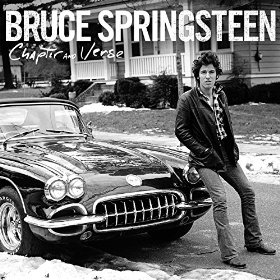
brucechapterandverseReleased to accompany the album is Chapter and Verse. Given that it took close to twenty-five years and eleven albums for Bruce to release his first Greatest Hits and in the twenty years that followed there were another three such compilations to the six studio albums… it’s hard to believe that another new compilation were needed to do so, it does kinda reek of cash-grab.

Of the eighteen tracks on Chapter and Verse, thirteen have already been released many in the same order on other compilations. That’s not to say the songs aren’t required listening – any album that contains ‘The River’, ‘My Father’s House’, ‘Born To Run’ and ‘The Rising’ is easily going to stand strong. In some respects the running order here is more beneficial than other instances – lifting ‘Long Time Comin” from it’s sandwiching on Devils And Dust‘s weaker tracks really allows it to shine. But, given that fans will already have either the existing compilations, the albums these tracks are culled from or both, it’s hard to argue a case for their recompiling.

So – the big USP of Chapter and Verse comes down to this; the first five songs have not been released previously and pre-date Bruce’s recording career with Columbia. But are they worth shelling out for?  In a couple of words, sorry but not really…. These songs are notable for the progression they represent (even the jump in style between the two cuts from Springsteen’s first band The Castiles) but, ultimately are only being heard because who one of their members went on to be. The Steel Mill song ‘He’s Guilty (The Judge Song)’ is a standard southern-blues stomper recorded in San Francisco as the band tried to use California to break out of Jersey-only stardom but highlights what Bruce himself realised; for every Allman Brothers Band there were a hundred Steel Mill’s and there’s little here to distinguish them above the pack.  The exception, though, is The Bruce Springsteen Band’s ‘The Ballad of Jesse James’ which, of the five ‘new’ tracks is the keeper.

For myself, and I’d wager a few others, I’d rather the previously-unreleased material shone some light on either the E-Street Band’s take on Nebraska (that the fabled Electric Nebraska exists in its entirety is confirmed in Born To Run) or Bruce’s shelved album from the nineties… so I’ll drop one such track here – ‘Waiting On The End of the World’, written for that album and taken a stab at with the E-Street Band at the time of Greatest Hits which, for my money, is still the best Springsteen comp.

If you are still looking for music to ‘accompany’ the reading of Born To Run, there’s a Spotify playlist that Bruce (or someone on his team, most likely) put together containing all songs referenced and important:

Quick List: 2016 in 5 (Gut reaction)

While every sane and right-thinking person on this planet greets this morning’s news with a collective “WHAT THE FUCK?!” I received a “Top 5 songs that reflect 2016” message.

In the spirit of ‘think less, post more’ here are those that, in no particular order, leapt to mind.

Tool – Ænema

The lyrics… the timing signatures…

Bob Dylan – A Hard Rain’s a-Gonna Fall

REM – It’s The End of the World As We Know It (And I Feel Fine) 

The Rolling Stones- Gimme Shelter

Has there been a better apocalyptic song than this? Or album than Let It Bleed?*

Eels – End Times 

“Crazy guy with a matted beard, standing on the corner. Shouting out “end times are near” and nobody noticed him”


*No. No there hasn’t.

Out of Europe: A Swedish Top Five

While the stupidity of June 23rd and the fumbling-in-the-dark it lead to continues to dominate the news  (unless America votes in a racist, misogynistic Oompa Loompa today) I thought I’d revisit my initial “Out of Europe” list… I thought I’d go for a region, in this instance Scandanavia, but quickly found I’d come up with five from the same country.

So, in the same “this is what we’re saying goodbye to” thought, here’s a Top Five From Sweden (in no particular order, of course, and without a Waterloo in sight*):

Kristofer Åström – How Can You Live With Yourself

There’s just something so amusing and great about the juxtaposition between those gentle strums and lyrics like “I hope you’ll burn in hell”.

Refused – New Noise

I don’t think I ever was or ever will be – especially as my clock has just clicked over another year closer to 40 and I merge quietly into listening to ‘Dad rock’ – to talk about Refused or profess fandom in the same way I’m probably unlikely to be considered serious when I talk about At The Drive In’s Relationship of Command (“Hello, mother leopard. I have your cub”). I will say, though, that I love and loved The Shape of Punk To Come in all it’s screaming, emphatic and brutal force.

Shout Out Louds – Oh Sweetheart

I cannot recall how I found this band back in the mid 2000’s. Their first album Howl Howl Gaff Gaff is chock full of cracking, upbeat and well crafted tunes like this and The Comeback. I can’t say I’ve heard a great deal since though, so perhaps it’s time to head to Spotify….

Junip – Line Of Fire

Having found solo success on his own with his bare, acoustic tracks and covers (including Heartbeats) José González did the sensible thing and got the band – Junip – back together again. I first found them on the The Secret Life of Walter Mitty soundtrack and then their 2013 self-titled.

Last Days of April – The Thunder & The Storm

I could have put anything from Last Days of April here, they remain my favourite European export and I’d be hard-pushed to find a dud in their catalogue. So I went with something form their latest – last year’s Sea of Clouds – if only for the moment halfway through when the pedal-steel and guitar takes over and just keep going.  For a quick LDOA bracer:

It’s On Everything
I Wish That You Would Mean A Lot Less To Me
Forget About It
Who’s On The Phone (because there’s no way of linking to Lily)
Two Hands And Ten Fingers

There’s some honourable mentions for this one (Sweden has sent some wonderful music out into the world) including that one-hit-wonder Glorious by Andreas Johnson, The Knife – purveyors of the original Heartbeats, and Lykke Li’s wonderful Melodies & Desires.


*no matter how many people claim there’s something great in ABBA I cannot stomach them, the DJ at my wedding was even banned from playing them no matter who made a request (I have a list of those that did, too).

Revisiting: Collapse Into Now

Revisiting…..

Since he was old enough to pull himself up and stand holding onto the shelves, my son would reach into the CD shelves that line our hall and pull out an album (or a handful) while I put on my shoes and zipped his coat of a morning. Initially because that’s what toddlers do but subsequently because he’d learn that when he thrust one into my hands odds were that I’d take it out with us and we’d listen to it during the drive – him to the child-minder and me onwards to the office – and the idea of choosing the music for the day appealed to him greatly.

Aside from the fact that he’s already forming favourites and calling out requests (“where’s that Dinosaur Jr?” “Foo Fighters please”) from the back seat before he’s three, it’s meant that as his physical development allowed him to do more than repeatedly grab clusters from the M/N area – he’s been selecting albums that I wouldn’t otherwise do so for myself and, in many instances, hadn’t listened to for years and giving me the impetus to spin things I hadn’t for some time.

Hence; revisiting.

Collapse Into Now

In 1997, a couple of years after a suffering a brain aneurysm on stage in Switzerland, and as the band were due to commence sessions for a new album, drummer Bill Berry told his band mates that he was leaving REM. In the seventeen years he’d sat on his drum stool behind Messrs Stip, Buck and Mills the four-piece from Athens, Georgia had gone from underground, college-scene heroes, broken through with Document and achieved major-label success and sales with Out of Time, Automatic For The People and assured permanent rotation wherever music videos are played with clips for ‘Everybody Hurts’, ‘Losing My Religion’ and, to their own chagrin, ‘Shiny Happy People’.

After announcing his intentions Berry added a caveat; he would only vacate his stool if the others agreed to carry on. As such, the publicity for the band’s next album Up often contained Stipe’s “I guess a three-legged dog is still a dog. It just has to learn to run differently” quote.

I’d gotten quite into REM at this point in time. While I’d played ‘Drive’ on the jukebox at a holiday camp one summer to the point that the guy working there ended up pulling the plug (to be fair he at least gave me my 50p back even if his ‘I think that song breaks it’ lie was weakly delivered0 – it was New Adventures In Hi-Fi that I held and still hold as a great album (‘Departure’, ‘Bittersweet Me’, ‘How The West Was Won and Where It Got Us’, ‘Electrolite’??!) As such Up was purchased by me on day of release. Sadly Berry’s departure also marked the point I pretty much started losing interest. Up has some good songs (3.5 at last count), Reveal was too stodgy and heavy-handed – and marked the last REM album I’d buy for some time – and Around The Sun (or what I’ve heard of it) had all the punch and staying power of a kitten’s fart. Save for the (Berry-co-written) single ‘Bad Day’ from the Warner Bros comp it seemed like the now-three-piece from Athens, Georgia weren’t going to be finding rotation on my stereo again.

But then…. perhaps tired of the inertia and lukewarm reception surrounding their output – Around the Sun had shifted under 240,000 copies in the US – and enthused by working with (finally) a new producer, REM engaged again and, working under tighter pressure and deadlines, released Accelerate; an aggressively upbeat and purposeful album that was, as one critic said, the “sound of a band having enjoyed a good word with themselves”.

For all it’s praise – and I’ve still not added it to my own shelves – Accelerate was a very single-focus album and lacked the subtleties that enthused their earlier and better tracks. I don’t think there was a single mandolin lick to be found. Still, it made me listen again so that, in 2011, when word of a new album and lyric videos for ‘Überlin’ and ‘Mine Smell Like Honey’ dropped, Collapse Into Now was one I bought on day of release.

Until this last week I hadn’t listened to it for a couple of years but each and every time I hear this album I find more to enjoy – that naggingly catchy riff that kicks off proceedings with ‘Discoverer’, the vocal power of ‘Oh My Heart’, the breaking out of that joyous chorus of ‘Mine Smell Like Honey’ or Eddie Vedder’s contribution to ‘It Happened Today’, the blast that is ‘All The Best’ (in which Stipe portends their plans with “it’s just like me to overstay my welcome”) or the blink-and-you’ll-miss-it joy of ‘That Someone Is You’:

Collapse Into Now may not be perfect but then no REM album is 100% (‘Star Me Kitten’, anyone? No, didn’t think so). It is their most consistent and successfully multi-faceted album for a long time and one in which the sheer weight of positives and the quality of the production outnumber its weaker points. Rather than simply play it fast as they’d done with Accelerate, the songs on this album are given space to breath, there are textures that harken back to their earlier work without sounding like re-treads and there’s an overwhelming sense that, once again, they’re enjoying what they do.

Once you’ve reclaimed your reputation – what do you do, though? With their deal with Warner Bros at an end, would they sign to an independent or will they make another massive-money deal? Will they continue this upward trend in quality with another album? With a seemingly-rekindled joy of playing live will they tour?

But they didn’t go for any of that. For it turns out that when they got together to record Collapse Into Now they did so with the idea of  “going out on a high note.” And, in September 2011 (just five months after the album’s release) REM announced their decision to call it a day. With Collapse Into Now, to my ears at least and this is my blog after all, they did just that. After all, I doubt people would be clamouring for more if the last think they’d released had been ‘Leaving New York’.

Currently Listening

In any shooting gallery where promises are made….

I’ve been finding comfort in familiar sound recently so those newer releases by the Pixies etc haven’t really been given a listen. But, here’s an idea of the current playlist:

Jack Rose and his mastery and innovation of the acoustic is actually a new discovery for me. I think the lack of vocals made it easier for me to get into over the last couple of weeks. A huge body of work still to hear for the first time as Mr Rose made a lot of music before his untimely passing but this, from the brilliant album I Do Play Rock and Roll is hypnotisingly awesome.

Because I’m still gobbling up House of Cards

I don’t think I’ve even mentioned Mr Petty on here… odd. Anthology; Through The Years is one of those rare compilations that’s absolutely perfect and, after starting to watch Runnin’ Down A Dream on Netflix, is now back in rotation in my car. Eddie Vedder says, at the start of the documentary, “The first time you hear a new Tom Petty song is sounds like, you know, a classic song.” – he’s not wrong. If you only have the aforementioned compilation you’ll know just how many sheer belters the man has written.

Going back to an earlier discussion on Dire Straits… I’ve been listening to Making Movies the last couple of days, in particular this opening track (and Skateaway). It’s made me wonder something though; in 1980 Mark Knopfler borrowed both a producer (Jimmy Iovine – having loved the production sound of Patti Smith’s ‘Because The Night’) and band member (Roy Bittan) from Bruce Springsteen to make what was the band’s breakthrough third album (Iovine had a thing for making third albums). A few (seven to be precise) years later Bruce dropped his own (and arguable one of his finest) album and song called Tunnel of Love. Where Knopfler’s track featured lines like “Come on and take a low ride with me girl, on the tunnel of love”, Bruce used “Cuddle up angel cuddle up my little dove, we’ll ride down baby into this tunnel of love”… Now, while both album’s dealt fairly prominently with love’s broken promises, Bruce’s album and lyrics were significantly different, more nuanced and the sound very much of his own but… I have to wonder; surely Bruce must’ve heard what his piano player and produce had been moonlighting on and did that plant a seed that, over a few years, grew into one of his most brooding and significant albums?

Tracks: 5.15am

He thought the man was fast asleep
Silent, still and deep
Both dead and cold
Shot through
With bullet holes

This is an odd one and probably the least ‘cool’ track on this list which is strange and mumble-worthy in itself… Of all those bands revisited and touted as influences, given the remaster treatment and dusted off in the wake of nostalgia revivals, Dire Straits remained immune. Perhaps it was down to Knoplfer’s unfortunate headband / hair combo during the Money For Nothing era or that Harry Enfield sketch, or the over-presence of Sultans of Swing on the radio but, for a band that shifted over 100 million records (30 million shifted by Brothers In Arms alone), Dire Straits are still one of those bands that are sneered at though I’m sure there’s an awful lot of guitarists and bands influenced by Knopfler’s playing.

I’m willing to bet, though, that Knopfler himself couldn’t give a rat’s arse about it. Likely contributing to that lack of attention is the fact that, having quietly dissolved the group in 1995 having become uncomfortable with the scale of the tours and productions, Mark Knopfler has resisted any and every urge (if he even has them) to revisit the group having forged ahead with his solo career and no calls for the ‘Legend’ spot at Glastonbury are likely to change that.

I grew up with the sound of Dire Straits thanks to my Dad and the same is true of Knopfler’s solo material – it’s one of those common tastes we share. While I’m not a big enough fan to own anything beyond a Best Of comp I do know the songs and will keep an ear out when I hear them, if only for sentimental reasons. That and the fact that Knopfler’s guitar phrasing and tone is an absorbing an beautiful thing all by itself, especially on his solo albums. Shrangri La – Knopfler’s fourth solo record – is a different story though.

Recorded after a seven-month break from the guitar imposed by recovering from a motorcycle accident, I’d state this is my favourite thing Knopfler has put to tape and certainly his most-consistent. The slow-burn, blues tone is dominant, gone are the celtic/folk leanings of his earlier efforts and his laid back phrasing and story telling is leant to a much wider range of subjects including Elvis (Back To Tupelo), the founding of McDonalds (Boom Like That) and those uniquely British tales like the plight of the modern fisherman in The Trawlerman Song and the One-Armed Bandit Murder in what has to be my favourite Knopfler composition; 5.15am.

It’s an atmospheric tune that begins with a gentle strum that builds into a real bluesy tone as it tells both the story of the discovery of “one armed bandit man (who) came north to fill his boots”‘ body and its impact on the local coal-mining community where “generations toiled and hacked, for a pittance and black lung”.

The world came charging up the hill, and we were women and men

EDIT: In looking back at this post I discovered that I had listed Gypsy Biker twice (a result of careless Copy and Pasting). 

This is Jim’s fault. Specifically Jim at Music Enthusiast who recently, in what seems like one of those blog tags, ran up a list of his own twenty favourite Springsteen songs. It’s good list (and a blog well worth reading) and I think we share a few – it got me to then try and whittle down my own version. Then I looked at it and edited it. Then I looked at it again and edited again….

I did decide to limit myself to a maximum of two tracks from any one album and have omitted cuts from Tracks etc (I could easily put together a list of best non-album tracks). I don’t think this list is necessarily order-specific or concrete as it’s been adjusted a few times. But, right now….

Youngstown  – Some of Bruce’s best works have a real sense of both time and location and they don’t get more specific than the “Here in north east Ohio, bank in eighteen-o-three” of Youngstown, the best track on The Ghost of Thom Joad and one that Nils Lofgren would set alight live come the reunion tour.

New York City Serenade – There were so many characters and street scenes thrown into Bruce’s first two albums that it’s hard to pick one stand-out but the sheer ambition of this track and its instrumentation, for anyone let alone a singer-songwriter on his second album, leaves my mouth open.

Worlds Apart Another strong cut from The Rising, I love the blending of Middle Eastern vibes, Qawwali singers and the E-Street at full power, the thickness of the guitars under Brendan O’Brien’s production and the urgency of it all.

Gypsy Biker – I’ve written about this one before – and it’s call back to Shut Out The Light– but there’s something about this that, to me, means that of all Bruce’s later tracks enthused with anger at Bush etc this is the stand-out.

Downbound Train  Born In The USA is an odd album. It’s not Bruce’s best but then it does contain some of his best songs. Rubbing shoulders with I’m On Fire and No Surrender is this one. Bruce has many down-on-their-luck songs but this is one of my favourites.

Tunnel Of Love – Limiting choices from Tunnel of Love is as tough as limiting choices from Darkness On The Edge of Town. Both 5 Star albums. There’ll be some in honourable mentions but I’m a sucker for the line “Fat man sitting on a little stool”. As befitting a title track this one kinda contains the themes that run through the album as Bruce wrestled with the reality of his first marriage – “you me and all that stuff we’re so scared of” – and had the audacity to use it to power some of his most evocative songs. The gifted bastard.

Bobby Jean – One of the last songs written for Born In The USA – supposedly about his friendship with Steve Van Zandt, who was leaving the band… ” just to say I miss you baby, good luck goodbye”.

State Trooper – In 1999 I went and bought my second Springsteen album (after Greatest Hits had sat un-listened to for some time) – Nebraska. I’d just heard State Trooper play out over the credits of an episode of The Sopranos. It opened me up to what I’d missed about Springsteen the first time around and I’ve been hooked since.


Point Blank – Completed in ’78 and the first song Springsteen wrote after Darkness On The Edge of Town, Point Blank has been brilliantly described as “a song of shadows, of lives going nowhere, of broken relationships, and broken promises” and I can’t improve on that description.

Magic – The album, Magic, was a very strong late-career one for Bruce and a great follow up to The Rising. If only he and Brendan O’Brien had finished here. It was loaded with anger and barely-veiled hostility to the George W Bush era. This, then, is such a beautiful, slight and simple tune as to almost seem out of place. I’m also a sucker for Van Zandt’s mandolin on this.

Candy’s Room – One tricky part of this list was not going for every track on Darkness On The Edge of Town. Leaving aside the title track and Badlands, I love the tempo, the menace and the guitar on this track.

Jungleland – Was this Bruce’s last story song? I’ve got a suspicion that future such sagas would be written from a more personal perspective. Either way it’s arguably the best if only for the Big Man – especially when you imagine the agony of getting that take ‘just’ so.

Paradise – Bruce has a way of being able to evoke a real sense of pain and yearning. I don’t think it was there in his earlier work, as his voice changes he’s finding more ways of using it I guess. Thinking around this tracks like The Wall and Danny Federici tribute The Last Carnival come to mind.  Paradise is so evocative of that yearning that I couldn’t listen to it for a while as I’d been misinformed as to just what it was about (somehow I’d been given the idea that it was specific to a man grieving for a drowned son) A song on the theme of loss – “I thought, ‘What do you miss?’ You miss the physicalness and the ability to touch somebody” – against the barest of backdrops serves to make this a late-career gem.

Lost In The Flood The first in what I think of as a continual development on a theme that begins here, develops further with New York City Serenade and concludes with Jungleland.

American Skin (41 Shots) – The caveat here being that it has to be the version from Live In NYC album, complete with Bruce’s “we need some quiet” when its message was painfully fresh and cutting and before Tom Morello got his hands on it and cut the tracks balls off.

One Step Up – That melody. That naggingly simple and catchy melody. “Mmm she ain’t lookin too married, and me well honey I’m pretending”. The best track on The Tunnel Of Love.

Born To Run – Because without this song or the album its from I doubt anybody would be compiling Best Of Bruce lists. That and the line “The amusement park rises bold and stark” is just ridiculously good.

Racing In The Street – “Some guys they just give up living,  and start dying little by little, piece by piece. Some guys come home from work and wash up and go racing in the street”… I mean fuck that’s a lyric and a half there. Back that with the heavy, haunting melodrama of that piano and this one is unimpeachable. The ’78 version that graced The Promise is not only a belter in its own right but also serves to show just how much craft went into this track.

The River – Even before I went back to Nebraska and it all ‘clicked’ into place I loved The River. It’s just one of those songs that will always appear at the higher echelons of Springsteen lists.

Blood Brothers – In the early nineties Springsteen’s stock wasn’t at its highest; Human Touch and Lucky Town and the ‘other band’ tours hadn’t gone down as favourably as he’do hoped. There’s a mythical whole album that was recorded and scrapped. Then in 1994 he won an Oscar for Streets of Philadelphia and figured it was as good as time as any for a Greatest Hits album and got the E-Street Band back together to work up some older songs for it and a couple of new songs. Though fans would have to wait a few more years for a proper reunion and tour the sessions did yield two great news songs in Secret Garden and my favourite Springsteen track – Blood Brothers.

I was always a bit bemused by Bruce’s take on it in the linear notes:  “It was good to see the guys”


Honourable Mentions: This Hard Land, Spare Parts, Thunder Road, She’s The One, Radio Nowhere, For You, Fade Away, I’m On Fire, With Every Wish.

Tired of leaving, temporary breathing…

Don’t know why this one has been going around and around my head the last couple of days. Could be down to having the phrase “Black Out” in there after putting a book review together and it morphing into “back out” in my head and just as likely down to having been spinning the new Dinosaur Jr album today.

Either way there’s something hugely addictive about this track and the ease with which J Mascis blends into Kevin Dew’s song that I can’t shake and haven’t been able to for some eight and a half years now since it dropped in 2007.

Blimey…. 2007 doesn’t feel like it should be nine years ago. For context it made it onto Rolling Stone’s Best 100 Songs of the Year list which also included the then-new Radiohead track ‘Weird Fishes/Arpeggi’, Arcade Fire’s ‘Keep the Car Running’, Springsteen’s ‘Long Walk Home’ yet also had Rhianna’s ‘Umbrella’ at number 3. Go figure.

Oh well.

Anyway, the most frustrating thing about having this stuck in my head is that I cannot for the life of me find it in my collection. Whether I (or toddler-sized fingers) accidentally knocked it out of my iTunes or the CD has done a bunk, I don’t know.


Tracks: Round-Eye Blues

Last night I closed my eyes and watched the tracers fly
Through the jungle trees
Like fireflies on a windy night, pulled up and onward by the breeze…


Kids In Philly remains a high water mark for Marah, and it was only their second album. Marah are one of those bands that shoulda, woulda, coulda been so much more but, following their second album, they were dogged by line-up changes and the ever-diminishing press interest and promotion that comes from a band that sign to a seeming merry-go-round of record labels. Back in 2000, though, the band with the Bielanko Brothers Serge and David at its core were coming off the enthusiastic critical response to their début Let’s Cut The Crap & Hook Up Later on Tonight – which saw them signed to Steve Earle’s now-defunct label – when they released Kids In Philly. The response was hugely positive.

Upon release critics lauded the band and the album for its originality and recasting of musical touch stones. References to Springsteen abounded along with phrases such as “imagine The Clash taking on Born to Run” documenting the album’s energy and lyrical call outs. Calling the album relentlessly infectious, AllMusic calls it stunning “in its diversity, and even more stunning in its ambition. The album forges its own confident, note-perfect rock & roll sound, while practising the type of effortless stylistic hopping that hadn’t been executed to such wonderful effect since the heyday of the Fab Four.”

Kids In Philly is an absolute blinder of an album and one that makes my own Essential 100 list (which I’m still miles from returning to let alone completing). It’s not only compellingly addictive in its urgency and song-writing craft but the lyrics come across as hugely authentic and miles away from the phoned-in, play-acting that was rife in so music at the time – 2000 was peak landfill-indie on the radio. Rolling Stone cited how the album “lives and breathes the streets where it was made.”

I found it, as with so much music at the time, via one of Uncut Magazine’s Unconditionally Guaranteed cds glued to the cover (I wonder if I ought to start buying that magazine again). I’ve got an odd soft-spot for these war story songs (Goodnight Saigon serves as another example and even Stand Ridgway’s Camoflauge for other reasons) that try and put something so inhuman into a human context. It’s tricky, though, to get it right – find the balance between affective lyrics, a good tunes and a song that works in its own right. In that respect Round-Eye Blues exemplifies everything that makes the album it’s from great; instantly catchy, full of hook, biting lyrics and great craftsmanship in both the tune and the lyrics.

Somehow these guys manage to make a bitter tune sung from the point of view of a Vietnam vet (another little nod to Bruce) convincingly genuine despite the fact that they would only have been in their early 20’s at the time  – “But late at night I could still hear the cries of three black guys I seen take it in the face, I think about them sweet Motown girls they left behind and the assholes that took their place.”

From here it was a bit of a stalling, down hill tumble for Marah. Their follow-up was made by Owen Morris (who was known for producing Oasis so Be Here Now should have served as a red-flag in terms of suitability), the over-produced (so much so that they later released a “de-constructed” version) and aimless Float Away With The Friday Night Gods failed to capitalise on the doors opened by Kids In Philly (or the practically-buried cameo from Springsteen himself) and led to the previously mentioned label-hopping and line-up changes. I stuck around for a few more albums hoping for a return to form but, while they remained capable of turning out the odd little reminder of their song-writing charm the energy and urgency of Kids In Philly eluded them and lack of effective record distribution made it harder to get hold of their work. Still, I understand that they’ve since ‘reformed’ to celebrate the album’s 15th anniversary so who knows.

Self-compiled; Aerosmith Pt 2

Oddly enough I like the idea of doing a split, two-parter post as it gives me something resembling a structure to post on rather than ramble – especially when current events are something I need to stay away from if only for the sake of my blood pressure and keeping that black dog at bay.

Earlier this week I got the Pre-Milk Spillage Aerosmith compilation up having been inspired by Jim over at Music Enthusiast’s post-trilogy on the Toxic Twins. Turns out that one was the easiest of my original comps to recreate on Spotify and share. For some reason Falling Off isn’t included on the streaming version of Nine Lives (I guess it was cut from international versions of the album) which meant I head to substitute it for the lesser Walk On Down and Can’t Stop Messin’ has been culled from Get A Grip but once you start substituting….Well, I wanted to get something from the latest Music From Another Dimension on there and Out Go The Lights seemed the only one to fit (I guess because the tune has its origins from the Pump era) which meant I was able to slice out some of those awful ballads that I’d no longer want to hear (and clog up most of Big Ones).

But then with an extra minute or three do any of the tracks from the period between Nine Lives and Music… warrant selection? Well, no. I, like Mr Perry (2010: “I don’t think we’ve made a decent album in years. Just Push Play is my least favorite. When we recorded it there was never a point where all five members were in the room at the same time and Aerosmith’s major strength is playing together. It was a learning experience for me: it showed me how not to make an Aerosmith record”) don’t care for Just Push Play. And, yes, I open with three from Pump and even include two more including the only one of their ballads that I can still enjoy (if you’ve seen them live and been part of the crowd that sings along to the start so loudly it shuts Steven Tyler up you’ll have a soft spot for it too) but Pump is to their latter-day period what Rocks is to their initial run; unimpeachable.

So, it was possibly the trickiest to compile and is by no means perfect but if I were to compile for CD length, tunes from the Post-Rehab (I can’t really call this one Post-Milk Spillage as I’ve selected nothing from Done With Mirrors) now it would probably look like this:

Honourable mentions go to:

Monkey On My Back

The Movie

Line Up

Heart’s Done Time