Least To Most: Bruce – “halfway to heaven and just a mile outta hell”

Ok, so I’ve just looked at my (much revised, scrawled over and rewritten) list and realised we’re at the half way point in my rambling about Bruce’s albums in Least to Most Favourite order. We’re ten down with ten to go and that feels like a good point to take a breather* and talk about some Springsteen songs (a couple of favourites amongst them) that wouldn’t otherwise get a mention and take a look at those releases that don’t qualify for the list.

Compilations 

Bruce was twenty three years into his recording career before he decided it was time for a compilation. 1995’s Greatest Hits oddly didn’t get the best reviews – many felt that by omitting anything prior to Born To Run, Bruce was cutting out an important part of his history (“no Rosalita?!” was a common cry in reviews I’ve found in archives**) and others suggested that these songs simply didn’t belong together and performed better in their original album sequencing… though isn’t that the case with all such compilations? Seems like a trite comment to make.

Personally, this was my introduction to Bruce Springsteen so I’m a little biased. I was a little put-off by the sounds of ‘Born In The USA’ and it’s kin (this was 1995, after all, and such sounds weren’t ageing well) but there was no denying the draw of songs like ‘The River’ and ‘Atlantic City’ which were the big hook for me.

I’ll also make a fight for the new songs included here that many a critic argued were weak. I think ‘Blood Brothers’ remains an essential Bruce Springsteen song and both ‘Streets of Philidelphia’ and ‘Secret Garden’ are strong tracks and that’s without the dusted-off and revisited ‘Murder Incorporated’ (which saw Steven Van Zandt return to the fold for the video and would become a real blazer on the Reunion Tour) and ‘This Hard Land’ – both Born In The USA cuts that didn’t make selection, the latter of which was Max Weinberg’s favourite tune. For a one-stop sampler of Bruce Springsteen V1***, Greatest Hits is still a damn good start for any Bruce newbie.

Strangely enough, just two studio albums later and with the successful launch of Bruce Springsteen V2 cemented, it was time for another compilation.

This time more space was allotted to it and the selection was allowed to span out across two discs so that The Essential Bruce Springsteen kicked off with ‘Blinded By The Light’ and wrapped it up with cuts from Live In NYC and The Rising making sure to include ‘Rosalita (Come Out Tonight)’, all the hits, some fan favourites like ‘Jungleland’ and ‘Nebraska’. Of course, the fans would already have all of these so a limited run with a third disc of rarities was offered and some of those are none-too shabby either. I particularly enjoy Springsteen’s live take on ‘Trapped’:

Odder still, in 2015 the track listing was revised. Out went ‘Jungleland’ and ‘Tunnel of Love’ and in came ‘Tenth Avenue Freeze Out’ and ‘One Step Up’ and a handful of other tracks were shuffled / cut in order to make space for a couple of bolted-on post-The Rising tunes. Bonkers, if you ask me; cutting ‘The Darkness On The Edge of Town’  to make space for something from High Hopes?! Why bother?

On the ‘Why Bother’ list is the 2009 Greatest Hits which was billed to Bruce and The E Street Band (is that only their second billing? Though they didn’t get the US cover) which strips it all back to one disc and adds a couple of newer tracks – presumably released to catch the newer casuals after Superbowl and festival appearances.

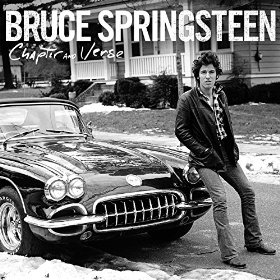
Chapter & Verse was released this year to coincide / accompany Bruce’s Born To Run book. It’s somewhat linear and obvious in its song selection and only really stands out in as much as being more ‘personally’ selected than the above comp and featuring a handful of pre-Columbia Recording Artist Bruce. The best of which being ‘Ballad of Jesse James’. I’ve yet to add this to the shelves as they’re not what you’d call ‘required listening’ for anything other than an intro to the origins story.

Live

In terms of live albums, while there’s certainly a couple listed on Bruce’s discography, Live 1975-85 is inarguably the best way to get a take on what makes Springsteen live so legendary. Sure, Live In NYC is a good capture of the reunited E Street Band (and the best place to hear its new songs) but it’s strange sequencing and fading out have hampered it and interrupt the flow.

Live 1975-85 contains 40 songs recorded with the band in its prime, a wealth of classics, Springsteen pre-song story telling and, in ‘Seeds’ another great original:

It’s only downfall – and one that was much picked up on by fans I’m given to understand – was that it didn’t include ‘Prove It All Night’ in the live reshaping (or at all, in fact) that had acquired a massive fandom. So here it is:

Worth mentioning that Bruce is more than savvy to the current musical buying trends and has made many a current and classic concert available for download at http://live.brucespringsteen.net/

EPs

1988’s Chimes of Freedom was released to tie-in with the Human Rights Now! tour. The live rendition of ‘Tougher Than The Rest’ is suitably girded by the E Street Band’s backing, ‘Be True’ is a decent enough tune but the flip side with Bruce’s take on Dylan’s ‘Chimes of Freedom’ and the acoustic ‘Born To Run’ and still captivating stadium-size crowds is the strongest, in my opinion:

Blood Brothers originally came with the film of the same name (in a very limited pressing) that documented the mini-reunion of the E Street Band. While the tracks included are certainly interesting there’s nothing really here other than curiosities – like the ‘alt’ version of the title song.

Which brings us to the last release of new Bruce Springsteen material – American Beauty. Now, if High Hopes was made up of songs that didn’t make the cut for The Rising or Wrecking Ball then an ep of songs that didn’t make the cut of THAT might be stretching it a bit….  Indeed it is. Nothing on here is particularly essential in its listening and there’s chunks of all that were salvaged and better used elsewhere, it’s release remains something of a mystery to me, almost an example of a big artist and major label slapping something together to cash in on Record Store Day and it pains me to say that as a fan. That being said, ‘Hey Blue Eyes’ is a very good song and I do play it a fair old bit on stream. One of Springsteen’s angry Bush-era political songs that isn’t mired by over-production – almost demonstrating in on four-track EP how clearly Brendan O’Brien is the better set of hands for Springsteen’s songs over Ron Aniello.


*Whether I’ll manage to finish this series by the New Year remains to be seen.

**Bruce made reference to this in the linear notes for The Essential and, if you watch the accompanying ‘Blood Brothers’ DVD, there was plenty of discussion against the inclusion of earlier tracks

***Bruce Version 1 extends from his debut up to the conclusion of The Reunion Tour. The Rising marked the emergence of Bruce Springsteen Version 2.0
Found and Shared: Point Blank & Reunion Tour in LA

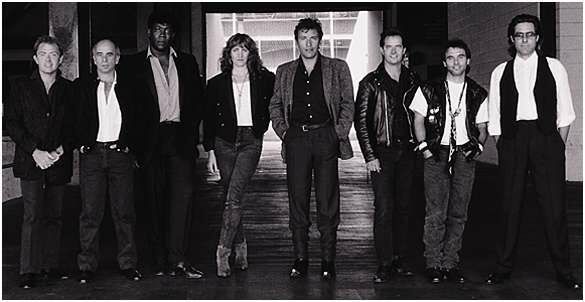
In my Born to Run post I mention how, when it came to the rebirth of the E-Street Band, Bruce Springsteen was hesitant almost until curtains up.

He needn’t have been. Obviously. That tour was a scorcher and set the stage (excuse the pun) for a resoundingly successful second-era for him and his band. It was captured and released on the Live In NYC album but I always felt that CD was a little on the short side.

I also mentioned that in preparing for the tour, Springsteen was building set lists that pulled heavily from previously unreleased material on the then-new Tracks and how I’d have loved to hear some of those deeper cuts. Well… while reading some early reviews of that show today I found increasing mentions of songs that were played during that tour but not captured. Given how much the reinforced E-Street Band (four guitars strong at that point and Max Weinberg hitting harder than before) added to songs like ‘Youngstown’ and ‘Lost In The Flood‘ I was delighted to find that that tour’s recasting of ‘The River’ was often followed by a re-reading of one of my favourites from that album; ‘Point Blank’.

Having found audio of it, I’ll share it here:

However….

The real gem of my search is this… the full concert from the Staples Center, Los Angeles, CA from October 1999 with a set list that varies pretty wildly from the tour’s official release and includes some fantastic cuts including my own favourite Tracks highlights  ‘Take Em As They Come’ and ‘The Promise’ and also features the first play ‘Incident on 57th Street’ in close to 20 years!

While it’s not as polished or refined as it would become as the tour progressed and the arrangements tightened, it’s all the better for it’s rough and ready nature and WELL worth a listen:

Born To Run | Chapter And Verse

I tell you, moving house knocks it out of you. Still, sometime between my birthday a couple of weeks back and popping it back up on a new shelf, I found the time to tear through Bruce Springsteen’s autobiography Born To Run (it was never going to be called anything else, was it?).

It is an absolute blast to read. Written completely solo and without the assistance of a ghost-writer, the voice is clearly that of Bruce – at times cuttingly honest, at others poetic and then written as though delivering a sermon from the stage on the LIFE SAVING POWERS OF ROCK AND ROLL!!! (yes, the caps-lock button is Bruce’s friend). Contained within its five hundred or so pages is the story of how a young man from a poor, working class family in the town of Freehold, New Jersey, fell in love with music, got a guitar, learned how to make it talk, refined his craft and cracked the code. It’s fascinating and joyous stuff.

This being a memoir / auto-biography, the story is going to be somewhat one-sided. This is Bruce’s version. So while in Born To Run, Bruce describes the recording of Tunnel Of Love, for example, by writing that Bob Clearmountin ‘tidied up’ his playing so it sounded as if he knew what he was doing, it’s Peter Ames Carlin’s 2012 Bruce that fills the picture out by pointing out that Bruce and Bob actually used samplers, drum machines and synths to create a lot of the music and then bought in members of the band to “beat the machine” – if they did the part was recorded, if not… well not every member of the E-Street featured and not every member of the band were impressed by the process but then Bruce is the Boss, a fact he gently underlines on a number of occasions in the pages of his own book; “I’d declared democracy and band names dead after Steel Mill. I was leading the band, playing, singing and writing everything we did. If I was going to carry the workload and responsibility, I might as well assume the power”.

estreetband4

The part of the book that deals with the period before the release of Born In The USA is both the largest and juiciest. There’s a wealth of information about the source of Bruce’s art, his influences and his decisions. These were lean times – it wasn’t until after The River tour that Bruce had anything resembling financial success thanks to lawsuits and recording costs inflated due to his infamous perfectionism – and there’s a huge amount of detail as to what drove him to take certain choices with his music. While there’s no real breakdown of what inspired each and every song (that already exists in Songs) there’s a great amount of revelations to be found.

born-to-run-9781501141515_hrBruce is surprisingly candid when it comes to more personal elements too. I was a little surprised by some of his descriptions of his fellow E-Streeter’s – especially the late Danny Federici – but then his undeniable love for these band-members is also evident as his heartbreak at their passing.

Many of the column inches covering this book in the press have been at pains to mention that Mr Springsteen is equally revealing when it comes to his struggles with depression. Having managed to suppress what he describes as a consequence of the same mental plagues suffered by his father through years of working and touring, Bruce’s own depression came jumping up into his face . He is very open with his fight with and its effect on both him and his loved ones. As a fellow sufferer of that Black Dog it’s inspiring to read. His relationship with his father as a young man – while hinted at in song – is revealed in a much deeper and, at times, darker light and there’s a real sense of emotion and release when, post diagnosis with Paranoid Schizophrenia, Bruce’s father becomes a softer man and the two find some form of closure.

Part of not embracing the full ‘rock star lifestyle’ means that there’s not a huge amount of rock star stories to be found here and you’d be forgiven for skimming a go-nowhere Frank Sinatra story or those chapters (yep) dedicated to horse riding and Bruce’s equestrian escapades. Indeed, post-USA the structure is more vignettes than linear bio and some of those don’t really feel all that vital but, then, Bruce spent the larger part of that time period between E-Street lives building and raising his family and seeking a sense of calm that had previously alluded him so I’d hardly argue that this is a fault.

But there is still plenty to enjoy in the latter section of the book including  some real eye-openers even post-USA. Bruce shines a little more light on the ‘missing’ album from the period between ‘Streets of Philadelphia’ and Greatest Hits – it was another ‘men and women, relationships’ themed album but steeped in that minimal, loops and beats sound he’d employed for SoP. During a drive with Roy Bittan, his trusty piano player mentioned that perhaps it was the lyrical content of this new music that audiences were having trouble connecting to. Unable to find a unifying voice and sound for it, the album was shelved “and there she sits” – ‘Secret Garden’, ‘Missing’ and ‘Nothing Man’ would see the light of day. Bruce may have shot The Professor down but it dawned soon enough – he’d lost his ‘voice’.  Post Greatest Hits he went to find it and that’s why Ghost of Tom Joad is more of an important album than that subtle masterpiece may have been considered: “the songs on it added up to a reaffirmation of the best of what I do. The record was something new, but was also a reference point to the things I tried to stand for and still wanted to be about as a songwriter.”

Particularly interesting and surprising – given how logical and inevitable it must have seemed to all outside  of Bruce’s head – is that up until the last minute, he still doubted whether reuniting the E-Street Band was the best move – not feeling the fire despite the band’s force, initially building a set list that drew heavily from Tracks and eschewed hits and classics (fuck but I’d love to hear that set!) It wasn’t until the fifty or so fans that had stood outside the rehearsals trying to hear the sounds drifting out were let in to watch that Bruce felt the spark.

Given the level of detail assigned to the writing and recording of earlier works, it’s a little surprising and perhaps disappointing that the post E-Street reformation era isn’t deemed sufficiently interesting to warrant the same treatment. The Rising onwards saw Bruce’s career and popularity reborn after a lacklustre nineties yet the six albums recorded since are breezed over – with the exception of Bruce noting how disappointed he was that Wrecking Ball did not garner the impact and attention he felt these songs warranted. From my point of view and deviating slightly that’s  down to the fact that his and Ron Anellio’s attempts to sound sonically relevant and ‘now’ detracted from the quality of the song writing. That being said it was surprising to read the candour with which Bruce realised that, after years of doing so, he simply wasn’t the right person to record or produce his music any more.

Despite the slightness of its third act – I guess if he’d been as thorough here the book would’ve been simply too long as well – Born To Run is, without question, one of the best musician’s autobiogs I’ve read. Hugely insightful, informative and written with a trueness of voice that equals Bruce’s finest music, it’s an essential read for any fan and a bloody important one for anyone with even a passing interest.

brucechapterandverseReleased to accompany the album is Chapter and Verse. Given that it took close to twenty-five years and eleven albums for Bruce to release his first Greatest Hits and in the twenty years that followed there were another three such compilations to the six studio albums… it’s hard to believe that another new compilation were needed to do so, it does kinda reek of cash-grab.

Of the eighteen tracks on Chapter and Verse, thirteen have already been released many in the same order on other compilations. That’s not to say the songs aren’t required listening – any album that contains ‘The River’, ‘My Father’s House’, ‘Born To Run’ and ‘The Rising’ is easily going to stand strong. In some respects the running order here is more beneficial than other instances – lifting ‘Long Time Comin” from it’s sandwiching on Devils And Dust‘s weaker tracks really allows it to shine. But, given that fans will already have either the existing compilations, the albums these tracks are culled from or both, it’s hard to argue a case for their recompiling.

So – the big USP of Chapter and Verse comes down to this; the first five songs have not been released previously and pre-date Bruce’s recording career with Columbia. But are they worth shelling out for?  In a couple of words, sorry but not really…. These songs are notable for the progression they represent (even the jump in style between the two cuts from Springsteen’s first band The Castiles) but, ultimately are only being heard because who one of their members went on to be. The Steel Mill song ‘He’s Guilty (The Judge Song)’ is a standard southern-blues stomper recorded in San Francisco as the band tried to use California to break out of Jersey-only stardom but highlights what Bruce himself realised; for every Allman Brothers Band there were a hundred Steel Mill’s and there’s little here to distinguish them above the pack.  The exception, though, is The Bruce Springsteen Band’s ‘The Ballad of Jesse James’ which, of the five ‘new’ tracks is the keeper.

For myself, and I’d wager a few others, I’d rather the previously-unreleased material shone some light on either the E-Street Band’s take on Nebraska (that the fabled Electric Nebraska exists in its entirety is confirmed in Born To Run) or Bruce’s shelved album from the nineties… so I’ll drop one such track here – ‘Waiting On The End of the World’, written for that album and taken a stab at with the E-Street Band at the time of Greatest Hits which, for my money, is still the best Springsteen comp.

If you are still looking for music to ‘accompany’ the reading of Born To Run, there’s a Spotify playlist that Bruce (or someone on his team, most likely) put together containing all songs referenced and important:

Great Compilations: Asides from Buffalo Tom

Not too long ago – when explaining the need for self-compiling cds/playlists for those artists who already had a compilation out in the world, I mentioned that compilations are strange thing. That you’re never going to please everybody with a selection (in the linear notes for The Essential, Bruce Springsteen suggests that “one man’s NYC Serenade is another man’s Rosalita”*) and that my choice of what I’d consider essential listening very rarely coincides completely with the ‘official’ compiler’s (usually because they’re doing so with a specific, marketing-dictated aim  rather than just cherry picking).

There are some compilations, though, that are as close to perfect and essential as you can get. They do that rare thing of providing as solid, all-encompassing an overview as is possible in a dozen or so tracks in a manner that will provide a great entry-point for the uninitiated and give the already-converted a good career-spanner to listen to when they don’t feel like going through whole-albums. A good track-listing can also allow tracks to breath a little differently, have a better light shone on them than when otherwise buried on an album (see Long Time Comin’ on Springsteen’s Chapter and Verse – of which more to come later).

img_0628So I thought I’d kick this possible-series off with one of my favourite compilations, one that’s been keeping me steady company for a good sixteen years now; Asides from Buffalo Tom.

Now when it comes to recalling bands from Boston, I imagine those that get mentioned would include Aerosmith, The Cars, The J. Giels Band, Pixies, possibly even Dropkick Muphys and, of course Boston. I don’t know how many would pull up the trio of Buffalo Tom but, save for a bit of a break between 2000-2007, they’ve been a stalwart of indie-rock since their first album, the J Mascis produced self-titled effort, dropped in 1988.

After shifting song-writing gears for the 90’s, they became a pretty popular alt-rock band and yet, while Big Red Letter Day even managed to crack the top 20 over here, they never achieved the popularity their songs and music deserved. It is mind-boggling to me, and I’m sure others, that bands like The Goo Goo Dolls and Matchbox 20 got gargantuan levels of exposure while how-did-they-miss singles like “Taillights Fade” and “Mineral” remain songs I have to enthuse to people about as they’ve never heard ’em.

2011_buffalo-tom_tour_dates_13035883982475Of Buffalo Tom, I’ve read of them being described as “like a bar band fronted by an anxiously melancholic whiskey-fueled Alex Chilton” while even the too-cool-for-this Pitchfork said of them: “solo-ridden guitar-god aspirants Buffalo Tom: 1) named themselves after their drummer and Neil Young’s first band because it’d have been too much trouble to come up with anything really new; 2) played assorted variations on the strummy post-pop that filled collegiate airwaves throughout the 1980s because innovation is overrated; and 3) wrote sharply observed conversational lyrics because it was too hard to be obscure.”

This album came into my hands upon day of release thanks to my hearing “Taillights.. ” on a magazine sampler and seeing (just one of so many) highly-starred reviews against this comp. Having since gone back and accumulated the band’s discography, it’s still Asides From that gets the most plays (I’m genuinely surprised the disc hasn’t given out, the case certainly has). It contains the perfect selection of their finest from the 11-year period represented and the non-chronological sequencing makes this feel more like an album of absolute all-killer-no-filler than a compilation-by-rote. Early-cut “Birdbrain”, for example, is daft but is so full of hook as to be a barn-stormer and here rubs shoulders with the more bluesy-throat of “I’m Allowed”.

What such a track-listing also highlights is that, despite their lack of mainstream or commercial breakthrough, Buffalo Tom remained staggeringly consistent in terms of quality – album closer (and then final single) “Wiser” is one of their finest moments but here sits among plenty of equals – and remained ready and willing to bring it to every session.

While it isn’t going to break any new ground or make anyone wonder “how are they doing that?”, Asides From Buffalo Tom contains 18 very strong songs (even their cover of The Jams’ “Going Underground” is worth a listen) – in a way the fact that I’ve still yet to bump into anyone who shares this knowledge makes em feel just that little more ‘mine’. Still, I’m sharing it here and recommend – given how little it’ll cost – it to all.

After the release of Asides in 2000 (and the quickly-following Besides..), Buffalo Tom took a bit of a break – singer Bill Janovitz dropped another solo album, took up real estate, wrote a couple of books on The Rolling Stones – before getting back together and releasing Three Easy Pieces (2007) and Skins (2011). Both reveal the band remain consistently capable of a great tune and contain tracks that could easily sit alongside those on this best of – particularly You’ll Never Catch Him, Down and Don’t Forget Me (which features co-vocals from Tanya Donelly of another Boston band, Belly). There’s hints/rumour/suggestion of new Buffalo Tom music on the way and it’s something that I’m eagerly anticipating – a now long-term love for a band kicked of and continually fuelled by this compilation.


*or another combination – it, like all of my music collection, is currently sealed up in a box in the ‘spare’ room of my new house.

Quick List: 2016 in 5 (Gut reaction)

While every sane and right-thinking person on this planet greets this morning’s news with a collective “WHAT THE FUCK?!” I received a “Top 5 songs that reflect 2016” message.

In the spirit of ‘think less, post more’ here are those that, in no particular order, leapt to mind.

Tool – Ænema

The lyrics… the timing signatures…

Bob Dylan – A Hard Rain’s a-Gonna Fall

REM – It’s The End of the World As We Know It (And I Feel Fine) 

The Rolling Stones- Gimme Shelter

Has there been a better apocalyptic song than this? Or album than Let It Bleed?*

Eels – End Times 

“Crazy guy with a matted beard, standing on the corner. Shouting out “end times are near” and nobody noticed him”


*No. No there hasn’t.

Currently Listening

In any shooting gallery where promises are made….

I’ve been finding comfort in familiar sound recently so those newer releases by the Pixies etc haven’t really been given a listen. But, here’s an idea of the current playlist:

Jack Rose and his mastery and innovation of the acoustic is actually a new discovery for me. I think the lack of vocals made it easier for me to get into over the last couple of weeks. A huge body of work still to hear for the first time as Mr Rose made a lot of music before his untimely passing but this, from the brilliant album I Do Play Rock and Roll is hypnotisingly awesome.

Because I’m still gobbling up House of Cards

I don’t think I’ve even mentioned Mr Petty on here… odd. Anthology; Through The Years is one of those rare compilations that’s absolutely perfect and, after starting to watch Runnin’ Down A Dream on Netflix, is now back in rotation in my car. Eddie Vedder says, at the start of the documentary, “The first time you hear a new Tom Petty song is sounds like, you know, a classic song.” – he’s not wrong. If you only have the aforementioned compilation you’ll know just how many sheer belters the man has written.

Going back to an earlier discussion on Dire Straits… I’ve been listening to Making Movies the last couple of days, in particular this opening track (and Skateaway). It’s made me wonder something though; in 1980 Mark Knopfler borrowed both a producer (Jimmy Iovine – having loved the production sound of Patti Smith’s ‘Because The Night’) and band member (Roy Bittan) from Bruce Springsteen to make what was the band’s breakthrough third album (Iovine had a thing for making third albums). A few (seven to be precise) years later Bruce dropped his own (and arguable one of his finest) album and song called Tunnel of Love. Where Knopfler’s track featured lines like “Come on and take a low ride with me girl, on the tunnel of love”, Bruce used “Cuddle up angel cuddle up my little dove, we’ll ride down baby into this tunnel of love”… Now, while both album’s dealt fairly prominently with love’s broken promises, Bruce’s album and lyrics were significantly different, more nuanced and the sound very much of his own but… I have to wonder; surely Bruce must’ve heard what his piano player and produce had been moonlighting on and did that plant a seed that, over a few years, grew into one of his most brooding and significant albums?

The world came charging up the hill, and we were women and men

EDIT: In looking back at this post I discovered that I had listed Gypsy Biker twice (a result of careless Copy and Pasting). 

This is Jim’s fault. Specifically Jim at Music Enthusiast who recently, in what seems like one of those blog tags, ran up a list of his own twenty favourite Springsteen songs. It’s good list (and a blog well worth reading) and I think we share a few – it got me to then try and whittle down my own version. Then I looked at it and edited it. Then I looked at it again and edited again….

I did decide to limit myself to a maximum of two tracks from any one album and have omitted cuts from Tracks etc (I could easily put together a list of best non-album tracks). I don’t think this list is necessarily order-specific or concrete as it’s been adjusted a few times. But, right now….

Youngstown  – Some of Bruce’s best works have a real sense of both time and location and they don’t get more specific than the “Here in north east Ohio, bank in eighteen-o-three” of Youngstown, the best track on The Ghost of Thom Joad and one that Nils Lofgren would set alight live come the reunion tour.

New York City Serenade – There were so many characters and street scenes thrown into Bruce’s first two albums that it’s hard to pick one stand-out but the sheer ambition of this track and its instrumentation, for anyone let alone a singer-songwriter on his second album, leaves my mouth open.

Worlds Apart Another strong cut from The Rising, I love the blending of Middle Eastern vibes, Qawwali singers and the E-Street at full power, the thickness of the guitars under Brendan O’Brien’s production and the urgency of it all.

Gypsy Biker – I’ve written about this one before – and it’s call back to Shut Out The Light– but there’s something about this that, to me, means that of all Bruce’s later tracks enthused with anger at Bush etc this is the stand-out.

Downbound Train  Born In The USA is an odd album. It’s not Bruce’s best but then it does contain some of his best songs. Rubbing shoulders with I’m On Fire and No Surrender is this one. Bruce has many down-on-their-luck songs but this is one of my favourites.

Tunnel Of Love – Limiting choices from Tunnel of Love is as tough as limiting choices from Darkness On The Edge of Town. Both 5 Star albums. There’ll be some in honourable mentions but I’m a sucker for the line “Fat man sitting on a little stool”. As befitting a title track this one kinda contains the themes that run through the album as Bruce wrestled with the reality of his first marriage – “you me and all that stuff we’re so scared of” – and had the audacity to use it to power some of his most evocative songs. The gifted bastard.

Bobby Jean – One of the last songs written for Born In The USA – supposedly about his friendship with Steve Van Zandt, who was leaving the band… ” just to say I miss you baby, good luck goodbye”.

State Trooper – In 1999 I went and bought my second Springsteen album (after Greatest Hits had sat un-listened to for some time) – Nebraska. I’d just heard State Trooper play out over the credits of an episode of The Sopranos. It opened me up to what I’d missed about Springsteen the first time around and I’ve been hooked since.


Point Blank – Completed in ’78 and the first song Springsteen wrote after Darkness On The Edge of Town, Point Blank has been brilliantly described as “a song of shadows, of lives going nowhere, of broken relationships, and broken promises” and I can’t improve on that description.

Magic – The album, Magic, was a very strong late-career one for Bruce and a great follow up to The Rising. If only he and Brendan O’Brien had finished here. It was loaded with anger and barely-veiled hostility to the George W Bush era. This, then, is such a beautiful, slight and simple tune as to almost seem out of place. I’m also a sucker for Van Zandt’s mandolin on this.

Candy’s Room – One tricky part of this list was not going for every track on Darkness On The Edge of Town. Leaving aside the title track and Badlands, I love the tempo, the menace and the guitar on this track.

Jungleland – Was this Bruce’s last story song? I’ve got a suspicion that future such sagas would be written from a more personal perspective. Either way it’s arguably the best if only for the Big Man – especially when you imagine the agony of getting that take ‘just’ so.

Paradise – Bruce has a way of being able to evoke a real sense of pain and yearning. I don’t think it was there in his earlier work, as his voice changes he’s finding more ways of using it I guess. Thinking around this tracks like The Wall and Danny Federici tribute The Last Carnival come to mind.  Paradise is so evocative of that yearning that I couldn’t listen to it for a while as I’d been misinformed as to just what it was about (somehow I’d been given the idea that it was specific to a man grieving for a drowned son) A song on the theme of loss – “I thought, ‘What do you miss?’ You miss the physicalness and the ability to touch somebody” – against the barest of backdrops serves to make this a late-career gem.

Lost In The Flood The first in what I think of as a continual development on a theme that begins here, develops further with New York City Serenade and concludes with Jungleland.

American Skin (41 Shots) – The caveat here being that it has to be the version from Live In NYC album, complete with Bruce’s “we need some quiet” when its message was painfully fresh and cutting and before Tom Morello got his hands on it and cut the tracks balls off.

One Step Up – That melody. That naggingly simple and catchy melody. “Mmm she ain’t lookin too married, and me well honey I’m pretending”. The best track on The Tunnel Of Love.

Born To Run – Because without this song or the album its from I doubt anybody would be compiling Best Of Bruce lists. That and the line “The amusement park rises bold and stark” is just ridiculously good.

Racing In The Street – “Some guys they just give up living,  and start dying little by little, piece by piece. Some guys come home from work and wash up and go racing in the street”… I mean fuck that’s a lyric and a half there. Back that with the heavy, haunting melodrama of that piano and this one is unimpeachable. The ’78 version that graced The Promise is not only a belter in its own right but also serves to show just how much craft went into this track.

The River – Even before I went back to Nebraska and it all ‘clicked’ into place I loved The River. It’s just one of those songs that will always appear at the higher echelons of Springsteen lists.

Blood Brothers – In the early nineties Springsteen’s stock wasn’t at its highest; Human Touch and Lucky Town and the ‘other band’ tours hadn’t gone down as favourably as he’do hoped. There’s a mythical whole album that was recorded and scrapped. Then in 1994 he won an Oscar for Streets of Philadelphia and figured it was as good as time as any for a Greatest Hits album and got the E-Street Band back together to work up some older songs for it and a couple of new songs. Though fans would have to wait a few more years for a proper reunion and tour the sessions did yield two great news songs in Secret Garden and my favourite Springsteen track – Blood Brothers.

I was always a bit bemused by Bruce’s take on it in the linear notes:  “It was good to see the guys”


Honourable Mentions: This Hard Land, Spare Parts, Thunder Road, She’s The One, Radio Nowhere, For You, Fade Away, I’m On Fire, With Every Wish.

Self-compiled; Aerosmith Pt 2

Oddly enough I like the idea of doing a split, two-parter post as it gives me something resembling a structure to post on rather than ramble – especially when current events are something I need to stay away from if only for the sake of my blood pressure and keeping that black dog at bay.

Earlier this week I got the Pre-Milk Spillage Aerosmith compilation up having been inspired by Jim over at Music Enthusiast’s post-trilogy on the Toxic Twins. Turns out that one was the easiest of my original comps to recreate on Spotify and share. For some reason Falling Off isn’t included on the streaming version of Nine Lives (I guess it was cut from international versions of the album) which meant I head to substitute it for the lesser Walk On Down and Can’t Stop Messin’ has been culled from Get A Grip but once you start substituting….Well, I wanted to get something from the latest Music From Another Dimension on there and Out Go The Lights seemed the only one to fit (I guess because the tune has its origins from the Pump era) which meant I was able to slice out some of those awful ballads that I’d no longer want to hear (and clog up most of Big Ones).

But then with an extra minute or three do any of the tracks from the period between Nine Lives and Music… warrant selection? Well, no. I, like Mr Perry (2010: “I don’t think we’ve made a decent album in years. Just Push Play is my least favorite. When we recorded it there was never a point where all five members were in the room at the same time and Aerosmith’s major strength is playing together. It was a learning experience for me: it showed me how not to make an Aerosmith record”) don’t care for Just Push Play. And, yes, I open with three from Pump and even include two more including the only one of their ballads that I can still enjoy (if you’ve seen them live and been part of the crowd that sings along to the start so loudly it shuts Steven Tyler up you’ll have a soft spot for it too) but Pump is to their latter-day period what Rocks is to their initial run; unimpeachable.

So, it was possibly the trickiest to compile and is by no means perfect but if I were to compile for CD length, tunes from the Post-Rehab (I can’t really call this one Post-Milk Spillage as I’ve selected nothing from Done With Mirrors) now it would probably look like this:

Honourable mentions go to:

Monkey On My Back

The Movie

Line Up

Heart’s Done Time


There’s too many home fires burning and not enough trees..

The arguments for and against streaming have and will rage for a lot longer than I’ll be bothered to partake of them. Noel Gallagher recently pointed out “someone tried to sell me Spotify once and I was like, ‘Why would I want the entire fucking catalogue of the Kaiser Chiefs?” – though his argument of ‘if I want music I’ll buy it’ doesn’t necessarily work when not everyone has sold 40 million albums (not to mention the presence of his own music on the platform and that I don’t really want / need access to Dig Out Yer Soul)

There’s also the argument that the availability of so much music in one place means that archival releases and collections are diminishing – everything is already there but you have to find it first.

I’m not even going to touch the money / artist’s pay issue.

Anyway, I digress. This was supposed to be a quick one. So let’s call this rant “Advantages of Spotify, Example 53.8”

  1. Pink Floyd’s complete* discography is now there for streaming
  2. This includes The Final Cut
  3. I haven’t had to fork over cash in order to hear this, now, for the first time in full
  4. It’s cost me nothing to discover that a) it’s almost** a complete turd of an album and b) it’s a bloody good thing Gilmour kept the band going and this wasn’t it’s final release
  5. I’ve now heard the sole exception to the above. Not Now John is the only track on the album to feature Gilmour’s vocals and obvious involvement. It’s no wonder it was the lead only single released from it. It’s also a worthy and bafflingly-overlooked addition to any Pink Floyd compilation and I can’t help but enjoy hearing Mr Gilmour sing, with obvious relish “fuck all that” and wonder if, to his mind, he wasn’t singing about all the tosh that had preceded this song’s placement at the arse end of an arse of an album. Arse.

Here it is:


* No Point Me At The Sky, unfortunately.

** The Flethcher Memorial Home is alright. Though only thanks to Gilmour’s guitar arriving to pull the turgid lump away from Waters’ unconvincing wailing and When The Tigers Broke Free isn’t too bad either but that’s about it. Yep. That’s about it.


Currently Listening

I’m trying not to return to the old days a post every five months – it’s just been a busy week or two and life comes first.

A quick week’s break has recharged me somewhat so I’ll be getting back into the swing soon but in the interim here’s a few of what’s been spinning on my turntable / car / iPod of late….

Weezer – Weezer (White Album)

Remember Weezer? They made a great trio of albums, a good fourth a so-so fifth album and then went on a very strange and disappointing journey that included songs with titles like “Where’s My Sex?” and “I’m Your Daddy”, collaborations with Lil’ Wayne (I still don’t really know who he is nor do I want to, thanks), album art featuring the large guy from Lost (and Becker) and something called Death To False Metal which featured a cover of “Unbreak My Heart” (again; no thanks). Just when the nosedive seemed irreversible there was a perfect, in-studio cover of Radiohead’s “Paranoid Android” as if to suggest they’d just been fucking with us all along. Then they decided to go back-to-basics again with the apologetic Everything Will Be Alright In The End. Weezer (White) continues that streak – and their colour sequence – and is the most consistently strong album they’ve done in well over a decade. It’s not quite enough to erase the memory of “The Girl Got Hot” just yet but it gets stronger with each listen.

Public Service Broadcasting – The Race for Space

This is an oddly divisive one but I’m really into this right now. I caught a bit of a session these guys were doing on the radio and was instantly hooked (song below). With a heavy but well-selected use of samples this album sets the  story of the American and Soviet space race from 1957-1972 to music. I’m still fascinated by the scope and engineering complexities involved in the space race, the fact that so many people worked together with such a common goal and though it’s not immediate, the blending of music to sample really kicks in and lends an at-times majestic and stirring soundtrack to a story that gripped so many.


Radiohead – Burn The Witch

I’ve not heard A Moon Shaped Pool yet. By all accounts it’s great. I’ve pre-ordered and am anxiously awaiting needle-drop time but still loving this. It’s all about those strings.

Purple Rain – Prince

Because it’s still too hard to grasp that he’s gone.