The Fascination by Essie Fox

From the PR: “Victorian England. A world of rural fairgrounds and glamorous London theatres. A world of dark secrets and deadly obsessions…
Twin sisters Keziah and Tilly Lovell are identical in every way, except that Tilly hasn’t grown a single inch since she was five. Coerced into promoting their father’s quack elixir as they tour the country fairgrounds, at the age of fifteen the girls are sold to a mysterious Italian known as `Captain´.

Theo is an orphan, raised by his grandfather, Lord Seabrook, a man who has a dark interest in anatomical freaks and other curiosities … particularly the human kind. Resenting his grandson for his mother’s death in childbirth, when Seabrook remarries and a new heir is produced, Theo is forced to leave home without a penny to his name.

Theo finds employment in Dr Summerwell’s Museum of Anatomy in London, and here he meets Captain and his theatrical ‘family’ of performers, freaks and outcasts.

But it is Theo’s fascination with Tilly and Keziah that will lead all of them into a web of deceits, exposing the darkest secrets and threatening everything they know…

Exploring universal themes of love and loss, the power of redemption and what it means to be unique, The Fascination is an evocative, glittering and bewitching gothic novel that brings alive Victorian London – and darkness and deception that lies beneath…”

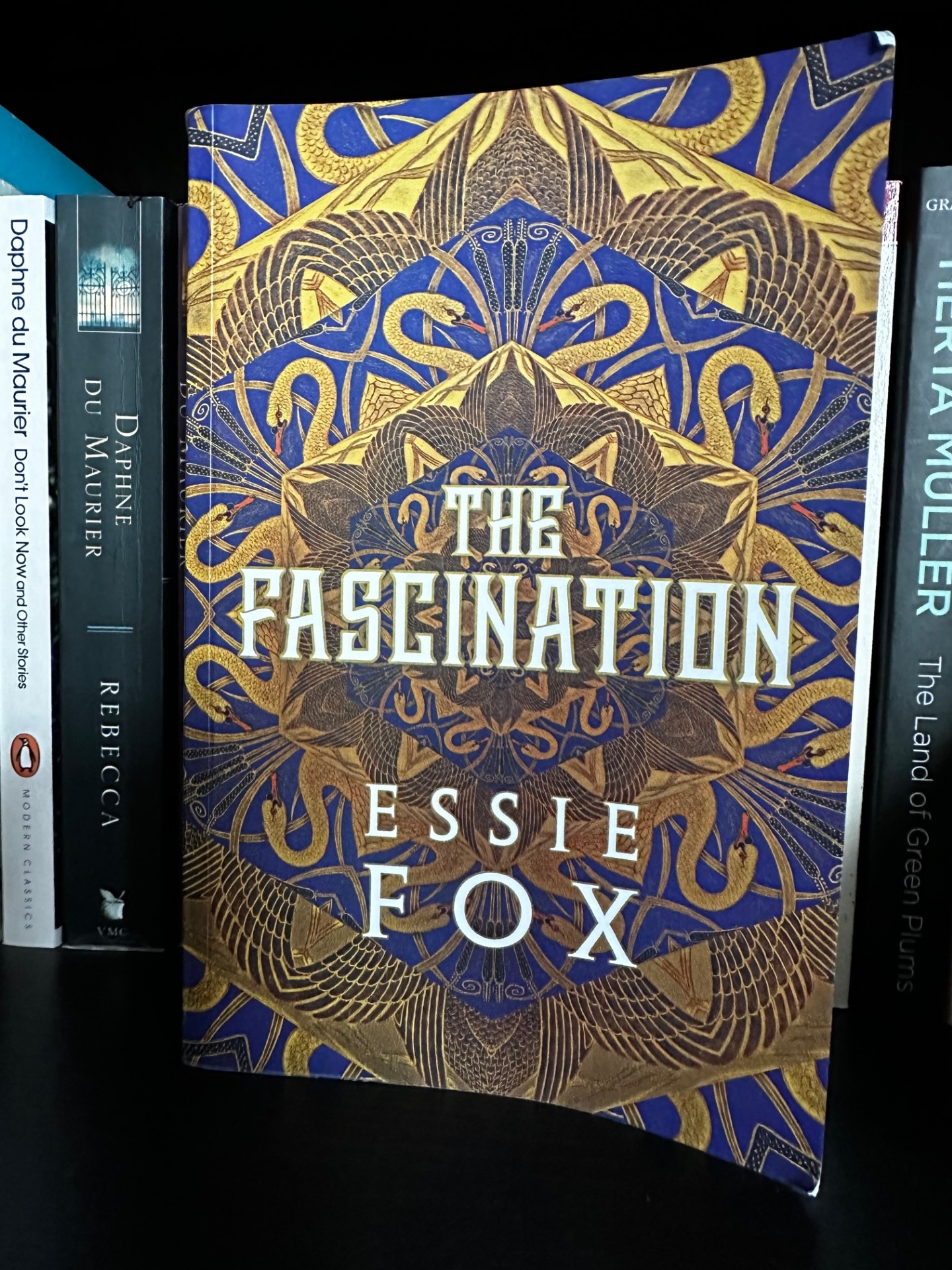
I know they say you should never judge a book by its cover but I’ve got a feeling that’s a load of tosh, there are some great novels on my shelves with covers that are just as glorious and Essie Fox’s The Fascination has joined that list, it’s a stunner inside and out.

I tend to be wary of historical novels, I find the notion of characters within pages set, for example, in the time of Henry VIII behaving or using phraseology too close to the time they were written vs the time they supposedly inhabit, especially when we have literary touch points from that time that are more likely to be accurate in that respect. Perhaps its because I studied the era and its literature (specifically that of crime and law) at university, I’m typically less forgiving of novels set within the Victorian era that find characters either cliched or as historically convincing as Ben Affleck in, well, anything other than a meme.

With that preamble out of the way… how do I feel about The Fascination? I bloody loved it. Essie Fox’s novel feels like a delicious example of that classic Victorian narrative that made the era and genre so ripe and important. From the syntax to the characters, their clothing and actions and presentation, The Fascination is so immersive and richly of its time you’d be forgiven for doubting it was published in 2023.

More than managing the tricky feat of creating an accurate setting in time, Essie Fox’s novel also delivers a compelling and, if you’ll pardon the pun, fascinating storyline that’s loaded with mystery, suspense and underpinned with a whole lot of heart.

While the principal trio of Keziah, Tilly and Theo deservedly evoke plenty of emotion (the twins’ early years are rendered so heartbreakingly), they’re supported by a bevvy of characters that are painted with similarly sympathetic colours and attention to detail, providing the emotional warmth of the novel even as it treads into some seriously grim and dark waters.

Those dark waters do get pretty disturbing too… it’s to Fox’s credit that she manages to convey those horrors so vividly while still maintaining the feeling that you’re reading a classic Victorian novel. As thrilling as some of those moments get, I think it’s fair to say that The Fascination is more an enthralling mystery than it is a thriller and there are some genuine surprises in store as its different threads come together – indeed, the very last one was one that left my mouth agape and made me go back and double check I’d read it correctly.

The Fascination is rich in detail, overflowing with brilliant characters and reading like a true classical Victorian novel and wholeheartedly recommended.

Mirror Image by Gunnar Staalesen

From the PR: “Bergen Private Investigator Varg Veum is perplexed when two wildly different cases cross his desk at the same time. A lawyer, anxious to protect her privacy, asks Varg to find her sister, who has disappeared with her husband, seemingly without trace, while a ship carrying unknown cargo is heading towards the Norwegian coast, and the authorities need answers.

Varg immerses himself in the investigations, and it becomes clear that the two cases are linked, and have unsettling – and increasingly uncanny – similarities to events that took place thirty-six years earlier, when a woman and her saxophonist lover drove their car off a cliff, in an apparent double suicide.

As Varg is drawn into a complex case involving star-crossed lovers, toxic waste and illegal immigrants, history seems determined to repeat itself in perfect detail … and at terrifying cost…”

There are few reading pleasures like sitting down with a new Varg Veum novel but then there are few writers as good as Gunnar Staalesen. Since reading We Shall Inherit the Wind back in 2015 Staalesen has become one of my favourite writers and a new Varg Veum novel from Norway’s finest is always reason to get excited.

Like all good pleasures, the reading of a new Staalesen novel is something to be savoured. The problem is that it’s also so bloody good and addictive that it’s usually impossible to put down. Mirror Image builds up momentum so masterfully, places just enough hooks in each chapter and leads the reader from ‘wait, what?’ to ‘hang on, but that means…’ so compellingly that addictive isn’t the word and before you know it you’re knee deep in snow peering through a cabin window and on your way to a denouement that’ll leave your jaw open. Oh, and Mirror Image may be the most stunning of those yet.

There’s a quiet poetry in reading a novel set in 1993 that works perfectly with Varg’s style. I’ve said before that Staalesen’s lone wolf is neither a Reacher or Harry Hole, there are no explosive set pieces here nor does our hero deliver any violent kicks to the kidney that ‘would have sent a football out of the stadium.’ Instead, Veum tracks his clues determinedly, putting in the leg work and the miles as he puts the pieces together. In 1993, devoid of cell phones to ping locations from (though Varg does revel having such a then-new device) or the ability to reach someone in an instant with a text, Mirror Image moves to a different pace. It’s joyous to sense the work and miles – numerous early morning starts and ferry crossings across those fjords to islands not yet reached by bridge – involved as Veum doggedly chases the truth across a geographical distance that manages to mirror the chronological distance involved as he travels back and forth across both the country and decades to unravel the complexities of his case.

Speaking of mirroring… how about the symmetry in the events of 1957 affecting the central characters of Varg’s current case just as the events of his previous investigation affect his current life?

There’s a huge amount to enjoy in Mirror Image. From the characters – both familiar and new – to the perfectly detailed landscapes. Staalesen’s style and prose remains that of a master, succinct yet evocative with more than a crackle of charm and humour all clearly written by an author that takes delight in the form. The plot is as wonderfully crafted and multifaceted as you’d expect from a Varg Veum novel – just when you think the pieces are starting to come together Staalesen can subtly work in a new angle that brings increasing layers into play and still find a way to seamlessly bind them into one.

The only bad thing about Mirror Image is that it must draw to a close. Though that close, again, is possibly the finest ending to a Varg novel to date.

Mirror Image is the ninth Varg Veum novel in my collection (of a published nineteen with) and yet Staaelesen still manages to bring something new to the character with every instalment, ensuring that Varg remains both familiar to readers but compelling enough to want another novel straight after finishing, all the while continuing to set a high benchmark for both Nordic Noir and fiction as a whole.

My thanks, as always, to Karen at Orenda Books for my copy of Mirror Image and for all the work she’s done in championing these books in English, my bookshelf would be a poorer place without them.

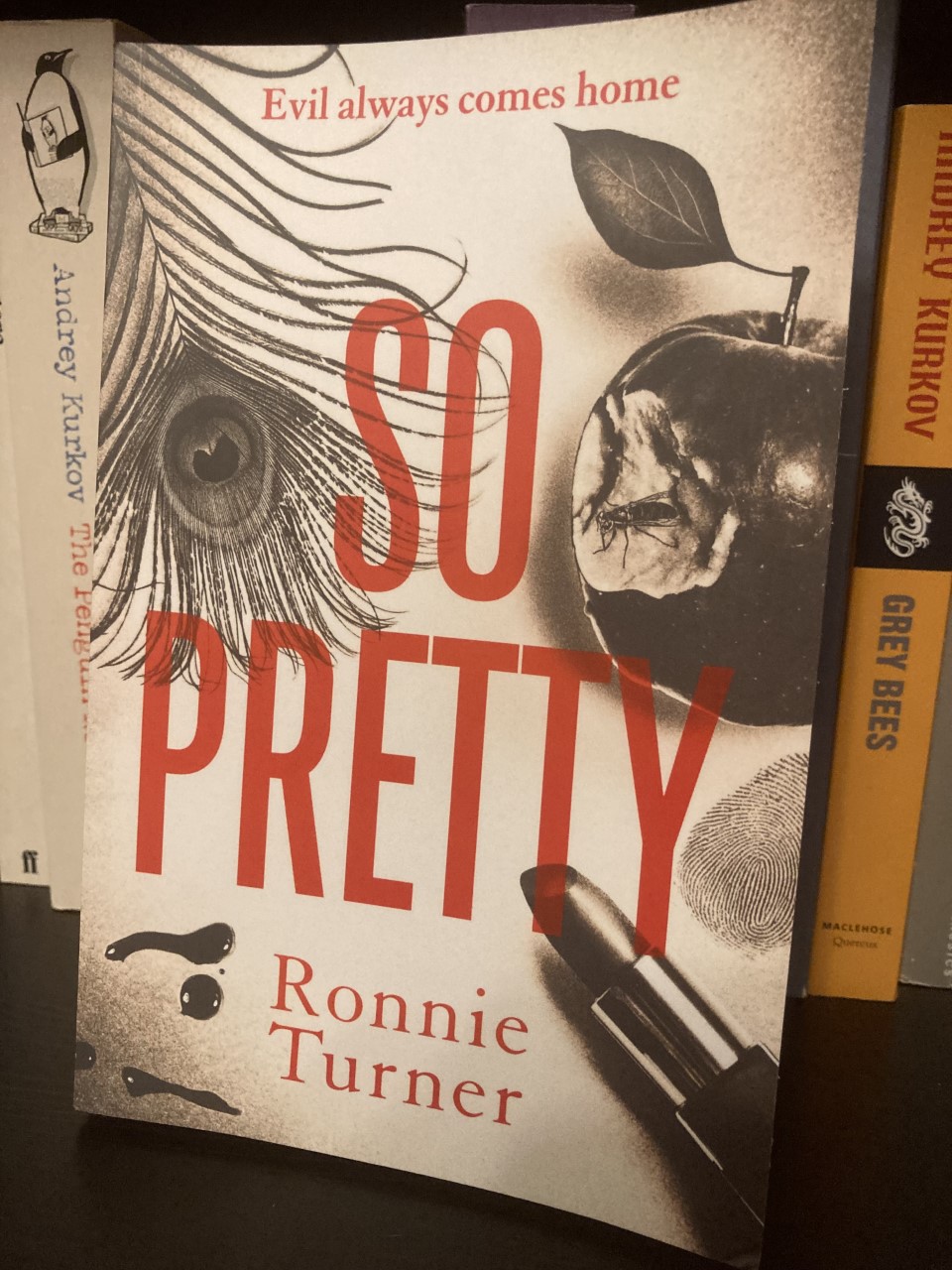
So Pretty by Ronnie Turner

From the PR:“Fear blisters through this town like a fever…

When Teddy Colne arrives in the small town of Rye, he believes he will be able to settle down and leave his past behind him. Little does he know that fear blisters through the streets like a fever. The locals tell him to stay away from an establishment known only as Berry & Vincent, that those who rub too closely to its proprietor risk a bad end.

Despite their warnings, Teddy is desperate to understand why Rye has come to fear this one man, and to see what really hides behind the doors of his shop.

Ada moved to Rye with her young son to escape a damaged childhood and years of never fitting in, but she’s lonely, and ostracised by the community. Ada is ripe for affection and friendship, and everyone knows it.

As old secrets bleed out into this town, so too will a mystery about a family who vanished fifty years earlier, and a community living on a knife edge.

Teddy looks for answers, thinking he is safe, but some truths are better left undisturbed, and his past will find him here, just as it has always found him before. And before long, it will find Ada too.”

Two things drew me to this book. First – it’s published by Orenda Books and there’s not a book on my shelves with their logo on the spine that I haven’t enjoyed. Secondly, it’s set in Rye. Rye is a small, picturesque town that’s not too far from where I sit and type and, once upon a time, was once. coastal port. It’s one I’ve visited often and happened to have done so just before my copy of So Pretty arrived – massive thanks to Karen at Orenda for sending this one over. It’s certainly changed the way I’m going to be looking at the town next time.

So Pretty is one hell of good book. I cannot think of the last time I was so gripped by a story, or swore under my breath quite so often while reading, or wondered how many more times the hairs on the back of my neck were going to stand up before I reached the end of this novel.

Just as “there is something malignant” about Berry & Vincent, the curio shop that haunts the heart of this novel from which a sense of unease seeps, there’s a deliciously chilling sense of foreboding that seeps out of the pages of So Pretty. And then… well… it dials up the chills with a literal “say Daddy” shudder of a shocker and changes gear as foreboding breaks into full on sinister thrill ride.

It’s a challenge not to give away too much of So Pretty‘s plot away here because this is a ride every reader should take. It’s like a literary roller coaster – that long, drawn out pull up to the peak where you feel the tension rising in as you teeter at the top, realising that Teddy might not be all there, before the sheer, heart-pumping acceleration, twists, turns and terrifying moments that follow. You want to close your eyes and not look but you can’t; it’s just too damn gripping and thrilling as So Pretty races through heart-in-mouth moment after another until it reaches the end and you put the book down, realise you haven’t been breathing for a few moments and almost immediately want to read it again.

Ronnie Turner is a fantastic writer. That’s why this book is so bloody good – it takes real skill to tackle the subjects handled in So Pretty as well as she does all the while creating characters that you care about, painting a detailed and real sense of place and managing to slyly but surely ratchet up that tension – she certainly knows how to keep the book firmly gripped in a reader’s fingers. From multiple narratives – of varying reliability – to gut-check reveals, disturbing vignette after another, real emotional pull and moments of genuine ‘I need to put this down for a second and say “fuuuuuuucking hell” a few times’, So Pretty delivers everything you want in a thriller and more.

Turning Pages: 2022 thus far

A strange thing happened at the start of this year – after years of blazing through books at a tremendous lick, I found myself struggling to get into anything. Moving beyond the first few chapters was a challenge, let alone finishing anything.

Given the degree to which I love a good read, this was a concern. Had I burnt out on books? Was this a byproduct of wrestling with the black dog? Either, rather than persevere and force the issue I took a break, did the rare thing (for me) of indulging in episodic television. Then, when the itch to read began to build up to the point of being impossible to ignore again I picked up the first book on my ‘to read’ pile which happed to be Antti Tuomainen’s The Rabbit Factor.

That did the job. Since then I’ve been pretty much back to business as usual so it feels as good a time as any to summarise the highlights of those collections of words I’ve been consuming over the last six months.

One of my growing joys when it comes to reading, and a mainstay even when I couldn’t get into anything for myself, has been the fact that my son is now of the age where we’ll sit and read through fuller stories and novels over bedtimes. This has meant that, alongside those Terry Pratchett collections like The Witches Vacuum Cleaner, I got to enjoy Journey to the Centre of the Earth again and marvel at the ageless wonder of Jules Verne’s writing. It’s one of those classics that’s been sat on my shelf waiting to be re-read since my days at uni and I couldn’t think of a better reason to have done so.

Rather than set an arbitrary number of books as a target for my reading lately I’ve instead made it a point to read one ‘big Russian classic’ a year. This year that happened to be Leo Tolstoy’s Anna Karenina. It’s one of those books that I’d put off reading due to some misconception but am glad to have done so – it’s a joyous read (probably depending on your translation) that’s one to cherish – even if I found the the main plot (and character) of Anna herself bloody irritating. Much more the stories of Prince Stepan and Kostya for me.

Keeping on the classics theme momentarily, the Ernest Hemmingway section on my shelves has seen more than its fair share of action lately as I seek to consume more first-person narrative references. Fiesta: The Sun Also Rises was the first to be torn through and (as it, too had been sitting awaiting re-read since uni) just how bloody strong a first novel it is. While his mother may have been disappointed that he should squander his gifts writing about a social set she considered ghastly and, like To Have and Have Not which I read shortly thereafter, there are a few racist comments that grate a touch in 2022, there’s a lot to enjoy here. To Have and Have Not was one I hadn’t read before and while it felt like a disjointed story of three different and gradually weaker parts the first part alone is worth the price of admission and it would be followed by one of his finest and I’m sure I’ll be going back that end of the ‘H’ section soon.

It’s not often that I tend to read multiple books by the same author in one year and yet, along with Hemmingway, I’ve double up on Amor Towles this year. Much has been said of A Gentleman In Moscow and it remains one of my favourite novels to date so I was happy to get hold of The Lincoln Highway at the end of last year though it remained unread for some time. Before I got around to it I went back, as it were, with Mr Towles’ first – The Rules of Civility. Set in New York during the ‘jazz age’ and telling the story, in retrospect, of an eventful 1938 this was such an absolute belter of a read that it was a) clear that Towles is one of those astoundingly talented writers b) an immediate push to pick up The Lincoln Highway again – which turned out to be pretty good timing as having the former fresh in my mind allowed me to really appreciate the connection between the two, making some elements all the more poignant. While it may not have been the most practical of books to take to the beach (the hardback pulls in just under 600 pages) it, too, is a masterpiece of both storytelling and narrative (of which there are several) and highly recommended.

Gunnar Staalesen, since my introduction via Orenda Books published We Shall Inherit The Wind back in 2015, has become one of my favourite authors and I’ve made a point of working my way through as many of his extensive older novels that have been published in English as possible while eagerly awaiting new instalments in the Varg Veum series. I was delighted, then, to find a couple of his books – one new, complete with my review, and one old, The Writing on the Wall – in a bookshop earlier this year. The Writing on the Wall was originally written in 1994 (the English translation arriving in 2004) and is easily a highlight of this year’s reading. I always liken to reading to Staalesen as enjoying a good mug of coffee – it’s to be savoured as is gently kicks in. Once again dealing with some particularly dark subject matter (teenage prostitution and addiction) with quiet power, this is a bloody strong entry in a series that doesn’t have a weak point.

I’d seen Danny Goldberg‘s Serving the Servant: Remembering Kurt Cobain about for some time but hadn’t felt compelled to get a hold of it before – was there anything more to be said about Kurt Cobain. Well, turns out there is / was, a few insights to be gained. Goldberg become Nirvana’s manager ahead of Smells Like Teen Spirit and here compiles a series of insights from his own memories and unique insider perspective as well as reaching out to others both in the industry and inner circle including Courtney Love and Krist Novoselic for clarification (though Dave Grohl seems notably absent in input) on a few details. Some of these insights are at times painful – particularly on Cobain’s mental health – some refreshingly human given how much Kurt has been turned into a myth, and others fascinating (the examination of the Vanity Fair article that essentially deprived Cobain and Love access to their child is a real eye-opener). All of which mean that this is actually pretty essential reading for a fuller picture into Nirvana’s rise and Kurt Cobain’s tragic end.

As has been the prevailing approach of recent months I’m currently steaming through two books: Love in the Time of Cholera by Gabriel García Márquez – which is proving to be another beautiful novel I wish I’d read sooner – and, as I’ve recently been exploring more of Neil Young‘s music, Waging Heavy Peace is turning out to be a much better read and less about his model trains than I’d been given to believe.

The Quiet People by Paul Cleave

From the PR: “Cameron and Lisa Murdoch are successful New Zealand crime writers, happily married and topping bestseller lists worldwide. They have been on the promotional circuit for years, joking that no one knows how to get away with crime like they do. After all, they write about it for a living.

So when their challenging seven-year-old son Zach disappears, the police and the public naturally wonder if they have finally decided to prove what they have been saying all this time… Are they trying
to show how they can commit the perfect crime?

Multi-award winning bestseller Paul Cleave returns with an electrifying and chilling thriller about family, public outrage and what a person might be capable of under pressure, that will keep you guessing until the final page”

Okay, so we all know the adage that you’re not supposed to judge a book by it’s cover – a thoroughly bogus claim anyway – but it would be remiss of me to even think of reviewing Paul Cleave’s The Quiet People without mentioning how bloody awesome its cover art is. It’s also a pretty cracking proposition; many is the time I’ve mentioned that I wouldn’t like to play chess with a few crime writers given how many moves ahead they seem to think. Of course there are also some where you have to wonder if they need to lie back on a couch and talk to someone at a large hourly rate. Obviously reality and a controlled, fictional world over which a writer reigns omnipotent are two different things, but could someone who spends their time coming up with tricky, hard to solve murders, actually get away with murder?

Which leads us to another question, the gist of this review; does Paul Cleave’s The Quiet People deliver on that premise? Does a cracking cover design grace a cracking novel? Oh hell yes.

Paul Cleave has delivered a novel that ‘gripping’ doesn’t do justice to. He kicks it off strong: getting the tension going with a chill-inducing prologue then darts into an equally nerve-wracking scenario as Cameron loses track of his son Zach at a fair. He doesn’t let off that hammer throughout – there’s no way of saying ‘just one more chapter’ with this bad boy, it’s intense in a delicious way.

As a parent of a seven year old son, I found this to have a whole lot of edge-of-the-seat moments and tore through with baited breath just hoping…. but then I can’t talk too much about plot because I don’t want to give this away – I’ve made enough ‘Bruce Willis was dead the whole time’ comments in these reviews. Without trotting out that chess metaphor for the second time in one review, I will say that Paul Cleave has crafted a brilliantly plotted and paced story here with some real vivid scenes. It has the expected twists and turns of a great thriller and a conclusion that might just floor you and it’s told with a masterful narrative and style and, yes, you may wonder if Paul Cleave might be capable of pulling of an unsolvable crime himself it’s so fiendishly clever in its storyline.

The characters push the tension along and Cleave paints them both fully and complex. There’s a real joy to be had seeing how they interact – particularly Cameron and Lisa – as the plot unfolds and the nuances in their behaviour sneak out and cracks appear, the same of which can be applied when the narrative switches to DI Rebecca Kent and her relationship with DI Ben Thompson. The narrative switch, and getting an alternative view of Cameron and his wife to that presented by his narrative is another brilliant element of Cleave’s craft.

Cleave’s prose is precise and wielded like only an expert can. He keeps it taught, powerful and it packs a sharp punch. Ridiculously compelling, tightly plotted and massively rewarding; The Quiet People is another shot of the bloody good stuff from Orenda Books.

My thanks to Karen at Orenda for my copy and to Anne Cater for inviting me to review as part of the blogtour.

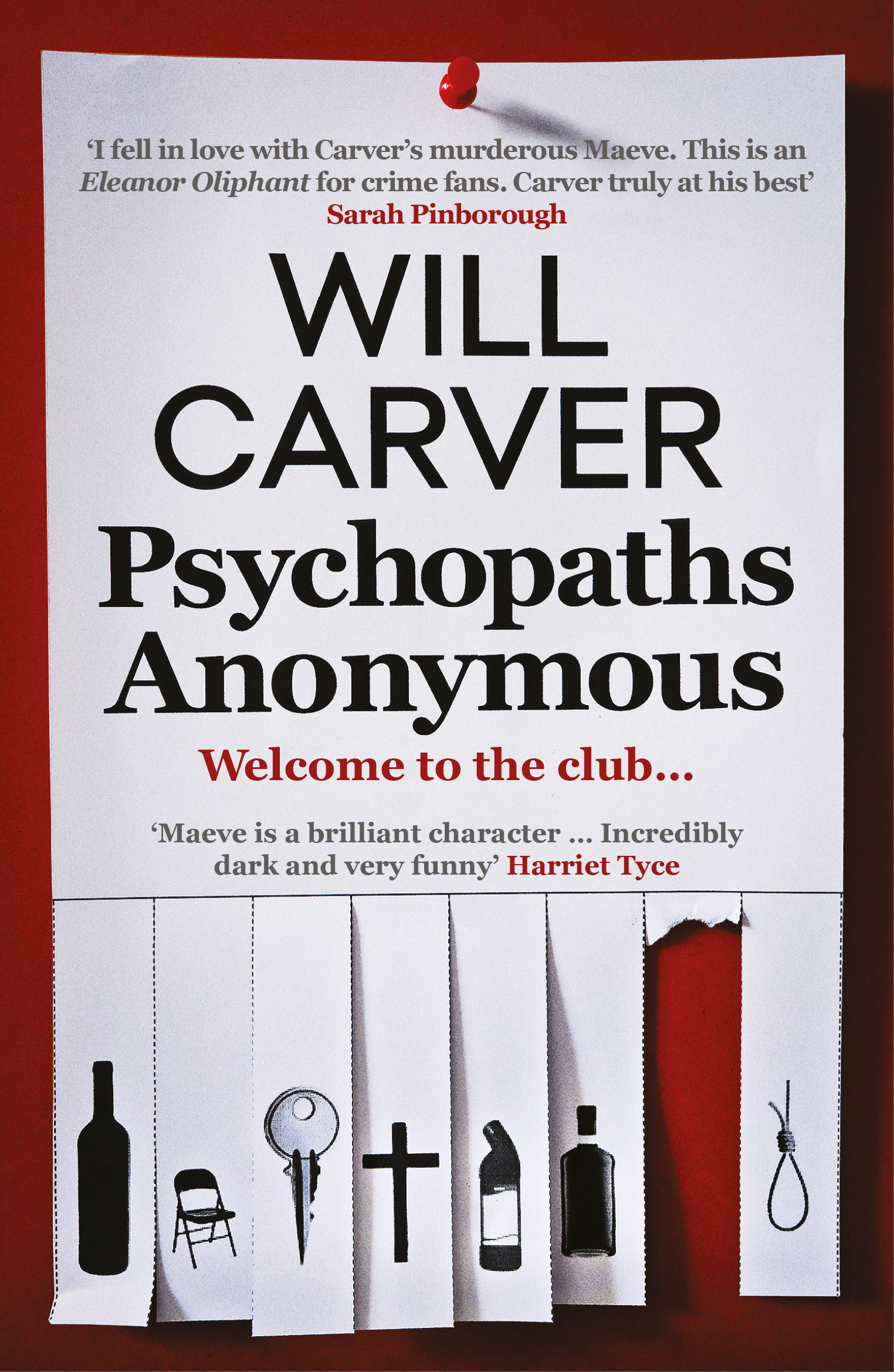
Psychopaths Anonymous by Will Carver

From the PR: “When AA meetings make her want to drink more, alcoholic murderess Maeve sets up a group for psychopaths.

Maeve has everything. A high-powered job, a beautiful home, a string of uncomplicated one-night encounters. She’s also an addict: a functioning alcoholic with a dependence on sex and an insatiable appetite for killing men. When she can’t find a support group to share her obsession, she creates her own. And Psychopaths Anonymous is born. Friends of Maeve.

Now in a serious relationship, Maeve wants to keep the group a secret. But not everyone in the group adheres to the rules, and when a reckless member raises suspicions with the police, Maeve’s drinking spirals out of control. She needs to stop killing. She needs to close the group. But Maeve can’t seem to quit the things that are bad for her, including her new man…”

“I mean there’s obviously no God, and if there was, He’s not sitting around thinking ‘I need to make Jill quit the booze because the red wine turns her into such a cunt.’ That can’t be right. Even if you are everywhere and see everyone and know everything and know everything, you don’t give a fuck about Jill, she’s so annoying.”

This is not your standard thriller, but then Will Carver’s novels are anything but standard, he continues to carve a unique space in the genre with novels that sharply tongued and plotted, deliciously dark in humour and bite and meticulously crafted. Psychopaths Anonymous is another slice of the very good stuff from an exceedingly talented writer – reading a Will Carver you know that not only is this the work of a skilled wordsmith but one who clearly bloody loves it too, it means there’s really no way to read his work and not revel in the joy of doing so.

Yes; Psychopaths Anonymous paints with the darker colours on the palette – there’s murder, very bloody murder in fact, a lot of sex, murdered gangsters with genitalia stuffed into their mouth and plenty of scathing takes on humanity – but it does so with a decidedly insightful voice and a wicked sense of glee and wit that is, if you’ll pardon the pun, addictive. There is a theory that if you’re only exposed to one narrative voice – be it in literature, film, television etc – for a certain amount of time you will inevitably find elements of it in which you identify similarities to yourself. It’s why novels where the protagonist is far from a match for the reader still work, even if they’re capable of the most horrific acts.

How many people watched ‘Dexter’ and still enjoyed watching the character’s breakfast routine with each new episode’s credits as if they were watching an old friend, even if he’d spent the previous episode cutting people into small pieces and dumping them in the ocean? Will Carver’s novels are often populated and narrated by some of the most unpleasant characters guilty of the most heinous acts – one of his former novels was narrated by evil ‘itself’ – and yet his skill lies in a superb ability to find a way in which we can not only find an element to relate to but even agree with some of their most scathing of commentary.

Take Maeve for example. Maeve, as a character and narrative voice is massively compelling – a woman who, on the face of it, has it all and has it all nailed down. Yet it’s a facade – beneath that surface, not particularly too far beneath, is a dangerous whirlwind of a psychopath with a very well managed alcohol addiction and an itch to kill.

And yet… for a supposed ‘psychopath’ – someone lacking in empathy – her actions seem fuelled by a sense of injustice or righting wrongs, whether to her or not, and there are more than a few signs of compassion that peek through the cracks – enough, at least, to ensure you’re ‘with’ this narrative voice rather than feeling your reading the rantings of a Jeffrey Dahmer, say. Is she acting out of a sense of righting wrongs inflicted on those who have penetrated her facade and actually connected to her in some off-kilter way or are is it merely an excuse to indulge in another addiction, like that ‘well nothing important happened today but it is Friday’ excuse for an extra drink? It’ll all depend on your take on Maeve really, how much you’ve already found yourself identifying with in her or her reliability as a narrator.

She’s got no time for dickhead clients – I failed to supress my laughter at her comments during a meeting – or phonies and those that would force either themselves or their beliefs on others and Carver get’s these across in a darkly humours and spot on commentary that you can’t help but agree with. Of course, the difference is that Maeve tackles it in a more ‘hands-on’ way and ends up with a head in her fridge and the reader doesn’t.

It all makes for fucking brilliant fiction and a book that’s hard to put down as you tear from page to page like every other Will Carver novel to date, in fact. A wicked, not-at-all guilty pleasure that’s a joy to read and another great book from an outstanding talent.

My thanks as always to Karen at Orenda for feeding my particular addiction and to Anne Cater for inviting me to review as part of the blogtour.

Sergeant Salinger by Jerome Charyn

From the PR: “J.D. Salinger, mysterious author of The Catcher in the Rye, is remembered today as a reclusive misanthrope.

Jerome Charyn’s Salinger is a young American WWII draftee assigned to the Counter Intelligence Corps, a band of secret soldiers who trained with the British. A rifleman and an interrogator, he witnessed all the horrors of the war – from the landing on D-Day to the relentless hand-to-hand combat in the hedgerows of Normandy, to the Battle of the Bulge, and finally to the first Allied entry into a Bavarian death camp, where corpses were piled like cordwood.

After the war, interned in a Nuremberg psychiatric clinic, Salinger became enchanted with a suspected Nazi informant. They married, but not long after he brought her home to New York, the marriage collapsed. Maladjusted to civilian life, he lived like a ‘spook,’ with invisible stripes on his shoulder, the ghosts of the murdered inside his head, and stories to tell.”

There’s a massive difference between the “Sonny” Salinger of this novel’s prologue – an aspiring short story writer chasing his romantic infatuation with Oona O’Neill in the Stork Club and meeting Hemmingway for the first time – and that of the Sergeant Salinger of the coda – drifting through his memories as he tumbles down an escalator at Bloomingdales in 1947 (a point at which part of his famous novel had already appeared in a serialised form) struggling to come to terms with his experiences in the years in between.

Sergeant Salinger by Jerome Charyn explores Salinger’s war years, how the horrors and tumult of emotions witnessed and experienced shifted and formed the young writer’s mind and outlook to the point where the naive romantic of 1942 could, less than a decade later, deliver a defining novel oozing in edginess and scathing critique of modern society.

Salinger’s war years are richly imagined, blurring lines between fiction and reality – there was a lot here that sent me to check ‘did that actually happen’ and with so much of it genuinely having taken place (Exercise Tiger really was the horrific cock up it’s described as here and more).

We view the horrors and brutality through Salinger’s experiences whether it’s coming ashore with the second wave on Utah beech and spending hours wading through water, the green hell of Hürtgen Forest or the liberation of Kaufering IV in a way that’s at times reminiscent of Catch-22 with its mix of the absurdity and tragedy of war and the increasingly detached state “Sonny” begins to inhabit – Salinger was hospitalised for ‘combat stress reaction’ after the defeat of Germany. We see a writer being shaped by both events and a growing disillusionment with those around him – be it the Hemingway he again encounters in Paris or his own superiors.

Taking a known figure and carving a fictional version of them with a bit of artistic licensing can often go awry in the wrong hands. But with more than fifty works of fiction and nonfiction to his name, Jerome Charyn’s hands are safe ones to be in – here Salinger’s biological facts mix with another talented writer’s imagination to bring the young “Sonny” to life in a way that more straight ahead biographies wouldn’t.

Most importantly, though, even if you’re not familiar with or interested in J.D and his “Holden Caulfield novel” and short stories, Sergeant Salinger works bloody well as a novel in its own right and one very much worth reading.

My thanks to No Exit Press for my copy and to Anne Cater for inviting me to review as part of the blog tour.

Cold As Hell by Lilja Sigurðardóttir

From the PR: “Estranged sisters Áróra and Ísafold live in different countries, and are not on speaking terms. When their mother loses contact with Ísafold, Áróra reluctantly returns to Iceland to look for her. But she soon realizes that her sister isn’t avoiding her …she has disappeared, without a trace.

As she confronts Ísafold’s abusive, drug-dealing boyfriend Björn, and begins to probe her sister ’s reclusive neighbours – who have their own reasons for staying out of sight – Áróra is drawn into an ever-darker web of intrigue and manipulation.

Baffled by the conflicting details of her sister’s life, and blinded by the shiveringly bright midnight sun of the Icelandic summer, Áróra enlists the help of police officer Daníel, to help her track her sister ’s movements, and tail Björn. But she isn’t the only one watching…”

There’s a quote toward the end of Cold As Hell explaining why so many missing people in Iceland are never found, as the country is “so wide and so sparsely populated, much of it not easily accessible, with its cracks in the lava, fissures and river valleys, mountain lakes so cold they never gave up bodies, and the restless sea all around.” It’s small wonder, then, that this chilling, remote country sat atop the world has given us a genre as rich as Icelandic Noir, a genre to which Lilja Sigurðardóttir’s Cold As Hell is a magnificent addition.

Cold As Hell is the first in a five-book series and it’s a mighty fine way to kick it off and get the reader hooked in. Taut, addictive and superbly plotted, Liilja Sigurðardóttir has written a real cracker of a novel here.

There’s a surprising amount going on in Cold As Hell. I say surprising because the narrative tears along at a superb pace with short, punchy chapters across multiple subplots and characters, each carrying just the right amount of hook to keep you charging ahead without ever feeling rushed.

Whether it’s Áróra’s search for her sister, financial crimes or the plight of an asylum seeker, Lilja Sigurðardóttir details every element of her novel with a wonderful prose style and populates it with characters that are vital and compelling.

While it’s clear that a lot of ground is being laid here for a longer story arc than one novel can contain, Cold As Hell is thoroughly satisfying in its own right whilst ensuring there’s plenty for the next instalment to sink its teeth into. I’ll also say that Grimur’s ‘twist’ is beautiful in it’s execution and was a hugely satisfying “oh!” moment that really shifted the plot in a manner that’s rarely so well done.

Cold As Hell is a great read. An intelligent and edgy thriller that makes for a fantastic start to the series – I’m already looking forward to book two. My thanks to Karen at Orenda Books for my copy and to Anne Cater for offering me a review spot on the blog tour.

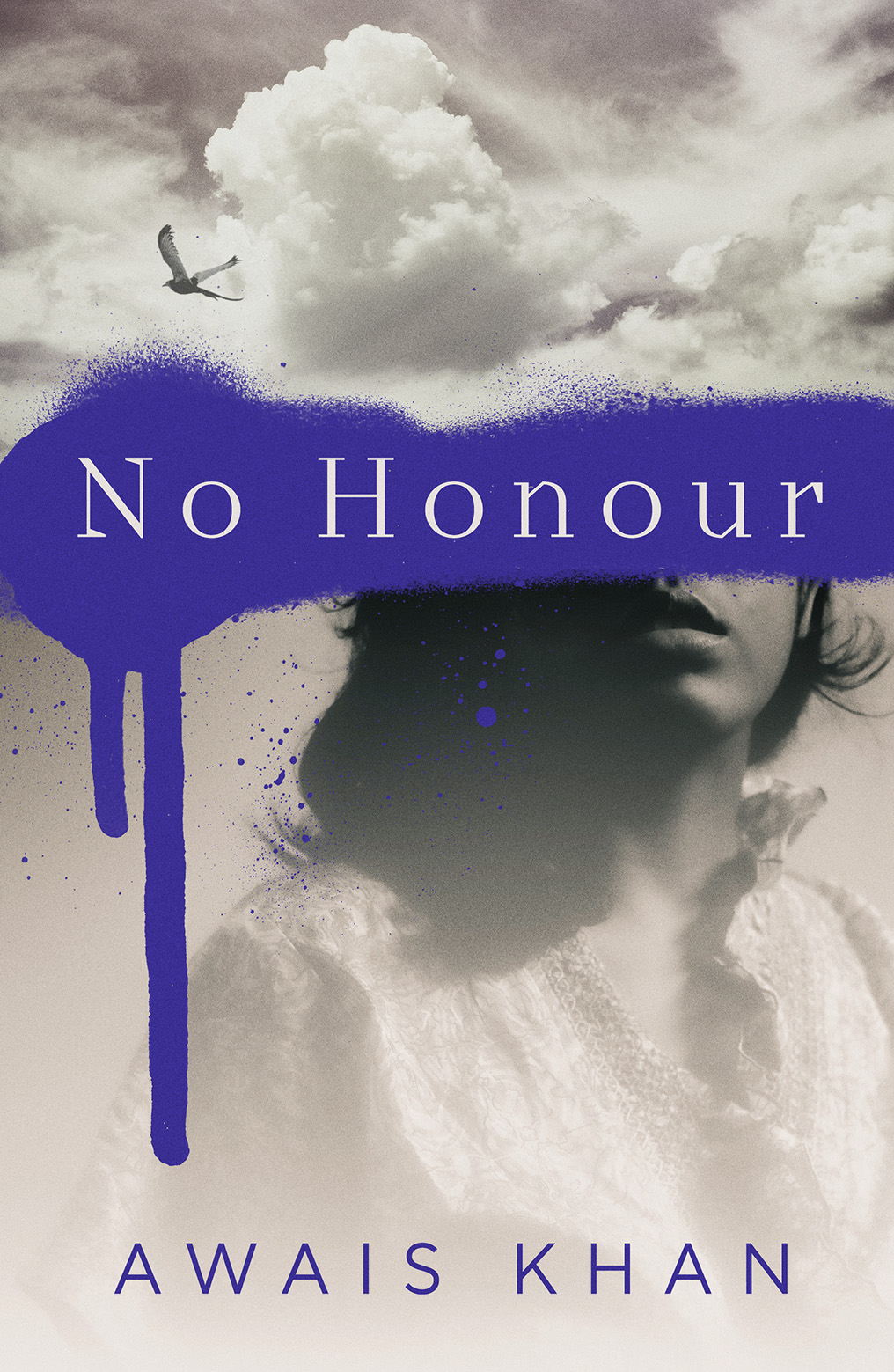
No Honour by Awais Khan

From the PR: “In sixteen-year-old Abida’s small Pakistani village, there are age-old rules to live by, and her family’s honour to protect. And, yet, her spirit is defiant and she yearns to make a home with the man she loves.

When the unthinkable happens, Abida faces the same fate as other young girls who have chosen unacceptable alliances – certain, public death. Fired by a fierce determination to resist everything she knows to be wrong about the society into which she was born, and aided by her devoted father, Jamil, who puts his own life on the line to help her, she escapes to Lahore – only to disappear.

Jamil goes to Lahore in search of Abida – a city where the prejudices that dominate their village take on a new and horrifying form – and father and daughter are caught in a world from which they may never escape.”

Let’s get to it: No Honour is an astoundingly good novel. An important and brilliantly written story, Awais Khan’s book is a real stunner that had me riveted from the off.

Commencing with a painfully tragic and moving portrayal of an ‘honour’ killing in a Pakistan village, No Honour tackles a heavy subject matter and Khan, a very talented writer, details a world that is a terrifying reality in parts of Pakistani society and elsewhere in the world. Not for the faint of heart but a powerful, important and compelling read.

The subjects of honour killing, the subjugation of and violence against women and young girls don’t make for an easy read or subject matter for a novel but Awais Khan has an ace up his sleeve in the story of Abida and her father, Jamil. In these wonderful and warm characters and their journey, Khan tells a story that takes the reader through some genuinely shocking scenes that are very real, yet keeps us gripped because we care about them. It also makes it all the harder hitting.

Khan doesn’t flinch in his portrayals of some of the novels darker moments and it’s clear that so much of this is rooted in reality. There’s real skill here – there’s never a suggestion of shock for the sake of it, instead events unfold as though being genuinely observed with Khan’s narrative style deftly guiding us through. It’s a masterfully written story that manages to walk that very fine line in delivering a hard-hitting portrayal of a dark subject matter while still making for compelling fiction.

However, for all the brutality and shock, this is also a story of the power of love and compassion. The love that Jamil has for his daughter and his determination to see her safe, the memory of his mother’s love that guides him, the power of love to win through and show the way beyond the dark and it’s how this compassion shines in contrast to the ways of the jirga that makes the novel so compelling.

Khan has a great style and can paint a brilliant canvas with it – his descriptions of both village and city place you right there and his characters, even the most repugnant, are glorious in their detail.

My thanks as always to Karen at Orenda Books for my copy of No Honour and to Anne Cater for inviting me to review as part of this blog tour.

The Beresford by Will Carver

From the PR: “Just outside the city – any city, every city – is a grand, spacious but affordable apartment building called The Beresford.

There’s a routine at The Beresford.

For Mrs May, every day’s the same: a cup of cold, black coffee in the morning, pruning roses, checking on her tenants, wine, prayer and an afternoon nap. She never leaves the building.

Abe Schwartz also lives at The Beresford. His housemate Smythe no longer does. Because Abe just killed him.

In exactly sixty seconds, Blair Conroy will ring the doorbell to her new home and Abe will answer the door. They will become friends. Perhaps lovers. And, when the time comes for one of them to die, as is always the case at The Beresford, there will be sixty seconds to move the body before the next unknowing soul arrives at the door.

Because nothing changes at The Beresford, until the doorbell rings…”

How to review a novel as devilishly brilliant as The Beresford… that’s the question. I’m still not sure that I have the answer.

Four books in now and I’m never sure what to expect from a new Will Carver novel. Hang on, that’s not entirely true as Carver has well established prior in creating ridiculously well-crafted novels that are wickedly sharp in both style and dark humour, hugely addictive and filled with his own incisive takes on human nature and perceived reality.

What I mean is that I open a new Will Carver novel with anticipation to discover what new twist awaits and it’s always something unexpected and brilliant. The Beresford doesn’t disappoint on that level – or any level in fact.

Will Carver has a very distinctive style and narrative that’s a real joy to read. It’s deceptive; with seemingly little effort he’s able to slip in a huge amount, a wealth of details being slipped in little by little until you’re deep into it and haven’t realised you’ve been holding your breath for the last few chapters.

The Beresford absolutely rocks along at a great pace and every page manages to deliver something fiendishly clever and another hook that propels you on to the next.

Yes, you could say The Beresford is a dark, and at times very dark, thriller / horror and you wouldn’t be entirely wrong but it’s done in way that almost takes delight in the absurdity – Abe searching for ways to dispose of a dead body only to kick himself for forgetting to use private mode – of the situations rather than the gore or shock. It’s a very intelligent dark thriller, then, told with a knowing wink and grin that makes for a wickedly good read that I didn’t want to end.

My thanks as always to Karen at Orenda Books for my copy of The Beresford and to Anne Cater for inviting me to review as part of the blog tour.