Now that we’re back in the atmosphere with drops of Jupiter in our hair we can reflect on the year in which Travis wanted us to ‘sing, sing sing sing sing sing sing’, we got our freak on with Missy Elliott, Pink got the party started while Lifehouse were hanging by a moment (whatever the hell that means), we discovered that heaven is a halfpipe and Nelly wanted us to ride wit him. Yup; it’s 2001.
It’s that year the world got knocked off its axis in September and we’re still dealing with the fall out, the “War on Terror” began, an earthquake of massive proportions in India killed 20,000 people and Apple released iTunes.
At the Drive-In, Cast, Catatonia, L7, Elastica, Ride, Sunny Day Real Estate (again), and Anal Cunt all called it quits in 2001. Arcade Fire, Audioslave, The Dresden Dolls, Fall Out Boy, The Fire Theft, Jet, My Chemical Romance, M83, The Mars Volta and The Postal Service were amongst those bands forming this year. We also said goodbye to George Harrison in 2001. After fighting lung cancer, which had spread to his brain, George Harrison died at Paul McCartney’s house in LA on 29 November 2001. His ashes were scattered in the Ganges and Yamuna rivers in keeping with Hindu tradition. A concert – the Concert for George – would be held on the one year anniversary of his death as a celebration as his life and work.
So who released what? Any good albums arriving in 2001? Well, this was the year Jack Johnson released his first album, Brushfire Fairytales, John Frusciante revealed what it’s like To Record Only Water for 10 Days, Spoon released Girls Can Tell and Aerosmith released a bit of a stinker in Just Push Play.
Semisonic released their brilliant third, Dashboard Confessional pushed emo twee to new lengths with The Places You Have Come to Fear the Most (and, currently, final) album All About Chemisty, Ben Harper and Bruce Springsteen both released decent live albums (which don’t count on this list), Red House Painters released their last album Old Ramon and Neil Finn released his second solo album One Nil.
Colin Hay released his sixth solo album, Going Somewhere, Mogwai released the brilliant (there’s not a Mogwai album I don’t like) Rock Action and, sticking with post-rock, Explosions In The Sky released their second album Those Who Tell The Truth Shall Die, Those Who Tell The Truth Shall Live Forever. Released on September 4th the album’s artwork became a bit of an issue very quickly and picked up media attention as the liner notes of contain a picture of an airplane and the text “This Plane Will Crash Tomorrow”. Oh, and The Silver Mt Zion Memorial Orchestra & Tra-la-la Band may not have settled on the wording of their band’s name yet but released their second: Born into Trouble as the Sparks Fly Upward.
Mercury Rev released the superb All Is Dream, Bob Dylan continued his late-career comeback with Love and Theft, Ben Folds’s first solo album Rockin’ The Suberbs arrived in 2001 as did Tori Amos’ concept album Strange Little Girls, Eels’ Souljacker, Radiohead gave us the amazing Amnesiac, My Morning Jacket’s second At Dawn, Death Cab for Cutie’s The Photo Album, Bush’s lacklustre The Golden State and Incubus’ Morning View which contains the great lyric “the garbage truck beeps as it backs up and I start my day thinking about what I’ve thrown away”.
The Shins released Oh, Inverted World, The White Stripes kicked into a new gear with White Blood Cells and Tool gave us the beast that is Laterlus. We got a couple of slabs of the good ‘pop-rock’ from Weezer with their green Weezer and Jimmy Eat World’s Bleed American (which would soon be retitled).REM’s Reveal, the first point at which I went ‘meh’ with their studio albums, arrived in 2001 and Nick Cave and the Bad Seeds gave us the gorgeious No More Shall We Part and Sparklehorse the wonderful It’s a Wonderful Life.
When it comes to the albums released in 2001 that sit on my shelves, the one that’s probably been played the most and I think of as being of that year, it’s:
Ryan Adams – Gold
I know, I know; it’s both a pretty obvious choice and his name is somewhat… contentious these days, but Gold was an album that instantly made good on the promise of Heartbreaker and took him up a gear. It also contains a huge amount of cracking tunes.
The thing about Gold… I wouldn’t even say it’s Adams’ finest but it’s easily his most unabashedly open and accessible (and best selling) set of tunes that just goes down so easy but there’s so much more at work behind what initially sound like a simple set of tunes: take ‘New York, New York’ (the timing of its release and video was pretty fateful) with it’s gorgeous organ fills and horn section that kicks in at the end:
It’s such a warm and lush sounding album, the production perfectly suiting Adams’ then writing style that moves away from the stripped back sound of his solo debut Heartbreaker and makes use of major-label clout and carte blanche to make an album rich in arrangements that nods to some of those most hallowed of his influences, predominantly of the 70’s rock variety, while remaining distinctly contemporary and keeping such flourishes in-check so they don’t over-power. I listen to ‘Rescue Blues’ (which was featured, oddly, in the Owen Wilson film ‘Behind Enemy Lines’) and hear those gorgeous ‘You Can’t Always Get What You Want’ background singers:
Then there’s great songs like ‘La Cienega Just Smile’ which I’ve already highlighed, or ‘Firecracker’ or ‘Stars Go Blue’… it’s chock full of them.
There’s an argument that it suffers from CD bloat at 16 tracks but that in itself is down to the start of what would be a long, drawn-out bone of contention between Adams and his new label Lost Highway: Gold was envisioned as a double but the label weren’t having that. For all the freedom they allowed him in making the album and its sound that was too much for them. They took some of the tracks intended for ‘LP2’ and made a single disc, with the remainder put on a limited ‘bonus disc’ edition. A move Ryan would describe as “Fucking my fans over and making them pay extra for a record I wanted to be a double album. They counted that as one record.”
It was the start of a strange relationship – when they heard his intended follow up Love Is Hell they rejected it as being too uncommercial. The result was that Adams would record Rock ‘n’ Roll in two weeks (it showed) and Love Is Hell would be split into two separate EPs. When these proved successful, Lost Highway stuck em back together into a single album. When his deal with Lost Highway was complete – no doubt sped up by Ryan Adams releasing three albums within a seven-month period in 2005 – he’d form his own and point out that despite an already heavy back catalogue, there were more still that the label had said no to releasing.
However, all that (and a whole lot more) lay ahead. In 2001 Gold was the album that propelled Ryan Adams forward in his craft and into a lot more peoples’ record collection. It’s a great bunch of tunes that I still slip into the CD player nearly 20 years later and while its production soaks up cues from influences of decades prior and its lyrics remain universal, it has a very distinct 2001 feel to me.
See the tuna fleets clearing the sea out? Yeah, great. See the Bedouin fires at night? You do, cool. Now look at the stars, see how they shine for you? It’s 2000; the year that was for the ones who stood their ground, for Tommy and Gina who never backed down. It was the year LeAnn Rimes couldn’t fight the moonlight, Linkin Park were one step closer to the shape of the Backstreet Boys’ heart, Limp Bizkit wanted us to take a look around – probably because someone let the dogs out (though Shaggy assured us it wasn’t him) – and Eminem wrote us even if we still ain’t callin.
Lesson one of 2000: there was no millennium bug.
So, 2000: Prince saw in the new year by playing what he promised would be the last performance of ‘1999’ and Sharon Osborne promptly quit after three months as the Smashing Pumpkins’ manager “for medical reasons: Billy Corgan was making me sick.” Nice. It was also the year that CD sales reached their peak, apparently, with sales declining yearly ever since. In an effort to stop the rise of the alternative – downloads and mp3s – Metallica decided to sue Napster.
Rage Against The Machine were petering out – bass player Tim Commerford was arrested for climbing onstage at the MTV VMAs when their ‘Sleep Now In The Fire’ video lost out to Limp Bizkit. Apparently he was ‘just bored’ of the show. Not to worry though – NSYNC performed ‘Bye Bye Bye’. A month or so later Zach De La Rocha left RATM, he said the band’s “decision making process” had completely failed. They’d be back but they got out just in time – their bastard spawn genre ‘nu metal’ was making bands like Limp Bizkit, Papa Roach and Mudvayne monstrously dominant.
Ben Folds Five, Candlebox, Sceaming Trees and Smashing Pumpkins all joined Rage Against The Machine in calling it a day in 2000.
I think I did my bit for CD sales in 2000 – I was at university and doing the sensible and responsible thing of spending big chunks of my student loan instalments at the multitude of music shops in Canterbury at the time. So what’s worth grabbing from the stack from the start of the new millennium?
It was double-bubble from at least two bands in 2000. The Smashing Pumpkins graced us with two instalments of their ‘Machina’ albums: Machina / The Machines of God and Machina II/The Friends & Enemies of Modern Music with the first released traditionally and the latter – a double album packaged with 3 eps full of b-sides and alternative versions – released online only after plans for a physical release got buggered by legal wranglings. Both are better in retrospect than I remember but Machina / The Machines of God was definitely the strongest and stronger than Adore for my money.
The other double came from Everclear who released their two-parts of the same concept Songs From An American Movie Vol One: Learning How To Smile and Songs from an American Movie Vol. Two: Good Time for a Bad Attitude some four months or so apart. Another lesson in how one good album was sacrificed for the sake of two ‘ok’ albums it also pretty much killed off the original run of the band thanks to the fact that the band and label were still promoting Vol One when the second was released and songs from Vol Two were used in films so were then added back as bonus tracks to Vol One… it was a mess that meant both albums stalled and the band kinda stalled with em.
Lesson two of 2000: no two album concept releases.
Then again… one of two albums recorded at the same time, Radiohead’s Kid A was released in 2000. Wisely decided the material would be too dense if served up as a double, the sound of Kid A were a massive leap in a ‘definitely not OK Computer Part 2 direction. More samples, more loops, more processed guitars and disjointed lyrics. Having nearly been broken by the strain of touring and promoting OK Computer (see ‘Meeting People Is Easy’), Radiohead took a leaf out of Pearl Jam’s book and said ‘no’ a lot more: no singles, no videos, minimal promotion and photos. Garnering a massively mixed reception at the time, if you ask me: Kid A is a fucking triumph:
The Go-Betweens released their first album in 12 years, The Friends of Rachel Worth and Cat Power’s The Covers Record gave Chan Marshall a reprieve from the pressure of following up Moon Pix as she added her unique take on a series of classics from the Rolling Stones, Bob Dylan, Lou Reed and more.
2000 was another great year for the growing post-rock genre with the debut from Explosions In The Sky How Strange Innocence arriving – one of last year’s finest re-releases – along with Godspeed You! Black Emperor’s astonishing masterpiece Lift Your Skinny Fists Like Antennas To Heaven. Not content with releasing one of the genre’s finest albums to this day, some of Godpseed’s members kickstarted a new band, A Silver Mt Zion (now having swapped ‘A’ for ‘Thee’) with the release of another great album; He Has Left Us Alone but Shafts of Light Sometimes Grace the Corner of Our Rooms…
Things were happening out in Nebraska – Omaha based label Wichita was at the forefront of another ‘scene’ with releases in 2000 including Cursive’s Domestica and Bright Eyes’ Fevers and Mirrors. I listened to both again recently and it’s now Cursive’s that holds up stronger.
Warren Zevon figured Life’ll Kill Ya in 2000 – a return to new music and form – released just a couple of years before Zevon was diagnosed with mesothelioma. Aimee Mann released Bachelor No 2 and PJ Harvey gave us Stories From The City, Stories From the Sea. One that I found via ‘The Sopranos’ from 2000 and still enjoy is Kasey Chambers’ The Captain.
The Cure’s Bloodflowers was a real strong effort as was Eel’s Daisies of the Galaxy and Death Cab For Cutie’s We Have The Facts and We’re Voting Yes. Elliott released their album False Cathedrals in 2000. A band born of Slowdive, Mojave 3 released Excuses For Travellers and one of the most famous duos in music, The White Stripesdropped their second effort De Stijl. There were great albums to be found at the heavier end of the shelves with A Perfect Circle’s Mer De Noms, Queens of the Stone Age’s Rated R with its famous shopping list of drugs and the phenomenal Relationship of Command by At The Drive-In.
Two big guns in my collection released strong efforts in 2000: Pearl Jam released their much-overlooked Binaural, their first effort with a new producer after an amazing four-album run with Brendan O’Brien. But I’ve already covered that a couple of times. Sonic Youth released a similarly much-overlooked album: NYC Ghosts and Flowers. In 1999 a huge amount of the band’s gear – including guitars and effects pedals – was stolen in the middle of the night while they were on tour in California. Pretty much having to start from scratch after years of building up effects and tunings, NYC Ghosts and Flowers is a much more experimental album than expected and has aged really well. Oddly enough they’d join Pearl Jam for the start of the Binaural tour in 2000. By 2012 they’d managed to recover 8 of the guitars which were stolen.
Modest Mouse released an absolute classic with The Moon & Antartica, Coldplay arrived with Parachutes, Placebo began the climb down after two amazing albums with the ‘it’s ok’ Black Market Music and Jets to Brazil released another brilliant album with Four Cornered Night.
It’s interesting just how big a sway less than amazing feedback can have on artists used to being covered in praise. Take the reaction to Lucky Town and Human Touch – it pushed Springsteen’s confidence back so much he barely released anything else for the decade despite working a couple of albums’ worth of material in that time. On the plus side it drove him back to the E Street Band and the reunion tour that was still underway in 2000. Then there’s U2 – the response to Pop was such that the band pulled back on the experimentation and released a ‘Best Of’ of their first decade then chose 2000 for a ‘comeback’ with All That You Can’t Leave Behind. Songs like ‘Beautiful Day’ and ‘Stuck In A Moment That You Can’t Get Out Of’ helped it leap up to monster figures and drive them back to the adulation they’d grown accustomed to but listening back to it, it’s not aged as well and now as then I find it more ‘twee’ and too singular in its approach, like they were scared to give anything any of that bite they’d discovered in time for the 90s. They’d find it again by the next album though.
Speaking of comebacks, after a four year break taken up with soundtrack work, Mark Knopfler released Sailing to Philadelphia in 2000. Managing to both break away from yoke of Dire Straits while also recall some of its finer moments, Sailing to Philadelphia was probably the last time MK”s solo work received such attention, while Golden Heart found him wavering in direction, as if he was expecting to find the same level of success, this one sounds a lot more relaxed and confident in its boots and managed to set the template for what his solo work would be for a while to come and it’s a bloody solid album too.
So if it’s not Radiohead, Sonic Youth or Pearl Jam, what’s my pick for 2000?
Elliott Smith – Figure 8
You know, I listened to this again in its entirety yesterday. And probably a week or so before that too and goodness knows how many times since Elliott Smith released what would be his final album in April 2000. Listening to it now is not only a reminder of what a joyously great album it is but also a kick in the balls as it’s such a crying fucking shame that he’s no longer with us.
But back to the album. Between XO and Figure 8 Elliott Smith had moved from Brooklyn to LA where he’d play regular intimate and acoustic shows in bars around the Silver Lake area. You’d be forgiven then for thinking his next album would be a return to his former hushed sounds but then there’s a cover of the Beatles’ ‘Because’ that appeared on the ‘American Beauty’ (can anyone watch Kevin Spacey in that now?) soundtrack that was a better indication – Figure 8 is Smith’s lushest, most fully-fleshed sounding record with a big ‘Fab Four’ influence in its arrangements, instruments and textures while unmistakably Elliott Smith.
There’s something so much more…. positive and upbeat to Figure 8. It’s not as strong as XO but it’s a definite progression in sound and Smith’s writing was going from strength to strength. Listening to it I get the feeling he was really having fun in the studio and being able to build up his songs into these great arrangements, I’m sure that upset people who only wanted their Elliott Smith records to feature an acoustic guitar, but there’s so much to love about the sound of Figure 8.
It got in early but Figure 8 is one of the best albums of the 2000s, it’s both enjoyable and accessible while rewarding on multiple listens with so many little hidden elements that can be missed at first.
From the PR: “Film star Amelie Hart is the darling of the silver screen, appearing on the front pages of every newspaper. But at the peak of her fame she throws it all away for a regular guy with an ordinary job. The gossip columns are aghast: what happened to the woman who turned heads wherever she went?
Any hope the furore will die down are crushed when Amelie’s boyfriend Dave is arrested on charges of child sexual abuse. Dave strongly asserts his innocence, and when Amelie refuses to denounce him, the press furore quickly turns into physical violence, and she has to flee the country.
While Dave is locked up with the most depraved men in the country and Amelie is hiding on the continent, Damaris, the victim at the centre of the story, is also isolated – a child trying to make sense of an adult world…
Breathtakingly brutal, dark and immensely moving, A Song of Isolation looks beneath the magpie glimmer of celebrity to uncover a sinister world dominated by greed and lies, and the unfathomable destruction of innocent lives… in an instant.”
Where to start with A Song of Isolation? Well, let’s start by saying ‘holy shit, this is a good book’. This Michael J Malone is a sneaky one… each of his previous four novels published by Orenda have managed to deliver a massively rewarding read that takes a detour from the expected and with A Song of Isolation Michael J Malone has once again managed to deliver a thriller that subverts the genre’s tropes – there’s no body in sight for one thing – with a plot and narrative that packs real power and surprise.
Forget mysterious bodies and murders, broody cops with an alcoholic tendency or ex-military bruisers: A Song of Isolation is a much more taught and intellectual thriller that gets its tensions from the pain of injustice and the constant shadow of threat and panic that hangs over its principal characters.
What’s really compelling is Malone’s portrayal of characters in crisis and under pressure in situations nobody would expect or ever want to encounter. How would any reader respond if they or their loved one were falsely accused and charged of this most heinous of crimes and nobody believed the truth? Remember that phrase about how a lie can travel around the world before truth is still getting its pants on? Here that lie relates to a crime that is an instant – and understandably – gut-reaction button for everyone. I think we’ve probably all read a story in the press where someone is accused of it and instantly wished them hell before any evidence is heard. But this time the lie is told so convincingly that telling the truth is like screaming in the wind and innocent lives are cracked, ruined and thrown upside down – it’s real page-turning stuff.
Malone tackles some massively difficult subjects in A Song of Isolation – there’s the fact that we have a young girl being coached in giving evidence in a sexual assault trial, the perversion of justice, the treatment of the wrongly accused (David’s journey through the system and how he is handled specifically), self-harm and some unpleasant stalker stuff too – and he does so with a style that’s at times intense and unflinching but without resorting to shock value for the sake of it. Meanwhile his handling of some of the more sensitive elements – such as Damaris’ internal dialogue – is deft and insightful.
I really dig Michale J Malone’s style; it’s concise yet powerful and he’s got a really crafty way of hooking you in deep so before you realise it you’ve burnt up half the night reading and you still don’t want to put the book down. It’s really bloody good stuff.
My thanks to Karen at Orenda Books for my copy and to Anne Cater for inviting me to take part in this blog tour.
We were livin’ la vida loca as there seemed to be an explosion of polished pop taking over once again – Christina Aguilera wanted us to rub her up the right way (at least it wasn’t as fucking awful a message to be sending out to kids as WAP) and Britney Spears told us we were driving her crazy. Dr Dre was still D.R.E – has anyone checked what his doctorate is in? – and Blink 182 wanted to check their age, again. Apparently we stole Len’s sunshine but it didn’t matter because everybody was free to wear sunscreen while finding it impossible to escape from Rob Thomas crooning about how ‘Smooth’ it all is over Santana’s guitar toss-offs – that’s right: it’s 1999! Prepare to party as this series does what I’ve never managed to do: say goodbye to the 90s.
With the new Millennium (or Willenium – I see what you did there, Big Will) approaching, music was in a weeeiiiird place, man. It felt like there was a real rush to shrug off the sound that had been so prevalent in the decades early stages and embrace all things gloss and Y2K – I point the cannon of blame firmly at MTV’s TRL era. There’s only so much Backstreet Boys and Britney guff the world can take before it starts to seep out…
Mark Sandman – bass player and singer for the fantastic Morphine – collapsed on stage in Italy in July. He was pronounced dead shortly after – a heart attack likely due to heavy stress and the heat had killed him at age 46. Morphine disbanded.
Gary Cherone said farewell to the Van Halen brothers and The Artist Formerly Known As Prince (as he was then going by) filed a lawsuit against 9 websites for copyright and trademark infringement starting a pattern of strict and total control over the presence of his songs anywhere that would continue until his passing. Oh, and the music world said ‘alright, how’s it goin?’ to the Coachella Valley Music and Arts Festival when the first event was held on October 9th – Tool, Beck, The Chemical Brothers, The Racist Prick Formerly Known As Morrissey and Rage Against The Machine all featured on the lineup.
So – leaving aside the pop tarts of the era, was anything decent released in 1999? Well…. it’ wasn’t a huge year but The Black Crowes kicked things off with a pretty good stab at it with By Your Side, produced by Kevin Shirley and sounding much like the Crowes of old with plenty of biting riffs and soul. Blondie released their first album in 17 years – No Exit shifted pretty well on the back of their hit ‘Maria’ and everybody’s favourite Anal Cunt released that album that everyone owns at least two copies of – It Just Keeps Getting Worse.
Sparklehorse’s second album Good Morning Spider was a real slice of the good stuff and Jimmy Eat World achieved a great album with Clarity – I hate the ’emo’ tag – with songs like ‘Lucky Denver Mint’, ‘Table for Glasses’, ‘Goodbye Sky Harbour’ and ‘Believe In What You Want’ it’s a real solid slab of alt-gold.
Silverchair released their third album Neon Ballroom which is one my wife wanted to add to the record shelves not too long ago and the first I’d really heard by them, it’s not shabby at all though still feeling more like a callback to those bands from a certain Pacific North West area of America that they loved.
Wilco dropped their third album Summerteeth and received praised from pretty much every critical outlet and The Flaming Lips’ The Soft Bulletin – featuring ‘Race for the Prize’ and ‘Waitin’ for a Superman’ – met an equally ecstatic reaction. At some point I remember watching one of the music channels and catching a video for ‘The Dolphin’s Cry’ and was so taken with it that I went out and got hold of Live’s The Distance To Here, the band’s fourth album. It’s got a real strong and cool vibe that I dig a lot though it wasn’t as successful for them as previous efforts like Throwing Copper.
On the post-rock front there were another pair of stone-cold classics released in 1999 – three if you count Godspeed You Black Emperor’s Slow Riot For Kanada EP – Mogwai released their fucking amazing second studio album Come On Die Young which featured a deliberately sparser sound to Young Team and still gets thrown into my cd player on a regular basis. Oh and a band from Iceland released their second album too: Sigur Rós’ Ágætis byrjun proved to be both their breakthrough and a benchmark for both the genre and the band – it’s just a thing of beauty:
Tom Petty and the Heartbreakers released Echo their last with Rick Rubin and bass player Howie Epstein who was absent from both many a session and the cover photo shoot. A much more sombre collection of tunes, it’s Petty’s ‘divorce’ album and one the band didn’t touch much live but it’s very much worth a listen and songs like ‘Room At The Top’ and ‘Free Girl Now’ always a joy to hear. Another Tom – Tom Waits released his thirteenth album, Mule Variations which was his first in six years.
Red Hot Chili Peppers, now featuring the return of John Frusciante, released the album that threw them into the megasphere: Californication. A massive success and loaded with singles like ‘Otherside’, ‘Scar Tissue’ and the title track, it gave the band another lease of life and success and its songs are still played on radio, it’s pretty good too.
There was a trio of great third albums too in 1999 – Rage Against The Machine’s third and final album Battle of Los Angeles was another slab of their fiery great stuff (to be honest, they had a pretty perfect run in the studio album department so it’s not surprising they don’t want to taint it by pushing for more) and Dave Grohl and his mates figured There Was Nothing Left To Lose which went bonkers thanks to hits like ‘Learn to Fly’ and ‘ Generator’. It’s got a real different vibe to most everything else in their catalogue – a bit softer, almost Police-like at times – and is a real highlight. Oh and Counting Crows’ This Desert Life arrived just two years after their second. It’s another fine effort from the band though not as strong as Recovering The Satellites with songs like ‘Mrs Potter’s Lullaby’, ‘I Wish I Was A Girl’ and ‘Colorblind’ standing out for me.
For me, the album of 1999 goes to:
Built to Spill – Keep It Like A Secret
Built to Spill often feel like a secret in themselves, I honestly don’t think they get the audience they deserver (or that their major label Warner Bros would like) but they remain one of the finest purveyors of guitar-driven ‘alt’ out there and have a massively strong back catalogue of albums which include Keep It Like A Secret and its predecessor Perfect From Now On both of which are oft-heralded by those list-compilers as essential.
Perfect From Now On is was the band’s first on a major label and in a move that surprised everyone, and showed Warner’s faith in them, the shortest song on it was still over five minutes long – it’s a song of long, experimental tunes with philosophical lyrics all hinged on Doug Martsch’s guitar playing. No doubt knackered after crafting such an epic, Keep It Like A Secret is a deliberate direction, Martsch made a concerted effort to create shorter, more concise tunes – most of which were born during a week of jamming. Maybe they looked around, saw how quickly the majors could cast aside bands and decided to tighten things up.
Well – to an extent. What I love about this album is that, yes, it’s more concise and accessible but even here Built To Spill wouldn’t be constrained – the songs start out like streamlined, massively catchy indie tunes but then Martsch still manages to shake loose and throw in bundles of guitar histrionics, twists and turns while maintaining a tightness and directness that keep them rooted in tighter time frames – even with the glorious time signature changes.
The lyrics are more immediate and catchy too and I’ve got a real love for the humour on this album, perhaps most evident in the cliche-mocking ‘You Were Right’ which borrows lines from the ‘classic rock’ school that the indie-rock scene at the time was so keen to distances itself from and not even approach ironically: “You were right when you said all that glitters isn’t gold, You were right when you said all we are is dust in the wind, you were right when you said we are all just bricks in the wall.”
That’s the other thing I love about Built To Spill both in general and on this album – they manage to keep their music open and breathing as openly as bands like Pavement and other ‘indie rock’ bands that sites like Pitchfork used to fawn over. BUT they’re not afraid to simply fucking have it when it comes to amazing guitar solos and playing – classic rock elements and executions in an alt-rock sound. Doug Martsch clearly knows how to make people like me go “ooooohhhh BABY!” It’s the sort of stuff that I think Thurston Moore would love to do but doesn’t quite have Martsch’s guitar chops.
See: aside from how little an audience this band has compared to what they deserve – Doug Martsch is a massively underrated guitar player. Throughout Built To Spill’s career (I can no longer refer to them as BTS anymore as that throws up an all together different band on Google), which is still going and still on a major label, Martsch is not only the only mainstay of a band but the lineup and sound is built around his guitar playing in a way that makes me think of a less fuzz-buried J Mascis. Whereas it feels like J can just plug in and rip out a riff into a song and Martsch deliberates a lot more over structures (hence the increasing gap between studio albums), there’s plenty of similarities and I’d hold them both up as the genre’s greatest players.
I’d happily dig into any Built To Spill album and lose myself in it but Keep It Like A Secret is like the most perfect encapsulation of their sound and easily its classic lineup and manages to be what’s got to be the decade’s last great 90s album.
Unfortunately I guess Warner Bros. has a strange relationship with the streaming service beginning with an S and this is one of the band’s albums not available on it. However:
1998 was the year that we figured fuck it; if Bruce Willis can blow up an asteroid then Nic Cage can be an angel and Nicole Kidman and Sandra Bollocks can be witches. Oh, and cinema goers had to contend with Death having Brad Pitt’s looks and flicky hair. Thank fuck for the Coen Brothers and the mighty Big Lebowski – now there is a classic movie and great soundtrack.
On the subject of soundtracks – Aerosmith didn’t wanna miss a thing in ’98 and the Goo Goo Dolls would give up forever to hold us, isn’t that sweet? Puff Daddy and Jimmy Page wanted us to come with them as they married the riff from ‘Kashmir’ to some mutterings about a monster, elsewhere Lenny Kravitz wanted to ‘Fly Away’, Shania Twain was convinced we were still ‘the one’ – probably because, as Stardust pointed out, music sounds better with us – and 2Pac’s ‘Changes’ reminded us all what a great piano tune Bruce Hornsby and the Range had in ‘The Way It Is’ long before Pierce wrote it for Greendale Community College. Oh, and Metallica MURDERED Thin Lizzy’s ‘Whisky In The Jar’ for their own financial gain. Bastards.
At some point, Dave Navarro had apparently turned up to a Red Hot Chili Peppers practice off his tits on drugs. He was asked to leave the band in March. Flea – having convinced a near-death and poverty John Frusciante to entre rehab at the start of the year – asked him to rejoin in April ’98. Frusciante rejoined his bandmates and production on their next album soon got underway. Aerosmith’s Steven Tyler took a tumble onstage and broke his leg causing delays to their Nine Lives Tour (to remind people why it would be worth waiting and to fulfil their Geffen contract they released the live album A Little South Of Sanity) and Pearl Jam’s first music video in six years premiered on MTV’s 120 Minutes:
On the subject of MTV – Total Request Live aired for the first time in ’98, just in time for Britney Spears’ god-awful arrival. On the plus side we said hello to bands including Aereogramme (massively missed), The Album Leaf, Metric, My Morning Jacket and Rilo Kiley who all formed in 1998.
‘Do The Evolution’ – which marked Pearl Jam’s first music video since ‘Oceans’ – wasn’t released as a single but was taken from the band’s 1998 album Yield. Seen by many as a ‘return to form’ because it was more accessible than No Code, Yield marked another great album from the band and one that I can listen to front-to-back repeatedly. ‘Given To Fly’, ‘Faithful’, ‘Lowlight’, ‘MFC’, ‘In Hiding’…. it’s just stuffed with some of the band’s greatest tunes and is a real ‘band’ album with just two ‘Vedder/Vedder’ songs.
Plus, to round off what was a great year for Pearl Jam they released their first live album Live On Two Legs at the tail end of ’98 too – it remains one of the best entry points to the band given how much of what they are as a band is thrown up there on the stage. Yet I’ve discussed both of these albums at length in previous posts here and here.
I’ve also spoken pretty deep on one of the year’s other bumper releases – Bruce Springsteen’s Tracks – which, for Springsteen fans, was like getting four new albums in one hit – at least three of which featured some of his finest work.
There was a weird… shift I think in the air at this point in the 90s. After the wave of ‘grunge’ had passed there was a rise in… I don’t think you’d call it ‘soft rock’ but it was a kind of ‘soft Alt.’ with bands like Matchbox 20 starting to cut through on the back of ‘3 a.m’ and ‘Real World’ and from their ’96 album while bands like Train released their self-titled debut and the Goo Goo Dolls’ Dizzy Up The Girl started churning out singles like ‘Black Balloon’ and ‘Slide’. Kind of Alt. with less bite… something to slot into TRL I suppose.
One band that may have inadvertently been lumped into that category but not quite fitting in is Semisonic – they’re second album Feeling Strangely Fine is a cracker of extremely well-crafted tunes that bely their radio-friendly first takes.
Van Halen spat out Van Halen III in 1998… and that’s all we’ll say about that.
Stone Temple Pilots singer Scott Weiland released his first solo album 12 Bar Blues and with Alice In Chains in a state of ‘what the fuck?’ with Staley’s addiction rendering any band work unlikely, Jerry Cantrell released his first one too with Boggy Depot. It’s pretty decent though not as good as his next would be and a little self-indulgent as is sometimes the way with these things.
One really good solo that arrived in 1998 was that of Neil Finn. Following the end of Crowded House – and not having put anything out in his own name before – Try Whistling This arrived in June. A fair bit of an experimental vibe compared to that of his former band (probably where the title came from), I’m fairly new to Mr Finn’s solo work but I really dig this one. I also really dig Colin Hay’s Transcendental Highway which was released in ’98 too.
Air released the brilliant Moon Safari in 1998 – seriously, these posts are making me feel old as balls because it’s insane to think that ‘All I Need’, ‘Sexy Boy’ and ‘Kelly Watch The Stars’ are now 22 years old:
As too, weirdly is Board of Canada’s awesome Music Has The Right To Children which is another of those classic albums that define a genre. Though given that they’ve only released four albums across the last 22 years it’s understandable to be surprised by its age.
Less surprising is Jimmy Page and Robert Plant Walking Into Clarksdalewhich also featured John Bonham’s son Jason on the skins. Oddly enough I bought this one new at the time, not sure how that happened but it’s not a bad effort from the fellas though obviously not enough to keep Plant tuned to the idea of more Zep stuff over the years.
Seattle’s Death Cab For Cutie released their debut in 1998, the much-loved Something About Airplanes while a newly reunited (minus Nate Mendel who stuck with Foo Fighters) put out their third album – the brilliant How It Feels To Be SomethingOn and Neutral Milk Hotel released their much-lauded In the Aeroplane Over the Sea.
All good albums as is Spoon’s A Series of Sneaks and Beck’s sixth (sixth!) album Mutations and The Afghan Whigs’ 1965. Taking a departure toward a darker, more eltronica vibe, the Smashing Pumpkins’ Adore hit shelves in June – still a really decent album with tunes like ‘Ava Adore’, ‘Perfect’ and ‘Once Upon A Time’ still doing the business for me. Still, Corgan knows his away around writing a tune and a half as evinced by Hole’s Celebrity Skin which had his name against writing credits for five of its twelve tracks – it still holds up today as a decent album.
Lenny Kravitz released his imaginatively titled fifth album 5 which felt pretty lacking compared to previous efforts and it wasn’t until the following year and the stapling on of his ‘American Woman’ cover that it really gained any momentum. I remember reading Q magazine one month in ’98 – they recently shuttered sadly – and their featured reviews were for Manic Street Preachers’ This Is My Truth Tell Me Yours and Sheryl Crow’s The Globe Sessions. Pretty sure that, in the rush to ensure they didn’t apply the right level of praise to something that was gonna sell they gave 4 stars to the Manics and 3 to Shezza. Hindsight being what it is I think they should’ve both had the 3 This Is My Truth… is pretty overcooked whereas The Globe Sessions remains a solid listen that blends her first two albums with a slightly parred-back production but the songs aren’t quite as strong. On the other hand I thought that Alanis Morissette’s Supposed Former Infatuation Junkie was better than Jagged Little Pill if a little less immediate.
1998 was also the year The Offspring borrowed a “Gunter glieben glauten globen” from Def Leppard for ‘Pretty Fly (For a White Guy)” from their massive-selling Americana. The Cardigans changed gear a little for their Gran Turismo album which spawned hits in ‘My Favourite Game’ and ‘Erase / Rewind’ and Buffalo Tom were Smitten with the last album of their original run.
Sonic Youth released a couple of strong ‘experimental’ efforts in SYR3 and Silver Session For Jason Knuth and dropped A Thousand Leaves on us in May. Recorded in their own studio it meant the band had more time for longer, improvised songs and turned in one of their strongest to date.
Eels’ strongest, in my opinion, Electro-Shock Blues was also released in 1998 as was Jeff Buckley’s Sketches for My Sweetheart the Drunk – made of polished studio tracks and demos from sessions for the album he was working on at the time of his death ‘My Sweetheart, The Drunk’. Even unfinished these songs are fantastic and show a real progression in his songwriting – ‘Nightmares By The Sea’, ‘The Sky Is A Landfill’, ‘Everybody Here Wants You’… there’s so much here that’s great that it just makes his passing all the more frustrating.
REM released their first album without Bill Berry. Up which, for some reason, was accompanied by the band using the phrase ‘a three-legged dog is still a dog’ in the press, was a bit of a departure and a push toward a more experimental vibe. It’s not bad – the only real stinker in their catalogue is Around The Sun – and has some great tunes on it like ‘Daysleeper’ and ‘At My Most Beautiful’ though wasn’t as consistently strong as previous efforts.
So, where does that leave us? Oh, yes:
Elliott Smith – XO
I wasn’t listening to Elliott Smith yet in 1998. Man, I was getting into Radiohead and delving back into their first couple of albums too. I passed my driving test in ’98 and was listening to a lot of stuff that I’d thrown onto compilation tapes which would have included those Aerosmith comps I’ve mentionedpreviously. I got into Elliott Smith big time a couple of years later on the back of Figure 8. I was into him enough for his passing to be a real ‘what the fuck?!’. When I did get into the dude from Omaha though mostly associated with Portland’s music it was XO that did it for me and still does.
I can also imagine that, on the back of Either / Or – released just a year previous – the idea of Elliott Smith being signed to a major label would’ve been pretty unexpected. His records had done pretty well with the critics and music community but they weren’t exactly about to pull a Smash. Yet here’s the thing – Gus Van Sant dug Elliott’s music and selected it to form part of the soundtrack to his ‘Good Will Hunting’ film. Suddenly cinema goers and the larger world were tuned in to some of Smith’s finest tunes like ‘Angeles’, ‘Between the Bars’ and ‘Miss Misery’ which kind of made up for it dumping Ben Affleck into the movie world like a turd in a swimming pool. ‘Miss Misery’ was nominated for an Oscar for Best Original Song – it lost out to Celine Dion which was probably a blessing for Smith. Elliott Smith performed at the ceremony too which must have been more of a surprise for his fans than his nomination was for everyone else but it turned out he did it only because when he wasn’t keen the producers told him it would be performed regardless – with or without him. Nor did they want him sitting in a chair. So he performed with the orchestra and wearing his white suit. When Madonna – who it turns out was a fan – announced Celine Dion as the winner she even gave a sarcastic ‘what a shocker!’. Thankfully the night before he’d performed a solo acoustic version for the world to see too on ‘Late Night With Conan O’Brien’.
I digress though – what all of the above meant longer term though is that major labels woke up. Elliott Smith signed to DreamWords Records. Unfortunately he also waged a real heavy war with depression even trying to kill himself by throwing himself off a cliff while heavily intoxicated – another battle he would fight constantly. A tree would save him by badly impaling him.
However, night after night through the winter of 1997/1998 Elliott would settle in at the Luna Lounge in Manhattan and write songs. This was a real prolific period for him and the songs he wrote during this time would feature on his next album: 1998’s XO.
XO is a much fuller-sounding record than Smith’s previous albums. The production and sound are practically Beatles-esque at times with baroque-pop arrangements and making use of every acre of the studio. He always had a knack for coming up with great melodies but here they’re thrown into greater relief with the richer accompaniments and detailed arrangements.
But don’t be fooled. As much as the sound and melodies proved that Elliott was making great leaps and strides as a songwriter and at creating the ‘perfect pop song’ as it were, the lyrics stuck true to his intense introspection and darker subject – like ‘Baby Britain’s tales of alcoholic binging set against one of his lighters and bounciest beats yet:
That’s what makes XO so good for me – you don’t catch the songs on the first take, it’s an album that not only holds up to repeated listens but reveals more. You get caught on the tune and sound then it’s “wait, what did he just sing?” and you realised that along with creating alluring and well-crafted arrangements he’s getting so much better at writing the kind of lyrics that make you stop and pay attention.
XO was met with well-deserved praise when it was released and still makes lists of the ‘best record of <insert decade / genre / subject here’ variety. It’s a real high-point in his catalogue – he’d only have one more studio album released in his lifetime – and a massive favourite of mine. As wonderfully created and light the arrangements are, there’s still something so very much of its time for me about the album, even its cover, in that tail-end of the decade and baring enough of a marking of that very-90’s alternative feel that so many would seem to be keen to wash away as the next decade dawned.
From the PR: “University professor Nina is at a turning point. Her work seems increasingly irrelevant, her doctor husband is never home, relations with her adult daughter Ingeborg are strained, and their beautiful house is scheduled for demolition.
When Ingeborg decides to move into another house they own, things take a very dark turn. The young woman who rents it disappears, leaving behind her son, the day after Nina and Ingeborg pay her a visit.
With few clues, the police enquiry soon grinds to a halt, but Nina has an inexplicable sense of guilt. Unable to rest, she begins her own investigation, but as she pulls on the threads of the case, it seems her discoveries may have very grave consequences for her and her family.”
Agnes Ravatn’s The Bird Tribunal was one of my favourite reads of 2016 so I’ve been very much looking forward to more from the author and The Seven Doors does not disappoint. No: what it does is captivate from the word go and hold you in its grip well after finishing.
First off this is not your standard mystery – it’s a real slow burning joy of a novel that rewards on many levels.
The plot is a quiet, tightly orchestrated masterpiece and when it all comes together so many little details that had been sewn into the narrative earlier are all bathed in a new light and there’s a real “ohhhh” moment. Not to mention the fact that when it does all click it’s a real ‘holy crap’ moment – I mean, I’ve read more thrillers and mysteries now than I can count but I don’t think I’ve read anything as intense and bitingly real as the final confrontation between Nina and the guilty party (I really really don’t want to give anything away).
Plus Nina makes for a really captivating protagonist, slowly unravelling a mystery while at the same time dealing with a major upheaval in her own life.
But, just like The Bird Tribunal, what makes The Seven Doors such a welcome addition to any bookshelf is Agnes Ravatn’s writing and style. Her style is deceptively unassuming yet completely mesmerising. There’s a real beauty in her prose and a wonderful ability to immerse the reader in the novel’s world. It’s there in both the setting of location and in the portrayal of her characters; a magical thread that seems to effortlessly (and making it seem easy is never easy) breathe a warmth and life into the pages.
Atmospheric, intricately plotted and brilliantly written, The Seven Doors is an easy entry onto the Best Books of 2020 list for me.
My thanks to Orenda Books for my copy of The Seven Doors and to Anne Cater for inviting me to take part in this blog tour.
From the PR: “Malcolm George Galbraith is a large, somewhat clumsy, Scotsman. He’s being forced to leave the woman he loves behind and needs to explain why.
So he leaves her a handwritten note on the kitchen table (well, more a 300-page letter than a note). In it, Malcolm decides to start from the beginning and tell the whole story of his long life, something he’s never dared do before.
Because Malcolm isn’t what he seems: he’s had other names and lived in other places. A lot of other places. As it gathers pace, Malcolm’s story combines tragedy, comedy, mystery, a touch of leprosy, several murders, a massacre, a ritual sacrifice, an insane tyrant, two great romances, a landslide, a fire, and a talking fish.”
Sometimes I’ll get an email about a book and I know straight off the bat I’m gonna enjoy it. This one was an immediate ‘yes’ for me just on the back of the author: Andy Hamilton has made me laugh on so many occasions over the years across TV and radio I knew this wouldn’t be an exception. A comedy writer, performer and director you may know him from his regular appearances on the BBC TV panel shows Have I Got News for You and on Radio 4’s News Quiz and I’m Sorry I Haven’t A Clue. His television writing credits include Outnumbered, Drop the Dead Donkey, Not the Nine O’Clock News, Trevor’s World of Sport, Ballot Monkeys, Power Monkeys and many others. He also co-created the movie What We Did On Our Holiday. For twenty years he has played Satan in the Radio 4 comedy Old Harry’s Game, which he also writes.
So; who is Malcom? Well, as he puts it: “my name is Heracles and I think I may be immortal”. Yup, the Heracles – or Hercules as you may know him – sired by an hilariously bastard-like version of Zeus who discussed himself as Antiphon in order to have his way with Alcmene, Antiphon’s wife. The demi-god offspring manages to piss his ‘real Dad’ off no end by refusing to show Him the respect He feels is due . As a result, Heracles must spend his life – several hundred years and counting – never laying down roots because Zeus is bent on ensuring he’s never happy.
Having been settled for some twenty years with Bess in Scotland – though never ageing – Zeus has rocked up and, through a serious of stunning events laced in black humour, that it’s time to move on again, or else. Long Hand is written as Heracles’ explanation, confession and, at times, lament as he prepares once again to make a hasty exit.
I can’t remember the last time I laughed so much while reading, Long Hand is just deliciously and uproariously funny. An hilarious novel written by a genuine great of comedy writing – that he’s written this novel as a 300 page letter which never once loses momentum or interest and wrap it around a plot that combines classical mythology with modern life and style is testament to just how great a comedic writer Andy Hamilton is.
But Long Hand is also balanced with a real heart and poignancy (after all, those Greek myths are steeped in tragedy). This is a letter from a man on the run seemingly all his life and written against the clock.
I wouldn’t say I tore through this book, more that I devoured it hungrily, savouring every page of it. An absolute giddy joy of a read that I only wish had gone on for longer. Though given that Andy Hamilton wrote the novel by hand – over two years and 43 italic pens – I’m not sure whether it could be longer.
I can’t recommend this one enough. My thanks to Unbound for my copy and to Anne Cater for inviting me to read and take part in this blog tour.
Well after five and a half months of not working I didn’t manage to make the dent in this project I’d hoped to. But here were are in 1997 with the lockdown having returned my hair to a length not unlike that of ’97 and with than two months until my self-imposed deadline I’d get a move on.
1997 is the year Billie Myers kissed the rain, the Backstreet Boys wanted to tell everybody they were back (alright!), R.Kelly emoted really heavily about Batman’s fictional home, Chumbawamba drank a whiskey drink, drank vodka drink, drank a lager drink, drank a cider drink and then sang the songs that remind them of the good times which was fitting as Bran Van 3000 were also getting wankered over in LA all the while Celine Dion’s heart was going on and on.
Townes Van Zandt passed away on 1st January 1997 aged 52 after what could probably be described as a lifetime’s battle with alcoholism and heroin abuse. It was the year that Notorious B.I.G was shot dead with Puff Daddy (gotta wonder about someone who calls themselves that) and Faith Evans going on to seemingly be played on loop lamenting his loss over samples of The Police’s ‘Every Breath You Take’. In May, Jef Buckley went for a swim, fully clothed, in Wolf River Harbour. He was last seen, by his roadie who stayed on shore, walking into the water singing the chorus of Led Zeppelin’s ‘Whole Lotta Love’. After moving a radio and guitar away from the water, the roadie turned back to the water and realised Jeff had vanished. Search and rescue efforts that night were fruitless, Jeff Buckley’s body was discovered June 4th. He was 30 years old.
David Bowie celebrated his 50th birthday in January with a celebration at Madison Square Garden with guests including Frank Black, The Foo Fighters, Sonic Youth, Lou Reed, Placebo, Billy Corgan and Robet Smith, as you do. I’m thinking of doing something similar for my 40th though not sure if it’ll be in New York. The Spice Girls managed to re-break Toni Braxton’s heart and secure the top spot on the US charts with ‘Wannabe’ in 1997, ensuring ‘Girl Power’ wasn’t restricted to this side of the Atlantic where they continued to dump the musical equivalent of human sewage coated in sugar into the airwaves with increasingly vomit-inducing videos from which escape was impossible thanks to their label boss’ fingers being in so many pies. Of course, if that wasn’t bad enough, 1997 was the year Hanson MMMBoped their way to number one in 27 different countries. FFS.
I’ve heard it said by one of the monstrously eyebrowed and overego’d Gallagher brothers that along with being so powerful in it, they also killed Britpop ‘the second Noel got off the helicopter’ in the ‘D’You Know What I Mean’ (the lead single from their self-indulgent album Be Here Now… but no: Britpop was already dying from the harpoon that Radiohead shot into it with the May release of ‘Paranoid Android’.
It ushered in a new era, thankfully, that led further from the turgidity that Britpop was falling into – even Blur had moved into a meatier terrain in ’97 with their self-titled album and singles like ‘Song 2’ and ‘Beetlebum’ sounding like the work of a different band to that which put out ‘Girls and Boys’. But with ‘Karma Police’ and ‘Lucky’ released as singles from 1997’s absurdly great OK Computer which became 1997’s biggest selling album in the UK (despite Capitol records having thought it would be ‘career suicide’) and the band’s powerful headline performance at a notoriously muddy Glastonbury Festival that year felt like it rightfully belonged to Thom Yorke and co.
So, yeah – Blur released their album Blur in 1997 and Oasis released Be Here Now. Neither of which feature high, or at all, in my own lists but I know plenty of people dig them both – oddly enough the park behind my house was home to a ‘social distancing’ festival this past weekend (concert goers sit in pods two metres apart from other pods and food etc is bought to them) made up of cover bands one of which was playing a combination of ‘Britpop classics’ and I managed to catch a brace of songs from both albums as we walked past.
Surging the wave of ‘TFI Friday’ (golden days, eh?) power, Reef’s Glow hit the top of the charts here in the UK and ‘Place Your Hands’ still enjoys a good play from time to time. Meanwhile the flow of strong non UK music continued with the likes of the Chemical Brothers’ Dig Your Own Hole, the Stereophonics’ Word Gets Around and Texas enjoying a real-deserved change of fortune after years of diminishing returns following their first single ‘I Don’t Want A Lover’ with the chart-topping White On Blonde which was packed full of the good stuff. Oh and The Prodigy erupted into massive sales on the back of ‘Firestarter’ and ‘Breathe’ as The Fat Of The Land also hit the top spot en route to shifting ten million globally. Smack my bitch up indeed.
1997 was also the year Richard Ashcroft shrugged and stropped his way through some East End streets in ‘Bittersweet Symphony’ and Urban Hymns also topping the charts and giving birth to big singles like oh-so-cheerful ‘The Drugs Don’t Work’, ‘Lucky Man’ and ‘Sonnet’. Unfortunately for The Verve, ‘Bittersweet Symphony’ borrowed some strings from The Rolling Stones’ ‘The Last Time’ and the Stones’ former manager Allen Klein decided he wanted all the royalties… and thus began a series of disputes over the song’s royalties that wouldn’t wind down until Jagger and Richards signed over their publishing for the song in 2019. I guess if you’re going to life some strings from another song make sure it’s not a Rolling Stones one. Try something by Lennon / McCartney, they’re probably not litigious.
Speaking of The Rolling Stones, Mick and Keith took a break from running their corner shop to put together a new album: Bridges To Babylon. The album wasn’t really one to stand alongside their greatest but they were – and still are – at that point that as long as they don’t turn in an absolute howler they’ll still shift enough to keep em on the road, the tour behind the album would gross over $274 million. Probably more than enough to restock the shelves a few times:
Silverchair’s second and heavier album Freak Show continued to borrow heavily from their influences but did show a lot more originality and is still a pretty good listen today. Frontman Daniel Johns’ future wife Natalie Imbruglia was on her way to shifting 7 million copies of her debut album Left Of the Middle after ‘Torn’ dominated radio and MTV all over the shop. Continuing on the antipodean path, Nick Cave & The Bad Seeds released the amazing The Boatman’s Call in 1997 – a stately and poignant album dripping in gorgeous tunes.
It was a great year for post-rock; both Godspeed You Black Emperor! and Mogwai released their genre-benchmark debut albums, the faultless F♯A♯∞ and Young Team respectively. Mogwai also dropped Ten Rapid, a collection of earlier cuts that is often held up as one of their finest works even if it was never released as an album proper. All three get regular spins in my house – it’s rare if a week goes by without one of them being played. The same of which could be said for Elliott Smith’s fantastic Either / Or also released in 1997. Smith’s third solo album is another that’s often held up as his finest – it’s the one that got him a larger audience when three of its songs were featured in the ‘Good Will Hunting’ soundtrack and received universal critical acclaim, with due course: it was his finest collection of songs to date.
Also churning in one of his finest sets of songs for some time after getting pretty close to meeting Elvis, Bob Dylan’s Time Out of Mind was released to surprise and acclaim in 1997 and started something of a late-career revival in terms of both quality and interest. ‘Love Sick’, ‘Cold Iron Bounds’, ‘Tryin’ To Get To Heaven’…. re-teaming with produce Daniel Lanois (behind the great Oh Mercy) did wonders for ol’ Bob.
Elsewhere Built To Spill’s Perfect From Now On was just that; perfect. Recorded three times and a MASSIVE move forward into something more experimental and intricate, Perfect From Now On is one of the indie-rock genre’s benchmarks and another that I regularly grab from the rack as I’m heading to the car.
1997 was really a strong year for the whole indie-rock genre. Along with Elliott Smith and Built To Spill handing in career highlights, Pavement released the brilliant Brighten The Corners – and then followed it quickly with extra love in the form of the Shady Lane EP. I don’t think Pavement ever made a bad album and I’ve got a lot of time for Brighten The Corners especially ‘Date with IKEA’. Oh and Dinosaur Jr released what, to my mind, is the finest of their major label efforts and the one that pretty much sank without a trace. It took me ages to get a copy of this one when I was filling out my Dinosaur Jr collection some twelve years or more ago now. It didn’t shift anywhere near the numbers of Where You Been or Without A Sound – not that they’re exactly multi-million sellers either mind – but it’s still my favourite of the band from that era and last year’s expanded re-release was a wonderful thing. Ben Folds Five’s Whatever And Amen did the good stuff too with songs like ‘Brick’, ‘Smoke’, ‘Battle of Who Could Care Less’ and ‘Song For The Dumped’ standing out for me and many others.
U2 dropped Pop like a half-baked turd and then hit the ‘MAX POWER’ button with the promotion and tour involving muscle-suits and a giant mirrorball lemon which made it clear they either hadn’t seen or grasped the point of ‘This Is Spinal Tap’. Still, some two decades on and Pop, on reflection, isn’t all too bad – it could have done with a bit more gestation time and I’ve heard it said they were pushed to release before they were happy with it but songs like ‘If God Will Send His Angels’ and ‘Gone’ are still decent enough but ‘Discothèque’ remains a howler.
Faith No More wanted to get a head start on the accolades for their album and named it Album Of The Year – it’s their most straight-forward which helped it shift well and ‘Ashes to Ashes’ is a great tune. Ry Cooder and some of his mates from Cuba got together to form the Buena Vista Social Club in ’96 and in 1997 released the cracking Buena Vista Social Club album which sent critics and music writers into a bit of a state in their efforts to find accolades to heap on it. Less so for Aerosmith though as critics weren’t so kind to Nine Lives despite the fact that, in my book, it’s one of their finest late-career efforts. A good, gritty kick in the balls to the over-production of Get A Grip thanks to Kevin Shirley it’s home to some great tunes like ‘Taste of India’, ‘Full Circle’, ‘Pink’, ‘Ain’t That A Bitch’…. I caught em on the tour for Nine Lives, albeit a few years later thanks to injures and delays that would become a staple for the group for the rest of their career, and I still reckon this is the last album to capture them at full flight.
Way out on a different side of the musical wave and even further geographically, Bjork released her brilliant Homogenic in 1997, ‘Jóga’ is one of my absolute favourite songs. Portishead released their second, self-titled, album which, though great as it remains, didn’t quite have the impact of Dummy, even if – to me – it’s a more rewarding listen. Everclear’s So Much for the Afterglow arrived in 1997 as did Green Day’s Nimrod and ‘Good Riddance (Time of Your Life)’.
With the surprised – to him – success of his Foo Fighters’ first album behind him, Dave Grohl set about to make a ‘band’ album. However, the intense sessions – under producer Gil Norton – proved taxing on all members and Grohl’s redoing of drum tracks led to Will Goldsmith quitting the band. For his part, Grohl has since said “I wish that I would have handled things differently”. Goldsmith would be replaced by Taylor Hawkins who had said “yeah; me” when Grohl asked if he knew of any drummers who’d want the gig. The Colour and the Shape is probably their finest album and – depending on whether I’ve listened to Wasting Light that day – contains some of their best and most-loved songs. But… I’ve already written on this one pretty heavily and rules are rules.
So, not that there was much doubt what this could have been:
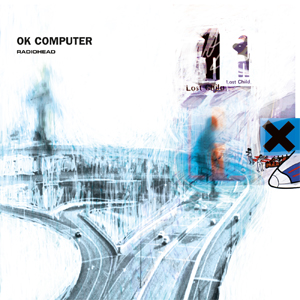
Radiohead – OK Computer
At some point in early 1997 I was sat in my room one evening watching TV – one of those big tube fuckers as this was pre-slimline LCD stuff – and as I’d have been upstairs on my own TV I’d have been stuck with the standard four channels so that means it must have been ‘Top of the Pops’ or similar I was watching rather than MTV2…. but I was watching but not watching, you know how, through what was the usual dross on these shows predominantly focused on the pop stuff and then they played the new singled from a band called Radiohead, ‘Paranoid Android’ and a bomb went off in my head.
OK Computer is an amazing album that’s been pretty much universally lauded since it was released in May 1997 – though, coincidentally, the Gallagher brothers were instant critics but then I’d take that as a compliment – and was a near-instant game changer. I didn’t pick the album up straight away – this was ’97 and at 16 years old I would’ve been spending what wages I had on other music or gobbling up the Aerosmith back catalogue as this was the year I got into them. No I do remember having the cash for a new CD at some point early in ’98 though as I remember going down to get hold of Pearl Jam’s Yield after reading positive reviews only when I took it to the counter they didn’t have it – so I picked up OK Computer instead and that bomb went off all over again.
I mean there’s been so much written about this album – when you consider the impact it had and how it exploded the band it would be impossible for there not to be. Plenty of pages have been dedicated to its origins (‘Lucky’ was recorded for The Help Album in 1995) and the recording processes (80% of it was recorded live according to Ed O’Brien) and that, after the introspective soul-searching focus of The Bends, Thom Yorke took a new tact with his lyric writing…. it would be fruitless to do so here and I wouldn’t be able to do so in a way that did the album justice.
For me this is one of those albums that had a massive impact on my musical tastes.. I know a lot of comparisons were made between this and Pink Floyd’s Dark Side of The Moon and I get that – there’s a sense of cohesion to it that works so beautifully as a whole, there’s almost a feel of concept about it in that way and there’s sense of intricacy almost akin to ‘prog’ but the prominence of guitars pushes it firmly into the more accessible and ‘this deserves to be played loud and live’ arena, just as DSTOM did – even though the band were very keen to shrug that off. But for me I stand it alongside Pink Floyd’s magnum opus in that it has had such an impact on a certain generation’s music taste and certainly on mine. It was that defining album and is held up in the same light as DSOTM was twenty years or so previous. Not to mention that just as there’s a “oh Meddle / Animals / Wish You Were Here is so much better” debate there’s a “but they really came into their own with Kid A / The Bends” argument too… but just as you can’t tell me ‘Time’ takes a back seat to ‘Fearless’, there’s no argument for ‘Treefingers is better than ‘Let Down’ (and I do really really dig Kid A).
It’s one of the few albums I own across multiple formats and I even had to replace that original CD as it ended up bouncing about in numerous cars over the years. It was like a reinvention of ‘guitar rock’ just as those genres that had defined the start of the decade were starting to wane. There was a creeping in of technological dread and wariness in there, a bite and snarl of sarcasm and angst, shimmering melodies, odd time signatures and a band tighter than a duck’s arse playing a fuckload of great songs that just get better and reveal more with repeated listening over the years.
There’s a reason OK Computer is so well regarded and it’s the same reason it’s featured here as my choice for 1997: it’s just perfect.
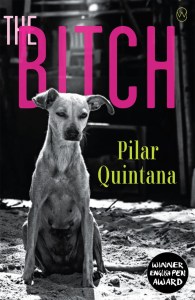
From the PR: “Colombia’s Pacific coast, where everyday life entails warding off the brutal forces of nature. In this constant struggle, nothing is taken for granted. Damaris lives with her fisherman husband in a shack on a bluff overlooking the sea. Childless and at that age “when women dry up,” as her uncle puts it, she is eager to adopt an orphaned puppy. But this act may bring more than just affection into her home.
The Bitch is written in a prose as terse as the villagers, with storms―both meteorological and emotional―lurking around each corner. Beauty and dread live side by side in this poignant exploration of the many meanings of motherhood and love.”
Sometimes you’ll pick up a book that’s so intensely written and moving that you’ll wonder how the author has managed to pack so much power into so little space. The Bitch by Pilar Quintana is just such a book. I have a few of these ‘bantamweight belters’ on my bookshelves: Pereira Maintainsby Antonio Tabucchi, Hemmingway’s The Old Man and the Sea and, more recent works such as Andrey Kurkov’s The Case of the General’s Thumb and Quintana’s novel sits right amongst those favourite titles which manage to deliver in just 150 pages a wealth of delight and literary brilliance.
In case it wasn’t clear – I bloody loved reading this book. The Bitch is an absolutely gripping and magnificent read that gets you right from the word go and takes you in deep. Its prose is simple and concise yet powerful and moving and conveys a world so vivid and detailed, in terms of characters and setting, with such precision and skill with the greatest economy of words it’s a genuine thrill and joy to read.
The bitch in question is the dog that Damaris takes in, it’s a blunt harsh title that’s in keeping with the prose and the life that the novel’s characters lead. The story goes beyond that of Damaris’ adoption of a dog – this is about Damaris’ life in a world where, as the PR suggests, life is a constant struggle. Having lost her mother at a young age to a stray bullet and forever haunted by the drowning of a childhood friend, not to mention the punishment received, The Bitch offers the story of Damaris’ life and her desperation for love in a hard world without lavish prose and manages to deliver all the more emotional impact as a result.
I’ve got no doubt that I’ll be reading The Bitch again, there’s simply so much to enjoy and admire in it that it I’ve already read it twice and discovered more upon the second reading that I hadn’t picked up first time around. It’s not a gentle read, it’s an on-the-nose book about a hard life in a tough environment but it is such a thoroughly well-written, powerful and rewarding read that I can’t recommend it enough. It more than deserves the accolades and prizes its already received (including the Colombian Biblioteca de Narrativa Prize and being chosen as one of the most valuable objects to preserve for future generations in a marble time capsule in Bogotá) and whileThe Bitch is the first of Pilar Quintana’s novels to be translated into English, I really hope that it’s not the last.
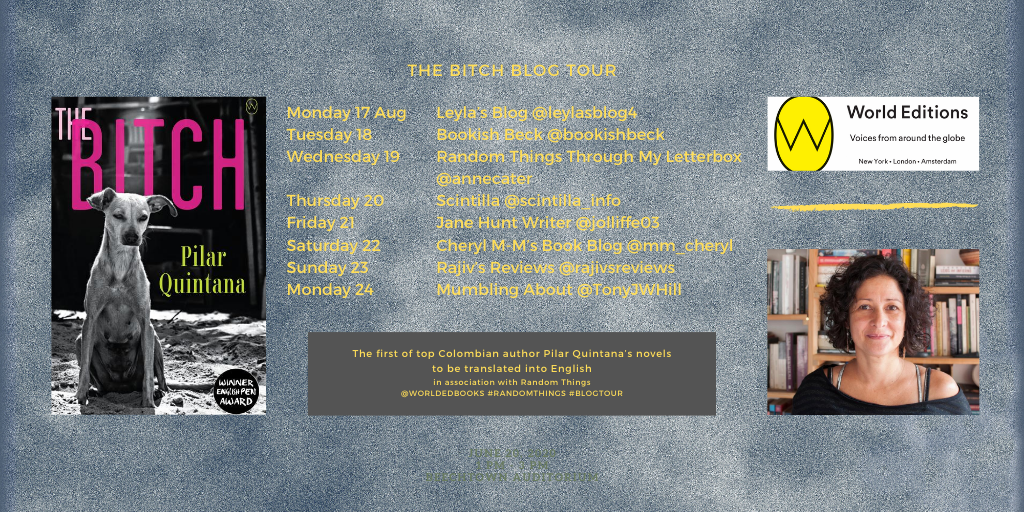
My thanks to World Editions for my copy of The Bitch and to Anne Cater for asking me to take part in this blogtour.
“Early one morning
With time to kill
I borrowed Jebb’s rifle
And sat on a hill
I saw a lone rider
Crossing the plain
I drew a bead on him
To practice my aim”
The magnificent and multi-talented Jim of Music Enthusiast (if you don’t read it, you’re missing out) has kindly permitted me to half-inch his One Song / Three Versions format for a mo so I better make sure and do this as well as I can.
I Hung My Head was originally, and this surprised me greatly, a song by Mr Gordon Sumner – or Sting as he’s been called for more decades than not. It was featured on his fine 1996 album Mercury Falling and was written from both his fondness for Westerns and his interest in country music – which is also pretty notable on one of the album’s singles, ‘I’m So Happy I Can’t Stop Crying’.
A somewhat dark tune in narrative, it’s the story of a young man who, having borrowed his brother’s rifle, shoots a stranger while practicing his aim. Whether the shot is fired by accident / on purpose isn’t really clear but it’s about facing the consequences – “I orphaned his children, I widowed his wife” – as much as anything else. Anyone familiar with this blog knows that I’m gonna dig a song like that.
So, the original:
It’s a fine song in its writer’s hands but…. I don’t know. There’s something about the narrative vs Sting’s arrangement on record that clashes a little too much for me. The music is very much a… 90’s Hugh Padgham & Sting sound with too much bounce, synth and brass to work with the song as a western or story like this. It’s almost like Nick Cave doing a reggae version of Red Right Hand.
For a good western style song about murder and begging for God’s mercy there’s really only once voice that you think of… a voice that sounds like it was hewed from granite, gargled gravel for breakfast to wash away the pain of life itself and still carry a tune…. the Man in Black himself; Johnny Cash. American IV, the final album Johnny Cash released during his lifetime and features his own rendition of Sting’s song.
The production is minimal, the sound stripped to just an acoustic guitar, the odd sustained piano chord and Cash’s aged, world-weary voice taking the song into a different time signature and turning into a starker, more direct and hard-hitting tale.
There’s a change in lyrics here too as with some of Cash’s over readings – the rifle in Cash’s take is thrown “into the sheen” and the rider “kept on runnin’ into the south lands” rather than Sting’s “salt lands”. It so suits him that I thought this was a Cash original at first – his voice and approach means that it’s one of those rare times that a cover version feels to have more authenticity than the original. Here:
In a strange connect-the-dots way, American V, released after Cash’s death in 2003, featured his take on Bruce Springsteen’s ‘Further On Up The Road’. It wasn’t the first time he’d covered Bruce – notable takes on ‘Johnny 99’ and ‘Highway Patrolman’ were included on Cash’s 1983 album Johnny 99 and there’s a cracking version of ‘I’m On Fire’ on the Badlands: A Tribute to Bruce Springsteen’s Nebraska album.
Springsteen and Sting are also pretty firm friends, with the two sharing a mic on many occasion and a drink on even more. So, in 2014 when Sting was made a Kennedy Center Honoree and the time came for the obligatory performance of one of his songs by another artist…. it was Bruce Springsteen that stepped up to provide a highlight and bring the house down with ‘I Hung My Head’, a song he’d already been playing (Sting’s songs were also performed by Lady Gaga, Esperanza Spalding and Bruno Mars) with a song that seemed as perfectly suited to late-career Bruce as it did Johnny Cash.
Before I drop spill into Bruce’s version, here – for reference – is Sting’s reaction to hearing one of his songs played… perhaps not as favourably:
Thing is, I think it’s fair to say that when Bruce covers a song he kind of makes it his own and it’s certainly the case with ‘I Hung My Head’ – his reading is closer to Cash’s take and he seems to get caught up in the emotion of the narrative but then he also gives it the full band treatment and turns it into a Springsteen song much, it’s clear, to the delight of the song’s writer. Again, Bruce makes a few lyrical changes in his take – substituting “I beg their forgiveness” with “I ask no forgiveness” along with the ending “I pray for God’s mercy” giving way to “I ask for no mercy” because in Springsteen’s songs his characters own their crimes and face the consequences.
Personally I think Bruce – in his charged and committed performance – pretty much takes the prize. But that’s just my opinion…
 I know, I know; it’s both a pretty obvious choice and his name is somewhat… contentious these days, but Gold was an album that instantly made good on the promise of Heartbreaker and took him up a gear. It also contains a huge amount of cracking tunes.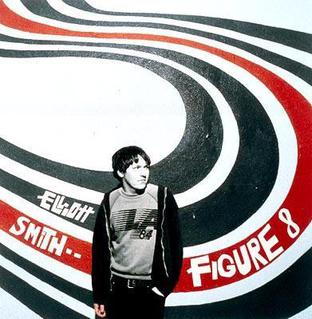



 Mumbling About...