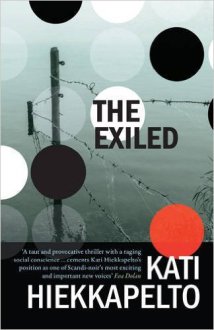
Blog Tour: The Exiled by Kati Hiekkapelto

Is there a Finish expression for busman’s holiday?

From the PR:
“Murder. Corruption. Dark secrets. A titanic wave of refugees. Can Anna solve a terrifying case that’s become personal?  
Anna Fekete returns to the Balkan village of her birth for a relaxing summer holiday. But when her purse is stolen and the thief is found dead on the banks of the river, Anna is pulled into a murder case. Her investigation leads straight to her own family, to closely guarded secrets concealing a horrendous travesty of justice that threatens them all. As layer after layer of corruption, deceit and guilt are revealed, Anna is caught up in the refugee crisis spreading like wildfire across Europe. How long will it take before everything explodes?”

41mxo4kt01l-_sx322_bo1204203200_I really need to get my hands on a copy of The Hummingbird, the first installment in Kati Hiekkapelto’s Anna Fekete series. Last year the second book The Defencless was one of my best reads of 2015  and, having just finished The Exiled it’s safe to say this is fast becomming one of my favourite series and Anna Fekete makes for a compelling lead character.

A fish out of water in Finland, Anna finds herself just as out of place back in her ‘home’ country – she’s lived abroad for so long now that the mannerisms, and even the language, are alien to her and Kati Hiekkapelto perfectly captures that strange sense of disconnect felt by those returning home from a different culture – specifically a ‘western’ one – and the seeming frustration at the change in how even the most straight-forward of things function differntly. It’s not obvious to all who haven’t witnessed or experienced it but there is a real change in the pace of life and priorities compared to more latin countries and it’s clear the author has done more than her homework here.

Kati does a wonderful job of evoking Serbia – the people, the mannerisms, the climate, the pastimes, even the social necessities and the odd (to Western eyes) importance placed on just those, along with Anna’s confused emotions on returning to her homeland – even if what she finds isn’t always to her liking there are certain sensations and memories that cannot be tainted and here come across beautifully. Ms Hiekkapelto’s skill, though, is in combining these rich evokations with a gripping and superbly paced plot. It’s one thing to paint a picture so vivid as to have the ready longing for another glass of homemade plum brandy, it’s another to write a genuinely engaging and taut mystery but it’s an art to get the two to work together seamlessly. That’s an art where Kati Hiekkapelto is most definitely skilled.

As much as I enjoy tearing though a fast-paced thriller, I love a good slow-burner and The Exiled more than delights; the writing is calm and effective – it draws you in with deceptive ease until you’re fully immersed in both place and plot with a great level of detail and characters and as determined to get to the bottom of the mystery as Anna Fekete herself.

One of the elements I enjoyed most about The Defenceless was Kati Hiekkapelto’s handling of important social themes and the same is true with The Exiled. Never more timely, the handling of the dehumanisation of refugees – even the nastily subtle manner in which the media decides they’re ‘immigrants’ rather than people fleeing absolutle terror – plays a central role in this novel; a pertinent message for our times as the Right seems to barrel it’s way through truth and humanity.

I thoroughly enjoyed The Exiled and can’t recommend it enough. Thanks again to Karen at Orenda for my copy and do check out the other stops on the blogtour:

finnish-invasion-blog-tour-banner


Least to Most: Bruce – Wrecking Ball

“After the crash of 2008, I was furious at what had been done by a handful of trading companies on Wall Street. Wrecking Ball was a shot of anger at the injustice that continues on and has widened with deregulation, dysfunctional regulatory agencies and capitalism gone wild at the expense of hardworking Americans.”

After the relative mid-tempo doze that was his last studio album, a few years passed before a new effort from Mr Springsteen arrived and he certainly seemed more fired up and focused for the break. According the The Boss, it was on a drive home from a local bar that “Easy Money” came to him and the muse materialised for most of the material that would appear on this, his seventeenth studio album.

wreckingballI don’t necessarily dislike Wrecking Ball. There’s some very strong songs on here and it’s great to hear a change, sonically, in Bruce’s material. It’s hard to put my finger on what it is that doesn’t push this album higher up in my favourites and I’m not alone here, even Bruce mused “Wrecking Ball was received with a lot less fanfare than I thought it would be. I was sure I had it. I still think I do and did. Maybe my voice has been compromised by my own success, but I don’t think so.”

Personally, I think it’s down to the production. I think Bruce perhaps lost his nerve when it came to producing his own music – he’s said himself that when he initially tried recording something with the E Street Band post-reunion, the results were flat – hence calling Brendan O’Brien for The Rising. Unfortunately, he later called Ron Aniello and began a partnership that has resulted in some of my least favourite output.

The songs that make up Wrecking Ball are strong and gritty. The first half of the album specifically tackles the economic blight that followed the 2008 crash. Yet rather than give these songs a good, gritty recording or even bare-bones them and let the lyrics speak for themselves, they’re covered in ‘ticks and gimmicks’ – IMHO.

I know that he’d just produced Patti Scialfa’s Play It Where It Lays but I still to this day wonder what it was about his back catalogue (Lifehouse, Jars of Clay, Candlebox) that made Bruce place his music in Ron’s hands. The stapled-on soul / gospel parts of ‘Shackled and Drawn’ (“I want everybody to stand up and be counted tonight, you know we got to praaaay together”) and ‘Land of Hope and Dreams’ rub the wrong way, as does the overly prevalent use of drum machines / loops. It seems to jolt too much with the force of the more organic sounding music that tears along like some pumped, stadium-ready, celtic folk-rock dervish and suits the anger that Bruce is trying to convey.

Take the kick-off ‘We Take Care of Our Own’, does it need the echo on his voice?

This album more than any since shows the influence of the Seegar Sessions in terms of instrumentation – there’s a real Celtic lean to a the opening clutch of songs but with a lot more punch and wallop. At times it brings to mind the Dropkick Murphys – ‘Death To My Hometown’ especially – and he sings with a lot more urgency and earnestness than he had on Working On A Dream.

Regarding the choice of music Bruce said he “used a lot of music from the 1800s and the 1930s to show these things are cyclical. The album is resonant with history.”

Resonant with history is a good choice of phrase. There’s some of his own on here with the revisiting of ‘Land of Hope and Dreams’* and the recasting of ‘Wrecking Ball’ into an album track.

Now… this is something that a lot of people have raised issue with and I kinda understand their points. ‘Land of Hope and Dreams’ has been slighted in its handling. Yes, it’s Bruce’s song and up to him to do as he sees fit with it but; this was an E Street Band song, 14 years old at the point it was recorded and had been a staple of almost every show since the reunion tour on which it made its début . Steven Van Zandt considered it “a wonderful reintroduction of what has become a very different E Street Band. We just opened with it the other night, and the whole fucking stadium took off.”

Live it was a sprawling epic, a soulful, uplifting song of hope – it’s also my go-to first play if I haven’t picked up my guitar for a bit – and I admit I did often wonder what it would sound like if the band recorded under a producer willing to tighten the bolts up a bit. Unfortunately the band didn’t record it. Only two members feature, with the remaining parts played by Bruce and Ron and session drummer Matt Chamberlain replaces Max Weinberg. Given that they’d played it nightly for over a decade prior and then had to play it on the subsequent tour, I can’t help but wonder how the band felt on that one. Max thumps the shit out of the drums on this live, especially. Then it was decided to fade it in and out around more ‘stapled-on’ gospel singers (I have nothing against gospel our soul singers, if I need to make that clear) singing parts of “People Get Ready”. To me it was as if Bruce was trying too hard to frame his music / emphasis the points it was trying to make.

Here’s both versions for comparison:

Those that did make the cut were Van Zandt’s mandolin and Clarence Clemons, which brings me to another point…It was while recording Wrecking Ball that Bruce had been trying to reach Clarence to arrange a recording session. Specifically the sax solo on ‘Land of Hope and Dreams’. When Clarence did get back to Bruce he was feeling ill and it became the first and only time in which the Big Man bowed out of a scheduled session. No worries.. we’ll pick it up when you’re feeling stronger. Bruce went away on holiday with his wife and it was then that he got the call that Clarence had suffered a massive stroke. He passed not long after, something Bruce refers to as “like losing the rain.”

In the period that followed Ron Aneillo assembled the sax part on ‘Land of Hope and Dreams’ from recordings of the live version. When Bruce heard it he said it was though Clarence was in the room. It remains the song’s highlight. I just feel it was a missed opportunity to capture the punch that the band bring to it.

Wrecking Ball‘ was the other ‘old’ song to grace the album it gave it its title to. It had been written on the eve of the E Street Band’s final shows at Giants Stadium in 2009, after which it was to be tore down. As such it was a ‘road song’ written for the band. To quote Mr Van Zandt again: “They tend to take on a very comfortable arrangement because they’re being written for the live band and with the live band. It’s not like he’s going home in between and writing it and demo’ing it and showing it to the band later. He’s playing us the song backstage on his acoustic guitar, just like the old days. Songs like that take on a different sort of immediacy because they’re literally being worked up at soundcheck”.

It’s a strong song that’s become about much more – facing the hard shit that life can throw and actually daring it to bring it on. It’s the closest to the E Street Band playing as you’ll find – though Van Zandt himself doesn’t feature. I think at this point he was likely busy with ‘Lilyhammer’ (a show I do wish would make a return).

I mention the lack of E Streeters for a couple of reasons. First is that I think with Wrecking Ball, Bruce found the key to making ‘rock’ music with musicians outside of the band and still having it been accepted by his audience. That key being; feature some of them on a couple of tracks and tour the album with them. There’s no Garry Tallent or Roy Bittan and Nils Lofgren found his plectrums half-inched by Tom Morello. They’d all play the arse off of them on the following tour though.

The other reason is that Bruce has a new album in the works – well, it’s been delayed by the steady expansion of the current E Street tour in support of The River‘s box set. Both Bruce and Jon Landau have been at pains to point out that it’s a solo album and not an acoustic one, that it is “in fact, a very expansive record, a very rich record. It’s one of Bruce’s very creative efforts”. Given that he’s also been working with Ron Aniello (sigh) on it, Wrecking Ball‘s sound and lineup perhaps serve as the biggest indicator as to what, sonically, we might be in for.

Some criticism lobbed at Wrecking Ball accused it of being top-heavy and sonically uninteresting. For me the album gets better after ‘Jack of All Trades‘ (tepid, Bruce by numbers with added Morello). Aside from those already mentioned, songs from this point are solid – ‘Rocky Ground’ brings to mind the groove he mastered with ‘Streets of Philadelphia’ and features a Springsteen-penned rap, ‘This Depression’  originally considered to reference the economical could now be seen as Bruce praising Pati during the large depression of his own he was going through and the strange, ode to the dead that is ‘We Are Alive’:  “A party filled with ghosts. It’s a party filled with the dead, but whose voices and spirit and ideas remain with us.”

For my money – lose ‘Easy Money’, ‘Shackled and Drawn’, cut some of the effects and promote ‘Swallowed Up (In The Belly of a Whale)’ and  ‘American Land’ from bonus to full-album track and you’d have an absolute belter of an album with more of a sonic palette and a real barn-storming closer. Indeed, it’s how it plays on my iPod. But, then; everyone’s a critic….

Highlights: ‘We Take Care of Our Own’, ‘Death To My Hometown’, ‘Wrecking Ball’, ‘Rocky Ground’, ‘This Depression’, ‘We Are Alive’ and the bonus tracks

Not-so Highlights: ‘Jack of all Trades’

*’Land of Hope and Dreams’ was one of two new songs featured on the reunion tour Live In NYC album alongside ‘American Skin (41 Shots)’. The newer studio version of the latter was also cut during Wrecking Ball sessions and would later have Tom Morello dubbed onto it for release on High Hopes. Bruce, at the time, said that he wanted to give these live staples a more ‘official’ release but these are both songs that, I think, were better left – like ‘Seeds’ – in their original versions.

Book Review: The Mountain In My Shoe by Louise Beech

“A book is missing.

A black gap parts the row of paperbacks, like a breath between thoughts.”

love that opening.

Last year saw publication of Louise Beech’s How To Be Brave on Orenda Books. A thoroughly moving book that made my reads of the year list. What impressed me most was how its writer was unafraid to tackle emotional areas from which others might blanch while combining such insightful writing with a compelling story. She’s done it again.

I was more than happy and eager to read The Mountain In My Shoe when it was so kindly sent to me by Karen at Orenda. Life and this year being the utter shit that it has been, though, means I couldn’t do so straight away. My stop on the blogtour for this one was kindly populated by the author herself with a piece on adversity that’s well worth a read, here.

Now, though, I’ve not long turned the final page on this one and it’s time to get down my thoughts and I’ll try to do so without giving away too much. If I can…

From The PR: “A missing boy. A missing book. A missing husband. A woman who must find them all to find herself …

the-mountain-in-my-shoe-copy-275x423On the night Bernadette finally has the courage to tell her domineering husband that she’s leaving, he doesn’t come home. Neither does Conor, the little boy she’s befriended for the past five years. Also missing is his lifebook, the only thing that holds the answers. With the help of Conor’s foster mum, Bernadette must face her own past, her husband’s secrets and a future she never dared imagine in order to find them all.

Exquisitely written and deeply touching, The Mountain in My Shoe is both a gripping psychological thriller and a powerful and emotive examination of the meaning of family … and just how far we’re willing to go for the people we love.”

I seem to recall Louise Beech saying that in The Mountain In My Shoe she’d ‘accidentally’ written a thriller. If this is an accident then I’d be first in line to see what happens were she to set out to do so. I was thoroughly gripped and found myself turning through the pages with a speed that ought to have worried the binding. Contained within is a book that encompasses psychological thriller, emotional drama and gripping mystery.

As with How To Be Brave, there’s more than one voice telling a story in The Mountain In My Shoe: Bernadette, an abused housewife on the verge of leaving her controlling husband; Connor, a young boy who’s spent his life in the care system and The Book – Connor’s ‘life book’. The Life Book is Connor’s story updated by those that care for him – foster parents, social workers, teachers. I found this exceptionally moving – having just rediscovered my young son’s ‘My Story’ type book after moving and realising that, for Connor (and so many like him) life can deal some pretty harsh cards. A masterful touch from Mrs Beech.

The changing narratives and perspectives add a great depth to the story and each are handled convincingly and ring true. The Book is especially moving, upping the empathy for Connor and the suspense. It makes for painful reading at times but I’ve said this before and I’ll no doubt say it again; woe betide the author that goes for comfortable.

How To Be Brave and The Mountain In My Shoe are very different books and while there’s a few similarities (a diary and lifebook as narrative devices), there’s one undeniable thing they have in common; Louise Beech writes with an emotional honesty and bravery that elevates her work from the crowd. She writes in a way that just manages to cut to the core – especially as a parent – every single time. Brilliant.

Worth the wait, very highly recommended and thanks again to Karen at Orenda for another great book. Seriously, though, Karen; every time I think I’ve got my ‘Top Reads of the Year’ list sorted I open another book with the Orenda logo on its spine.


Tracks: Wots’…. Uh The Deal?

“Flash the readies
Wot’s, uh the deal?
Got to make to the next meal
Try to keep up with the turning of the wheel.”

Perched in the Pink Floyd discography between Meddle and The Dark Side of the Moon is the oft-overlooked Obscured By Clouds. I say oft-overlooked… fans will know of it, I’m sure, but it’s not one that really gets much of a mention and I don’t recall seeing any of its tracks appearing on any of the band’s compilations. Probably because it’s a soundtrack – to the French film ‘La Vallée’ – work more than it is an album proper, following their previous such efforts More and Zabriskie Point.

Now, between Meddle and The Dark Side of the Moon is an amazing place to sit, both stellar works. At the time the band were asked to create the soundtrack, work was already under way on Dark Side so I doubt the band were in a position to give it their all in terms of song-writing. Indeed from what I’ve read they weren’t too concerned at creating ‘songs’  and the sessions were somewhat rushed.

There is, though, some cracking songs on Obscured By Clouds that at least make it worthy of ownership if not constant rotation. ‘Mudmen’ is as massive, prism-shaped indicator as to what was in the Pink Floyd pipe as you could get, ‘Free Four’ is another cracker and got a bit of airplay Stateside and ‘Stay’ is quite lovely.

For me, though, this album is all about ‘Wot’s… Uh, the Deal?’ and it’s a Pink Floyd song that – were I to sit down and make it – would certainly be on my ‘Top Twenty’ or even ‘Top Ten’ PF songs.

There’s so much I love about this song – the rolling piano, the gentle melody and lyrics that touched on lyrical themes that would be explored greater on DSOTM and some wonderful vocals and guitar work from David Gilmour (and a great bit of lap steel). It’s a beautifully sedate piece of a style that’s somehow so very English they did so very well (see also ‘Grantchster Meadows‘ from Ummagumma) and would later come back to so spectacularly with ‘High Hopes’.

At what was undoubtedly a peak time for the band, even their rushed soundtrack work contains some great material.

Shame Roger Waters would cock it all up.

David Gilmour, while touring his On An Island album dusted the song off and gave it the odd airing, which is also worth sharing. I think. Not least because it bought about a rediscovery of the song for many and it includes Richard Wright on piano.

Book Review: Dark Side of the Moon by Les Wood

41binrfmxkl-_sx324_bo1204203200_Boddice, a crime lord looking over his shoulder for good reason, has assembled an unlikely band of misfit crooks. Their job is to steal a famous diamond worth millions, known as The Dark Side of the Moon. Despite the odds, the crew is self-serving squabbles and natural incompetence, the plan progresses. As events build to an explosive climax no one really knows who is playing who. Full of twists and turns and laugh-out-loud moments, this is a hugely enjoyable romp entirely from the criminal’s point-of-view, with not a single cop in sight.

An odd one, this; Dark Side of the Moon  by Les Wood is essentially a crime story with not a whisper of the police.  Instead what we get is a crime lord falling down the pecking order of Glasgow’s underbelly, desperate to pull off a big job and secure his place at the top of the table. A gang of petty criminals and hard men all under his thumb / at his mercy. The world’s most valuable diamond and a plot to steal it against tough security and odds with no experience and no real clue what the hell is going on.

Gritty, at times uproariously funny and populated by some truly memorable characters Dark Side of the Moon is more than a madcap heist story – for one thing there’s an undercurrent of sadness throughout. It’s a grim, blighted reality that these characters live in and it’s pulling them all down. Strangely, though, this meant I ended up having genuine sympathy for some of them despite the fact that these are some pretty nasty people. It’s a mark of real talent that Les Wood manages to draw out compassion for someone as brutal and hardened as Prentice – even after Kyle’s dog story.

Like the hard-men it portrays, this book gets its punches in early and doesn’t relent. Maybe it’s the continual influx of bad news that this year has heralded but I’m finding myself increasingly immune to shock, yet there are parts of Dark Side of the Moon that caused me to swear and put the book down for a moment or three (though never for long as I was hooked) so powerful are parts of it. I’ve not been able to look at a can of emulsion paint the same way since.

But don’t get me wrong – this isn’t a bleak book that’s hard to read. Noooo… far from it. I love a book that challenges and I thoroughly enjoyed reading Dark Side of the Moon. Les Wood finds the perfect balance between vividly portraying the dark underworld, humour and thrill with pacing that keeps the book surging along, building up to a terrifyingly gripping and bloody crescendo of a climatic scene that both quashed expectations and left my mouth agape.

Deliciously dark and hugely entertaining, The Dark Side of the Moon is a great novel and I’m very surprised that this is Les Wood’s first. Very grateful to Freight Books for sending this one my way and wholeheartedly recommended.

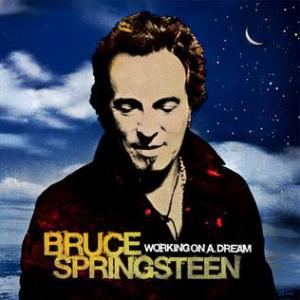
Least to Most: Bruce – Working On A Dream

I’m gonna take a bet that of this album’s fans, Steven Van Zandt (“I’m a pop-rock-band guy. That’s all I am”) is one of the biggest. He’s stated that he sees this – the last Bruce Springsteen and E-Street album to date – as the logical end of a trilogy that started with The Rising with “a projection more toward the pop-rock form” achieved more completely on Working On A Dream.

working_on_a_dreamI might be quoting more heavily on Mr Van Zandt than anyone else but that’s because Bruce is somewhat quiet about Working On A Dream in hindsight. Even in his own book it got just a fleeting mention. Perhaps he – like quite a few – consider it one without real staying power. Perhaps it was sheer timing that meant that Working On A Dream, the third-and-final album with Van Zandt & co would also be the least rewarding. Let’s face it; in the ten years preceeding its release Bruce had reunited the band and embarked on a huge tour, released The Rising, Magic, Devils & Dust, The Seegar Sessions, an anniversary edition of Born To Run, released The Essential compilation, toured the globe tirelessly and stepped into the political arena with the Vote For Change tour. A whirl of activity that by far eclipsed that of Bruce’s previous decade. It was probably time to take a break.

Instead, struck by inspiration and a writing spell that carried through from the final recording sessions for Magic, Bruce returned to the studio with Brendan O’Brien (one last time) and a core band of Max Weinberg, Roy Bittan and Garry Tallent (other members would be bought in to add their parts later) to catch, as he said, the “energy of the band fresh off the road from some of the most exciting shows we’ve ever done.”

One could argue that, with a Superbowl concert on the horizon the need for product was in mind and this one was perhaps a little under-cooked. One could argue that… could…

See, there are some songs here that I simply cannot connect to no matter how I try. The title track has never clicked. Yeah; it’s nice and pleasant but it just seems to lack spark or real weight and I think he’s tackled the theme better elsewhere (on Lucky Town especially). ‘Queen of the Supermarket’ simply should never have been and I had to wonder what a champion lyricist like Bruce was thinking with ‘Life Itself’ – “We met down in the valley where the wine of love and destruction flowed, there in that curve of darkness where the flowers of temptation grow”… do what, mate?

But. But. ButIt’s not fair, though, to write it off or brush over it completely because this is Bruce Springsteen and (with the rare exception) you only tend to have to wait a second for a belter of a song to reveal itself and there is a lot to enjoy on Working On A Dream.

Take the opener; ‘Outlaw Pete’. I know it gets a bit of slack for being a bit overblown and borderline self-parody, but I still enjoy it (granted, I wouldn’t listen to it everyday) and I don’t think Bruce is exactly taking himself seriously with it. Yes it’s daft (“by six months old he’d done three months in jail”), yes it may well have borrowed from another song but it sets the scene – I really think that at this point it was a case that, rather than sweating over everything too much, the mood was “you know what? Fuck it, let’s give it a go”.  Not to mention that when played live (though I don’t think it’s been touched since) Steve – a much underused player on stage these days – got to play the lead.

Right on it’s heals – ‘My Lucky Day‘ is another fast, blistering tune that, again, sounds like a blast was had recording it. Its fast, rawer sound almost at odds with the layers of overdubs and lush, huge 60’s sound that drapes so much of the album. Step past the next couple of momentum stallers and you get to the great sonic backdrop of ‘What Love Can Do’ and the swampy, blues-stomp of ‘Good Eye‘ a nice enough (though nothing that special) couple of tunes that sandwich ‘This Life’ – a more obvious Beach Boys’ aping sound you’d be hard pushed to find:

‘Tomorrow Never Knows’ jangles along quickly and without much to hang on to, as does ‘Surprise Surprise’. ‘Kingdom of Days’ is a genuinely warm one about love and ageing. The album’s most affecting track though is saved for last (if we exclude – still very good – ‘The Wrestler’ tacked on as a bonus).

‘The Last Carnival’ is seen by many as a follow up to ‘Wild Billy’s Circus Story’ from The Wild The Innocent & the E Street Shuffle. It is, more importantly, for Danny Federici who passed away in April 2008, the first member of the E Street Band to do so having played with Bruce for forty years. Danny had appeared with the band briefly over the previous Magic tour and did so last less than a month before his death. Bruce asked him what song he wanted to play – it was, of course, ‘Sandy’. In his book it’s clear that while Danny Federici was the only member of the band to drive him to violent rage, Bruce had a genuine love for the organ player and his death certainly rocked him, as he said in the eulogy: “After a lifetime of watching a man perform his miracle for you, night after night, it feels an awful lot like love.”

‘The Last Carnival’ is a beautiful send off. An immensely affecting farewell to a fallen brother. After opening to Jason Federici’s accordion, Bruce sings at the bottom of his range in a barely-suppressed choke and hush against minimal accompaniment “Where have you gone my handsome Billy?” before layered voices swell to a choir. It’s a moving send-off and ending to the last album featuring the full E Street Band*.

A couple of clunkers aside, while there’s nothing wrong with the majority of Working On A Dream it perhaps lacks the sharpness and punch of its immediate predecessor. That being said, in amongst some of the most ambitious production of his career (Rolling Stone gave it the default 5 star review, though none of its songs made their 100 Best Springsteen Songs list, wetting their knickers over its lush sound), Bruce was still capable of crafting a fair few beauties so that the good by far outweighed the bad.

Highlights: My Lucky Day, Kingdom of Days, The Last Carnival

Lowlights: Queen of the Supermarket

*Certainly their last full album. Songs that didn’t make the cut on this or its immediate predecessors and featured E Street (and Danny Federici) included High Hopes highlights ‘Down In The Hall’ and ‘The Wall’.

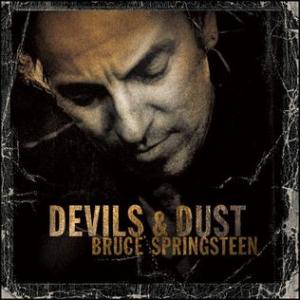
Least to Most: Bruce – Devils & Dust

“Now down below and pullin’ on my shirt
I got some kids of my own
Well if I had one wish in this god forsaken world, kids
It’d be that your mistakes would be your own” Long Time Comin’

bruce_springsteen_-_devils__dustLet’s kick this one off with a small clarification – Devils & Dust (as with each that follows in this series) is a fine album. As strong a collection of songs as many could muster. From here on in (now that High Hopes is behind us) we’re really just talking personal preferences.

The outlier in Bruce’s ‘acoustic trio’, the songs on Devils & Dust aren’t  as sparsely accompanied as they are on Ghost Of Tom Joad or Nebraska, nor are they as single-minded in their focus. Recorded after touring behind The Rising, this set was produced by Brendan O’Brien and mixes themes from politics to personal.

Many of the songs here go back to the Ghost Of Tom Joad tour – some even earlier -but the opening title track was new and is as fine a song as Bruce has ever written, a strong commentary on the Iraq war: “It is basically a song about a soldier’s point of view, but it kind of opens up to a lot of other interpretations.” The album and song were nominated for a few Grammy Awards (it won Best Solo Rock Vocal) and, performing the song during the broadcast he added a cry  of “Bring ’em home” at the end before immediately turning and leaving the stage (missing his partial standing-ovation). It’s a great song.

There’s plenty of great tunes on Devils & Dust, even the older tunes revisited for the format work well and still stand (the mark of a good Springsteen song if you ask me) their ground. ‘All The Way Home‘ is particularly strong – written for and originally released by Southside Johnny in 1991 (on an album titled Better Days of all things) and is not even slightly acoustic, Bruce really steps into the lyric “I know what it’s like to have failed, baby with the whole world lookin’ on”.

One of my personal favourites on this one is ‘Long Time Comin” – a catchy, sins-of-the-father, redemption song that only suffers by it’s placing between ‘Reno’ and ‘Black Cowboys’:

Devils & Dust was the first Springsteen album to feature a Parental Advisory sticker and it wasn’t just for the ‘fuck it up this time’ in the ‘Long Time Comin’ either. It was most likely down to the album’s biggest talking point; ‘Reno’. To me, though, I find the song, like a couple of the others on here, just a bit ‘meh’. It seems like the minimal two-chord repetition and overly-heavy lyrics are too oppressive/dour and, in this instance, seem to be an awful lot of a build-up to hear Bruce sing about a man’s visit to a prostitute; “”Two hundred dollars straight in, two-fifty up the ass,” she smiled and said.”  There’s nothing wrong with daring, there’s nothing wrong with those lyrics but it seems, to me at least, that the song isn’t really much to write home about in the first place and if it weren’t for those lines nobody would’ve really written about it all.

While there’s nothing wrong with a good ‘story’ song (‘Galveston Bay’ on Ghost of Tom Joad for example), there’s a few instances on Devils & Dust, like ‘The Hitter’ or ‘Jesus Was An Only Son’ where these near short-stories are too much for their minimal backdrops to retain attention. Take a look at the lyrics and you’ll see that some of these are blocks of paragraphs rather than verses and some (‘The Hitter’) are nine plus verses without a chorus. Don’t get me wrong; the lyrics aren’t bad at all (‘The Hitter’ is especially brutal) but it weighs the album down a touch more than the music and production can lift.

To me it’s not a good thing if a song can’t speak for itself. The inlay for Devils & Dust is filled with explanatory notes around many of these wordier tunes and, from what I’ve read, Bruce spent many a minute on stage during the solo tour for this one explaining the meaning / story behind a lot of the tracks – as can also be seen on the ‘Storytellers’ episode (and while that’s kinda the point it got a little frustrating as he’d almost pause during song to explain verse-by-verse).

That being said I reiterate that it’s a good album (again I’m sure there’s many who may say it’s their favourite) and contains some great tunes so I’ll drop the much-overlooked ‘Maria’s Bed’ here:

Highlights: Devils & Dust, All The Way Home, Long Time Comin’, Maria’s Bed, All I’m Thinkin About, Leah.

Lowlights: Reno, Black Cowboys, Jesus Was An Only Son.


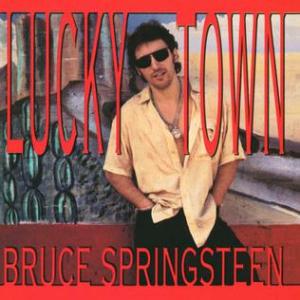
Least To Most: Bruce – Lucky Town

“Well my soul checked out missing as I sat listening
To the hours and minutes tickin’ away
Yeah, just sittin’ around waitin’ for my life to begin
While it was all just slippin’ away. ” – Better Days

It’s an odd thing but the workaholic, perfectionist streak that was behind those arduous sessions for, say, Born To Run and the near-bankrupting sessions for The River that lead to those albums’ brilliance, can often lead to adding so much polish to something that you’re blinded to the turd underneath the shine. Just look at Human Touch. Far too much time and take-after-take on tracks that were second-rate for Bruce (don’t get me wrong, other artists have made long careers off of worse but Mr Springsteen set the bar higher for all including himself).

lucky_townAt the end of the sessions for Human Touch, Bruce felt he needed one more song. He wrote ‘Living Proof’ and hit a streak which bought another ten songs in rapid succession. All of them (with the exception of ‘Happy’) were released as Lucky Town.

When I first bought these two albums I did so at the same time – I believe it was after having bought a ‘double’ which contained both Nebraska and Darkness so they were always gonna struggle to compare – and, initially, it was (as with many others I’ve read) Human Touch that I preferred. Yet on repeated listens and with the passing of time it’s Lucky Town  that I go back to more. I find it’s quiet and more-adult contemplations get better with time and experience.

There’s something so much lighter about it yet it’s so much more focused and the song-writing stronger and more convincingly true than on Human Touch. While I’ll skip ‘Leap of Faith’ and’Big Muddy’ the remainder aren’t too bad at all and some I’d even call great.

‘Better Days’ is a strong kick-off and one that captures the happiness and contentment in his new life and how he struggled to reconcile such feelings with his former life -“It’s a sad funny ending to find yourself pretending, a rich man in a poor man’s shirt…. a life of leisure and a pirate’s treasure don’t make much for tragedy” – and the dichotomy of how to write about it rather than his previous muses that Bruce spent the majority of Human Touch and a later, never to be released, album fumbling around.

The song that sparked the whole album off, ‘Living Proof’, is one that I came to appreciate more as I added more years to my own clock, especially with fatherhood. While the slightly too slick and heavy session musicians almost marr it, the production isn’t as overwhelming as on this albums’ sister and it’s hard to deny the genuine salvation Bruce had found in this himself, the same goes for ‘My Beautiful Reward‘. *

Perhaps the album’s most lasting export, though, is ‘If I Should Fall Behind’ which very quickly outgrew it’s relatively minor representation here and became a centrepiece of many a live show and no doubt features in a lot of fan favourite lists. A beautiful, hushed hymn to his wife as they began their new life together which manages to do that magical thing a good Bruce Springsteen song can do – take something personal to him and make it universal to all and, if you check the notes, it’s one of those in which he played everything (save the drums) himself ensuring a) it comes across as intended and b) isn’t marred by flat playing:

‘Souls of the Departed’ is a strong song, touching back to the themes of ‘Born In The USA’ – only this time spurred by the Gulf War and the LA Riots; “This is a prayer for the souls of the departed, those who’ve gone and left their babies brokenhearted, young lives over before they got started” only with added personal clout this time round as all Bruce, while tucking his son into bed, “can think of is what if it would’ve been him instead.” It’s a bitter, cynical and biting song. Oddly enough Bruce managed to spend the 80’s avoiding having his work inflected too much by popular sound trends and the big sound on ‘Born In The USA’ pushes the song forward and lifts it. On ‘Souls..’ the sound is big but it was almost dated by the time it was released. It’s one of those from this era that I’d so very love to hear with the clout of Max Weinberg and a searing lick from Nils. Oh well. Still, I think more tunes from Lucky Town have been played live in recent years than from its sister album.

In his book Bruce does mention how he auditioned a lot of session players for his new band. How he struggled to find – given how many musicians there must be per square metre in that place I do wonder how hard he looked – a drummer with sufficient skill and clout… But he was determined to try routes new so calling The band wasn’t on the cards. It’s perhaps telling how he now feels about the band he assembled and its reception given how scant a summary he gives; there’s no enthusiastic wrap-up of concerts given or even much commentary of how it was received.

To be honest, it’s probably that which stops this album going higher up the list. Some of the songs on here stand head and shoulders above later and earlier duds but it’s the overall sound and lack of richness that comes with most Springsteen albums that handicaps Lucky Town and the songs on it. The players may have been top notch (for all my comments Gary Mallaber is a fine drummer) but the chemistry and spark just feels that little bit hollower and the production has dated poorly.

I think that, with the release of Human Touch and Lucky Town, two very-slick, glossy albums with a production that almost buffed the (ironically) human touch from Bruce’s songs, a lot of fans that had been held enraptured since the early seventies stopped listening and many didn’t really pay much attention again.

It’s a shame, for on Lucky Town there are some real gems. As any artist who releases a double album (or two single ones on the same day) will no doubt face the commentary that the project would’ve worked better whittled down to a single disc. It’s certainly true here. Oddly I think Bruce’s entire decade would probably have been kicked off and gone differently, and regarded as such in hindsight, had he binned pretty much all of Human Touch, dropped the title track onto Lucky Town, swapped ‘Leap of Faith’ for ‘With Every Wish’….. I think every fan has probably done this but, perhaps, mine would go something like this:

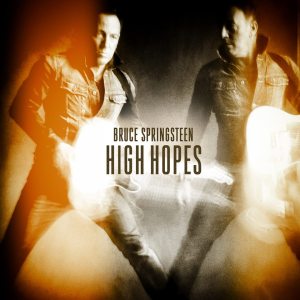
Least to Most: Bruce – High Hopes

“I’m not sure what he had in mind from the beginning, but this is what we ended up with.” Ron Aniello on High Hopes.

high-hopes-album-bruce-springsteen-1389043820In my original review of the album I said “Bruce has gotten a little lost lately in a seemingly ill-fated determination to sound fresh and vital” and that the quality control, usually tighter than a duck’s arse, had gone AWOL here. I stand by those thoughts.

It’s hard to consider this as a ‘studio album’ and producer Ron Aniello’s “this is what we ended up with” is a good summary – if you take a group of songs not deemed right / worthy of inclusion on other albums, slap a few covers together and dub Tom Morello’s now-dull guitar over the top, this is what you end up with.

And it’s a shame. It’s a real shame because unlike, say, Human Touch, there are some great tunes on here that could be presented and served so much better had they not been included on what feels like a cash-grab.

‘Down In The Hole’ has shades of ‘Paradise’ from The Rising and is steeped in that song’s delicate touch and minimal beauty and is something of a family-affair with backing vocals from Patti Scialfa and their children. It’s a beautiful thing.

‘The Wall’ is one of the finest songs in Bruce’s catalogue but by dumping it on this ‘odds and ends’ album it’s not going to get the attention it should. An ode to a fallen serviceman, inspired by the loss of early mentor Walter Cichon (detailed in the Born To Run book) who volunteered for the Army only to go missing in action in Vietnam in March 1968. It had been a long time since Bruce visited Vietnam in song and this is as fitting and touching as any of those songs he’d done so with previously.

‘Frankie Fell In Love’ sounds like one of the best Bruce and Steve songs that barely features Steve at all – Mr Van Zandt was largely absent from sessions and the tour due to filming commitments on Lilyhammer. It’s joyful, whooping along with pure enthusiasm and a really catchy-as-flu melody. It brings to mind a modern recasting of the dynamism the duo had on earlier tunes like ‘Two Hearts’.

‘Harry’s Place’ – correct me if I’m wrong – dates back to sessions for The Rising and is a brooding gangster-populated number with a fantastic opening line “Downtown hipsters drinkin’ up the drug line”.

However. Bruce declared at the time that, for High Hopes, “Tom and his guitar became my muse, pushing the rest of this project to another level.  Thanks for the inspiration Tom.” Yeah… thanks Tom.  It’s the cuts onto which Morello is plastered that weaken the whole joint. Credit to him for living out every six-string plucking fan’s dream (the one where Bruce is suddenly short a guitarist and your phone rings), but the fit just isn’t right.  The awful re-recording of ‘American Skin’ is unpardonable.

The covers are lacklustre and suffer for Morello’s incessant ‘jamming’ over them. Bruce and The E-Street had already tackled ‘High Hopes’ and their decent-enough take was used as a b-side. The take included here is simply poor. Nor can I hear ‘Just Like Fire Would’ without hearing “Just like firewood, I burn up”.

Hard to view as a studio album proper, High Hopes is a real mixed bag; some great tunes lost amidst the flotsum and reheats.

Highlights: ‘The Wall’, ‘Down In The Hole’ ‘Frankie Fell In Love’

Lowlights: The Ghost of Tom Joad, American Skin (41 Shots) two originals damned by their “reimagining”.

Least To Most: Bruce – Human Touch

Now I can imagine that for each of the albums that precede my ‘Most’ favourite in this series there’s plenty of people that will say “actually that’s my favourite..” to pretty much all of them. With the easy and obvious exception that is Springsteen’s early-nineties output. Given the scarcity with which the tracks are touched live I don’t think even Bruce cares much for them in retrospect.

Released  on the same day in March 1992, neither Lucky Town or Human Touch have fared well with fans or critics. Perhaps it was the lack of E-Street support, perhaps it was the changing musical culture at the time but either way, I doubt that even the most die-hard will argue for their place in a Top Ten.

bruce_springsteen_-_human_touch_-_coverart_-_iOf the two I find Human Touch the overall weakest link in Bruce’s mighty discography. These were songs that Bruce had been tooling around with for some time and had, in doing so, over-cooked. If you listen  to The Christic Shows recorded in LA in 1990, many of the songs that would appear here can be heard in their early embryonic stages. They sound better. At the time it would’ve left fans eager to hear the finished result, excited by the change in direction with what sounded like some real personal stuff (though the sexually-charged ‘Red Headed Woman’ didn’t make the cut). Unfortunately when it came time to capture theses songs for release, the result was what’s now considered the nadir of Bruce’s output.

It’s not that there aren’t good songs on Human Touch it’s just that there aren’t enough of them and those that have the bones of a great song are lost under some truly awful production and sound, like ‘Soul Driver’, for example. When I do slip the cd into the car, it’s more likely that I skip through more than half of the album.

The story goes that Bruce – newly transplanted to LA – had a collection of songs that he was working on but couldn’t quite find the turning point that would bring them into a cohesive album. He wanted to continue the theme and practice of not employing the E-Street Band he’d started with Tunnel of Love and try a new approach. Then he met up with a similarly newly-moved Roy Bittan who showed him his new recording set up and synths before playing his former-Boss a few tunes he’d worked on. Inspired, Bruce went home, added a few parts and lyrics to those tracks and  a long period trying to find the ‘sound’ and working with session players followed before the album was complete*.

Of those Bittan co-writes that made Human TouchRoll of the Dice‘ is Springsteen-by-numbers but without the heart and force of the E-Street band to lift it beyond over-glossed territory. On the other hand, ‘Real World’ is perhaps the most fully-realised of his ‘men and women’ concept that many had hoped for. There’s just not enough of it and the players and production still mar what should have been a classic.

While the production (the one and only time Roy Bittan received a credit for such) is very much of it’s time and the slick sound has never suited Bruce. It would be the last ‘rock’ album he’d release before he released that he wasn’t the right person to produce his music any more. The album does have some strong contenders, not least it’s classic title track, that stand up well to repeated listens. ‘With Every Wish’ is a great tune as is ‘I Wish I Were Blind‘. They’re more relaxed, less drenched in studio-session  sound and are genuine, occasionally even tender tunes that, along with ‘Human Touch’ and ‘Real World’ are the most realised on the album. Indeed, some of his best lyrics can be found within the title track: “you can’t shut off the risk and the pain, without losing the love that remains”.

Unfortunately the remainder – to my ears – sound more like what a songwriter trying to write like Bruce Springsteen would create. They seem hollow-boned and attempts to cover the gaps with gloss and force (which may have worked with the E-Street) via top notch session players just fall flat. At the time it wasn’t so condemned but now, further on up the road, it’s blighted by dated guitar tones and synthesisers and drum beats that simply don’t measure up to Max.

Thankfully, Human Touch may have been the first release of the nineties from Mr Springsteen but from here it was only upwards in terms of quality and its sister release was a whole other story.

In the spirit of ‘what might have been’ – some of the tracks deemed not suitable for Human Touch would later appear on Tracks and, shorn of the production elements that blight it, sound (just a touch mind) a little better than those duffs rounding out the numbers here. I’d gladly swap ‘When the Lights Go Out’ for ’57 Channels’ and I still enjoy ‘Seven Angels’.

Highlights: Human Touch, Real World, With Every Wish, I Wish I Were Blind

Lowlights: Soul Driver, Man’s Job, 57 Channels and Nothin’ On, All Or Nothin’ At All


*Almost – he felt he needed one more song, wrote ‘Living Proof’ and instead dashed off enough tracks to make Lucky Town in just a few days.