Night Blind

Ragnar Jónasson knows how to get a reader hooked. The first chapter of Night Blind finds police inspector Herjólfur following up a tip off at a house on the edge of town. It’s got all the classic ingredients in place for one hell of an opening- the house itself is not only remote and isolated but it practically hangs over a cliff, even its walls are “leaden and foreboding”, it’s dark and the rain is pouring, beams of torchlight peer out from inside. Only the edge of your seat will be needed before the chapter’s finished and it’s all too late for the inspector; “that was when he heard the shot, deafening and deadly.”

IMG_7059I’d been gripped by this opening chapter for close to a year before I got to read any further. It was included at the end of Jónasson’s first class début Snow Blind. The next instalment in the Dark Iceland series, Night Blind takes the reader back to the remote Siglufjörður, catching up with Ari Thór Arason five years on from the events of the first book. While it’s not essential to have done so before picking up Night Blind, I’m aware that not everyone will have read Snow Blind (and why not?!) so I’ll do my utmost not to drop any spoilers.

Ari Thór has settled somewhat since last we met- he and his girlfriend Kristín now have a young son – yet Siglufjörðu still holds plenty of discoveries for him. Preparing to return from an extended paternity leave and a battle with the flu, Ari Thór receives a concerned call from the new Inspector’s wife and soon discovers the likely-fatally wounded Herjólfur. Finding himself alone in the police department and unable to investigate the attempted murder of his boss, assistance soon arrives in the form of Ari’s former boss Tómas and we’re very quickly back into a taut, gripping and beautifully crafted murder investigation.

All the ingredients are in place for a great detective story. Yet Night Blind goes beyond the confines of any simple whodunnit. Layered within the mystery are sub-plots involving local political corruption, drug dealing, the opening up of a small community to the outside world (and its increase in crime), relationship challenges, a decades-old mystery and domestic assault; all of which Jónasson handles brilliantly, creating some genuinely memorable and affecting scenes that go beyond the slow-burning detective story of Snow Blind and show a talent that can cross genres.

The issue of domestic assault in itself is a tricky one, in a lesser-writer’s hands this could be so easily clumsily written and riddled with clichés. Not here though. Jónasson handles the subject deftly and manages to show a real ability when it comes to victim psychology. He can also write a bloody good action piece – the climatic scene between Elín and her ex had me gripped like a Jack Reacher action sequence yet with a genuine concern and sense of fear for the outcome.

Just as Snow Blind was interwoven with a narrative from the past and the question of how it connects to the present, Night Blind is interspersed with the diary entries of a young man held in a psychiatric hospital against their will for a seemingly violent incident – who is this young man and how does this relate to the shooting of  Herjólfur?

The final reveal and the connection between the two is, as with Snow Blind, a gob-smacker. The number of times I thought I’d sussed the answer out only to be shut down by the next chapter is too many to count, the reveal catching me so off-guard I had to go back and wonder how I’d missed the breadcrumbs. I’m not sure I’d like to play Mr Jónasson at chess, clearly a man who thinks more moves ahead than I.

One of the most wonderful things about Night Blind to me is just how many doors are so subtly opened, how many potential focus points for other stories are gently hinted at, but leave enough of a question mark, a hook in your interest as to leave you wanting more, much more of the Dark Iceland series. There’s the “wait, what?” moments of revelations including why the Siglufjörður police department is now under-staffed, the opening up of political influences on the department – and the interfering of shady locals, characters that are begging for larger roles in scenes to come and, of course, the thought that Ari Thór does his best to ignore; with Herjólfur shot, does this mean he’ll now be in line to become Inspector?

It’s here in these sly peeks at the depth of potential in the Dark Iceland series and the sheer number of elements at play in Night Blind that Jónasson excels; the subtle crafting of the story, with it’s intricate and overlapping plotlines and detailed characters coupled with a slow and genuinely surprising, out of left-field-reveal demonstrate a supremely confident and talented writer clearly revelling in his art.

It’s rare that I get quite so invested in the personal lives of characters in crime stories (often times they’re painted almost as side-shows and cursory / obligatory scene padding) but I was genuinely gutted (perhaps as my own son is still so young), though not entirely surprised, by the departure of Kristín  – yet even here Jónasson lays teasing ground-work for future developments. It’s also testament to Jónasson’s ability to create such genuine and fully-realised characters – it helps not only in keeping the reader hooked but adds a real depth and sense of community to these fictitious inhabitants of Siglufjörðu.

Snow Blind was one of my favourite reads of last year and Night Blind, an even stronger novel, will no doubt sit high atop the list of 2016’s best reads. To expand a little upon my original summary…..

Capture231

….. Night Blind is a compelling, multi-layered masterpiece that breathes fresh life into the genre. Breaking beyond the confines of the traditional whodunnit, Ragnar Jónasson has delivered an intriguing, intelligent crime novel that leaves the reader open-mouthed wanting more (well, this one at least). Clearly an author to follow, he seems to have pulled off the not-so-easy task of creating a series that only gets deeper and more interesting as it goes.

A translation can make or break a book and here the translation is, again, in the very capable hands of Quentin Bates. There is no point at which Night Blind feels like it was written in anything other than English; the flow, pace and charm of the book are all captured perfectly. A cracking job.

I was delighted to take part in this Blog Tour for Night Blind and my thanks again go to Karen at Orenda Books (which has nothing but quality bearing it’s logo on the spine). Do check out the rest of the tour and today’s other, eye-opening, instalment at Mrs Peabody Investigates.

Nightblind Blog tour


…and polished up the chrome

It can be expensive being a Bruce Springsteen fan. I’ve just taken a look at the price tag on the River box set “The Ties That Bind” – what the hell, man? That’s almost as much of a piss-take as price tags that are attached to the recent trawls through Dylan’s vaults.

It’s all the more frustrating as:

a) The ‘specials’ for Born To Run and Darkness On The Edge of Town both sit in my collection and add plenty to the collection yet neither were as ott in terms as price (Born To Run’s 30th Anniversary edition set me back less than £20 if I remember and I was gifted the Darkness Set).

b) Raiding Bruce’s vaults has always turned up gold before and I doubt this is an exception.

Still – that’s what streaming is for I guess. I probably don’t have space for it in all honesty either.

But looking at point ‘b’ – Tracks proves that. That it’s so cheap now beggars belief – probably as it was the first such exercise in dusting off masters and so doesn’t have the kind of lavish ‘boxed’ feel that so many collections do now (oh but I so do still want that Ten box from Pearl Jam); there’s no hardback book, no live dvd concert or ‘documentary’ – just four fantastic (three faultless) discs of never-before released songs.

I’m pretty sure that the best of the outtakes from The River have already surfaced on Disc 2 of that set. Fuck, there’s 11 of them. I doubt very much if anything else is as good, to my ears, as Take Em As They Come (included on both):

Anyway….

The thing that always gets me with these sets is – “how the hell didn’t this make the cut when X-song did?” Even his latest, single volume ‘dust-off’ of scraps High Hopes had me wondering how songs like Down In The Hole or Frankie Fell In Love never made the cut – or the ‘bonus’ track Swallowed Up (In The Belly Of The Whale) was relegated in place of Easy Money etc etc…

Chief amongst the possible causes is the fact that Springsteen albums are almost concept albums. There’s a theme, a feel to them. Some songs, no matter how good, just don’t fit.

Another is that with so many strong songs being churned out, an album only has space for so many. Just look at the songs across the second, third and half of the first and fourth discs on Tracks.  Born In The USA was so rammed full of A-List songs that seven of its twelve songs were released as sings – and that didn’t include it’s best tracks like Bobby Jean, Downbound Train or No Surrender! It’s even more surprising then that there’s 17 further songs from the Born In The USA sessions on Tracks. Seventeen! And that doesn’t include the original demo of the title tune – that one was an out-take from Nebraska.

Even then there’s still more lurking in the vaults – what about the electric, full-band take on songs from Nebraska? Where’s the whole album Bruce recorded and shelved in 1994? Where are the other 36 tracks that made the original shortlist of 100 for this collection? Though, given that Tracks covered up to 1998 (ish) it’s safe to assume that a truck-load of those have appeared on the box sets for Darkness and The River.

That’s a whole lot of music. A wealth of songs. Is it worth these trawls? Well, when the material is as strong as this I’d say 100% yes.

It’s not like we’re wading through songs by Lifehouse that weren’t Hangin By A Moment or something here.

We’re hearing songs that were written by one of those few as prolific and important as Dylan to the musical landscape.

One of the things I love about these is seeing just how much goes in to developing the themes / characters / lyrics. There’s some which feature very-very close matches on lyrics, follow a theme but aren’t quite there, there’s something not quite convincing. It’s like listening to Springsteen try them on, see how they fit and adjust until he ends up with what he considers the best use of that lyric, theme and apply it to the right feel – usually the song that makes the album.

The song Car Wash wasn’t quite there but the line “Well I work down at the car wash” would appear in Downbound Train with just a tweak.

Further proof of this process can be seen on the Blood Brothers doc with just how many variations in just musical style / timing signatures the lyrics are staple to before the ‘final’ one is found.

It’s clearly an on-going process.

I caught one the other day, listening to Shut Out The Light:

It’s one of Bruce’s then many Vietnam-vet songs. Guys came home but bore scares physical and mental. In this case Johnny’s still reeling with shock, gets the shakes, wakes up at night and feels his girl next to him (another familiar trope, see Happy, Cautious Man, The River etc etc). There’s a line in there – “Bobby pulled his Ford out of the garage and they polished up the chrome”.

It hit me. I knew that line.

It’s used in one of the best tracks on the damn near unimpeachable (I could do without Girls In Their Summer Clothes) Magic:

Now I think I see what this song really is, all the more bitter.

It’s more than revisit of that soldier’s homecoming theme but instead of a happy reunion “Johnny oh Johnny I’m so glad to have you back with me” and picking up the pieces of life and trying to move forward – there’s no coming home. The soldier coming home here has been killed in Iraq, this time sung to his memory. Instead of a family welcoming, there’s a family mourning – Wendy sits with the soldier’s uniform while John is “drunk and gone”.

And the line? “We pulled your cycle out of the garage and polished up the chrome”.

Bobby? Bobby’s there too. He “brought the gasoline” and helped set the bike on fire in the foothills.

The use of the same names makes it all the more haunting and effocative. It could even be the same family given the “my love for you brother” in the last verse.

It’s brilliant. It’s not a re-use of lyrics that didn’t fit right at the time (Shut Out The Light was considered worthy of release even as a b-side – appropriately – to Born In The USA). It’s a return to a scene and delivering it’s final chapter. Magic is brimming with anger and barely-veiled hostility to the state of the US and, to me, it’s like Bruce looked back in his cannon to see what he’d got that could help punch his message home hard and he found it. Some quarter-century later, Springsteen delivered a bitter counter-punch to the almost-optimism of the earlier work to bury home the fact that so many families were being left gutted by yet another American war on foreign land.


It ain’t no secret…

I’m listening to a lot of Bruce lately.

Could be because – following an unexpected dance along in HMV – my son has adopted Glory Days as his current favourite and I end up putting it on in the car in the mornings and so listen on after dropping him off. Could be. Could also be that (High Hopes aside) there’s such a volume of great songs that not many an artist can compete.

Today it’s all about American Skin (41 Shots).

It’s a funny one, or three, really.

Live In NYC was probably the first ‘new’ Springsteen album I bought after getting into him. While not the most comprehensive live album it’s a great snapshot of the reunited E-Street Band at the peak of their performance for that tour and captures one of his then most contraversial songs, American Skin (41 Shots) in the most appropriate of settings – Amadou Diallo was gunned down by police officers in New York.

It’s an important song both socially and in terms of Bruce’s catalogue. Prior to it’s debut the only ‘new’ music played on the tour that wasn’t from Tracks was familiar Brooooce territory – Code of Silence, Land of Hope and Dreams and an early Further On Up The Road – but for American Skin (41 Shots) found the socially aware voice that he’d been lacking. It’s angry, it’s well crafted, it’s bitter and brooding, it’s tight, it’s got a fantastic guitar lead and solo from Bruce and explodes in all the right places and stands amongst his best tunes to this day.

It went down one of two ways – fans loved it. The police were pissed off. They called for a boycott of his shows after he premiered it in Atlanta. Fuck ’em; he bought it to Madison Square Garden with him and it was recorded on the accompanying album.

Then in order to get it played he recorded a studio version of the song in 2001 for radio (when it was still a relevant outlet). It’s a strong version.  For one thing it’s the E-Street Band as was that first bought the song to life. It lacks the spark and passion of the live version but that’s to be expected. It’s still solid, though, and convincing in it’s message and sentiment and still has Bruce’s lead guitar:


Then, bafflingly and frustratingly to many, he stated that and so re-cut it for High Hopes. When I say re-cut I really mean that in letting Ron Aniello over-egg the pudding with needless he pulled the passion out of it, allowed Tom Morello to staple a piss-poor 80’s power ballad solo in place of his own and had Clarence Clemons’ sax swapped out for one performed by C’s nephew Jake. He stated that the song had never been ‘presented’ officially on a studio album. And I believe that everybody said “so?!” Neither has Seeds but he didn’t let Morello wreck that. It’s got the same structure, the same lyrics and build up but it just feels like a pale imitation, especially when it comes to the climax.

The 2000 studio version is streets ahead of the High Hopes version but the ultimate take is still the live recording from NYC….

I’m a fleabit peanut monkey…

… for years I’ve been mishearing that lyric as “flea bit beat-up monkey”, what the hell is a peanut monkey?!

Anyway….

I’m not a huge Rolling Stones fan. But there’s a lot of Rolling Stones songs that I love.

Monkey Man is one of em.

Id say I have a handful of Stones albums – a couple of compilations, Their Satanic Majesties Request, Sticky Fingers and Exile… I couldn’t say that I’ve listened to them all that much – more a cherry picking of tracks. Until I read Life by Keith Richards.

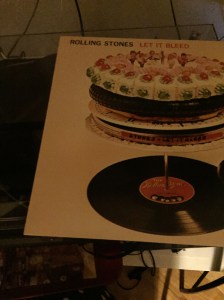
But… in that imported-non-event Black Friday and the subsequent weekend of discounts, my local chain music store (if I can I still buy independent but we’re all on a budget) dropped the price on a handful of albums – going so far as to slap “1 purchase per customer” on them as if the £5 discount was as monumental as a signed cover – and I grabbed Let It Bleed.IMG_6471

It’s already been round the turn table a good three or four times. I’ve often sought it out and for three reasons: Monkey Man, Gimme Shelter and You Can’t Always Get What You Want. Any album with those on it is automatically elevated to great status.

One of my favourite song writers – Mr Bill Janovitz of Bufallo Tom – is a huge Stones fan. He’s even written a couple books; a 33 1/3 on Exile On Main Street and one called “Rocks Off: 50 Tracks That Tell the Story of the Rolling Stones”. I don’t know that I could list 50 songs of theirs that I enjoy, probably a dozen or so.

review for said book in the Wall Street Journal kicks off with this:

“I used to work with a salesman who wore a Rolling Stones tongue-logo tie every day. His Stones were the Stones of “Satisfaction,” “Start Me Up,” and even (yuck) “She Was Hot”—huge arena-rock songs with instantly recognizable guitar-riff intros. Then there is the Stones fan of the classic-rock variety—the “Under My Thumb” and “Jumping Jack Flash” fan for whom the group, and the world, ceased to matter around 1968. My Stones are more about “Moonlight Mile,” “Monkey Man,” “Gimme Shelter,” “Rocks Off”—tracks that have the rambling, wide-open blues and rock sound that the band perfected in the 1970s. All three of us will devour Bill Janovitz’s “Rocks Off: 50 Tracks That Tell the Story of the Rolling Stones.”

I fall in the middle – my favourite tracks are, for the most part, of that “rambling, wide-open blues and rock sound that the band perfected in the 1970s.”

So, in the spirit of Top 10s (if it was Top 5 there’d be very little that wasn’t on Let It Bleed) and lists…. they are, in no real order:

Can’t You Hear Me Knocking

It’s not Brown Sugar, nor is it Sway or Dead Flowers… the standout track on Sticky Fingers, to my ears, is Can’t You Hear Me Knocking. I first heard this when it was used in Tedd Demme’s drug-smuggling, Scorsese-like Blow (more on Scorsese and the Stones to come of course) . I love the nasty, dirty-feeling power of that guitar riff, the breakdown and resolve of the saxophone (the hugely talented Bobby Keys appears on so much of their best work) and the fact that the breakdown happened, according to Mick Taylor because “toward the end of the song, I just felt like carrying on playing. Everybody was putting their instruments down, but the tape was still rolling, and it sounded good, so everybody quickly picked up their instruments again and carried on playing. It just happened, and it was a one-take thing.”

It’s a powerful, swaggering monster of a Stones song that contains every element of that blues rock sound that they nailed down so hard and perfectly in the Seventies.

Gimme Shelter

Another belter and, of course, also used in a few films – Goodfellas being the most memorable for me. Mick Jagger has said of it that “That’s a kind of end-of-the-world song, really. It’s apocalypse”. I read that Keith came up with the tune while stuck indoors as it was pissing down outdoors, meanwhile Mick was off filming Performance in which he beds down with Keith’s then-girlfriend Anita Pallengberg. Keith was just starting to use heroin and the anxiety and dread are palpable in the tune and it’s just a glorious tune that – while Satisfaction, Start Me Up or Brown Sugar might be the most well known – is undoubtedly their best.

Monkey Man

So; I’m a flea bit peanut monkey…. Whatever that means. The lyrics here are filled with snarl and bite (“I’ve been bit and I’ve been tossed around by every she-rat in this town”), the guitars even more so with Keith giving it some hard bluesy blasts, the piano is cracking and, like so much on Let It Bleed, pinned down by some ominous, urgent sense of menace. While Jagger’s line of “I hope we’re not too messianic or a trifle too satanic” is a classic, for me it’s all about the yell of “I’m a MONKEY…….”

You Can’t Always Get What You Want

For me, one of the best few seconds of any tune comes 50 seconds into the last Stones song of the Sixties. The choir finishes, the acoustic guitar has a few seconds alone and then the French horn pipes in with what could easily be considered a lament to the decade and the first chapter of the band’s life – the song was essentially all Mick in creation, Keith was beginning his journey into heroin addiction and Brian Jones was practically gone. And yet… it’s hopeful. Despite the universal doom and gloom Jagger sings of the song comes across as a near-rousing song of hope. The gorgeous arrangement, the keys, the horns, the shuffle of the drums and the kiss-off of the chorus “you just might find, you get you need” sung with a joyous sounding choir.

She’s A Rainbow

This is here almost entirely for personal reasons – it’s a song loved by my wife and I and played during our wedding – but it’s still a great Stones tune. Undoubtedly the prettiest thing they ever did and really the only one on Their Satanic Majesties Request that stands up on repeated listen. The delicate, pastoral piano, the shakes of the tambourine and then the dissonant breakdown with sharp, stabs of strings and the lewd “she comes in colours…” If the album was their attempt to take on Sgt. Pepper this song shows they could have knocked the Beatles into a hat and then jumped on it.

Their Satanic Majesties was a turning point in a way probably not intended. However, from here they went into an unbroken run of classics up to and including Exile On Main Street and kicking off with Beggars Banquet, featuring…

Street Fighting Man

To me, more so than Sympathy for the Devil, this one marks the start of the next chapter for the Stones. The lyrics came after a massive anti-war protest Jagger had witnessed, there’s no electric guitar on it with Keith building layer upon layer of distorted acoustic (via a cassette recorder!) and Brian Jones adds sitar and tamboura into the mix, keeping it rooted in the Sixties.

Thru and Thru

Ah Thru and Thru… Perhaps not the most obvious choice and I’d be surprised if it turned up in too many critical lists but this is my list and I love this. I first heard it when used on an episode of the Sopranos and the subsequent soundtrack. That it’s a Keith-sung number threw me off at first as I didn’t realise it was a Stones song. I love the slow build up, the layered vocal of “waiting on a call from you…” and Keith’s bluesy growl (though the ‘love as a takeaway’ lyric might not be his best). You know the subtle strings, build up and minimal guitar is going to break, has to break – especially with the thunder-crack drums appearing around the two minute mark – and yet the build up continues perfectly for more than half of the song and when the full-band does kick in, it’s glorious.

Mother’s Little Helper

“What a drag it is getting old….” An absolute ripper of a song about pill-popping mothers all wrapped up in under three minutes with a gleeful “oi” at the end. I continually find myself singing that opening line.

Wild Horses

Yeah, yeah… but it had to be on the list really. But it’s only lately that it’s snuck in there (over, say, Honky Tonk Woman) for me. Why? Because I read that Keith had written the chorus for his infant son as they were about to head off on tour. As a father I know that sentiment all to well. That it’s also among the best examples of how Mick and Keith wrote together – Keith had the riff and chorus, Mick added the rest (supposedly his relationship with Marianne Faithful going into his lyrics) and the pair of them sharing the mic for the chorus. The music is that most Gram Parsons inspired acoustic strum Keith had down at the time andsounds like it could sit on the Almost Famous soundtrack, underpinned with some beautiful electric lines and piano and is so well known it really won’t benefit from my prattling on about it.

Paint It, Black

Of course you can’t have any kind of Best Of list for the Stones and not have this song. That drone, that sinister sitar (Brian Jones’ legacy, to me, is in how much of their early work he got that instrument into), the drums and those lyrics that would no doubt inspire only Bailey knows how many ‘moody’ emo lyrics –

“I look inside myself and see my heart is black
I see my red door I must have it painted black
Maybe then I’ll fade away and not have to face the facts
It’s not easy facing up when your whole world is black”

Even if, according to Keith, it was written as a bit of a joke, they penned a classic here. Aftermath is the first Stones album to benefit entirely from the Jagger / Richards song-writing partnership, a move which meant Brian Jones got a tad bored with guitars and began exploring instruments like the sitar. This song is the perfect summation of the early-Stones’ parts.

Tracks: Aspirins and Alcohol

I’ve tried writing around this track as a post a few times and stalled. So let’s give it another pop…

As mentioned in my recent mumbling about Last Days of April’s latest On A Sea Of Clouds, I don’t recall how / when I first heard the band. I do, however, remember very vividly first hearing Aspirins and Alcohol. Or, at least, the first tumble of chords that kick it off – sitting in on a friend’s band practice when it was light-heartedly suggested as an exception to the “no covers” rule and the first twenty seconds or so of it were blasted through.

It’s certainly one of the Swedish band’s best songs and I’ve got fond memories of getting my request for it granted at small gig in a local venue (courtesy of a casual acquaintance at the time with the promoter).

There’s something immediate and arresting in the urgency of this song’s start that never fails to hook. It’s a very bitter track lyrically – I remember reading a review that said something along the lines of how Last Days of April used to write about every possible angsty teenage relationship and this one certainly fits that; just read the comments on the SongMeanings page. Hell, you can imagine goodness-knows how many ’emo’ kids agonising over this as if it were MY. SONG.

But get beyond that. It’s a belter, first and foremost. A massive rush and charge and I love the bitter, sarcasm in the lyrics and the “that’s nice…” kiss-off. It’s certainly a highlight on the album Angel Youth – which also includes a stellar second-half kicking off with the harpsichord-lead Make Friends With Time.

The band moved on from this sort of lyrical content pretty soon and gradually evolved into a more ‘mature’ sound – which has reached the point of lap-steel tinged Americana on their latest album – but this is certainly a call back to a time when labels like Deep Elm and Bad Taste were the ones with the rosters to watch and it was all so serious.


Turning Pages

Another month plus slips by without finding time to put anything on here. You know; life.

However – lots of reading and listening did happen. I’m charging through books at a pace that I hadn’t achieved for some time prior thanks to a late-summer / early autumn break and less-interrupted nights affording greater page time.

A relatively recent trip to Cambridge meant a stop in Heffers there (Oxford wasn’t on the route) and a quick trio of books were added to the shelves at home that might not otherwise have been considered. The first of which was The Death’s Head Chess Club by John Donoghue. A very original premise set amongst one of the most horrific backgrounds you could probably imagine for fiction as a master chess player is forced to play chess against guards, SAS offices and Gestapo members at Auschwitz with some very high stakes; the lives of fellow prisoners. It’s a startling read – while perhaps too heavy on the technicalities of chess, it’s no doubt useful in terms of offsetting the brutality at the novels core as the protagonist struggles to come to terms with events decades later and the novel becomes an exploration of guilt and forgiveness. I burned through this one pretty quickly, the pace is quick and the plot gripping but – as with any written word on this subject matter – at times harrowing and thoroughly devastating. Nonetheless; a clever and compelling read that – while not looking beyond the horror as such – tackles the emotions of those involved on both sides.IMG_6233

Given how heavy a subject matter and setting anyone could be forgiven for seeking something lighter. So I turned to an old favourite: Small Gods. I could – and probably will – write a whole lot more on the importance of Terry Pratchett in my library and literary explorations but it cannot be underestimated. I had, prior, to his sad passing earlier this year, been slowly putting together a Discworld collection of my own over the last few years. In a somewhat trivial – but important to me – element this has been somewhat slowed as I a) will only buy if I’m about to read and b) am not all that fond of the new range of paperback covers. Of his work there are three particular novels that stand out in my mind as “must read next”s – what I consider the best three, one a year from 1992, 1993 and 1994; Interesting Times, Men At Arms and Small Gods. It’s for these three in a good edition that I’ve been searching and at Heffers I found Small Gods as part of the newer hardback collection. It had been years since I read this first – perhaps as many as twenty – and it felt just as fresh, original and funny. Less ‘fantasy’ perhaps than some of his work (there’s no trolls, vampires or dwarves of indeterminate gender) and more of a biting satire and swipe at religion – Small Gods is, to my mind, one of Pratchett’s best and, yet, often overlooked works. With the question of religion and fundamentalism still causing more questions around the world it’s always a good time to pick this one up.

This somewhat out of order as prior to both of these I’d spent a week or so devouring Catch-22. I can’t believe that it took me this long to read this book. I don’t know why I’d ignored it before – I seem to have had the impression it was something different and far less accessible and funny. I ended up grabbing Joseph Heller’s masterpiece (and it certainly deserves that title) for just £2 in HMV not long before going away for a week and wanting something I could page-flick while relaxing. There’s a site – gobookyourself which I thoroughly recommend but can easily get lost in- that linked it to three other books I’d loved so I figured it was worth a punt for such a small sum. Out-and-out hilarious – there were times when I had to put the book down I was laughing so hard. There is a kind-of sequel that I’m not sure I want to read; I need to keep this one as singularly perfect as it is. A deliciously funny and wicked and scathingly satirical read that’s equal parts farce and slapstick of which far too much has been written by other reviewers for me to able to add much except to perhaps say that I wholeheartedly agree with Heller’s response in the below:

hell

I seem to be going in reverse order here. For before churning through so many books so promptly I spent a fair few weeks lost in Perfidia. Again; bought on something of a whim on the premise of it having had countless strong reviews and being set in World War 2. I wasn’t really prepared for this one because Holy Shit this book is good.

I’d not read anything of Ellroy before and I was some pages in before I connected the dots to the fact that he’s behind LA Confidential and the Black Dahlia et al. This is the first in a planned quartet of books set before the events of those previously mentioned – in 1941, in the days surrounding the Japanese bombing of Pearl Harbour. Nobody else writes like Ellroy. This is a huge novel in terms of intricacy and detail. The writing is intense and all-consuming – I genuinely felt like I’d been immersed in another world when I finally turned the last page and left itching for more. Time permitting I’m pretty sure I’ll be heading back to Ellroy’s LA.

I started reading a lot of Nordic crime / noir / thriller type stuff this year and thoroughly loved a couple of books by Jo Nesbø – The Snowman (my introduction to Harry Hole) and The Son. As such it kinda galls me to write this as I don’t think (hope) it’s indicative of his work but…  Headhunters is a ‘no thank-you’ from me. I didn’t find the first person narrative so convincing, found the plot so-so, the pacing lacklustre, the characters flimsy and the main character such a general twat that it’s hard to find any interest in reading ‘his’ story. So much so that – and this is indeed a rarity – I simply couldn’t find any reason to push further than 100 pages into this one. This being said I seem to be far from the majority in this view and so I may try and give it another go when time permits but, with so many strong contenders lined up on the To Read pile, it might be some time.


How To Be Brave

imageThis has probably been said a million times or more and will no doubt continue to be stated while simultaneously irritating those who have yet to realise just how true it is due to lack of personal experience, but; everything changes when you become a parent.

So much so that I couldn’t possibly attempt to describe it here. Nor would it be relevant to do so. So why do I start this post, a review of the fantastic How To Be Brave by Louise Beech with this?

Well one big shift when becoming a parent is that of self-concern giving way to an all-consuming focus and worry your child’s well-being; what if something were to go wrong? What if they were to become ill?

It’s very hard to put this into words in a manner that truly captures the feeling let alone one that does so in a way that others might want to read. Louise Beech, however, does just that. In How To Be Brave she vividly evokes the sensations of panic and dread that accompany being a parent when a child falls ill and perfectly captures the feeling of isolation from the rest of the world that occurs at such times. Not that it’s a ‘dark’ book, far, far from it.

Natalie’s nine-year-old daughter Rose collapses in the kitchen one Halloween. Following an ambulance trip to the hospital and a little diagnostic testing, Rose is confirmed as having Type 1 diabetes and will require finger-prick tests and insulin injections for the rest of her life. An extremely daunting concept to cope with.

What follows is a great story of a mother and daughter coming to terms with the illness and its ramifications. Louise Beech does a cracking job of portraying the “shut out the world”, “nation of us” feelings that pervade at times of crisis in a family with a tight bond.

It’s also the story of Natalie coming to terms with her daughter’s growing independence and realising that – as much as she or any parent would like to – she doesn’t have to hold her child’s hand all the time anymore.

But that’s not all. For within this story another two are interwoven with Natalie’s attempts to reconnect with her daughter and keep alive her love of books which, in the resultant, insulin-driven emotional fall-out of her diabetes diagnosis had threatened to vanish completely.

First is the mystical presence / visitation of Natalie’s grandfather who appears to both Natalie and Rose and how it leads them to finding another story and a way to connect by leading them to his diary and, in it, his tale of being lost at sea for fifty days following the torpedoing of his merchant ship in World War Two.

(Grandad) Colin’s story is told – via Natalie – in exchange for finger-prick test and insulin injection cooperation from Rose. Through this storytelling we travel to a small boat adrift on the Atlantic Ocean where Colin and the remaining survivors fight to stay alive in their wait to sight land or rescue.

The story of Colin and his plight is told brilliantly and the reader is kept on tenterhooks between instalments and there are times you feel as much eagerness to get back to the men on the boat as Rose does.

Beech artfully weaves the two narratives together with times of crisis for Natalie and Rose mirrored by those times of peril on the lifeboat. As Colin and the survivors are literally cut off from the world and their loved ones Natalie is cut off by the changes in her life, distanced from her daughter by the changes diabetes has on Rose’s personality and seperated from her husband, Jake, by his unit’s tour in Afghanistan. Indeed as Colin’s salvation arrives it’s clear that Natalie and Rose, too, have turned a chapter and have navigated the worst. Rose is now back to her old self and both mother and daughter are at peace with her diabetes, their relationship is restored just as Jake returns, belatedly, home (quietly matching the time at sea spreading beyond the previously calculated 30 days from land).

How To Brave is two wonderful stories wrapped into one compelling read. Louise Beech is adept at both narratives and styles and writes with a confidence and trueness of voice that can only come from experience and yet manages to turn what must have been a truly testing time in her life into a great, gripping and thoroughly rewarding read for all. She’s clearly an author to keep an eye on.

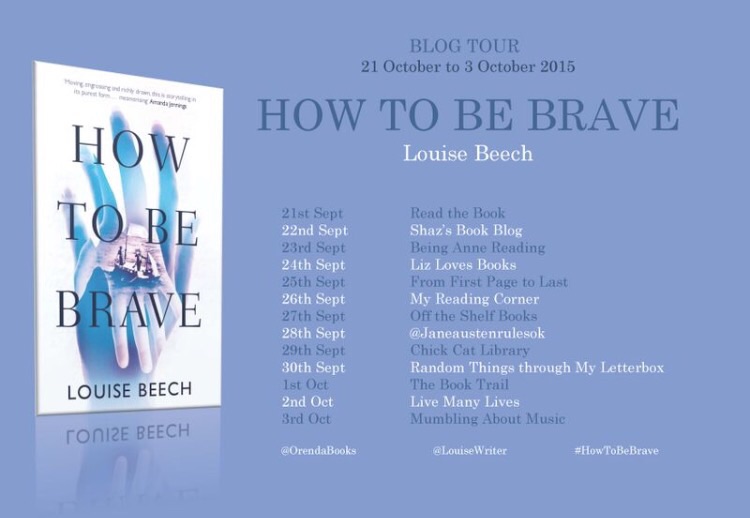
My thanks again to the wonderful Karen at Orenda Books for sending me How To Be Brave and asking me to be part of its Blog Tour. Check out Live Many Lives for yesterday’s and Welsh Librarian Blogspot for tomorrow’s stop and get a hold of the book today, you won’t be disappointed.

image

The Defenceless

There’s a statement on the cover of The Defenceless, Kati Hiekkapelto’s second novel to feature police investigator Anna Fekete: “Best Finnish Crime Novel 2014”. I’ve not read a Finnish crime novel before nor have I yet read this book’s predecessor, The Hummingbird, but, and let’s get straight to the point here: The Defenceless is one hell of a good book. Great, in fact.

CMd78rFWgAEcd-vAt the centre of The Defenceless lies a mystery – an old man (Vilho Karppinen) dies, presumably, at the hands of a drug dealer, only for his death to be pinned on an Hungarian au-pair. Two girls stumble onto an alarmingly fresh crime scene in a forest – snow soaked in human blood, tyre tracks leading from the trees and a knife found at the scene – but missing the vital ingredient; a body. Then, one of Karppinen’s neighbours, goes missing. Is there a connection? Is it her who’s body is missing from the murder scene? Is a killer prowling the streets of this Finnish town?

Given that we’re witness to Karppinen’s demise you may be forgiven for wondering where the police investigation into his death is going at first, chiefly because it looks as though, to all intents and purposes, he died at the hands of a drug dealer in an argument over noise. It’s almost a case of waiting to see how long it takes for the Hungarian au-pair to be cleared. Yet as the story develops, Hiekkapelto skilfully weaves in more mystery and plot twists, adding intertwining sub-plots involving gangs, corruption, drugs and social commentary into an addictive, compelling novel with more questions building with each page turn; are the killings related to the violent gang that’s trying to establish itself in Finland that Fekete’s partner, Esko, is trying to snuff out? How is that gang related to the drug dealer? Are they behind the murder scene? How are the Hell’s Angels involved? Is the au-pair all that she seems?

There is a lot going on in The Defenceless, a world of story lines packed into less than 300 pages. Rubbing ink with the main case and Esko’s investigations (not to mention the ticking-clock of his health) is Anna’s own sense of isolation and removal from a homeland that no longer exists, her brother’s battle with alcohol, family illness and, of course, Sammi.

Sammi is a refugee from Pakistan, now in hiding and living rough following the rejection of his asylum claim and facing deportation to a country in which he faces persecution and death for his beliefs. Desperation leads him to increasingly extreme measures in his attempts to remain in Finland. There’s no heavy hand here, no resorting to the didactic in telling Sammi’s side of the story and the futility of his fight against blind bureaucracy, just a talented author using her art form to affectively shine light on an increasingly absurd system (one not unique to Finland) that differentiates between people and their rights to basic human existence according to the particular piece of this Earth that chance happened to place their birth. The message couldn’t be more pertinent given the humanitarian crisis facing the world today and it’s the conclusion (or non-conclusion) of that story which will stay with you beyond the final page.

With The Defenceless you’re so caught up in the characters, the sub plots and the hunt for what appears to be a brutal killer that when the killer’s identity and motive are revealed it comes like a bolt from the blue. It brings to (my) mind the reveal in Håkan Nesser’s The Unlucky Lottery. I do hope that doesn’t serve as a spoiler, more as a nod to another gripping Scandi-noir detective series.

There’s a growing number of crime novels with a conscience out there and this ranks up there with the best, leading the charge with a heady blend of mystery, suspense and social drama that hooks from the off and doesn’t let go even when the last page is turned.

A sign of a good novelist is not seeing them in the text, if you follow me. A writer needs to disappear, to allow their characters to take centre stage, become real and express themselves rather than parroting the views and sensibilities of the author. It’s not the easiest of tasks but it’s one which Kati Hiekkapelto pulls off nicely.  The Defenceless is populated by characters who are not only engrossing and fully realised but, when the narrative shifts to them, tell the story in their own way without filter – especially so in the case of the oh-so-politically-correct Esko who’s passages are so vociferous with their racial hate as to be at polar-like odds with those of the empathetic Fekete.

The translation – by David Hackston – should also receive the strongest nod of approval; at no point in reading The Defenceless was there any indication that this was anything other than the language the novel was written in and the deft translation ensures that the novel’s momentum and feel flows uninterpreted across the language transition.

While The Defenceless is the second Anna Fekete I’ve not yet read  The Hummingbird and I don’t believe it’s essential to have done so to enjoy this novel – another plus – which manages to stand brilliantly on its own. That being said, it does mean that, for me, The Hummingbird is an essential ‘to read’ and I’ll now go about getting my hands on it while eagerly awaiting the next instalment from Kati Hiekkapelto – clearly an author to watch.

I was, again, delighted to be sent this book by Karen at Orenda Books (a publisher who’s first year has certainly cemented it as a purveyor of quality, original fiction) and be asked to take part in the Blog Tour. Check out the other stops and keep an eye on Crime Thriller Girl for tomorrow’s stop and – of course – read The Defenceless.

Defenceless Blog Tour

The Dust That Falls from Dreams

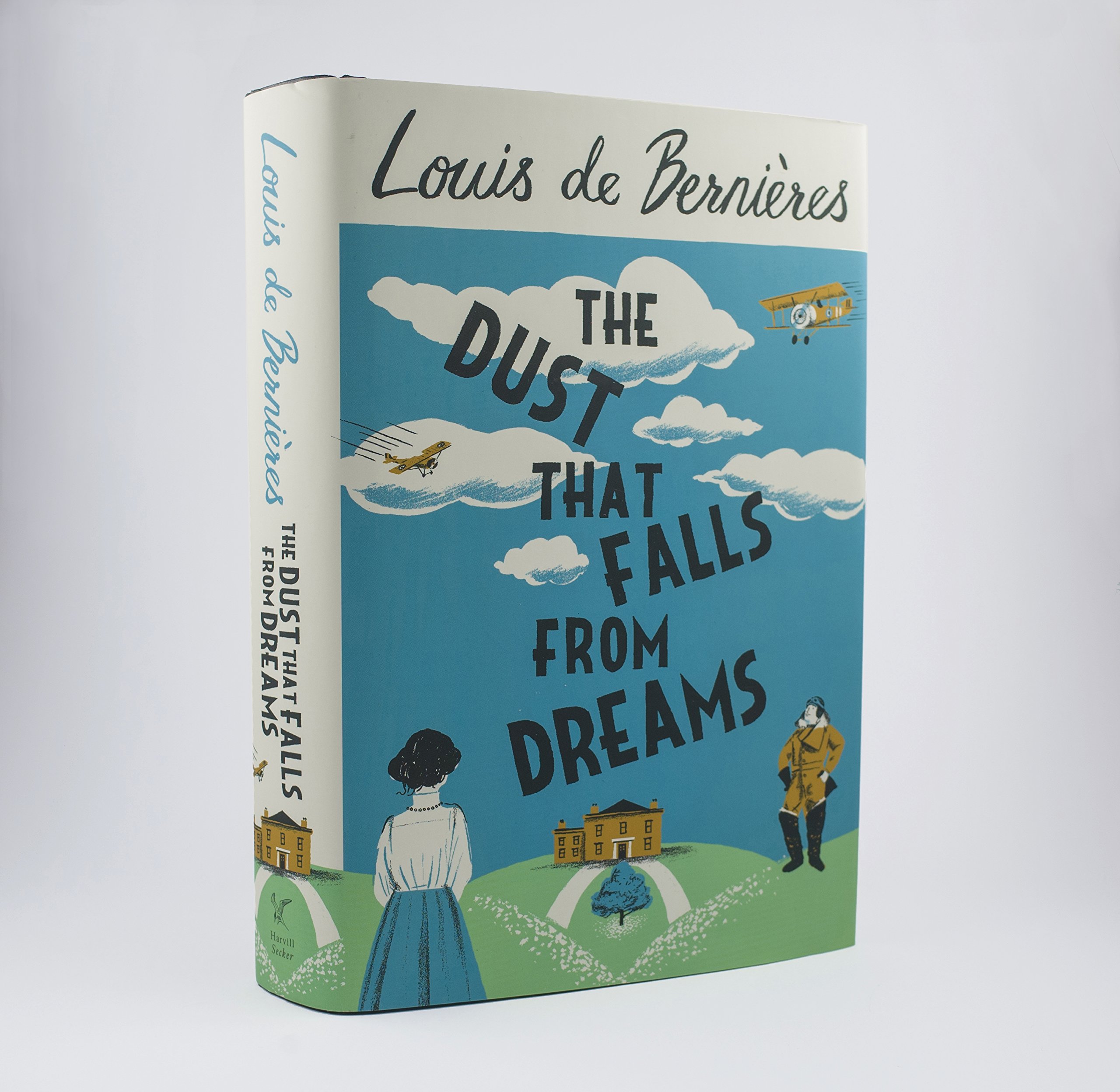
91e3i+vVdTLI go back a bit with Louis de Bernières. Well, I say that – like most I started reading him thanks to Captain Corelli’s Mandolin – the first few lines of which were used as discussion point in an A-level English class in – I’d guess – ’97. The perfectly self-contained opening chapter, a beautifully written piece of charming prose, a (what I know now to be) typical de Bernières style light-hearted slice-of-life scene setter with a fantastic description of an inner ear as “an aural orifice more dank, be-lichened, and stalagmitic even than the Drogarati cave”.

I took the print outs containing that first chapter (Dr Iannis Commences his History and is Frustrated) home, passed it to my father and the book was soon in our home and passed into my hands following his. It’s a novel well-known, commented upon, discussed and dissected. As such I won’t here.

There followed the discovery of and lapping up of de Bernières’ South American Trilogy, earlier novellas and plays, the stop-gap Red Dog and, my personal favourite Birds Without Wings. 

Birds Without Wings arrived some ten years after the publication of de Bernières’ previous novel. But he isn’t a writer of small books; his novels are of epic proportion and scope.

It’s not too surprising, then, that The Dust That Falls From Dreams arrived another ten years after the publication of Birds... Not that he was idle. Between times there was A Partisan’s Daughter a (somewhat smaller though nonetheless impressive) novel set in more contemporary times and familiar locales and, in 2009, Notwithstanding – a charming, if non-consequential collection of semi-linked short stories all set in an English village of a certain southern England type and charm, populated by characters of a particular eccentricity.

Perhaps, in hindsight, those stories within Notwithstanding were perhaps something of an exercise. I’m inclined to see them as de Bernières – known for novels set in Greece, Latin America and Turkey – setting out his stall in ‘middle England’, gaining confidence in the styles and character types that would populate his next saga for, as we’re now aware, The Dust That Falls From Dreams is the first of a planned trilogy.

And so, to it.

The Dust That Falls From Dreams is every bit the opus I’ve been waiting for as a fan of de Bernières. Yes, some will complain that he’s switched a setting like Cephalonia or Cochadebajo de los Gatos for Kent, but arseholes to them. This is a novel of epic proportions and every bit as “de Bernières” as his previous five “big” novels.

Kicking off with death of Queen Victoria and the commencement of the Edwardian era, we’re introduced to the McCosh family as they hold a belated coronation party with their neighbours. With a sudden time-jump we’re off to the Georgian era and slap bang on the doorstep of the First World War.

Of all the writers to task themselves with chronicling this most heinous of periods, the upheaval and destruction it wrought, there are few who could do so as well as de Bernières (Sebastian Faulks’ Birdsong is, of course, another exemplary example) – bringing all too real the events both home and abroad that bought an end to an era and threw individuals into a torrid world where the sense of the individual was lost.

CJAjyIFWcAEeatZIn The Dust That Falls From Dreams de Bernières is at his best. The plot and author play with our fears and guesses and – as those familiar with the author will expect – deliver both uproariously funny and uplifting moments with one chapter before just as skilfully delivering gut-wrenching emotional blows to the heart in the next (this is the Great War, after all). I won’t dwell and deliver spoilers as to who de Bernières casts asunder but will say I felt the final one, unrelated to any ‘cast’ member was a little uneccessary and particularly crushing, especially after the soul hitting account of the Folkestone bombings. Though, in hindsight, this too shows the author’s mastery at engaging a reader and rendering you completely spellbound.

The McCosh girls’ visit to a local medium and the scenes that unfold add a welcome touch of the fantastical, hearkening back to the author’s Latin American Trilogy, and well-chosen historical references help set a thoroughly well realised setting in both time and place, home and abroad.

At times the characters could perhaps be considered a little two-dimensional (though I don’t recall too many layers being attributed to Don Emmanuel) but this is the start of a trilogy and I have little doubt that as the whole saga of the McCosh family unfolds in de Bernières’ magnificent style, all will become fully rounded and developed.

The Dust That Falls From Dreams is a saga that encompasses three families at one of the most dramatic times the World faced. It deals with a vast array of subjects beyond the core of love and death, picking up the politics of class and gender, religion and industrialisation as it goes.

While not quite up there with Birds Without Wings this may well be the start of something amazing as the saga continues and should well be considered a fantastic novel in its own right. I await the next instalment with high expectations.

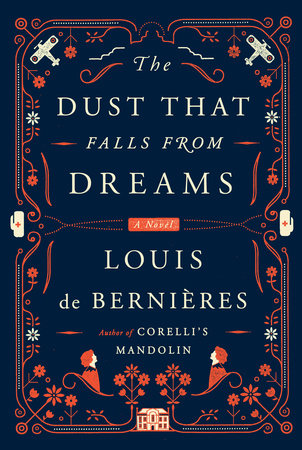
On a side note; why do we get lumped with such a cack cover image in the UK compared to the more attractive cover design they get in US?

9781101946480


On A Sea of Clouds

Ah, Last Days of April; now here’s a band that should be known to a much wider audience.

How and when I first came across this band I cannot entirely recall – I recall the name being one of those that were bartered about by a few of those friends of mine back a decade or so ago (before the internet was what it now is) amongst which music tip-offs were traded continually and all were keen to turn another on to a great band – Deep Elm / Bad Taste Records’ rosters supplying plenty of fruit…. think Appleseed Cast, American Football etc.

I can recall sitting in on a friend’s band practice when the guitar player hit the opening chords of Aspirins and Alchohol (of which I shall write more in another post) and getting hooked.

CJYR7RyWcAA6ImZThis Swedish band – which has now evolved into a somewhat rotating cast of musicians around core singer/songwriter/guitarist Karl Larsson – has been steadily releasing music since 1997 and evolving with each addition to the catalogue. Having been along for the ride since If You Lose It (and having caught a couple of shows in intimate venues), I’ve relished the band’s continued progress.

Arriving three years after their last effort Sea of Clouds marks a continuation of their sound’s evolution and Larsson’s maturity as a singer and songwriter.

Since Might As Well Live – the album which I think marks the end of the original LDOA sound – Larsson appears to have become an artist of second halves. Both Gooey (see the extremely catchy ‘Forget About It’ and ‘Why So Hasty’) and 79 (‘Lily’ and ‘Feel the Sun Again’) have reserved their best moments for Side B. That’s not to say these albums are only worth playing on one side, more that Larsson appears to stretch out and push beyond the simple pop structure. It’s then that the real fun is to be had.

The same is most definitely true of Sea of Clouds; it’s on those songs where Larsson is pushing beyond the sounds of his earlier records that the best songs are found. ‘The Artist’, ‘The Way Things Were’ are charming and straight-forward, ‘Oh Well’ a little more contemplative than LDOA of old and then we get to ‘The Thunder and the Storm’ – a stately tune underpinned by some superb playing that finally lets loose and propels the song into something else altogether. ‘Someone For Everyone’ is probably the most LDOA sounding song on the album but it’s the title track that holds it altogether.

‘Sea of Clouds’ is likely to become one of the songs I listen to most this year. A real slow-burning bruiser of a song, the title track is the best thing on here. A huge leap in songwriting from his earlier material, Larsson’s voice here is both wiser and more assured than ever as it’s given room to lament over a rolling-dark-cloud like backing with some sublime guitar flashes.

There’s a line in ‘America’ from Gooey: “I can’t go back to you, America” which has proven strangely prophetic as it seems that, starting with 79 and continuing here, Larsson has very much been under the thrall of America – specifically Americana. Where once LDOA albums tore past in a frenzied rush of fiercely strummed electric guitars, drums and songs about everyone’s love life, here the songs are of a calmer, more mature nature, embellished instead with delicate acoustic guitar layered with lapsteel – even a bit of honky-tonk on ‘Get You’.

A much more sedate and contemplative record than I was expecting but a strong and compelling collection of songs that’s not only impressive on first listening but suggestive of a real grower in Sea of Clouds. Hopefully it won’t be another three year wait until the next instalment.