Least to Most: Bruce – Tracks

“The alternate route to some of the destinations I travelled to on my records.” Bruce Springsteen

“Every song on Tracks is a lost argument”. Steven Van Zandt.

Strap in, this one is a long one…

bruce_springsteen_tracksIn 1998, with eleven studio albums to his name, close to 75% of Springsteen’s work remained in the vaults. His mammoth studio and recording sessions from Darkness on the Edge of Town onward meant that he’d essentially written four albums worth of material for every one that was released. His production and arranging partner for much of this time, Steven Van Zandt, would get frustrated by this practice – especially when he had to work so hard for his own songs – as many of his favourite tracks would end up shelved despite being the sort of thing other acts could make a career from but has referred to this period as Bruce’s “hundred song phase”. Not many artists are capable of such sustained writing periods, let alone when the material was so solidly strong.

When Tracks was released in 1998 it had already been whittled down from six discs of material to four and the 66 tracks ran from Springsteen’s 1972 audition tapes for Columbia through roughly chronological order to the late 90’s, divided up (as illustrated by the covers given to each of those discs inside the box) into what Bruce saw as the sections of his song-writing arc. Given that it came at the end of an otherwise sparse decade for Bruce fans, it was embarrassment of riches; of the songs included a handful had been released as B-Sides, some had leaked out on bootlegs and some had been heard live but never released. Plenty of them though had never even been heard of.

Those audition tapes kick proceedings off but, given the bare-bones approach to their released versions, don’t offer anything other than a passing interest and ‘Bishop Danced’ isn’t all that good if I’m honest. The first disc is made up of out-takes that, for the most part, it’s clear to see why; the songs are good ideas but don’t really make for strong contenders. I couldn’t imagine much debate went into ‘Zero & Blind Terry’ vs ‘Incident on 57th Street’ but the songs are good examples of Bruce working out ideas in the studio, with many a part stripped from one and dropped into another – albeit a couple of decades later with ‘Seaside Bar Song’s “the highway is alive tonight” lyric. But that’s because, up to, and including, the Born To Run sessions, Bruce’s writing hadn’t hit its stride (in terms of prolificacy not quality) and I imagine the constraints put upon him by the record label meant the time to do so wasn’t afforded to him in the way the Appel lawsuit would force it. For once the first disc reaches ‘Rendevous’ and the sublime ‘Iceman‘  we’re jumping into songs from Bruce’s most fertile period and the quality kicks up into a different gear. The leap is noticeable between ‘Linda Let Me Be The One’ and ‘Don’t Look Back’.

Now, in the same way the The Promise represents a lost album, the second and third discs of Tracks are nigh on faultless and could easily make up three classic albums from tracks completely omitted from The River and Born In The USA. Just take the breathless joy of Disc 2 opener ‘Restless Nights’ as Danny Federici whips up a dervish on his keys before Bruce’s guitar rips into it a minute and a half in:

Tracks like ‘Roulette‘, ‘Dolls House’, ‘Where The Bands Are’, ‘Loose Ends‘, ‘Living on the Edge of the World’ are pure, perfect three/four minute pop songs. Van Zandt was aghast that these were shelved – believing an album of these, plus ‘The River’ would be been a great thing. He’s not wrong. ‘Living on the Edge of the World‘ perhaps sounds strange but that’s because Bruce would take a few of it’s lines and strap them to altogether different beats for Nebraska‘s ‘Open All Night’ and ‘State Trooper’. Oh and there’s the absolute classic ‘Take ‘Em as They Come’ which just bounds along on a stellar beat that surpasses many a released song.

Slipped just before ‘Take ‘Em..’ is a Born In The USA out-take whose existence was previously unknown;

‘Wages of Sin’, another Bruce classic, is the first hint of what’s to come on Disc 3; a wealth of tunes that were recorded between 1982 and 1984 in that protracted recording period that lead to Bruce’s biggest-selling album. As big as that album was, the tracks that didn’t make the cut could easily be put together into an alternative album that would’ve been as good if not better. Just picking a handful of those tracks, say: ‘Wages of Sin, ‘Rockaway the Days‘, ‘Shut Out the Light’, ‘This Hard Land’, ‘Frankie’, ‘A Good Man Is Hard to Find (Pittsburgh)‘, ‘Lion’s Den’ will give you a strong album, if you were to add ‘My Love Will Not Let You Down‘, which breezes and rocks past plenty like on Born In The USA then you’ve got a classic and that’s without even mentioning another previously unheard of song – ‘Brothers Under The Bridges ’83’:

More than an ‘alternate route’ there’s alternate albums here. Oddly enough, Bruce even toyed with yet another album approach between Nebraska and …USA. Buoyed by the positive reception Nebraska‘s stripped-down sound received he headed back and laid down a few more tracks in a similar bare-bones, minimal approach before abandoning and heading back into the studio with the full band. Of those recorded during those sessions the soft tribute to Elvis, ‘Johnny Bye Bye’ and ‘Shut Out The Light’ would end up released as b-sides for ‘Born in the USA’ and ‘I’m On Fire’ before their inclusion on Tracks.

It’s not only ..USA that could’ve taken a different theme – just take a look at the difference in themes on those songs recorded during the Tunnel of Love sessions. ‘The Wish‘ is perhaps most known of these- a song Bruce wrote for his mother but felt unable to release officially given its sentimentality – while ‘The Honeymooners’ (a home-recording with the sound of dog barking captured in the background), ‘Lucky Man’ and ‘When You Need Me’ give a different insight to the men & women relationships that album tended to lean toward. Hell, ‘When You Need Me‘, similar in its uncomplicated sentiment as ‘Two For The Road’ is as content as Bruce would get this side of Lucky Town: “When you need me call my name, ’cause without you my life just wouldn’t be the same”.

The final disc loses the momentum a little with a lot of bass-heavy songs cut during the Human Touch sessions weighing it down. “I wrote about half a record on the bass, where you had a note and you had your idea. The only one that made it to release was ‘57 Channels,’”… indeed, and on Disc 4 there’s the remainder of those cuts – all exploring similar themes (internal dialogues working out psychological or relationships as Bruce himself was at the time) but none that really stand out as worthy of going further. That being said I’d rather something like ‘Gave It  A Name‘ or ‘When The Lights Go Out’ had seen release over the aforementioned Human Touch cut itself.

There’s still plenty to enjoy, though. In ‘Songs’ he explains that to shake off his writer’s block, Bruce started sessions for Human Touch by experimenting with different styles he “had always liked: soul, rock, pop, R&B”.  If you ask me, removed from much of the heavy-handed production that spoilt that album, they shine brighter here. One such song ‘Sad Eyes‘ is a cutting tune that’s better than most released on that album (and features David Sancious who also plays on ‘Part Man, Park Monkey’), ‘Seven Angels’ is back to the rock but undercut with more humour and looseness than anything that made the cut and ‘Gave It A Name’ – the master take couldn’t be found so Bruce and Roy Bittan recut the track in ’98 – is masterful in it’s minimalism. Oh, and there’s also ‘Happy’ the sole out-take from Lucky Town omitted only, I guess, because it shared the “gold and diamond rings…drug to ease the pain that living brings” line with the superior ‘My Beautiful Reward’.

The box is rounded out by the then-latest omissions. ‘Back In Your Arms‘ features the E Street Band and was recorded during the Greatest Hits sessions – like ‘Secret Garden’ it was originally one intended for Bruce’s shelved ‘Philadelphia’-style album – while ‘Brothers Under The Bridge’ is a beautiful out-take that was, exasperatingly when you considered what it could’ve replaced, omitted from The Ghost of Tom Joad and brings the set up to what was then Bruce’s most recent studio sessions. A story about a homeless Vietnam veteran living “who has a grown daughter that he’s never seen, and she grows up, and she comes looking for her dad. And what he tells her.” It would be performed live after ‘Born in the USA’ or ‘Shut Out The Light’ to place it within Bruce’s Vietnam arc and its one of those songs (like ‘The Promise’) whose live rendering meant fans were puzzled by its omission from the record.

Not everything on Tracks is brilliant but a lot of it is, much of it is very strong and some of the songs are absolute Bruce classics that stand above many in his catalogue. That’s why it’s on this list and why it’s on this list in this place; if I were talking to a Bruce newbie I’d recommend many of the songs on here well before a lot in his catalogue.

While many box-sets merely curate already-released material with a smattering of live cuts or offer up b-sides that are clearly inferior to their As, Tracks represents a much deeper fleshing out of the Springsteen narrative and emphasises just how strong a songwriter he is; even those tracks omitted from his albums piss all over many artist’s hits. Four discs and 66 songs is a lot to get through but it’s worth it. If you’re pressed for time then Discs 2 and 3 contain enough gold to make sure the box is worth of inclusion as an essential addition to a Springsteen collection / discussion.

Highlights: ‘Iceman’, ‘Don’t Look Back,’ ‘Restless Nights’, ‘Roulette’, ‘Take ‘Em as They Come’, ‘Shut Out the Light’, ‘My Love Will Not Let You Down’, ‘Frankie’, ‘Rockaway the Days’, ‘Brothers Under the Bridges ’83’, ‘Seven Angels’, ‘Gave It A Name,’ ‘Happy’, ‘Brothers Under The Bridge’

Not-so-highlights: The omission of ‘The Promise’. This actually lead to many a complaint from fans. A new recording of it would be slapped on the single-disc-sampler/cash-in 18 Tracks along with another couple of ‘new old’ tracks – ‘The Fever’ and ‘Trouble River’. 18 Tracks, intended for fans who didn’t fancy the full box, actually fared worse than Tracks in terms of sales and charting; Tracks was something of a hit for Bruce, hitting the Top 30 and shifting plenty of units, defying expectations for a Box Set in much the same way as Live: 1975-85 had a decade earlier.

We got the means to make amends… Pearl Jam and the Rock & Roll Hall of Fame

Warning: rant incoming.

The Rock and Roll Hall of Fame is a strange thing. From where I sit it seems like a lot of back-slapping and congratulating from industry-types with very little real merit. Does it mean something to be a “Hall of Famer”? Does it add all that much credence anymore? Perhaps it means more in the States than it does here where a UK Music Hall of Fame sputtered, stalled and stopped before anyone paid it any attention.

Let’s spin back a bit to 1983; the Rock and Roll Hall of Fame was set up by Ahmet Ertegun (he of Atlantic Records) to “recognize and archive the history of the best-known and most influential artists, producers, engineers, and other notable figures, who have each had some major influence on the development of rock and roll” (Wikipedia) and began inducting such artists in 1986 with the first group of artists including Elvis Presley, Sam Cooke and Chuck Berry.

Since then each year a group of artists are nominated, voted for and inducted in a ceremony – again; from where I sit – that seems overly long on speeches and pretty short on the ‘rock and roll’. With each year there’s criticisms about who is and isn’t nominated (chief amongst which being that those controlling nominations, as a small group, are not musicians and nominate based on personal taste) and then there’s plenty of column inches and website debate and pages handed over to the ‘drama’ of which members from a certain band will be inducted, will attend, will tell the HoF to shove it…

From those Bozos in Makeup to Axl Rose’s tantrums, the question about which ex-members should be in alongside the nominees seems to draw more debate than discussing that band’s lasting impact. The cynical side of me (which seems to only get more so after a decade in marketing) certainly thinks that this is a deliberate act by the HoF in order to stir the pot, get more attention and create more buzz than the ceremony would otherwise get, nominating bands for whom the real question will be “will they induct that member who played tambourine on their first album or…?”

Nirvana had it in 2014 when those members inducted included Dave Grohl and not the four drummers that had sat on the stool pre-Nevermind. Would they induct Chad Channing or the first drummer, Aaron Burckhard? For, you see, there’s a criteria for getting in: “artists will first become eligible for the Rock Hall 25 years after the release of their first record (LP, EP or single)”. Bleach was released in 1989 (with Chad Channing on drums and Jason Everman on guitar*) but Nevermind, the first record Grohl drummed on, came out in 1991. It really adds weight to the idea that the HoF is after the popular vote more than anything – everyone loves a bit of Dave Grohl, nobody knows who Chad Channing is. There was, of course, a lot of online hubbub about the ‘snub’ of Chad.

Being the perennially nice guy of rock that he is, of course, Dave praised those drummers that had hit the skins before him in his speech and the band invited Channing to attend.

This year that question and the online buzz falls upon the collective shoulders of Pearl Jam. A band with a huge and dedicated following who forged a path for many to follow. Few can touch them live or match their unique set lists and they’re certainly the last men standing when it comes to the ‘Seattle Scene’. Their place in the Hall, even in the first year of eligibility, isn’t likely to be questioned. They’re also a band who, for the first half of their career, had a Spinal Tap scenario with their drummers**.

Released in August 1991, Ten featured Eddie Vedder, Stone Gossard, Mike McCready, Jeff Ament and, on drums, Dave Krusen. Krusen, though, had left the band in May due to alcoholism. His replacement, Matt Chamberlain only hung around for a handful of shows before heading off to join the SNL band. He suggested a guy to take his place; Dave Abbruzzese. Abbruzzese played drums through the rest of the tour supporting Ten, on Vs. and Vitalogy before he was fired in 1994.  During which time the band would tour extensively, Abbruzzese would write the music for ‘Go’, ‘Last Exit’ and ‘Angel’ and defined the band’s sound at the time with his ferocious drumming. The harder sound he bought helped them move away from being pigeon-holed as another clone.

If you ask a Pearl Jam fan what the band’s ‘peak’ period was I’m willing to lay money on a large percentage saying 1991-1994. Abbruzzesse was a key part of that sound. The problem is, he enjoyed it too much. I’m not talking piles of cocaine and claims of being a Golden God, no; he just loved it all and smiled too much. Rumours swirl as to why Abbruzzesse was actually let go but it boils down to the fact that he was obviously having fun. Vedder was, at this time, at his most serious and ‘punk’, it wasn’t ‘cool’ to be enjoying your success and, as the front man, he took most of the attention and it was a lot to handle. While the band withdrew from the spotlight, Dave would give interviews (albeit to drum magazines, not Spin or Rolling Stone). While the other members would go the Volvo or battered old truck route, Dave bought a Lexus. He didn’t really care about the famous Ticket Master Boycott either. Apparently the final straw for Dave’s tenure came when he accidentally broke the neck of one of Vedder’s guitars during Vitalogy sessions and didn’t hang around to tell Eddie or apologise. He wouldn’t be in the band when it came time to tour the album he’d helped create, he was let go – Vedder wouldn’t do it, the task fell to Stone Gossard.

Pearl Jam

Jack Irons, formerly of the Red Hot Chili Peppers*** was then in the saddle for four years and two albums before he ducked out (not happy with touring) in 1998 and then-former Soundgarden drummer Matt Cameron took the seat he still occupies. Now, Cameron is certainly the stick man with the longest tenure and its clear that he’s considered a full member of the band – Vedder continues to praise him and has credited his joining with keeping them together – but I don’t think I’m alone in seeing him as an outsider even some 19 years and five albums later.

Now of all their six drummers, only one, technically, qualifies: Dave Krusen. He played on Ten, twenty-five years ago. By all accounts he’s quite surprised at the nod. The Rock and Roll Hall of Fame, however, is also inducting Matt Cameron. And nobody from the period between the two.

Now, out-dated and bloated an institution as it may be, if the Rock and Roll Hall of Fame are recognising Matt Cameron then they sure as shit should recognise Dave Abbruzzese.  As much of a deliberate poking of a hornet’s nest as the snub is, it’s also pretty unfair to then place the onus of dealing with the question onto Pearl Jam (ever-shy of such publicity and awards) to be the ones to deal with it. Dave, obviously riled himself, has said plenty, chiefly:

“I have always thought that every award given to a band that celebrates the bands lifetime achievements should be awarded to every person that was ever a debt incurring, life sacrificing, blood spilling, member of that band. Maybe the Hall should reevaluate the need to put all the monkeys in the same cage in order to boost revenue, and instead let the history of the band be fully and completely represented as they were and as they are. …leave it up to the group to show their true colors as they celebrate their own history in a manner of their choosing…

I will admit to wanting to look out over my drum kit at the faces of Jeff, Stone, Mike and Eddie. Looking to my left at my drum tech, the mainest of mellow, Mr. Jimmy Shoaf and seeing him give me that look that dares me to destroy my cymbals and kick the songs ass, the bands ass and the crowds ass… The idea of counting it off and giving the band, the music & the people all that I have to give, as I always have without compromise or hesitation… The sound of the people singing along… Making eye contact with the person air drumming their ass off right before the big drum fill, so we can do it together…
I loved it.
I loved it every single time.”

Pearl Jam have always marked themselves out as a band of integrity and honest values. They’re continually raising money and awareness for important causes and fighting the good fight. Again, it’s unfair of the HoF to put this on them but it is gonna be down to them to decide how to deal with the Dave question. History gives no real clue – their 2004 compilation Rearviewmirror featured photos cropped not to include him yet in 2016 the band performed his composition ‘Angel’ for the first time since 1994 with Vedder stating it ” was written by the guy who was our drummer. Dave Abbruzzese, We wish him well.”

How it’s dealt with come the night, though, we’ll have to see. And that’s how the Rock and Roll Hall of Fame keeps getting people to pay attention. And, damn it, they’ve suckered me in to giving a damn too. The rat bastards.


* albeit in name only and his image was ‘tastefully’ removed from the album cover come the 20th Anniversary re-release. Everman would go through a musical life of ups and downs which would include a blink-and-you’ll-miss-it stint on bass for Soundgarden before cutting his hair and joining the army where he would serve with the Rangers and Special Forces – it makes for a fascinating read.

** You can’t dust for vomit.

***and was inducted into the HoF in 2012.

Least To Most: Bruce – “halfway to heaven and just a mile outta hell”

Ok, so I’ve just looked at my (much revised, scrawled over and rewritten) list and realised we’re at the half way point in my rambling about Bruce’s albums in Least to Most Favourite order. We’re ten down with ten to go and that feels like a good point to take a breather* and talk about some Springsteen songs (a couple of favourites amongst them) that wouldn’t otherwise get a mention and take a look at those releases that don’t qualify for the list.

Compilations 

Bruce was twenty three years into his recording career before he decided it was time for a compilation. 1995’s Greatest Hits oddly didn’t get the best reviews – many felt that by omitting anything prior to Born To Run, Bruce was cutting out an important part of his history (“no Rosalita?!” was a common cry in reviews I’ve found in archives**) and others suggested that these songs simply didn’t belong together and performed better in their original album sequencing… though isn’t that the case with all such compilations? Seems like a trite comment to make.

Personally, this was my introduction to Bruce Springsteen so I’m a little biased. I was a little put-off by the sounds of ‘Born In The USA’ and it’s kin (this was 1995, after all, and such sounds weren’t ageing well) but there was no denying the draw of songs like ‘The River’ and ‘Atlantic City’ which were the big hook for me.

I’ll also make a fight for the new songs included here that many a critic argued were weak. I think ‘Blood Brothers’ remains an essential Bruce Springsteen song and both ‘Streets of Philidelphia’ and ‘Secret Garden’ are strong tracks and that’s without the dusted-off and revisited ‘Murder Incorporated’ (which saw Steven Van Zandt return to the fold for the video and would become a real blazer on the Reunion Tour) and ‘This Hard Land’ – both Born In The USA cuts that didn’t make selection, the latter of which was Max Weinberg’s favourite tune. For a one-stop sampler of Bruce Springsteen V1***, Greatest Hits is still a damn good start for any Bruce newbie.

Strangely enough, just two studio albums later and with the successful launch of Bruce Springsteen V2 cemented, it was time for another compilation.

This time more space was allotted to it and the selection was allowed to span out across two discs so that The Essential Bruce Springsteen kicked off with ‘Blinded By The Light’ and wrapped it up with cuts from Live In NYC and The Rising making sure to include ‘Rosalita (Come Out Tonight)’, all the hits, some fan favourites like ‘Jungleland’ and ‘Nebraska’. Of course, the fans would already have all of these so a limited run with a third disc of rarities was offered and some of those are none-too shabby either. I particularly enjoy Springsteen’s live take on ‘Trapped’:

Odder still, in 2015 the track listing was revised. Out went ‘Jungleland’ and ‘Tunnel of Love’ and in came ‘Tenth Avenue Freeze Out’ and ‘One Step Up’ and a handful of other tracks were shuffled / cut in order to make space for a couple of bolted-on post-The Rising tunes. Bonkers, if you ask me; cutting ‘The Darkness On The Edge of Town’  to make space for something from High Hopes?! Why bother?

On the ‘Why Bother’ list is the 2009 Greatest Hits which was billed to Bruce and The E Street Band (is that only their second billing? Though they didn’t get the US cover) which strips it all back to one disc and adds a couple of newer tracks – presumably released to catch the newer casuals after Superbowl and festival appearances.

Chapter & Verse was released this year to coincide / accompany Bruce’s Born To Run book. It’s somewhat linear and obvious in its song selection and only really stands out in as much as being more ‘personally’ selected than the above comp and featuring a handful of pre-Columbia Recording Artist Bruce. The best of which being ‘Ballad of Jesse James’. I’ve yet to add this to the shelves as they’re not what you’d call ‘required listening’ for anything other than an intro to the origins story.

Live

In terms of live albums, while there’s certainly a couple listed on Bruce’s discography, Live 1975-85 is inarguably the best way to get a take on what makes Springsteen live so legendary. Sure, Live In NYC is a good capture of the reunited E Street Band (and the best place to hear its new songs) but it’s strange sequencing and fading out have hampered it and interrupt the flow.

Live 1975-85 contains 40 songs recorded with the band in its prime, a wealth of classics, Springsteen pre-song story telling and, in ‘Seeds’ another great original:

It’s only downfall – and one that was much picked up on by fans I’m given to understand – was that it didn’t include ‘Prove It All Night’ in the live reshaping (or at all, in fact) that had acquired a massive fandom. So here it is:

Worth mentioning that Bruce is more than savvy to the current musical buying trends and has made many a current and classic concert available for download at http://live.brucespringsteen.net/

EPs

1988’s Chimes of Freedom was released to tie-in with the Human Rights Now! tour. The live rendition of ‘Tougher Than The Rest’ is suitably girded by the E Street Band’s backing, ‘Be True’ is a decent enough tune but the flip side with Bruce’s take on Dylan’s ‘Chimes of Freedom’ and the acoustic ‘Born To Run’ and still captivating stadium-size crowds is the strongest, in my opinion:

Blood Brothers originally came with the film of the same name (in a very limited pressing) that documented the mini-reunion of the E Street Band. While the tracks included are certainly interesting there’s nothing really here other than curiosities – like the ‘alt’ version of the title song.

Which brings us to the last release of new Bruce Springsteen material – American Beauty. Now, if High Hopes was made up of songs that didn’t make the cut for The Rising or Wrecking Ball then an ep of songs that didn’t make the cut of THAT might be stretching it a bit….  Indeed it is. Nothing on here is particularly essential in its listening and there’s chunks of all that were salvaged and better used elsewhere, it’s release remains something of a mystery to me, almost an example of a big artist and major label slapping something together to cash in on Record Store Day and it pains me to say that as a fan. That being said, ‘Hey Blue Eyes’ is a very good song and I do play it a fair old bit on stream. One of Springsteen’s angry Bush-era political songs that isn’t mired by over-production – almost demonstrating in on four-track EP how clearly Brendan O’Brien is the better set of hands for Springsteen’s songs over Ron Aniello.


*Whether I’ll manage to finish this series by the New Year remains to be seen.

**Bruce made reference to this in the linear notes for The Essential and, if you watch the accompanying ‘Blood Brothers’ DVD, there was plenty of discussion against the inclusion of earlier tracks

***Bruce Version 1 extends from his debut up to the conclusion of The Reunion Tour. The Rising marked the emergence of Bruce Springsteen Version 2.0

Least to Most: Bruce – The Ghost of Tom Joad

“Shelter line stretchin’ ‘round the corner
Welcome to the new world order
Families sleepin’ in their cars in the southwest
No home, no job, no peace, no rest”

I’m starting to think that the poor reception that greeted Human Touch and Lucky Town kinda knocked Bruce’s confidence a little heavier than he’d let on. Going by the fact that, at the time, he was still actively fighting depression and going through a lot of personal changes, it’s not that big a surprise. One could imagine that, were he feeling more resilient mentally he may have said “nuts” to the negative reviews, gone back to the woodshed and kicked it up a notch. Instead, during the period between the end of what’s now called ‘The Other Band’ and the start of the E Street Reunion tours precious little of what Springsteen wrote saw the light of day (pun intended).

the_ghost_of_tom_joadNow to me – and I hope others – this is a real burr because what recorded material from 1994 onwards has reached the eager ears of listeners is gold and does show that the man was more than capable of saying “nuts” and going back to work. There’s an entire album’s worth (close to two*) of material that was shelved and will likely never be released. There’s been some hints as to what it contains – like the E Street reworking of ‘Waiting on the End of the World‘ – but it’s likely to remain unheard save a (much prayed for) Tracks 2**emerging and all you need to is cast a look at the material Bruce did release from that era, all with a certain understated charm, to know why we’re missing out: ‘Streets of Philadelphia’, ‘Secret Garden’, ‘Blood Brothers’ (the latter two written during a run of inspiration ahead of and during the E Street reunion for Greatest Hits), ‘Missing‘, ‘Lift Me Up‘, ‘Dead Man Walking’, even ‘Without You‘ has a joyful charm, ‘Nothing Man’ originated during this period… and then there’s this thing he wrote called ‘The Ghost of Tom Joad’.

‘The Ghost of Tom Joad’ was written around the time of Greatest Hits and Bruce even took the band through a few takes but, much like elusive ‘Electric Nebraska Sessions’, it wasn’t right. So, instead of the presumed course after that compilation’s reunion, Bruce took a sharp left: he assembled a group of songs about the American South West and, for the most part, embellished them with little more than his voice and some delicate guitar patterns weaving through the odd keyboard drone (something that started with ‘One Step Up’ and featured heavily in his 90s output to good effect).

And what a group of songs they are***. More restrained and narrow focused than his earlier solo (masterpiece) Nebraska, these songs actively incorporated silence and hushed phrasing (so much so that the tour that followed was often referred to as the ‘Shut the Fuck Up’ tour) to create memorable and affecting stories that lingered. Listening back to this one I’d forgotten just how powerful some of these are, take the tale in ‘Sinaloa Cowboys’ as an example:

Here the stories are perfectly succinct and the delicate touches of instrumentation mean that in their simplicity they achieve what the over-worked attempts of Devils & Dust failed to: stories with bite with music as a subtle backdrop rather than focus.

There are four songs on The Ghost of Tom Joad, title track included, for which Bruce assembled a small backing band – including Gary Tallent and Danny Federici – to add a little colour to the sonic palette and these serve as beautiful counterpoint to the otherwise stark, bitter-sweet beauty of songs like ‘The Line’. ‘Straight Time’ and ‘Dry Lightning’ may not linger as much as, say, the powerfully stark ‘Highway 29’ which could slot right at home on Nebraska, but the title track and ‘Youngstown’ are both essential Bruce songs.

‘Youngstown’ has become such a torch-burning, electrically recast centre-point of E Street band shows since the Reunion tour that it’s easy to forget just how strong the original is:

The other reason Ghost of Tom Joad is an essential part of Springsteen’s catalogue is that it finds him rediscovering his voice. Not the hushed tones of the vocals but the no-linger inward focus. This was Bruce looking for inspiration outside of the men vs women themes he’d used for the previous three (released, that is) albums, but looking at the struggles of others – as he says; ““the songs on it added up to a reaffirmation of the best of what I do. The record was something new, but was also a reference point to the things I tried to stand for and still wanted to be about as a songwriter.””

Received to slighter commercial success but pretty strong reviews with Rolling Stone reckoning it “among the bravest work that anyone has given us this decade”  (and a Grammy for Best Contemporary Folk Album), it perhaps receives a harsher view in retrospect from some corners than it deserves. Some criticisms fired at this album focus around the hushed, minimal delivery or the lack of fire and brimstone given to the recorded versions of songs like ‘Ghost of Tom Joad’ and ‘Youngstown’ compared to their now live rendering but, if you ask me, they’re missing the point. The songs on this album (something of a concept album in that respect) all focus on the- as  his own website puts it – ” poverty, immigration and the brittle troubles of Americans and Mexicans in the Southwest.” The desert can be a cold, bleak place with vast empty spaces. The Ghost of the Tom Joad, sonically, is the sound of these oft-broken characters staring into that space after a day in the cruel, blinding light of its heat with acceptance / surrender of the inevitable. It’s not a time for boot, stomping rock and, in the brittle, fragility of its delivery of these stories Ghost of Tom Joad remains an understated and captivating masterpiece.

Highlights: ‘Ghost of Tom Joad’, ‘Youngstown’, ‘Highway 29’, ‘Sinaloa Cowboys’, ‘The Line’, ‘Galveston Bay’.

Not so highlights: The exclusion of ‘Brothers Under The Bridge’ which could’ve elevated this album to virtually unimpeachable. But then everybody needs a ‘Blind Wille McTell’.

*Depending on how much different side-men know: Bruce has spoken about an album of more relationship songs in the minimal ‘Streets of Philadelphia’ style, Shane Fontayne has given interviews that hint at yet another. Could just be crossed wires, could be another well of unheard material. He was certainly clocking up recording sessions during this period.

** At the time of Tracks 75% of Bruce’s material was unreleased. Even the number of songs settled on for Tracks was then culled from 100 to 66. What was on those extra two discs? Surely more than went on to make up The Promise and The Ties That Bind?

***Here, again, though he wrote some 22 songs. There’s tales of two albums’ worth of songs – one with the band backing – being recorded. Some would pop up on tour, some never to be sung again. FFS.

Least To Most: Bruce – Lucky Town

“Well my soul checked out missing as I sat listening
To the hours and minutes tickin’ away
Yeah, just sittin’ around waitin’ for my life to begin
While it was all just slippin’ away. ” – Better Days

It’s an odd thing but the workaholic, perfectionist streak that was behind those arduous sessions for, say, Born To Run and the near-bankrupting sessions for The River that lead to those albums’ brilliance, can often lead to adding so much polish to something that you’re blinded to the turd underneath the shine. Just look at Human Touch. Far too much time and take-after-take on tracks that were second-rate for Bruce (don’t get me wrong, other artists have made long careers off of worse but Mr Springsteen set the bar higher for all including himself).

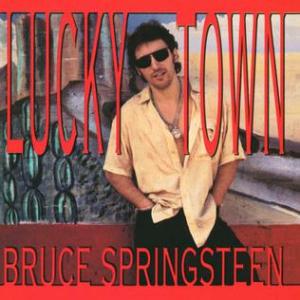
lucky_townAt the end of the sessions for Human Touch, Bruce felt he needed one more song. He wrote ‘Living Proof’ and hit a streak which bought another ten songs in rapid succession. All of them (with the exception of ‘Happy’) were released as Lucky Town.

When I first bought these two albums I did so at the same time – I believe it was after having bought a ‘double’ which contained both Nebraska and Darkness so they were always gonna struggle to compare – and, initially, it was (as with many others I’ve read) Human Touch that I preferred. Yet on repeated listens and with the passing of time it’s Lucky Town  that I go back to more. I find it’s quiet and more-adult contemplations get better with time and experience.

There’s something so much lighter about it yet it’s so much more focused and the song-writing stronger and more convincingly true than on Human Touch. While I’ll skip ‘Leap of Faith’ and’Big Muddy’ the remainder aren’t too bad at all and some I’d even call great.

‘Better Days’ is a strong kick-off and one that captures the happiness and contentment in his new life and how he struggled to reconcile such feelings with his former life -“It’s a sad funny ending to find yourself pretending, a rich man in a poor man’s shirt…. a life of leisure and a pirate’s treasure don’t make much for tragedy” – and the dichotomy of how to write about it rather than his previous muses that Bruce spent the majority of Human Touch and a later, never to be released, album fumbling around.

The song that sparked the whole album off, ‘Living Proof’, is one that I came to appreciate more as I added more years to my own clock, especially with fatherhood. While the slightly too slick and heavy session musicians almost marr it, the production isn’t as overwhelming as on this albums’ sister and it’s hard to deny the genuine salvation Bruce had found in this himself, the same goes for ‘My Beautiful Reward‘. *

Perhaps the album’s most lasting export, though, is ‘If I Should Fall Behind’ which very quickly outgrew it’s relatively minor representation here and became a centrepiece of many a live show and no doubt features in a lot of fan favourite lists. A beautiful, hushed hymn to his wife as they began their new life together which manages to do that magical thing a good Bruce Springsteen song can do – take something personal to him and make it universal to all and, if you check the notes, it’s one of those in which he played everything (save the drums) himself ensuring a) it comes across as intended and b) isn’t marred by flat playing:

‘Souls of the Departed’ is a strong song, touching back to the themes of ‘Born In The USA’ – only this time spurred by the Gulf War and the LA Riots; “This is a prayer for the souls of the departed, those who’ve gone and left their babies brokenhearted, young lives over before they got started” only with added personal clout this time round as all Bruce, while tucking his son into bed, “can think of is what if it would’ve been him instead.” It’s a bitter, cynical and biting song. Oddly enough Bruce managed to spend the 80’s avoiding having his work inflected too much by popular sound trends and the big sound on ‘Born In The USA’ pushes the song forward and lifts it. On ‘Souls..’ the sound is big but it was almost dated by the time it was released. It’s one of those from this era that I’d so very love to hear with the clout of Max Weinberg and a searing lick from Nils. Oh well. Still, I think more tunes from Lucky Town have been played live in recent years than from its sister album.

In his book Bruce does mention how he auditioned a lot of session players for his new band. How he struggled to find – given how many musicians there must be per square metre in that place I do wonder how hard he looked – a drummer with sufficient skill and clout… But he was determined to try routes new so calling The band wasn’t on the cards. It’s perhaps telling how he now feels about the band he assembled and its reception given how scant a summary he gives; there’s no enthusiastic wrap-up of concerts given or even much commentary of how it was received.

To be honest, it’s probably that which stops this album going higher up the list. Some of the songs on here stand head and shoulders above later and earlier duds but it’s the overall sound and lack of richness that comes with most Springsteen albums that handicaps Lucky Town and the songs on it. The players may have been top notch (for all my comments Gary Mallaber is a fine drummer) but the chemistry and spark just feels that little bit hollower and the production has dated poorly.

I think that, with the release of Human Touch and Lucky Town, two very-slick, glossy albums with a production that almost buffed the (ironically) human touch from Bruce’s songs, a lot of fans that had been held enraptured since the early seventies stopped listening and many didn’t really pay much attention again.

It’s a shame, for on Lucky Town there are some real gems. As any artist who releases a double album (or two single ones on the same day) will no doubt face the commentary that the project would’ve worked better whittled down to a single disc. It’s certainly true here. Oddly I think Bruce’s entire decade would probably have been kicked off and gone differently, and regarded as such in hindsight, had he binned pretty much all of Human Touch, dropped the title track onto Lucky Town, swapped ‘Leap of Faith’ for ‘With Every Wish’….. I think every fan has probably done this but, perhaps, mine would go something like this:

Least To Most: Bruce – Human Touch

Now I can imagine that for each of the albums that precede my ‘Most’ favourite in this series there’s plenty of people that will say “actually that’s my favourite..” to pretty much all of them. With the easy and obvious exception that is Springsteen’s early-nineties output. Given the scarcity with which the tracks are touched live I don’t think even Bruce cares much for them in retrospect.

Released  on the same day in March 1992, neither Lucky Town or Human Touch have fared well with fans or critics. Perhaps it was the lack of E-Street support, perhaps it was the changing musical culture at the time but either way, I doubt that even the most die-hard will argue for their place in a Top Ten.

bruce_springsteen_-_human_touch_-_coverart_-_iOf the two I find Human Touch the overall weakest link in Bruce’s mighty discography. These were songs that Bruce had been tooling around with for some time and had, in doing so, over-cooked. If you listen  to The Christic Shows recorded in LA in 1990, many of the songs that would appear here can be heard in their early embryonic stages. They sound better. At the time it would’ve left fans eager to hear the finished result, excited by the change in direction with what sounded like some real personal stuff (though the sexually-charged ‘Red Headed Woman’ didn’t make the cut). Unfortunately when it came time to capture theses songs for release, the result was what’s now considered the nadir of Bruce’s output.

It’s not that there aren’t good songs on Human Touch it’s just that there aren’t enough of them and those that have the bones of a great song are lost under some truly awful production and sound, like ‘Soul Driver’, for example. When I do slip the cd into the car, it’s more likely that I skip through more than half of the album.

The story goes that Bruce – newly transplanted to LA – had a collection of songs that he was working on but couldn’t quite find the turning point that would bring them into a cohesive album. He wanted to continue the theme and practice of not employing the E-Street Band he’d started with Tunnel of Love and try a new approach. Then he met up with a similarly newly-moved Roy Bittan who showed him his new recording set up and synths before playing his former-Boss a few tunes he’d worked on. Inspired, Bruce went home, added a few parts and lyrics to those tracks and  a long period trying to find the ‘sound’ and working with session players followed before the album was complete*.

Of those Bittan co-writes that made Human TouchRoll of the Dice‘ is Springsteen-by-numbers but without the heart and force of the E-Street band to lift it beyond over-glossed territory. On the other hand, ‘Real World’ is perhaps the most fully-realised of his ‘men and women’ concept that many had hoped for. There’s just not enough of it and the players and production still mar what should have been a classic.

While the production (the one and only time Roy Bittan received a credit for such) is very much of it’s time and the slick sound has never suited Bruce. It would be the last ‘rock’ album he’d release before he released that he wasn’t the right person to produce his music any more. The album does have some strong contenders, not least it’s classic title track, that stand up well to repeated listens. ‘With Every Wish’ is a great tune as is ‘I Wish I Were Blind‘. They’re more relaxed, less drenched in studio-session  sound and are genuine, occasionally even tender tunes that, along with ‘Human Touch’ and ‘Real World’ are the most realised on the album. Indeed, some of his best lyrics can be found within the title track: “you can’t shut off the risk and the pain, without losing the love that remains”.

Unfortunately the remainder – to my ears – sound more like what a songwriter trying to write like Bruce Springsteen would create. They seem hollow-boned and attempts to cover the gaps with gloss and force (which may have worked with the E-Street) via top notch session players just fall flat. At the time it wasn’t so condemned but now, further on up the road, it’s blighted by dated guitar tones and synthesisers and drum beats that simply don’t measure up to Max.

Thankfully, Human Touch may have been the first release of the nineties from Mr Springsteen but from here it was only upwards in terms of quality and its sister release was a whole other story.

In the spirit of ‘what might have been’ – some of the tracks deemed not suitable for Human Touch would later appear on Tracks and, shorn of the production elements that blight it, sound (just a touch mind) a little better than those duffs rounding out the numbers here. I’d gladly swap ‘When the Lights Go Out’ for ’57 Channels’ and I still enjoy ‘Seven Angels’.

Highlights: Human Touch, Real World, With Every Wish, I Wish I Were Blind

Lowlights: Soul Driver, Man’s Job, 57 Channels and Nothin’ On, All Or Nothin’ At All


*Almost – he felt he needed one more song, wrote ‘Living Proof’ and instead dashed off enough tracks to make Lucky Town in just a few days.

Found and Shared: Point Blank & Reunion Tour in LA

In my Born to Run post I mention how, when it came to the rebirth of the E-Street Band, Bruce Springsteen was hesitant almost until curtains up.

He needn’t have been. Obviously. That tour was a scorcher and set the stage (excuse the pun) for a resoundingly successful second-era for him and his band. It was captured and released on the Live In NYC album but I always felt that CD was a little on the short side.

I also mentioned that in preparing for the tour, Springsteen was building set lists that pulled heavily from previously unreleased material on the then-new Tracks and how I’d have loved to hear some of those deeper cuts. Well… while reading some early reviews of that show today I found increasing mentions of songs that were played during that tour but not captured. Given how much the reinforced E-Street Band (four guitars strong at that point and Max Weinberg hitting harder than before) added to songs like ‘Youngstown’ and ‘Lost In The Flood‘ I was delighted to find that that tour’s recasting of ‘The River’ was often followed by a re-reading of one of my favourites from that album; ‘Point Blank’.

Having found audio of it, I’ll share it here:

However….

The real gem of my search is this… the full concert from the Staples Center, Los Angeles, CA from October 1999 with a set list that varies pretty wildly from the tour’s official release and includes some fantastic cuts including my own favourite Tracks highlights  ‘Take Em As They Come’ and ‘The Promise’ and also features the first play ‘Incident on 57th Street’ in close to 20 years!

While it’s not as polished or refined as it would become as the tour progressed and the arrangements tightened, it’s all the better for it’s rough and ready nature and WELL worth a listen:

Born To Run | Chapter And Verse

I tell you, moving house knocks it out of you. Still, sometime between my birthday a couple of weeks back and popping it back up on a new shelf, I found the time to tear through Bruce Springsteen’s autobiography Born To Run (it was never going to be called anything else, was it?).

It is an absolute blast to read. Written completely solo and without the assistance of a ghost-writer, the voice is clearly that of Bruce – at times cuttingly honest, at others poetic and then written as though delivering a sermon from the stage on the LIFE SAVING POWERS OF ROCK AND ROLL!!! (yes, the caps-lock button is Bruce’s friend). Contained within its five hundred or so pages is the story of how a young man from a poor, working class family in the town of Freehold, New Jersey, fell in love with music, got a guitar, learned how to make it talk, refined his craft and cracked the code. It’s fascinating and joyous stuff.

This being a memoir / auto-biography, the story is going to be somewhat one-sided. This is Bruce’s version. So while in Born To Run, Bruce describes the recording of Tunnel Of Love, for example, by writing that Bob Clearmountin ‘tidied up’ his playing so it sounded as if he knew what he was doing, it’s Peter Ames Carlin’s 2012 Bruce that fills the picture out by pointing out that Bruce and Bob actually used samplers, drum machines and synths to create a lot of the music and then bought in members of the band to “beat the machine” – if they did the part was recorded, if not… well not every member of the E-Street featured and not every member of the band were impressed by the process but then Bruce is the Boss, a fact he gently underlines on a number of occasions in the pages of his own book; “I’d declared democracy and band names dead after Steel Mill. I was leading the band, playing, singing and writing everything we did. If I was going to carry the workload and responsibility, I might as well assume the power”.

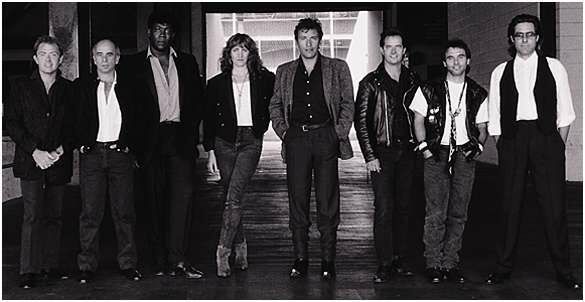
estreetband4

The part of the book that deals with the period before the release of Born In The USA is both the largest and juiciest. There’s a wealth of information about the source of Bruce’s art, his influences and his decisions. These were lean times – it wasn’t until after The River tour that Bruce had anything resembling financial success thanks to lawsuits and recording costs inflated due to his infamous perfectionism – and there’s a huge amount of detail as to what drove him to take certain choices with his music. While there’s no real breakdown of what inspired each and every song (that already exists in Songs) there’s a great amount of revelations to be found.

born-to-run-9781501141515_hrBruce is surprisingly candid when it comes to more personal elements too. I was a little surprised by some of his descriptions of his fellow E-Streeter’s – especially the late Danny Federici – but then his undeniable love for these band-members is also evident as his heartbreak at their passing.

Many of the column inches covering this book in the press have been at pains to mention that Mr Springsteen is equally revealing when it comes to his struggles with depression. Having managed to suppress what he describes as a consequence of the same mental plagues suffered by his father through years of working and touring, Bruce’s own depression came jumping up into his face . He is very open with his fight with and its effect on both him and his loved ones. As a fellow sufferer of that Black Dog it’s inspiring to read. His relationship with his father as a young man – while hinted at in song – is revealed in a much deeper and, at times, darker light and there’s a real sense of emotion and release when, post diagnosis with Paranoid Schizophrenia, Bruce’s father becomes a softer man and the two find some form of closure.

Part of not embracing the full ‘rock star lifestyle’ means that there’s not a huge amount of rock star stories to be found here and you’d be forgiven for skimming a go-nowhere Frank Sinatra story or those chapters (yep) dedicated to horse riding and Bruce’s equestrian escapades. Indeed, post-USA the structure is more vignettes than linear bio and some of those don’t really feel all that vital but, then, Bruce spent the larger part of that time period between E-Street lives building and raising his family and seeking a sense of calm that had previously alluded him so I’d hardly argue that this is a fault.

But there is still plenty to enjoy in the latter section of the book including  some real eye-openers even post-USA. Bruce shines a little more light on the ‘missing’ album from the period between ‘Streets of Philadelphia’ and Greatest Hits – it was another ‘men and women, relationships’ themed album but steeped in that minimal, loops and beats sound he’d employed for SoP. During a drive with Roy Bittan, his trusty piano player mentioned that perhaps it was the lyrical content of this new music that audiences were having trouble connecting to. Unable to find a unifying voice and sound for it, the album was shelved “and there she sits” – ‘Secret Garden’, ‘Missing’ and ‘Nothing Man’ would see the light of day. Bruce may have shot The Professor down but it dawned soon enough – he’d lost his ‘voice’.  Post Greatest Hits he went to find it and that’s why Ghost of Tom Joad is more of an important album than that subtle masterpiece may have been considered: “the songs on it added up to a reaffirmation of the best of what I do. The record was something new, but was also a reference point to the things I tried to stand for and still wanted to be about as a songwriter.”

Particularly interesting and surprising – given how logical and inevitable it must have seemed to all outside  of Bruce’s head – is that up until the last minute, he still doubted whether reuniting the E-Street Band was the best move – not feeling the fire despite the band’s force, initially building a set list that drew heavily from Tracks and eschewed hits and classics (fuck but I’d love to hear that set!) It wasn’t until the fifty or so fans that had stood outside the rehearsals trying to hear the sounds drifting out were let in to watch that Bruce felt the spark.

Given the level of detail assigned to the writing and recording of earlier works, it’s a little surprising and perhaps disappointing that the post E-Street reformation era isn’t deemed sufficiently interesting to warrant the same treatment. The Rising onwards saw Bruce’s career and popularity reborn after a lacklustre nineties yet the six albums recorded since are breezed over – with the exception of Bruce noting how disappointed he was that Wrecking Ball did not garner the impact and attention he felt these songs warranted. From my point of view and deviating slightly that’s  down to the fact that his and Ron Anellio’s attempts to sound sonically relevant and ‘now’ detracted from the quality of the song writing. That being said it was surprising to read the candour with which Bruce realised that, after years of doing so, he simply wasn’t the right person to record or produce his music any more.

Despite the slightness of its third act – I guess if he’d been as thorough here the book would’ve been simply too long as well – Born To Run is, without question, one of the best musician’s autobiogs I’ve read. Hugely insightful, informative and written with a trueness of voice that equals Bruce’s finest music, it’s an essential read for any fan and a bloody important one for anyone with even a passing interest.

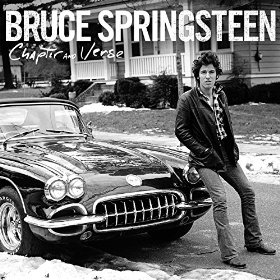
brucechapterandverseReleased to accompany the album is Chapter and Verse. Given that it took close to twenty-five years and eleven albums for Bruce to release his first Greatest Hits and in the twenty years that followed there were another three such compilations to the six studio albums… it’s hard to believe that another new compilation were needed to do so, it does kinda reek of cash-grab.

Of the eighteen tracks on Chapter and Verse, thirteen have already been released many in the same order on other compilations. That’s not to say the songs aren’t required listening – any album that contains ‘The River’, ‘My Father’s House’, ‘Born To Run’ and ‘The Rising’ is easily going to stand strong. In some respects the running order here is more beneficial than other instances – lifting ‘Long Time Comin” from it’s sandwiching on Devils And Dust‘s weaker tracks really allows it to shine. But, given that fans will already have either the existing compilations, the albums these tracks are culled from or both, it’s hard to argue a case for their recompiling.

So – the big USP of Chapter and Verse comes down to this; the first five songs have not been released previously and pre-date Bruce’s recording career with Columbia. But are they worth shelling out for?  In a couple of words, sorry but not really…. These songs are notable for the progression they represent (even the jump in style between the two cuts from Springsteen’s first band The Castiles) but, ultimately are only being heard because who one of their members went on to be. The Steel Mill song ‘He’s Guilty (The Judge Song)’ is a standard southern-blues stomper recorded in San Francisco as the band tried to use California to break out of Jersey-only stardom but highlights what Bruce himself realised; for every Allman Brothers Band there were a hundred Steel Mill’s and there’s little here to distinguish them above the pack.  The exception, though, is The Bruce Springsteen Band’s ‘The Ballad of Jesse James’ which, of the five ‘new’ tracks is the keeper.

For myself, and I’d wager a few others, I’d rather the previously-unreleased material shone some light on either the E-Street Band’s take on Nebraska (that the fabled Electric Nebraska exists in its entirety is confirmed in Born To Run) or Bruce’s shelved album from the nineties… so I’ll drop one such track here – ‘Waiting On The End of the World’, written for that album and taken a stab at with the E-Street Band at the time of Greatest Hits which, for my money, is still the best Springsteen comp.

If you are still looking for music to ‘accompany’ the reading of Born To Run, there’s a Spotify playlist that Bruce (or someone on his team, most likely) put together containing all songs referenced and important:

Great Compilations: Asides from Buffalo Tom

Not too long ago – when explaining the need for self-compiling cds/playlists for those artists who already had a compilation out in the world, I mentioned that compilations are strange thing. That you’re never going to please everybody with a selection (in the linear notes for The Essential, Bruce Springsteen suggests that “one man’s NYC Serenade is another man’s Rosalita”*) and that my choice of what I’d consider essential listening very rarely coincides completely with the ‘official’ compiler’s (usually because they’re doing so with a specific, marketing-dictated aim  rather than just cherry picking).

There are some compilations, though, that are as close to perfect and essential as you can get. They do that rare thing of providing as solid, all-encompassing an overview as is possible in a dozen or so tracks in a manner that will provide a great entry-point for the uninitiated and give the already-converted a good career-spanner to listen to when they don’t feel like going through whole-albums. A good track-listing can also allow tracks to breath a little differently, have a better light shone on them than when otherwise buried on an album (see Long Time Comin’ on Springsteen’s Chapter and Verse – of which more to come later).

img_0628So I thought I’d kick this possible-series off with one of my favourite compilations, one that’s been keeping me steady company for a good sixteen years now; Asides from Buffalo Tom.

Now when it comes to recalling bands from Boston, I imagine those that get mentioned would include Aerosmith, The Cars, The J. Giels Band, Pixies, possibly even Dropkick Muphys and, of course Boston. I don’t know how many would pull up the trio of Buffalo Tom but, save for a bit of a break between 2000-2007, they’ve been a stalwart of indie-rock since their first album, the J Mascis produced self-titled effort, dropped in 1988.

After shifting song-writing gears for the 90’s, they became a pretty popular alt-rock band and yet, while Big Red Letter Day even managed to crack the top 20 over here, they never achieved the popularity their songs and music deserved. It is mind-boggling to me, and I’m sure others, that bands like The Goo Goo Dolls and Matchbox 20 got gargantuan levels of exposure while how-did-they-miss singles like “Taillights Fade” and “Mineral” remain songs I have to enthuse to people about as they’ve never heard ’em.

2011_buffalo-tom_tour_dates_13035883982475Of Buffalo Tom, I’ve read of them being described as “like a bar band fronted by an anxiously melancholic whiskey-fueled Alex Chilton” while even the too-cool-for-this Pitchfork said of them: “solo-ridden guitar-god aspirants Buffalo Tom: 1) named themselves after their drummer and Neil Young’s first band because it’d have been too much trouble to come up with anything really new; 2) played assorted variations on the strummy post-pop that filled collegiate airwaves throughout the 1980s because innovation is overrated; and 3) wrote sharply observed conversational lyrics because it was too hard to be obscure.”

This album came into my hands upon day of release thanks to my hearing “Taillights.. ” on a magazine sampler and seeing (just one of so many) highly-starred reviews against this comp. Having since gone back and accumulated the band’s discography, it’s still Asides From that gets the most plays (I’m genuinely surprised the disc hasn’t given out, the case certainly has). It contains the perfect selection of their finest from the 11-year period represented and the non-chronological sequencing makes this feel more like an album of absolute all-killer-no-filler than a compilation-by-rote. Early-cut “Birdbrain”, for example, is daft but is so full of hook as to be a barn-stormer and here rubs shoulders with the more bluesy-throat of “I’m Allowed”.

What such a track-listing also highlights is that, despite their lack of mainstream or commercial breakthrough, Buffalo Tom remained staggeringly consistent in terms of quality – album closer (and then final single) “Wiser” is one of their finest moments but here sits among plenty of equals – and remained ready and willing to bring it to every session.

While it isn’t going to break any new ground or make anyone wonder “how are they doing that?”, Asides From Buffalo Tom contains 18 very strong songs (even their cover of The Jams’ “Going Underground” is worth a listen) – in a way the fact that I’ve still yet to bump into anyone who shares this knowledge makes em feel just that little more ‘mine’. Still, I’m sharing it here and recommend – given how little it’ll cost – it to all.

After the release of Asides in 2000 (and the quickly-following Besides..), Buffalo Tom took a bit of a break – singer Bill Janovitz dropped another solo album, took up real estate, wrote a couple of books on The Rolling Stones – before getting back together and releasing Three Easy Pieces (2007) and Skins (2011). Both reveal the band remain consistently capable of a great tune and contain tracks that could easily sit alongside those on this best of – particularly You’ll Never Catch Him, Down and Don’t Forget Me (which features co-vocals from Tanya Donelly of another Boston band, Belly). There’s hints/rumour/suggestion of new Buffalo Tom music on the way and it’s something that I’m eagerly anticipating – a now long-term love for a band kicked of and continually fuelled by this compilation.


*or another combination – it, like all of my music collection, is currently sealed up in a box in the ‘spare’ room of my new house.

Quick List: 2016 in 5 (Gut reaction)

While every sane and right-thinking person on this planet greets this morning’s news with a collective “WHAT THE FUCK?!” I received a “Top 5 songs that reflect 2016” message.

In the spirit of ‘think less, post more’ here are those that, in no particular order, leapt to mind.

Tool – Ænema

The lyrics… the timing signatures…

Bob Dylan – A Hard Rain’s a-Gonna Fall

REM – It’s The End of the World As We Know It (And I Feel Fine) 

The Rolling Stones- Gimme Shelter

Has there been a better apocalyptic song than this? Or album than Let It Bleed?*

Eels – End Times 

“Crazy guy with a matted beard, standing on the corner. Shouting out “end times are near” and nobody noticed him”


*No. No there hasn’t.