It’s not just books. I’m consuming a lot of music lately. Specifically I’m playing the arse out of the new albums from Built to Spill and Last Days of April (of which more to come).
I’m stuck on this song:
Still blasting the My Morning Jacket album from the car:
And, because my son still rocks out to this album:
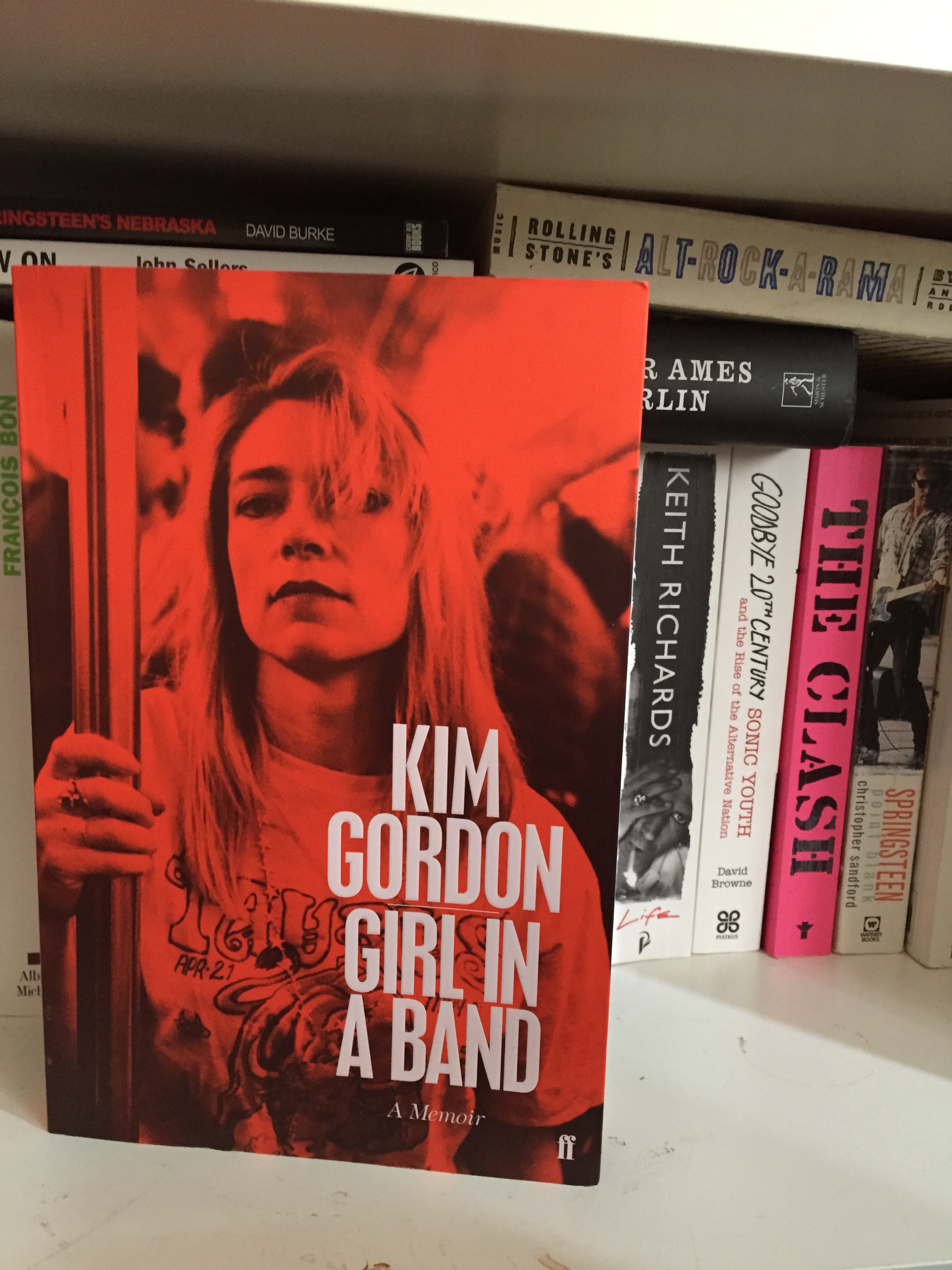
When Girl In A Band was released earlier this year I didn’t rush out and buy it. In fact, it was my wife that added this one to the collection and got to it first.
It’s safe to say that going in to this book I had mixed feelings. On the one hand; I love Sonic Youth and was anxious to gobble down more insights into the band, its working process and its body of work. On the other; Kim and Thurston’s split meant not only the end of Sonic Youth but a shift in focus whenever the band or either of them were mentioned in print. As such all press surrounding the release of Girl In A Band – including the excerpts printed in various publications – seemed heavier on that matter than the music.
It’s also safe to say that coming away from this book I have mixed feelings.
This is a memoir, after all. Says it right there in the title: Girl In A Band: A Memoir. So not an auto-biog in the traditional linear sense nor a “making of the album” type book. Further ‘nor’ is it a My Time In Sonic Youth book. No; it’s Kim Gordon’s memoir and to expect it to be solely on SY would be rude and demeaning as Ms Gordon’s life revolves around a whole lot more.
Gordon writes movingly about her early life and family – the terror inflicted upon her by her older brother and the greater terrors unleashed by his illness – and finding her way in the art world and path into music.
All that being said, though, Sonic Youth is/was a big part of Kim’s life and so does get plenty of page time too. Gordon is remarkably frank about her limited singing abilities – explaining that she asked Kim Deal to sing the harmonies on Little Trouble Girl as she, well, couldn’t – and offers insights into the writing / recording of many of SY’s tunes including my own favourite Tunic (Song for Karen).
There’s also plenty of revelations about life with the band – touring with Neil Young and its pitfalls, Kurt Cobain (a gentle yet tortured and manic soul here) and enough to suggest that Kim Gordon and Courtney Love don’t exchange Christmas Cards.
For all of the above I loved this book and would happily read it again.
Though as it’s a memoir and a recent one at that, the dissolution of Kim and Thurston’s marriage hangs heavy over the book. Hindsight often gets a few words in on recollections of earlier times and then there’s the break-up itself. It’s dealt with in, again, a remarkably frank manner – the discovery of text messages / emails from the Other Woman, attempts at counselling and repairing the marriage and, throughout, Kim’s own devastation.
It’s hard reading. Perhaps, to me, because the two had previously been more private about their relationship. When the announcement of their separation was made it was very quiet and via their label. In a world where celebrity couples can’t walk the dog alone without speculation appearing across the internet that their relationship is on the skids, it was a welcome relief for private matters to remain just that.
But then, as mentioned, this is her memoir and its her right to use the medium to set her version on the record, perhaps so as to never need do so again. It’s a little uncomfortable to read given just how open and forthright the sordid details of Thurston’s betrayal and the abrupt collapse of their marriage are laid bare – as though, perhaps, the disclosure was a little too full.
There’s a few music ‘magazines’ I’ll read online. Things like Spin (for their lists, their in-depth Dinosaur Jr article etc) predominantly, occasionally Consequence of Sound, even Pitchfork (which I take with more than a grain of salt thanks to their hipster-heart-on-sleeve and love of things not even slightly alternative) from time to time for news. I’ll also get the Rolling Stone email on a close-to-daily basis.
I’m sure this isn’t unique or blog-worthy in itself but bear with me.
Sometimes there’ll be an article on a band I’m loving. So what I like to do – having read said article – is kinda back-explore the coverage of that band on the site(s). See what they were saying about them / reviewing etc before I was reading them.
My Morning Jacket dropped a new album this year, The Waterfall. It’s brilliant. No question from me that it’ll be up in the most played of 2015 come December.
Checking back on some of the earlier reviews for the band it’s interesting to see there’s a lot of comparisons for their seminal Z album to Radiohead’s OK Computer. Rolling Stone lead their review with “America is a lot closer to getting its own Radiohead, and it isn’t Wilco.”
I can understand the comparisons. It was a Big Step album. It was more experimental with the sound and was a deliberate move away from regional sound to something altogether more Universal and moved them into a different orbit in terms of sales, concerts and coverage.
I’ve spoken of it before so won’t do too much here.
In a way the comparisons thereafter also work. In the same way as some people never got over OK Computer and judged each subsequent release accordingly, the same is true of MMJ and Z. As Radiohead went further ‘left’ with their follow-up so did MMJ. The difference is that the quality control switch on the 1-2 punch of Kid A and Amnesiac was significantly higher than MMJ’s Evil Urges which alienated many by straying too far into the falsetto-funk and wandering – while Librarian and Touch Me Pt 2 still hold up not a lot else really does. A quick dart back to the centre followed for both bands too – Hail To The Thief for Radiohead and MMJ’s Circuital (obviously the timelines are a bit off). Circuital almost felt like an apology – straight ahead, less trip and almost subdued.
So if your wanderings into experimentation alienate some and your move back to please alienates others, what do you do next?
For Radiohead it was In Rainbows. Their now high-point. The culmination of their experimentation crafted into finely honed and tight songs without any flabby excess or weak points, taking every element of their sound to date and pushing it forward with the kind of expert confidence that can’t be ignored.
I didn’t get over OK Computer until I heard In Rainbows.
I didn’t get over Z – until I dropped the needle on The Waterfall (even if I did need to change the speed settings – who puts an album at 45rpm?!).
The Waterfall is not only MMJ’s most direct album, it’s also their trippiest. All the elements of their sound are contained in these 10 tracks and yet rather than feel like a retread, there’s an urgency to it, a compelling move forward. Everything is here from the big, live crowd-thrillers, the guitar solos, the orchestral / folk-rock, the psychedelic wanderings and the falsetto-hitting funk all surrounded by Jim James unimpeachable voice.
In the same way that Z sounded ready to blast forth from the stage (for evidence see the live album Okonokos that followed), The Waterfall sounds just as tailor-made to thrill audiences. Believe will undoubtedly be opening every live set for the next 5 years – a slow entry propelled with guitar-chord punching and the title repeated an octave higher each time until Jim James lets rip with a BELIEEEEVVEE that strays oh-so-close to Journey, the song lifts-off in the same way as Worldless Chorus and suddenly we’re airborne with the song. I’ve probably played the tune to death already but the rule at the moment is that if my toddler son rocks out to it, it gets played a lot – slipping this in the CD player (I’ve said it before and I’ll say it again – putting the CD in with the Vinyl is a win-win in my opinion) in the morning is the best way to start a day. Especially if the journey is long enough to include In Its Infancy (The Waterfall).
It’s something of a different tact for the band lyric-wise. There’s a different voice here, it’s more personal; certainly a break-up album, albeit with an air of “and so it goes”, with lines such as “I’m getting so tired of trying to always be nice,” (Big Decisions), ” it’s a thin line between lovin’ and wastin’ my time” (Thin Line) and “I hope you get the point, I think our love is done” (Get The Point).
That there’s another album due next year from the same sessions is great news – four years separate this from Circuital – even if a predetermined release schedule can sometimes spell an ease in quality.
It feels very much like My Morning Jacket are back in the game.
To be honest it goes back to being very busy with that thing called life.
The busy in question has, however, been soundtracked by some great music, new and not-so-new.
First the new…. I’ve been playing two new releases at a steady pace for the last two weeks, both of which arrived on the same morning. Strangely enough this was the day after the arrival of the not-so-new – a bumper weekend for the collection.
Not so long ago I’d dismissed Death Cab For Cutie. I first heard them – like so many – at the time that Transatlanticism was propelling them into a lot of speakers. Title and Registration and The New Year (Christ, how many myspace and xanga pages featured that on January 1st for years to come?) were my way in and still remain a regular listen.
However, having heard a few earlier albums I was then put off by Plans. It sounded too ‘OC’ and watered-down to my ears. I Will Follow You Into The Dark was far too obvious and over-played for my taste. I still don’t listen to anything from it. So I stopped paying attention to Gibbard and Co. This was a bit of a mistake, really.
In 2011 my wife surprised me with tickets to a DCFC show. I hadn’t listened to anything new of theirs for some time let alone have any idea what they would be like live. I was expecting a lot of quiet acoustic numbers. Another mistake. It was a great show – new material (the Codes and Keys album which I grabbed on vinyl from the merch stand) vastly more upbeat and superior to anything on Plans and songs that I didn’t know that meant I quickly went and picked up Narrow Stairs. The quality of those two albums (and the connection to a great night out) meant that Death Cab went up the play count list.
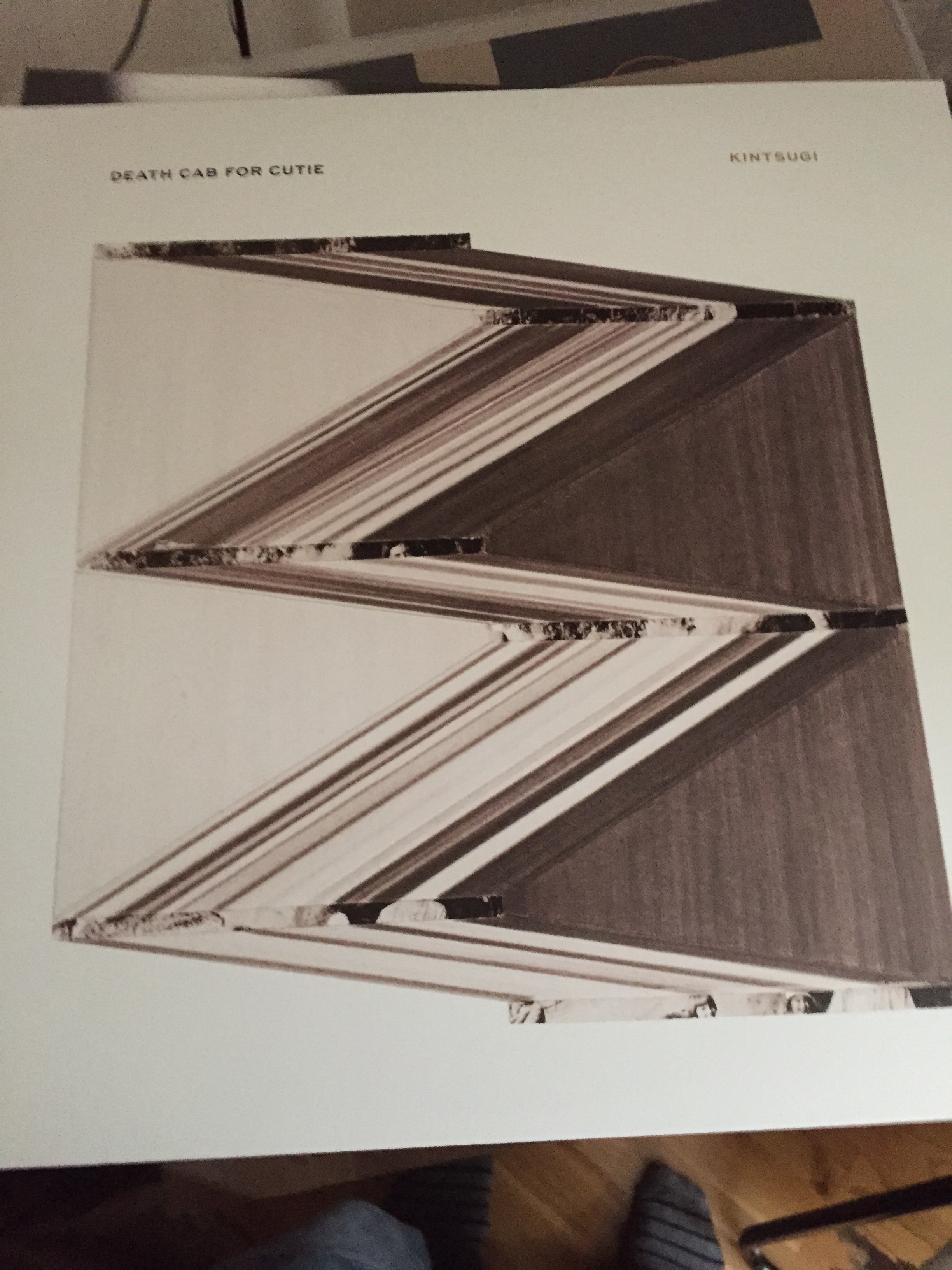
While not as sonically interesting as Codes and Keys, Kintsugi continues along the same path musically – more blips and electronic phases than acoustic strums. Lyrically the theme of separation seems to abound. It makes sense given the events between this album and the last – though I’ve now read that Gibbard is trying to be less self-referencing than ever- with high profile relationships ending and founding guitarist / producer Chris Walla saying farewell to the band.
To my ears Kintsugi isn’t as strong as Codes and Keys but contains many a cracker. The vinyl (very pretty) also included the CD which meant it went straight in the car and has been on steady repeat over the last couple of weeks on the commute and family drives. It holds up very well and reveals more with each listen.
Not really one for listening to on family drives – it’s a bit too intense for toddler ears – I’ve been hungrily devouring another new one on repeated listens on my commutes.
In my overview of last year’s listens I mentioned how I’d rather Godspeed You! Black Emperor was the going concern over Silver Mt Zion. When they came back in 2012 their Allelujah! Don’t Bend! Ascend! was the best thing released that year. It’s still huge.
Accordingly I was pretty excited when news arrived – out of nowhere as is customary – of a new Godspeed album to drop in March.
Asunder, Sweet and Other Distress is perhaps their shortest. Certainly for a while. It’s their first not to feature any samples or field recordings, just the most direct, intense and powerful sound they’ve made. It’s amazing. Having created a genre and dominated they’ve now found a way to make a variation on their sound which still manages to completely hypnotise and compel.
I won’t be able to see them when they make their way over here on tour this year but I’m just so very glad that they’re a) making music again and b) that music is of such pulverisingly high a quality as Asunder, Sweet and Other Distress.
And the not-so-new… I was happy to find Ennio Morricone’s Film Music Volume 2 on vinyl on ebay. I was even happier to find it was exactly as described and played faultlessly.
When it comes to film soundtracks I have my favourites. While John Williams’ Jurassic Park score is high up on that list, I’ve long looked forward to being able to drop the needle on both the themes from Once Upon A Time In America and The Mission. Both of these are by Ennio Morricone, both of which are my favourite of his (yeah, yeah; The Good, The Bad and The Ugly etc etc… don’t move me in the same way) and both of which feature on here. Perfect – if it took me three listings to get hold of thanks to the ending times.
The last Foo Fighters album has – in my opinion – one turd on ii: What Did I Do? / God As My Witness. However, that song features a guitar solo that saves it from being complete tosh. I found out that that solo is thanks to Gary Clark Jr. I mentioned in my blog about the album how when it came to recording it, Grohl says that Clark:
…walked into the studio and didn’t even bring a guitar. He just took one from Pat Smear – Pat hadn’t even played it yet and it still had a tag on it – and does three takes and that’s it. Pat said, “Just fuckin’ keep it.”
So who’s Gary Clark Jr? I asked myself. A little browsing revealed a lot of hype. A little listening on Spotify revealed that hype to be justified, I listened to a snatch of last year’s Live album and my leg couldn’t stop from bouncing.
This guy is amazing. End of.
I grabbed the album on vinyl this weekend, it’s played through a couple of times. I’ve got it in the car. My little son dances away every time he hears a bit of it.
Bluesy virtuoso, undoubtedly likely to continue drawing comparisons to Hendrix but with – for my money – a better voice and less anger / destructiveness (not that you’ll ever hear me fault Jimi). Damn fine natural guitarist.
I know already that this is going to be one of the albums I listen to a LOT this year.
October 2000 and I’m a relatively regular reader of Uncut Magazine, scouring their Unconditionally Guaranteed CD each month for the one or two tracks that will make me sit up and pay attention as is usually the way with such free, on-the-cover comps. There’s only one track on this one, though but I fell in love with it and promptly ordered the album it was pulled from. It was Taillights Fade by Buffalo Tom.
A three-piece from Boston, Buffalo Tom got going in the mid-eighties. Their first two albums were produced by (and featured the odd guitar line from)Dinosaur Jr’s J Mascis. It’s safe to say they got a second-go-around following the surge in interest in ‘alt-rock’ in the early nineties and their third album Let Me Come Over not only marked an increase in popularity but a change in sound; less fuzz, sharper lyrics, a clearer sound and melodies you could hang your hat on. In the nineties they crafted hugely powerful, deftly-written songs, each subsequent album containing a strong blend of crunching rockers and delicate acoustics with soulful and intelligent lyrics sewn into songs that make you wonder how the hell they weren’t huge singles.
Taillights Fade is taken from that big-leap-forward third album.
From the sound of the hand slipping up the neck I was hooked. From a gentle strum behind the lead figure to a fuller throttle thump, this song builds and builds, adding more with every listen. It’s a lovelorn song with one hell of a tune. In fact everything about this song – from the music to the lyrics to the mix is spot-fucking-on.
Sister, can you hear me now
The ringing in your ears
I’m down on the ground
My luck’s been dry for years
I’m lost in the dark
And I feel like a dinosaur
Broken face and broken hands
I’m a broken man
I’ve hit the wall, I’m about to fall
But I’m closing in on it
I feel so weak on a losing streak
Watch my taillights fade to black
Sadly – at least for seven years until returning with Three Easy Pieces – by the time I got my ears wrapped around this, they were done as a band. Typical timing on my behalf but it meant I was able to go on and complete the back catalogue. While this song opened doors into their cannon for me, Asides From is almost certainly the most played album within my collection and one I whole heartedly recommend getting hold of as a starting point.
147? Granted this includes b-sides, covers etc. But it’s still 147 songs that have been released by Mr Grohl and his band of merry men.
I agree with the list for the most part. It’s unlikely they’ll ever better Everlong. But what surprised me and begs the opening questions is – how and when?
Granted; next year will mark the 20th anniversary of the first Foo Fighters album (yes, yes; that was all Dave) but somehow they’ve gone from being ‘that guy from Nirvana’s new thing’ to a bonafide, long-lasting band with a very very strong back catalogue chock full of songs that are precisely written and virtually all guaranteed a place on whatever alternative / rock radio stations still exist (I think it’s usually a daily occurrence to hear a Foo’s song on Xfm).
They’re like the Matt Damon of rock in this way – quietly and calmly going from ‘that Good Will Hunting guy’ to an actor with an extremely credible filmography and calmly churning out strong, consistent and enjoyabe (though not ‘set the world alight’) performances.
So, just as I’m quite happy about the announcement of a new Damon-starring Bourne film, I was quite happy to hear about the new Foo Fighters album when it starting being discussed…. how “nobody has ever done anything like this” etc etc.
Grohl has talked about going the Radiohead / experimental route (I do wish he would) but it was something a bit more straightforward – the Foos put together a bunch of solid, guitar crunching riffs and went on a tour of those 8 (budget / logistics restricted) cities in the US that have a documentary-worthy / personally relevant music scene / history for a week at a time, talk to the leading lights of that scene, write the lyrics based on the experience, have a few guests from each week guest on that track, record it in a famous local studio and have HBO film it, put the whole thing out as a very engrossing docu-press kit type thing.
Well, I say “straightforward”… that is quite a big task. The whole recording in multiple settings has been done before, usually when a bands on a long tour and keen to get another album out (REM’s New Adventures in Hi-Fi possibly the best) but the rest… probably not. And, to be honest, because there’s probably not all that much point to it, really.
I’m sure, from the little I’ve been able to see, until a Blu-ray version drops (probably / hopefully in time for Christmas), and read of, the Sonic Highways series is a great 8-part gem. How could it not be; Dave Grohl rocking up in Washington DC, Seattle, Austin etc and talking to local musicians / icons about music then strapping instruments on at the end?
However, how much this lends to the album itself remains negligible. Each of the eight tracks on Sonic Highways has a guest. Each of those guests could just as easily have not swung by. It’s virtually impossible, for instance, to pluck out Rick Nielsen’s baritone guitar from the mix on “Something From Nothing” or what’s specifically ‘Joe Walsh’ of that Eagles’ contribution to “Outside”. Though Gary Clark Jr does tear the arse off of the otherwise plodding, Skynrd-esque “What Did I Do?/God As My Witness”.
The other element that stops me listening to “In The Clear” and perhaps saying “oh you can totally hear the New Orleans scene in that” is that a) as a now three-guitar strong band, it would take a lot to really have an obvious impact and b) I’m English and have no bloody idea what any influence of the New Orleans scene might sound like.
The kinda-pointless approach does mean, however, that while it doesn’t add to the album in an overly noticeable way, it also means you don’t need to know about the depth of, say, Washington’s music scene, to enjoy the album as it remains a thoroughly enjoyable slab of Foo Fighters guitar blast.
Opener “Something From Nothing” is my son, Elliott’s, favourite sound at the moment. He’s 11 months old. When this song comes on it gets his full attention and when the drums kick in so does his rocking out dance. This makes me a little bias of course. It’s a solid album opener, a little different for the band in it’s slow-to-build style and has the strange addition of a 70’s porn-style breakdown. It’s lyrics “fuck it all I came from nothing” are a fitting nod to the nature of the Foos, perhaps, and Chris Shifflett’s guitar solo is a little too late and short but this is a solid track that will get lodged in your head.
It’s followed by “Feast and the Famine” – a strangely heavy / punk-rock song to staple Martin Luther King Jr assination references too but it’s got the stop/start, fast/faster Foos dynamics that they’ve got down tight all over it. At 3:49 it’s the shortest thing on Sonic Highways.
Further on the album “Congregation” is a belter of a track (a sister track to Wheels perhaps) but, lyrically, no matter how many times I hear it I can’t really get down to the use of the word as being anywhere near as anthemic as they’re going for – it’s far too lumpy as a word.
“What Did I Do?/God As My Witness” is, sadly, a turd. Well, almost. It tries to do too many things and leans far too close to Lynyrd Skynrd BUT it is – as mentioned – saved by the guest spot. Gary Clark Jr tears through his lead part on this and pulls the song through the muck it dropped itself in. I also love the story of his recording:
…he walked into the studio and didn’t even bring a guitar. He just took one from Pat Smear – Pat hadn’t even played it yet and it still had a tag on it – and does three takes and that’s it. Pat said, “Just fuckin’ keep it.”
Elsewhere; “Outside” – obviousness of guest or not – is a dark, brooding beast that I enjoy everytime. Ben Gibbard’s presence on “Subterranean” is a nice addition but the song is strong in its own right and “I Am A River” is another slow burning build up.
The only real disappointment from me with Sonic Highways is that – again, as a UK resident – I didn’t get to specify the cover on my LP. I got… and I had to actually look it up as I haven’t a clue of this city’s landmark… Austin. Though, given this is the city of the Gary Clark Jr solo I suppose I couldn’t mind despite – obviously – hoping for the Seattle cover.
So, I’m off to find what I can hear of Gary Clark Jr….
Ugh. It almost pains me to write this. Especially when I consider that this will be the second time I mumble about a Springsteen album and the second not-so-favourable. I say this now because I do love a bit of Bruce Springsteen. My collection is stuffed with Boss. Nebraska, Tunnel of Love, Magic, Darkness and both Borns get heavy rotation. However….
Earlier this year Bruce Springsteen released his eighteenth studio album. Eighteenth. Saying that, two of the songs have seen release previously and three of the remaining are covers.
Before I get into this too much and why am I getting into this now….
This weekend, while doing a bit of tidying up and keeping the little man company, I found and put on Springsteen’s Blood Brothers DVD. It documents the slightly awkward and touch-too-soon mini reunion of the E-Street Band to record a few new tunes for Bruce’s first Greatest Hits (I should note here that I got that CD on its release and it served as my introduction to Springsteen and from there on…) .
Two things came from watching Blood Brothers that feed into this post. The first is a moment where, suddenly, the discomfort and ill-at-ease Bruce felt in front of the camera seems to fade as he discusses the implications of a string arrangement that had been created for Secret Garden. Talking of the song as a narrative, Springsteen explains to the gathered co-producers and mixers that the song is a narrative. If any arrangement or sounds distract from that “we’re fucked.” The second element of note is that the 1995 session captured also found Bruce and the band cutting into Tim Scott McConnell’s High Hopes for the first time.
That version of High Hopes was released as a B-Side to Secret Garden. Which, really, is where it should have stayed.
Let’s skip forward to 2014. Post 2000 Springsteen is a different proposition to that of ’95 model Bruce. Now willing to trust others with production work, Bruce has seen his music produced, with varying results, by Brendan O’Brien (who should have taken a bow after Magic and not gone for the victory-lap with Working On a Dream) and, lately, Ron Anellio. Credit to him for this decision. If he’d stayed working away on his own, we may not have had the rebirth and revitalising of his and the E-Street’s sound that came with The Rising. Going on past lessons and biographical revelations, he may still have been in his home studio labouring away on the one album. Self-producing rarely works. It’s key to get a good collaborator in that can bring out an artist’s best and encourage them to shine.
So what’s the problem? Well I’d say Bruce has gotten a little lost lately in a seemingly ill-fated determination to sound fresh and vital. Just look at the cover. Sorry Bruce but is the double denim and popped collar really the best fit for you in 2014?
In the past, Bruce has had a very tight quality control. Not letting anything out that he wasn’t 100% happy with or didn’t fit the feel / story of an album. That’s what archival releases like Tracks and the Darkness box are for. Working On A Dream marked a turning point. There should have been more use of “no” in the studio on that one… “supermarket beeps and a song about fancying the girl on the checkout while doing your shopping? Sure thing Boss!”
Fuelled by social circumstances again and looking to vent, for Wrecking Ball Bruce came up with some of his tightest and most direct, angry lyrics yet. However, the collaborators bought in to furnish these songs took them the wrong way and did exactly what Springsteen previously voiced such determination to avoid – they detracted from the lyrics and the songs.
Unfortunately the songs on High Hopes suffer the same fate at the same hands. This is not a studio album in a true sense. Long-term Springsteen ally/collaborator/sidekick Stevie Van Zandt has often said that on any one day, Bruce will have at least half an album of songs on him. With High Hopes we discover what would happen if that half-album of songs were taken into the studio, recorded with selections of the E-Street Band, it’s latest quasi-addition Tom Morello shoved in awkwardly, mixed with another half-album of left overs from the last decade, warmed up by over-production and served as a ‘fresh’ dish.
That’s not to say that the album is devoid of good music. Frankie Fell In Love, Heaven’s Wall, The Wall, This Is Your Sword… all top-draw Springsteen material, even the brooding Harry’s Place feels like some of the cracking, darker material Springsteen wrote (though never truly released) in the early 90’s. Even it, though, is over-worked. Heaven’s Wall is nearly drowned in over-the top choir arrangements. Those heavy handed arrangements blight too much of the strong material here and are used far too much to prop up the lesser songs.
Morello is, frankly, out of place here. His guitar parts, the scratchy sounds that were once new and compelling, are both now and here tired and overplayed. They sound clunky when added to the title track and trample all over songs they have no business being near. Just take the title track as an example. It’s said that this project was born after Morello hearing High Hopes while preparing for the Australian leg of the Wrecking Ball tour and proposed it join the set list, from there the studio beckoned for a ham fisted bounce over a song that was only suited to B-Side status (let alone lead-single).
See:
We didn’t need a second take on Ghost of Tom Joad and as for the recasting of American Skin (41 Shots)? The live version of this was compelling, tight and full of well-directed anger with a searing solo from Springsteen himself. It came at a turning point for Springsteen – pre-9/11 and on the back of the reunion tour, a relative drought of quality new material in the 90’s and here, suddenly, was a glimpse at new material that bristled over with the force of old material. Guitars like teak bolted onto socially-aware lyrics and furnished with delicate, perfectly fitted arrangements from the E-Street Band. A precursor to The Rising and a return to form after a decade of almosts.
Bruce has said that he never felt it got presented properly. So, as with Land of Hope and Dreams on Wrekcing Ball, it was given a new studio arrangement. Surely it would be a winner. Relevant again with the shooting of Trayvon Martin and back in the set list, a slow burning tune that builds to a thundering climax and release. Surely it would be a winner. Surely…. Except it isn’t. Instead that same song is flat (albeit with the exception of Clarence Clemons’ sax giving us one last treat from beyond), layered with cheap-sounding production effects and, in place of Springsteen’s own guitar, ruined by a solo from Morello that’s bad-80’s-power-ballad by numbers.
With Nebraska, Bruce took his raw, home-made demos to the E-Street Band. They tried them on for size and found the songs didn’t fit in the band setting. Springsteen released them as was. The result is one of his most loved and praised albums.
Secret Garden: Bruce tried a few grander arrangements, added layers, different string parts. Didn’t work. The original arrangement was released. But, the other arrangements, rather than scrapped, did see release as B-Sides and soundtrack additions.
With High Hopes…. it’s the heavy handed, overworked and near-drowned in effects versions of the songs that have been released.
In a way, High Hopes is best looked at as a “what if” album rather than a legitimate ‘new’ studio album. What if some of these songs – Frankie Fell In Love, Heaven’s Wall… been given that little bit longer to gesticulate. What if some of these had been included in place of the clukers on Working On A Dream? What if Down In The Hole had been used in place of its very-close sister Paradise on The Rising? Sadly it’s not as intriguing or rewarding a listen as the “what-ifs” of Tracks’ second, third and even fourth discs.
To me, now, nearly ten months later and with Mr Springsteen assuming radio and road silence again, it’s a case of not only what-if but please, when the next album emerges we find the quality control of old back in place.
Following the Top Five Debut text, I recently texted two of my most music loving, list-compiling friends another simple message: “All time top five second albums?”
Only the one cross-over across the lists (Nevermind popping up on two of the three). Here, however, are mine (in no particular order, that’d be too hard):
Pixies – Doolittle
Bob Dylan – The Freewheelin’
In all likelihood still my favourite Dylan album.
Nirvana – Nevermind
Yes, I know; this is such a commercial choice… blah blah. Commercial, sell-out, whatever – the importance of this cannot be denied.
My Bloody Valentine – Loveless
Foo Fighters – The Colour and The Shape
I still don’t think they’ve bettered this. Yes this makes my list a bit Grohl-heavy but what can you do?
The second album is important. A debut album tends to be more of a compilation of songs that the artist has been living / gigging / tinkering with for years prior to a deal. A second finds them more established, a bit more at home with the idea of recording and who they are and building on those foundations laid by the debut. I think….



 Grohl has talked about going the Radiohead / experimental route (I do wish he would) but it was something a bit more straightforward – the Foos put together a bunch of solid, guitar crunching riffs and went on a tour of those 8 (budget / logistics restricted) cities in the US that have a documentary-worthy / personally relevant music scene / history for a week at a time, talk to the leading lights of that scene, write the lyrics based on the experience, have a few guests from each week guest on that track, record it in a famous local studio and have HBO film it, put the whole thing out as a very engrossing docu-press kit type thing.


 Mumbling About...