Least to Most: Bruce – The Rising

“I need your kiss, but love and duty called you someplace higher
Somewhere up the stairs into the fire…”

I’ve mentioned before that I think the negative reaction to Human Touch and Lucky Town gave more of a knock to Springsteen’s confidence than he’d be willing to let on; rather than follow Greatest Hits with a full blown reunion and band album he went the solo route and still wasn’t convinced that the Reunion Tour was a good thing practically up until the last minute. When that tour finished in July 2000, many assumed the next logical step would be to get the reconstituted band into the studio for a new album, presumably featuring some of the new songs they’d aired during that tour.

springsteen_the_risingBut… not quite. Instead Bruce spent roughly half a year logging up solo recording sessions, perhaps wary of going for another ‘rock’ album after so many years. Indeed, during press for The Rising he admitted hesitancy at returning to his ‘rock voice’.  Then, in March 2001, Bruce assembled his then core production team of Landau and Chuck Plotkin with Toby Scott recording and bought the E Street Band into New York’s Hit Factory. A handful of songs were recorded but the results… didn’t jump. It seems hard to think that with the band at full power a recording could be flat but it had happened before when he struggled with the sound on The River and Bruce has admitted that he realised he was now a better writer and singer than he was a producer and that modern techniques and equipment were simply unknown to him. He also felt that there was no unifying theme to bind the tracks written thus far into a ‘record’. If Bruce and the E Street Band were to move into the new millennium as anything other than an oldies touring act, he needed a new sound and a subject.

Then everything changed one terrifying and tragic September morning.

On his way home to his wife and kids that morning Bruce was sat at a stop sign. The driver of a car hurtling down the off-ramp recognised him, wound his window down and, as he drove past, shouted “Bruce, we need you now!” Bruce got the message, he just didn’t know how he could respond. Whether it was the call from the car or Bruce reading obituary after obituary mentioning victims being his fans*, but as he found himself glued to footage and, watching the firefighters making the ultimate sacrifice, climbing up the stairs, bidding goodbye to this world and stepping into the unknown… the songs started coming with ‘Into The Fire’.**

Some years prior, the president of Sony Records had mentioned to Bruce that producer Brendan O’Brien (Pearl Jam, RATM, STP amongst many others) had mentioned a desire to work with him. The two connected, met up and Springsteen played him a couple of tracks he’d written. Now, O’Brien is a very hands-on producer, in search of the ‘song’ he’ll roll up his sleeves and get stuck in. This doesn’t always please the artists. By all accounts his sessions with Aerosmith in 2009 were fraught with tension between him and Tyler partly due to the frontman’s displeasure at O’Brien’s methods**. When Springsteen played him ‘You’re Missing’, O’Brien jumped straight in re-arranging. Initially he believed Springsteen was impressed, though he later found out The Boss wasn’t so happy at the idea but realised this might be needed: “At one point Brendan said, ‘Well, I think we should find another chord for this spot.’ I said, ‘Find another chord?! Wait a minute, now! Hold on, hold on! Those are the chords!’ But then I’m thinking that my job now as the producee, is to say yes.” They cut the demo and Brendan told Bruce “this is good, now go write some more”.

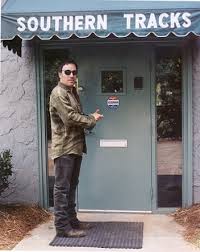
When recording on The Rising began in late January 2002 at Southern Tracks in Atlanta, it was out with the old and in with the new. Brendan O’Brien produced and mixed and recording was handled by Nick DiDia. In the past Springsteen album sessions were long and laborious. As Van Zandt, back in the band sharing second guitar duties with Nils Lofgren, Bruce would “write a bunch of songs, we’d record them, then, you know, hang out for a bit. He’d write another bunch of songs, we’d record them. What would happen is, we’d always do two or three or four records before one finally came out.” For The Rising the band would run through the song a couple of times and O’Brien would call time to record. Recording sessions for the last E Street Band album, Born in the USA, took over two years. Recording sessions for The Rising took seven and a half weeks.
urlThe first new Bruce Springsteen album I bought on day of release, The Rising is the sound of Bruce and his band embarking on a new era, re-galvanised and sounding tighter and tougher than before, songs focused and punchier than in over a decade. Bruce said of the change in sound that “I heard the way we sound right now. Today. And I said, ‘Well, that’s what we need to do.’ If somebody has all our other records, I want to make sure they don’t have this one. You can’t replace this one with some of the other ones.”

O’Brien’s touch isn’t as heavy-handed and obvious as a later producer would be, the altering of the band’s sound more of an update than an overhaul. His work seems to be more in finding the essence of a song, distilling it down and bringing different sounds to the forefront – the guitar tone on here eclipsing that of Lucky Town / Human Touch for example – and adding subtle touches to the overall palette.

The Rising never tackles the theme of September 11th directly, but it’s shadow can be felt across the album. With ‘Your Missing’ and ‘Into The Fire’ nine of the album’s fifteen tracks were written post 9/11 while ‘Nothingman’ and ‘My City Of Ruins’ fit the overall feel perfectly.

While not quite the finest record of the Bruce V2 era it’s certainly up there higher than most of his recorded output since and marked a fine return to form. I’m not a fan of ‘Waitin’ On A Sunny Day,’ nor am I that bothered about ‘Lets Be Friends (Skin to Skin)’ but I find it hard to find a fault with the rest of the album and it gets many a play. These are songs of loss, sure, but they’re also songs of finding strength in that loss. Songs of love, faith and power. Themes Springsteen had sung of throughout his career and, with the rejuvenation offered by The Rising, would go on to do so into a new chapter of his career.

Highlights: ‘The Rising’ ‘Into The Fire’ ‘Worlds Apart’ ‘Mary’s Place’ ‘You’re Missing’ ‘The Fuse’

*Bruce would reach out to the families of those victims, talking and consoling at length.

**’Into the Fire’ wasn’t finished just yet so come the A Tribute To Heroes concert it was ‘My City Of Ruins’, written previously for Asbury Park, that Bruce played.

***The band was already fraught with tension, Tyler was using again and were abandoned much to the chagrin of other members even after, according to Brad Whitford, O’Brien “bent over backwards to do whatever he could to make Steven comfortable”.

Least to Most: Bruce – Born in the USA

“You end up like a dog that’s been beat too much
Till you spend half your life just covering up”

bruceborn1984Bruce at his largest in terms of both commercial appeal and sound, this was the spark that ignited ‘Boss Mania’ and saw Springsteen go from playing to packed arenas of the faithful to selling out stadiums and play-acting himself to newer audiences against a screen that projected his newly pumped-up image punching his fist into the air, ushering in the final verse of the misappropriated title-track to his then-new album Born in the USA to the cheap seats at the back of the crowd.

Thirty million (and still counting) sales, seven top ten hits. That cover. That Ben Stiller parody. Born in the USA is Bruce’s biggest selling album and, probably, his most well-known.  Yet commercial heights do not always equal creative heights. There’s always a sacrifice, a deal with the devil to achieve those numbers. For my money, the production and sound on this blockbuster meant that the details that make for a great Bruce song were sacrificed somewhat.

But let’s not get confused, though. At this point in the list we’re really getting into the quality end of the spectrum, the wheat has been separated from the chaff and we’re down to lining up in order of personal preference and anything from here on in will likely regularly feature on any stereo and may well top other ‘favourite / best’ lists.

The title track is inescapable, even on this side of the Atlantic, whenever Bruce is mentioned. That’s not necessarily a bad thing, it’s a belter of a song. Let’s skip over the way in which it was misinterpreted as that’s been discussed ad nauseam. I think what fascinates me is just how different this version is from the original demo cut around the Nebraska sessions is (perhaps this was the key to the sacrifice – in its original form it would not have been so misunderstood yet would never have reached such a wide audience) and that the version on the album is only the band’s second take at it – Max Weibnerg didn’t even know Bruce was going to count the band in for another punch at the four-and-a-half minute mark but The Boss has praised ‘Born in the USA’ as his drummer’s finest recording*.

That being said, I dont’ always listen to it when I play the album so over-exposed did it become and it was one of those songs that put me off Bruce initially. Listening to Chapter & Verse recently it sounds so out of place sat between ‘My Father’s House’ and ‘Brilliant Disguise’ as to almost sound like the work of a different artist. Almost.

Perhaps it was a cultural thing – Reagan harped on about a new morning in America while that country’s cinema heroes of the early 1980’s were muscle-bound and jingoistic, here we were had Thatcher and mining strikes (cinema audiences dropped to an all-time low in ’84) so a bicep-baring Bruce singing heartland rock against a backdrop of the Stars and Stripes was never going to be as huge here as it was in the US** and I don’t think this one has quite the lasting appeal in comparison to his other work.

I think that those songs at the start of the album are the ones I enjoy least and rarely listen to. I’d struggle to quote a lyric from ‘Darlington County’ say, or easily recognise ‘Working On The Highway’ if played live. The recording of Born In The USA dates back to 1982 and many of the tracks were written at the same time as those that appeared on Nebraska**. Bruce himself has said that “if you look at the material, particularly on the first side, it’s actually written very much like Nebraska – the characters and the stories, the style of writing – except it’s just in the rock-band setting.” Given that the fabled ‘Electric Nebraska’ has yet to see the light of day I can see why, the songs just don’t suit the sound – in my own humble.

Perhaps its another one of those results of a protracted recording period. Sessions for the album were spread over so many months (years even) that it can seem a little disjointed and with so many songs recorded it would be hard to find the perfect balance and he toiled with it for a long time. At one point in 1982, with the demo tape that would become Nebraska ready for release and a record of band material also ‘ready’ he toyed with releasing the two as a double album; one solo, one ‘band’ with a tracklisting ready as:

BORN IN THE U.S.A
MURDER INCORPORATED
DOWNBOUND TRAIN
DOWN, DOWN, DOWN (I’m Goin’ Down)
GLORY DAYS
MY LOVE WILL NOT LET YOU DOWN
WORKING ON THE HIGHWAY
DARLINGTON COUNTY
FRANKIE
I’M ON FIRE
THIS HARD LAND

Yet then he released Nebraska as a stand alone (no tour, no real fanfare) and took a break before picking up recording again in early 1983 with newer songs coming up and wouldn’t conclude until February of 1984. As such a wealth of material was recorded and never released – you could easily pick a dozen of any such songs and create an album that would still be considered a classic. So the protracted recording, agonising and umming and erring (toying with releasing different selections and demos as is) as Bruce searched for that elusive ‘binding factor’ means that perhaps this record isn’t as consistent as it deserves to be.

But… but BUT. This album contains a wealth of such strong material that even if I tend to skip a few tracks a the start there’s enough here to warrant its inclusion in the top half of this list. Even limiting myself to two tracks from each album when I compiled my own Top 20 Springsteen songs was a tough one with this album and those I chose weren’t released as singles.

‘Downbound Train’ remains one of my favourite Springsteen songs and one I feel is criminally overlooked.

‘I’m On Fire’ gets many a play as does ‘Bobby Jean’. And then there’s ‘Dancing In The Dark’. When Landau listened to Born in the USA his reaction was “we don’t have a single” and told his charge to go home and write one. Legend has it a guitar was thrown at this point. However, Bruce set about writing about his frustration about writing – “It went as far in the direction of pop music as I wanted to go – and probably a little farther.” His biggest single to date (with it the album actually had seven) and one which initially wasn’t popular with the band. Van Zandt has said “It was much, much, much more produced. I didn’t like that song when I first heard it.”*** While it may still have its detractors I still really enjoy it a lot more than some of the album’s other singles like ‘Glory Days’.

Overall Born in the USA is something of a grab-bag album. Certainly affected by over-production in its unabashed reach for the maistream (no qualms here, if any artist is going to shift thirty million copies of an album I’d rather it a Springsteen than a Beiber) it nonetheless contains more than its fare share of solid Springsteen tunes that carry the album into the higher quality end of his catalogue.

Highlights: ‘Downbound Train’, ‘Bobby Jean’. ‘I’m On Fire’, ‘Born In The USA, ‘No Surrender’, ‘Dancing In The Dark’.

http://www.youtube.com/watch?v=MD3DdskaPhs

*While Weinberg is fond of the song for the same reasons, his favourite of these sessions, ‘This Hard Land’ was shelved like so many of the 80(!) recorded.

**It was a hit, though, nonetheless, topping the charts and shifting just over a million. I don’t feel though that it had quite the same cultural impact as it did for Bruce at home.

***Van Zandt would leave the E Street band in 82 (though this wasn’t really announced until after the recording of Born in the USA) and Nils Lofgren would join in time for the tour. The official line being that he’d joined in order to help see Bruce rise to success and, job done, it was time to focus on his own music.

Least To Most: Bruce – “halfway to heaven and just a mile outta hell”

Ok, so I’ve just looked at my (much revised, scrawled over and rewritten) list and realised we’re at the half way point in my rambling about Bruce’s albums in Least to Most Favourite order. We’re ten down with ten to go and that feels like a good point to take a breather* and talk about some Springsteen songs (a couple of favourites amongst them) that wouldn’t otherwise get a mention and take a look at those releases that don’t qualify for the list.

Compilations 

Bruce was twenty three years into his recording career before he decided it was time for a compilation. 1995’s Greatest Hits oddly didn’t get the best reviews – many felt that by omitting anything prior to Born To Run, Bruce was cutting out an important part of his history (“no Rosalita?!” was a common cry in reviews I’ve found in archives**) and others suggested that these songs simply didn’t belong together and performed better in their original album sequencing… though isn’t that the case with all such compilations? Seems like a trite comment to make.

Personally, this was my introduction to Bruce Springsteen so I’m a little biased. I was a little put-off by the sounds of ‘Born In The USA’ and it’s kin (this was 1995, after all, and such sounds weren’t ageing well) but there was no denying the draw of songs like ‘The River’ and ‘Atlantic City’ which were the big hook for me.

I’ll also make a fight for the new songs included here that many a critic argued were weak. I think ‘Blood Brothers’ remains an essential Bruce Springsteen song and both ‘Streets of Philidelphia’ and ‘Secret Garden’ are strong tracks and that’s without the dusted-off and revisited ‘Murder Incorporated’ (which saw Steven Van Zandt return to the fold for the video and would become a real blazer on the Reunion Tour) and ‘This Hard Land’ – both Born In The USA cuts that didn’t make selection, the latter of which was Max Weinberg’s favourite tune. For a one-stop sampler of Bruce Springsteen V1***, Greatest Hits is still a damn good start for any Bruce newbie.

http://www.youtube.com/watch?v=K4mFqkfDn6U

Strangely enough, just two studio albums later and with the successful launch of Bruce Springsteen V2 cemented, it was time for another compilation.

This time more space was allotted to it and the selection was allowed to span out across two discs so that The Essential Bruce Springsteen kicked off with ‘Blinded By The Light’ and wrapped it up with cuts from Live In NYC and The Rising making sure to include ‘Rosalita (Come Out Tonight)’, all the hits, some fan favourites like ‘Jungleland’ and ‘Nebraska’. Of course, the fans would already have all of these so a limited run with a third disc of rarities was offered and some of those are none-too shabby either. I particularly enjoy Springsteen’s live take on ‘Trapped’:

Odder still, in 2015 the track listing was revised. Out went ‘Jungleland’ and ‘Tunnel of Love’ and in came ‘Tenth Avenue Freeze Out’ and ‘One Step Up’ and a handful of other tracks were shuffled / cut in order to make space for a couple of bolted-on post-The Rising tunes. Bonkers, if you ask me; cutting ‘The Darkness On The Edge of Town’  to make space for something from High Hopes?! Why bother?

On the ‘Why Bother’ list is the 2009 Greatest Hits which was billed to Bruce and The E Street Band (is that only their second billing? Though they didn’t get the US cover) which strips it all back to one disc and adds a couple of newer tracks – presumably released to catch the newer casuals after Superbowl and festival appearances.

Chapter & Verse was released this year to coincide / accompany Bruce’s Born To Run book. It’s somewhat linear and obvious in its song selection and only really stands out in as much as being more ‘personally’ selected than the above comp and featuring a handful of pre-Columbia Recording Artist Bruce. The best of which being ‘Ballad of Jesse James’. I’ve yet to add this to the shelves as they’re not what you’d call ‘required listening’ for anything other than an intro to the origins story.

Live

In terms of live albums, while there’s certainly a couple listed on Bruce’s discography, Live 1975-85 is inarguably the best way to get a take on what makes Springsteen live so legendary. Sure, Live In NYC is a good capture of the reunited E Street Band (and the best place to hear its new songs) but it’s strange sequencing and fading out have hampered it and interrupt the flow.

Live 1975-85 contains 40 songs recorded with the band in its prime, a wealth of classics, Springsteen pre-song story telling and, in ‘Seeds’ another great original:

It’s only downfall – and one that was much picked up on by fans I’m given to understand – was that it didn’t include ‘Prove It All Night’ in the live reshaping (or at all, in fact) that had acquired a massive fandom. So here it is:

Worth mentioning that Bruce is more than savvy to the current musical buying trends and has made many a current and classic concert available for download at http://live.brucespringsteen.net/

EPs

1988’s Chimes of Freedom was released to tie-in with the Human Rights Now! tour. The live rendition of ‘Tougher Than The Rest’ is suitably girded by the E Street Band’s backing, ‘Be True’ is a decent enough tune but the flip side with Bruce’s take on Dylan’s ‘Chimes of Freedom’ and the acoustic ‘Born To Run’ and still captivating stadium-size crowds is the strongest, in my opinion:

http://www.youtube.com/watch?v=oH1I5z44fuU

Blood Brothers originally came with the film of the same name (in a very limited pressing) that documented the mini-reunion of the E Street Band. While the tracks included are certainly interesting there’s nothing really here other than curiosities – like the ‘alt’ version of the title song.

Which brings us to the last release of new Bruce Springsteen material – American Beauty. Now, if High Hopes was made up of songs that didn’t make the cut for The Rising or Wrecking Ball then an ep of songs that didn’t make the cut of THAT might be stretching it a bit….  Indeed it is. Nothing on here is particularly essential in its listening and there’s chunks of all that were salvaged and better used elsewhere, it’s release remains something of a mystery to me, almost an example of a big artist and major label slapping something together to cash in on Record Store Day and it pains me to say that as a fan. That being said, ‘Hey Blue Eyes’ is a very good song and I do play it a fair old bit on stream. One of Springsteen’s angry Bush-era political songs that isn’t mired by over-production – almost demonstrating in on four-track EP how clearly Brendan O’Brien is the better set of hands for Springsteen’s songs over Ron Aniello.


*Whether I’ll manage to finish this series by the New Year remains to be seen.

**Bruce made reference to this in the linear notes for The Essential and, if you watch the accompanying ‘Blood Brothers’ DVD, there was plenty of discussion against the inclusion of earlier tracks

***Bruce Version 1 extends from his debut up to the conclusion of The Reunion Tour. The Rising marked the emergence of Bruce Springsteen Version 2.0

Least to Most: Bruce – Greetings From Asbury Park, N.J

“Madman drummers bummers and Indians in the summer with a teenage diplomat
In the dumps with the mumps as the adolescent pumps his way into his hat
With a boulder on my shoulder feelin’ kinda older I tripped the merry-go-round”

Pardon?

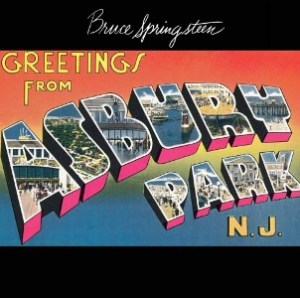
greetings_from_asbury_park_njGreetings From Asbury Park, NJ feels exactly like a debut album should: it’s full of energy, enthusiasm and awash with ideas – essentially what happens when an act has been working up these songs long before getting a deal and let into a recording studio. So here we find Bruce Springsteen at the tender age of 23, in thrall still to his idols, making his recording début not as a frontman for a rock band but, essentially, a solo artist with a few band members on a couple of tracks.

Indeed a bit of a dispute arouse very early in as Bruce wanted more tracks with his band (at that time featuring Vini ‘Mad Dog’ Lopez, Garry Tallent and David Sancious) whereas Mike Appel and John Hammond wanted more of the solo artist, acoustic feel. Not only that but Hammond’s boss, Columbia Records president Clive Davis,  didn’t feel there was a single on the album and sent his new signing back to work.

So Springsteen, proving his craft, wrote two – ‘Spirit In The Night’ and ‘Blinded By The Light’* (which would mark Clarence Clemons’ entry into Bruce’s catalogue). Neither would prove a hit for Bruce but Manfred Mann’s Earth Band would take ‘Blinded…’ to the top of the charts. The two songs pushed a trio of ‘solo acoustic’ songs off never to be heard from again. I’ve never been this song’s biggest fan, to be honest. I don’t like what I feel is wordplay for the sake of wordplay and I still can’t fathom the meaning of lines like “And go-cart Mozart was checkin’ out the weather chart to see if it was safe to go outside, And little Early-Pearly came in by her curly-wurly and asked me if I needed a ride, Oh, some hazard from Harvard was skunked on beer playin’ backyard bombardier”… it’s almost as though he’s just going for rhyme over reason… but that’s just me.


But then if – after seventeen studio albums – your début was still considered your best you’d have to wonder what you’re doing wrong, right? He’d later start finding his own voice and stripping away all the wordiness and start matching his poetry to more muscular, tighter rhythms that really worked together. At the time, though, I think he was desperate to get his foot in the door. I think he’s even explained that he’d sit on the bed with a rhyming dictionary to help with the lyrics. It’s a fun anecdote now but I think it does kinda harm the music – Jon Landau and his editing hand were still a way off.

I think the only reason I don’t spend as much time with this as I do with later albums is probably down to the production / guiding hands behind it. The whole ‘New Dylan’ tag that Columbia was marketing Bruce behind meant that  it landed somewhere between folk and rock and not firmly in either, in amongst some that don’t really leave much of an impression are some great songs on here that would later go on to become fleshed out monsters live restrained by their studio rendering –  as though Bruce wasn’t being allowed to really bust loose with his own material. When he’d play the final album to a friend, the question was “where’s the band?”

For my money the album’s stronger tracks are those which most prominently feature a band – ‘Lost In The Flood’ is an immense song for someone in their early twenties to have penned (and features Mr Van Zandt clobbering Springsteen’s Danelctro amp to get the opening sound) remains a favourite and I’m sure it’s not just one of mine, and marks the start of those ‘story’ songs that would continue on up to ‘Jungleland’.

As I’ve said, we’re already into real strong territory on this list so I won’t say anything on Greetings is bad, more that the kitchen-sink attempts don’t always work and songs like ‘Mary Queen of Arkansas’ and ‘The Angel’ don’t really hold long in my memory after listening. There’s just not much about them to kinda hang your hat on – they don’t have the melody / hook of ‘Growin’ Up’ or ‘It’s Hard to Be a Saint in the City’ which, although it’s almost drowned in the Dylanesque lyrical flood, points as to where he’d be going with his next effort in just a few months.

One of this album’s fans included David Bowie – who actually covered ‘It’s Hard to Be a Saint in the City’. Initially, though, it was meant to feature on his Young Americans album but, according to Tony Visconti, after they played the cover to Bruce, David and The Boss had a tense, private chat after which work on the song was abandoned (later released on Bowie’s 1989 box set).

I think what I really love about Greetings From Asbury Park, N.J – aside from the music – is the sheer journey it started. It’s amazing to listen to this and associate it the the same artist who, just a decade later, would be muscle-bound and singing about how he “had a brother at Khe Sahn”. Here he is in all his youthful, bearded glory, searching out the avenues his music would later stride down, a little in awe to the poetry of his idols over his own voice but still, unquestionably, massively talented.

Highlights – ‘Lost In The Flood’, ‘Growin’ Up’, ‘It’s Hard to Be a Saint in the City’.

*Jon Landau would pull the same method just a decade later, sending Bruce back to come up with a ‘hit’ as he felt that Born In The USA lacked one. Turns out that with the resulting ‘Dancing In The Dark’ it had seven singles in it.

Least to Most: Bruce – The Promise

“When the promise is broken you go on living
But it steals something from down in your soul
Like when the truth is spoken and it don’t make no difference
Something in your heart goes cold”

Three years separated the release of Springsteen’s star-making Born To Run and its follow-up Darkness on the Edge of Town. If you look at it on paper, even factoring in the long tour for BTR, that’s a big chunk of time for an artist that needs to prove he’s more than a Newsweek and Time double cover and hype. But, due to legal and contractual malarkey with his former manager Mike Appel, Bruce was forbidden from entering a recording studio and releasing new music.

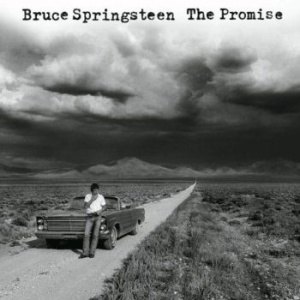
bruce_springsteen_-_the_promiseFrustratingly, this was also right at the point that Bruce was hitting his prolific stride in terms of song writing. So when, four days after his lawsuit with Appel was finished*, he finally hit the studio in May 1977 he was over-flowing with ideas and laid down eight songs in the first night alone. The take of ‘Something in the Night’ from this first session made the album. By the time recording for Darkness on the Edge of Town finished in January 1978 , Jimmy Iovine estimated that some thirty songs had been recorded and readied for release (and probably just as many in a less-refined state) – a huge increase in output when you consider that there were perhaps seven out-takes for BTR and albums prior, most of which only ever made it to raw mixing stages.

So what happened to those other songs? For a long time nothing. Some (‘Don’t Look Back’, ‘Hearts of Stone’, ‘Iceman’, ‘Give the Girl a Kiss’) were released twenty years later on Tracks. ‘The Promise’ was played live a couple of times and caused uproar when it wasn’t released on that box set (Bruce recorded a ‘new’ version in 1999 for 18 Tracks as partial recompense) along with a handful of others which became solid bootleg items but, for the most part, nobody outside of the group heard ’em.

Until 2010 when, while putting together a slightly-late retrospective package for Darkness on the Edge of Town, the songs were revisited. Most of the 22 (there’s an uncredited one at the end) are presented as-is, some had new vocals added and one was completely re-recorded by Bruce and the Darkness era E Street band, making the chiming, delightful ‘Save My Love’ the final recording session for Clarence Clemons.

‘The Promise’ was written as something of a sequel to ‘Thunder Road’ and appeared on likely track listings for Darkness almost until the last minute. One of his most-revered out-takes, Bruce felt it too soon after the release of ‘Thunder Road’ and that it threatened to over-shadow the rest of the album as well as not finding it in tune with the general theme of Darkness.

Originally released as part of  the box set The Promise: The Darkness on the Edge of Town Story, then later as a stand-along (though the box set is well worth investment) The Promise is more than a compilation of ‘lost songs’. More a ‘lost album’ in my opinion – it’s not only packed with previously unheard gems but really shows the evolution of Bruce’s songwriting. The choices he’d make in terms of cutting and refining down to get the sound he wanted for Darkness as well as showing the range of directions he could’ve gone down and just how comfortable he was with each.

There’s gorgeous pop songs in ‘Gotta Get That Feeling’, ‘Rendezvous’ and ‘The Little Things (My Baby Does)’ that must’ve been a massive delight for Steven Van Zandt when they finally saw the light of day. The slashing guitar player believes it’s “just full of some of my favorite things ever in Bruce’s history. That is now neck-and-neck with my favorite E Street album, which is the second disc of the Tracks box set”.

There’s the old-school R&B feel with songs like ‘Ain’t Good Enough for You’ (with a shout out to the up & coming Iovine) and even his recording of the the song he wrote for Elvis Presley – ‘Fire’ – which he and Steve jammed up in about 20 minutes (The Pointer Sisters would have a huge hit with it) and his own ‘Because The Night’.

This album also showcases just how much of a craftsman Bruce is – the early versions of songs that would make Darkness here demonstrate just how determined he was to work a song to get it to perfection. Take ‘Racing in the Street ’78’ as an example, how many other artists would release the version included here once they’d hit it? Not Bruce; he refined this further, working on the details until a line like “Other guys do it cause they don’t know what else they can do,  well and they just hang around in an empty home, waking up in a world that somebody else owns, and tonight tonight the strip’s just right…” became that beautiful punching line “Some guys they just give up living and start dying little by little, piece by piece. Some guys come home from work and wash up, and go racin’ in the street”.

It’s also a real insight into the creative process to hear ‘Candy’s Boy’ as something of an E Street waltz before Bruce took his axe to it and turned it into the turbo-charged (really been listening to a lot of The Boss’ car songs) ‘Candy’s Room’ for Darkness or the ‘Come On (Let’s Go Out Tonight)’ would be similarly parred down into ‘Factory’. Not only that but, in the same way as Tracks would reveal, Bruce would take a ‘discarded’ song and strip it for parts when he needed to make another song work. Any fan listening to ‘Spanish Eye’s for example is going to sit up in their car seat (or comfy chair) and say “hang on a bloody second”**…

But… but BUT. Here’s the thing. They all work in these versions too. The Promise is a fantastic album not just because it shows the different paths Bruce and these songs could’ve taken after Born To Run but because these songs are so fucking good as they are; they’re peak-period Springsteen songs recorded and mixed to a releasable state backed by one of the finest bands of its time. They could all just as easily made up an album and it would still be a solid contender. I’ve had this album spinning in my car again for the last week and I still keep stumbling across moments that make me go “shit, how did I miss that on first listen?”

While the songs here certainly point the way to what Darkness on the Edge of Town would become, they represent a ‘lost’ album, highlighting what was a very productive time for Bruce. It really isn’t just a collection of off-cuts, it’s a real insight into a creative genius hitting its stride and I’d gladly recommend that any ‘Springsteen newbie’ check out the songs on these two discs to discover what he’s all about than many a weaker studio album ‘proper’.

Highlights: ‘Racing in the Street – ’78’, ‘Gotta Get That Feeling’. ‘Wrong Side of the Street’, ‘Save My Love’, ‘It’s A Shame’, ‘Breakaway’, ‘The Promise’.

Not-so highlights: Again, pretty much into solid gold rankings now.


*Appel got $800,000 and retained 50% of rights to songs from up to and including BTR.

** or the less-British version. Interestingly the lyrics listed for this one on Springsteen’s site are nothing like the version on The Promise which begs the question as to how many versions of ‘Spanish Eyes’ there are.

Least to Most: Bruce – The Ghost of Tom Joad

“Shelter line stretchin’ ‘round the corner
Welcome to the new world order
Families sleepin’ in their cars in the southwest
No home, no job, no peace, no rest”

I’m starting to think that the poor reception that greeted Human Touch and Lucky Town kinda knocked Bruce’s confidence a little heavier than he’d let on. Going by the fact that, at the time, he was still actively fighting depression and going through a lot of personal changes, it’s not that big a surprise. One could imagine that, were he feeling more resilient mentally he may have said “nuts” to the negative reviews, gone back to the woodshed and kicked it up a notch. Instead, during the period between the end of what’s now called ‘The Other Band’ and the start of the E Street Reunion tours precious little of what Springsteen wrote saw the light of day (pun intended).

the_ghost_of_tom_joadNow to me – and I hope others – this is a real burr because what recorded material from 1994 onwards has reached the eager ears of listeners is gold and does show that the man was more than capable of saying “nuts” and going back to work. There’s an entire album’s worth (close to two*) of material that was shelved and will likely never be released. There’s been some hints as to what it contains – like the E Street reworking of ‘Waiting on the End of the World‘ – but it’s likely to remain unheard save a (much prayed for) Tracks 2**emerging and all you need to is cast a look at the material Bruce did release from that era, all with a certain understated charm, to know why we’re missing out: ‘Streets of Philadelphia’, ‘Secret Garden’, ‘Blood Brothers’ (the latter two written during a run of inspiration ahead of and during the E Street reunion for Greatest Hits), ‘Missing‘, ‘Lift Me Up‘, ‘Dead Man Walking’, even ‘Without You‘ has a joyful charm, ‘Nothing Man’ originated during this period… and then there’s this thing he wrote called ‘The Ghost of Tom Joad’.

‘The Ghost of Tom Joad’ was written around the time of Greatest Hits and Bruce even took the band through a few takes but, much like elusive ‘Electric Nebraska Sessions’, it wasn’t right. So, instead of the presumed course after that compilation’s reunion, Bruce took a sharp left: he assembled a group of songs about the American South West and, for the most part, embellished them with little more than his voice and some delicate guitar patterns weaving through the odd keyboard drone (something that started with ‘One Step Up’ and featured heavily in his 90s output to good effect).

And what a group of songs they are***. More restrained and narrow focused than his earlier solo (masterpiece) Nebraska, these songs actively incorporated silence and hushed phrasing (so much so that the tour that followed was often referred to as the ‘Shut the Fuck Up’ tour) to create memorable and affecting stories that lingered. Listening back to this one I’d forgotten just how powerful some of these are, take the tale in ‘Sinaloa Cowboys’ as an example:

Here the stories are perfectly succinct and the delicate touches of instrumentation mean that in their simplicity they achieve what the over-worked attempts of Devils & Dust failed to: stories with bite with music as a subtle backdrop rather than focus.

There are four songs on The Ghost of Tom Joad, title track included, for which Bruce assembled a small backing band – including Gary Tallent and Danny Federici – to add a little colour to the sonic palette and these serve as beautiful counterpoint to the otherwise stark, bitter-sweet beauty of songs like ‘The Line’. ‘Straight Time’ and ‘Dry Lightning’ may not linger as much as, say, the powerfully stark ‘Highway 29’ which could slot right at home on Nebraska, but the title track and ‘Youngstown’ are both essential Bruce songs.

‘Youngstown’ has become such a torch-burning, electrically recast centre-point of E Street band shows since the Reunion tour that it’s easy to forget just how strong the original is:

http://www.youtube.com/watch?v=4GaFUOQWi9A

The other reason Ghost of Tom Joad is an essential part of Springsteen’s catalogue is that it finds him rediscovering his voice. Not the hushed tones of the vocals but the no-linger inward focus. This was Bruce looking for inspiration outside of the men vs women themes he’d used for the previous three (released, that is) albums, but looking at the struggles of others – as he says; ““the songs on it added up to a reaffirmation of the best of what I do. The record was something new, but was also a reference point to the things I tried to stand for and still wanted to be about as a songwriter.””

Received to slighter commercial success but pretty strong reviews with Rolling Stone reckoning it “among the bravest work that anyone has given us this decade”  (and a Grammy for Best Contemporary Folk Album), it perhaps receives a harsher view in retrospect from some corners than it deserves. Some criticisms fired at this album focus around the hushed, minimal delivery or the lack of fire and brimstone given to the recorded versions of songs like ‘Ghost of Tom Joad’ and ‘Youngstown’ compared to their now live rendering but, if you ask me, they’re missing the point. The songs on this album (something of a concept album in that respect) all focus on the- as  his own website puts it – ” poverty, immigration and the brittle troubles of Americans and Mexicans in the Southwest.” The desert can be a cold, bleak place with vast empty spaces. The Ghost of the Tom Joad, sonically, is the sound of these oft-broken characters staring into that space after a day in the cruel, blinding light of its heat with acceptance / surrender of the inevitable. It’s not a time for boot, stomping rock and, in the brittle, fragility of its delivery of these stories Ghost of Tom Joad remains an understated and captivating masterpiece.

Highlights: ‘Ghost of Tom Joad’, ‘Youngstown’, ‘Highway 29’, ‘Sinaloa Cowboys’, ‘The Line’, ‘Galveston Bay’.

Not so highlights: The exclusion of ‘Brothers Under The Bridge’ which could’ve elevated this album to virtually unimpeachable. But then everybody needs a ‘Blind Wille McTell’.

*Depending on how much different side-men know: Bruce has spoken about an album of more relationship songs in the minimal ‘Streets of Philadelphia’ style, Shane Fontayne has given interviews that hint at yet another. Could just be crossed wires, could be another well of unheard material. He was certainly clocking up recording sessions during this period.

** At the time of Tracks 75% of Bruce’s material was unreleased. Even the number of songs settled on for Tracks was then culled from 100 to 66. What was on those extra two discs? Surely more than went on to make up The Promise and The Ties That Bind?

***Here, again, though he wrote some 22 songs. There’s tales of two albums’ worth of songs – one with the band backing – being recorded. Some would pop up on tour, some never to be sung again. FFS.

Least to Most: Bruce – We Shall Overcome: The Seeger Sessions

“Now Teddy me boy,” the old widow cried
“Your two fine legs was your mama’s pride
Them stumps of a tree won’t do at all
Why didn’t you run from the big cannon ball?”

“Now against all war, I do profrain
Between Don Juan and the King of Spain
And, by herrons, I’ll make ’em rue the time
When they swept the legs from a child of mine.”

It’s worth pointing out that, from this point on, we’re really into the quality stuff. 8/10 and upwards so there’s no real “this album is a bit cack because” elements, more of a general exploration / personal ranking attempt.

seeger_sessionsWith eighteen studio albums (he counts High Hopes), half a dozen compilation albums, a few box-sets and a couple of live records, it’s We Shall Overcome: The Seeger Sessions that’s the real outlier in Bruce Springsteen’s catalogue. NebraskaGhost of Tom Joad and Devils & Dust may not have been sonically in line with, say, The River, but their subjects and song writing style certainly sit within the overall Springsteen narrative style. We Shall Overcome.. is an album made up entirely of covers* and contains his interpretations of thirteen tracks made popular by Pete Seeger.

This one goes back, initially, to that fallow period in Bruce Springsteen’s recorded output, between Ghost of Tom Joad and the resurgence of the E Street Band at the end of the decade. In 1997 Bruce got together with a group of musicians introduced to him by Soozie Tyrell and recorded ‘We Shall Overcome’ for the Where Have All the Flowers Gone: the Songs of Pete Seeger tribute album.

A few years later, his career revitalised and during a brief break between ‘rock’ albums, Bruce decided to revisit the idea and the band got together in his home, counted off and let her rip.

In a recent interview Bruce was asked about the possibility of a second Seeger Sessions album and he said that, while there’s nothing on the horizon yet, he doesn’t see why not, he’s “collected a small group of material” and that what he enjoyed about this one was he that didn’t have to write and “that it was such an enjoyable band I can’t imagine not doing it again”.**

So here we have thirteen songs that Bruce chose to cover and had an absolute blast playing with musicians introduced to him just days before and just letting rip. If you hang your Springsteen luggage at the door it’s a hugely enjoyable album from which the most apparent feature is just what a joyful experience recording it must have been.

The tracks are pretty diverse and date back many hundreds of years and Bruce brings his own arrangements to each.

Let’s face it; for all his detours into hushed acoustics, Bruce is primarily a rock singer and carries with his voice and phrasing a certain clout. Even with his first two albums of acoustic-based music (we’ll get to those a bit later in this series) you only need go back a few years in his musical journey and he was on stage with Steel Mill belting out southern-tinged harder-rocking numbers and honing the his abilities to rock any joint that would let him plug in. When it’s just him with a guitar you can expect a hush but if you put a band behind him it is (to pull a Steve Van Zandt line in where he has no place) “Boss time” – what he brings to these arrangements of folk standards is an extra thump, a beefing up ready for those stadium-ears almost. I find ‘Mrs McGrath’ particularly benefits from this. It not only makes these songs sound more contemporary but is likely the best way to make them accessible for his own fanbase who – were they recorded in a style much closer to their standards – may not give them as much time.

Personally – I love a lot of this record and it did mean I not only went out looking for more similar music but spent a lot of time with this in the car. Mission accomplished then, I guess.

I recall at the time of release that We Shall Overcome: The Seeger Sessions was met with a lot of acclaim. It picked up a Grammy for Best Traditional Folk album and the tour that followed won similar applause (and was captured on the Live In Dublin album which featured a few of Bruce’s originals re-worked) though, reportedly, a little under-attended.  There was some negativity – the very ‘Springsteeninsation’ of these songs robbed them of some of their more traditional elements but then, if you want a traditional folk rendering would you really buy a Springsteen version? For my money, a lot of those traditional ones can come across a whole lot more bland and a whole lot less fun.

When it comes to why this one doesn’t go higher up in terms of rotation it’s probably down to the fact that, for all the fun and appeal of it, it’s not necessarily one to listen to all the way through each time – after a while the lack of diversity becomes a little much and I find myself wanting to listen to something else. An element which will also depend on which version of this album you got your hands on. I got this one on day of release so mine concludes with ‘Froggie Went A-Courtin”. Frustratingly, six months later the album was reissued as  We Shall Overcome: The Seeger Sessions – American Land Edition. This version slapped an extra five tracks on including Springsteen’s own ‘American Land’ (later re-recorded for Wrecking Ball) and ‘How Can A Poor Man Stand Such Times and Live’ featuring some additional lyrics from Bruce. A little vexing as both are strong tunes but I wasn’t about to go out and buy the same album twice in one year and it felt a little cash-grab.

However, overall, nothing but like for We Shall Overcome: The Seeger Sessions.

I have one small curiosity of a hang-up with it though and it’s a trifle of a thing but it’s the cover. Bruce has been backed by the E Street band on ten albums. Yet the cover is always Bruce alone. So you’d guess the rule is that the musicians that play on the songs don’t get to the cover. Except, it would seem, the group of musicians of the Sessions Band (who he’d only played with a couple of times) – they get the cover. Garry Tallent has played bass on 14 Springsteen  records since 1972 – he’s not on any cover. A chap called Jeremy Chatzky plays upright bass on We Shall Overcome: The Seeger Sessions. He’s on the cover. Played bass on one album, on the cover. Garry Tallent bass on 14 albums, no cover. Even on the live albums credited to the E Street only Bruce was on the cover. I think only one album, a ‘quick we’ve got some big festival shows coming’ Greatest Hits comp saw the whole band on the front cover and even that was only for the European disc. My tongue is, of course, firmly in my cheek with most of this but I do wonder if this caused a slight eye twitch on the E Streeters….

Highlights: Mrs McGrath, John Henry, Pay Me My Money Down, Eerie Canal, Eyes On The Prize

Not so highlights: most of these will be empty from here on in.

*Again; unless you have the reissued version in which case you get one original Springsteen song and some original lyrics.

**He also revealed that he wrote and submitted a song for the Harry Potter films which went unused.

Least to Most: Bruce – Wrecking Ball

“After the crash of 2008, I was furious at what had been done by a handful of trading companies on Wall Street. Wrecking Ball was a shot of anger at the injustice that continues on and has widened with deregulation, dysfunctional regulatory agencies and capitalism gone wild at the expense of hardworking Americans.”

After the relative mid-tempo doze that was his last studio album, a few years passed before a new effort from Mr Springsteen arrived and he certainly seemed more fired up and focused for the break. According the The Boss, it was on a drive home from a local bar that “Easy Money” came to him and the muse materialised for most of the material that would appear on this, his seventeenth studio album.

wreckingballI don’t necessarily dislike Wrecking Ball. There’s some very strong songs on here and it’s great to hear a change, sonically, in Bruce’s material. It’s hard to put my finger on what it is that doesn’t push this album higher up in my favourites and I’m not alone here, even Bruce mused “Wrecking Ball was received with a lot less fanfare than I thought it would be. I was sure I had it. I still think I do and did. Maybe my voice has been compromised by my own success, but I don’t think so.”

Personally, I think it’s down to the production. I think Bruce perhaps lost his nerve when it came to producing his own music – he’s said himself that when he initially tried recording something with the E Street Band post-reunion, the results were flat – hence calling Brendan O’Brien for The Rising. Unfortunately, he later called Ron Aniello and began a partnership that has resulted in some of my least favourite output.

The songs that make up Wrecking Ball are strong and gritty. The first half of the album specifically tackles the economic blight that followed the 2008 crash. Yet rather than give these songs a good, gritty recording or even bare-bones them and let the lyrics speak for themselves, they’re covered in ‘ticks and gimmicks’ – IMHO.

I know that he’d just produced Patti Scialfa’s Play It Where It Lays but I still to this day wonder what it was about his back catalogue (Lifehouse, Jars of Clay, Candlebox) that made Bruce place his music in Ron’s hands. The stapled-on soul / gospel parts of ‘Shackled and Drawn’ (“I want everybody to stand up and be counted tonight, you know we got to praaaay together”) and ‘Land of Hope and Dreams’ rub the wrong way, as does the overly prevalent use of drum machines / loops. It seems to jolt too much with the force of the more organic sounding music that tears along like some pumped, stadium-ready, celtic folk-rock dervish and suits the anger that Bruce is trying to convey.

Take the kick-off ‘We Take Care of Our Own’, does it need the echo on his voice?

This album more than any since shows the influence of the Seegar Sessions in terms of instrumentation – there’s a real Celtic lean to a the opening clutch of songs but with a lot more punch and wallop. At times it brings to mind the Dropkick Murphys – ‘Death To My Hometown’ especially – and he sings with a lot more urgency and earnestness than he had on Working On A Dream.

Regarding the choice of music Bruce said he “used a lot of music from the 1800s and the 1930s to show these things are cyclical. The album is resonant with history.”

Resonant with history is a good choice of phrase. There’s some of his own on here with the revisiting of ‘Land of Hope and Dreams’* and the recasting of ‘Wrecking Ball’ into an album track.

Now… this is something that a lot of people have raised issue with and I kinda understand their points. ‘Land of Hope and Dreams’ has been slighted in its handling. Yes, it’s Bruce’s song and up to him to do as he sees fit with it but; this was an E Street Band song, 14 years old at the point it was recorded and had been a staple of almost every show since the reunion tour on which it made its début . Steven Van Zandt considered it “a wonderful reintroduction of what has become a very different E Street Band. We just opened with it the other night, and the whole fucking stadium took off.”

Live it was a sprawling epic, a soulful, uplifting song of hope – it’s also my go-to first play if I haven’t picked up my guitar for a bit – and I admit I did often wonder what it would sound like if the band recorded under a producer willing to tighten the bolts up a bit. Unfortunately the band didn’t record it. Only two members feature, with the remaining parts played by Bruce and Ron and session drummer Matt Chamberlain replaces Max Weinberg. Given that they’d played it nightly for over a decade prior and then had to play it on the subsequent tour, I can’t help but wonder how the band felt on that one. Max thumps the shit out of the drums on this live, especially. Then it was decided to fade it in and out around more ‘stapled-on’ gospel singers (I have nothing against gospel our soul singers, if I need to make that clear) singing parts of “People Get Ready”. To me it was as if Bruce was trying too hard to frame his music / emphasis the points it was trying to make.

Here’s both versions for comparison:

http://www.youtube.com/watch?v=jGbUe9-kAR0

Those that did make the cut were Van Zandt’s mandolin and Clarence Clemons, which brings me to another point…It was while recording Wrecking Ball that Bruce had been trying to reach Clarence to arrange a recording session. Specifically the sax solo on ‘Land of Hope and Dreams’. When Clarence did get back to Bruce he was feeling ill and it became the first and only time in which the Big Man bowed out of a scheduled session. No worries.. we’ll pick it up when you’re feeling stronger. Bruce went away on holiday with his wife and it was then that he got the call that Clarence had suffered a massive stroke. He passed not long after, something Bruce refers to as “like losing the rain.”

In the period that followed Ron Aneillo assembled the sax part on ‘Land of Hope and Dreams’ from recordings of the live version. When Bruce heard it he said it was though Clarence was in the room. It remains the song’s highlight. I just feel it was a missed opportunity to capture the punch that the band bring to it.

Wrecking Ball‘ was the other ‘old’ song to grace the album it gave it its title to. It had been written on the eve of the E Street Band’s final shows at Giants Stadium in 2009, after which it was to be tore down. As such it was a ‘road song’ written for the band. To quote Mr Van Zandt again: “They tend to take on a very comfortable arrangement because they’re being written for the live band and with the live band. It’s not like he’s going home in between and writing it and demo’ing it and showing it to the band later. He’s playing us the song backstage on his acoustic guitar, just like the old days. Songs like that take on a different sort of immediacy because they’re literally being worked up at soundcheck”.

It’s a strong song that’s become about much more – facing the hard shit that life can throw and actually daring it to bring it on. It’s the closest to the E Street Band playing as you’ll find – though Van Zandt himself doesn’t feature. I think at this point he was likely busy with ‘Lilyhammer’ (a show I do wish would make a return).

I mention the lack of E Streeters for a couple of reasons. First is that I think with Wrecking Ball, Bruce found the key to making ‘rock’ music with musicians outside of the band and still having it been accepted by his audience. That key being; feature some of them on a couple of tracks and tour the album with them. There’s no Garry Tallent or Roy Bittan and Nils Lofgren found his plectrums half-inched by Tom Morello. They’d all play the arse off of them on the following tour though.

The other reason is that Bruce has a new album in the works – well, it’s been delayed by the steady expansion of the current E Street tour in support of The River‘s box set. Both Bruce and Jon Landau have been at pains to point out that it’s a solo album and not an acoustic one, that it is “in fact, a very expansive record, a very rich record. It’s one of Bruce’s very creative efforts”. Given that he’s also been working with Ron Aniello (sigh) on it, Wrecking Ball‘s sound and lineup perhaps serve as the biggest indicator as to what, sonically, we might be in for.

Some criticism lobbed at Wrecking Ball accused it of being top-heavy and sonically uninteresting. For me the album gets better after ‘Jack of All Trades‘ (tepid, Bruce by numbers with added Morello). Aside from those already mentioned, songs from this point are solid – ‘Rocky Ground’ brings to mind the groove he mastered with ‘Streets of Philadelphia’ and features a Springsteen-penned rap, ‘This Depression’  originally considered to reference the economical could now be seen as Bruce praising Pati during the large depression of his own he was going through and the strange, ode to the dead that is ‘We Are Alive’:  “A party filled with ghosts. It’s a party filled with the dead, but whose voices and spirit and ideas remain with us.”

For my money – lose ‘Easy Money’, ‘Shackled and Drawn’, cut some of the effects and promote ‘Swallowed Up (In The Belly of a Whale)’ and  ‘American Land’ from bonus to full-album track and you’d have an absolute belter of an album with more of a sonic palette and a real barn-storming closer. Indeed, it’s how it plays on my iPod. But, then; everyone’s a critic….

Highlights: ‘We Take Care of Our Own’, ‘Death To My Hometown’, ‘Wrecking Ball’, ‘Rocky Ground’, ‘This Depression’, ‘We Are Alive’ and the bonus tracks

Not-so Highlights: ‘Jack of all Trades’

*’Land of Hope and Dreams’ was one of two new songs featured on the reunion tour Live In NYC album alongside ‘American Skin (41 Shots)’. The newer studio version of the latter was also cut during Wrecking Ball sessions and would later have Tom Morello dubbed onto it for release on High Hopes. Bruce, at the time, said that he wanted to give these live staples a more ‘official’ release but these are both songs that, I think, were better left – like ‘Seeds’ – in their original versions.

Least to Most: Bruce – Working On A Dream

I’m gonna take a bet that of this album’s fans, Steven Van Zandt (“I’m a pop-rock-band guy. That’s all I am”) is one of the biggest. He’s stated that he sees this – the last Bruce Springsteen and E-Street album to date – as the logical end of a trilogy that started with The Rising with “a projection more toward the pop-rock form” achieved more completely on Working On A Dream.

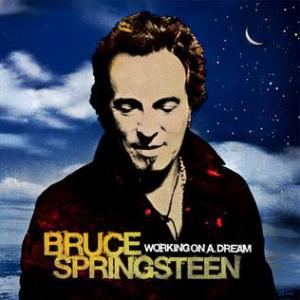
working_on_a_dreamI might be quoting more heavily on Mr Van Zandt than anyone else but that’s because Bruce is somewhat quiet about Working On A Dream in hindsight. Even in his own book it got just a fleeting mention. Perhaps he – like quite a few – consider it one without real staying power. Perhaps it was sheer timing that meant that Working On A Dream, the third-and-final album with Van Zandt & co would also be the least rewarding. Let’s face it; in the ten years preceeding its release Bruce had reunited the band and embarked on a huge tour, released The Rising, Magic, Devils & Dust, The Seegar Sessions, an anniversary edition of Born To Run, released The Essential compilation, toured the globe tirelessly and stepped into the political arena with the Vote For Change tour. A whirl of activity that by far eclipsed that of Bruce’s previous decade. It was probably time to take a break.

Instead, struck by inspiration and a writing spell that carried through from the final recording sessions for Magic, Bruce returned to the studio with Brendan O’Brien (one last time) and a core band of Max Weinberg, Roy Bittan and Garry Tallent (other members would be bought in to add their parts later) to catch, as he said, the “energy of the band fresh off the road from some of the most exciting shows we’ve ever done.”

One could argue that, with a Superbowl concert on the horizon the need for product was in mind and this one was perhaps a little under-cooked. One could argue that… could…

See, there are some songs here that I simply cannot connect to no matter how I try. The title track has never clicked. Yeah; it’s nice and pleasant but it just seems to lack spark or real weight and I think he’s tackled the theme better elsewhere (on Lucky Town especially). ‘Queen of the Supermarket’ simply should never have been and I had to wonder what a champion lyricist like Bruce was thinking with ‘Life Itself’ – “We met down in the valley where the wine of love and destruction flowed, there in that curve of darkness where the flowers of temptation grow”… do what, mate?

But. But. ButIt’s not fair, though, to write it off or brush over it completely because this is Bruce Springsteen and (with the rare exception) you only tend to have to wait a second for a belter of a song to reveal itself and there is a lot to enjoy on Working On A Dream.

Take the opener; ‘Outlaw Pete’. I know it gets a bit of slack for being a bit overblown and borderline self-parody, but I still enjoy it (granted, I wouldn’t listen to it everyday) and I don’t think Bruce is exactly taking himself seriously with it. Yes it’s daft (“by six months old he’d done three months in jail”), yes it may well have borrowed from another song but it sets the scene – I really think that at this point it was a case that, rather than sweating over everything too much, the mood was “you know what? Fuck it, let’s give it a go”.  Not to mention that when played live (though I don’t think it’s been touched since) Steve – a much underused player on stage these days – got to play the lead.

Right on it’s heals – ‘My Lucky Day‘ is another fast, blistering tune that, again, sounds like a blast was had recording it. Its fast, rawer sound almost at odds with the layers of overdubs and lush, huge 60’s sound that drapes so much of the album. Step past the next couple of momentum stallers and you get to the great sonic backdrop of ‘What Love Can Do’ and the swampy, blues-stomp of ‘Good Eye‘ a nice enough (though nothing that special) couple of tunes that sandwich ‘This Life’ – a more obvious Beach Boys’ aping sound you’d be hard pushed to find:

‘Tomorrow Never Knows’ jangles along quickly and without much to hang on to, as does ‘Surprise Surprise’. ‘Kingdom of Days’ is a genuinely warm one about love and ageing. The album’s most affecting track though is saved for last (if we exclude – still very good – ‘The Wrestler’ tacked on as a bonus).

‘The Last Carnival’ is seen by many as a follow up to ‘Wild Billy’s Circus Story’ from The Wild The Innocent & the E Street Shuffle. It is, more importantly, for Danny Federici who passed away in April 2008, the first member of the E Street Band to do so having played with Bruce for forty years. Danny had appeared with the band briefly over the previous Magic tour and did so last less than a month before his death. Bruce asked him what song he wanted to play – it was, of course, ‘Sandy’. In his book it’s clear that while Danny Federici was the only member of the band to drive him to violent rage, Bruce had a genuine love for the organ player and his death certainly rocked him, as he said in the eulogy: “After a lifetime of watching a man perform his miracle for you, night after night, it feels an awful lot like love.”

‘The Last Carnival’ is a beautiful send off. An immensely affecting farewell to a fallen brother. After opening to Jason Federici’s accordion, Bruce sings at the bottom of his range in a barely-suppressed choke and hush against minimal accompaniment “Where have you gone my handsome Billy?” before layered voices swell to a choir. It’s a moving send-off and ending to the last album featuring the full E Street Band*.

A couple of clunkers aside, while there’s nothing wrong with the majority of Working On A Dream it perhaps lacks the sharpness and punch of its immediate predecessor. That being said, in amongst some of the most ambitious production of his career (Rolling Stone gave it the default 5 star review, though none of its songs made their 100 Best Springsteen Songs list, wetting their knickers over its lush sound), Bruce was still capable of crafting a fair few beauties so that the good by far outweighed the bad.

Highlights: My Lucky Day, Kingdom of Days, The Last Carnival

Lowlights: Queen of the Supermarket

*Certainly their last full album. Songs that didn’t make the cut on this or its immediate predecessors and featured E Street (and Danny Federici) included High Hopes highlights ‘Down In The Hall’ and ‘The Wall’.

Least to Most: Bruce – Devils & Dust

“Now down below and pullin’ on my shirt
I got some kids of my own
Well if I had one wish in this god forsaken world, kids
It’d be that your mistakes would be your own” Long Time Comin’

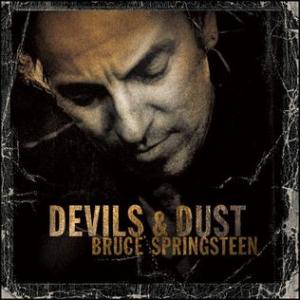
bruce_springsteen_-_devils__dustLet’s kick this one off with a small clarification – Devils & Dust (as with each that follows in this series) is a fine album. As strong a collection of songs as many could muster. From here on in (now that High Hopes is behind us) we’re really just talking personal preferences.

The outlier in Bruce’s ‘acoustic trio’, the songs on Devils & Dust aren’t  as sparsely accompanied as they are on Ghost Of Tom Joad or Nebraska, nor are they as single-minded in their focus. Recorded after touring behind The Rising, this set was produced by Brendan O’Brien and mixes themes from politics to personal.

Many of the songs here go back to the Ghost Of Tom Joad tour – some even earlier -but the opening title track was new and is as fine a song as Bruce has ever written, a strong commentary on the Iraq war: “It is basically a song about a soldier’s point of view, but it kind of opens up to a lot of other interpretations.” The album and song were nominated for a few Grammy Awards (it won Best Solo Rock Vocal) and, performing the song during the broadcast he added a cry  of “Bring ’em home” at the end before immediately turning and leaving the stage (missing his partial standing-ovation). It’s a great song.

http://www.youtube.com/watch?v=7zFAbxNjvxo

There’s plenty of great tunes on Devils & Dust, even the older tunes revisited for the format work well and still stand (the mark of a good Springsteen song if you ask me) their ground. ‘All The Way Home‘ is particularly strong – written for and originally released by Southside Johnny in 1991 (on an album titled Better Days of all things) and is not even slightly acoustic, Bruce really steps into the lyric “I know what it’s like to have failed, baby with the whole world lookin’ on”.

One of my personal favourites on this one is ‘Long Time Comin” – a catchy, sins-of-the-father, redemption song that only suffers by it’s placing between ‘Reno’ and ‘Black Cowboys’:

Devils & Dust was the first Springsteen album to feature a Parental Advisory sticker and it wasn’t just for the ‘fuck it up this time’ in the ‘Long Time Comin’ either. It was most likely down to the album’s biggest talking point; ‘Reno’. To me, though, I find the song, like a couple of the others on here, just a bit ‘meh’. It seems like the minimal two-chord repetition and overly-heavy lyrics are too oppressive/dour and, in this instance, seem to be an awful lot of a build-up to hear Bruce sing about a man’s visit to a prostitute; “”Two hundred dollars straight in, two-fifty up the ass,” she smiled and said.”  There’s nothing wrong with daring, there’s nothing wrong with those lyrics but it seems, to me at least, that the song isn’t really much to write home about in the first place and if it weren’t for those lines nobody would’ve really written about it all.

While there’s nothing wrong with a good ‘story’ song (‘Galveston Bay’ on Ghost of Tom Joad for example), there’s a few instances on Devils & Dust, like ‘The Hitter’ or ‘Jesus Was An Only Son’ where these near short-stories are too much for their minimal backdrops to retain attention. Take a look at the lyrics and you’ll see that some of these are blocks of paragraphs rather than verses and some (‘The Hitter’) are nine plus verses without a chorus. Don’t get me wrong; the lyrics aren’t bad at all (‘The Hitter’ is especially brutal) but it weighs the album down a touch more than the music and production can lift.

To me it’s not a good thing if a song can’t speak for itself. The inlay for Devils & Dust is filled with explanatory notes around many of these wordier tunes and, from what I’ve read, Bruce spent many a minute on stage during the solo tour for this one explaining the meaning / story behind a lot of the tracks – as can also be seen on the ‘Storytellers’ episode (and while that’s kinda the point it got a little frustrating as he’d almost pause during song to explain verse-by-verse).

That being said I reiterate that it’s a good album (again I’m sure there’s many who may say it’s their favourite) and contains some great tunes so I’ll drop the much-overlooked ‘Maria’s Bed’ here:

Highlights: Devils & Dust, All The Way Home, Long Time Comin’, Maria’s Bed, All I’m Thinkin About, Leah.

Lowlights: Reno, Black Cowboys, Jesus Was An Only Son.

http://www.youtube.com/watch?v=xjNHMU4kY8s