Least To Most: Bruce – Lucky Town

“Well my soul checked out missing as I sat listening
To the hours and minutes tickin’ away
Yeah, just sittin’ around waitin’ for my life to begin
While it was all just slippin’ away. ” – Better Days

It’s an odd thing but the workaholic, perfectionist streak that was behind those arduous sessions for, say, Born To Run and the near-bankrupting sessions for The River that lead to those albums’ brilliance, can often lead to adding so much polish to something that you’re blinded to the turd underneath the shine. Just look at Human Touch. Far too much time and take-after-take on tracks that were second-rate for Bruce (don’t get me wrong, other artists have made long careers off of worse but Mr Springsteen set the bar higher for all including himself).
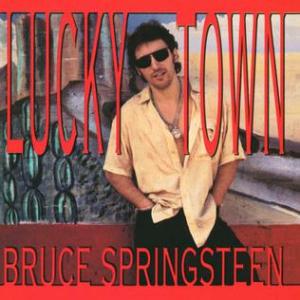
lucky_townAt the end of the sessions for Human Touch, Bruce felt he needed one more song. He wrote ‘Living Proof’ and hit a streak which bought another ten songs in rapid succession. All of them (with the exception of ‘Happy’) were released as Lucky Town.

When I first bought these two albums I did so at the same time – I believe it was after having bought a ‘double’ which contained both Nebraska and Darkness so they were always gonna struggle to compare – and, initially, it was (as with many others I’ve read) Human Touch that I preferred. Yet on repeated listens and with the passing of time it’s Lucky Town  that I go back to more. I find it’s quiet and more-adult contemplations get better with time and experience.

There’s something so much lighter about it yet it’s so much more focused and the song-writing stronger and more convincingly true than on Human Touch. While I’ll skip ‘Leap of Faith’ and’Big Muddy’ the remainder aren’t too bad at all and some I’d even call great.

‘Better Days’ is a strong kick-off and one that captures the happiness and contentment in his new life and how he struggled to reconcile such feelings with his former life -“It’s a sad funny ending to find yourself pretending, a rich man in a poor man’s shirt…. a life of leisure and a pirate’s treasure don’t make much for tragedy” – and the dichotomy of how to write about it rather than his previous muses that Bruce spent the majority of Human Touch and a later, never to be released, album fumbling around.

The song that sparked the whole album off, ‘Living Proof’, is one that I came to appreciate more as I added more years to my own clock, especially with fatherhood. While the slightly too slick and heavy session musicians almost marr it, the production isn’t as overwhelming as on this albums’ sister and it’s hard to deny the genuine salvation Bruce had found in this himself, the same goes for ‘My Beautiful Reward‘. *

Perhaps the album’s most lasting export, though, is ‘If I Should Fall Behind’ which very quickly outgrew it’s relatively minor representation here and became a centrepiece of many a live show and no doubt features in a lot of fan favourite lists. A beautiful, hushed hymn to his wife as they began their new life together which manages to do that magical thing a good Bruce Springsteen song can do – take something personal to him and make it universal to all and, if you check the notes, it’s one of those in which he played everything (save the drums) himself ensuring a) it comes across as intended and b) isn’t marred by flat playing:

‘Souls of the Departed’ is a strong song, touching back to the themes of ‘Born In The USA’ – only this time spurred by the Gulf War and the LA Riots; “This is a prayer for the souls of the departed, those who’ve gone and left their babies brokenhearted, young lives over before they got started” only with added personal clout this time round as all Bruce, while tucking his son into bed, “can think of is what if it would’ve been him instead.” It’s a bitter, cynical and biting song. Oddly enough Bruce managed to spend the 80’s avoiding having his work inflected too much by popular sound trends and the big sound on ‘Born In The USA’ pushes the song forward and lifts it. On ‘Souls..’ the sound is big but it was almost dated by the time it was released. It’s one of those from this era that I’d so very love to hear with the clout of Max Weinberg and a searing lick from Nils. Oh well. Still, I think more tunes from Lucky Town have been played live in recent years than from its sister album.

In his book Bruce does mention how he auditioned a lot of session players for his new band. How he struggled to find – given how many musicians there must be per square metre in that place I do wonder how hard he looked – a drummer with sufficient skill and clout… But he was determined to try routes new so calling The band wasn’t on the cards. It’s perhaps telling how he now feels about the band he assembled and its reception given how scant a summary he gives; there’s no enthusiastic wrap-up of concerts given or even much commentary of how it was received.

To be honest, it’s probably that which stops this album going higher up the list. Some of the songs on here stand head and shoulders above later and earlier duds but it’s the overall sound and lack of richness that comes with most Springsteen albums that handicaps Lucky Town and the songs on it. The players may have been top notch (for all my comments Gary Mallaber is a fine drummer) but the chemistry and spark just feels that little bit hollower and the production has dated poorly.

I think that, with the release of Human Touch and Lucky Town, two very-slick, glossy albums with a production that almost buffed the (ironically) human touch from Bruce’s songs, a lot of fans that had been held enraptured since the early seventies stopped listening and many didn’t really pay much attention again.

It’s a shame, for on Lucky Town there are some real gems. As any artist who releases a double album (or two single ones on the same day) will no doubt face the commentary that the project would’ve worked better whittled down to a single disc. It’s certainly true here. Oddly I think Bruce’s entire decade would probably have been kicked off and gone differently, and regarded as such in hindsight, had he binned pretty much all of Human Touch, dropped the title track onto Lucky Town, swapped ‘Leap of Faith’ for ‘With Every Wish’….. I think every fan has probably done this but, perhaps, mine would go something like this:
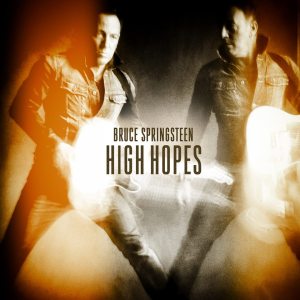
Least to Most: Bruce – High Hopes

“I’m not sure what he had in mind from the beginning, but this is what we ended up with.” Ron Aniello on High Hopes.

high-hopes-album-bruce-springsteen-1389043820In my original review of the album I said “Bruce has gotten a little lost lately in a seemingly ill-fated determination to sound fresh and vital” and that the quality control, usually tighter than a duck’s arse, had gone AWOL here. I stand by those thoughts.

It’s hard to consider this as a ‘studio album’ and producer Ron Aniello’s “this is what we ended up with” is a good summary – if you take a group of songs not deemed right / worthy of inclusion on other albums, slap a few covers together and dub Tom Morello’s now-dull guitar over the top, this is what you end up with.

And it’s a shame. It’s a real shame because unlike, say, Human Touch, there are some great tunes on here that could be presented and served so much better had they not been included on what feels like a cash-grab.

‘Down In The Hole’ has shades of ‘Paradise’ from The Rising and is steeped in that song’s delicate touch and minimal beauty and is something of a family-affair with backing vocals from Patti Scialfa and their children. It’s a beautiful thing.

‘The Wall’ is one of the finest songs in Bruce’s catalogue but by dumping it on this ‘odds and ends’ album it’s not going to get the attention it should. An ode to a fallen serviceman, inspired by the loss of early mentor Walter Cichon (detailed in the Born To Run book) who volunteered for the Army only to go missing in action in Vietnam in March 1968. It had been a long time since Bruce visited Vietnam in song and this is as fitting and touching as any of those songs he’d done so with previously.

‘Frankie Fell In Love’ sounds like one of the best Bruce and Steve songs that barely features Steve at all – Mr Van Zandt was largely absent from sessions and the tour due to filming commitments on Lilyhammer. It’s joyful, whooping along with pure enthusiasm and a really catchy-as-flu melody. It brings to mind a modern recasting of the dynamism the duo had on earlier tunes like ‘Two Hearts’.

‘Harry’s Place’ – correct me if I’m wrong – dates back to sessions for The Rising and is a brooding gangster-populated number with a fantastic opening line “Downtown hipsters drinkin’ up the drug line”.

However. Bruce declared at the time that, for High Hopes, “Tom and his guitar became my muse, pushing the rest of this project to another level.  Thanks for the inspiration Tom.” Yeah… thanks Tom.  It’s the cuts onto which Morello is plastered that weaken the whole joint. Credit to him for living out every six-string plucking fan’s dream (the one where Bruce is suddenly short a guitarist and your phone rings), but the fit just isn’t right.  The awful re-recording of ‘American Skin’ is unpardonable.

The covers are lacklustre and suffer for Morello’s incessant ‘jamming’ over them. Bruce and The E-Street had already tackled ‘High Hopes’ and their decent-enough take was used as a b-side. The take included here is simply poor. Nor can I hear ‘Just Like Fire Would’ without hearing “Just like firewood, I burn up”.

Hard to view as a studio album proper, High Hopes is a real mixed bag; some great tunes lost amidst the flotsum and reheats.

Highlights: ‘The Wall’, ‘Down In The Hole’ ‘Frankie Fell In Love’

Lowlights: The Ghost of Tom Joad, American Skin (41 Shots) two originals damned by their “reimagining”.

Least To Most: Bruce – Human Touch

Now I can imagine that for each of the albums that precede my ‘Most’ favourite in this series there’s plenty of people that will say “actually that’s my favourite..” to pretty much all of them. With the easy and obvious exception that is Springsteen’s early-nineties output. Given the scarcity with which the tracks are touched live I don’t think even Bruce cares much for them in retrospect.

Released  on the same day in March 1992, neither Lucky Town or Human Touch have fared well with fans or critics. Perhaps it was the lack of E-Street support, perhaps it was the changing musical culture at the time but either way, I doubt that even the most die-hard will argue for their place in a Top Ten.

bruce_springsteen_-_human_touch_-_coverart_-_iOf the two I find Human Touch the overall weakest link in Bruce’s mighty discography. These were songs that Bruce had been tooling around with for some time and had, in doing so, over-cooked. If you listen  to The Christic Shows recorded in LA in 1990, many of the songs that would appear here can be heard in their early embryonic stages. They sound better. At the time it would’ve left fans eager to hear the finished result, excited by the change in direction with what sounded like some real personal stuff (though the sexually-charged ‘Red Headed Woman’ didn’t make the cut). Unfortunately when it came time to capture theses songs for release, the result was what’s now considered the nadir of Bruce’s output.

It’s not that there aren’t good songs on Human Touch it’s just that there aren’t enough of them and those that have the bones of a great song are lost under some truly awful production and sound, like ‘Soul Driver’, for example. When I do slip the cd into the car, it’s more likely that I skip through more than half of the album.

The story goes that Bruce – newly transplanted to LA – had a collection of songs that he was working on but couldn’t quite find the turning point that would bring them into a cohesive album. He wanted to continue the theme and practice of not employing the E-Street Band he’d started with Tunnel of Love and try a new approach. Then he met up with a similarly newly-moved Roy Bittan who showed him his new recording set up and synths before playing his former-Boss a few tunes he’d worked on. Inspired, Bruce went home, added a few parts and lyrics to those tracks and  a long period trying to find the ‘sound’ and working with session players followed before the album was complete*.

Of those Bittan co-writes that made Human TouchRoll of the Dice‘ is Springsteen-by-numbers but without the heart and force of the E-Street band to lift it beyond over-glossed territory. On the other hand, ‘Real World’ is perhaps the most fully-realised of his ‘men and women’ concept that many had hoped for. There’s just not enough of it and the players and production still mar what should have been a classic.

While the production (the one and only time Roy Bittan received a credit for such) is very much of it’s time and the slick sound has never suited Bruce. It would be the last ‘rock’ album he’d release before he released that he wasn’t the right person to produce his music any more. The album does have some strong contenders, not least it’s classic title track, that stand up well to repeated listens. ‘With Every Wish’ is a great tune as is ‘I Wish I Were Blind‘. They’re more relaxed, less drenched in studio-session  sound and are genuine, occasionally even tender tunes that, along with ‘Human Touch’ and ‘Real World’ are the most realised on the album. Indeed, some of his best lyrics can be found within the title track: “you can’t shut off the risk and the pain, without losing the love that remains”.

Unfortunately the remainder – to my ears – sound more like what a songwriter trying to write like Bruce Springsteen would create. They seem hollow-boned and attempts to cover the gaps with gloss and force (which may have worked with the E-Street) via top notch session players just fall flat. At the time it wasn’t so condemned but now, further on up the road, it’s blighted by dated guitar tones and synthesisers and drum beats that simply don’t measure up to Max.

Thankfully, Human Touch may have been the first release of the nineties from Mr Springsteen but from here it was only upwards in terms of quality and its sister release was a whole other story.

In the spirit of ‘what might have been’ – some of the tracks deemed not suitable for Human Touch would later appear on Tracks and, shorn of the production elements that blight it, sound (just a touch mind) a little better than those duffs rounding out the numbers here. I’d gladly swap ‘When the Lights Go Out’ for ’57 Channels’ and I still enjoy ‘Seven Angels’.

Highlights: Human Touch, Real World, With Every Wish, I Wish I Were Blind

Lowlights: Soul Driver, Man’s Job, 57 Channels and Nothin’ On, All Or Nothin’ At All


*Almost – he felt he needed one more song, wrote ‘Living Proof’ and instead dashed off enough tracks to make Lucky Town in just a few days.

Least To Most: Bruce (Intro)

I don’t think I’ve really delved into a long ‘series’ of posts on here before. However, after reading Bruce Springsteen’s Born To Run I was thrown into revisiting his albums, almost one-by-one as the book progressed and decided to try to share my thoughts on each – in a series.

It’s an undertaking as this is likely to include some twenty posts so thought I’d first offer up an intro so I can, with the next instalment, get straight to the chase. Now, any musician with a such a long career and discography and varied output is bound to have a number of “worst to best” type lists on them doing the rounds on various websites and Bruce is no exception.

This isn’t intended to be one of those. I’m not a music critic, this isn’t a site of critique more of personal thoughts and opinions. As such I’m going to be running through, in order (though not necessarily uninterrupted), my Least to Most Favourite Bruce Springsteen albums. It’s just that, personal favourites – I don’t lay claim to my judgement of one album’s quality to being universal or true. It’s supposed to be fun after all.

It’s also worth noting that as a Springsteen fan, while it might be among the ‘least’ end of the spectrum, any such album is still likely to be played a fair bit by me and held in overall good standing.

So, let’s get on with the list….


High Hopes…. Dashed

Ugh. It almost pains me to write this. Especially when I consider that this will be the second time I mumble about a Springsteen album and the second not-so-favourable. I say this now because I do love a bit of Bruce Springsteen. My collection is stuffed with Boss. Nebraska, Tunnel of Love, Magic, Darkness and both Borns get heavy rotation. However….

Earlier this year Bruce Springsteen released his eighteenth studio album. Eighteenth. Saying that, two of the songs have seen release previously and three of the remaining are covers.

Before I get into this too much and why am I getting into this now….

This weekend, while doing a bit of tidying up and keeping the little man company, I found and put on Springsteen’s Blood Brothers DVD. It documents the slightly awkward and touch-too-soon mini reunion of the E-Street Band to record a few new tunes for Bruce’s first Greatest Hits (I should note here that I got that CD on its release and it served as my introduction to Springsteen and from there on…) .

blood_brothers_site-352x500Two things came from watching Blood Brothers that feed into this post. The first is a moment where, suddenly, the discomfort and ill-at-ease Bruce felt in front of the camera seems to fade as he discusses the implications of a string arrangement that had been created for Secret Garden. Talking of the song as a narrative, Springsteen explains to the gathered co-producers and mixers that the song is a narrative. If any arrangement or sounds distract from that “we’re fucked.” The second element of note is that the 1995 session captured also found Bruce and the band cutting into Tim Scott McConnell’s High Hopes for the first time.

That version of High Hopes was released as a B-Side to Secret Garden. Which, really, is where it should have stayed.

Let’s skip forward to 2014.  Post 2000 Springsteen is a different proposition to that of ’95 model Bruce. Now willing to trust others with production work, Bruce has seen his music produced, with varying results, by Brendan O’Brien (who should have taken a bow after Magic and not gone for the victory-lap with Working On a Dream) and, lately, Ron Anellio. Credit to him for this decision. If he’d stayed working away on his own, we may not have had the rebirth and revitalising of his and the E-Street’s sound that came with The Rising. Going on past lessons and biographical revelations, he may still have been in his home studio labouring away on the one album. Self-producing rarely works. It’s key to get a good collaborator in that can bring out an artist’s best and encourage them to shine.

So what’s the problem? Well I’d say Bruce has gotten a little lost lately in a seemingly ill-fated determination to sound fresh and vital. Just look at the cover. Sorry Bruce but is the double denim and popped collar really the best fit for you in 2014?

high-hopes-album-bruce-springsteen-1389043820

In the past, Bruce has had a very tight quality control. Not letting anything out that he wasn’t 100% happy with or didn’t fit the feel / story of an album. That’s what archival releases like Tracks and the Darkness box are for. Working On A Dream marked a turning point. There should have been more use of “no” in the studio on that one… “supermarket beeps and a song about fancying the girl on the checkout while doing your shopping? Sure thing Boss!”

Fuelled by social circumstances again and looking to vent, for Wrecking Ball Bruce came up with some of his tightest and most direct, angry lyrics yet. However, the collaborators bought in to furnish these songs took them the wrong way and did exactly what Springsteen previously voiced such determination to avoid – they detracted from the lyrics and the songs.

Unfortunately the songs on High Hopes suffer the same fate at the same hands. This is not a studio album in a true sense. Long-term Springsteen ally/collaborator/sidekick Stevie Van Zandt has often said that on any one day, Bruce will have at least half an album of songs on him. With High Hopes we discover what would happen if that half-album of songs were taken into the studio, recorded with selections of the E-Street Band, it’s latest quasi-addition Tom Morello shoved in awkwardly, mixed with another half-album of left overs from the last decade, warmed up by over-production and served as a ‘fresh’ dish.

That’s not to say that the album is devoid of good music. Frankie Fell In Love, Heaven’s Wall, The Wall, This Is Your Sword… all top-draw Springsteen material, even the brooding Harry’s Place feels like some of the cracking, darker material Springsteen wrote (though never truly released) in the early 90’s. Even it, though, is over-worked. Heaven’s Wall is nearly drowned in over-the top choir arrangements. Those heavy handed arrangements blight too much of the strong material here and are used far too much to prop up the lesser songs.

Morello is, frankly, out of place here. His guitar parts, the scratchy sounds that were once new and compelling, are both now and here tired and overplayed. They sound clunky when added to the title track and trample all over songs they have no business being near. Just take the title track as an example. It’s said that this project was born after Morello hearing High Hopes while preparing for the Australian leg of the Wrecking Ball tour and proposed it join the set list, from there the studio beckoned for a ham fisted bounce over a song that was only suited to B-Side status (let alone lead-single).

See:

We didn’t need a second take on Ghost of Tom Joad and as for the recasting of American Skin (41 Shots)? The live version of this was compelling, tight and full of well-directed anger with a searing solo from Springsteen himself. It came at a turning point for Springsteen – pre-9/11 and on the back of the reunion tour, a relative drought of quality new material in the 90’s and here, suddenly, was a glimpse at new material that bristled over with the force of old material. Guitars like teak bolted onto socially-aware lyrics and furnished with delicate, perfectly fitted arrangements from the E-Street Band. A precursor to The Rising and a return to form after a decade of almosts.

Bruce has said that he never felt it got presented properly. So, as with Land of Hope and Dreams on Wrekcing Ball, it was given a new studio arrangement. Surely it would be a winner. Relevant again with the shooting of Trayvon Martin and back in the set list, a slow burning tune that builds to a thundering climax and release. Surely it would be a winner. Surely…. Except it isn’t. Instead that same song is flat (albeit with the exception of Clarence Clemons’ sax giving us one last treat from beyond), layered with cheap-sounding production effects and, in place of Springsteen’s own guitar, ruined by a solo from Morello that’s bad-80’s-power-ballad by numbers.

With Nebraska, Bruce took his raw, home-made demos to the E-Street Band. They tried them on for size and found the songs didn’t fit in the band setting. Springsteen released them as was. The result is one of his most loved and praised albums.

Secret Garden: Bruce tried a few grander arrangements, added layers, different string parts. Didn’t work. The original arrangement was released. But, the other arrangements, rather than scrapped, did see release as B-Sides and soundtrack additions.

With High Hopes…. it’s the heavy handed, overworked and near-drowned in effects versions of the songs that have been released.

In a way, High Hopes is best looked at as a “what if” album rather than a legitimate ‘new’ studio album. What if some of these songs – Frankie Fell In Love, Heaven’s Wall… been given that little bit longer to gesticulate. What if some of these had been included in place of the clukers on Working On A Dream? What if Down In The Hole had been used in place of its very-close sister Paradise on The Rising? Sadly it’s not as intriguing or rewarding a listen as the “what-ifs” of Tracks’ second, third and even fourth discs.

To me, now, nearly ten months later and with Mr Springsteen assuming radio and road silence again, it’s a case of not only what-if but please, when the next album emerges we find the quality control of old back in place.

Back to Blood Brothers, though: