With every mistake we must surely be learning

Variety is the spice of life. What constitutes a great book will vary from person to person. We all have different tastes (to this day some people still try to tell me The Da Vinci Code isn’t just something to keep at hand for when you run out of toilet roll) and some only every read within a genre. Recommending someone read The Master and Margarita won’t work if they’re only ever ‘reading’ Jojo Moyers….

But…. every now and then that rare thing will come along – a book that is so unarguably great that you find yourself telling everyone they should read it regardless of their usual choice of paperback writer. Jihadi; A Love Story by Yusuf Toropov is just such a book.

IMG_7211The main thrust of the story is set in the fictional Islamic Republic and it’s capital Islamic City – such fictionalised generalisation of geographical particulars allows Toropov a much freer hand in painting scenarios and characters that are so worryingly real that you’re left with the impression that they may well have happened without running the risk of naysayer nitpicking over such trivialities of actual place/date/official-versions-of that would have hindered his craft had he set it in, say, Iraq or Afghanistan. Thelonious Liddell is an American intelligence operative captured, tortured and imprisoned by local authorities after a mission gone wrong in Islamic City. Fatima A is the young interpreter sent, initially, to assist in translation as he’s interrogated and, later, question Thelonious directly.

Jihadi: A Love Story is Liddell’s confession / memoir as written during his final months on paper smuggled to him in his cell at The Beige Motel –  a Federal Prison in Virginia. We know it doesn’t end well for Liddell but how he got to the point we find him as Ali Liddell is a hell of a story. It’s the story of how he went from senior agent to suspected terrorist, the story of Fatima and her family (how I wish I’d never learnt of flechettes), the actions of US Marine Mike Mazzoni, of the complex local information supply to the Directorate from shadowy sources, the weight of the past, marital and mental breakdowns, the rise of a new fundamentalist sect and how it all, piece by glorious piece, comes together in a gripping and though-provoking novel. All with a little help from the White Album and notations from R.L Firestone, the agent responsible for Liddell’s interrogation – one of the biggest questions the reader must face is who to believe, though as events unfold one version becomes increasingly unhinged while the other strives for clarity.

This is a book which raises some big questions. Questions about faith and love and, on a more pertinent and timely issue; questions on the West’s foreign policy and habits of wading into countries and cultures without any real awareness or consideration.

There’s also the question that Jihadi asks as to where the lines of ‘good guy’ and ‘bad guy’ lie given the actions of each – for all the accusations that Liddell is a ‘terrorist’ and has been ‘radicalised’, the only action he commits to have earned such treatment is so minimal in comparison to that of the supposed ‘heroes’ as to wonder where the distinction can be drawn, if it can – and that’s without considering Fatima’s supposed act of terrorism.  Living is easy with eyes closed, both sides are capable of atrocities yet we make the assumption that when we’re told by ‘the Directorate’ that Side A is Good and Side B is ‘Terrorism’ it’s correct because they say so. This book asks us to open our eyes and consider things from a different perspective. There’s no side-taking, finger-pointing or blame-allotting, the tone of the narrative is purely neutral, all sides have their arguments shown, allowing – in the case of Mazzoni vs Fatima – the reader to make their own mind up. Granted Firestone’s annotations argue that Liddell references events that he was not present for and cannot possibly know about so his word cannot be trusted… but, then again, Liddell is a senior agent; it wouldn’t be that much of a stretch for him to find information and piece events together for himself after the fact.

Some of those events are not for the faint at heart. The ridiculous “War on Terror” is just that – a war and one with very human consequences and casualties. Unfortunately many of those casualties are innocent civilians and characters in whom Toporov has breathed life to such an extent as to remove any possibility of not being affected by their fates. The fact that the tone is neutral and detached emotionally  means that some of the more harrowing and violent scenes hit just that much harder – it’s your own emotional responses you’re projecting onto the text, not the characters’ and all the more affecting accordingly. Many was the time that I had to put the book down and take a breath, hug my son and reflect with gratitude for the safety in which we live. There’s simply no way to read this and, if you weren’t already, not wonder just where we’re going as a species when we’re capable of such treatment of one another.

The nonlinear narrative is in keeping with the premise of these pages being from a memoir and keeps the pace ripping along and while those annotations may seem intrusive at first they soon present yet another compelling sub-plot. Toporov is able to sew in many more characters and plot arcs than a standard, linear narrative might allow for, and move between them so as to offer multiple view points and keep the reader hooked as they each near their boiling point, their moments arise and they intersperse.

It’s been a long time since I’ve been gripped so completely by such a multi-faceted novel and I simply cannot recommend Jihadi: A Love Story enough. I’ve seen references to Homeland and yes, there are echoes of such tight covert intelligence plots here, there are echoes of le Carré and even Vonnegut. But they’re only echoes, the loudest voice here is that of Toporov; a compelling new author with a style of his own delivering an exhilaratingly fresh, important and powerful novel so very much of its time.

Thanks again to Karen at Orenda for sending me this novel and to check out the other stops on the Blog Tour – there have been some great interviews and insights along the way -and grab a copy of Jihadi: A Love Story sharpish.
JIHADI Blog tour Banner

Night Blind

Ragnar Jónasson knows how to get a reader hooked. The first chapter of Night Blind finds police inspector Herjólfur following up a tip off at a house on the edge of town. It’s got all the classic ingredients in place for one hell of an opening- the house itself is not only remote and isolated but it practically hangs over a cliff, even its walls are “leaden and foreboding”, it’s dark and the rain is pouring, beams of torchlight peer out from inside. Only the edge of your seat will be needed before the chapter’s finished and it’s all too late for the inspector; “that was when he heard the shot, deafening and deadly.”

IMG_7059I’d been gripped by this opening chapter for close to a year before I got to read any further. It was included at the end of Jónasson’s first class début Snow Blind. The next instalment in the Dark Iceland series, Night Blind takes the reader back to the remote Siglufjörður, catching up with Ari Thór Arason five years on from the events of the first book. While it’s not essential to have done so before picking up Night Blind, I’m aware that not everyone will have read Snow Blind (and why not?!) so I’ll do my utmost not to drop any spoilers.

Ari Thór has settled somewhat since last we met- he and his girlfriend Kristín now have a young son – yet Siglufjörðu still holds plenty of discoveries for him. Preparing to return from an extended paternity leave and a battle with the flu, Ari Thór receives a concerned call from the new Inspector’s wife and soon discovers the likely-fatally wounded Herjólfur. Finding himself alone in the police department and unable to investigate the attempted murder of his boss, assistance soon arrives in the form of Ari’s former boss Tómas and we’re very quickly back into a taut, gripping and beautifully crafted murder investigation.

All the ingredients are in place for a great detective story. Yet Night Blind goes beyond the confines of any simple whodunnit. Layered within the mystery are sub-plots involving local political corruption, drug dealing, the opening up of a small community to the outside world (and its increase in crime), relationship challenges, a decades-old mystery and domestic assault; all of which Jónasson handles brilliantly, creating some genuinely memorable and affecting scenes that go beyond the slow-burning detective story of Snow Blind and show a talent that can cross genres.

The issue of domestic assault in itself is a tricky one, in a lesser-writer’s hands this could be so easily clumsily written and riddled with clichés. Not here though. Jónasson handles the subject deftly and manages to show a real ability when it comes to victim psychology. He can also write a bloody good action piece – the climatic scene between Elín and her ex had me gripped like a Jack Reacher action sequence yet with a genuine concern and sense of fear for the outcome.

Just as Snow Blind was interwoven with a narrative from the past and the question of how it connects to the present, Night Blind is interspersed with the diary entries of a young man held in a psychiatric hospital against their will for a seemingly violent incident – who is this young man and how does this relate to the shooting of  Herjólfur?

The final reveal and the connection between the two is, as with Snow Blind, a gob-smacker. The number of times I thought I’d sussed the answer out only to be shut down by the next chapter is too many to count, the reveal catching me so off-guard I had to go back and wonder how I’d missed the breadcrumbs. I’m not sure I’d like to play Mr Jónasson at chess, clearly a man who thinks more moves ahead than I.

One of the most wonderful things about Night Blind to me is just how many doors are so subtly opened, how many potential focus points for other stories are gently hinted at, but leave enough of a question mark, a hook in your interest as to leave you wanting more, much more of the Dark Iceland series. There’s the “wait, what?” moments of revelations including why the Siglufjörður police department is now under-staffed, the opening up of political influences on the department – and the interfering of shady locals, characters that are begging for larger roles in scenes to come and, of course, the thought that Ari Thór does his best to ignore; with Herjólfur shot, does this mean he’ll now be in line to become Inspector?

It’s here in these sly peeks at the depth of potential in the Dark Iceland series and the sheer number of elements at play in Night Blind that Jónasson excels; the subtle crafting of the story, with it’s intricate and overlapping plotlines and detailed characters coupled with a slow and genuinely surprising, out of left-field-reveal demonstrate a supremely confident and talented writer clearly revelling in his art.

It’s rare that I get quite so invested in the personal lives of characters in crime stories (often times they’re painted almost as side-shows and cursory / obligatory scene padding) but I was genuinely gutted (perhaps as my own son is still so young), though not entirely surprised, by the departure of Kristín  – yet even here Jónasson lays teasing ground-work for future developments. It’s also testament to Jónasson’s ability to create such genuine and fully-realised characters – it helps not only in keeping the reader hooked but adds a real depth and sense of community to these fictitious inhabitants of Siglufjörðu.

Snow Blind was one of my favourite reads of last year and Night Blind, an even stronger novel, will no doubt sit high atop the list of 2016’s best reads. To expand a little upon my original summary…..

Capture231

….. Night Blind is a compelling, multi-layered masterpiece that breathes fresh life into the genre. Breaking beyond the confines of the traditional whodunnit, Ragnar Jónasson has delivered an intriguing, intelligent crime novel that leaves the reader open-mouthed wanting more (well, this one at least). Clearly an author to follow, he seems to have pulled off the not-so-easy task of creating a series that only gets deeper and more interesting as it goes.

A translation can make or break a book and here the translation is, again, in the very capable hands of Quentin Bates. There is no point at which Night Blind feels like it was written in anything other than English; the flow, pace and charm of the book are all captured perfectly. A cracking job.

I was delighted to take part in this Blog Tour for Night Blind and my thanks again go to Karen at Orenda Books (which has nothing but quality bearing it’s logo on the spine). Do check out the rest of the tour and today’s other, eye-opening, instalment at Mrs Peabody Investigates.

Nightblind Blog tour


How To Be Brave

imageThis has probably been said a million times or more and will no doubt continue to be stated while simultaneously irritating those who have yet to realise just how true it is due to lack of personal experience, but; everything changes when you become a parent.

So much so that I couldn’t possibly attempt to describe it here. Nor would it be relevant to do so. So why do I start this post, a review of the fantastic How To Be Brave by Louise Beech with this?

Well one big shift when becoming a parent is that of self-concern giving way to an all-consuming focus and worry your child’s well-being; what if something were to go wrong? What if they were to become ill?

It’s very hard to put this into words in a manner that truly captures the feeling let alone one that does so in a way that others might want to read. Louise Beech, however, does just that. In How To Be Brave she vividly evokes the sensations of panic and dread that accompany being a parent when a child falls ill and perfectly captures the feeling of isolation from the rest of the world that occurs at such times. Not that it’s a ‘dark’ book, far, far from it.

Natalie’s nine-year-old daughter Rose collapses in the kitchen one Halloween. Following an ambulance trip to the hospital and a little diagnostic testing, Rose is confirmed as having Type 1 diabetes and will require finger-prick tests and insulin injections for the rest of her life. An extremely daunting concept to cope with.

What follows is a great story of a mother and daughter coming to terms with the illness and its ramifications. Louise Beech does a cracking job of portraying the “shut out the world”, “nation of us” feelings that pervade at times of crisis in a family with a tight bond.

It’s also the story of Natalie coming to terms with her daughter’s growing independence and realising that – as much as she or any parent would like to – she doesn’t have to hold her child’s hand all the time anymore.

But that’s not all. For within this story another two are interwoven with Natalie’s attempts to reconnect with her daughter and keep alive her love of books which, in the resultant, insulin-driven emotional fall-out of her diabetes diagnosis had threatened to vanish completely.

First is the mystical presence / visitation of Natalie’s grandfather who appears to both Natalie and Rose and how it leads them to finding another story and a way to connect by leading them to his diary and, in it, his tale of being lost at sea for fifty days following the torpedoing of his merchant ship in World War Two.

(Grandad) Colin’s story is told – via Natalie – in exchange for finger-prick test and insulin injection cooperation from Rose. Through this storytelling we travel to a small boat adrift on the Atlantic Ocean where Colin and the remaining survivors fight to stay alive in their wait to sight land or rescue.

The story of Colin and his plight is told brilliantly and the reader is kept on tenterhooks between instalments and there are times you feel as much eagerness to get back to the men on the boat as Rose does.

Beech artfully weaves the two narratives together with times of crisis for Natalie and Rose mirrored by those times of peril on the lifeboat. As Colin and the survivors are literally cut off from the world and their loved ones Natalie is cut off by the changes in her life, distanced from her daughter by the changes diabetes has on Rose’s personality and seperated from her husband, Jake, by his unit’s tour in Afghanistan. Indeed as Colin’s salvation arrives it’s clear that Natalie and Rose, too, have turned a chapter and have navigated the worst. Rose is now back to her old self and both mother and daughter are at peace with her diabetes, their relationship is restored just as Jake returns, belatedly, home (quietly matching the time at sea spreading beyond the previously calculated 30 days from land).

How To Brave is two wonderful stories wrapped into one compelling read. Louise Beech is adept at both narratives and styles and writes with a confidence and trueness of voice that can only come from experience and yet manages to turn what must have been a truly testing time in her life into a great, gripping and thoroughly rewarding read for all. She’s clearly an author to keep an eye on.

My thanks again to the wonderful Karen at Orenda Books for sending me How To Be Brave and asking me to be part of its Blog Tour. Check out Live Many Lives for yesterday’s and Welsh Librarian Blogspot for tomorrow’s stop and get a hold of the book today, you won’t be disappointed.

image

The Defenceless

There’s a statement on the cover of The Defenceless, Kati Hiekkapelto’s second novel to feature police investigator Anna Fekete: “Best Finnish Crime Novel 2014”. I’ve not read a Finnish crime novel before nor have I yet read this book’s predecessor, The Hummingbird, but, and let’s get straight to the point here: The Defenceless is one hell of a good book. Great, in fact.

CMd78rFWgAEcd-vAt the centre of The Defenceless lies a mystery – an old man (Vilho Karppinen) dies, presumably, at the hands of a drug dealer, only for his death to be pinned on an Hungarian au-pair. Two girls stumble onto an alarmingly fresh crime scene in a forest – snow soaked in human blood, tyre tracks leading from the trees and a knife found at the scene – but missing the vital ingredient; a body. Then, one of Karppinen’s neighbours, goes missing. Is there a connection? Is it her who’s body is missing from the murder scene? Is a killer prowling the streets of this Finnish town?

Given that we’re witness to Karppinen’s demise you may be forgiven for wondering where the police investigation into his death is going at first, chiefly because it looks as though, to all intents and purposes, he died at the hands of a drug dealer in an argument over noise. It’s almost a case of waiting to see how long it takes for the Hungarian au-pair to be cleared. Yet as the story develops, Hiekkapelto skilfully weaves in more mystery and plot twists, adding intertwining sub-plots involving gangs, corruption, drugs and social commentary into an addictive, compelling novel with more questions building with each page turn; are the killings related to the violent gang that’s trying to establish itself in Finland that Fekete’s partner, Esko, is trying to snuff out? How is that gang related to the drug dealer? Are they behind the murder scene? How are the Hell’s Angels involved? Is the au-pair all that she seems?

There is a lot going on in The Defenceless, a world of story lines packed into less than 300 pages. Rubbing ink with the main case and Esko’s investigations (not to mention the ticking-clock of his health) is Anna’s own sense of isolation and removal from a homeland that no longer exists, her brother’s battle with alcohol, family illness and, of course, Sammi.

Sammi is a refugee from Pakistan, now in hiding and living rough following the rejection of his asylum claim and facing deportation to a country in which he faces persecution and death for his beliefs. Desperation leads him to increasingly extreme measures in his attempts to remain in Finland. There’s no heavy hand here, no resorting to the didactic in telling Sammi’s side of the story and the futility of his fight against blind bureaucracy, just a talented author using her art form to affectively shine light on an increasingly absurd system (one not unique to Finland) that differentiates between people and their rights to basic human existence according to the particular piece of this Earth that chance happened to place their birth. The message couldn’t be more pertinent given the humanitarian crisis facing the world today and it’s the conclusion (or non-conclusion) of that story which will stay with you beyond the final page.

With The Defenceless you’re so caught up in the characters, the sub plots and the hunt for what appears to be a brutal killer that when the killer’s identity and motive are revealed it comes like a bolt from the blue. It brings to (my) mind the reveal in Håkan Nesser’s The Unlucky Lottery. I do hope that doesn’t serve as a spoiler, more as a nod to another gripping Scandi-noir detective series.

There’s a growing number of crime novels with a conscience out there and this ranks up there with the best, leading the charge with a heady blend of mystery, suspense and social drama that hooks from the off and doesn’t let go even when the last page is turned.

A sign of a good novelist is not seeing them in the text, if you follow me. A writer needs to disappear, to allow their characters to take centre stage, become real and express themselves rather than parroting the views and sensibilities of the author. It’s not the easiest of tasks but it’s one which Kati Hiekkapelto pulls off nicely.  The Defenceless is populated by characters who are not only engrossing and fully realised but, when the narrative shifts to them, tell the story in their own way without filter – especially so in the case of the oh-so-politically-correct Esko who’s passages are so vociferous with their racial hate as to be at polar-like odds with those of the empathetic Fekete.

The translation – by David Hackston – should also receive the strongest nod of approval; at no point in reading The Defenceless was there any indication that this was anything other than the language the novel was written in and the deft translation ensures that the novel’s momentum and feel flows uninterpreted across the language transition.

While The Defenceless is the second Anna Fekete I’ve not yet read  The Hummingbird and I don’t believe it’s essential to have done so to enjoy this novel – another plus – which manages to stand brilliantly on its own. That being said, it does mean that, for me, The Hummingbird is an essential ‘to read’ and I’ll now go about getting my hands on it while eagerly awaiting the next instalment from Kati Hiekkapelto – clearly an author to watch.

I was, again, delighted to be sent this book by Karen at Orenda Books (a publisher who’s first year has certainly cemented it as a purveyor of quality, original fiction) and be asked to take part in the Blog Tour. Check out the other stops and keep an eye on Crime Thriller Girl for tomorrow’s stop and – of course – read The Defenceless.

Defenceless Blog Tour

The Dust That Falls from Dreams

91e3i+vVdTLI go back a bit with Louis de Bernières. Well, I say that – like most I started reading him thanks to Captain Corelli’s Mandolin – the first few lines of which were used as discussion point in an A-level English class in – I’d guess – ’97. The perfectly self-contained opening chapter, a beautifully written piece of charming prose, a (what I know now to be) typical de Bernières style light-hearted slice-of-life scene setter with a fantastic description of an inner ear as “an aural orifice more dank, be-lichened, and stalagmitic even than the Drogarati cave”.

I took the print outs containing that first chapter (Dr Iannis Commences his History and is Frustrated) home, passed it to my father and the book was soon in our home and passed into my hands following his. It’s a novel well-known, commented upon, discussed and dissected. As such I won’t here.

There followed the discovery of and lapping up of de Bernières’ South American Trilogy, earlier novellas and plays, the stop-gap Red Dog and, my personal favourite Birds Without Wings. 

Birds Without Wings arrived some ten years after the publication of de Bernières’ previous novel. But he isn’t a writer of small books; his novels are of epic proportion and scope.

It’s not too surprising, then, that The Dust That Falls From Dreams arrived another ten years after the publication of Birds... Not that he was idle. Between times there was A Partisan’s Daughter a (somewhat smaller though nonetheless impressive) novel set in more contemporary times and familiar locales and, in 2009, Notwithstanding – a charming, if non-consequential collection of semi-linked short stories all set in an English village of a certain southern England type and charm, populated by characters of a particular eccentricity.

Perhaps, in hindsight, those stories within Notwithstanding were perhaps something of an exercise. I’m inclined to see them as de Bernières – known for novels set in Greece, Latin America and Turkey – setting out his stall in ‘middle England’, gaining confidence in the styles and character types that would populate his next saga for, as we’re now aware, The Dust That Falls From Dreams is the first of a planned trilogy.

And so, to it.

The Dust That Falls From Dreams is every bit the opus I’ve been waiting for as a fan of de Bernières. Yes, some will complain that he’s switched a setting like Cephalonia or Cochadebajo de los Gatos for Kent, but arseholes to them. This is a novel of epic proportions and every bit as “de Bernières” as his previous five “big” novels.

Kicking off with death of Queen Victoria and the commencement of the Edwardian era, we’re introduced to the McCosh family as they hold a belated coronation party with their neighbours. With a sudden time-jump we’re off to the Georgian era and slap bang on the doorstep of the First World War.

Of all the writers to task themselves with chronicling this most heinous of periods, the upheaval and destruction it wrought, there are few who could do so as well as de Bernières (Sebastian Faulks’ Birdsong is, of course, another exemplary example) – bringing all too real the events both home and abroad that bought an end to an era and threw individuals into a torrid world where the sense of the individual was lost.

CJAjyIFWcAEeatZIn The Dust That Falls From Dreams de Bernières is at his best. The plot and author play with our fears and guesses and – as those familiar with the author will expect – deliver both uproariously funny and uplifting moments with one chapter before just as skilfully delivering gut-wrenching emotional blows to the heart in the next (this is the Great War, after all). I won’t dwell and deliver spoilers as to who de Bernières casts asunder but will say I felt the final one, unrelated to any ‘cast’ member was a little uneccessary and particularly crushing, especially after the soul hitting account of the Folkestone bombings. Though, in hindsight, this too shows the author’s mastery at engaging a reader and rendering you completely spellbound.

The McCosh girls’ visit to a local medium and the scenes that unfold add a welcome touch of the fantastical, hearkening back to the author’s Latin American Trilogy, and well-chosen historical references help set a thoroughly well realised setting in both time and place, home and abroad.

At times the characters could perhaps be considered a little two-dimensional (though I don’t recall too many layers being attributed to Don Emmanuel) but this is the start of a trilogy and I have little doubt that as the whole saga of the McCosh family unfolds in de Bernières’ magnificent style, all will become fully rounded and developed.

The Dust That Falls From Dreams is a saga that encompasses three families at one of the most dramatic times the World faced. It deals with a vast array of subjects beyond the core of love and death, picking up the politics of class and gender, religion and industrialisation as it goes.

While not quite up there with Birds Without Wings this may well be the start of something amazing as the saga continues and should well be considered a fantastic novel in its own right. I await the next instalment with high expectations.

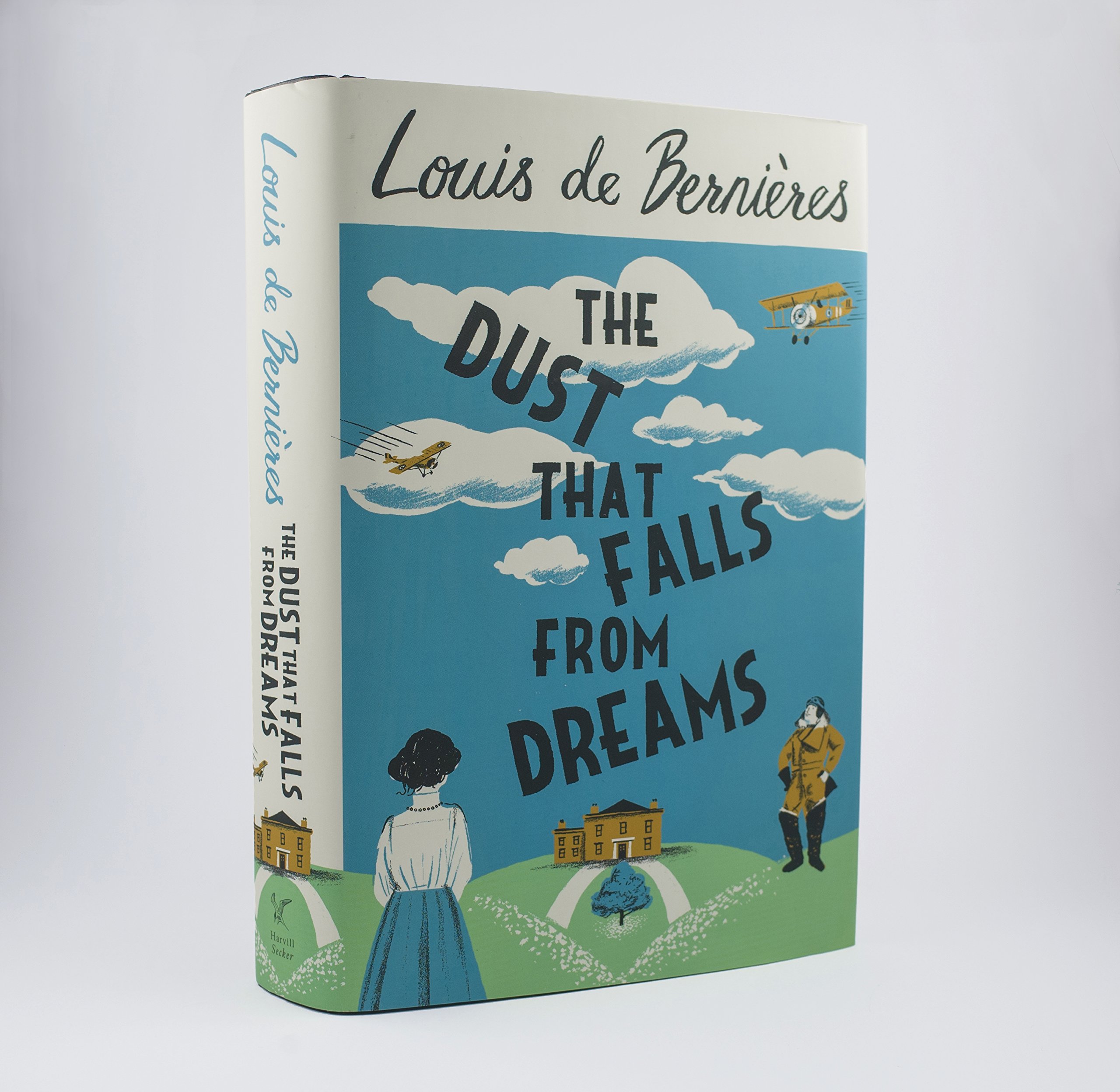
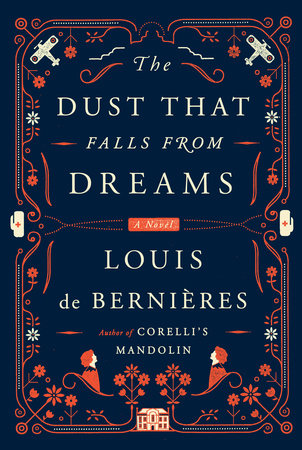
On a side note; why do we get lumped with such a cack cover image in the UK compared to the more attractive cover design they get in US?

9781101946480


He’s Back, and he’s Fuhrious

I’ll admit it – I bought this book after seeing the advert at a tube station and laughing at the pun “He’s back, and he’s Fuhrious”

Modern day Berlin. A man wakes up on a piece of scrub land in Berlin. He’s in full military uniform. He’s unaware how he got there and has trouble remembering anything of the previous day or two. He’s Adolf Hitler.

The Adolf Hitler.

IMG_4755So – Hitler has, somehow, been removed from the pages of history and deposited back among modern Germans. A world he expected to not exist: he had given orders for it to be burnt to the ground. He believes that he’s here due to the intervention of ‘fate’ and has been enlisted to save Germany, again, from the horror it – according to him -finds itself in.

Mistaken as an impersonator, a very intense one who refuses to break character, he finds himself taken in by a newspaper vendor conveniently located close to a television production company who buy into his act and line him up with a slot on a comedy tv show.

The humour here in Timur Vermes’ Look Who’s Back is both laugh out loud and extremely dark.

There’s a fantastic section early in where, having been caught in civvies while his uniform is cleaned, Hitler berates a young tv producer who had made a comment about Poland. Chastising him for his slovenly appearance, Hitler launches into a tirade, doubting that the young man even knows where Poland is, demands to know if he’s ever served in the army while doubting so as he clearly does not know where his uniform is. Hitler knows where his uniform is at all times, produces a ticket from his pocket and announces “it is at the dry-cleaners”.

There’s the suggestion that Hitler write a marriage / relationship advice book: “you could call it ‘Mein Kempf – With My Wife'”.

There’s the point that Hitler’s uniform is a little damp and, for some reason, smells of gasoline…

The combination of Hitler of old mixing with the modern world is funny but can run the risk of being a one-joke pony with diminishing results. So Vermes uses the voice of Hitler to take a satirical swipe at present day politics – Putin is admonished for appearing with his shirt off, Merkel mocked, the ideals of Germany’s Green party likened to some of his own and the Hilter of old rocking up on the doorstep of the current National Democratic Party and tearing them apart as pale imposters.

There are, however, two elements that stop this book from being a great one. Both are down to the fact that the character here isn’t fictional. It’s hard to imagine the real Hitler ever acclimatising and adapting to modernity quite as wilfully and quickly as he does – in order to propel it toward it’s function – here. The fact that he takes so easily to computers and smart phones enables all that follows and is necessary as such but isn’t quite plausible. That being said, suspend your element of disbelief and get past it, it’s a comedy after all.

And… therein lies the rub. It is a comedy, never lays claim to be serious. But while the book is clearly a satire and takes swipes at all things modern and politico, it does so from the eyes of one of History’s monster. As a bit of a history buff I’ve spent several years expanding my knowledge of World War 2 – not the dates and the statistics, the human stories. A large part of my bookshelves are given over to it. I’ve read the accounts of those who both witnessed, suffered and lost at the hands of this nasty entity and his followers.  Even if we are continually reminded that “the Jews are no laughing matter.”

There’s a theory that if you expose an audience to only one point of view, one take, one narrative for a certain amount of time, they’ll begin to find little ways to identify with that voice. To do so with Hitler is a very bold move. It works at times but the over-riding element here, especially given the lack of character change and arc (there’s no reason the real Hitler would consider any opinion other than his own so wouldn’t change), is that this is still told through the eyes of a man responsible for some of worst atrocities known to man.

As such Look Who’s Back fails to be completely laugh out loud throughout – it’s hard to laugh with abandonment at his admonishing of modern day Nazis for failing to to live up to the party when you know just what his version of living up to that party would be. But it is a very funny, satirical swipe at both how he rose to power in the first place and could, conceivably, do so again – anyone who’s been sickened by the rise of the petty, small-minded and similarly prejudiced Farage and his friends can see it’s not too much of a stretch after all.

This wasn’t quite what I was expecting, but there are plenty of laugh out loud moments and a few moments that make you think.

We Shall Inherit The Wind

Having gotten a taste for Nordic Noir I’ve now been given the opportunity to read the man hailed as one of the fathers of the genre – Gunnar Staalesen.

First published in 2010 in Norway, We Shall Inherit The Wind is the 18th novel in the Varg Veum series and now published in English by Orenda Books (if ever there’s a publisher to follow devotedly it’s Orenda Books) with translation by Don Bartlett.

We Shall Inherit the Wind BF AW.inddSet in 1998, Staalesen’s private investigator Varg Veum sits at the hospital bedside of his long-term girlfriend Karin as she battles life-threatening injuries bought about by the events surrounding Varg’s latest investigation.

From here Staalesen takes us back – by “barely a week” – to re-trace those events (when I re-read that line for this review I had to read it twice as so much is packed into just a few days). Given how we know where they lead, the edge of the seat is pretty much all you’ll occupy from here on in.

This ominous start leads us into a missing-persons case, with Veum pretty certain that the missing man – Mons Mæland – is already dead. Veum’s initial digging into Mæland’s affairs opens up a Pandora’s Box of questions with no clear answers. Every clue seems to point toward a more complex mystery which becomes all the more thrilling when Mæland is found dead – in a most dramatic fashion – and the plot thickens.

Location is key. While Veum operates out of Staalesen’s own Bergen, most of the action takes place on the fictitious Brennøy and nearby islands. We’re a little outside of the comfort-zone here, you got the sense that you’re out in the wilds on each occasion that Veum leaves Bergen behind, with civilisation just a little too far over the horizon – indeed, law and order needs to arrive via helicopter.

From experience I know how stunning Norway can be but this isn’t a summer holiday; this is autumn and Staalesen uses the isolation afforded by the setting to up the chill-factor. From the off, almost, the remote locations hang heavy with foreboding:

…the trees stood like dark monuments to a time when not only the mountains had to be clad but every tiny scrap of island skirted by the fjord. Accordingly spruces lined long stretches of the Vestland cost. No one had thinned the striplings, and no one had cut down the trees except the cabin owners who had desperately tried to clear themselves a place in the sun. It looked as if they had given up here ages ago.

So much to love in that paragraph alone… “dark monuments”…. “desperately tried”…  “given up here ages ago”… you almost have the “abandon all hope” sign nailed to the start of the chapter.

Far from being a run-of-the-mill who-dunnit, We Shall Inherit The Wind is an intense read, pulling in eco-terrorism, religious fanaticism, corruption both at corporate and local-government level, plot twist after plot twist and a cast of characters with plenty of secrets and hidden connections. Two, three, four times I thought I’d sussed out who was behind Mæland’s murder only to be left utterly open-mouthed by the final reveal with Veum keeping his cards close to his chest right until the bitter end. I’ll admit I also felt like I’d been emotionally sucker-punched come the end, having been so caught up in the mystery as to be left open for the impact of the human consequences.

Varg means “wolf” in Norwegian and the novel approaches the plot just as a wolf its prey; elements come together piece-by-piece, as the wolf slowly and assuredly stalks it prey Varg is a wise hunter, patiently letting events unfold with delicate pacing. Rather than rushing in and barrelling along at a frantic pace there’s long drives and ferry rides (the novel is set in the fjords of Norway, not down-town LA afterall), a stealthy gathering of every shred of evidence (and a lot of people’s cages rattled) before going in for the violent and bloody climax.

Gunnar Staalesen is clearly a master-at-work by now, having first introduced the world to Varg Veum back in 1977. The prose is richly detailed, the plot enthused with social and environmental commentary while while never diminishing in interest or pace, the dialogue natural and convincing and the supporting characters all bristle with life.

A multi-layered, engrossing and skilfully written novel, there’s not an excess word in We Shall Inherit The Wind. It’s a slow-building exercise in suspense that’s 100% addictive, one that gets you in the wolf’s jaws with the first few lines, sinks its teeth in and won’t let go until long after the finale.

After my first dip into the world of Varg Veum I’m left wanting more. With We Shall Inherit The Wind I’ve been afforded a snap-shot into the life of a very complex but nonetheless endearing and relatable character and anxiously await the next two instalments from my favourite publisher. Though I may search out the earlier two novels to have made it into English.

I’m one of the last stops on the blog tour for this novel so do check out those that have come before me including yesterday’s great interview with Staalesn at Nordic Noir and get your hands / kindle / e-reader / whatever on a copy of this hugely rewarding read via Orenda.

We Shall Inherit the Wind Blog Tour

Nothing Ever Happens Around Here

Careful; the smallest whiff of a spoiler is contained fleetingly herein.

Iceland.

If you’d asked me a couple of weeks ago what I associate with that country I’d have suggested a few bands like Sigur Rós, múm, Of Monsters and Men, Olafur Arnalds and that woman called Björk , Reykjavik 101, unpronounceable (by me) volcanoes and geysers. Oh, and the chap who sang “Ég á líf” at Eurovision a couple of years ago.

If you ask me the same question today I’ll add fjords, the herring boom, and great Nordic crime fiction to that list.

For in the last week I had the utmost pleasure of reading Snowblind by Ragnar Jónasson.

The fist novel in Ragnar Jónasson’s Dark Iceland series – almost up to its sixth installment in Iceland – has now been translated into and published in English by Orenda Books.IMG_4357

Snowblind introduces us to Ari Thor Arason – finishing his police training (after starting and dropping other pursuits including Theology) on-the-job having spontaneously accepted a posting in the northern town of Siglufjörður. It’s a posting that takes him hundreds of kilometres away from his home, his partner and his comfort zone. Plunging him into a small town where things aren’t quite as tranquil as they seem and a killer is on the loose.

Quiet and remote, Siglufjörður is a small fishing town only accessible via perilous mountain roads and a small tunnel seemingly carved out of the rock without a millimetre of excess width for as Ari Thor takes his first journey through the sense of a trap being sealed begins to sneak in – “it was a narrow single track…. carved through the mountainside more than forty years ago” with water dripping in the darkness from a ceiling unseen. Even on the other side the weather is starting to turn grim and oppressive (“every winter is a heavy winter in Siglufjörður”).

Still, what could go wrong?  Siglufjörður is an idyllic little community set amongst the mountains and fjord where – according to Police Inspector Tomas “nothing ever happens”.

Nothing that is except murders, manslaughter, literary theft, adultery, fugitives in hiding, drunk locals stumbling into the wrong house at night and seemingly not a character in the story without a history of loss and tragedy and, of course, the politics of local am-dram.

Having visited such small towns at the foot of a fjord (albeit in Norway not Iceland) in summer when the majesty of the scenery will steal your breath, I often wondered how different those imposing mountains would be when winter sets in and the calm of such detached living is replaced by a sense of being cut-off and encircled by thousands of metres of impenetrable nature. I need wonder no more; Ragnar Jónasson perfectly creates an atmosphere of dense, stifling claustrophobia, an impenetrable trap tightening with every falling flake, using geology to form a locked-room style setting with the imposing mountains and heavy snow falling in like a heavy, stifling blanket:

Claustrophobia had sneaked up on him, a feeling that had deepened as the snowfall around the station had become increasingly heavy. It was as if the weather gods were trying to construct a wall around the building that he would never be able to break through. He saw things around him grow dim and suddenly he found himself fighting for his breath.


Siglufjörður beset by snow

Siglufjörður beset by snow

The fact that Ari Thor – like the reader – is the only one not used to such environs deftly adds to the fish-out-of-water feeling, almost a “am I the only sane person here?” element adding to the tension.

Just as the winter snow falls gently at first but builds, the plot unfolds slowly; each of the character arcs expanding at their own pace, gently but intractably linking to each other and interspersed with snippets of a knife-point burglary so obviously doomed to a bad end that no matter how tranquil that which follows may be, a sense of foreboding and danger pervades.

For a debut novel, Snowblind is startlingly confident and sure-footed. The characters and dialogue all ring true, the plot is original and packed with plenty a surprise. Perhaps most pleasingly of all, Jónasson steers clear of hackneyed plot devices and reveals; while Ari Thor possess a talent for his work he’s no ‘instant wonder / super cop’ – in fact his inexperience lands him in a very dangerous position as he enthusiastically blunders into a confrontation with a killer, preventing any real chance of justice being served and only solves the novels main “who dunnit” by chance.

It’s clear that Ari Thor is a character that has plenty of space and potential to grow and that the sequel is currently in-translation by Quentin Bates (who deserves very positive praise for his translation of Snowblind) can only be considered great news. The first sliver of NightBlind is enough to have me hooked while confirming that Ragnar Jónasson is a writer with plenty more up his sleeve.

From it’s opening prelude, Snowblind steps back a couple of months to put the pieces in place, then assuredly and calmly expands into a compelling thriller that keeps you gripped throughout and delivers a final 1-2-3 punch of revelations that will leave your gob on the floor.

Get a hold of a copy today and check out the other stops on the blog tour.

snowbling-blog-tour-2

Ploughing Through and You Don’t Know Jack

Oops; another month slips by without a post. Life is a busy thing with a toddler. The library has continued to grow and while my to-read list grows I’m getting through some great books. This last month (and a few days) I’ve ploughed through four books of an evening / weekend crashtime – and, in the case of one; lunchtimes. Let’s discuss…. IMG_4323 A Christmas gift from my wife (presumably as I’ve often mentioned that nobody says ‘bastard’ or does repressed anger as brilliantly as JC), John Cleese’s autobiography So Anyway was an odd read.

Odd as Cleese is an undoubtedly funny man with a rich and varied career in television and film comedy from Pythons and hoteliers to barristers hankering after Jamie Lee Curtis and even a few straight roles to mix it up a bit. He’s also known for a rather torrid personal life – currently married to his fourth wife – and the odd disagreement / heated debate with other Pythons named Terry Jones. YET wordage is not handed over to any of these but for the passing reference and occasional “so this is where that sketch / idea / character” originated. More ink is spent retrospectively linking events in his life to theories he’d later discover in psychology books than it is on those years so many were sure to have expected coverage of.

But… it’s still a good read. It’s a slow starter – Cleese gives a (sometimes too) thoroughly detailed account of his childhood, school years and early education. We learn how he inexplicably started supported the Australian cricket team as a young child and wonder why we need to know this nugget of information. So Anyway… is as insightful as an auto-bio could be and provides a great arc of a young man finding his calling in comedy – albeit unintentionally at first – and the road that took him to Python. It’s clear that even pre-Python Cleese packed more into these 30 years than many a full-career bio that lines the bookshop shelves. The overwhelming sense though is one of “but what about…”.

One of the things I like about short story collections is the ease of which you can dip in and out, one story at a time as it were, without losing any narrative thread. The problem with short story collections though is that there is no narrative thread, they can jump from tone to tone, first-person to third person narrative and the quality can vary dramatically. You often feel that you’re reading a series of sketches – ideas that will later be fleshed out, trimmed down and slipped in in a minor role or re-worked into a different context in the writer’s novels.

This is certainly the case, in part, with Tales From The Underworld, a collection of short stories by Hans Fallada. While his novels are rich, tightly bound mines of quality, the short stories here are perhaps too obviously touch-points for his later works to be taken at face-value. References to Altholm (setting for A Small Circus) rub shoulders with portrayals of farmworkers suffering at the hands of the government, characters across different stories share names and petty criminals and criminal acts populate a number of these stories. The struggles to get by, scrape an existence and find succour in the arms of loved ones at the most austere of times form the binding theme between those stories gathered here.

That being said, Fallada is a vastly underrated writer and even the lesser of those stories within Tales From The Underworld is only judged so in comparison to his own more-fulfilled writing. A darkly humorous and at times devastatingly moving collection, the short stories here are sequenced chronologically and show Fallada refining his style and themes. The quality tails off toward the end, sadly, but when viewed in line with his own life add up to show an insight into his thinking and writing process.

Reading thrillers has become something of a pleasure again. I’d started to lean into the genre a while ago – then stopped. The same authors I’d started to enjoy started leaving me a bit tired – namely Jeff Abbott and Robert Ludlum. First two Bourne books; brilliant. Third book; awful. Any other Ludlum book I tried was achingly formulaic. First Jeff Abbott books I read – Panic, Fear, Run – cracking stuff. Then he started in with the Sam Capra series and my attention waned as it all became too obvious.

But then lately…. lately I’ve been getting more into it all again. So, first stop: The Ghost by Robert Harris. Many’s the time I’ve been wandering around the supermarket at lunch and have seen a number of cheap books and thought of buying to read during the lunch breaks. This was one of those. I paid just £1 for it having immensely enjoyed Fatherland and found the story behind its publishing intriguing – upon hearing that Tony Blair was to resign, Harris stopped what he was working on in order to write this and get it out ahead of Blair’s own memoirs.

The Ghost is equal parts thriller and political swiping at Blair; a ghost-writer is bought in to help former Prime Minister Adam Lang complete his memoirs following the death of his former assistant. Very much a dig at Labour, its cozying up to the US and involvement in the War on Terror, The Ghost is still a gripping and well written thriller with enough grip and cliff-hanger-shockers to be a bloody good read even without the political overtones – especially as the final reveal is so shocking it surely cannot be true or intended to suggest so. While I’m not about to rush out and start filling the H section of the book shelves with the spines of Mr Harris’ novels, it’s certainly well worth a read – especially at just £1. They ought to include it in the Meal Deal for that value. 

IMG_4327

So with an appetite for a good thriller and having found the film adaptation of the character to be fine enough for brain-off entertainment I decided it was time to indulge a long-harboured curiosity and meet Jack Reacher.

Being the stickler for order that I can be I wanted to start at the beginning so got hold of The Killing Floor and devoured it in just a couple of days (not bad considering I really only read before falling asleep or at lunch). There’s been so much praise lauded upon Lee Child and his one-man-army Reacher that I won’t attempt to do so. But: bugger me it’s a good book. I will say that I was hooked from the start and will happily and readily get hold of more instalments.

I won’t go the full-hog though, given that the 20th such book is about to be published. I can’t justify the expense or book shelf space. Sorry, Jack.

This high blood pressure’s got a hold on me…

IMG_4025Powerful things, dreams. David F. Ross’ The Last Days of Disco is bookended by two – the teenage fantasy of Bobby Cassidy racing around Monaco and the disturbed nightmares suffered by older brother Gary following his time in the Falklands War.

Quite the juxtaposition, but then an awful lot happens between the two points as we follow the lives (and dreams) of the Cassidy boys in early-80s Kilmarnock. Bobby – don’t ask to see his tattoos – and his best mate Joey Miller aim at avoiding the dole, school and the army by setting themselves up as the new kings of the mobile disco scene, becoming caught up in conflict with the local party-entertainment-mafia kingpin. Gary, meanwhile, pursues a career in the Army (in an attempt to make his father proud), eventually being caught up in the Falklands Conflict.

I was born in 1980. As such there is zero chance that I was politically aware (or aware of The Jam) at any point during Thatcher’s reign. I do, though, have many a memory of the TV news containing phrases such as “strikes”, of the threat of the IRA and not knowing what Gerry Adams’ voice sounded like, of Simon Weston appearing on various television shows and of the image of the Iron Lady herself holding court.

Accordingly, I’m often fascinated to see and read portrayals of those times that served as a backdrop to my own childhood that fill in the blanks, as it were. To learn that it wasn’t all He-Man, Trap Door or Roland Rat on TV and that the god-awful music on Top of the Pops, and that which Bruno Brookes played on a Sunday Evening, wasn’t the only kind being listened to.

Along with plenty of references to ‘proper’ music, Ross evokes a vivid portrait of urban blight under Thatcher rule: a family of seven (soon to be eight) “all living in a three-bedroomed, mid-block council flat….. the only flat in a block of six that didn’t have the windows boarded up”, interspersed with transcripts from TV interviews and newspaper reports for increased context.

But context is really all that such ‘grey’ is for as this is no sad-sack, misery-guts, woe-is-life under the Tory Battle-Axe read. Far from it.

The Last Days of Disco is a thoroughly enjoyable, uplifting and bloody hilarious book that’s shot through with a clear and knowledgeable devotion to music (“the beauty and power of the 45rpm” as the PR summary so succinctly puts it) and a wicked, wicked sense of humour.

I come close to choking on my coffee when Hamish picked up the microphone to speak only for “a bang. A blue flash. A high-pitched shriek. And then the still unamplified but now perfectly audible ‘Ah! Ya fuckin’ bastart hoor, ye!’” Not to mention his abduction-at-urinal-point (seriously; poor Hamish comes in for such a drumming I did start to wonder if the author had something against him at times). Nor to mention the laughs I had imagining Mr King’s repeated rants of barely-repressed anger at each play of Shakin’ Stevens… “Ah’m fuckin’ agreein‘ wi’ him an’ he calls me “a cheeky wee cunt”.'”

Throughout, Ross demonstrates a real skill when it comes to rendering situations life-like, be it the brilliantly-funny first encounter with Hairy Doug and the disarray he and his ‘python’ live in to the disturbing nightmares that haunt Gary following his experience in the Falklands –

 …he saw the crudely shaped limbs of what appeared to be tailors’ dummies sticking out of the marshes and the mud as he advanced – bayonet out – towards them.

As he got to them, they weren’t mannequins but real people; kids barely out of their teens just like him, crying for their mums. It was Gary’s job to silence them. As he stabbed at them they didn’t just fall and die like they did in The Longest Day. They grabbed desperately at the blade…. it took ten thrusts to silence the desperate screams of the third. All of them were so close to Gary he could feel their hot breath on his face.

A real talent with words is at work in these pages.

Location is a key character in many a novel and The Last Days of Disco is no exception. Small-town life in Ayrshire is wonderfully described with dialogue delivered in Kilmarnock vernacular adding to both sense of place and the general hilarity: “Ah’m Franny fuckin’ Duncan. Noo whit dae ye want. Ah’m in ma fuckin’ scratcher.'”

DSC_5361 David Ross 2010The main story arc is beautifully bolstered by a strong cast of supporting characters. From dubious party entertainers making phallic balloon animals and hapless van drivers to local gangsters (Fat Franny Duncan is one of those woefully unaware self-styled master villains so comedically-inept as to almost warrant his own novel), each with any number of laugh-out-loud moments.

Seemingly minor plot lines intersperse into one and eventually meet that of the main in a thoroughly unexpected and compelling way with Ross deftly blending together the build up of conflict in the Falklands with that of the Ayrshire mobile disco scene.

In all honesty, I did not expect a novel that started out with young Bobby Cassidy dreaming of Sally McLoy’s “tits jiggling away like jellies in an earthquake” to slowly and surely become such a multi-layered social / political-commentary with so many plot twists and turns nor for it to do so with such skill and depth, but bugger me if that’s not what it did.

In his first novel, David F. Ross has given us a heady blend of social realism, tragedy, humour and Paul Weller. There’s not a dull moment in these pages and I wholeheartedly recommend getting your hands on a copy pronto.

Check out the previous stop in the book tour for The Last Days of Disco at Euro Drama and keep an eye on Literature for Lads for tomorrow’s.

Thanks again to Karen at Orenda for sending me another cracking read and Liz Barnsley for inviting me to take part in the blog tour.

Last Days Banner1

While a lot of my favourite bands got started in the 80’s, the term “80’s music” to me still brings back nightmare like images of Duran Duran or Spandau-fecking-Ballet on Top of the Pops (not to mention the horror of Bros). Thankfully David F. Ross put together a quality (The Human League aside) playlist of those songs that brought about the book, you can check it out here: http://t.co/Pi5ReU5V16