Albums of my years – 1996

1996…. in a way it felt like we’d sneaked unknowingly past a turning point. The initial surge that had powered ‘grunge’ into the mainstream had slowed and, post-Nirvana, that scene’s leading bands were singing a darker, less commercially-sheened tune. The midway point in the decade had slipped past and the second half of the 90s would have a distinctly different flavour… MTV was moving more into programming vs music, big budget videos and gloss were becoming the norm as each pop tart tried to out do the next boyband in video stakes. It was the year that Mariah Carey told us she’d always be her baby, Deep Blue Something asked if we remembered ‘Breakfast At Tiffanys’ and we said, well that’s the one thing we’ve got. It was also the year that The Spice Girls arrived and promoted Girl Power(!) by pointing out that if we want to be their lover then, first, we had to get with their friends… I mean, I’m all for polygamy if that’s your thing, man, but that seemed a little ‘say what?’… The Prodigy were starting fires, No Doubt didn’t want us to speak while The Fugees killed us, softly, with their song, boy bands like N Sync and Backstreet Boys were dumping raw sewage in our ears at the same time as Liam Gallagher bleated about a ‘Champagne Supernover’ but we were all too busy doing the Macarena.

The start of the year saw the end of what seemed like such a perfect and completely natural marriage between Michael Jackson and Lisa Marie Presley. Still, it was wedding bells for Meg White and John Anthony Gillis who were married in September – he’d take her last name and change his first name to Jack before the two formed The White Stripes a year later. Madonna got off to a bumpy start in ’96 – in the good news column for Madge her stalker was jailed on five charges of assault, stalking and threatening to kill her. However, she then received a lot of flack in Argentina including death threats after it was announced she was to play Eva Peron.

Bono had a weird shakeup too – the plane he was on (which belonged to Jimmy Buffet – who was, random aside, responsible for Harrison Ford deciding to go for an earring) was mistaken for a drug-dealers plane and the Jamaican authorities opened fire. Either that or they really really didn’t care for Passengers’ Original Soundtracks 1.

In what feels like a very ‘1996 MTV’ story – a judge ruled against Tommy Lee and Pamela Anderson who were trying to prevent someone publishing photos from a home movie that had been stolen from their home… I guess they must have been doing something embarrassing…. Speaking of MTV – MTV2 was launched in 1996. Now there’s a channel I watched a lot of. Launching with Becks’ ‘Where It’s At’, it was the network’s answer to critics that complained they didn’t show enough music videos anymore and, at least that I remember, showed videos of a more alternative bent.

Having released the first double rap album earlier in the year, Tupac Shakur was shot on the way home from the Mike Tyson and Bruce Sheldon fight at the MGM Grand Hotel in Las Vegas. Shakur died from his injuries six days later. He was just 25 years old. Sticking with guns… one of my most hated things… Sheryl Crow’s self-titled album angered Wal-Mart who announced they wouldn’t be selling it thanks to the ‘Love Is A Good Thing’ lyric “”Watch out, sister, watch out, brother/watch our children while they kill each other/with a gun they bought at Wal-Mart Discount Stores.”  Let’s face it if you’re getting shirty about people pointing out the dangers of the guns you stock and still insist on selling them… well, you can fuck yourself in my book.

1996 marked the end of a beautiful relationship as tensions between Sammy Hagar and the Van Halen brothers reached their logical conclusion and created a real soap opera instead. Having recorded the song ‘Humans Being’ (great tune) for the ‘Twister’ (naff movie) soundtrack, Hagar left for home on Fathers Day. Eddie didn’t care for Hagar’s vocal and renamed the song and wrote the melody – which ticked off Hagar of course. The band were meant to record two songs for the soundtrack but Hagar was in Hawaii for the birth of his daughter so the Van Halen brothers recorded an instrumental instead. There were also disagreements over a planned ‘Best Of’ – Hagar wanted to work on a new album instead and suggested it should be a ‘Roth era’ only volume or that there should be separate volumes per singer (which, of course, would follow years later)… with more arguments and tensions boiling over and probably not helped with Eddie Van Halen calling David Lee Roth to work on two new songs for the upcoming comp. Hagar left.

Enter Roth and Roth’s gob. After recording two new songs – which were both released as singles – the band, with Roth, made their first appearance together in over 11 years on the 1996 MTV Video Music Awards where they were presenting Beck with an award. Well, that was the plan but somewhere in Roth’s head it turned into a “HEY LOOK AT ME! I’M DAVID LEE ROTH!” Which pissed off EVH – along with some apparent spiteful comments from DLR about Ed’s upcoming surgery needs – and the band soon announced that Roth, too, was out. Again. And some guy called Gary Cherone from Extreme was in instead…. while Roth claimed he was an ‘unwitting pawn’ in Van Halen’s publicity stunt. Never a calm day in the Van Halen camp. Best Of – Volume 1 hit Number 1 in the US…

So it was goodnight from Van Hagar in ’96 and 4 Non Blondes, Belly, Crowded House, Extreme, Fleetwood Mac (briefly), Heatmiser, The Kinks, Jawbreaker and Ride. Meanwhile Calexico, Coldplay, Dropkick Murphys, Fly Pan Am, Linkin Park, Queens of the Stone Age, The Shipping News, The Shins and Wolf Eyes were among those bands formed in 1996.

So, who released what? Well…

Tori Amos released her third album Boys For Pele and was sued when some bloke crashed his car after being distracted by a billboard promoting the album. The picture was of Amos breastfeeding a piglet. As you do. It was third album time for Frank Black too who released his The Cult of Ray in 1996 and The Cranberries who released their third album To The Faithful Departed.

Tortoise released one of post-rock’s most revered albums Millions Living Will Never Die in January and Palace, or Palace Music, Palace Songs, Palace Brothers or plain old Will Oldham – before he started trading under the name Bonnie “Prince” Billy – released the equally well regarded Arise Therefore. Nick Cave and the Bad Seeds’ ninth album Murder Ballads was a great drop for ’96 – made up of new and traditional murder ballads with guests including P J Harvey and Kylie Minogue who duetted with Cave on the single ‘Where The Wild Roses Grow’ which gave the group a hit and pushed the album into big numbers.

The Afghan Whigs released Black Love, The Cure released their tenth and mixed-bag album Wild Mood Swings and, following the demise of Dire Straits, Mark Knopfler’s first non-soundtrack solo album Golden Heart arrived in March. Dripping in Knopfler’s guitar, it was clear he was still trying to find his sound as a solo artist and there’s probably a bit too much filler on it, though the title track and ‘Darling Pretty’ are pretty good. Speaking of solo artists finding their sound, Paul Westerberg released his second solo album Eventually – three years after his first. Eventually gets a real bad rap that’s unfair – it’s got some great Westerberg songs on it like ‘Love Untold’, ‘Once Around The Weekend’, ‘Angels Walk’ and the tribute to the recently departed Bob Stinson ‘Good Day’. That it’s an album of two producers – Brendan O’Brien and Lou Giordano  – it’s a really strong effort and there’s not a track on it I skip when I spin it.

Another bloody strong and oft-overlooked 1996 album came from Stone Temple Pilots with their third Tiny Music…. Songs from the Vatican Gift Shop. By this point in the band’s career Scott Weiland was pretty well into his drug addiction and trouble was circling with cancelled tours and drug busts but this is a great album. After the explosion of their first album, Rage Against The Machine released their second: Evil Empire. I think of the group’s three studio efforts this one gets my vote – ‘Bulls on Parade’, ‘People of the Sun’… fucking ‘Vietnow’! Amazing album.

Modest Mouse released their debut album This Is A Long Drive For Someone With Nothing To Think About and Dave Matthews Band Crash was their second and went bonkers in sales terms thanks to the presence of ‘Crash Into Me’ in seemingly every soppy bollox scene on TV while the power of being ‘Popular’ helped Nada Surf’s High / Low share many of the same shelves (though not as many). Jimmy Eat World’s Static Prevails (a cracking album) was released in 1996 too as was Fiona Apple’s Tidal.

If we wanna talk about albums that define the year then, at least this side of the Atlantic, this was the year of Manic Street Preachers’ Everything Must Go. An absolute power house of an album it was the group’s first as a trio following the disappearance of Richie Edwards and was a massive success both commercially and critically. A determined approach and change in sound heralded a new era for the group and shifted in the millions. Songs like the title track, ‘Kevin Carter, ‘Australia’ and, of course, ‘A Design For Life’ were everywhere in 1996 and just hearing any of them send me straight back to ’96.

The same could also be said for Kula Shaker who – with major-label backing seeking to look for ‘the next Oasis’ phenomenon – released their psychedic-rock tinged album K in 1996 and radios here began blasting ‘Hey Dude’, ‘Tatva’ and ‘Govinda’ with enthusiasm. Not a bad summer to buzz between stations really.

Back Stateside and The Black Crowes, following the disappointing sales of Amorica decided to rehash the album minus the pubes on the cover and, sadly, minus the quality and tunes, Three Snakes and One Charm was their weakest to date even with ‘Good Friday’. Soundgarden prepared and released what would be their final studio album for sixteen years: Down On The Upside. Helmed by band and Adam Kasper, Down On The Upside is still a bloody fine album and one I’ll return to just as often as Superunkown.

One from 1996 I do play a lot more though is Screaming Trees’ Dust, the groups final and finest effort. Songs such as opener ‘Halo Of Ashes’ and the following ‘All I Know’ and ‘Look at You’ offer superb, textured sounds that still pack plenty of punch and anchored down by Lanegan’s distinctive vocals. ‘Dying Days,’  later offered up as a single, features some delicious blues guitar work courtesy of  Pearl Jam’s Mike McCready as Lanegan sings on the falling state of Seattle. Absolutely five star album and one of the most over-looked of the ‘scene’.

Often accused of ripping off the Seattle sound, Bush released their second album Razorblade Suitcase in ’96. This one had a fair few spins from me over the years but not as many as their debut, ‘Swallowed’ is a pretty decent tune. Weezer also released their second album Pinkerton in 1996. Pinkerton is one of those albums that’s become so beloved and heralded as a band’s highpoint it’d be hard to write anything about it that hasn’t already been – songs like ‘Tired of Sex’, ‘Pink Triangle’, ‘Why Bother?’ are great but, at the time, it was a bit of a flop – it was more personal and harder in sound than the group’s first album and, after the tour to promote it and shell-shocked by the reaction, the group went on a five year hiatus. During that time, though, it began building a cult following and bands began citing it as an influence. Despite this, though, Rivers Cuomo wouldn’t embrace it again for years, seeing it and its following as an embarrassment until 2008 by which time retrospective reviews from the same publications that had panned it on release were awarding it 10/10. It’s a strange world.

Tom Petty And the Heartbreakers soundtrack to the pretty-cack-really movie She’s The One arrived in ’96 and features a stack of great tunes from Petty and co including ‘Walls’, ‘Angel Dream’, ‘California’, ‘Change The Locks’… it really should be considered as one of their best. It was the first Heartbreakers album to be produced by Rick Rubin who’s name also graced Johnny Cash’s Unchained this year – the second of JC’s ‘American’ albums it actually featured Tom Petty and The Heartbreakers essentially serving as Cash’s backing band as he covered songs like Soundgarden’s ‘Rusty Cage’, Geoff Mack’s ‘I’ve Been Everywhere’ and Petty’s own ‘Southern Accents’ alongside a couple of originals across a stronger album than 94’s American Recordings.

TV sets were spewing ‘Baywatch’ in 1996 according to E – Eels Beautiful Freak was released this year and is still a regular play in my collection. Not my favourite of the group’s it’s still a fine album with ‘Novocaine for the Soul’, ‘Susans House’ and ‘My Beloved Monster’ (long before its application to a green ogre) doing the business on repeated listens.  Also doing well on repeated listens is Wilco’s Being There, the group’s second. Following the death of Shannon Hoon, Blind Melon’s remaining members put togehter Nico from unreleased songs and tracks started by Hoon and finished by the band with proceeds going into a college trust for Hoon’s daughter Nico. It’s actually the first Blind Melon album I got hold of – back in the days when Fopp were still a real thing rather than a HMV in different clothing – for a fiver and enjoyed immensely, still do. For a ‘rag bag’ album it works pretty damn well.

Is that it? Fuck no: 1996 gave us a lot more great albums. How about the second album from Counting Crows? Recovering The Satellites came three years after the band’s debut (better get used to that gap) and is a much stronger collection really though without the immediacy of August And Everything After so it didn’t go down quite as well in terms of sales. But check it out; ‘Angels of the Silences’, ‘Daylight Fading’, ‘Children In Bloom’, ‘A Long December’, ‘Goodnight Elisabeth’…. This is a great album. Hell, those first three Counting Crows albums are all really blood good but there’s something about this one, that stands out for me. Speaking of sounds that do it for me; Sheryl Crow released her second, self-titled album in 1996 and the sound – courtesy of Tchad Blake and Mitchel Foom – with a sort of off-balance production coupled with her strongest set of songs and some real genuine hits, made Sheryl Crow a deserved hit this year.

Are we there yet? Well it would be pretty remiss of me not to mention a couple more like Tool’s astounding Ænima. Dedicated to Bill Hicks and tacking a similar stance (goodbye you lizard scum) on the title track, Ænima is a stonking album of heavy, complex rock with unusual time signatures and dripping in aggression and cynicism that actually managed to reach number 2 on the charts. Oh and then Pearl Jam released their fourth album – the astonishingly great No Code. Recorded amidst tension and, as Stone Gossard later described it, ” just kind of winging it and trying stuff that maybe didn’t quite work… But you listen to it ten years later and go, ‘Fuck! That’s jamming!’” A further move away from the spotlight, another deliberate left turn from the glare of Ten etc, No Code is a massively rewarding listen and one of my favourite Pearl Jam albums.

But I’ve already highlighted No Code in detail before so it can’t be my pick for 1996, which can only leave:

REM – New Adventures in Hi-Fi

“Look up and what do you see? All of you and all of me
Fluorescent and starry, some of them, they surprise.” Man I remember sitting in the back of a car somewhere in August of 1996, the radio on and hearing the ‘new REM single E-Bow The Letter’ and just ‘wow’ – something in my head going ‘click’. Those opening words… I had no idea what an E-Bow was then (and as many times as I keep thinking to get one I still haven’t) or what it was about but that sound, that song… that went in and made me sit up and pay attention to REM all over again. It’s also got to be one of the least likely lead single choices out there, dropping a song like that in the summer as your first single… especially given the attention the band had gotten after resigning with Warner Bros for what was rumoured to be the largest record deal made at that point and here, with the comparative ‘meh’ response to Monster behind them they drop a song like ‘E-Bow The Letter’ to radio.. fuckin-a.

New Adventures In Hi-Fi has it’s origins in watching Radiohead. Radiohead supported REM on tour in ’94/’95 and recorded the basic tracks for The Bends during soundchecks and while on the road. REM had been talking about making a ‘road album’ for a while and so borrowed their technique with most of the songs recorded either live or at soundchecks with four additional songs being recorded in the studio at the start of ’96. Those four additional songs were the opener ‘How the West Was Won and Where It Got Us’, ‘E-Bow the Letter’ (to which Patti Smith added vocals), ‘Be Mine’, and ‘New Test Leper’. As the rest were recorded on the road they feature the band’s touring members and have a real sense of immediacy and looseness that I guess came from not being stuck in the studio for long periods of time. According to Mike Mills they wanted to catch the “spontaneity of a soundcheck, live show or dressing room.” I think they succeeded.

I think what I enjoy so much about New Adventures In Hi-Fi is that it covers the full spectrum of the ‘REM sound’ – the country-rock / folkier vibes of Out of Time and Automatic.. with the harder edge they’d pushed for with Monster – across the album yet the consistency is so high. After this – with the exception of the immediate follow-up Up – I don’t think they’d be this varied in sound across one album until their last, Collapse Into Now, and neither of those have such a consistently high benchmark in terms of quality. It’s all so fucking good.

As it’s a ‘road album’ there’s a sense of movement to it and quite a few of the songs touch on this – the above, awesome ‘Departure’, ‘Leave’ (which also made it to the soundtrack of ‘A Life Less Ordinary), ‘Low Desert’ – and there’s a sort of in-transit vibe to the album overall that I really dig. It would be the band’s last with Bill Berry who would leave in 1997 and become a farmer (really) and captures the band at their peak – all glad to be healthy and alive after a shocker of a tour which, as touched on in the ’95 post, saw Berry suffer an aneurysm which required immediate surgery, Michael Stipe suffer a hiatal hernia and Mills needing an appendectomy, tight after touring for the first time in years and at the top of their game in songwriting.

New Adventures In Hi-Fi was my first REM and remains my favourite. I’m really hoping next year heralds a 25th Anniversary treatment that’s already been rolled out for their other albums. Oh, and you gotta love the album’s closing lines: “I’m not scared, I’m outta here.”


Albums of my years – 1995

Wow: 1995. It was like ten thousand spoons when all you needed was a knife, and other things that weren’t actually ironic. Don’t you think?

It was the year that Bjork insisted ‘ It’s Oh, So Quiet’, that Oasis had everyone trying to figure out what the fuck a ‘Wonderwall’ was (everyone except George Harrison), Lenny Kravitz probably looked at Britpop before declaring that ‘Rock and Roll Is Dead’, Supergrass however decided that, actually, everything was ‘Alright’ and Bryan Adams asked us if we’d ever really, really ever loved a woman. But nobody could answer him because we were probably all too busy humming The Connells’ ’74-’75’.

It was the year of Batman Forever – a god awful film (which would only be surpassed in terms of ‘holy shit, Batman, what’s that smell’ when Joel Schumacher decided that Batman & Robin should also be made) with a killer soundtrack that somehow eschewed the expected and threw in great tunes from U2 (‘Hold Me, Thrill Me, Kiss Me, Kill Me’), PJ Harvey, Mazzy Star, The Offspring, The Flaming Lips, Nick Cave and Sunny Day Real Estate! Oh and a song by Seal about getting hot and steamy in a florists.

It was the year Mel Gibson assured us, in a Scottish accent as good as Sean Connery’s Russian, that his freedom couldn’t be taken, Kevin Costner’s Waterworld sank to the murky depths from which it sprang, Robert De Niro and Al Pacino stalked each other in Heat and Woody met Buzz. Yup; Toy Story was released 25 years ago.

Back in music, Tommy Lee married Pamela Anderson and had a very secret and private honeymoon where they most likely stayed in and read Russian literature to each other.

Bruce Springsteen called the E Street Band for a somewhat awkward and brief reunion to record some new tracks for his Greatest Hits album – captured on the ‘Blood Brothers’ video. The group cut ‘Secret Garden’, ‘Blood Brothers’ and re-recorded earlier tunes ‘This Hard Land’ and ‘Murder Incorporated’ along with ‘High Hopes’ (much better than the version later released) and ‘Without You’ which would appear on the Blood Brothers EP. This isn’t a Bruce post but I’ll also point out that if Bruce is in a studio with a band – not just any band, mind, the E Street Band – then you can bet your arse there’s gonna be more than that recorded. There was also ‘Back In Your Arms’ which would see the light of day on Tracks, ‘Missing’ which would appear on Sean Penn’s ‘The Crossing Guard’ soundtrack, and ‘Waiting on the End of the World’ which has been punting about on YouTube etc for a while. But… there was also an early take on ‘Dry Lightning’ and other tunes which he’d tried with a smaller band in 1994 such as ‘Nothing Man’, ‘Dark and Bloody Ground’, I’m Going Back’, ‘Angelina’ and more thrown in the vaults never to be heard from again… unless there’s a Tracks 2 coming.

Jerry Garcia crashed his car in January but was uninjured. However, having relapsed into drug addiction, he checked himself into rehab later in the year though died in his room in August after suffering a heart attack. He was 53. Also lost to the music world in 1995 was Blind Melon’s Shannon Hoon. Hoon was found dead after a night of binging on drugs after what he felt was a disappointing show. He was 28 and left behind a daughter who was only months old. Addiction is a terrible fucking thing. I can’t tell you how angry I get when I see children losing parents to it.

Tired of the vast scale and drama that Dire Straits had become, Mark Knopfler called it a day for his band in 1995. I’m pretty sure that, as good as one last show would be (even if you don’t push it and ask for David Knopfler to take part too), a reunion won’t happen. Sunny Day Real Estate, Slowdive and Kyuss also called it a day in ’95. However, on the flip side of that coin, it was ‘hello’ to Alabama 3, Biffy Clyro, Blonde Redhead, Cursive, Eels, Elliott, Faithless, Idlewild, Mansun, Matchbox 20, Mogwai (fuck YEAH!), Mojave 3 (formed with former Slowdive members), Semisonic, Sleater-Kinney, Slipknot, … and er… Death Vomit, who all formed in 1995. Which kind of makes up for the fact that Nickelback also chose this year to start slowly murdering music.

R.E.M were having a pretty shit time of it on their Monster tour – Michael Stipe suffered a hiatal hernia, Mike Mills needed an appendectomy and Bill Berry left the stage during a concert in Switzerland after he suffered a brain aneurysm. Still, somehow during all these they’d be finding the time to put together the songs that would form their next, and finest, album. But that’ll have to wait until the 1996 post… so what dropped in 1995? Well, sticking in this blog’s wheelhouse, Van Halen released Balance their last album with Sammy Hagar and the last time they’d hit the top spot.

Slowdive also released their final album ahead of their breakup, Pygmalion was a real solid dose of the great stuff and, thankfully, the band would eventually reunite and drop another great new album some decades later. Sunny Day Real Estate’s aforementioned break-up took place during the recording of their second album, so by the time they handed it over to Subpop the label found themselves in the unpleasant situation of having a much-anticipated album but from a band that no longer existed and had no interest in it or promoting in. The lyrics weren’t finished and the “just make it pink” direction for the artwork was taken literally by the label who released it as LP2 in 1995 and yet, somehow, it’s a bloody brilliant album and one that gets a regular play on my turntable.

Sunny Day Real Estate’s tight rhythm section of Nate Mendel and William Goldsmith weren’t idle long, though – a chap called Dave Grohl needed a band and pronto. Grohl’s self-performed Foo Fighters album was released in mid-95 and he needed a group to take it out and play the arse off it. Goldsmith’s tenure would be… troubled at best but Mendel remains in Foo Fighters to this day as does Pat Smear (albeit having left then returned a few years later) and the first album has since shifted a few million units even if Grohl still insists it was never actually meant to be an album. While its composition and recording means it sounds very much unique within the Foo’s catalogue, it’s a great album and one of the year’s best:

No post-breakup blues from Kim Deal in ’95 – following the demise of the Pixies and sister Kelley’s drug bust putting The Breeders on hold, she formed another new band and The Amps released their only album Pacer the same year. She’d also pop up on Sonic Youth’s ‘Little Trouble Girl’ from their album Washing Machine – another corker from the band packed with great tunes like ‘Becuz’ and ‘Junkie’s Promise’ though not quite up to their promise.

Meanwhile, formed out of the ‘remains’ of Uncle Tupelo, Wilco released their debut A.M and Australian teens Silverchair released their debut Frogstomp which was, correctly in this instance, seen as their attempt to sound as identical to those bands they were enamoured by as they could (they’d get better) but was still pretty decent when you consider it’s an album by three 15 year olds.

Having recorded her debut at a similar age, Alanis Morissette released an altogether different album in 1995 to her two previous Canada-only albums; Jagged Little Pill was one of those albums that seemed to define the year with singles like ‘Ironic’, ‘You Oughta Know’, ‘One Hand In My Pocket’ playing from stereos everywhere as their videos seemed just as dominant on MTV (remember – it still played music back then) on their way to becoming part of pop-culture. Reviewed in retrospect it’s still a powerful album dominated both by Alanis’ vocals but by the ‘angst’ of it, Glenn Ballard’s production and the  sheer consistency of it.

Ben Folds Five released their self-title debut in 1995 as did Garbage whose album contains some absolute belters like ‘Stupid Girl’ and ‘Only Happy When It Rains’. Blind Melon’s second album Soup was released just 8 weeks before singer Shannon Hoon’s death. It’s a real move forward from their debut and was received with a lot more positivity from critics – songs like ‘Galaxie’ and ‘2×4’ are always good to hear. Tindersticks released their second (and second self-titled) album in ’95 and I can never hear songs like ‘My Sister’ or ‘Tiny Tears’ enough.

Neil Young’s Mirror Ball was released in ’95 – recorded in just a couple of weeks toward the start of the year with Pearl Jam as his backing band minus Vedder who was dealing with a stalker issue though still appeared on a couple of tracks. The group – without Eddie – would tour Europe with Neil to promote the album. Bjork’s Post arrived in 1995 and, beyond the annoying ‘It’s Oh So Quiet’ included the amazing ‘Hyperballad’ and the Red Hot Chili Peppers released their only album with ex-Janes Addiction guitarist Dave Navarro with One Hot Minute and proved that what looks good on paper doesn’t always work. It’s not… terrible.. but the combination of Navarro and RHCP could’ve been a lot more potent than it was.

Jumping back across the Atlantic to make an abrupt change in sound and scene, one of the few positives about Britpop for me was that it – much like ‘grunge’ in the US – allowed over bands who were ‘kinda but not quite’ Britpop to get attention and success. Released at the height of it, Pulp’s Different Class remains – unlike many of that era – highly listenable with ‘Common People’ and ‘Disco 2000’ absolute classics. Meanwhile, Radiohead were preparing the nails for Britpop’s coffin…  The Bends was released in March 1995 and is a stone-cold fucking classic. The term ‘massive leap forward’ seems to have been invented just for the shift from Pablo Honey to The Bends. Yes it’s the shift in songwriting and approach that would reach perfection on OK Computer but The Bends is pretty damn perfect in its own right – ‘Just’, ‘Fake Plastic Trees’, ‘High and Dry’, ‘Street Spirit (Fade Out)’… It’s just insanely good.

Popping back State-side for the last push…. Elliott Smith’s second solo album was released in 1995 too. The self-titled album, perhaps best-known for ‘Needle In The Hay’ is another favourite and is too oft-overlooked in his catalogue. Pavement released their third album, the great Wowee Zowee in April 1995 and, despite what the critics said at the time, it’s one of their best.

How do you follow-up an album as amazing as Siamese Dream? Well, if you’re Billy Corgan you go bigger, of course. Bigger and grander by far. Mellon Collie and the Infinite Sadness is a monster of an album – a whopping 28 tracks covering seemingly every spectrum of the Pumpkins’ sonic sweep from tender, string-laden beauties like the perfect arrangement of ‘Tonight, Tonight’ and the gorgeous ‘Porcelina of the Vast Oceans’ to the fiercer, heads-down rippers like ‘Bullet With Butterfly Wings’ via the all-time classic ‘1979’. It could so easily be at the ‘top’ of this list, it’s great album and a real favourite but… it’s just too fucking long, Billy; what the hell man? Talk about ‘cd bloat’…

Former poodle-haired rockers Bon Jovi have come in for a bit of slack on this blog but These Days was not like any other Bon Jovi album – shorn of over-wrought production (albeit far too temporarily) These Days struck a much more mature and cheese-free approach and deserved its surprising presence on many a ‘best of the year’ list at the end of 1995 with many suggesting that, were it recorded by anyone else, the album would’ve been ranked higher still. New Jersey’s more-famous son Bruce Springsteen had another album up his sleeve in the decade’s middle year. Having released Greatest Hits in February, complete with an E Street Band powered video for ‘Murder Incorporated’, Bruce threw a complete left at the end of the year with November’s released of The Ghost of Tom Joad. His second ‘solo’ and mainly acoustic album it’s great but… I’ve already featured The Ghost of Tom Joad so cannot sit it here at the top either…

There was another import self-titled release in 1995, the final album from the Layne Staley fronted version of Alice in Chains. Alice In Chains feels to me like a sonically different beast to AIC’s two previous albums, steering closer to the melodies of Jar of Flies than the heavy-riffing of Dirt and while the subject matter for lyrics is still pretty dark, it makes for an easier listen and is lighter in its sound with ‘Grind’, ‘Brush Away’ and ‘Heaven Beside You’ sitting amongst my favourite Alice In Chains songs.

Which, looking at my shelves, really only leaves…

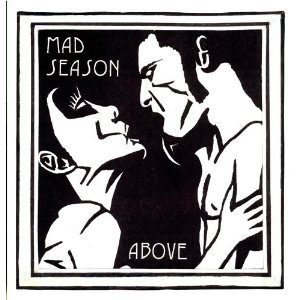
Mad Season – Above

Sure there were undoubtedly bigger, more important and more well-received albums in this year and I’ve know doubt that any of those mentioned above would happily slot in here but when I think of 1995 in music now it’s Mad Season’s sole album Above that pops up almost instantly.

A ‘grunge supergroup’, Mad Season was formed by Pearl Jam’s Mike McCready, Screaming Trees’ Barrett Martin, Alice in Chains’ Layne Staley and John Baker Saunders. During early sessions for ’94’s Vitalogy, McCready had entered into rehab for drug and alcohol addiction and had met bass player John Baker Saunders there. The two returned to Seattle and began playing with Barrett Martin. It was McCready who bought in Layne Staley to sing in the hope that being around sober musicians and having a new project would help push Layne to get clean himself.

I remember the first time I heard Above will deep-diving into my then newly discovered love for ‘grunge’ and realising it was nothing like what I was expecting. I don’t know what I thought it would be – like Layne fronting Pearl Jam perhaps…. but it’s something somehow both distinctly different to the sound of those two most famous of its ingredients yet still familiar enough to let you know where its roots lie.

Instead of AIC’s heavy riffage, there’s more of a bluesy sway to a lot of Above thanks to Mike McCready’s awesome playing. Mark Lanegan stopped by to sing on a few songs including ‘Long Gone Day’ and ‘I’m Above’ incase more was needed to apply a ‘supergroup’ tag. It’s not a perfect album but it’s still a favourite. You get a sense that the members are using the opportunity away from their main gig to try a few things out and push in a different direction – always something worth going for – and I think, for the most part it works.

But it’s also important to remember that this is a first album, it wasn’t conceived as a one-off it’s just how fate took it. I can’t help but think that they would’ve gone on to better. I mean, the music for two songs were written before Staley was recruited, the rest within a week and Layne completing his lyrics in just a few more days. All at a time when AIC were preparing their next album, Pearl Jam were coming off the back of Vitalogy… had time allowed the group to get it together again after touring and feeling each other out more as players and the group’s capabilities the next album would’ve soared.

As it was they’d play a good few shows in early ’95 to promote the album but soon their ‘day jobs’ started to call their attention and so Mad Season took a break. By the time they tried to revive the group for another go in 1997, Staley’s addiction had taken such a toll on his health that he was no longer interested or, probably, capable. His last live performance was in July 1996. The remaining members began instead working with Mark Lanegan on some new songs and adopted a new name – Disinformation – to reflect the change in lineup. Conflicting schedules would make it difficult for work to progress and then, in 1999, John Baker Saunders died after a heroin overdose. McCready continued to work with Pearl Jam, Lanegan forged a successful solo career and Martin – after Screaming Trees ended – would tour as REM’s drummer having played on their album Up along with forming Tuatara with Peter Buck. In 2002 Layne Staley would also succumb to his drug addiction.

As such, Above is that single-shot blast of greatness from Mad Season and captures a brief, fleeting moment in time when these great players were able to make it work. It also sounds so very 1995, surely this was the only time when a side-project could get such major label support and promotion.

Tracks: Camouflage

“And then a big marine, a giant with a pair of friendly eyes
Appeared there at my shoulder and said ‘Wait!’
When he came in close beside me he said ‘Don’t worry, son, I’m here’
‘If Charlie wants to tangle now they’ll have two to dodge'”

After a brief back and forth in a comment section with CB over at Cincinnati Babyhead and ahead of a post on war (what is it good for?) I felt the need to dust off my Tracks format  wherein I spotlight a particular song that stands out in my mental jukebox and sits amongst my favourites – I feel a Spotify playlist coming on…

Stan Ridgway’s ‘Camouflage’ was taken from his 1986 album The Big Heat. It was a hit over here in the UK (hitting number 4 in the chart – I’ve still got a cassette of the Top 40 from some point in the year and it’s on there alongside things like Robert Palmer’s ‘I Didn’t Mean to Turn You On’ and Gwen Guthrie’s ‘Ain’t Nothing Going On But The Rent’ as a slab of my childhood in the back seat of my parent’s car on family drives) but didn’t chart in Ridgway’s native US where he’d previously found success in Wall of Voodoo.

Sung from the pov of a young, inexperience Private First Class cut off from his patrol in ‘the jungle war of ’65’ and finding himself surrounded… until ‘that big marine named Camouflage’ saves him…  Sure, it’s over-the-top and not exactly realistic, but it’s a cracker in my book:

This song cuts on a personal level. When I was a kid growing up my Dad’s best friend Charlie was a regular presence in our lives. He’d been a ‘weekend soldier’ in the TA and, with my Dad, part of an RAF volunteer service called the ROC. This was one of his favourites, I guess the Vietnam story appealed to him, and so it became lodged in my mind and the connection between the song and him makes it a bit of an emotional one too: he was killed while riding his motorbike in 1992 when a lorry hit him.

Aside from that emotional connection – my father can’t listen to it anymore – I really dig the tune and can see why it was a favourite. The story is like something from Catch 22, the sound has that 80’s New Wave / Alternative vibe and Ridgway’s delivery, like some strange film noir narrative, is unique.

Spinning Some Newer Things

Stepping out of the mid-90s for a moment, I thought it high time to throw a few things up here to show what else – during this long-arse pause in the ‘norm’ – has been going through my ears lately.

Daughter – Youth

So… anyone else catch Ricky Gervais’ ‘Afterlife’ on Netflix? We powered through both seasons earlier this year. Not what I was expecting – gutting at times… jesus. Hell of a soundtrack though and sent me off exploring a lot of new artists and many I’d heard of but not heard. This particularly stood out and I’ve been enjoying Daughter’s catalogue since.

Eliot Sumner – Information 

Some time back I took a punt on Destroyer’s Kaputt having seen it on sale for £5.99 and found out I really dug it. The same thing happened with Eliot Sumner’s album Information: I saw it in a sale for £6.99 and thought ‘why is a double lp so cheap?’, checked reviews / information, not a lot them about so pinged it up on Spotify and… holy shit! The name didn’t click at first but the voice…. it’s like the same timbre of her father and she’s singing with such confidence and there’s a real power to it… really enjoying this album from Gordon’s daughter even if, or perhaps because, it’s not what would normally be in my wheelhouse.

School Is Cool – Close

Another new discovery – these guys hail from Belgium. Their new album Things That Don’t Go Right is a pretty good mix of the same sun-kissed guitar tones and vibes that The War On Drugs have perfected along with some cool vocal harmonies and those 80’s sci-fi synths that Stranger Things seems to have revived.

Turnover – Cutting My Fingers Off

I’d seen this album so many times on ‘the ‘gram’ and for some reason thought it was something entirely different – I thought it was one of those stone-metal albums like Sleep…. However; took the opportunity afforded by not having to get up for work (only as an acting teacher to my son at least) to listen in on headphones in the evenings and have been hooked on Turnover since.

Gary Clark Jr – This Land

Holy shit did I sleep on this one. I mean, I’ve always dug Gary Clark Jr’s playing – his Live album is a frequent spinner even if I haven’t found his studio albums as rewarding – but this is just something else and, right now, still, essential.

Philp Sayce – Burning Out

Again – new to me, this guy, but I’ve been digging what I’ve heard thus far and, much like Gary Clark Jr, this guy drew a lot of ears playing at one of Clapton’s Crossroads Guitar Festivals.

Pearl Jam – Quick Escape

March seems like a decade ago already doesn’t it? Without being able to tour and promote it’s easy to forget Pearl Jam had a new album out this year – which sucks especially when you consider how long we had to wait for it! Still, Gigaton is an absolute beast – one of their most ‘on’, diverse and consistently strong albums in a long time and I enjoy it more with every spin. ‘Quick Escape’ is a thumper! “Crossed the border to Morocco , Kashmir to Marrakesh . The lengths we had to go to then to find a place Trump hadn’t fucked up yet.”


Albums of my years – 1994

I want you to go in that bag and find my wallet. Which one is it? It’s the one that says…. Life is like a box of chocolates, you never know what you’re gonna get. 1994, the year of Pulp Fiction, Forest Gump, The Shawshank Redemption and Natural Born Killers. It’s the year that Jim Carey rubber-faced and over-acted on cinema screens in not one,  not two but 3 hits of his schtick: The MaskAce Ventura: Pet Detective and Dumb and Dumber and Hugh Grant stammered his way into Andie MacDowell’s delicates in Four Weddings and a Funeral.

In music it was the year that Lisa Loeb implored us to ‘Stay’ because she missed us, Whigfield was preparing for ‘Saturday Night’ (dee dee nah nah), All-4-One swore about something, Boyz II Men announced they’d make love to us, we were all Maria Carey wanted for Christmas and Big Mountain assured us they loved our way, baby.

It was a big year for Aerosmith – they released their Geffen-era hits album Big Ones having headlined the Saturday night at Woodstock 94 – according to Tyler it “rained like a cow pissing on a flat rock” during their set, opened their own Mama Kin Music Hall in Boston, seen singles ‘Crazy’ and ‘Deuces are Wild’ still manage to do the business in a music scene already rapidly changed since their recent reemergence and become the first major band to premier a new song on the Internet; the Get A Grip cast-off ‘Head First’ was downloaded for free by 10,000 CompuServe (remember them?) subscribers in 8 days.

This side of the Atlantic, the ball-ache of Oasis vs Blur (neither, thanks) was underway with the rise of Britpop as Parklife and Definitely Maybe began being milked for songs to fill the airways. Albarn figured he, and Britpop, were there to kill off grunge. The conceited prick that he was, told NME in 1993 that “If punk was about getting rid of hippies, then I’m getting rid of grunge. People should smarten up a bit, be a bit more energetic. They’re walking around like hippies, stooped, greasy hair… It irritates me.” Yeah, because Blur,  Oasis and Britpop was all about looking smart and not lolling about the place like twats:


In ‘grunge’, though, things went very dark in ’94. On March 3rd, Kurt Cobain overdosed on Rohypnol and champagne in Rome and slipped into a coma. A few weeks later, back in the US, police confiscated four guns and twenty-five boxes of ammo from his house after Courtney Love dialled 911 fearing he was suicidal. An intervention on the 25th March saw Kurt agreeing to enter rehab – he checked in to the  Exodus Recovery Center in Los Angeles on March 30, 1994. The next evening he went outside for a cigarette, scaled the six-foot-high fence, hailed a cab and flew back to Seattle, sitting near to Guns ‘n’ Roses’ Duff McKagan. While he was spotted in various places throughout Seattle over the next couple of days, nobody could pin down his whereabouts – Love hired Tom Grant, a private investigator, on April 3rd to find Cobain. On April 8th, 1994 an electrician called Gary Smith (who had been hired to install a security system) found Kurt Cobain’s body on the floor of the musician’s home – Smith thought Cobain was asleep until he saw the shotgun pointing at his chin. Kurt Donald Cobain was 27 when he c omitted suicide. His daughter hadn’t yet reached her second birthday. Cobain had, an autopsy would reveal, taken his life on April 5th, his blood contained a high concentration of heroin and traces of diazepam.

I think it’s fair to say that while the ‘grunge’ scene was already marked by some pretty horrific incidents – Andrew Woods’ death in ’90 and the brutal rape and murder of The Gits’ Mia Zapata to name but two – Cobain’s suicide marked a real tangible shift. It’s become a sort of time-marker for the scene in a way with everything after being viewed in relation to it. Even with amidst the phenomenon the Seattle scene had become, the members of the musical community were still close and Cobain’s suicide was a blow to all.

Hole’s Live Through This was released a week after Cobain’s death. I guess in ’94 it was a lot harder to stop wheels that were already in motion because, just saying, you’d kinda think you might wanna not release an album with such a title a week after your husband put a shotgun in their mouth… Heroin is a cunt of a drug; shortly after the release of the album and just ahead of a scheduled tour to promote it, on June 16th, Hole’s bass player Kristen Pfaff was found dead in her apartment following a heroin overdose.

Nirvana’s Unplugged album, recorded in November ’93 and released in November in 1994 arrived after plans for a double album called Verse Chorus Verse which would compile the bands live performances on one disc and the full unplugged set on the second, fell through in August (compiling it was too emotionally draining for the surviving Nirvana members). It’s widely held as one of the best unplugged sets released and marked a touching final Nirvana release.

So what was released in 1994? Well, to put it succinctly; a fucking lot.

Neil Young and Crazy Horse released  Sleeps With Angels, the title track written about the death of Kurt – who’d quoted Young in his suicide note, while REM released their much-maligned Monster which was dedicated to River Phoenix with the track ‘Let Me In’ a tribute to Kurt. Monster is a great album let down, in my opinion, by poor mixing – I always thought that a good chunk of the songs felt buried in a mix that, it turned out, producer Scott Litt also regretted after burying the vocals low in the mix and under distortion in an effort to keep up with the ‘grunge’ sound of the time. Thankfully last year’s 25th Anniversary reissue featured Litt’s remix of the album and gave it the sound it should have had in 1994:

Weezer was introduced to the world in 1994 with their self-titled debut (which would become known as the Blue album) which still stands as one of their finest collections – ‘Undone’, ‘Say It Ain’t So’, ‘Only In Dreams’, ‘My Name Is Jonas’, ‘Buddy Holly’…. all on here. While Rivers and co went Blue, The Stone Temple Pilots went Purple with their second album – also a great slab of the alternative-flavoured good stuff that’s stuffed with some of their finest too:

It’s weird to think but 1994 also saw the debut of Jimmy Eat World with their self-titled debut. I’ve a lot of time for early JEW and their first album is worth a listen for the curious but it’s still early days. In terms of debut albums in 1994 it’d be hard to beat Portishead’s Dummy. Popularising trip-hop, winning the 1995 Mercury Music Prize and just gobbling up acclaim, it’s an album that’s pretty much unlike anything else released that year and I think even they have yet to top it.

Voodoo Lounge was definitely not The Rolling Stones’ debut – a pretty decent Stones album (I have a huge amount of time for ‘Thru and Thru’) it’s their 20th and, not to be considered ‘out of touch’ with the musical zeitgeist, they announced the Voodoo Lounge Tour by arriving on JFK’s presidential yacht… meanwhile Pink Floyd released what would be their final studio album, one of my own favourites, The Division Bell. Pink Floyd’s last album didn’t go down as well as it should have at the time but I think it’s aged very well and stands as a much stronger farewell than A Momentary Lapse of Reason and a million times stronger than The Final Cut would have been.

Demonstrating just how much the musical world had shifted since both the Stones and Floyd released their previous albums, both were massively outsold by an independent release from a punk-rock band from California – not that one. The Offspring’s Smash, released on Epitaph, became the best selling independent record of all time with more than 11 million shifted to date – don’t worry, Gilmour and Mick & Keith cleared up BIG time when it came to tours behind The Division Bell and Voodoo Lounge.

Oddly enough, as a lot of older artists found themselves a little out of touch in ’94, Johnny Cash chose this as the year to prove he was still very much a force to be reckoned with. With major labels deciding the sun had set on Cash’s career, he was offered a contract with Rick Rubin’s American Recordings label. Produced by Rubin, and recorded in the producer’s living room and Cash’s own cabin, American Recordings was a stripped-back collection of well-chosen covers and originals that became one of the year’s and Cash’s finest albums and usher in a decade of commercial and critical acclaim for the Man in Black.

Fittingly, Nine Inch Nails also released their second album The Downward Spiral in 1994 featuring ‘March of the Pigs’, ‘Closer’ and ‘Hurt’ which Cash would go on to cover in 2002. Oh, and Rick Rubin would wave his magic wand again in 1994, producing Tom Petty’s superb Wildflowers – the long-awaited reissue of which with a second-disc’s worth of extra material looks a lot closer now.

Still with me? Pretty strong list so far, right? Well what about the Tori Amos’ Under the Pink, also released in 1994? ‘Cornflake Girl’, ‘Pretty Good Year’, ‘God’? No? … or Green Day’s Dookie which arrived at the start of ’94 and went on to shift 20 million copies on the back of songs like ‘Basket Case’ and ‘Longview’.Weight – the Rollins Band’s fourth album which hit hard with ‘Liar’ and Mark Lanegan released his finest album, his second, Whiskey for the Holy Ghost AND Nick Cave and the Bad Seeds released the phenomenal Let Love In in 1994 too.

But then there was also the debut from Seattle’s Sunny Day Real Estate – Diary pretty much defined the second-wave of emo and is an absolute classic. ‘Lightning Crashes’ and ‘I Alone’ helped push Live’s Throwing Copper on to massive figures and Built To Spill got the car with their second album There’s Nothing Wrong With Love – already a leap forward their next, in 1997, would be a real genre-definer.

That’s a pretty fucking strong list of albums for a year. But 1994 also heralded Sonic Youth’s Experimental Jet Set, Trash and No Star – the Butch Vig and band helmed album included ‘Bull In The Heather’, ‘Starfield Road’ and ‘Winner’s Blues’ – and Dinosaur Jr’s Without A Sound is another 1994 album- easily one of their best with ‘Feel The Pain’, ‘I Don’t Think So’ and ‘Get Out of This’ coming to mind as standouts. If you’re not familiar with them how about this:

Yup; Soundgarden’s genre-defining Superunknown was released in 1994 too! I mean… it’s just the best thing they ever did. It’s such a varied and accomplished slab of the great stuff…

The Cranberries released No Need to Argue in 1994 and ‘Zombie’ got stuck in everybody’s head, in their heeaaad…. Elliott Smith released his debut solo album, Roman Candle and The Black Crowes released their sublime third album, Amorica. After scrapping an album (Tall – the sessions for which can and should be checked out on 2006’s Lost Crowes), The Black Crowes re-recorded the material with a different producer but then shot themselves in the foot by releasing what could arguably be one of their greatest albums with a cover that many retailers wouldn’t touch thanks to the clock-springs poking over the top of the US-flag thong.

Oh and Pearl Jam released what I still consider their finest – Vitalogy. But I can’t consider that as a featured album as I’ve already covered that one here. However, as close a call as it would be, for me there’s only one album that stands head and shoulders above the pack for 1994:

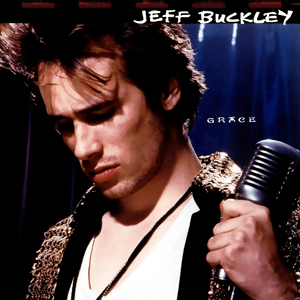
Jeff Buckley – Grace

I could talk for pages about Grace. I discovered this album at some point in the late 90’s – one of those cases of reading about it often enough to be inclined to check it out. I remember reading about how Buckley had both the voice of Plant and the guitar sound of Page and remember putting it on and being blown away.

Initially met with poor sales, Grace‘s popularity and reputation seems to have grown with each passing year, with Buckley’s own myth – the son of Tim Buckley whom he met only once (at 8 years old), possessor of an amazing talent who made only one album before his early death….  thing is, with myths the reality is often disappointing. Grace, however, is fucking amazing.

So here are just five things I love about Grace:

1) Mojo Pin

I’m not going to say every track is a reason to love this album. Though that could easily happen.

Mojo Pin is the best kind of opener. An absolute belter of a song that manages to contain every element you’ll find on the album itself: psychedelic leanings giving way to Zeplin-esque blues and hard rock propelled by a surging guitar; lyrics that hint at the spiritual, a love lost; rising and crashing melody and, of course – that voice.

2) The Sound

The Legacy Edition of Grace comes with a Making Of.. DVD. It suggests Jeff was hard to pin down musically and could be compulsive, over-flowing with ideas as he was. When making Grace they had to have three different band set-ups available at any time in order to accommodate his ideas. Not the smoothest of productions by any account and yet the final sound is amazing.

I don’t know enough to say it’s down to the recording equipment, the sound engineer or the production – all I know is that the richness of sound is beautiful and is probably down to Andy Wallace who produced, engineered and mixed the album (adding to a CV that included mixing duty for Sonic Youth’s Dirty,  Nirvana’s Nevermind, Rage Against the Machine, L7…).You can hear every element, perfectly balanced. The plectrum on the strings, the slip of a hand on a neck, you get the sound of real music being played – nothing artificial about it. A warm, enveloping sound.

3) Track 6, 02:18- 03:08

These points are all interlinked it seems for the element that adds to the richness of that sound is the band that Jeff built around himself. Signed as a solo artist – the Live At Sin-e album highlights several points that inform Grace as well as realise that here’s a guy with songs that would really benefit from a band – Jeff didn’t always manage to reign it all in to a concise, well-formed song. Early versions of tracks that would make Grace meander more – both on Live at Sin-e and last year’s RSD release In Transition –  and he pushes his voice a little too much, not yet there with his most unique instrument.

It’s also clear that Jeff needed a full band to truly capture and develop his ideas. One of those musicians bought in, toward the end, was guitarist Michael Tighe. Tighe bought something else to the mix – the song ‘So Real’. Buckley would add a chorus and a few lyrical changes and the song was so strong it pushed off Buckley’s own Forget Her from the final album. From that, between 02:18 and 03:08 is pure chainsaw-guitar magic wrapped up with a near-whispered “I love you, but I’m afraid to love you.”

4) Covers

Not the head shot that graced the cover, but the choice of covers here – that Buckley felt sufficiently strong about to include over his some of his over originals.

The now-famous take on Leonard Cohen’s Hallelujah is easily the definitive version of a much-covered song. A perfect tune to showcase Buckley’s vocal prowess, it’s flawless. Enough has been written about it that I can’t / shouldn’t go into it too much here – but I will say that just when I think I’m bored of it, I’ll here it again and hear something new in his reading of it and suddenly it’s perfect again.

‘Lilac Wine’ is transformed from a cocktail-lounge song into a near mystical experience that just-about manages to keep a lid on Jeff’s voice. Then there’s a take on Britten’s hymn ‘Corpus Christi Carol’, which, in Buckley’s hands, is more of a lullaby.

Jeff’s takes on each of these songs does what any good cover should – transform it into something new.

Even the choice of these songs is notable. This was 1994. The post-Nevermind alternative music scene still on the rise and yet here are tunes plucked from Nina Simone’s repertoire and a hymn first heard in 1504.

Of course, the over, more practical reason for the inclusion of three covers is that Buckley didn’t yet have enough material of his own that was up to inclusion. Though his song writing was moving forward (those tunes written by Buckley alone include’ Last Goodbye’) it wasn’t there yet and, sadly, we’d never get the chance to discover why because….

5) A One-Off

One of those elements that makes Grace so special is frustrating and tragic in equal measure; it’s all we really have in terms of a fully-realised document of his talent.

On the evening of May 29th, 1997, Jeff Buckley went for a swim in the Mississippi. Fully clothed, wearing his boots and singing the chorus to Led Zeppelin’s ‘Whole Lotta Love’. He’d been swimming in the channel before. The roadie who was with had stayed on shore, moved a guitar out of the way from a passing tugboat’s wake, looked back out to the water to find Buckley had vanished. It would be five days before his body was found. His death, at the age of 30, was ruled as an accidental drowning.

The album he was working on at the time would never reach fruition. A compilation of those songs he was working on for it would be released a few days shy of a year after his death. Critically well-received, Sketches for My Sweetheart the Drunk showcased a new leaning for Jeff, tighter, harder and at times darker, the songs gathered across the two discs showed a marked evolution in his song writing. It’s a tantalising glimpse, a painful “what if?” that no amount of reissues or vault-digging can ever answer.

As such Grace remains the only final, definitive recording by Jeff Buckley. A true one-off.

Albums of my Years – 1993

1993: John Hammond spared no expense on his dinosaur theme park, Bill Murray lived the same day over and over, Harrison Ford searched for a one-armed man, Robin Williams looked like a lady (dude) and Matthew McConaughey loved high-school girls, man – “I get older, they stay the same age.”

In music it was the year that Whitney Houston dominated the charts singing about her favourite form of coordination (hand – eyeeeeeeee), DJ Jazzy Jeff and the Fresh Prince shook the room, Lenny Kravitz needed to know which way we were going, Bruce Springsteen showed MTV who was Boss by taking his electric guitar to his Unplugged performance and Meat Loaf left us all wondering just what it was he wouldn’t do for love*.

It was the year that the BBC Radio 5 interviewed Frank Black and found out that Pixies were finished… ahead of the other band members knowing. Black would call guitarist Joey Santiago to break the news but let Kim Deal and David Lovering know via fax.  New Order, Skin Yard (influential Seattle band featuring producer / engineer Jack Endino), Echo & The Bunnymen and, er, Marky Mark and the Funky Bunch also called it a day in 1993. However – on the bands formed side; this was the year that gave birth to At The Drive-In, Ben Folds Five, Daft Punk, Embrace, Garbage, Jimmy Eat World, Modest Mouse, Reef, Spoon, Supergrass and Wilco.

It was also a bumper year for great albums, plenty of which still feature heavy on rotation here. Fairly new discovery for me, Band of Susans dropped their fourth album Veil which tour off into a more experimental direction just as contemporaries Sonic Youth were steering toward song-focused albums. It’s a tricky one to define – it’s like a glorious hybrid of the noise-rock school that SY emerged from with punches of alternative rock and shoegaze mixed into what one critic called an “epic swell of guitar and noise:”

Speaking of shoegaze; Slowdive released their second, possibly finest, album Souvlaki in 1993. Dinosaur Jr released their phenomenal Where You Been – a real scorcher probably aided by the fact that it was recorded with a full band though it would be drummer Murph’s last with the band until the original lineup reconvened over a decade later.  However, Dinosaur Jr classics ‘What Else Is New’, ‘Start Choppin’ ‘Get Me’ and ‘Out There’ all feature on this album though I should probably state that I don’t think Dinosaur Jr have ever made a bad album.

Not an outright classic in itself, though one with at least four good songs on it, Radiohead’s debut album Pablo Honey arrived in 1993 and introduced the world to the band via the inescapable ‘Creep’ while Everybody Else Is Doing It, So Why Can’t We? marked the arrival of The Cranberries.


Having already asked us once, Lenny Kravitz repeated the question by naming his third album Are You Gonna Go My Way? – while Mama Said edges it in my books, it’s still a blast of the good stuff, as was Afghan Whigs’ Gentlemen also released in 1993. Picking up on the experimentation with electronic and dancier vibes of Achtung Baby and running with it, U2 released the oft-overlooked Zooropa in 1993. Very much a different trip to anything else in their catalogue, Zooropa began life as an EP to promote another leg of the Zoo TV tour, Bono figured he’d push for a full album instead… it would be easy to say it does feel like an over-stuffed EP but there’s plenty of great tunes on it that make it well worth adding to the shelves including the title track, The Wanderer which featured Johnny Cash before his American comeback and ‘Stay (Farwa, So Close!)’:

PJ Harvey released her brilliant second album, Rid of Me and Kate Bush chose 1993 as the year for The Red Shoes which was not only her first album for four years but would be her last for another 12.

With Pixies having broken up at the start of the year, Kim Deal’s the Breeders dropped their second and most well-known album Last Splash in August and the single ‘Cannonball’ becoming their biggest ‘hit’ and propelling the album to platinum status. Meanwhile, having recorded it in 1992, Frank Black released his self-titled debut in 1993 as well. Still close to the sound of Pixies in many ways (including additional guitar work from Joey Santiago), Frank Black is a great album packed with great tunes that build on the Pixies sound.

Speaking of solo albums following the dissolution of great bands – Paul Westerberg’s first solo album 14 Songs also arrived in 1993 – it’s another cracking collection of songs that I still play and have expanded upon on this very blog. Also making a solo debut, though I don’t think The Sugarcubes would be mentioned in the same breath as either The Replacements or Pixies, Bjork’s Debut also appeared this year, featuring the brilliant tunes ‘Human Behaviour’ and ‘Big Time Sensuality’. It was also debut time for Sheryl Crow who’s Tuesday Night Music Club was released in August 1993. I tuned in around this time and while I have more fondness for he next couple of albums there’s no denying that Ms Crow’s debut has both a great sound in terms of production – very much of its time – and is stacked with great tunes like ‘Run Baby Run’, ‘All I Wanna Do’, ‘Can’t Cry Anymore’ and ‘Leaving Las Vegas’ to name but four.

Now… here’s the thing. The above are undeniably strong albums and they’re all very much regulars on my stereo to this day. And yet there’s more and choosing between them is a tough one for me. See, 1993 heralded the arrival of Pearl Jam’s second album Vs. which is one of my favourite Pearl Jam albums – but I’ve covered that one at length as well so can’t feature it here too (rules are rules).

When it comes to staggeringly good debut albums, Counting Crows’ August and Everything After has got to be high on the list. AllMusic suitably claims this album “burst(s) at the seams with both dominant pop harmonies and rich, hearty ballads” – there’s just so much on this that – especially in the age of CD bloat – it’s all wrapped up within 11 tracks. It’s such a rich feast in terms of both the sound (thanks to T Bone Burnett’s production) but with beautiful melodies and lyrics that pack so much into them without becoming lost in a wash of words for the sake of it as some of Duritz’ later songs would. I must have spun this album more times than I could count and I still never skip a track, though perhaps ‘Omaha’ doesn’t get as much attention as, say, ‘Anna Begins’, it’s such a great album…

Then there’s the second album from Smashing Pumpkins: Siamese Dream also one of my favourite albums. It was a massive leap forward for the band and really threw their hat into the ring as one of the foremost alternative bands of the nineties. Songs like ‘Today’, ‘Cherub Rock’, ‘Disarm’ are amongst those that are appropriately considered hallmarks of the genre. Produced by Butch Vig, who was riding high following his production of NevermindSiamese Dream is not only the Smashing Pumpkins’ finest, one of the best albums of the 90’s but one that belongs on Greatest Album lists full stop.

However, also released in 1993…

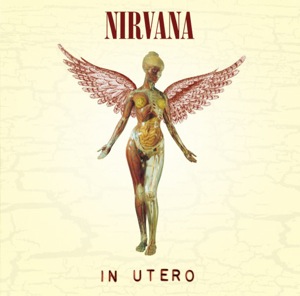
Nirvana – In Utero

It would be virtually impossible for me to choose between some of the above – especially the last three – albums from 1993 were it not for the fact that Nirvana’s finest and, sadly, final album was also released in the same year as so many strong contenders for the crown. But, on September 21, 1993 – having been recorded by Steve Albini over two weeks in February.

Interesting side note and one fact that I always find interesting is that Steve Albini – known as a producer of independent releases and for his band Big Black – took a flat fee of $100,000 for his work recording and producing In Utero despite suggestions from Nirvana’s management company to take percentage points on record sales. I think, though my recollection may be fuzzy, when Dave Grohl mentioned how much he could’ve made from the album given that the album has shifted over 5 million, Albini said something along the lines of “you pay a plumber for the job when he does it, you don’t then send him a cheque every time your taps work”.

In Utero is a notably harder and rawer sounding album than Nevermind was. As sales for everything out of Seattle took off and media focused its attention on the city’s ‘scene’, the foremost proponents of ‘grunge’ were obviously getting pissed off with it – Pearl Jam’s Vs. is a far punchier and angrier beast than Ten – and Cobain himself was distancing himself from what he saw as the commercial sheen of his group’s second album. For a scene that grew out of the punk movement, it must have seen a necessary step to proving that you weren’t ‘corporate rock sellouts’. Either way, the albums the shift produced were outstanding.

With Albini’s mix seeming to cause concern at Geffen – Kurt would say “The grown-ups don’t like it” – the band themselves started to have doubts and asked Albini to remix it. He refused: “Kurt wanted to make a record that he could slam down on the table and say, ‘Listen, I know this is good, and I know your concerns about it are meaningless, so go with it.’ And I don’t think he felt he had that yet … My problem was that I feared a slippery slope.” With Albini nixing a remix, it would be Scott Litt (known for his work with R.E.M) that would remix and augment a number of the album’s tracks. For all the concern that Geffen’s initial feedback had raised, Litt only worked on two songs – the rest of the album was left as is, save for a little raising of the vocals and sharpening of the bass. They needn’t have fretted: preceded by the single ‘Heart Shaped Box’, In Utero topped the charts (not that this was the band’s chief concern) and received widespread acclaim from critics and their audience.

For me this album is as good as it gets in terms of Nirvana – it felt like they were at the peak of their game. Cobain’s continuing growth as a songwriter now matched with the passion and ‘punk’ leaning of their first record was the perfect combination. Tighter than a duck’s arse thanks to the touring and promotion of Nevermind with Dave Grohl now fully ensconced behind the drums and contributing the guitar riff for ‘Scentless Apprentice’, In Utero feels like fired up answer to any critics that doubted them as a flash in the pan.

Rolling Stone managed to get it right in their review: In Utero is “a lot of things – brilliant, corrosive, enraged and thoughtful, most of them all at once. But more than anything, it’s a triumph of the will.”

Of course, it also manages to capture just how dark and nihilistic Cobain’s lyrics were getting. It’s front-loaded with the blazers – ‘Serve the Servants’, ‘Heart Shaped Box’, ‘Rape Me’ and ‘Dumb’ – but then there’s the harsher side of the album – songs like ‘Milk It’ and ‘Very Ape’ and, finally, ‘All Apologies’: “Everything’s my fault, I take all the blame.” Kurt was coming apart almost by the day and it’s all on here to hear.

Hindsight is though, of course, 20-20 and it’s easy now to listen to Nirvan’s final album and point to the signs. At the time, though, nobody could have known. It was, and still is, ‘just’ a massively engaging and powerful album not a cry for help or suicide note and that’s how it should be remembered.

I’d love to know where the band could have gone from here. The ‘You Know You’re Right’ song from the compilation Nirvana gives promise for an even better sound than In Utero but given Cobain’s state of mind toward the end it’s an unanswerable question – numerous times he talked of, and drafted letters to band members calling for, the dissolution of Nirvana. He was going to work with Michael Stipe on a strings-based sound for an album… he could have done so many things but… well, this isn’t that post. In Utero is the glorious sound of Nirvana doing everything right even if it isn’t the easiest of listens.

*I sincerely doubt it’s that, pervert.


Albums of my years – 1992

Schwing! Party on! Way! Excellent! Oh, my, God Becky, look at her butt…. It’s 1992!

The year that Wayne and Garth hit cinema screens, that Aladdin showed Princess Jasmine a whole new world, that Whitney said she’d always love Kev, Bill Clinton defeated George H.W Bush in the US Presidential elections and Def Leppard asked a very, very important question:

1992 is the year Nirvana toppled Michael Jackson from the top of the chart and ‘grunge’ began its ascendancy in sales and popularity – Nevermind hit the top spot in the US on January 11th. A month and a half later Kurt Cobain would marry Courtney Love on Waikiki Beach in Hawaii with just 8 guests, including Dave Grohl. Cobain wore his pyjamas for the ceremony.

1992 was the year the world was introduced to the be-mulleted turdburger Billy Ray Cyrus and his Achy Breaky Heart, the 9 million people that bought his debut album in its first year have got a lot to answer for.

In May, John Frusciante left the Red Hot Chili Peppers (Rolling Stone digitally removed him from the photo on their upcoming cover feature), having been overwhelmed by the band’s new level of success and becoming a little unhinged… as the band’s world tour got underway he began hearing voices in his head telling him “you won’t make it during the tour, you have to go now.” Already enjoying plenty of drugs, when he returned to California Frusciante’s depression lead to a deep dive into full-on drug addiction that would keep him in its grip until 1998 when, suffering with a lethal oral infection and arms ravaged with abscesses, he’d check into rehab and enter sobriety. However, in 92, that was a long, dark six years away.

Speaking of overindulgence  – 1992, Guns ‘N’ Roses’ ‘November Rain’ clocked into the record books as the longest single to enter the Top 20 at 8 minutes and 57 seconds and its video’s budget of $1.5 million became the most expensive of all time (at that point). Similar indulgence would be applied to the video for ‘Estranged’ (which added another 40 seconds in song length)a year later when a rumoured $4 million was spent on Rose and co – ah the day’s when MTV actually played music videos to the extent that labels were willing to spend that much dosh courting airtime.

They probably needed to placate some fans – at a concert in Montreal in August, opening act Metallica’s James Hetfield was burnt by a pyrotechnics blast, he suffered second and third degree burns to the left half of his body, both arms and left hand, causing them to cancel the second hour of their show. When Guns ‘N’ Roses took the stage Axl Rose (did he ever perform a full concert on time?) decided his voice wasn’t up to it’s usual sound of a cat having its testicles removed without anaesthetic and called it quits for the night. Instead of being relieved at not being asked to “give me some reggae“, the fans were a little pissed off. So they decided a riot was in order, which spilled to the streets with overturned cars, smashed windows, looting  and setting fires.

At the end of August, Kurt Cobain and Courtney Love’s daughter Frances Bean Cobain was born after god knows how much drama and magazine reporting on the couples’ drug use during pregnancy… which, Love being Love, no doubt enjoyed stirring up for the sake of attention.  It meant that child welfare services launched an investigation into their parenting abilities and Frances was removed from her parents’ custody for a short time when she was two weeks old. There’s a real ugly and grim side to the world of celebrity and sometimes the consequences aren’t considered by its actors while they court it… but hindsight is a wonderful thing full of ‘if only’s and ‘why didn’t somebody’s… and there were times when the Courtney Love show seemed of more interest to the press than the music Nirvana made. Perhaps to remind people of the fact that there was more to Cobain than headlines, Geffen kept the momentum going with the release of Incesticide in December – a collection of b-sides, outtakes and demos that’s still better than a lot of the studio albums released in 1992.

Speaking of controversy – presumably having had enough of singing about being ‘Like a Virgin’, Madonna went full on erotic with Erotica in ’92, a concept album about bumping uglies which was accompanied by a ‘book’ of soft porn photos – ‘Sex’. It was an edgy time.

Pearl Jam rounded off a very busy 1992 – which saw Ten find its way into homes across the world, the band touring Europe, demoing songs for their next album and putting on the free ‘Drop in the Park’ concert for 33,000 fans in Seattle – with Eddie Vedder and Mike McCready joining acts including Tom Petty and The Heartbreakers, Neil Young, Eric Clapton, June Carter Cash, Johnny Cash and Tracy Chapman to see Sinéad O’Connor get booed by an audience still angered by her ripping up a picture of Pope John Paul II on SNL – who knew Dylan fans were such devoted Catholics. Oh, yeah – I mean they joined other acts at a tribute concert to mark 30 years of Bob Dylan’s recording career.

Speaking of Bob – in 1992 he released Good As I Been To You. A collection of traditional folk songs and covers that was so well received he’d follow it with another collection of covers the following year…. just wait until he’d release nothing but covers and Christmas songs for decade.

Meanwhile Bush, Built To Spill, The Cardigans, Everclear, Feeder, Silverchair, Stereophonics, Sunny Day Real Estate, Tindersticks and Weezer were all amongst those bands forming in 1992.

Making the most of studio time allocated to recording ‘Would?’ for Cameron Crowe’s ‘Singles’ (also released in 1992) the previous year, Alice in Chains also recorded ‘Rooster’ and all the songs that would end up on February’s acoustic EP – Sap – the songs for which were left mostly acoustic after drummer Sean Kinney dreamed about making just such an EP with that title. I’m not sure basing career decisions on the dreams of a drummer is always the best approach (I heard Ringo dreams of murdering kittens) but Sap is a great addition to anyone’s shelves:

It’s also a much lighter listening experience than their next release of 1992. Arriving in September following the singles ‘Would?’ and ‘Them Bones’, Alice In Chains’ second album Dirt is an undeniable classic of the genre and still gets many a play on my stereo – though it’s an intensely dark and heavy listen in both sound and subject matter as Layne and Cantrell made no bones about drug addiction along with depression, pain, anger, war and death forming the inspiration for lyrics. ‘Sickman’, ‘Junkhead’ and ‘God Smack’ are the obvious contenders, all referencing heroin use while ‘Rooster’

Layne Staley would later come to change his mind on having sung so openly about his drug use –  “I wrote about drugs, and I didn’t think I was being unsafe or careless by writing about them … I didn’t want my fans to think that heroin was cool. But then I’ve had fans come up to me and give me the thumbs up, telling me they’re high. That’s exactly what I didn’t want to happen.” Thankfully, all of these dark and potentially ‘I can’t listen to that’ lyrics were both well crafted and strapped to some fucking awesome music:

Afghan Whigs would released their third album  Congregation in 1992, The Cure gave us Wish and provided DJs the world over with an easy gimmick by playing ‘Friday I’m In Love’ at the end of each working week – though the standout track for me is ‘From the Edge of the Deep Green Sea’ – Manic Street Preachers dropped their debut, Generation Terrorists.

Pantera released one of the decade’s heaviest  – Vulgar Display of Power and Rage Against The Machine declared that, fuck you; they won’t do as you tell ’em on their astounding, genre-bending powerhouse self-titled debut whose iconic cover art continues to find new homes and delight to this day thanks to its sheer force and unbridled passion in the delivery. Though they’d release another two studio albums in their career (not counting covers), nothing would match Rage Against The Machine in terms of immediacy and impact, not quite a breath of fresh air but a kick in the balls with a pair of heavy boots.

On a different end of the sonic spectrum – another 1992 debut came from Tori Amos whose Little Earthquakes was her first ‘solo’ album and featured the great tune ‘Precious Things’ along with eleven other cracking songs.

The Black Crowes got together with producer George Drakoulias to make what could be considered their finest album: The Southern Harmony and Musical CompanionA much bluesier, more maturing sounding album than their debut, their second album was powered to the top of the charts thanks to its four singes and stand out tracks – ‘Remedy’, ‘Sting Me’, ‘Thorn in My Pride’ and ‘Hotel Illness’.

Two other debuts in 1992 came from Stone Temple Pilots with Core and Blind Melon whose self-titled album probably gets more repeated plays than STP’s who never really did it for me to the same degree as others of that scene (though their fifth album Shangri-La Dee Da is an exception to that rule). In Shannon Hoon, Blind Melon had a great frontman and singer. ‘No Rain’ is one thing and may have done so well that Bee Girl graced the cover of the album, Blind Melon, but songs like ‘Tones of Home’ or ‘Change’ are real keepers. Both bands would lose their singers and try and keep going but I don’t think either will ever tap the same vein again in the way in which Alice In Chains have managed to do with William Duvall… but that’s a different blog.

Nearly five years after his last album and three since telling the E Street Band members he wouldn’t be needing their services for a while, Bruce Springsteen emerged with two new albums in 1992 – the first of which, Human Town having been sparked off by three instrumental tracks written by E Street Band member Roy Bittan… who would also produce the album. While needing another song to finish Human Touch, Springsteen wrote another album instead, the superior (of the two) Lucky Town. Released on the same day, the albums… well I’ve written on both Human Touch and Lucky Town already but while they’re not his worst (that still hangs on High Hopes) they’ve not been as well-received as his other albums. As Bruce would later acknowledge that, had it not been for his father he “would have written just happy songs – and I tried it in the early ‘90s and it didn’t work; the public didn’t like it.” Still, while in the recordings for, say, Darkness On The Edge of Town, The River and even Born In The USA there was enough material for a further three or four great albums – if you cull the dross from these two there’s enough for one great album there.

Having chosen not to tour behind Out Of Time REM had gotten straight to work on new songs, including the demos for ‘Drive’, ‘Try Not To Breath’ and  ‘Nightswimming’ which had been recording during that album’s mixing at Prince’s Paisley Park Studios. Automatic For The People is one of those albums that’s been written about so many times and for good reason: it’s a fucking classic. It is chock-a-block with great songs, I don’t think there’s a bad one on it and, given that I don’t think it’s their best, that’s insane. From opener ‘Drive’ through to the closing ‘Find The River’ via the lighter radio-staple ‘The Sidewinder Sleeps Tonite’ (nothing to do with Jamaica, the lyric is “Call me when you try to wake her”), the gorgeous ‘Nightswimming’  and the colossal hit ‘Everybody Hurts’, it’s all gold. While clearly the same band, it stands apart from the sounds of Out Of Time and here I’ll refer to the Rolling Stone review for the album which sums it up suitably: “”This is the members of R.E.M. delving deeper than ever; grown sadder and wiser, the Athens subversives reveal a darker vision that shimmers with new, complex beauty”

Which only leaves my choice for featured album of 1992…

Buffalo Tom – Let Me Come Over

Let’s hop in the DeLorean and set the time circuits for October 2000 – we were all able to go outdoors and meet people, Donald Trump was just a prick who’d tried to get the nomination of the Reform Party and I, still at uni was a regular regular reader of Uncut Magazine. An actual printed music monthly as the internet then was… different. I remember scouring their Unconditionally Guaranteed CD each month for the one or two tracks that will make me sit up and pay attention and inspire greater digging. As a side note I really should do this again as the last time I did I discovered Big Thief and a few more enjoyable tracks.

There’s only one track on the October 2000 CD though that grabbed me: Taillights Fade by Buffalo Tom, a band from Boston who were releasing a career-spanning Best Of just as they kicked off a seven year hiatus.

It meant I picked up Asides From as soon as I could and, having played it through repeatedly without skipping a song, set off rapidly exploring and collecting their back catalogue. Of the now 9 studio albums the band has put out since forming in 1986, their third album, released in 1992, Let Me Come Over is held up by many as their finest hour (well, 51 minutes) and while it’s probably their biggest seller, I doubt it’s all that known. Hell, if I asked you to name me five Boston bands I imagine the list would include Aerosmith, Pixies, Boston (real original name lads), The Cars, Dropkick Murphys or even the Lemonheads or The Mighty Mighty Bosstones before Buffalo Tom (the Buffalo is borrowed from Springfield). And I think that’s a crying shame.

On the back of their first two albums, released in ’88 and ’90, Buffalo Tom had been branded as Dinosaur Jr Jr. Given the use of fuzz in the guitar tones and the fact that the albums were produced by J Mascis himself, it was an easy tag to apply. It wasn’t entirely accurate though as their third album would show. It would also mean that the band – now supported by RCA Records as well Beggars Banquet, would get a second go around in their bid for breakthrough as ears were pricking up whenever alternative rock was played on radios around the world.

With J presumably far too busy now as Dinosaur Jr’s major label push took other and with the band’s songwriting needing a different production approach and less use of the overdrive pedal, Let Me Come Over was helmed by Paul Q. Kolderie and Sean Slade. It was a massive leap forward. The sound on Let Me Come Over is painted with a much more layered approach and subtle brush – there’s a lot less shouting, acoustic guitar overdubs, more intricate compositions that feels like the band working as a piece rather than individual instruments with more mature and insightful lyrics.

Pitchfork have said of Buffalo Tom that they “wrote sharply observed conversational lyrics because it was too hard to be obscure.” Perhaps that’s why they were never able to break through – the songs are great; they’re well written, well played and the lyrics are clever and to the point at a time when alternative music was trying to be considerably more obtuse / mysterious in its song meanings and lyrics (hell, Ten didn’t even contain the song lyrics printed in anything resembling legible). It shouldn’t, though, detract from what’s a great set of songs and easily their strongest album.

Songs like ‘Mineral’ and ‘Taillights Fade’ (which it turns out is a favourite of Eddie Vedder who bought Bill Janovitz on stage with Pearl Jam on both nights they played Boston in 2018 much to the delight of fans and Bill to run through the song) are undoubted highlights that show off the band’s improved songwriting – drummer Tom Maginnis (the ‘Tom’ in the band name) points out in Asides From: “we were beginning to find our inspiration as songwriters and a sound of our own as a band”.

But the more straight-ahead rockers on the album like ‘Stymied’, ‘Saving Grace’ and ‘Velvet Roof’ also sound significantly sharper and more focused than on both the band’s previous direction – benefiting both from the less-cluttered production,  and the band members’ improved playing after constant touring.

I read something suggesting that Buffalo Tom were ‘always the bridesmaids’ of the alternative rock movement, having never quite broken through in the way they deserved – Let Me Come Over was probably as close as they’d get but perhaps they just weren’t edgy enough for the musical climate that was brewing at the dawn of the 90s. Regardless, and perhaps even because of their underdog status, Buffalo Tom are one of my favourite bands to this day and Let Me Come Over gets a regular spin on my turntable.

Following a seven year hiatus, Buffalo Tom got back together in 2007 and put out Three Easy Pieces, followed in 2011 by Skins. Only playing select, occasional shows, it’s safe to say the band is semi-retired these days – though they put out their best album since Let Me Come Over in 2018 with Quiet and Peace. Bill Janovitz developed a side-career as a real-estate agent but has put out a couple of fine solo albums and has also written two books on The Rolling Stones. I, and I’m sure other fans, would love it if he were to chronicle his own band too.


Albums of my Years – 1991

Here we are, 1991 – “the year punk broke.” This was the year in which grunge music broke through. Still in its infancy, though, the genre wasn’t the force in terms of sales it would become over the next couple of years. While Nirvana’s Nevermind (released in September) would be propelled by the surprise hit of ‘Smells Like Teen Spirit’, metal was still a massive force and it would be Metallica’s ‘black’ album that became the year’s biggest seller along with the double wankfest of Guns ‘n’ Roses’ Use Your Illusion 1 & 2 selling massive figures and Garth Brooks, still a good few years away from turning into Chris Gaines, was making money as fast as they could print it.

In February, James Brown was released from prison on parole after his bizarre ‘89 episode – presumably the wardens were fooled by his cape routine and feigned exhaustion. Years away from revelations of child abuse, Michael Jackson renewed his recording contract with Sony records for $65 million – that’s a lot of monkey food. The Rolling Stones also signed a new deal with Virgin Records and Aerosmith – riding high on the back of their comeback and the success of Pump, signed a $30 million deal with Colombia Records / Sony Music, though it wouldn’t be until 1997’s Nine Lives that they would release anything for the label.

On March 20th Eric Clapton’s four-year-old son, Conor, died after falling from the 53rd-floor window of his mother’s friend’s New York City apartment. The loss of his young son, with whom he had only just realised his role as father took a heavy toll and inspired the song ‘Tears in Heaven’.

The film ‘Robin Hood; Prince of Thieves’ was released in 1991 and, from it, Bryan Adams’ ‘(Everything I Do) I Do It For You’ took the piss at number 1 in the UK for sixteen weeks. Also, in the world of soundtracks and infinitely more culturally and artistically more significant than Christian Slater’s English accent, ‘Baywatch’ returned in 1991 for a second season of slow motion running, drama and acting almost as convincing as the breasts on its female stars, kicking off with a new theme song:

On November 23rd, after years of speculation and insulting suggestions from the press, Freddie Mercury released a statement confirming that he had tested HIV positive and had AIDs. The statement didn’t say that Mercury was close to blind and could no longer leave his bed. Less than 24 hours later Mercury passed away from bronchial pneumonia resulting from AIDS. He was just 45.

Devo called it a day in 1991 as did Galaxy 500, NWA, Talk Talk, Talking Heads and The Replacements who played their last show together (minus drummer Chris Mars who had quit in 1990 ) in July at Chicago’s Grant Park, with each member leaving during the set with their respective roadies taking their places. Meanwhile Belly, Cake, The Chemical Brothers, Counting Crows, Heatmiser (featuring Elliott Smith), Incubus, Oasis, Portishead, Rage Against The Machine, Refused and, er, The Wiggles all formed in 1991.

So what about album releases? Well… Dickhead Dave got the year off to a cloudy start with the release of his third solo album A Little Ain’t Enough (despite the fact that a little of him is way too much). Still doing well with Sammy Hagar, Van Halen would release the imaginatively For Unlawful Carnal Knowledge in June and while its title is a little Spinal Tap (Hagar wanted to call it ‘Fuck’ but was, in a pure ‘Really? And you believed him?!’ moment, was told by Ray Mancini that ‘Fuck’ was actually an acronym for what would become the album’s title), it’s a strong slab of good stuff that includes quite a few of my favourite VH riffs.

1991 also saw the final album from Dire Straits – On Every Street. As recently surmised by Jim over at Music Enthusiast: There was some good stuff on it but Brothers in Arms had come out in 1985 and six years in the pop world is an eternity. Knoplfer’s other production credits for the year came from a seminal release from Bob Dylan:The Bootleg Series Volumes 1–3 (Rare & Unreleased) 1961–1991. One of my go-to Dylan volumes, this is one of those sets (like Springsteen’s Tracks) which always makes you wonder how the fuck some of this stuff was left off, like this cut from the Knopfler-produced sessions for Infidels (a fine, fine album):

Tom Petty re-teamed with the Heartbreakers for 91’s Into The Great Wide Open which, following the success of Petty’s Full Moon Fever was produced by Jeff Lynne. A lovely album, it was stocked with singles like such as ‘Learning To Fly’ and the title track along with great cuts including one of my favourites – ‘Two Gungslingers’.

On the heavier side of the year’s releases, Metallica’s Metallica (the answer is none, none more black’) was 1991’s monster – it spawned the classics ‘Enter Sandman’, ‘Nothing Else Matters’, ‘Sad But True’, ‘The Unforgiven’ … and would sell more than 16 million copies in the US alone.

One of my all-time favourite bands, Dinosaur Jr released their major-label debut in 1991. Green Mind is a great mix of J Mascis’ ferocious guitar playing, matching melody to walls of fuzz and power with a growing songwriting sensibility. It’s practically a J Mascis solo album as he not only produced by played most of the instruments too with original drummer Murph only playing on three of the album’s songs. Bass player Lou Barlow had been kicked out a year or two prior and would document this in ‘The Freed Pig’ on his new band Sebadoh’s album III, also released in 1991.

1991 is the year that the world was first introduced to Eddie Vedder. First via the Temple of the Dog album – discussed at length in 1990’s post. Released in April it was received well by those all-important critics but failed to chart… it would take a little more awareness of the key players for the momentum to build. Still it wouldn’t take long: preceded by the singles ‘Even Flow’ and ‘Alive’ Ten was released in August. A stunning debut, it would gradually build a following as the band hit the road hard to support it just as the grunge explosion began getting underway. I’d put it as a featured album or I wouldn’t be worth my salt as paid-up Ten Club member but I’ve already featured the album and rules are rules. Still, here’s a Stone-cold classic:

Another classic was dropped in 1991: Slint’s Spiderland. Their second and final album, Spiderland was a slow-burner and its popularity within the music world grew with time as it gradually found its audience and proved a massive influence on the post-rock genre.

Back over here, another genre-definer was released – My Bloody Valentine’s shoegaze classic and gem of an album Loveless eventually arrived in November after two years of recording, 19 studios and contributing to the bankruptcy of its label. Hailed as a ‘virtual reinvention of the guitar’ Loveless left a long shadow on the scene and would find new ears and inspire lots more for years to come – just as well as it took 22 years for the band to follow up.

Another great of the genre, Slowdive, released their debut Just For A Day in ’91 but it was Massive Attack’s Blue Lines that rightly stole a lot of column inches over here that year:

As if the year wasn’t bursting enough with big albums, REM chose 1991 to release their Out Of Time and find themselves catapulted to the level of MASSIVE with singles like ‘Shiny Happy People’ (I still think it’s naff) and ‘Losing My Religion’ sitting alongside beautiful album tracks like ‘Low’ and ‘Half a World Away’.  It was major hit time too for Crowded House with the great Woodface arriving in July of ’91 and doing the business worldwide. It’s stuffed with great songs (though my favourite Crowded House album was a couple of years off) that would go on to become much-loved hits.

Another band to breakout in ’91 – Red Hot Chili Peppers’ Blood Sugar Sex Magik found the band taking a different musical tact than previous and seeing monster results and was one of those early albums that would be regarded as a mainstay of the ‘alternative’ boom that would jump all over the 90’s. A band that really really deserved to be part of the 90’s alternative explosion but would break up before the decade was halfway through – Pixies released their fourth and greatest album in 1991: Trompe le Monde.

As the Pixies released their final album, Smashing Pumpkins released their debut in ’91 with Gish. Corgan’s monstrous cockwomble status and ego aside, they’d prove one of the scene’s finest in years to come. As we’re getting back to the ‘grungier’ part of the alternative scene, one of the genre’s too oft-overlooked acts The Screaming Trees released their fifth album Uncle Anesthesia in January. It was their last with drummer Mark Pickeral  and their first for major-label Epic. While it didn’t have the impact the band or label hoped for – the musical world was still waking up to the genre, to be fair, it was produced by Terry Date and Soundgarden’s Chris Cornell. Date also produced 1991’s Soundgarden album Badmotorfinger. Their first with bass player Ben Shepherd and released on September 24th 1991,  Badmotorfinger is an absolute stonker and features some of Soundgarden’s greatest songs.

Badmotorfinger is one of those classic albums that proved a breakthrough for Soundgarden. Already veterans of the Seattle music scene, Chris Cornell and co’s third album helped them reach the burgeoning alternative rock / grunge fanbase with singles like ‘Rusty Cage’ and ‘Outshined’. However, it would be another album released on the same day that busted everything wide open for the likes of Soundgarden, Screaming Trees, Smashing Pumpkins and Pearl Jam to storm through… Nirvana’s Nevermind.

There’s a great scene in the 1996 documentary Hype! (available to watch on Prime and well worth doing so) in which Sub Pop staff discuss how, toward the end of 1990 they felt the storm of the scene that was building in Seattle had passed and would soon wind down, the focus would shift and things would return to normal… and then a band with a relatively small following but plenty of buzz about them dropped a song called ‘Smells Like Teen Spirit’.

It’s overplayed and perhaps the most obvious choice to play but it’s a fucking classic for a reason. It did so phenomenally well for a reason – it’s a great tune that propelled the album Nevermind, the band and pretty much an entire scene into a new league. It’s one of those albums I play so often that I know every word. It’s not my favourite Nirvana album but it contains so many of my favourite Nirvana songs (and one of my all-time favourites in ‘Breed’) that I still get bemused – I’m too old to get bothered and riled up anymore – when people say “oh but it sounds too commercial” or “Kurt hated it”. No, he didn’t and no, id doesn’t. He loved it but needed to distance himself from it for fear of being seen as a sell-out. I fucking hate that aspect of the scene and music fans in general that mean artists are so worried about how it would be perceived as ‘not punk’ and blame that for the demise of it, and Kurt’s state of mind, and the rise of the absolute dog shit on the radio today….

However: that’s a boatload of great albums and yet these aren’t the ‘featured’ albums for the year. So, what’s it to be for 1991? Well, you may not have heard of this band, but:

U2 – Achtung Baby

“You who?” I hear you ask. “Is that the submarine that stole an enigma device?”

I give U2 an occasional jibe on this blog – like; what’s the difference between God and Bono? God doesn’t walk around Dublin thinking he’s Bono – but for good reason, as the years have gone by their recorded merit has deteriorated as Bono’s ego and the extravagance of being ‘the biggest band in the world’ grew in its place. The reason I do this is pretty simple really – U2 used to be great and they’ve made some absolute first class albums, the best of which (in my opinion) is Achtung Baby.

As the band’s popularity sky-rocketed in the 80’s and following the massive success of The Joshua Tree, U2 had started to get a little too caught up in trying to be serious and – as Bono said of Rattle and Hum: “We looked like a big, overblown rock band running amok.” That album and concert film summed it all up really: they’d gone from penning great tunes to paying too much attention to the look of it and were too self-serious. I mean; thank fuck for Bono taking a moment in ‘Silver and Gold’ to lecture us on apartheid before clumsily telling Edge to ‘play the blues’. It had stretched a little thin so when, at the end of that tour, Bono announced the band had “to go away and…and dream it all up again” it was probably welcome.

But I don’t think anyone was expecting Achtung Baby. It’s a total reinvention – while the band’s ethics and singing about the connections between people remained, everything else was a total reinvention. The way the band presented themselves changed – from Bono’s wrap around shades and black leather to the discovery of irony and dark humour in interviews with a bit of danger and the sound… the chiming sound of the 80s was seemingly buried now in distortion and lurching rhythms and textures not previously associated with the band as the emerged into the 90s with their first single ‘The Fly’:

I adore Achtung Baby – there’s not a song on it I’ll skip, even if I didn’t really want to listen to ‘One’ for a while as it became so omnipresent, it was always tracks like ‘Zoo Station’ and ‘Until The End of the World’ (in my favourite songs of all time list) that kept me coming back to it. I’m surprised my copy of it still plays it’s been slipped into so many different car CD players and stereos over the years, the case is pretty much battered and the booklet’s edges scuffed.

The album was gotten underway in Berlin, at Hansa Studios (where Bowie and Iggy Pop famously recorded four albums in 1977) in October 1990 as the band sought inspiration from the reunification of Germany. Instead it nearly broke the band as they argued over songs and the musical direction until they had a eureka moment with the writing of One which came in an improvised session as they worked on the arrangement of an early version of ‘Mysterious Ways’. As overplayed as it would become, it remains a great song (I really dig a lot of the vibe on this album including the artwork and the Trabants of the original video):

Just look at the list of singles released from the album alone: ‘The Fly’, ‘Even Better Than The Real Thing’, ‘One’, ‘Mysterious Ways’ and ‘Who’s Gonna Ride Your Wild Horses’ – if any one of these comes on the radio you’re not likely to be changing channel.

But then there’s the tracks that weren’t released – and they’re all just as good. Take ‘So Cruel’, ‘Acrobat’ or ‘Love Is Blindness’ as examples:

The lyrics aren’t millions of miles away from territory they’d wandered previously – “And you can dream, so dream out loud, you know that your time is coming ’round,
so don’t let the bastards grind you down” – but there’s a little more darkness and questioning here and, instead of being married to obvious ‘anthem’ sounds, there’s an edge (and Edge’s playing) to the songs on Achtung Baby with a metallic distorted bite, that borrows from industrial, electronic and the alternative rock scene that sits so sublimely with these songs and reveals more each time.

It shifted somewhere in excess of 18 million copies and ushered in U2’s Zoo TV Tour which was both so very 90s and completed their reinvention. It was the start of a new journey musically – from here to Zoorapa (also containing great tunes) to Pop which could’ve been another masterpiece if they’d been allowed time to finish it – and in terms of touring as the set grew from Zoo TV to Pop Mart and giant lemons. At no point, though, would it be as wholly and compellingly perfect again as it is on Achtung Baby*.


*After Pop‘s lacklustre reception, the band ducked away for a while before returning with a Best Of which captured 1980-1990, the reception to which buoyed their ‘back to basics’ All That You Can’t Leave Behind album in 2000. It’s a decent enough collection though a little sticky-sweet and twee, they’d lost the bite they found in the 90s. A second Best Of covering 1990-2000 must have reminded them of it again as at least half of 2004’s How to Dismantle an Atomic Bomb was really good and buzzed as well as chimed. After that though, for me, it was lost. Especially when they told me to get on my boots…

Yes and I had a little time to kill…. a Tom Petty twenty

Tom Petty was born in Gainesville, Florida in 1950. When he was ten years old his uncle, who was working on the movie,  invited him onto the set of the Elvis Presley flick ‘Follow That Dream’ to watch the shoot. Petty was awestruck and became an instant fan, trading his slingshot for a stack of Elvis 45s. Less than 4 years later Petty knew he wanted to be in a band when he saw The Beatles on The Ed Sullivan show, per Wikipedia: “The minute I saw the Beatles on the Ed Sullivan Show—and it’s true of thousands of guys—there was the way out.”

For Petty, that band was The Epics which would evolve into Mudcrutch – a band which included Mike Campbell and Benmont Tench. When Mudcrutch split Petty looked at a solo career but still felt the need for a band so, essentially he and Mike Campbell, co-opted  Benmont Tench’s new band and formed The Heartbreakers. Their first album would drop in 1976, Damn The Torpedoes would catapult them to multi-platinum status three years later and they continued to shift a shit load of records and rake up the hits as the years went on until the mid 90s where they slipped from the mainstream though would continue to shift massively respectable numbers, prove a great live act and retain a dedicated following and critical appeal.

It felt like the shine had worn off Petty’s songwriting around the time of The Last DJ (even if it did get him a spot on ‘The Simpsons’) and solo album Highway Companion. There’s some good stuff there, of course, but the consistency and freshness had waned. Perhaps Petty felt it too as he reformed Mudcrutch and the band released it’s first album in 2008 (a second followed in 2016)- the same year that Tom Petty and The Heartbreakers performed at the Superbowl’s half time show. Tellingly, none of the songs they played were from after 1989.

Then, with the release of 2010’s Mojo and 2014’s Hypnotic Eye a few years later, it felt like The Heartbreakers had found a second (or fourth? I’ve lost count) wind – changing up their sound and approach to embrace a much more bluesy sound that unlocked a new gear and they sounded fresh and invigorated on record again for the first time in decades. Then, in the early hours of October 2nd 2017, Tom Petty was found unconscious at his home in Santa Monica, California. He’d suffered a cardiac arrest and wasn’t breathing. There were, as always in this shitty media world in which we’re forced to live, rumours about his state almost immediately. But he was resuscitated and taken to hospital where, at 8:40pm, Tom Petty died. He was 66. During his recording career he released 13 studio albums with The Heatbreakers, 3 ‘solo’ albums and 2 albums with Mudcrutch, and 2 albums with The Travelling Wilburys, selling more than 80 million records worldwide.

I’d been into Tom Petty’s music for some time – his cds were on heavy rotation and the great compilation Anthology: Through The Years was often in my car. The news of his death really surprised me and took me some time before I could listen to his music again. My ongoing Albums of My Years series has set me back into his collection.

So, with that in mind, I thought I’d put together a list of my favourite Tom Petty songs. I’m counting both ‘solo’ and Hearbreakers albums together but nothing Mudcrutch as I’ve spent no time with those albums (and precious little with Mojo and Hyptnotic Eye).

This list isn’t necessarily order-specific or concrete as I may discover more as I listen to those Mudcrutch albums or spend more time with Hypnotic Eye.  But, right now….

Even The Losers – Damn The Torpedos was the album that changed it all for Tom Petty and The Heartbreakers but this standout for me was only released as a single in Australia despite how fucking good it is. Love the line “Well it was nearly summer, we sat on your roof.”

Wildflowers – Petty’s first album for Warner Bros. and first with Rick Rubin is an absolute gem. Essentially a Heartbreakers album – only Stan Lynch was missing but he’d be out of the group shortly and future Heartbreaker Steve Ferrone sat on the drum stool – and one of their finest.

The Waiting – come on, you know this song is gold.

Angel Dream (No. 4) – After Wildflowers, Petty and The Heartbreakers teamed up with Rick Rubin again for the soundtrack album Songs and Music from the Motion Picture “She’s the One”. I don’t know how this ended up as a soundtrack album (for a pretty ‘meh’ film’ but it’s a great Heartbreakers album – with some tracks from Wildlflowers sessions being developed, a looseness and charm that makes for some great tunes. If it wasn’t for the ‘soundtrack’ association and the repeat / variation of a few tunes as a result – this could’ve really changed the bands fortunes for the 90s.

Room at the Top – By the time Rick Rubin and The Heartbreakers got to work together on a Heartbreakers album ‘proper’, Petty was in the midst of a divorce and Echo feels more like a solo album given its subject matter. But it’s a bloody good disc that’s oft overlooked – including by me. This is just a beauty and, of all of his songs, it’s this one that I find hard to listen to in light of his passing.

Straight Into Darkness – Balls to the wall classic for me. “I remember Bruce Springsteen saying something about the song at a time when I felt like that album was kind of lost on people,” Petty said. “That meant a lot.”

It’ll All Work Out – The band’s last album before Petty went solo and they shifted gears again is a weird one and Let Me Up (I’ve Had Enough) is probably better known for ‘Jammin Me’ but I love this chilled out, delicate song – a type for which Petty had a real knack for.

Southern Accents – I love this song, no two ways about it. Southern Accents feels like an album of two halves, with original ‘concept’ songs mixed with class A hits but this, one of the ‘concepts’ is gorgeous. I love the lyric and delivery of ” For just a minute there I was dreaming,for just a minute it was all so real, for just a minute she was standing there, with me.”

Something Big – I’m a sucker for a ‘story’ song even if it is as deceptively dark as this one. Scratch that: ESPECIALLY if it’s as deceptively dark as this one.

Hope You Never – Another great from the She’s The One soundtrack, really dig the way this one builds and the beat.

Rebels – Another of Southern Accents‘ ‘concept’ songs and while the keyboards are very of the time it’s so well written it doesn’t hurt it none. The keyboards may be due to the fact that Petty was so high that he got so angry over arrangements he punched a wall and broke his left hand (causing pretty severe nerve damage). I guess it served as a wake up call as he called up Jimmy Iovine and asked him to come help finish the song and several others from this then-troubled ‘concept’ album.

You Wreck Me – a harder hitter from Wildflowers that just kicks. Even if Petty did feel it was a throwback: “I thought, ‘Man, this sounds just like the Heartbreakers about 1980’ – that style [that tells you] exactly who that is. So I got into it, to do a nostalgic song – ‘All right, we’ll go as far back as high school.”

Runnin’ Down A Dream – Petty’s first ‘solo’ album was a relaxed recording that featured all but one Heartbreaker (Stan Lynch again) and Petty’s friends George Harrison, Roy Orbison and Jeff Lynne – who also co-produced and wrote seven of Full Moon Fever‘s songs with Petty. For such a low-key album, Full Moon Fever went bonkers: hits like ‘Free Fallin’ and ‘I Won’t Back Down’ and their MTV staple vids helped it sell millions of copies and become Petty’s commercial peak. Of the 5 singles released from it, this is still my favourite.

Alright For Now – while this little Petty ditty is, oddly, my favourite on the whole album. I guess it’s the ‘for now’…. sometimes, most, that’s enough.

The Wild One, Forever – even on their first album The Heartbreakers showed they have a real knack for this not-quite-a-ballad slow blazer, yearning sorta thing.

American Girl – there’s no way of getting around it, the band’s first ‘hit’ is a classic.

Something Good Coming – The sole selection on here from Mojo, there’s something captivating about the vibe of this one for me.

Saving Grace – for his last solo album, Tom Petty worked again with Jeff Lynne and Mike Campbell, though no other Heartbreakers appear on Highway Companion. It’s not a bad album but lacks the consistency of his previous two. This is one of the highlights.

Waiting For Tonight – Oddly, this was recorded with the Heartbreakers during the a break from the Full Moon Fever sessions and put away until 1995’s Playback box set (which was one of the first things I got hold of when getting into Petty which is strange considering it’s a 6cd box set). Apparently it’s The Bangles on background vocals… why this was overlooked – it’s all hook much like ‘The Waiting’, it’s stuffed with great lyrics and is catchier than one of those contagious things…. were it not for Spotify having the ‘Nobody’s Children’ disc from Playback I think it would remain missed by many.

Don’t Come Around Here No More – Another gear and game change for Petty and the Heartbreakers. Stolen from Stevie Nicks who, having felt that Petty nailed the vocals, declined to use it on the album she was working on with Jimmy Iovine. The title is, according to Dave Stewart, a phrase he heard Nicks shout at Joe Walsh with whom she was throwing out of her house after a long drink and drug-fuelled party. The video for this put the band into MTV heavy rotation and all that came with that but…. it’s a great moment when the gears shift around the four minute mark.


Seven!

This one started as a joke, a throwaway comment… but then, I like the idea of a ‘theme’ or ‘write about this’ approach so took a look at seeing what I could put together for the number 7.

Well… staying within this blog’s wheelhouse, there’s ‘Seven Seas of Rhye’ according to Queen and Wonders of the World for Fleetwood Mac, both decent tunes. Perhaps most famously now it apparently takes more than a ‘Seven Nation Army’ to hold back Jack White:

Aside from being ridiculously catchy, ‘Seven Nation Army’ has probably made Jack White more money than anything else he’s done. While their label was initially reluctant to release it as a single in 2003, The White Stripes’ single was moderately successful in the charts (hitting and peaking at, fittingly enough, number 7 here), its usage in about a gazillion sporting events, broadcasts and adverts has netted its writer millions on its way to becoming what’s got to be the second-most recognisable guitar phrase ever (nobody’s gonna top ‘Satisfaction’).

There are also ‘Seven Curses’ and ‘Seven Days’ on Bob Dylan’s The Bootleg Series Volumes 1–3 (now THAT is a great collection of Dylan tunes) but only ‘7 Seconds’ for Youssou N’Dour and Neneh Cherry.

On a more recent note there’s also ‘Seven O’Clock’ one of the standout tracks on the new Pearl Jam Gigaton* and what kind of fan would I be if I didn’t take the opportunity to feature it and it’s glorious lyric ”Sitting Bull and Crazy Horse they forged the north and west, then you got Sitting Bullshit as our sitting President”:

On the subject of Pearl Jam, there’s also 7 Worlds Collide – a musical project of Neil Finn (Crowded House, Split Enz and a raft of great solo albums).  Taking its title from a line in Crowded House’s ‘Distant Sun’, the project bought Finn together with a number of other musicians for a series of shows in support of charities. The group featured contributions from Eddie Vedder, Johnny Marr,  Radiohead’s Ed O’Brien and Phil Selway, Tim Finn and many others – and a record , 7 Worlds Collide: Live at the St. James, was released in 2001 with tracks from a series of 5 shows at the venue and still gets taken off my shelves for a spin or three today. I’ve not checked out the studio album the project – with a pretty different ‘cast’ – put together a few years later but it still warrants checking out given that the set revolves around some of Finn’s strongest tunes along with a few written by his guests at the time:

Now, here’s a thing: I’ve often had a theory that the seventh track on album can often be one of the strongest. It’s not always the case, of course, and will depend on artist etc but my logic is that it’s the key point at which to drop a great tune and keep the listener’s ear into the second half of an album.  With this in mind I took a rummage through my records then realised I could save myself a huge amount of time and use Spotify… duh.

With that in mind, there are loads of albums in which the seventh track is not only bloody strong but ranks among the best on that album. Take ‘Us and Them’! Or ‘Ramble On’… easily one of Led Zep’s greatest with that seamless switch in gears… or the actual title track on Highway 61 Revisited! There’s a wealth of great track sevens and, sticking to the ‘no more than 2 per artist’ rule I’ve oft imposed upon myself on this blog, I put together a playlist of great Track Sevens, enjoy:

*Moving away from Brendan O’Brien’s production sets it in with Binaural and Riot Act in terms of the band’s embrace of different sounds and vibe but I think it’s better than both of those, it’s easily their strongest set in some time, possibly since Yield.