Am I really about to kick off a potentially lengthy series after what has been a year of sporadic posts at best? You bet your bollocks I am.
I’ve been toying with a way to pick up where my earlier posts on Pearl Jam’s ‘lost’ years left off and cover the band’s rise and ‘glory’ years in a way that didn’t simply regurgitate what had been written so many times before – and lining up another candidate for a Least to Most series* so, as the meme asks, why not both?
As per previous and future Least to Most this is not my attempt at a critical “worst to best”, as this isn’t a site of critique. It’s mumblings of personal thoughts and opinions relating to music. As such I’m going to be running through, in order (though certainly not uninterrupted), my Least to Most Favourite Pearl Jam studio albums.
Of key importance to note with this series is that as a massive Pearl Jam fan, even if they’re among the ‘least’ end of this rundown, it’s a fair bet that there’s usually at least two of these albums in my car or on rotation at a given time.
Let’s spin those black circles…
*Pink Floyd will be up to bat soon… depending on how soon I can a) listen to Saucerful of Secrets and b) decide whether Piper At The Gates of Dawn really counts as a Pink Floyd album.
I’d been lost composing a post about the Smashing Pumpkins reunion and how much a twatbadger Billy Corgan was but it ended up becoming a meandering rant about music’s biggest knobheads (especially Pete Townshend) and lost its way.
I’ve recently made a comment along the lines that there’s been nothing ‘of note’ in terms of new music this year only – looking at my Spotify playlists – to be proven wrong and realise that while we’re not quite halfway through the year, 2018 has seen some pretty decent new music find its way into my jukebox. So, to get back in the swing of posting, here’s a bit of this year’s new music I’ve been enjoying.
Lucy Dacaus – Night Shift
I actually found this one after following those ‘related artists’ trails. I love a good slow build song – it’s fairly documented on this blog – and this is just that (it’s past the four minute mark before it all kicks off!) and makes me think of Jeff Buckley in terms of structure and style. The album it’s taken from – Historian – has been massively well received critically and is a joy to listen to. It’s a deep, intricate and beautifully crafted work that’s the aural equivalent of a good, absorbing novel with so many different pieces coming together into one amazing narrative propelled by a wonderful voice.
Talking slow builds… I’ve commented on Ben Howard before and since discovering his music I’ve loved it all. Yet I clearly wasn’t paying any attention as he dropped a new album last week that completely caught me off guard. It’s amazing and ticks so many boxes on my list – mood atmospherics, chilled finger-picked acoustics, thunderous and reverb ridden electrics, complex layers… it’s only a matter of time before it’s on my shelves, it’s already on heavy digital rotation.
It’s odd that despite how much I enjoyed Pavement, I never really got into or paid any attention to Stephen Malkmus’ solo work. However, the new Stephen Malkmus and the Jicks album Sparkle Hard is thoroughly enjoyable affair (am I alone in hearing Billy Joel in opener ‘Cast Off’?) and it’s a real thrill to hear him get freaky with his guitar again on ‘Shiggy’.
In my Five from Spain post I included Exquirla – the collaboration between a flamenco singer and post-rock band from Spain. Toundra is that thunderous beast and their new album – Vortex – dropped earlier this year. I could’ve put any of its tracks on here – they’re all a meaty slab of the good stuff.
While those duplicitous, intellectually and morally deficient cockweasels that make up the spearhead of the government’s Brexit movement continue to flounder around like a freshly-neutered dog wondering what the hell he can now lick as the reality of both the consequences and legalities thunder down on them, I thought I’d take a look at the music of Spain.
I’ve been fortunate enough to see a fair bit of Spain and – while there are mixed emotions attached to part of it now – I’ve always loved being there. I’ve always found it a beautifully vibrant and colourful country, especially the Catalan areas I’ve spent time in, and from the Galician north-west to the Canary islands off the coast of Africa, I found warmth in both climate and people. And the food…..
As for the music, let’s go:
Héroes del Silencio – Entre dos tierras
NB: I don’t think the video is supposed to be as funny as it is. They may have been this earnest.
Héroes del Silencio – formed in the 80’s in Zaragoza – were BIG in Europe which, as per, means jack shit in England and they never crossed over. My wife, however, being from Europe ‘proper’ did know of them and dug them out of Spotify last year. One of Rock en Español most successful bands, they played big rock with a serious, capital R from the late 80’s up until 1996 when the singer went his own way. Rock en Español is a catch-all grouping for those ‘rock’ bands that sang in Spanish and precious few achieved success outside of Spanish speaking countries due to lack of promotion. Héroes del Silencio were signed to EMI and the album this track is taken from shifted well over 2 million copies alone. Not too shabby.
I’ve blasted this album out of my car and home speakers so much since picking it up earlier this year. Exquirla is the a surprise collaboration between Spanish post-rock band Toundra and flamenco singer Niño de Elche. The two acts met when they were both appearing at a festival in Cadiz (a city I love very much). This surprise collaboration yielded an album of intense post-rock with traditional guitar and flamenco vocals that’s hugely addictive, even if I haven’t got a clue what Senor de Elche is emoting about.
One of the joys of the internet is the degree to which the discovery of new music from places so geographically distant and bands not affiliated with major labels is now possible. I also love the ability that it has created for bands who don’t have or don’t want major backing to get product out there in a grass-roots, DIY style and build a genuine fanbase. It’s meant I’ve been able to discover a huge amount and I found a real groundswell of post-rock / ambient flowing out of Barcelona – perhaps it’s the Catalan element. I can really go down the rabbit hole at times and the discovery of Aloud Music (who work with the equally brilliant Dunk!) is a dangerous one for my bank balance. Veering more toward the melodic end of the genre, along with Astralia, Audiolepsia are one of those bands who’s album Muses has been on steady spin since discover.
Triángulo de Amor Bizarro – De la monarquía a la criptocracia
They take their name from the New Order song Bizarre Love Triangle (but I won’t hold that against them) and were formed in the Galician city of A Coruña (again: another city I’ve visited). Highly praised by press and famous musicians from various quarters they’re renowned for powerful live performances and mix indie, post-punk and shoegaze into one heady combo.
Joaquín Rodrigo – Concierto de Aranjuez II: Adagio
Stepping away from the usual fare on this blog but there is zero possibility of talking Spanish music and not mentioning what is one of my favourite pieces of music.
It’s nothing revolutionary and is probably a very well-known piece yet there is something undeniably beautiful about the Concierto de Aranjuez, it’s one of the finest pieces of Spanish classical music and the Adagio moves me every time. I’ve had the joy of seeing this performed live by the Royal Philharmonic Orchestra with Rolando Saad on guitar. There’s no video of that particular combo, that’s Rolando Saad in the video, though but the Spotify link is to just that pairing. The moment at which the orchestra fulls into sweep around the 8 1/2 minute mark always gives me goosebumps.
An attempt at a new feature wherein – in an effort to shake off the ‘lapsed’ status of postings – I proffer up five songs from an artist / band. Not a ‘Top Five’ as such more a potted selection should you be so inclined to check said act out….
Hailing from a Bellingham, Washington and undoubtedly influenced by the emo scene in nearby Seattle, Death Cab For Cutie have been putting out records for (gulp) 21 years now.
I got into them, like so many I guess, on the back of their widely acclaimed Transatlanticism. But then I stopped listening after the overexposure of Plans on the back of, I think, it featuring on some of those overly sappy, treacly, cheesier than a cheddar factory US teen-sitcom shows. However, in 2011 my wife surprised me with tickets to a DCFC show. I was expecting a lot of quiet acoustic numbers. Instead it was one of the best live shows I’ve seen – new material (the then-new Codes and Keys album) vastly more upbeat and superior to anything on Plans and songs that I didn’t know that meant I quickly went and picked up Narrow Stairs. The quality of those two albums (and the connection to a great night out) meant that Death Cab went up the play count list. Here’s five of those heavy rotation tunes that don’t sit in Spotify’s Top Five for DCFC:
Why’d You Want To Live Here
Title And Registration
This is the one that first got my attention and I still thoroughly enjoy it and Transatlanticism. That nagging little guitar line… I was quite chuffed when I sussed that one out.
I Will Possess Your Heart
Narrow Stairs is all too often dismissed and this song is immense with its build up of layers and pulsing rhythm – it kills live too.
You Are A Tourist
Viewed in retrospective, Codes and Keys is actually an intense break-up / pre-divorce album. Frontman Ben Gibbard had been married to Zooey Deschanel for a couple of years and was living the healthy life…. everyone labelled it his ‘happy’ album. But then the couple announced their seperation a few months later and lyrics like “If you feel just like a tourist/ In the city you were born/ Then it’s time to go/ And define your destination/ There’s so many different places to call home” take on a different meaning. Either way Codes and Keys is a bloody good album.
Little Wanderer
From their last studio album, Kintsugi. Not their strongest but a good effort and also the last to feature guitarist / occasional songwriter Chris Walla who’d been with the group from the start. With a new album strongly hinted at for this year, I’m looking forward to more.
Ok, in an effort to return to semi-normal service here I thought I’d have a run down of what, Buffalo Tom’s latest aside, has been playing on my turntable, car stereo and iPod of late.
GrimLake – The Reality of the Naive
There’s been a lot of post-rock going into my ears of late. I’ve been taking in music from all over the shop – Germany’s Kokomo, Toundra and Audiolepsia from Barcelona… Then Lost in Kiev, one of my favourite discoveries of last year, shared that they’d been included on a free 41-track compilation. This is taken from that compilation but there’s so many great tunes on it that it’s been spinning heavily since I downloaded it.
The National – Day I Die
I don’t know why it took me so long to get a copy of the new album from The National. Their previous albums have seen heavy rotation and I enjoyed the early tracks but for some reason I only picked up Sleep Well Beast early this year. It’s a great album, one of 2017’s best, that sees the band play to their strengths while expanding their musical arsenal. Well worth investigation.
The War On Drugs – Nothing To Find
If we’re talking best albums of 2017 then The War On Drugs’ A Deeper Understanding has to be up there – that album hasn’t left my car since its release and has been played to the point I’m surprised its still holding up.
Death Cab For Cutie – No Room In Frame
Perhaps because it’s about time a new one was due from these guys but for some reason I’ve been spinning Death Cab’s Kintsugi a fair bit lately. That the vinyl came with a cd for the car never hurts. While it’s not up there with their finest – I feel a Top Five coming on – it’s a strong album nonetheless and I hope there’s more from them soon.
Pink Floyd – The Happiest Days of Our Lives / Another Brick in the Wall (Part 2)
He’s a fair few years ahead of me on this one but my son is loving some Pink Floyd lately. Because Echoes is such a great compilation it’s often in the car and my son has developed a love for this particular combo. Initially it was the helicopters but I’ve often caught him singing along to ‘Another Brick…’ and in true pre-school style there’s no such thing as too much of a good thing so this is often requested multiple times but with Gilmour’s playing as sublime as ever on this one who am I to complain.
My lapsed blogger status seems to have become a reality, it would seem. My new role keeping me at “off my tits” busy level. As such I didn’t find opportunity to do a “Best of” “Looking Back at” post for the last year and now that we’re almost nearing the end of January Part 2 it would be pretty pointless.
But there is one album I want to talk about and it kind of bridges a gap between best last year, this year and 1992. I’ll explain…
There were some great re-releases last year. A lot of hype went to Thommy and his mates’ magnum opus but one of my favourites flew a little under the radar: Buffalo Tom’s Let Me Come Over – 25th Anniversary Edition. I’ve written of BT before so won’t go too deep on the history of (one of, at least) Boston’s finest but Let Me Come Over was a breakthrough for them in terms of songwriting, contained some of their best songs and – with Tailllights Fade – almost saw them crack through into the mainstream.
Last year’s re-release didn’t add a great deal – there’s no exhaustive combing of the vaults for versions where the guitar was tuned slightly differently or the inclusion of b-sides. Instead there’s a fantastic 17 song live set on the second disc (well, 10 on the vinyl with the full lot on the digital) that sees the three-piece add more power and guitar tone to album (and career) highlights in concert up at the University of London’s student union.
Already one of my favorite albums, the reissued Let Me Come Over got a lot of plays last year, and would usually be the one album I point to as their career-best. But… but BUT: then along comes something new.
In a couple of weeks Buffalo Tom will drop Quiet and Peace. However, as an early backer on Pledge Music, I’ve been able to have this album playing in my car since December and I don’t think a week has gone by where I haven’t listened to it at least once.
I don’t think – judging by the press reviews that are starting to appear – I’m alone in saying that, 25 years after their previous such effort, Buffalo Tom have made another career highlight in Quiet and Peace.
It’s both rousing and reflective, channeling the maturity and seriousness that set them aside from other college rock bands in the early 90s, into a beautifully warm, almost autumnal feel. Sample lyric: “Now my time behind is greater than my time ahead” from ‘All Be Gone’.
When I first go into Buffalo Tom it was on the back of 2000’s Asides From compilation that marked the commencement of a hiatus for the band. It would be seven years until they got it back together. Quiet and Peace is the third album since they reconvened and, not to bag on Three Easy Peices or Skins, it’s easily the best they’ve done since and easily has had more plays than some of their latter post-hiatus records too. There’s a cohesiveness to it (perhaps down to mixing from John Agnello – Kurt Vile, Sonic Youth, The Hold Steady.. and Buffalo Tom – or Dave Minehan’s production) and the songs sound just that little bit more well-brewed. Or maybe it was just an alignment in the cosmos or something, who knows how it happens but the ten new songs on Quiet and Peace – and the closing over of ‘Only Living Boy In New York City – make for one of Buffalo Tom’s finest collections to date, their new best record released just after celebrating the birthday of their previous one.
There’s precious little I can share in terms of songs or videos from it at the moment but keep an eye out for it in early March – Quiet and Peace is a belter of an album.
The Rock and Roll Hall of Fame is a strange thing that I reckon probably means more in the States than it does here. I think it’s a lot of backslapping really but seems like excuse enough for a good bout of entertainment each year as those acts inducted – depending on which member is still not speaking to another for perceived slights / lawsuits / wife fondling or other – blast through a couple of their most well-known numbers.
While I’m sure many a musical press headline will be given over to whether an estranged guitarist will rejoin his former New Jersey bandmates and plug in his talkbox, the really interesting one for me is the induction of Dire Straits.
Aside from seeing a very British band being pulled into a distinctly American ritual, the big question is whether or not Mark Knopfler will decide this is reason enough to play with those other members that are being inducted.
Given that one of those members being inducted is his brother David, who left the band all the way back in 1980 and the two have barely spoken since – it makes for quite the plot twist. While original drummer Pick Withers left in 1983 his departure was an amicable one so I doubt any issue would arise there. Of course there’s no doubt bass player, and the only other member to have been a constant, John Illsley is up for it: he’s said as much to press since the announcement and, to me, seems like the Nick Mason of the band – always up for the reunion that isn’t in his power to call.
It’s odd that Dire Straits are being inducted at all, in a way. It’s probably evidence that the “fan ballot” is now being considered, I suppose (and who would’ve pinned Dire Straits as getting that many votes?), but while there’s no denying their talent and popularity (how many people have a cd with a shimmering National Resonator on the cover? Thirty odd million?) they never seemed likely contenders for such a… recognition.
In a way they were never cool. My wife recently said – while not faulting them – they were a bit “boring.” It’s certainly true that they were never really innovators or swore on national tv or that Knopfler’s image was permanently removed from any possibility of cool thanks to those sweatbands, but I find it odd they don’t get much recognition in the same way so many other bands of that era have been offered in the urgency to bestow “legendary” status on those bands music writers remember from childhood. Rolling Stone put it succinctly “it might be a stretch to expect [millennials] to understand how band frontman Mark Knopfler, a balding thirtysomething given to wearing headbands and wristbands, used to fill arenas full of young people. Pop stars don’t really look like dads as much as they used to. ”
I guess they’re just not ‘cool’ enough to be mentioned as influences or remembered beyond ‘Money for Nothing’ or ‘Sultans of Swing’ as far as radio programmers go.
Which is a real shame. I grew up with a grey TDK mixtape of their first four albums on heavy rotation in my Dad’s car so they form an important part of my musical education and, as I’ve said before – they’re all too often sneered at though I’m sure there’s an awful lot of guitarists and bands influenced by Knopfler’s playing. If it wouldn’t be counter-productive I’d give my right hand to play some of those licks and master that tone (I remember spending a huge amount of time learning ‘Private Investigations’).
They weren’t just four (or five or six depending on the time you caught them) blokes that looked like your geography teacher playing in a pub band. They lasted as long as they did – going against the flow of punk, new romantics and synthpop and fucking Duran Duran – and sold as many records as they did because behind the deceptively laid back phrasing and style there’s a master songwriter and formidable guitar player at work in Dire Straits’ back catalogue and to refute that is just plain ignorant. So – regardless of whether some format of the band gets up and plays ‘Romeo and Juliet’ one more time – I’m glad to see them being inducted. Well deserved.
That being said I am rooting for Knopfler, Illsley and Withers to at least play together one more time and put the thing to bed properly.
In the spirit of trying to get away from the obvious, here’s a playlist of a baker’s dozen ‘non-regulation’ tracks that you won’t find spun on radio but really should.
Here we are again. Another ‘series’ down and a couple brewing in the pot and time for a look at what (alongside continual listens to Lost In Kiev’s Nuit Noire) my auditory ossicles have been pinging on down the line of late.
The Mono Jacks – 1,000 De Da
This one was sent to my wife last week via our friend in Romania who gave me some ammo for my Out of Europe on that country and I’ve been listening to it and their new album pretty solidly since. My Romanian isn’t strong enough to offer a translation but I’m told it deals with a certain kind of… parental method that a lot of Romanians today can identify with and “represents our inner children yelling for freedom as we each carve our own paths in life”. The Mono Jacks describe themselves as sounding “between alternative rock and post-punk touches”. As the review on the band’s site says: “I’ve seen most of the British bands ploughing this particular furrow, and The Mono Jacks have better songs than pretty much all of them.”
Destroyer – Chinatown
Another example of strange ways to discover music…. I was looking at an album on Amazon a week or two back and down in the “recommended” type carousel I saw Destroyer’s Kapputt at £5 for a double lp. Out of nothing more than curiosity and intrigue after scanning the glowing reviews (numerous album of the year accolades and reviews like “an astonishing world in just nine songs” and “an open love letter to a vanished pop era: it’s unique and warm and beautiful” ) I checked it out on Spotify and was hooked and hit ‘buy’. Why it was so cheap I have no idea, but, to quote another review “a brilliant and accessible album that draws from the lush sounds of the early 1980s but never forgets the importance of songwriting”.
Band of Susans – Elizabeth Stride 1843-1888
Again – different ways of discovering music. I saw a book (I think on Instagram) that I thought might be interesting called ‘Gimme Indie Rock: 500 Essential American Underground Rock Albums 1981–1996.’ I downloaded a sample chapter and while it’s more a case of “author’s favourite 500..” the description of Band of Susan’s Here Comes Success got me intrigued and I’ve had this opening track on a lot since. There’s a really obvious late-80’s Sonic Youth element to it along with *that* guitar sound. This one actually sent me down one of those Wikipedia rabbit holes that lead to the Saucy Jacky postcard (“you’re a saucy one, Jack”). Apparently Leo Fender was a rabid fan – of Band of Susans not Jack the Ripper.
Pearl Jam – Release, 1994 Orpheum Theater, Boston, MA
Because Jim at Music Enthusiast has got me seriously considering delving deeper into a Pearl Jam series and because I need no excuse to listen to Pearl Jam I’ve been spinning the live disc that came with the Vs/Vitalogy box. In terms of Pearl Jam live albums it’s probably the finest ‘official’ release out there.
Bruce Springsteen – I’ll Stand By You Always
Again in preparation for a possible series / longer post… (my notebook is starting to fill up with these and I haven’t even touched on the 100 Essential Albums thing..) back when Springsteen was doing the promo rounds for his book he confirmed the existence of this one as having been written for, and turned down by the producers of that film about kids and magic. At the time he said that it was “very uncharacteristic of something I’d sing myself.” “It was something that I thought would have fit lovely.” Well, despite being locked down for over a decade it emerged this year on a bootleg set called Odds and Sods. Perhaps not suited for a kids movie as such it’s certainly a different take for Bruce and would probably rank quite highly on his ‘movie songs’ list. It comes from the start of a very prolific song-writing period for Bruce and while he currently squats on Broadway in another activity that keeps him from releasing any new material it’s worth a listen for fans.
In terms of where this sits with sessions and musicians…. It’s listed as “copyright June 13, 2001” so my guess is that it could be from the E Street sessions at Thrill Hill East of that spring – between the end of the Reunion Tour and the start of The Rising sessions later that year in Atlanta – that Springsteen considered fruitless but there’s so little on it in terms of ‘band’ sound that it could just as easily be a solo recording.
It’s surprising the amount of stick Dave Grohl got for moving forward and making new music. Or, as some saw it, daring to make new music after the death of Kurt Cobain. As the man himself has often pondered – did they just expect him to stop? Music was all he’d done up until that point and he was only 25, why should he stop? In October of 1994, six months following Cobain’s suicide, Grohl booked some time at Robert Lang Studios in Seattle – where Nirvana’s final, aborted studio sessions had taken place (which yielded the demo of what would become ‘You Know You’re Right‘) earlier that same year – and recorded a fifteen-track demo, playing every instrument (save one guitar solo) himself.
Not sure where his future lay Grohl considered looking for another band with a vacant drum stool. One such stool had recently been vacated by Stan Lynch and there’s a great video of Grohl going full Animal with the Heartbreakers on SNL – “it was the first time I’d looked forward to playing the drums since Nirvana had ended.” Ultimately, though (and even after a couple of shows sitting on the vacant Pearl Jam drum stool*), Grohl wanted to give his ‘Foo Fighters’ project his attention as the demo tape he’d circulated was now picking up major label interest. The name was applied to the demo tape as Grohl wanted some anonymity post-Nirvana and to suggest that a group was behind the music.
Released in July 1995, there’s something wonderfully charming and warm about Foo Fighters. It’s very much a product of its time – the guitars are very grunge-like and loaded with the same levels of fuzz associated with Grohl’s former outfit but the songs quickly jump into more melodic and lighter routes and there’s an overwhelming sense of lightness and, yes, goofiness that wouldn’t be present on any other Foo Fighters release (likely down to the fact that the largely nonsensical lyrics were written 20 minutes before recording). It’s loaded with hook, charm and warmth and positivity. Though I have to wonder if I’m the only Foo Fighters fan that doesn’t care for ‘Big Me’.
Highlights: ‘This Is A Call’, ‘I’ll Stick Around’, ‘Alone + Easy Target’, ‘Good Grief’,’Floaty’
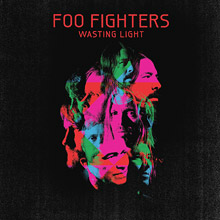
Wasting Light
Fuck but I love this album. This is the one instance in which the Gimmick behind it paid off in spades. In an effort to recapture some of the rougher sound of earlier Foo Fighters releases, Grohl decided that Foo Fighters Album 7 would be stripped of all the production bells and whistles that had been draped over Echoes, Silence, Patience & Grace and bought in Butch Vig and to record the entire album on analogue equipment in Dave’s garage.
At this point, though, it would be futile to expect such a process to result in a raw sounding record. It’s not like Dave Grohl has a small garage for that matter either. But, what makes Wasting Light such a late career highlight is that Vig captures a sense of purpose and drive in the band that had been lacking for at least three albums previous. It’s a big, anthemic rock record shorn of production sheen and filled with a sense of energy that comes from the fact that they recorded the entire album live and – with Pat Smear back in the ranks – a heavier, three-guitar strong attack.
From the off with ‘Bridges Burning’ powering into ‘Rope’ and ‘Dear Rosmery’ there’s no let up. Instead, when you’d expect it at track four, ‘White Limo’ has been described as “a blistering, paint-stripping thrash track” with Grohl’s vocals lost as he screams at what must be the top of his register. There’s no slowing down on Wasting Light. No ballads. ‘These Days’ looks like it’s gonna be that track until it turns into a thumping Foos classic that will no doubt rub shoulders with ‘Run’ and ‘Something From Nothing’ on the inevitable Greatest Hits 2. No, Wasting Light found a revitalised band firing with an energy and power few thought they had left in them and got me really paying attention to the band again and, depending on the day of the week, could just as easily sit right at the top of this list.
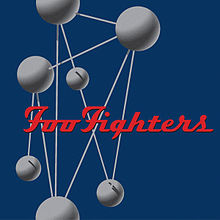
Twenty years on (gulp), the moment when the practically-throwaway ‘Doll’ gets torn apart by the arrival of ‘Monkey Wrench’ and The Colour and The Shape shifts into gear remains shit-the-bed-amazing. So good that the band themselves would give the formula another go and top it with ‘T-Shirt’ giving way to ‘Run’ on this year’s Concrete & Gold. That being said, while ‘Run’ is a great song, it doesn’t match the sheer power and fire of ‘Monkey Wrench’ – an absolute stone-cold classic. And it’s not the only one on the album for is home to a tonne of em: ‘Monkey Wrench’, ‘My Hero‘, ‘Walking After You’, ‘Enough Space’ and, easily their best song, ‘Everlong‘.
The Colour and The Shape was the first Foo Fighters album recorded as a group (although Grohl would end up re-recording the drum parts himself leaving drummer William Goldsmith little choice but to leave the band. He’d be replaced by Taylor Hawkins before the tour behind the album began) and is the most cohesive and consistent set of songs they’ve put to tape, still. After an extensive tour behind Foo Fighters, the band were coming together with Grohl emerging more confident in his role as singer and band leader – if you go back to ‘Monkey Wrench’ when he hits his final “one more thing before I quit” you can here that confidence screaming through. On the downside his first marriage was ending in divorce. This meant that, in place of the nonsensical lyrics on the first album, much of Grohl’s domestic strife was poured into the lyrics – ‘Everlong’ in particular is a strange mix up as it was written against both the collapse of his marriage and the beginning of a new relationship.
What makes this album stand out for me is that in between the staggering strength of the obvious hits, the songs that are so often forgotten are really bloody good too. Take ‘Enough Space‘ – watching ‘Back and Forth’ it’s clear how important this song was as one of the first new ones Grohl wrote for the band, with a tempo inspired by the jumping up and down of European audiences to heavier tunes. Or ‘My Poor Brain’ or ‘Wind Up’ or the best Foo Fighters album closer to date – ‘A New Way Home.’ These are great tunes and on any other album would be stand-outs. When put on an album stacked with killer classics they’re almost forgotten but prove that The Colour and the Shape is an album full of strengths (and ‘See You’ which, frankly, you can forgive).
Check out any review for a new Foo Fighters album and it will be this one that it gets judged against and with reason. The Colour and The Shape built the template of every song and direction the Foo Fighters would make yet remains their benchmark in terms of quality and consistency.
Highlights: All of it.
*Despite all the MTV (and Courtney fuelled) Nirvana vs Pearl Jam schtick the animosity between members really wasn’t there. Grohl sat in for two shows in Australia pre Jack-Irons and it’s been suggested that, having heard and recognised Grohl’s direction, they told him he’d be better doing it alone rather than playing for someone else. Eddie Vedder would actually premier two of the album’s songs on his radio show in 1995 as well as playing alongside Grohl in Mike Watt’s backing band – whose tour Vedder’s band Hovercraft were on along with Foo Fighters.
When touring the split-personality In Your Honor Foo Fighters would play two shows in each town / city – one big rock show in an arena and another in a smaller venue showcasing the quieter acoustic side of that album along with some re-readings of their back catalogue with an expanded line-up including a violinist, a pianist and former-Foo Pat Smear. The latter format would be captured in the lacklustre Skin and Bones and, at some point after the tour – as Dave Grohl tells it in ‘Back And Forth’ – the chief Foo was chatting with Clive Davis, boss of RCA (with whom the Foo Fighters have been since 1999) and expressed how great it would be if the Foos could be the band that did these different shows to demonstrate the different sides of their music and people could go to whichever appealed most and wouldn’t necessarily have to go to both. In what Grohl seems to have taken as a Svengeli comment (as opposed to, say, simply stating the bloody obvious), Davis replied “you can do both together” and the ‘Gimmick’ behind Foo Fighers Album 5 took root.
Taking In Your Honor‘s half-electric, half-acoustic approach and deciding to do it all on one album, often one song, meant that Echoes, Silence, Patience & Grace saw the Foo Fighters incorporating more instrumentation and styling detours than before and scoring plenty of scorchers along the way. Lead single and opener ‘The Pretender‘ is top-drawer Foos and still ranks as one of their best. ‘Let It Die’ – acoustics giving way to screaming power chords and Grohl at full wail – is the perfect meld of the two Foo dynamics and shows the formula working at its best and ‘Erase/Replace’ is another and holds up well ten years later. ‘Long Road To Ruin’ is standard Foo Fighter mid-pace that was killed by over-play, ‘Cheer Up, Boys (Your Make Up Is Running)’ (a working title that stuck) is a good, fun blast. Thing is, even with Gil Norton at the helm, it’s when the band stretches that the cracks show – ‘Summers End’, ‘Statues, ‘Home, ‘But, Honestly’…. they’re ‘ok’ but not quite the finished article they should be and there’s nothing about them to lodge in memory and the lack of power house riffs apparent in the first half of the album makes the closing third drag just a bit too long.
Still, I’d be the last person to fault a band or artist for trying to stretch themselves – to stand still is to go backwards and all that – and the efforts would yield fruit soon enough….
Highlights: ‘The Pretender’, ‘Let It Die’, ‘Come Alive’, ‘Erase/Replace’,’Cheer Up, Boys (Your Make Up Is Running).’
There Is Nothing Left To Lose
This is where I, and I’m sure plenty of others, came in. ‘Learn To Fly‘, it’s video and There Is Nothing Left To Lose broke the Foo Fighters to a lot of people and deservedly so though I can’t help but feel that, in the passage of time and the band’s continual evolution into STADIUM ROCK BAND, it’s often forgotten.
Just before the band would head out on tour for The Colour and the Shape, Pat Smear announced he wanted to leave. He hung around and continued to tour while the band found a replacement in Grohl’s former Scream bandmate Franz Stahl but, after that tour, Stahl too was fired. It’s clearly still a sore point for those involved but it would appear that writing for Foo Fighters Album 3 wasn’t working with Stahl. Feeling that the previous album’s recording sessions with Gil Norton were too arduous, Grohl decided to record the next one in his basement with the band as a three-piece – once Nate Mendel had quit for a day*.
Grohl has said of the sessions that “At that point it was me, Taylor and Nate and we were best friends. It was one of the most relaxing times of my whole life. All we did was eat chilli, drink beer and whiskey and record whenever we felt like it.” There Is Nothing Left To Lose feels like it was a blast to make. It’s got the energy and drive that would inform their later work but also retains the quirky charm of their earliest recordings. If I recall correctly there was an interview around the time where Grohl said he was focused more and more on melody too and there are times – ‘Aurora’, ‘Generator’, ‘Live-in Skin’ and the Police-like ‘Headwires’ when There Is Nothing Left To Lose is a great power-pop record. ‘Next Year’ and ‘Ain’t It The Life’ are great showcases for the band’s developing mellow side while ‘Stacked Actors’ and ‘Breakout’ are the obligatory harder edged cuts which, oddly, do nothing for me and seem positively out of place overall on this album.
Highlights: ‘Learn To Fly’, ‘Headwires’, ‘Aurora’, ‘Next Year’,’Generator’
Concrete and Gold
I gave my first impressions on this one only recently and I still think it ranks up there as one of the band’s finest. Free of the gimmicks the band headed to a big studio, hired a producer and the only focus was on creating a shit load of good songs. They succeeded. When talking of Gil Norton’s involvement on Echoes, Silence, Patience & Grace, Taylor Hawkins said it had been the first time “Dave had to deal with someone in the room questioning all his ideas”. Between these two albums it would seem that nobody really questions Dave’s ideas when they needed to because Concrete and Gold is the Foo Fighters album they’d been trying to make for a long time – a heavy mother with plenty of diversity and reach but, more than on any other attempt, consistency and quality.
In the build up to its release, the PR machine latched on to Dave Grohl’s description of it being Motorhead taking on Sgt Pepper. Ryan Adams has called it their Revolver. Concrete and Gold doesn’t quite achieve the premise of its PR – though it does feature Paul McCartney – and is, at the end of the day, a Foo Fighers ROCK album. To quote my initial review “It does, however, stand apart in the Foo Fighters cannon and is the sound of the band playing to those highs and strengths its achieved during its ascent to stadium rock act while also stretching out enough sonically to both refresh its sound and offer a welcome hand to those fans like me that had begun to wonder if Dave Grohl had anything interesting left up his sleeves. Turns out he does.”
Highlights: ‘Run’, ‘Make It Right’, ‘The Sky Is A Neighbourhood’, ‘Dirty Water’,’Arrows,’ ‘Concrete and Gold’.



 Mumbling About...
