Albums of my Years – 1993

1993: John Hammond spared no expense on his dinosaur theme park, Bill Murray lived the same day over and over, Harrison Ford searched for a one-armed man, Robin Williams looked like a lady (dude) and Matthew McConaughey loved high-school girls, man – “I get older, they stay the same age.”

In music it was the year that Whitney Houston dominated the charts singing about her favourite form of coordination (hand – eyeeeeeeee), DJ Jazzy Jeff and the Fresh Prince shook the room, Lenny Kravitz needed to know which way we were going, Bruce Springsteen showed MTV who was Boss by taking his electric guitar to his Unplugged performance and Meat Loaf left us all wondering just what it was he wouldn’t do for love*.

It was the year that the BBC Radio 5 interviewed Frank Black and found out that Pixies were finished… ahead of the other band members knowing. Black would call guitarist Joey Santiago to break the news but let Kim Deal and David Lovering know via fax.  New Order, Skin Yard (influential Seattle band featuring producer / engineer Jack Endino), Echo & The Bunnymen and, er, Marky Mark and the Funky Bunch also called it a day in 1993. However – on the bands formed side; this was the year that gave birth to At The Drive-In, Ben Folds Five, Daft Punk, Embrace, Garbage, Jimmy Eat World, Modest Mouse, Reef, Spoon, Supergrass and Wilco.

It was also a bumper year for great albums, plenty of which still feature heavy on rotation here. Fairly new discovery for me, Band of Susans dropped their fourth album Veil which tour off into a more experimental direction just as contemporaries Sonic Youth were steering toward song-focused albums. It’s a tricky one to define – it’s like a glorious hybrid of the noise-rock school that SY emerged from with punches of alternative rock and shoegaze mixed into what one critic called an “epic swell of guitar and noise:”

Speaking of shoegaze; Slowdive released their second, possibly finest, album Souvlaki in 1993. Dinosaur Jr released their phenomenal Where You Been – a real scorcher probably aided by the fact that it was recorded with a full band though it would be drummer Murph’s last with the band until the original lineup reconvened over a decade later.  However, Dinosaur Jr classics ‘What Else Is New’, ‘Start Choppin’ ‘Get Me’ and ‘Out There’ all feature on this album though I should probably state that I don’t think Dinosaur Jr have ever made a bad album.

Not an outright classic in itself, though one with at least four good songs on it, Radiohead’s debut album Pablo Honey arrived in 1993 and introduced the world to the band via the inescapable ‘Creep’ while Everybody Else Is Doing It, So Why Can’t We? marked the arrival of The Cranberries.


Having already asked us once, Lenny Kravitz repeated the question by naming his third album Are You Gonna Go My Way? – while Mama Said edges it in my books, it’s still a blast of the good stuff, as was Afghan Whigs’ Gentlemen also released in 1993. Picking up on the experimentation with electronic and dancier vibes of Achtung Baby and running with it, U2 released the oft-overlooked Zooropa in 1993. Very much a different trip to anything else in their catalogue, Zooropa began life as an EP to promote another leg of the Zoo TV tour, Bono figured he’d push for a full album instead… it would be easy to say it does feel like an over-stuffed EP but there’s plenty of great tunes on it that make it well worth adding to the shelves including the title track, The Wanderer which featured Johnny Cash before his American comeback and ‘Stay (Farwa, So Close!)’:

PJ Harvey released her brilliant second album, Rid of Me and Kate Bush chose 1993 as the year for The Red Shoes which was not only her first album for four years but would be her last for another 12.

With Pixies having broken up at the start of the year, Kim Deal’s the Breeders dropped their second and most well-known album Last Splash in August and the single ‘Cannonball’ becoming their biggest ‘hit’ and propelling the album to platinum status. Meanwhile, having recorded it in 1992, Frank Black released his self-titled debut in 1993 as well. Still close to the sound of Pixies in many ways (including additional guitar work from Joey Santiago), Frank Black is a great album packed with great tunes that build on the Pixies sound.

Speaking of solo albums following the dissolution of great bands – Paul Westerberg’s first solo album 14 Songs also arrived in 1993 – it’s another cracking collection of songs that I still play and have expanded upon on this very blog. Also making a solo debut, though I don’t think The Sugarcubes would be mentioned in the same breath as either The Replacements or Pixies, Bjork’s Debut also appeared this year, featuring the brilliant tunes ‘Human Behaviour’ and ‘Big Time Sensuality’. It was also debut time for Sheryl Crow who’s Tuesday Night Music Club was released in August 1993. I tuned in around this time and while I have more fondness for he next couple of albums there’s no denying that Ms Crow’s debut has both a great sound in terms of production – very much of its time – and is stacked with great tunes like ‘Run Baby Run’, ‘All I Wanna Do’, ‘Can’t Cry Anymore’ and ‘Leaving Las Vegas’ to name but four.

Now… here’s the thing. The above are undeniably strong albums and they’re all very much regulars on my stereo to this day. And yet there’s more and choosing between them is a tough one for me. See, 1993 heralded the arrival of Pearl Jam’s second album Vs. which is one of my favourite Pearl Jam albums – but I’ve covered that one at length as well so can’t feature it here too (rules are rules).

When it comes to staggeringly good debut albums, Counting Crows’ August and Everything After has got to be high on the list. AllMusic suitably claims this album “burst(s) at the seams with both dominant pop harmonies and rich, hearty ballads” – there’s just so much on this that – especially in the age of CD bloat – it’s all wrapped up within 11 tracks. It’s such a rich feast in terms of both the sound (thanks to T Bone Burnett’s production) but with beautiful melodies and lyrics that pack so much into them without becoming lost in a wash of words for the sake of it as some of Duritz’ later songs would. I must have spun this album more times than I could count and I still never skip a track, though perhaps ‘Omaha’ doesn’t get as much attention as, say, ‘Anna Begins’, it’s such a great album…

Then there’s the second album from Smashing Pumpkins: Siamese Dream also one of my favourite albums. It was a massive leap forward for the band and really threw their hat into the ring as one of the foremost alternative bands of the nineties. Songs like ‘Today’, ‘Cherub Rock’, ‘Disarm’ are amongst those that are appropriately considered hallmarks of the genre. Produced by Butch Vig, who was riding high following his production of NevermindSiamese Dream is not only the Smashing Pumpkins’ finest, one of the best albums of the 90’s but one that belongs on Greatest Album lists full stop.

However, also released in 1993…

Nirvana – In Utero
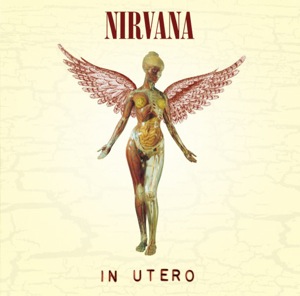
It would be virtually impossible for me to choose between some of the above – especially the last three – albums from 1993 were it not for the fact that Nirvana’s finest and, sadly, final album was also released in the same year as so many strong contenders for the crown. But, on September 21, 1993 – having been recorded by Steve Albini over two weeks in February.

Interesting side note and one fact that I always find interesting is that Steve Albini – known as a producer of independent releases and for his band Big Black – took a flat fee of $100,000 for his work recording and producing In Utero despite suggestions from Nirvana’s management company to take percentage points on record sales. I think, though my recollection may be fuzzy, when Dave Grohl mentioned how much he could’ve made from the album given that the album has shifted over 5 million, Albini said something along the lines of “you pay a plumber for the job when he does it, you don’t then send him a cheque every time your taps work”.

In Utero is a notably harder and rawer sounding album than Nevermind was. As sales for everything out of Seattle took off and media focused its attention on the city’s ‘scene’, the foremost proponents of ‘grunge’ were obviously getting pissed off with it – Pearl Jam’s Vs. is a far punchier and angrier beast than Ten – and Cobain himself was distancing himself from what he saw as the commercial sheen of his group’s second album. For a scene that grew out of the punk movement, it must have seen a necessary step to proving that you weren’t ‘corporate rock sellouts’. Either way, the albums the shift produced were outstanding.

With Albini’s mix seeming to cause concern at Geffen – Kurt would say “The grown-ups don’t like it” – the band themselves started to have doubts and asked Albini to remix it. He refused: “Kurt wanted to make a record that he could slam down on the table and say, ‘Listen, I know this is good, and I know your concerns about it are meaningless, so go with it.’ And I don’t think he felt he had that yet … My problem was that I feared a slippery slope.” With Albini nixing a remix, it would be Scott Litt (known for his work with R.E.M) that would remix and augment a number of the album’s tracks. For all the concern that Geffen’s initial feedback had raised, Litt only worked on two songs – the rest of the album was left as is, save for a little raising of the vocals and sharpening of the bass. They needn’t have fretted: preceded by the single ‘Heart Shaped Box’, In Utero topped the charts (not that this was the band’s chief concern) and received widespread acclaim from critics and their audience.

For me this album is as good as it gets in terms of Nirvana – it felt like they were at the peak of their game. Cobain’s continuing growth as a songwriter now matched with the passion and ‘punk’ leaning of their first record was the perfect combination. Tighter than a duck’s arse thanks to the touring and promotion of Nevermind with Dave Grohl now fully ensconced behind the drums and contributing the guitar riff for ‘Scentless Apprentice’, In Utero feels like fired up answer to any critics that doubted them as a flash in the pan.

Rolling Stone managed to get it right in their review: In Utero is “a lot of things – brilliant, corrosive, enraged and thoughtful, most of them all at once. But more than anything, it’s a triumph of the will.”

Of course, it also manages to capture just how dark and nihilistic Cobain’s lyrics were getting. It’s front-loaded with the blazers – ‘Serve the Servants’, ‘Heart Shaped Box’, ‘Rape Me’ and ‘Dumb’ – but then there’s the harsher side of the album – songs like ‘Milk It’ and ‘Very Ape’ and, finally, ‘All Apologies’: “Everything’s my fault, I take all the blame.” Kurt was coming apart almost by the day and it’s all on here to hear.

Hindsight is though, of course, 20-20 and it’s easy now to listen to Nirvan’s final album and point to the signs. At the time, though, nobody could have known. It was, and still is, ‘just’ a massively engaging and powerful album not a cry for help or suicide note and that’s how it should be remembered.

I’d love to know where the band could have gone from here. The ‘You Know You’re Right’ song from the compilation Nirvana gives promise for an even better sound than In Utero but given Cobain’s state of mind toward the end it’s an unanswerable question – numerous times he talked of, and drafted letters to band members calling for, the dissolution of Nirvana. He was going to work with Michael Stipe on a strings-based sound for an album… he could have done so many things but… well, this isn’t that post. In Utero is the glorious sound of Nirvana doing everything right even if it isn’t the easiest of listens.

*I sincerely doubt it’s that, pervert.


Albums of my years – 1992

Schwing! Party on! Way! Excellent! Oh, my, God Becky, look at her butt…. It’s 1992!

The year that Wayne and Garth hit cinema screens, that Aladdin showed Princess Jasmine a whole new world, that Whitney said she’d always love Kev, Bill Clinton defeated George H.W Bush in the US Presidential elections and Def Leppard asked a very, very important question:

1992 is the year Nirvana toppled Michael Jackson from the top of the chart and ‘grunge’ began its ascendancy in sales and popularity – Nevermind hit the top spot in the US on January 11th. A month and a half later Kurt Cobain would marry Courtney Love on Waikiki Beach in Hawaii with just 8 guests, including Dave Grohl. Cobain wore his pyjamas for the ceremony.

1992 was the year the world was introduced to the be-mulleted turdburger Billy Ray Cyrus and his Achy Breaky Heart, the 9 million people that bought his debut album in its first year have got a lot to answer for.

In May, John Frusciante left the Red Hot Chili Peppers (Rolling Stone digitally removed him from the photo on their upcoming cover feature), having been overwhelmed by the band’s new level of success and becoming a little unhinged… as the band’s world tour got underway he began hearing voices in his head telling him “you won’t make it during the tour, you have to go now.” Already enjoying plenty of drugs, when he returned to California Frusciante’s depression lead to a deep dive into full-on drug addiction that would keep him in its grip until 1998 when, suffering with a lethal oral infection and arms ravaged with abscesses, he’d check into rehab and enter sobriety. However, in 92, that was a long, dark six years away.

Speaking of overindulgence  – 1992, Guns ‘N’ Roses’ ‘November Rain’ clocked into the record books as the longest single to enter the Top 20 at 8 minutes and 57 seconds and its video’s budget of $1.5 million became the most expensive of all time (at that point). Similar indulgence would be applied to the video for ‘Estranged’ (which added another 40 seconds in song length)a year later when a rumoured $4 million was spent on Rose and co – ah the day’s when MTV actually played music videos to the extent that labels were willing to spend that much dosh courting airtime.

They probably needed to placate some fans – at a concert in Montreal in August, opening act Metallica’s James Hetfield was burnt by a pyrotechnics blast, he suffered second and third degree burns to the left half of his body, both arms and left hand, causing them to cancel the second hour of their show. When Guns ‘N’ Roses took the stage Axl Rose (did he ever perform a full concert on time?) decided his voice wasn’t up to it’s usual sound of a cat having its testicles removed without anaesthetic and called it quits for the night. Instead of being relieved at not being asked to “give me some reggae“, the fans were a little pissed off. So they decided a riot was in order, which spilled to the streets with overturned cars, smashed windows, looting  and setting fires.

At the end of August, Kurt Cobain and Courtney Love’s daughter Frances Bean Cobain was born after god knows how much drama and magazine reporting on the couples’ drug use during pregnancy… which, Love being Love, no doubt enjoyed stirring up for the sake of attention.  It meant that child welfare services launched an investigation into their parenting abilities and Frances was removed from her parents’ custody for a short time when she was two weeks old. There’s a real ugly and grim side to the world of celebrity and sometimes the consequences aren’t considered by its actors while they court it… but hindsight is a wonderful thing full of ‘if only’s and ‘why didn’t somebody’s… and there were times when the Courtney Love show seemed of more interest to the press than the music Nirvana made. Perhaps to remind people of the fact that there was more to Cobain than headlines, Geffen kept the momentum going with the release of Incesticide in December – a collection of b-sides, outtakes and demos that’s still better than a lot of the studio albums released in 1992.

Speaking of controversy – presumably having had enough of singing about being ‘Like a Virgin’, Madonna went full on erotic with Erotica in ’92, a concept album about bumping uglies which was accompanied by a ‘book’ of soft porn photos – ‘Sex’. It was an edgy time.

Pearl Jam rounded off a very busy 1992 – which saw Ten find its way into homes across the world, the band touring Europe, demoing songs for their next album and putting on the free ‘Drop in the Park’ concert for 33,000 fans in Seattle – with Eddie Vedder and Mike McCready joining acts including Tom Petty and The Heartbreakers, Neil Young, Eric Clapton, June Carter Cash, Johnny Cash and Tracy Chapman to see Sinéad O’Connor get booed by an audience still angered by her ripping up a picture of Pope John Paul II on SNL – who knew Dylan fans were such devoted Catholics. Oh, yeah – I mean they joined other acts at a tribute concert to mark 30 years of Bob Dylan’s recording career.

Speaking of Bob – in 1992 he released Good As I Been To You. A collection of traditional folk songs and covers that was so well received he’d follow it with another collection of covers the following year…. just wait until he’d release nothing but covers and Christmas songs for decade.

Meanwhile Bush, Built To Spill, The Cardigans, Everclear, Feeder, Silverchair, Stereophonics, Sunny Day Real Estate, Tindersticks and Weezer were all amongst those bands forming in 1992.

Making the most of studio time allocated to recording ‘Would?’ for Cameron Crowe’s ‘Singles’ (also released in 1992) the previous year, Alice in Chains also recorded ‘Rooster’ and all the songs that would end up on February’s acoustic EP – Sap – the songs for which were left mostly acoustic after drummer Sean Kinney dreamed about making just such an EP with that title. I’m not sure basing career decisions on the dreams of a drummer is always the best approach (I heard Ringo dreams of murdering kittens) but Sap is a great addition to anyone’s shelves:

It’s also a much lighter listening experience than their next release of 1992. Arriving in September following the singles ‘Would?’ and ‘Them Bones’, Alice In Chains’ second album Dirt is an undeniable classic of the genre and still gets many a play on my stereo – though it’s an intensely dark and heavy listen in both sound and subject matter as Layne and Cantrell made no bones about drug addiction along with depression, pain, anger, war and death forming the inspiration for lyrics. ‘Sickman’, ‘Junkhead’ and ‘God Smack’ are the obvious contenders, all referencing heroin use while ‘Rooster’

Layne Staley would later come to change his mind on having sung so openly about his drug use –  “I wrote about drugs, and I didn’t think I was being unsafe or careless by writing about them … I didn’t want my fans to think that heroin was cool. But then I’ve had fans come up to me and give me the thumbs up, telling me they’re high. That’s exactly what I didn’t want to happen.” Thankfully, all of these dark and potentially ‘I can’t listen to that’ lyrics were both well crafted and strapped to some fucking awesome music:

Afghan Whigs would released their third album  Congregation in 1992, The Cure gave us Wish and provided DJs the world over with an easy gimmick by playing ‘Friday I’m In Love’ at the end of each working week – though the standout track for me is ‘From the Edge of the Deep Green Sea’ – Manic Street Preachers dropped their debut, Generation Terrorists.

Pantera released one of the decade’s heaviest  – Vulgar Display of Power and Rage Against The Machine declared that, fuck you; they won’t do as you tell ’em on their astounding, genre-bending powerhouse self-titled debut whose iconic cover art continues to find new homes and delight to this day thanks to its sheer force and unbridled passion in the delivery. Though they’d release another two studio albums in their career (not counting covers), nothing would match Rage Against The Machine in terms of immediacy and impact, not quite a breath of fresh air but a kick in the balls with a pair of heavy boots.

On a different end of the sonic spectrum – another 1992 debut came from Tori Amos whose Little Earthquakes was her first ‘solo’ album and featured the great tune ‘Precious Things’ along with eleven other cracking songs.

The Black Crowes got together with producer George Drakoulias to make what could be considered their finest album: The Southern Harmony and Musical CompanionA much bluesier, more maturing sounding album than their debut, their second album was powered to the top of the charts thanks to its four singes and stand out tracks – ‘Remedy’, ‘Sting Me’, ‘Thorn in My Pride’ and ‘Hotel Illness’.

Two other debuts in 1992 came from Stone Temple Pilots with Core and Blind Melon whose self-titled album probably gets more repeated plays than STP’s who never really did it for me to the same degree as others of that scene (though their fifth album Shangri-La Dee Da is an exception to that rule). In Shannon Hoon, Blind Melon had a great frontman and singer. ‘No Rain’ is one thing and may have done so well that Bee Girl graced the cover of the album, Blind Melon, but songs like ‘Tones of Home’ or ‘Change’ are real keepers. Both bands would lose their singers and try and keep going but I don’t think either will ever tap the same vein again in the way in which Alice In Chains have managed to do with William Duvall… but that’s a different blog.

Nearly five years after his last album and three since telling the E Street Band members he wouldn’t be needing their services for a while, Bruce Springsteen emerged with two new albums in 1992 – the first of which, Human Town having been sparked off by three instrumental tracks written by E Street Band member Roy Bittan… who would also produce the album. While needing another song to finish Human Touch, Springsteen wrote another album instead, the superior (of the two) Lucky Town. Released on the same day, the albums… well I’ve written on both Human Touch and Lucky Town already but while they’re not his worst (that still hangs on High Hopes) they’ve not been as well-received as his other albums. As Bruce would later acknowledge that, had it not been for his father he “would have written just happy songs – and I tried it in the early ‘90s and it didn’t work; the public didn’t like it.” Still, while in the recordings for, say, Darkness On The Edge of Town, The River and even Born In The USA there was enough material for a further three or four great albums – if you cull the dross from these two there’s enough for one great album there.

Having chosen not to tour behind Out Of Time REM had gotten straight to work on new songs, including the demos for ‘Drive’, ‘Try Not To Breath’ and  ‘Nightswimming’ which had been recording during that album’s mixing at Prince’s Paisley Park Studios. Automatic For The People is one of those albums that’s been written about so many times and for good reason: it’s a fucking classic. It is chock-a-block with great songs, I don’t think there’s a bad one on it and, given that I don’t think it’s their best, that’s insane. From opener ‘Drive’ through to the closing ‘Find The River’ via the lighter radio-staple ‘The Sidewinder Sleeps Tonite’ (nothing to do with Jamaica, the lyric is “Call me when you try to wake her”), the gorgeous ‘Nightswimming’  and the colossal hit ‘Everybody Hurts’, it’s all gold. While clearly the same band, it stands apart from the sounds of Out Of Time and here I’ll refer to the Rolling Stone review for the album which sums it up suitably: “”This is the members of R.E.M. delving deeper than ever; grown sadder and wiser, the Athens subversives reveal a darker vision that shimmers with new, complex beauty”

Which only leaves my choice for featured album of 1992…

Buffalo Tom – Let Me Come Over

Let’s hop in the DeLorean and set the time circuits for October 2000 – we were all able to go outdoors and meet people, Donald Trump was just a prick who’d tried to get the nomination of the Reform Party and I, still at uni was a regular regular reader of Uncut Magazine. An actual printed music monthly as the internet then was… different. I remember scouring their Unconditionally Guaranteed CD each month for the one or two tracks that will make me sit up and pay attention and inspire greater digging. As a side note I really should do this again as the last time I did I discovered Big Thief and a few more enjoyable tracks.

There’s only one track on the October 2000 CD though that grabbed me: Taillights Fade by Buffalo Tom, a band from Boston who were releasing a career-spanning Best Of just as they kicked off a seven year hiatus.

It meant I picked up Asides From as soon as I could and, having played it through repeatedly without skipping a song, set off rapidly exploring and collecting their back catalogue. Of the now 9 studio albums the band has put out since forming in 1986, their third album, released in 1992, Let Me Come Over is held up by many as their finest hour (well, 51 minutes) and while it’s probably their biggest seller, I doubt it’s all that known. Hell, if I asked you to name me five Boston bands I imagine the list would include Aerosmith, Pixies, Boston (real original name lads), The Cars, Dropkick Murphys or even the Lemonheads or The Mighty Mighty Bosstones before Buffalo Tom (the Buffalo is borrowed from Springfield). And I think that’s a crying shame.

On the back of their first two albums, released in ’88 and ’90, Buffalo Tom had been branded as Dinosaur Jr Jr. Given the use of fuzz in the guitar tones and the fact that the albums were produced by J Mascis himself, it was an easy tag to apply. It wasn’t entirely accurate though as their third album would show. It would also mean that the band – now supported by RCA Records as well Beggars Banquet, would get a second go around in their bid for breakthrough as ears were pricking up whenever alternative rock was played on radios around the world.

With J presumably far too busy now as Dinosaur Jr’s major label push took other and with the band’s songwriting needing a different production approach and less use of the overdrive pedal, Let Me Come Over was helmed by Paul Q. Kolderie and Sean Slade. It was a massive leap forward. The sound on Let Me Come Over is painted with a much more layered approach and subtle brush – there’s a lot less shouting, acoustic guitar overdubs, more intricate compositions that feels like the band working as a piece rather than individual instruments with more mature and insightful lyrics.

http://www.youtube.com/watch?v=oqwdJozfVrM

Pitchfork have said of Buffalo Tom that they “wrote sharply observed conversational lyrics because it was too hard to be obscure.” Perhaps that’s why they were never able to break through – the songs are great; they’re well written, well played and the lyrics are clever and to the point at a time when alternative music was trying to be considerably more obtuse / mysterious in its song meanings and lyrics (hell, Ten didn’t even contain the song lyrics printed in anything resembling legible). It shouldn’t, though, detract from what’s a great set of songs and easily their strongest album.

Songs like ‘Mineral’ and ‘Taillights Fade’ (which it turns out is a favourite of Eddie Vedder who bought Bill Janovitz on stage with Pearl Jam on both nights they played Boston in 2018 much to the delight of fans and Bill to run through the song) are undoubted highlights that show off the band’s improved songwriting – drummer Tom Maginnis (the ‘Tom’ in the band name) points out in Asides From: “we were beginning to find our inspiration as songwriters and a sound of our own as a band”.

But the more straight-ahead rockers on the album like ‘Stymied’, ‘Saving Grace’ and ‘Velvet Roof’ also sound significantly sharper and more focused than on both the band’s previous direction – benefiting both from the less-cluttered production,  and the band members’ improved playing after constant touring.

I read something suggesting that Buffalo Tom were ‘always the bridesmaids’ of the alternative rock movement, having never quite broken through in the way they deserved – Let Me Come Over was probably as close as they’d get but perhaps they just weren’t edgy enough for the musical climate that was brewing at the dawn of the 90s. Regardless, and perhaps even because of their underdog status, Buffalo Tom are one of my favourite bands to this day and Let Me Come Over gets a regular spin on my turntable.

Following a seven year hiatus, Buffalo Tom got back together in 2007 and put out Three Easy Pieces, followed in 2011 by Skins. Only playing select, occasional shows, it’s safe to say the band is semi-retired these days – though they put out their best album since Let Me Come Over in 2018 with Quiet and Peace. Bill Janovitz developed a side-career as a real-estate agent but has put out a couple of fine solo albums and has also written two books on The Rolling Stones. I, and I’m sure other fans, would love it if he were to chronicle his own band too.


Seven!

This one started as a joke, a throwaway comment… but then, I like the idea of a ‘theme’ or ‘write about this’ approach so took a look at seeing what I could put together for the number 7.

Well… staying within this blog’s wheelhouse, there’s ‘Seven Seas of Rhye’ according to Queen and Wonders of the World for Fleetwood Mac, both decent tunes. Perhaps most famously now it apparently takes more than a ‘Seven Nation Army’ to hold back Jack White:

Aside from being ridiculously catchy, ‘Seven Nation Army’ has probably made Jack White more money than anything else he’s done. While their label was initially reluctant to release it as a single in 2003, The White Stripes’ single was moderately successful in the charts (hitting and peaking at, fittingly enough, number 7 here), its usage in about a gazillion sporting events, broadcasts and adverts has netted its writer millions on its way to becoming what’s got to be the second-most recognisable guitar phrase ever (nobody’s gonna top ‘Satisfaction’).

There are also ‘Seven Curses’ and ‘Seven Days’ on Bob Dylan’s The Bootleg Series Volumes 1–3 (now THAT is a great collection of Dylan tunes) but only ‘7 Seconds’ for Youssou N’Dour and Neneh Cherry.

On a more recent note there’s also ‘Seven O’Clock’ one of the standout tracks on the new Pearl Jam Gigaton* and what kind of fan would I be if I didn’t take the opportunity to feature it and it’s glorious lyric ”Sitting Bull and Crazy Horse they forged the north and west, then you got Sitting Bullshit as our sitting President”:

On the subject of Pearl Jam, there’s also 7 Worlds Collide – a musical project of Neil Finn (Crowded House, Split Enz and a raft of great solo albums).  Taking its title from a line in Crowded House’s ‘Distant Sun’, the project bought Finn together with a number of other musicians for a series of shows in support of charities. The group featured contributions from Eddie Vedder, Johnny Marr,  Radiohead’s Ed O’Brien and Phil Selway, Tim Finn and many others – and a record , 7 Worlds Collide: Live at the St. James, was released in 2001 with tracks from a series of 5 shows at the venue and still gets taken off my shelves for a spin or three today. I’ve not checked out the studio album the project – with a pretty different ‘cast’ – put together a few years later but it still warrants checking out given that the set revolves around some of Finn’s strongest tunes along with a few written by his guests at the time:

Now, here’s a thing: I’ve often had a theory that the seventh track on album can often be one of the strongest. It’s not always the case, of course, and will depend on artist etc but my logic is that it’s the key point at which to drop a great tune and keep the listener’s ear into the second half of an album.  With this in mind I took a rummage through my records then realised I could save myself a huge amount of time and use Spotify… duh.

With that in mind, there are loads of albums in which the seventh track is not only bloody strong but ranks among the best on that album. Take ‘Us and Them’! Or ‘Ramble On’… easily one of Led Zep’s greatest with that seamless switch in gears… or the actual title track on Highway 61 Revisited! There’s a wealth of great track sevens and, sticking to the ‘no more than 2 per artist’ rule I’ve oft imposed upon myself on this blog, I put together a playlist of great Track Sevens, enjoy:

*Moving away from Brendan O’Brien’s production sets it in with Binaural and Riot Act in terms of the band’s embrace of different sounds and vibe but I think it’s better than both of those, it’s easily their strongest set in some time, possibly since Yield.

Albums of my Years – 1990

Ah 1990 – the start of the decade to which this blog returns so often in its internet-powered DeLorean.

At the start of 1990 a platform on which many of the decade’s biggest names would appear over the coming years kicked off in January; MTV Unplugged aired for the first time in January, featuring Squeeze.

Billy Idol took a spill on his motorbike in February, breaking a fair few of his bones. It meant that the major role Oliver Stone had in mind for him in ‘The Doors’ was reduced to a bit part and, in a very curious twist of fate, the role of T-1000 in the upcoming ‘Terminator 2: Judgment Day’ had to be recast entirely having originally been written for him. That would have been a very different film.

On March 16th, Mother Love Bone singer Andrew Wood was found in a comatose state by his girlfriend Xana La Fuente. Having struggled with a drug addiction for some time previous, he’d overdosed on heroin. He was placed on life support in hospital, however the haemorrhage aneurysm he’d suffered meant that he’d lost all brain function. After friends and loved ones had said their farewells to one of the Seattle music scene’s beloved and promising figures, his life support was switched off and he passed on March 19th. Mother Love Bone’s debut album Apple would be released in July.

In April a promising band from Aberdeen, Washington got together with a producer called Butch Vig in between tour stops to record a few tracks for their second album. Nirvana were still signed to Sub Pop but were already looking to make changes. After recording a few tracks with Vig, Cobain and Noveselic weren’t thrilled with either their label or drummer. Very soon Chad Channing would leave Nirvana and demos from the session in Madison would be landing on the desks of keen major labels. Melvins front man (and general knob head) Buzz Osborne introduced Nirvana to Dave Grohl – probably because he wanted his own drummer back as Dale Crover had been sitting-in as the band toured with Sonic Youth. By the end of 1990 Nirvana had a new drummer in Dave Grohl and were signed to DGC Records following the advise of Kim Gordon and Soundgarden manager Susan Silver (hence; “forever in debt to your priceless advice”). They’d give Butch Vig a call again in 1991…

In August, the Alpine Valley Music Theatre welcomed all-star encore jam session with Stevie Ray Vaughan and members of Eric Clapton’s touring entourage. As there is only one road in and out of the venue, the band took a helicopter on to Midway International Airport. However, having taken off in foggy conditions with limited visibility, the helicopter crashed into a nearby ski hill. Pilot Jeff Brown, agent Bobby Brooks, SRV’s bodyguard Nigel Brown,tour manager Colin Smythe and Stevie Ray Vaughan were all killed. Vaughan was just 35.

Mother Love Bone guitarist Stone Gossard, devastated by the loss of Wood, had spent his time following Wood’s death writing significantly harder-edged songs. He got together with another guitarist for a couple of jams and it was Mike McCready who suggested Stone give his former band mate Jeff Ament a call to get involved with the music they were putting together. The then-trio put together a five-song tape to use in recruiting both a drummer and singer. They sent the tape to Jack Irons, the former Red Hot Chili Peppers drummer, to see if he’d be interested in getting behind the drums for the new band. Irons had just formed a new band called Eleven and passed but, at their request, said he’d share the tape with any singers he knew that might be suitable. He knew a dude called Eddie Vedder….  Vedder listened to the tape before heading out for a surf where inspiration struck: he  then recorded the vocals to three of the songs (“Alive”, “Once”, and “Footsteps”) as part of what became known as the Momma-Son trilogy. He sent the tape back and within a week Vedder was part of the band. Mookie Blaylock – as the band was then called – played their first gig at Seattle’s Off Ramp on October 22nd 1990.

Soundgarden singer Chris Cornell, who had been roommates with Andrew Wood, started writing a few songs in tribute to his friend as he headed out on tour in Europe a few days after his passing. As the music was outside of Soundgarden’s wheelhouse, he approached Ament and Gossard with the idea of recording the two songs and putting out a single. Rounding out the lineup with Mike McCready and Soundgarden’s Matt Cameron, Temple of the Dog was formed and the idea of a single was put aside for an EP which became an album recorded in 15 days. It was the first album to which Eddie Vedder would contribute – during the recording of ‘Hunger Strike’, Cornell was having difficulty putting the vocal parts in place during a practice so Vedder (having just flown up from San Diego to ‘audition’ for Ament and Gossard) stepped up and, according to Cornell; “sang half of that song not even knowing that I’d wanted the part to be there and he sang it exactly the way I was thinking about doing it, just instinctively.”

Along with Pearl Jam and Temple of the Dog, 7 Year Bitch, Blind Melon, Tool, Tortoise, Truly and The Verve all formed in 1990.

So what about album releases in 1990? Buffalo Tom’s second album Birdbrain, again with J Mascis assisting in production, dropped in ’90 as did Jane’s Addiction’s second album, Ritual de lo Habitual, both of which stocked with great tunes though only one contained a track about shoplifting that would be played to death despite it being one of the album’s weakest songs.

Screaming Trees singer Mark Lanegan also released his debut solo album in 1990 – The Winding Sheet marked a real move away from the sound of Screaming Tress and, while not his finest, is well worth a listen. There was also a debut from The Breeders – a band started by Pixies bass player Kim Deal as a response to her growing lack of fulfilment in that band. Pod was made for a tiny budget and recorded in something daft like ten days but went down a storm, with Kurt Cobain often citing it as amongst his favourite albums.

Meanwhile, in a genre that seemed a thousand miles away a band that would later come to curse the advent of the Seattle Sound*, The Black Crowes released their storming blues-rock, hard-southern-rock first album Shake Your Money Maker. Not gonna lie; I like this one a lot, it’s an unabashed blast of the good stuff from start to finish that always goes down well.

Speaking of that scene which would become so dominant in the next couple of years, Alice in Chains got a jump start and released Facelift, their first album, in 1990. I mean, just take a look at some of the tracks on it – ‘We Die Young’, ‘Man in the Box’, ‘Sea of Sorrow’… ‘Bleed the Freak’, ‘Love, Hate, Love’…… it’s an absolute benchmark of an album that should be included in all kinds of lists and still is. It was the first ‘grunge’ album to go reach Gold status (in September ’91) though its sales would soon be eclipsed by other bands of that scene, Facelift remains a great album.

Across the Atlantic, another debut was released in 1990; the first and only album from The La’s; The La’s. The recording, release and end of the band’s career is a hell of story that’s worth it’s own post alone one day but their sole album remains a classic some thirty years on and I still remember feeling gobsmacked standing in the crowd at Wembley Arena in 2000 as Eddie Vedder started pontificating on it from the stage before breaking into a cover of ‘Timeless Melody’:

Not just a year of great first albums, 1990 saw the final album from The Replacements, All Shook Down – a great group of tunes that Paul Westerberg had originally intended to be for a solo album before his management persuaded him otherwise – more on that can be found here.

Having completed work on The Breeders’ Pod in England- Kim Deal headed back to the US and joined the rest of the band in LA as Pixies recorded their third album – Bossanova, released in August of 1990.  An absolute classic, Bossanova is a great album and contains a wealth of great tunes like ‘Velouria’, ‘Dig for Fire’, ‘Allison’ and is a regular in my car to this day.

Again, it’s an all-time favourite of mine but it was released in a year that was already beginning to feature some of those albums I’d mark as such, especially…

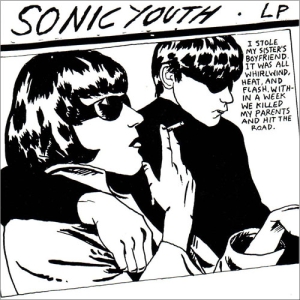
Sonic Youth – Goo

At some point in my 20s I’d reconnected with a friend I’d worked with before who had then gotten a job in a record shop (well, cds). He was in a band and I gravitated toward the scene, we’d all hang out, get small and absorb music and go to band practice etc…

At some point I needed a new place to live and ended up moving into this guy’s flat for a while. It was above a bakery which meant that it was like an oven in the summer and, at night, often impossible to sleep because the threshing machine beneath my room would kick off and clatter into the early hours…. heady days. It was there I discovered Sonic Youth and Goo. I still distinctly remember sitting there as my friend queued up ‘Tunic (song for Karen)’ for the first time. I may have been a little… baked, I can’t recall for sure but what I do remember is being hypnotised by it and very quickly becoming obsessed with it.

Released in June 1990, Goo is Sonic Youth’s sixth album and their first for DGC. In an attempt to test the humour of their new label they gave the album the working title ‘Blowjob?’ – I doubt there’d be so many t-shirts featuring its iconic album art (created by Raymond Pettibon) if they’d pushed too hard on that.

Aside from my own love of the band, Goo is apparently responsible for Placebo. Brian Molko has said that ‘Kool Thing’ was the first Sonic Youth song he heard and, were it not for Sonic Youth, he wouldn’t have started his own band. ‘Kool Thing’ is a delicious piss-take of a song; Kim Gordon had interviewed LL Cool J the previous year for ‘Spin’ magazine, she was a big fan but found his lack of interest in anything other than himself and his grossly misogynistic views appalling. ‘Kool Thing’ is both a send up of his attitude (Chuck D providing the seemingly disinterested responses) and her left-wing politics.

The exposure of ‘Kool Thing’ and a lot of press helped Goo shift a massive amount of records for Sonic Youth – by December it had shifted 200,000 units, much more than their new label had hoped for – and, as their most accessible (even to date I think this still holds) garnered a huge amount of positive press. Rolling Stone’s review got it pretty spot on in, if a little daft in its phrasing, referring to it as a “brilliant, extended essay in refined primitivism that deftly reconciles rock’s structural conventions with the band’s twin passions for violent tonal elasticity and garage-punk holocaust”.

1990 was the perfect time for Goo – this thing called ‘grunge’ was started to arrive on the scene, people were getting fecked off with the likes of Guns ‘N’ Roses and big stadium ‘rawk’. Hairspray bands were dying – Jon Bon Jovi was a year away from a haircut – and while punk hadn’t ‘broke’ just yet, it was about to; Goo was released at a time when the audience for its music was ripening. They and contemporaries like Dinosaur Jr had put in the groundwork for years before building up their own audience through hard work and harder touring and would now be championed by bands like Nirvana and Pearl Jam, granting their music an even greater level of exposure to an audience hungry for this new alternative (even if they were already five albums in to a stellar career).

For me, the discovery of Sonic Youth’s Goo came along at a time when I was wide open for music and, in my mid-20s, at my most receptive state for it. These were heady, carefree days and I could dive headlong into a love affair with a new-to-me band like Sonic Youth, which is what Goo made me do. This album helped me discover a band that ranks among my favourites and I couldn’t even put a conservative estimate on the number of times I may have listened to it. Daydream Nation is undoubtedly their finest but Goo is both a very close second and a personal favourite.


*In a recent interview, one of the brothers Robinson revealed that they hated everything out of this scene as they felt that the grunge and Seattle inspired alternative shift in music robbed them of greater success they felt due.

Continuing…

WordPress has conveniently pointed out that Saturday was the 8th Anniversary of my first post on this blog.

For that post I looked at a couple of things beginning with Z. I’m not about to go through the whole alphabet – William over at a1000mistakes has done that and I don’t think I could to the same – so let’s carry on going backwards instead and go for the 18th  (8 back from 26) letter of the alphabet: R

R is for Radiohead, R.E.M, The Replacements and Rollings Stones all of whom feature to varying degrees of heavy in my record collection as well as on this blog. It’s also for Rogue Wave and Rilo Kiley who formed part of that early-2000s alt/indie revival that I so enjoyed and occupy a good few spaces on the shelves alongside other ‘R’ artists Damien Rice and some Chili Peppers of the Red Hot variety (I also caught these guys live back in 2001), The Raconteurs, Refused, Rage Against the Machine and one of my favourite singers ever, Otis Redding.. so I’ve put together a quick ‘R’ playlist featuring a couple of my favourites from the above. Sticking to no more than two per artist proved tricky for some but the trickiest bit was trying to get it to flow when the only thing some of these have in common is the letter R. This proved impossible so this is in purely alphabetical:

It’s also for Rainbow – not as in the kids TV show with Geoffrey, Bungle, George and Zippy but as in the band Ritchie Blackmore formed after Deep Purple’s shift in sound didn’t agree with him and is perhaps suitably best known for the belter ‘Since You’ve Been Gone’ which features singer Graham Bonnet and one of rock’s ultimate drummers, Cozy Powell. It seems like I must’ve heard a thousand times as a kid and still enjoy, so:

R is also for Rearviewmirror, one of my favourite Pearl Jam songs and any opportunity to put a little Pearl Jam in a post is a welcome one*:

Also neatly slotting under this one is Romania, which is almost a blog unto itself but as we’re covering R it seems like an opportunity for a roundup. As mentioned in the Out of Europe series (which I need to get back to know those cock weasels pulled the trigger), it’s a country to which I owe so much and have a huge amount of love for despite its contradictions. I’ve been trying to keep my ear in for Romanian music and I’ve got an ongoing playlist on Spotify which I’ll also embed below, should you be so inclined.


I’ve also been able to up my game since starting this blog in terms of finding and reading more fiction from Romanian authors, so much so that I can even share five recommended Romanian reads with you:

Wasted Morning – Gabriela Adameșteanu: this one slots into my Top Ten of all time

For Two Thousand Years – Mihail Sebastian: also very much worth checking out is his Journal 1935-1944 which is a real eye-opener in terms of Romania’s treatment of the Jews during WW2 and will make you think differently about the next author too.

Youth Without Youth – Mircea Eliade: the shelves in our library here have many a story by Eliade on them in both English and Romanian,  there’s a plethora of short novellas and volumes of short stories as Eliade (as much of a dick as he was to his friend) was a prolific writer and his work is often surreal and deals with a lot of spiritual stuff. This is my favourite and a full length novel that was adapted into a film by Francis Ford Coppola in 2007.

Forest of the Hanged – Liviu Rebreanu: I’ve read very few WW1 novels and this is a great one which really takes off and develops into an exploration on the themes of identity, faith and, of course, how ordinary people change in the face of the extraordinary.

The Book of Mirrors –  EO Chirovici: a much more recent (2017) effort that caused a real stir as this was Chirovici’s first novel written in English and was grabbed by publishers in 23 countries in 2015, landing him a likely seven-figure sum just in publishing deals way ahead of its actual publication. It’s also very very good.

Since the start of the new millennium, Romania has also been experiencing something of a revival in terms of it’s film industry, with some really great films picking up acclaim and awards throughout the world. I’m nowhere near as up to speed with these as I’d like to be but, if you’re looking for a good film and fancy seeing what Romania has to offer in this arena you’d do well to check out these.

I think that’s R covered.

*Gigaton review coming just as soon as I can express my thoughts coherently.

Spinning Some More New

I’m still here! You’re still there, I hope. Despite being busier than a contagious disease expert I have been listening to music new and old. The old as part of my now way-behind schedule Albums of my Years series and the new because, well, who doesn’t like hearing new music?

So, as I try and finish the 1988 post in another tab, here’s some of the new tunes I’ve been spinning and streaming and Alexa…ing of late:


The National- Never Tear Us Apart

It’s safe to say that I was underwhelmed by last year’s much-hyped album from The National. Nothing hooked me in the same manner as their previous work but after x albums that’s not too surprising. This however…. well I really dig it. A cover of INXS’ most 80s of ballads for a bushfire relief album and shows (along with their cracking cover of Bruce’s ‘Mansion on the Hill’ a few years back) the band have a way with a cover.

Biffy Clyro – Instant History

My wife digs this band more than me but I think that’s more down to the singer… I like em though and have caught em live at least once. I saw a tweet that summed up my response to their slightly-new direction that went something like “I’m not sure about this new Biffy Clyro song.. THIS IS THE SOUND THAT WE MAKE!!!” It’s a real earworm that even my son is hooked on.

Bush – Flowers On A Grave

Obvious euphemism aside, I used to really like a bit of Bush back in the day. Their first three albums had some great tunes on but Golden State, their fourth, felt like the end of a road. Turns out they got back together in 2010 and have released a few albums since that I’ll earmark for future listening. This is their latest from an upcoming 8th album.

Pearl Jam – Dance of the Clairvoyants AND Superblood Wolfmoon

It gives me so much pleasure to put Pearl Jam in a ‘spinning the new’ post once let alone a twofer and say that there’s a new Pearl Jam album out in just a couple of weeks now. It’s been so long and the waiting drove me mad… It took a minute or two for me to love this song, it didn’t hit immediately. My first reaction was “wow that’s.. different.” But each listen revealed more: that bass line, Vedder’s vocal the most committed he’s sounded in ages and it’s got a real groove to it. New producer, new vibe…  the other new song release from the album is a little closer to the band’s ‘expected’ sound but still has a pretty different vibe (and a killer solo):

I can’t wait for Gigaton. Thankfully I don’t have to wait for long.

Musical words…. A Top Ten Music Book List

Alrighty, lets see about combing the two usual focuses of this blog into one post –  music and books, books about music.

A good book about music or musicians isn’t as common as you’d think. There are shit loads of duffers out there – poorly researched and badly written fluff pieces. Some musicians who you’d expect a really good book out of tend to spend more time talking about their model railway collection than about the making of After The Gold Rush and some make it a little too obvious that they have an ulterior motive in a book release other than just a memoir – Kim Gordon’s Girl in a Band, for example.

But, there are some bloody belters out there and there’s a reason that a good chunk of my library is given over to a ‘music’ section. I’m sticking close to this blog’s wheelhouse here, obviously, but honourable mentions should go to The Rest is Noise: Listening to the Twentieth Century by Alex Ross and Peter Doggett’s There’s a Riot Going on: Revolutionaries, Rock Stars, and the Rise and Fall of 60s Counter-culture.

In no particular order, then, are my ten favourite music biogs / auto-biogs / books etc…

Pearl Jam – Twenty

Put out as part of the celebrations surrounding the band’s twentieth anniversary – the clue is in the title – which included a Cameron Crowe helmed documentary, CD, live album, two-day festival and short tour… Pearl Jam Twenty is a year-by-year oral history of the band’s career. Stuffed to the bindings with imagery and photos, this is as intimate and candid as you’ll get for Pearl Jam, notoriously shy of publicity and exceedingly unlikely to offer anything resembling an official biography. There’s a wealth of humour and details in here given the format and it’s fuelled many a post on this blog and every time I open it up to refresh my memory I end up absorbed again.

Keith Richards – Life

Did you know Mick Jagger started an autobiography? Sometime in the 80’s – presumably during the lull in Stones activity, he got quite far with his book but promptly forgot about it – when he was later approached by a publisher he could neither remember writing it or let it be published. Somehow, Keith Richards remembered even more and not only finished but published his autobiography, Life. Could have been something to do with the publisher giving an advance of $7m based on a short extract, but Life is an essential read for even a minor Stones fan like me. Yes there’s the thrills and vicarious spirit of rock ‘n’ roll excess – but it’s his honesty and unflinching and everlasting love for music that really comes across, you understand how he became known as the human riff. Worth following up with the Netflix doc on Keith too if you’re in the mood.

Mark Yarm – Everybody Loves Our Town: An Oral History of Grunge

This book is, frankly, immense. In its scope, its telling and impact. Just reading it you can feel how much work and love has gone into this telling of the Seattle music scene – from its origins to its current status. The highs (both natural and chemical) and lows – some of which are pretty fucking dark and were a real discovery for me – are all covered in a forthright manner that manages to remain factual and detailed while also a clearly affectionate chronicle, sometimes gossipy, often hilarious and regularly revealing. It can’t be easy to build a narrative from so many and often conflicting memories (The Melvins’ Buzz Osborne comes across as a bit of a contrary prick) but Yarm has created what can only be described as the Bible of the scene here.

Bob Dylan – Chronicles Vol. One

“I’d been on an eighteen month tour with Tom Petty and The Heartbreakers. It would be my last. I had no connection to any kind of inspiration. Whatever was there to begin with had all vanished and shrunk. Tom was at the top of his game and I was at the bottom of mine.”

Wait, what? Nobody was expecting it, but Bob Dylan’s Chronicles Volume One appeared like a revelatory bolt from the blue in 2004 after he got ‘carried away’ writing linear notes for planned reissues of Bob DylanNew Morning and Oh Mercy. The memoir – apparently the first of three (who know when) – is a detailed and candid insight into Dylan’s life, thinking and writing at the time of those three albums. The dejection and lack of direction he felt for his career while on tour with Petty is pre- Oh Mercy which, it turns out, came about thanks to Bono, an obscure singer with a little-known Irish band called U2* who, for some reason, Dylan showed the songs he’d started putting together and, while old Bob thought about burning them, suggested he call Daniel Lanois instead…

There’s a lot to discover in these three ‘vignettes’ considering the brevity of the periods covered and it’s a vital read for any Dylan fan. For a less personal and fuller Dylan read, Howard Sounes’ Down The Highway does a comprehensive and enjoyable job of telling Dylan’s story while keeping clear of the myth(s).

Speaking of stripping away the myth..

Peter Guralnick – Last Train to Memphis: The Rise of AND Careless Love: The Unmaking of Elvis Presley 

This isn’t a double-header, I’m not sneaking two books into one slot, both deserve a spot on this list but as you just can’t read one and not the other I’ll cover both in one go. I bought these books a long time before I got to reading them. I’m not a big fan of Elvis, I can quite quickly name a Top Ten but I don’t go deep with the King. These books do and I’d mark them as essential.

Last Train to Memphis does a magnificent job in detailing – and I mean detailing – the rise of Elvis Presley right up to the point where he’s shipped out to Germany in 1958. Where he’s from, who he was as a person, his love for music, getting started, this book is rich in detail and interview and a real eye-opener. Guralnick finds the truth behind what has become a much retold and embellished story that’s become so familiar that the truth of a poor young truck driver who loved nothing above his mother and music and came out of nowhere to become the biggest thing the world had seen is far too often forgotten. Take, as an example, the words of Marion Keisker, the secretary at Sun records who recognised something special in the polite teenager’s voice, words on the enigma surrounding Elvis: “He was like a mirror in a way: whatever you were looking for, you were going to find in him. It was not in him to say anything malicious. He had all the intricacy of the very simple.”

The degree to which Last Train to Memphis manages to deliver the real Elvis Presley makes Careless Love all the more affecting. Once again – the demise of Elvis’ career and the man himself are too often mistold and the stock of parody: fat Elvis dying on the throne trying to take a dump surrounded by hamburgers and tv sets….

Careless Love gets underway with Elvis’ time in the army in ’58 and chronicles the gradual unravelling of the dream that had burnt so bright in Last Train To Memphis and details in disturbing detail the complex playing-out of Elvis’s relationship with his plotting, money-grabbing and manipulative manager, Colonel Tom Parker. The lying Dutchman’s desperate attempts to stop Elvis returning to the road after his comeback special (he’d have less control of him on the road), his continual pushing of terrible movie after terrible movie, the appalling contract and commission he took which fuelled his greed…. it wasn’t drugs that did for Elvis if you ask me. Written with a grace and affection for its subject, Careless Love is the real deal, a true insight into the end of one of the biggest and misunderstood figures of the 20th century.

While neither made me run out and buy anything beyond the couple of compilations that sit on my shelves, both of these books changed how I thought about Elvis.

Oddly, looking back as I write this, it’s not an Elvis song that comes to mind here:

George Harrison – I, Me, Mine

My love for this book isn’t so much down to what’s revealed or any ‘shocking truths’ – this aren’t necessary really. Though apparently John Lennon was pissed off (it came out a few months before he was murdered) and claimed to be hurt as the book doesn’t refer to Lennon as being a musical influence. What I love is the warmth and feel of I, Me, Mine. My version is that which was published in 2002, not long after Harrison had passed, with a new forward from his wife Olivia.  The autobiography itself isn’t essentially long or detailed but it’s everything else about this book I love – the bounty of photos and the song lyrics- copies of handwritten lyrics included – with details on the writing of each: “‘What is Life’ was written for Billy Preston in 1969. I wrote it very quickly, fifteen minutes or half an hour maybe…. it seemed too difficult to go in there and say ‘Hey I wrote this catch pop sing; while Billy was playing his funky stuff. I did it myself later on All Things Must Pass.”


Aerosmith – Walk This Way

My first taste of musical bios is a pretty extreme one. I bought this when it came out (first edition hardback still sitting on my shelves looking rather well read) and I was really starting to get into Aerosmith. Written by Stephen Davis and the band, Walk This Way was the first official telling of the Aerosmith story, from the band members’ origins and the formation of the group through to its early rise and debauchery to its drug-fuelled collapse and nadir before being reborn via sobriety in the mid-80s – much is given over to this process and the resentment Tyler felt at the time, Perry being involved in the intervention while still using etc and the troubles that nearly caused another break up prior to Nine Lives.

Since publication three of members have written their own memoirs (oddly I’ve only read Steven Tyler’s) and have suggested that Walk This Way is perhaps a little… sanitised and glosses over a few things. Odd considering just how shocking some of what this covers …

Mark Blake – Pigs Might Fly: The Inside Story of Pink Floyd

I mentioned this one recently and I still believe it deserves a place in my Top 10. While there’s never likely to be as complete and comprehensive a Pink Floyd autobiography as desired – Nick Mason’s Inside Out comes close but is obviously his own story – as a) Gilmour and Waters don’t really get on and b) Syd Barrett and Richard Wright are no longer with us… Pigs Might Fly is a thoroughly detailed and researched ‘as close as you’ll ever get’.

Bruce Springsteen – Born To Run

Of course this is bloody well going to be on here. This is pretty much top of the list and sets a new benchmark for how autobiographies should be written. I wasn’t expecting this one to be written so well or so candidly. In my original review for this, which was extensive so I won’t go overboard here, I said: It is an absolute blast to read. Written completely solo and without the assistance of a ghost-writer, the voice is clearly that of Bruce – at times cuttingly honest, at others poetic and then written as though delivering a sermon from the stage on the LIFE SAVING POWERS OF ROCK AND ROLL!!! (yes, the caps-lock button is Bruce’s friend). Contained within its five hundred or so pages is the story of how a young man from a poor, working class family in the town of Freehold, New Jersey, fell in love with music, got a guitar, learned how to make it talk, refined his craft and cracked the code. It’s fascinating and joyous stuff.


*If there isn’t a tribute band called ‘Not You Too’ then I’ll bloody well start one.

Least to Most: Pearl Jam – Let the Records Play

Here we are at the end of another (my third to date) Least to Most series.

What’s been learned:

That when I tackle this series on an album by album basis this is a pretty consuming mission when combined with that other thing called ‘life’. And yet I already find myself looking at my shelves and wondering who’s next (it’s not Bob Dylan, that’s for sure).

Pearl Jam are fucking awesome. But then that shouldn’t be a lesson to anyone.

For my money, these blokes were at their finest between 1993-1998.

I still think they have at least one great album in them despite recent evidence.

For those playing along at home, the Least to Most favourite list broke down like this:

10. Backspacer
9. Binaural
8. Lightning Bolt
7. Riot Act
6. Pearl Jam
5. Ten
4. Yield
3. No Code
2. Vs.
1. Vitalogy

That’s today. Well, that’s how I eventually settled the list (after five drafts). Ask me again in a few months that might change. Ask me again when the next studio album eventually drops and it may be all change again.

For my money, if you want a good single, cover-all bases Pearl Jam album you’ll struggle with just one disc but if you get your hands on the Vs. & Vitalogy re-release box you’ll get two of their best and Live at the Orhpeum Theatre which is a fierce, powerful live disc that captured the band live between the two albums and is packed with cuts from Ten and a few rarities too.

Still, for more of what I’d recommend, and as a tip of the hat to Jim over at Music Enthusiast whose playlists are the stuff of curator envy, here’s my Pearl Jam ‘essentials’ playlist wherein I try and cherry pick the best of the band’s ten studio (and one rarities) albums and still end up with sixty tunes. Play in order or play in random but, hopefully, enjoy:

Least to Most: Pearl Jam – Vitalogy

“This song is about… uh… people who don’t have taste but they like us anyway. It’s called ‘Not For You'”

If Vs. was the sound of Pearl Jam taking control, Vitalogy, released just a year later, is the sound of the band giving a big middle finger to anyone who hand’t got the message yet. Rougher, rawer and more eclectic than anything they’d either released to date or since with songs born out of jam sessions as the communication between band members started to falter, with “eighty percent of the songs were written 20 minutes before they were recorded” according to Stone Gossard. It’s stripped down, it’s lean and uncompromising and marks the first time Pearl Jam would really start to experiment. It’s rife with hostility and tension aimed both outward and inward as, three albums in, cracks began to show within relationships to the point that, while Gossard thought of quitting, drummer Dave Abbruzzese would actually be let go as sessions wound down.

Again – it shouldn’t be good. It shouldn’t be cohesive but it’s not only good: it’s their finest album yet – in my opinion and this is my Least to Most after all. As 1993 tumbled into 1994, Pearl Jam were hitting their songwriting peak and the songs on Vitalogy bristle with an energy that wouldn’t be matched again for a while and certainly not with the level of consistency found here.

The songs here form the template for all Pearl Jam songs to come – there’s the balls-out angry and heavy, there’s the flexing of creative / experimental muscle, the achingly poignant and the perfect mid-tempo. All summised in one rough-hewn gem of an album.

So – you want the balls-out angry and fast? Take that opening volley of songs:’Last Exit’, ‘Spin the Black Circle’ and ‘Not For You’:

As middle fingers to the label go, Pearl Jam chose ‘Spin the Black Circle’, much to Epic’s dismay, as the first single from Vitalogy. “See this needle, Oh see my hand, Drop, drop, dropping it down, oh so gently, here it comes, touch the flame, turn me up, won’t turn you away” is an homage to vinyl and was supposed to sound completely different – it’s a Stone Gossard riff that Vedder first heard at the wrong pitch: “I had come up with something in my truck with the tape player in my hand, but then I realized it was playing at a superhigh pitch. I turned it down, and it was really slow. I was like ‘Oh, fuck.”

‘Not for You’, meanwhile is as openly blunt and angry about the co-opting of the alternative scene as the band would be – save for the time Jeff Ament spotted Marc Jacobs and Anna Sui (who had released a ‘grunge’ line of clothes) and “I went down and did a fake fashion twirl and went ‘Hey Marc, what do you think of this for the next line?’ ” It’s hard to comprehend now in a way but I guess when Ricky Martin is cast on General Hospital as a clone of you – you’re gonna get pissed off. It also burns through ‘Corduroy’ (perfect mid-tempo) with it’s line “they can buy but can’t put on my clothes”:

Both ‘Not for You’ and ‘Corduroy’ are sole Vedder compositions. Vitalogy – dipping back to those inner band tensions mentioned – marked the first Pearl Jam album where Vedder’s songs would by far outweigh those of the other members. Half of the songs here (you can’t really count ‘Aye Davanita’ or ‘Hey Foxymophandlemama, That’s Me’ as songs) are marked as Vedder / Vedder on the lyrics / music front.

Vedder’s “it wasn’t a hostile takeover” caused issues in the group. Stone Gossard was said to have considered leaving as he was no longer the guy who made the final decisions on tunes and vacated his role as mediator within the group (something which Dave Abbruzzese has credited to his departure). With hindsight Jeff Ament has stated that it was simply a case that Vedder was working harder at writing songs than the rest of the band – McCready would enter rehab to receive treatment for alcohol and cocaine abuse during sessions too. “I still don’t know if he was consciously exerting wanting to take over the band or take the reins or the the power. I think it was more like, ‘Hey, man, I’ve got seven complete songs here. What do you guys have?’ and we only had little riffs or two-parter things.”

Of those Vedder / Vedder songs are the achingly poignant Immortality and, of course, one of the band’s most well known:

I’ve probably heard this song live on the numerous shows I have in my iTunes. These days when it’s played live it’s not really the same song but the original is still an out and out classic especially considering its troubled and lengthy gestation as a Pearl Jam studio song. Vedder, fearing it was too raw and direct in terms of emotion, was never happy with how it had been recorded (the band had first tried getting it on tape for Vs.) and, at one point, came close to giving it to Chrissie Hynde to record instead. As it is he changed the final mix for ‘Betterman’ right at the last.

The creative: perhaps too wary of releasing quite so many obviously strong and high-pedigree songs on one album, Pearl Jam used Vitalogy to drop some of their, frankly, weirdest shit to date too. So, following up the beautiful Ament / Vedder collab, ‘Nothingman’…

… is ‘Pry To’

While what could have been a one-two-punch knockout of ‘Betterman’ and ‘Immortality’ is softened by the slotting of ‘Aye Davanita’ between them – it’s “just screwing around” with chanted non-lyrics that O’Brien looped. Then again, there’s something charming about ‘Bugs’ which Vedder, suffering from poison at the time, plays an off-tune accordion.

Then again, perhaps I’m overthinking it. Maybe they really just did like those interludes. But let’s look at it this way: if Vitalogy had been stripped of those and released as a ten track album comprising of songs like ‘Corduroy’, ‘Betterman’, ‘Nothingman’, ‘Last Exit’, ‘Spin the Black Circle’ etc… even with the lean produciton behind them, there’d have been no real way for them to get away from it or say no so easily.

As it is, glorious rough-hewn warts and all, Vitalogy is my favourite Pearl Jam album.

Least to Most: Pearl Jam – VS

It wasn’t intended or planned but  – Pearl Jam’s Vs. was actually released 25 years ago today on October 19th, 1993. Crikey.

Back in 1993 in those wonderful days when a certain orange idiot was merely an occasional media presence and music news came periodically rather than by-the-second with inside access and selfies and… yep, I’m coming up on a birthday too so am feeling a sense of reminisce for those days of my youth when this was what new music sounded like.

To say I love Vs. would be a solid bet. It’s at number 2 on this list, today. Tomorrow it could be number 1. So here are lot of reasons why I think Vs is just the mutt’s nuts.

It was huge but in the lexicon of Pearl Jam’s discography and longevity is now something of a forgotten album, falling between the cracks between Ten and the shift in gears and stepping back from the spotlight that Vitalogy (yes, spoiler alert, more on which to follow) and wars with Ticketmaster would herald. At the time of release it set a new record for most copies of an album sold in its first week (950,378) and would hold that for five years*.

Dave Abbruzzesse is all over this album. Dave Abbruzzesse was an odd fit in terms of personality but an unimpeachable drummer for Pearl Jam. At a time when Eddie was struggling with the onslaught of fame and trying to step back and the band seemed at their most painfully angsty/earnest, Dave Abbruzzesse just wanted to enjoy the success. A Rolling Stone profile written that year, the drummer would point out that “when I was younger and I heard about a band selling a million records, I thought the band would get together and jump up and down for at least a minute,” he says with a wide-open East Texas laugh, “and just go, ‘Wow, I can’t believe it.’ But it doesn’t happen that way [in this band]. Me, I flip out. I jump up and down by myself.”

At the time this wasn’t where messrs Vedder, Ament, Gossard and McCready were. Well, definitely no Ed Vedd who was painfully serious at the time. It’s hard to judge, of course, because I’ve never written an album that sells millions of copies within a year, but I think the judgement of peers for doing so (Fugazi, Cobain** etc) perhaps made the band afraid of lightening up and desperate to appear more serious. For my money, Abbruzzesse’s inability to not smile and appear an amiable chap in band photos stopped the band disappearing up it’s own bum at the time.

As a drummer he was an immense tour de force and his drumming is what pushes Vs. along and is missing from these songs when performed live. Oh, and he also wrote the music for ‘Go’:

Go is about Eddie’s truck – well, apparently. While it sounds like it’s probably about something more serious, the lyrics were apparently written about Vedder’s truck – the band were making serious money but not spending or living like ‘rock stars’ – which he would often sleep in an effort to stay feeling ‘hungry’ and would often stall and threaten to quit.

Vs. is one of their most on target / consistent albums to date. The aforementioned Rolling Stone article, written before the album’s name was decided, stated that “Pearl Jam is the band’s turf statement, a personal declaration of the importance of music over idolatry.” Vs feels like a mission statement. It’s the most straight-ahead and consistent of tone album in their catalogue, rivaled, oddly enough, only by Pearl Jam. From the opener ‘Go’ via ‘Animal’, ‘Blood’ and ‘Leash’ to the closing ‘Inidfference’, there’s little deviance in style and minimal experimentation, a lot of fierce rockers and aggression thrown in. And every song is strong.

There’s barely a break in pace between the opening salvo of ‘Go’ and ‘Animal’ – save for the acoustic driven ‘Daughter’ which is hardly a slow song, and ‘Elderly Woman Behind the Counter In A Small Town’ (the very title of which is an outright joke at the band’s own habit of one-word song titles) – which makes ‘Indifference’ so much more of a powerful closer.

It was the beginning of saying “no” for part of Pearl Jam’s mission statement and way of coping with the assault of getting so big so fast was to push back. They began to saying no and taking control in an effort to prolong the band’s lifespan. The video for ‘Jeremy’ had become so ubiquitous at the time that the band, particularly Ament, were fighting hard against their songs being remembered only as a video. Having drawn the line at allowing a video for ‘Black’, they  started realising they could say no to requests. Requests like ‘can you raise Eddie’s vocals?’, ‘can you choose a director for a video?’ ‘can we schedule an interview with…?’ would be met with ‘no’s and ‘not really’s from here on in and Vs. feels like an aggressive stab at forging a new path.

Collaboration rules, or at least it did at the time of Vs. Only two of the twelve cuts on Vs. are sole Vedder compositions. Much like Ten before it, most of Vs was written as a collaborative effort with Vedder providing the lyrics. Perhaps this is why so many of the songs are as strong as they are: tighter than a duck’s arse after touring behind Ten and brimming with ideas, most of the songs on the album were born out of jam sessions with as much recorded live as possible. As Stone Gossard pointed out:  “I think we allowed things to develop in a more natural, band-oriented sort of way, rather than me bringing in a bunch of stuff that was already arranged.” It feels organic and it feels like a real band album and benefits from a lot more involvement in songwriting from Mike McCready too, take ‘Glorified G’:

‘Glorified G’ is a direct mocking of Dave Abbruzzesse but he dominates it nonetheless. ‘Glorified G’ – based on a McCready riff – was another song born out of a collaborative jam session but it’s anti-gun stance was born out of Vedder’s reaction to Dave’s ownership: “I was at a band rehearsal and just started writing down these things the guys were talking about. The band were having this conversation and I just took down the dialogue. One of the band members had just bought a gun. It was the drummer, actually. Ask him about it.”

So, if you asked Dave he’d have said: “I told our manager that I just bought a coupla guns and he told Jeff, and at rehearsal Jeff kinda blurted it out. And Eddie went, ‘Whaaaat, you bought a GUN?’ And I said, ‘In fact, I bought two,’ which ended up as the opening line of the song. I think it’s fair to say Eddie was pretty outraged.”

The odd thing is that this song rocks because of Abbruzzesse’s power. Even live – check out the performance on the Live at the Orpheum that accompanied the rerelease of this album and Vitalogy – he’s ON. Whether Vedder’s angered swipe at him either motivated him to play harder out of ‘fuck you too’ or he was just too easy going to really give a fuck we’ll never really know.

It is rammed with some of their best and most well-loved songs. Seriously, take a look at that track list and see how well received songs like ‘Go’, ‘Animal,’ ‘Blood,’ ‘Immortality’ are when they’re played live and you’ll see that the songs on Vs. are many a fan’s favourite. I just wish they’d bust out ‘Leash’ more.

‘Rearviewmirror’ – every single second of it. Live, now, it’s become something else and verses are often missed but ‘Rearviewmirror’ is one of Pearl Jam’s finest songs. Ridiculously catchy for a song supposedly about suicide it’s driven along by a hugely proppulsive riff from Vedder and, again Abbruzzesse’s drumming. Plus, as an added bonus you can hear Dave throwing his sticks against the wall at the end of the song as he grew increasingly frustrated by producer Brendan O’Brien’s (this was his first time producing a Pearl Jam record) constant pressure on him. There’s also a story that he ended up punching a hole in his snare drum and throwing it off a cliff. It’s worth it, though:

There’s a lot to love about Vs. and I can’t find anything to fault it on. If you’re nitpicking you might, in the same way as you would with Pearl Jam,  bemoan the lack of experimentation or single-focus on this one but the songs here are just so tight, confident and strong that you could only really do so for as long as it takes for ‘Go’ to give way to ‘Animal’.

*Technically it still holds that record as from 1998 (when it was broken by Garth Brooks) SoundScan started counting first week sales as opposed to first five days but that’s a technicality.

**Yes, Nirvana sold a tonne of records too but he famously decried Pearl Jam’s music as commercial / jock music