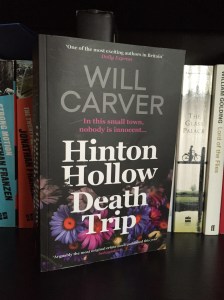
From the PR: “It’s a small story. A small town with small lives that you would never have heard about if none of this had happened.
Hinton Hollow. Population 5,120.
Little Henry Wallace was eight years old and one hundred miles from home before anyone talked to him. His mother placed him on a train with a label around his neck, asking for him to be kept safe for a week, kept away from Hinton Hollow. Because something was coming.
Narrated by Evil itself, Hinton Hollow Death Trip recounts five days in the history of this small rural town, when darkness paid a visit and infected its residents. A visit that made them act in unnatural ways. Prodding at their insecurities. Nudging at their secrets and desires. Coaxing out the malevolence suppressed within them. Showing their true selves.
Making them cheat.
Making them steal.
Making them kill.
Detective Sergeant Pace had returned to his childhood home. To escape the things he had done in the city. To go back to something simple. But he was not alone. Evil had a plan.”
Right: Hinton Hollow Death Trip. I’m sat here a good couple of weeks on from finishing Will Carver’s novel and it’s still painted vividly in my mind. This one will stay with you for a while much as Carver’s previous novels did too.
DS Pace is a man on the run from his past and the nightmares he’s picked up via Carver’s previous bloody brilliant books Good Samaritans and Nothing Important Happened Today. Both of those books left my mouth on the floor but Hinton Hollow Death Trip fucking floored me like a coup de grâce. Because what Pace is running from is waiting for him… Evil is in town by the time Pace arrives it’s already set in motion – via a series of little nudges and a few hard pushes on the right buttons in a few people – that will devastate both detective and town. Oh, and the reader.
See, Hinton Hollow Death Trip hits hard. Let’s be honest; a story told from the narrative point of view of Evil having a play session wasn’t going to be sunshine and kittens but what unfurls in these five days is brutal. And yet massively addictive, I mean I tore through these 400 or so pages like Dorothy Reilly with a family bucket of chicken.
Because Will Carver has populated Hinton Hollow with a great cast of characters, whether it’s the lesser ‘nudged’, the bystanders or those given a real push by Evil, that are so engrossing and make for a bloody compelling read, it’s impossible to put it down until everything has reached its head for better or worse.
Will Carver is a very talented author. Each of his books has a way of getting into your head and staying in there. He writes with a unique voice and his insights and comments on human nature are at times funny and disturbing. Oh and the final reveal and coming together of two plots was an absolute master stroke, didn’t see that coming at all.
There are a lot of great things going on in Hinton Hollow Death Trip: there’s a brilliantly crafted and multi faceted plot that would make this an essential read in itself but the way in which it is told, both in terms of the narrative view but Carver’s prose style – along with his in-character commentary – make it a serious contender for one of the year’s best reads. It’s a novel that challenges and rewards on multiple levels and stays with you long after.
Very much recommended and my thanks to Orenda Books for my copy of Will Carver’s Hinton Hollow Death Trip and to Anne Cater for asking me to take part in this blog tour.
These days I find myself questioning the teaching methods / teachers I had back in secondary school. I know I always liked to learn about history but back then it was a case of ‘the eight Henrys and two world wars’ and even then it was pretty dry stuff and mostly dates from what I recall.
Cut to a fair few years later and while my wife and I were dating we wanted a little getaway, drove up from Paris to Normandy to a little B&B we booked online only to discover that we were staying in Coleville-sur-Mer, just up the literal track from what had once been code-named Omaha Beach.
Coming face to face with the scene of the bloodiest of landings and standing where those German gun encampments once sat was a pretty strange sensation only matched by the cemetery up the road. It re-awakened my interest in that particularly tragic and yet inspiring periods of our history. Inspiring in terms of what ordinary people are capable of when placed into the most extraordinary of circumstance. It was this element that does and still interests me a lot more than sheer dates and stats ever could and there’s no interest from me in the “guys and glory” style or “we killed all those Jerry bastards from here to Berlin” approach – it’s the personal that counts.
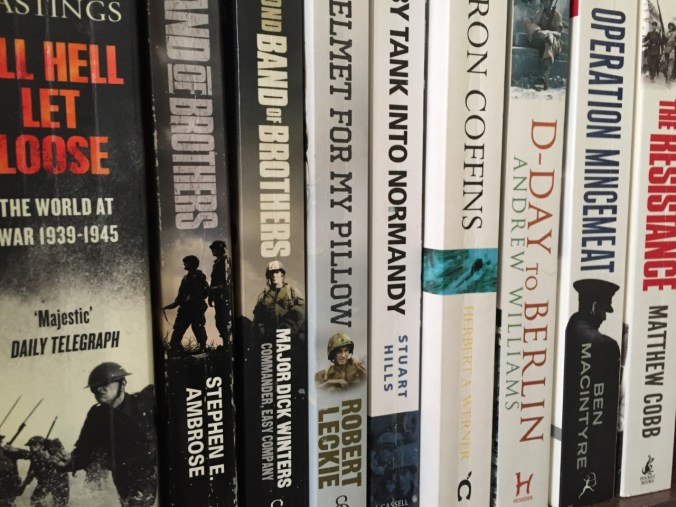
As this part of history takes a good percentage of the non-fiction part of my library, second only to the ‘music’ section and already having done so for that section, I thought I’d list out (this one’s been in the making for a while) those 10 books I’ve found the most essential during my ‘re-education’. After all, if we ignore history and it’s lessons we’re doomed to repeat its mistakes.
Max Hastings – All Hell Let Loose
Finding one book that manages to convey the vast depth and sweep of a global conflict in one volume is never easy but Max Hastings was always gonna be a safe bet and All Hell Let Loose does a great job of while still managing to focus on individual accounts and the impact of the war on the personal levels rather than simply get lost in stats and dates.
Alan Deere – Nine Lives
Alan Deere was a New Zealander who joined the RAF in 1938. He flew Spitfires in both the Battle of France, the Battle of Britain and fought throughout the war – a fighter ace with 22 confirmed victories who was awarded the Distinguished Flying Cross. His account of his time, Nine Lives, is written with a real warmth and charm while not flinching from the reality that faced the men – some little more than boys only a year or two out of school – during those dark times.
See also: First Light by Jeff Wellum and Stormbird by Hermann Buchner for a take from the ‘other side’ as it were.
Andrew Williams – D-Day to Berlin
A smaller focus than Hastings’ All Hell Let Loose but nonetheless detailed and with more insight as a result of the tighter arena, Andrew William’s D-Day to Berlin looks, as the title suggests, at the Allied arrival on the beaches, the fight for Normandy, the breakout and fight on to Berlin. It was one of the first I books on the subject I picked up and it remains an oft-referred to one. There was a BBC documentary based around it, though buggered if I can find it all these years later, and it’s written with both an eye to the overall campaign as well as the personal accounts and it’s always those that make these books worth reading to me.
Herbert Werner – Iron Coffins
Without a doubt one of the finest WW2 diaries and a real eye-opener. There weren’t many U-Boat commanders that made it through the war, such were the odds against them in the final half of the war when the tables were turned and the wolf packs became hunted with greater accuracy and techniques. Werner’s account is written with insight and with the use of his own diaries and records for accuracy and is a real eye-opener: in the space of those years Werner went from officer candidate in 1939, to the early victories the U-Boats scored in the Atlantic to fighting for survival and barely escaping the same fate that sent so many other crews to the seabed. Beyond the facts and figures, what makes Iron Coffins such a favourite on my shelves is the personal insights – while Werner is fighting for survival below, the war is destroying his home in Germany and the increasing – its important to remember the German Navy were not all Nazis – frustration in their orders and their direction.
Stephen E Ambrose – Band of Brothers
An obvious choice really but it doesn’t make it any less a great read. Of course I saw the series before reading the book, it was one of the first things I did on my return from France that summer and it spurned me on to find more hence the inclusion of this book and the next couple too. There’s so much more in Ambroses’ book than could ever be captured by HBO’s series (it’s always the way, there’s nothing new here) – such as how, in Bastogne, sat staring at the same tree line day after day, Darrel ‘Shifty’ Powers, was convinced there was a tree – a mile away – that hadn’t been the day before. Turned out it hadn’t – it was camouflage that the Germans had put up for their anti-aircraft battery, which was promptly taken out. Ambrose’s Band of Brothers is an essential read for all the obvious reasons – it’s the true story of those ordinary guys thrown into the most extraordinary of circumstances.
Major Dick Winters – Beyond Band of Brothers
Of course, reading or seeing Band of Brothers will leave you wanting more and appreciating what a damn fine leader of men Dick Winters was. His own Beyond of Brothers delivers more insights into both Winters as a man and leader as well as Easy Company’s campaign. A more personal account than Ambrose’s book and his guide to leadership is one I try to incorporate into my own life.
Robert Leckie – Helmet For My Pillow
Watching HBO’s The Pacific was a real eye-opener for me in much the same way as my recent watching of Ken Burns’ The VietnamWar was – and identified the next area of history to read up on. The operations in the Pacific theatre were pretty unknown to me but I soon realised that was home to some of the grizzliest and barbaric fighting and conditions. Robert Leckie’s account served as part of the series’ source material and makes for a harrowing but vital and very well-written and detailed read that gives a real look at the impact of some of the most inhumane conditions coupled with the horror of intense fighting has on people.
See also: With The Old Breed by E.B Sledge
Stuart Hills – By Tank Into Normandy
My paternal grandfather served in a tank regiment during the Second World War though spoke precious little about it to me. Aside from the closeness of Stuart Hills’ surname, the fact that he came from just down the road in Tonbridge and found himself in fierce tank combat in European fields that, while geographically close, must have felt like a million miles away from the security of Kent made this a real connection for me. These personal and individual accounts of the war that are printed by smaller publishing houses and take a little finding are all the more interesting to me and reveal so much more than statistics on the number of tanks that “brewed up” ever could and gave me a real eye-opening look at just what my grandfather may have faced when his tank rolled across those fields.
Matthew Cobb – The Resistance
You know these days you’d be forgiven for thinking that every French person has relatives that fought as part of the Resistance movement and were involved in either hiding and ferrying allied airmen to safety or blowing up German trains… the truth is that only a very small percentage of the population were involved in the French Resistance movement and of those even less in such movie-style acts of sabotage. Cobb’s book is not only a great account of the movement but also of life in occupied France which appealed both the historian and Francophile in me.
See also: Americans in Paris by Charles Glass.
Ben Macintyre – Operation Mincemeat
After success in North Africa the allies needed to open a new front in the European theatre and liberate Europe. But where would and could they land first? In April of 1943 a fisherman found a corpse floating in the sea – the body was identified as that of the Royal Marines’Major William Martin and his attached case revealed to the Germans the Allied invasion plans.
Except this was Operation Mincemeat. The body that of a tramp and the documents all perfect fakes with one aim in mind – fooling Hitler and making him believe the Allied landing would take place somewhere other than Sicily.
Ben Macintyre’s Operation Mincemeat reads like one of the greatest spy novels but it’s all true – the level of detail involved in planning and carrying out the campaign, the now-available insight into how the Germans swallowed it and how it was handled their side make for real jaw-droppers. There were so many things that needed to work and so many details that could cause it all to fail.
But it worked: Hitler informed Mussolini that Greece,Sardinia and Corsicamust be defended “at all costs” and transferred panzer regiments, planes and troops to that affect so that when the allies landed on Sicily it was comparatively unopposed – even hours later Hitler remained convinced it was a rouse. So much so that similar deception methods would be employed to dupe the Führer into believing Calais to be the landing point for D-Day.
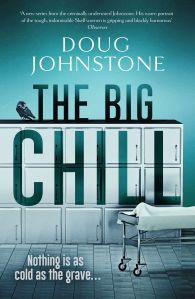
From the PR: “Running private investigator and funeral home businesses means trouble is never far away, and the Skelf women take on their most perplexing, chilling cases yet in book two of this darkly funny, devastatingly tense and addictive new series!
Haunted by their past, the Skelf women are hoping for a quieter life. But running both a funeral directors’ and a private investigation business means trouble is never far away, and when a car crashes into the open grave at a funeral that matriarch Dorothy is conducting, she can’t help looking into the dead driver’s shadowy life.
While Dorothy uncovers a dark truth at the heart of Edinburgh society, her daughter Jenny and granddaughter Hannah have their own struggles. Jenny’s ex-husband Craig is making plans that could shatter the Skelf women’s lives, and the increasingly obsessive Hannah has formed a friendship with an elderly professor that is fast turning deadly.
But something even more sinister emerges when a drumming student of Dorothy’s disappears and suspicion falls on her parents. The Skelf women find themselves sucked into an unbearable darkness – but could the real threat be to themselves? Following three women as they deal with the dead, help the living and find out who they are in the process, The Big Chill follows A Dark Matter, book one in the Skelfs series, which reboots the classic PI novel while asking the big existential questions, all with a big dose of pitch-black humour.”
I must have slept on A Dark Matter which I’m kicking myself for now because not only were the two previous Doug Johnstone novels I read – Breakers and Fault Lines – seriously good, but The Big Chill is a bloody great read.
Admittedly, I was momentarily thrown off when I realised I was reading a ‘sequel’ but The Big Chill works brilliantly enough at covering the retrospective detail needed without either labouring the point or taking away momentum. I still want to get my hands on A Dark Matter though – even if I now know the end I need to know the rest – because the Skelfs make for massively compelling protagonists and Doug Johnstone’s work is always compelling . There’s a warmth and humanity to Johnstone’s Skelf ladies – even, and especially, when surrounded by the coldness of death and some of the most inhuman events – that it’s impossible not to get on the team and they’re so well written and rounded as characters they practically walk off the pages.
Johnstone has a real ability when it comes to painting his locations in a near cinematic style, whether it’s the grim tower blocks of Breakers or a ‘volcanic’ Edinburgh – and that’s certainly true with The Big Chill. When coupled with the vitality of the novel’s cast, this lends a real gritty grounding to the story and keeps you immersed – though if you find this as addictive as I did you’ll only need a couple of sittings.
Picking up six months from the events of Dark Matter a large part of The Big Chill‘s plot follows directly though also takes time to bring in the mystery of first a missing school girl, then that of her father (I did not see that one coming) and the search for a dead homeless man’s identity while touching on human relationships, the nature of grief and, er, quantum mechanics.
I found these subplots – the search for Abi and her father and that of Hugh and his past – particularly engaging. Dorothy’s PI work and style was brilliantly written and paced while Hannah’s investigations and the revelations of Hugh’s life served to remind that you never really know what goes on in other people’s lives – especially those you’d least suspect.
The Big Chill is a both a gripping page turner and a warm, rewarding read. Very much recommended and I look forward to more from the series. My thanks to Karen at Orenda Books for my copy and Anne Cater for inviting me to take part in this blog tour.
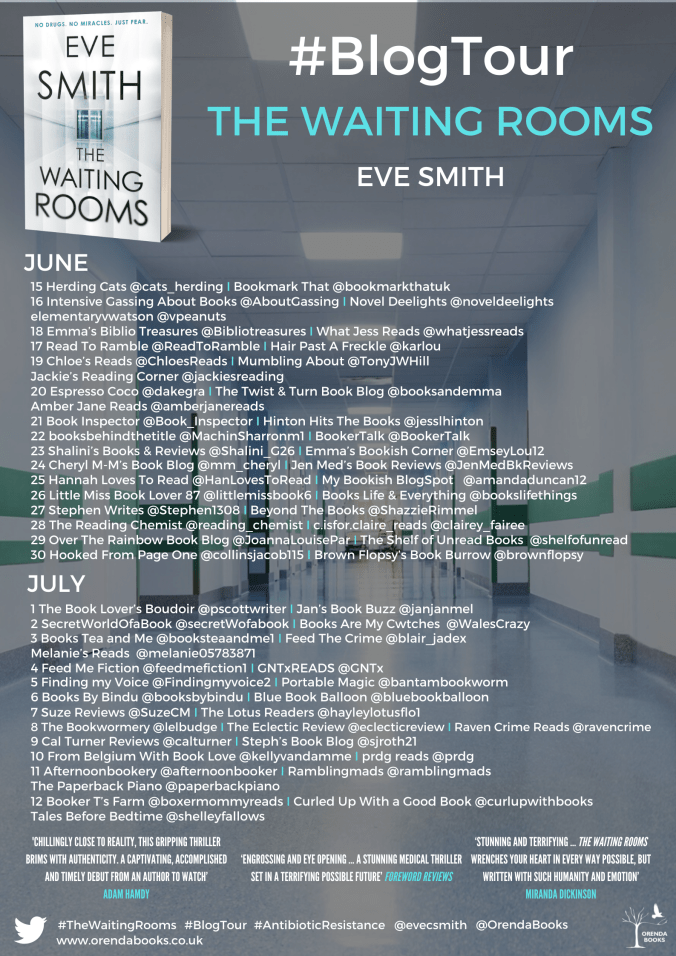
From the PR: “Decades of spiralling drug resistance have unleashed a global antibiotic crisis. Ordinary infections are untreatable, and a scratch from a pet can kill. A sacrifice is required to keep the majority safe: no one over seventy is allowed new antibiotics. The elderly are sent to hospitals nicknamed ‘The Waiting Rooms’ … hospitals where no one ever gets well.
Twenty years after the crisis takes hold, Kate begins a search for her birth mother, armed only with her name and her age. As Kate unearths disturbing facts about her mother’s past, she puts her family in danger and risks losing everything. Because Kate is not the only secret that her mother is hiding. Someone else is looking for her, too.
Sweeping from an all-too-real modern Britain to a pre-crisis South Africa, The Waiting Rooms is epic in scope, richly populated with unforgettable characters, and a tense, haunting vision of a future that is only a few mutations away.”
Crikey, where to start with this one… talk about timing; Eve Smith’s addictive novel The Waiting Rooms is set in a not too distant future in which antibiotics are no longer effective and everyone is required to take extreme measures to prevent infections and outbreaks. Hitting a little close to home for the start of 2020 however, as prescient as it may seem, I’m sure this this book would have had an impact regardless.
I thoroughly enjoyed The Waiting Rooms, it makes for an engrossing read that delivers on multiple levels. While there’s plenty take in, as it were, in the world Eve Smith presents here it’s all well threaded together and natural – the world post antibiotics seems pretty disorientating but then I’m pretty sure it would / will be and it has the suitable effect of making you feel a bit “what the f.. is going on?” – not wanting to harp on about it but reading this in the midst of an ongoing global pandemic, where you can’t go out without eyeing people up from ten feet away and wondering if they’re harbouring an invisible killer, gives it that extra wallop too.
(Caution: whiff of a spoiler ahead) The story of Lily / Mary was a real gripper for me. While the narrative of Kate and the window into the post-crisis world it offers is good stuff too, the exploration of Mary’s being swayed from her intended course by the harsh reality of a TB ward and the far-reaching impact of that one decision is the stuff that kept me hooked – not to mention that the race (albeit it at shuffle speed) for her to find out how this is all catching up to her in what she thought was a safe and secure environment was great. It could be that I’ve been alarmed by the proximity of a post-antibiotic world for some time (don’t get me started on what’s being fed to cows) so it found a pretty primed reader, or that it then sent me off into an eye-opening exploration of the TB epidemic in Africa… but it’s chiefly down to the fact that Eve Smith crafted a bloody compelling story line with the clout of some hard-edged ‘this is some real shit’ oomph to back it up.
Eve Smith has a real gift for setting her scenes too. Whether it’s a retirement home where the residents fear the slightest scratch, the reserves of South Africa amidst a poaching encroachment, a TB ward as the disease runs rampant or even during the ‘crisis’ itself, The Waiting Rooms’ environs are painted vividly and convincing and make for a book that’s hard to put down. Very much worth a read.
My thanks to Orenda Books for my copy of The Waiting Rooms and to Anne Cater for asking me to take part in this BlogTour.
From the PR: “The world is on the brink of disaster.
The environment, society and mankind itself are facing extreme challenges in a world that is both more connected, and yet more divided than ever before. Fear and confusion seep into all parts of everyday life now, more than ever, the world needs one voice, one guide…
One day the Earth is plunged into darkness and when light appears again so does a man – call him Joe – claiming to be the son of God.
Can Joe bring the world’s most creative thinkers and leaders together to tackle the ills of mankind?
Can he convince us all to follow him before it’s too late?
In this compelling and prescient novel, Martin van Es and Andrew Crofts highlight the key concerns of our time and imagines a future where we, at last, all work together to ensure the future of our world and all the life that calls it home.”
There must be something in the water. This isn’t the first time this year I’ve been presented with the question – but what would it be like if Jesus came back? When the year was new, what seems like a lot longer than a couple of months ago now, my wife and I binged our way through Netflix’ Messiah and, now, I’ve just finished reading Call Me Joe by Martin Van Es and Andrew Crofts. TV and Netflix being the medium that it is, Messiah is very much a ‘thriller’ of a take, looking for high-stakes drama and thriller hooks. For Call Me Joe the focus is more on what could be achieved and why.
Let’s face it – the world is in a pretty sorry state at the moment. Aside from what you see when you turn on the news or fire up social media right now, as a long-standing Green voter I’ve spent a lot of time pointing out just how much irrevocable damage we’re doing to the planet we’re lucky to call home.
For the Jesus, or Joe, of Call Me Joe it’s that damage we’re doing to our planet, the levels of greed and inequality of the world that have prompted his return after two thousand years or so. Essentially – keep going as we’re going and mankind will be extinct. Quite what he’s been doing since isn’t really covered though there’s an amusing suggestion that he’s been exploring life on other planets.
But how would the son of the Big Man be met upon arrival these days? I’ve read a few takes on this over the years and, for someone who believes that Jesus was merely a marketing construct (yes, I’m that cynical), Call Me Joe offers a very interesting take. There is, of course, incredulity but if you’re capable of genuine miracles and switching off the sun, even the most sceptical will have to listen to you. Thankfully, Joe’s message isn’t about pushing a religious creed, it’s a more harmonious approach and the actions we need to take to make this world a better place – the flock having lost its way without its number one shepherd, as it were.
One of the interesting elements of Call Me Joe is the multiple view points – from the convinced to the hardened naysayers – and how each arrive at the same conclusion; that this “hippy healer” is the real deal. In fact, what I enjoyed most about the reaction to Joe’s arrival wasn’t so much the crowds flocking to prostrate themselves at his feet, but the well crafted and extremely convincing response and interplay between the world’s political leaders, especially the nuanced take on the Russian president and team.
Of course, the idea of Jesus returning to the modern world is one thing but what makes a novel and a plot work is characters. Call Me Joe focuses primarily on Joe, of course, and Sophie – an atheist teaching at the school at which Joe first appears. Call Me Joe‘s Jesus is a more ‘human’ take on divinity and his relationship with his first ‘follower’ as well as Sophie’s arc keeps the reader invested. It’s these characters – along with the well thought out and that make Call Me Joe work as a novel as well as in its efforts to get across a few important and how these might be approached. Very much worth a read.
From the PR: “Night after night, cars are set alight across the German city
of Hamburg, with no obvious pattern, no explanation and no suspect.
Until, one night, on Mexico Street, a ghetto of high-rise blocks in the north of the city, a Fiat is torched. Only this car isn’t empty. The body of Nouri Saroukhan – prodigal son of the Bremen clan – is soon discovered, and the case becomes a homicide.
Public prosecutor Chastity Riley is handed the investigation, which takes her deep into a criminal underground that snakes beneath the whole of Germany. And as details of Nouri’s background, including an illicit relationship with the mysterious Aliza, emerge, it becomes clear that these are not random attacks, and there are more on the cards…”
OK – so I have a feeling I missed Simone Buchholz’ last book, Beton Rouge, which is something I need to rectify quickly as her first Blue Night was great and Mexico Street is, frankly, fucking awesome – easily one of the best books I’ve read so far this year.
It also means that I can say that you don’t need to have read it to thoroughly enjoy Mexico Street as Simone Buchholz does a great job of keeping things salient in terms of background filling without ever resorting to that “previously in the series” style narrative.
Everything about this book gets a massive thumbs-up from me – it ticks every box. Slow burning plot with the ability to kick you in the pills with a surprise? Yep – the plot of this one is just such a deep dive into the disturbing and fascinating Mhallami culture, the sleazy drugs-and-money slime of insurance… all the while trying to piece together a murder while the team themselves buckle and fray under pressures both professional and personal.
And what about the team; great characters? Check and check. Mexico Street – as with Blue Night before it – is populated with a crew of grippingly well portrayed characters that walk off the pages and are just as addictive as the story line. I could read a novel about these characters just interacting while driving round a ring road, let alone when they’re in the midst of an investigation as taxing as this one.
What about prose: thumbs up there? Oh fuck, yes! Buchholz’ writing style is a real blast of the good stuff (and a tip of the hat to Rachel Ward for a great job of keeping the style and rhythm so vital in the translation) -like an updated take on Ellroy’s telegraph style at times with a suggestion of Staalesen in the ability to paint these great scenes with the most minimal of brush strokes but with that unique element that is Simone Buchholz’ own voice – there’s nothing else on my shelves like this, it’s bloody brilliant.
In case you couldn’t tell I thoroughly enjoyed and recommend Mexico Street. Thanks again to Karen at Orenda for my copy and to Anne Cater for inviting me to take part in this blog tour – they’re like buses; you don’t do one for nearly a year then three come along at once 😀. Nobody’s really gonna be going out for a bit so while there’s plenty of reading time to be had get your teeth into Mexico Street and check out the other stops on the blog tour:
From the PR: “Working off the books for FBI Special Agent Alex Monroe, Florida bounty hunter Lori Anderson and her partner, JT, head to Chicago. Their mission: to entrap the head of the Cabressa crime family. The bait: a priceless chess set that Cabressa is determined to add to his collection.
An exclusive high-stakes poker game is arranged in the penthouse suite of one of the city’s tallest buildings, with Lori holding the cards in an agreed arrangement to hand
over the pieces, one by one. But, as night falls and the game plays out, stakes rise and tempers flare. When a power failure plunges the city into darkness, the building goes into lock down. But this isn’t an ordinary blackout, and the men around the poker table aren’t all who they say they are. Hostages are taken, old scores resurface and the players start to die.
And that’s just the beginning…”
Well, if reviewing a book called Containment wasn’t fitting enough… let’s get into a review for a bloody awesome locked-room style thriller: Deep Dark Night by Steph Broadribb where the bulk of action takes place in a building with a panic room on lock down and revels in claustrophobic tension… pretty well timed huh?
I’m gonna put my hands up here and say I’m out of touch with Steph Broadribb’s Lori Anderson series – I really enjoyed the first entry Deep Down Dead but I’ve missed the two following entries and here I am on book four, revelling in every taught and well written page and wondering how / why the hell I missed Deep Blue Troube and Deep Dirty Truth and when I can catch up – because Deep Dark Night is one of best thrillers I’ve read in a while.
This also gives me plenty of justification in saying that while this is the fourth in the Lori Anderson series, it’s not necessary to have read the previous (though I get a feeling it might add a little more) and this works as cracking stand alone too. Lori Anderson, on a pretty dicey job of her own , is caught up by pure dumb luck in the midst of someone else’s elaborate and ultimately violent and bloody revenge plan and the combination of two independent attempts to wreak a form of justice against the same target(s) is beyond explosive in its action.
Steph Broadribb has a real gift for pulling you in from the off and then smacking you face on with enough action, intrigue and twists to keep you hooked in throughout – and a great story to boot. The revenge story that Lori gets herself caught up in is the ultimate of reveals – unexpected and massively rewarding.
From the confines of the locked down ‘panic’ to hanging from fire escapes dozens of stories from the ground to the chaos-ridden streets of Chicago in the aftermath of a mass black out, Deep Dark Night sets the action against an expertly depicted series of increasingly tense environments that help ratchet up the pace and excitement – if this were on the screen only the edges of seats would be used.
I’m not usually a big locked-room thriller fan, but this is an absolute belter with plenty of original takes on the idea too. I was genuinely caught up in the whole ‘who is Herron?’ element and the effect the increasing pressure has on the characters makes for a powerful read. Oh, and it’s bloody addictive too – once the (poker) game is a foot in this one there’s no real opportunity to put it down.
My thanks to Karen at Orenda Books for my copy and to Anne Cater for inviting me to take part in this blog tour, check out the other stops:
From the PR: “A man with dark thoughts on his mind is racing along the remote snowy roads of Hurmevaara in Finland, when there is flash in the sky and something crashes into the car.
That something turns about to be a highly valuable meteorite. With euro signs lighting up the eyes of the locals, the unexpected treasure is temporarily placed in a neighbourhood museum, under the watchful eye of a priest named Joel.
But Joel has a lot more on his mind than simply protecting the riches that have apparently rained down from heaven. His wife has just revealed that she is pregnant. Unfortunately Joel has strong reason to think the baby isn’t his.
As Joel tries to fend off repeated and bungled attempts to steal the meteorite, he must also come to terms with his own situation, and discover who the father of the baby really is.
Transporting the reader to the culture, landscape and mores of northern Finland Little Siberia is both a crime novel and a hilarious, blacker-than-black comedy about faith and disbelief, love and death, and what to do when bolts from the blue – both literal and figurative – turn your life upside down.”
Antti Tuomainen is rapidly becoming one of my favourite writers. 2017’s The Man Who Died sits in my list of 50 Great Reads for a reason, Palm Beach, Finland was one of 2018’s finest – absurd, hilarious and thoroughly compelling – and now here I am finally getting round to reviewing last years’ Little Siberia and, let me tell you, it’s fucking brilliant too.
Packed with dark humour that is often uproariously funny, like a Nordic Noir directed by the Coen Brothers, like Fargo after a few shots of Finish vodka, Little Siberia is a delicious read that should sit well toward the top of the Best of 2019 lists – it does on mine.
Tuomainen has a real skill for creating worlds stuffed with fascinating and addictive characters and Little Siberia’s Hurmevaara abounds with just a population – throw a museum piece around and you’re bound to hit at least two characters that deserve a book each.
The scene in which Joel pursues the would-be meteorite thieves though the snow to their hideout had me weeping with laughter at the delicious comic absurdity of it, not to mention rally driving with a dead body…. Wickedly funny, dripping with dark humour and hugely addictive, Little Siberia cracks along at a staggering pace from one scene to another before reaching its brilliant conclusion and manages to throw plenty of curve balls into the plot to keep you sufficiently hooked as well as laughing throughout.
Easily one of 2019’s best books, Little Siberia is highly recommended. Given that I’m a little late in reviewing this I really hope there’s another slice of gold from Antti Tuomainen arriving in 2020 too.
It occurs to me that, as we head into the final quarter of the year, I haven’t really talked much about what I’ve been reading this year outside of the larger reviews.
While I set myself a target of 40 books again this year (currently reading number 31), I really wanted to get a specific couple of books off of the ‘to read’ list and absorbed, I think I’ve done that.
First such book on the wish list was finishing James Ellroy’s LA Quartet. White Jazz differs somewhat from its predecessors as it’s very much a single-thread narrative in the style of Black Dahlia. Massively rewarding and full of Ellroy guts and power as Lieutenant David Klein unravels the biggest of puzzles – some real heavy stuff even for Ellroy. I loved every fucking page of this book and the entirety of the LA Quartet. I find it strange to think it came out in 1992 – Ellroy’s take on late 50’s LA is so vital. It also introduced Pete Bondurant who is one of main narratives in American Tabloid – which was another tick on the list as I wanted to go from the LA Quartet to Ellroy’s Underwold USA Trilogy. American Tabloid makes a smooth transition from the LA focus to a fuller, corrupt take on American History (with a fair few artistic licenses) right up to the gun shots in Texas. I’d like to get to The Cold Six Thousand but there’s a few more on the list first..
Another tick on my reading goals for the year was to catch up with Arkady Renko – the Russian detective from Gorky Park, one of my favourite historical fiction / thrillers. Took a while to find – not often kept in stock new and I went the ebay route for a used copy – but worth it; Polar Star takes place pretty much completely at sea. Renko is basically in exile and hiding from the state and finds himself thrust into solving a murder on board a fish processing ship in the Bering Sea. I really have a thing for this cold war stuff and Martin Cruz Smith does a faultless job of making a thriller a literary work and combining a genuine mystery with enough genuine historical and political framing to tick all my boxes.
Speaking of historical references… I’ve fancied reading Maus for longer than I can remember not wanting to. My wife has a copy of it but my reading of French isn’t up to it so I was happy to pick up an English version at a good price not too long ago. I don’t usually get on with the graphic novel thing but this one is staggering in both its power and its honesty. Well worthy of the acclaim it still receives and an important read.
I also picked up with that bloke called Reacher again but The Midnight Line didn’t really do it for me. Much like Personal it almost feels like Child is treading water here, the formula isn’t anything new and there’s no real stakes here – just ticking the boxes: Reacher gets intrigued about something, follows a trial, cracks a few skulls, things still make no sense, cracks a few more, solves a minor riddle, goes on his way. A couple of years ago I enthused about All The Light You Cannot See by Anthoy Doerr… I still do; it’s a great book. I’d had his About Grace on the shelf for a while and finally go to it at the tail end of summer. It’s… not bad. There’s a couple of really good chunks in there but it’s not on the same level.
A few years further back I similarly enthused about Louis De Bernieres’ The Dust That Falls From Dreams, the first in a planned trilogy. I read the second this year: So Much Life Left Over. A little more focused in terms of characters, predominantly following the arc of Rosie and Daniel’s life, this slightly slimmer book is no less grand in terms of its reach or impact. De Bernieres one of those few writers with the ability to genuinely hit every emotion in the space of a few chapters. It takes a little adjusting each time as De Bernieres’ previous trilogy and novels took place in more exotic and poetic locations than this series but I really look forward to the final novel which will probably be no earlier than late 2020 at my guess.
Non-fiction wise there’s only been two hits on the list, one of which – Mark Blake’s Pigs Might Fly: The Inside Story of Pink Floyd – has already been touched on. The other was a reread of one of my favourite non-fiction books: Herbert A. Werner’s Iron Coffins: A U-Boart Commander’s War, 1939-1945 which I’d first read some ten years ago, lent out and never got back. I managed to find a copy at a recent air show and it’s always worth reading and will no doubt feature in an upcoming Top Ten Non-Fiction post.
This seems like a good place to leave it for now… back to that Springsteen series.
Alrighty, lets see about combing the two usual focuses of this blog into one post – music and books, books about music.
A good book about music or musicians isn’t as common as you’d think. There are shit loads of duffers out there – poorly researched and badly written fluff pieces. Some musicians who you’d expect a really good book out of tend to spend more time talking about their model railway collection than about the making of After The Gold Rush and some make it a little too obvious that they have an ulterior motive in a book release other than just a memoir – Kim Gordon’s Girl in a Band, for example.
But, there are some bloody belters out there and there’s a reason that a good chunk of my library is given over to a ‘music’ section. I’m sticking close to this blog’s wheelhouse here, obviously, but honourable mentions should go to The Rest is Noise: Listening to the Twentieth Century by Alex Ross and Peter Doggett’s There’s a Riot Going on: Revolutionaries, Rock Stars, and the Rise and Fall of 60s Counter-culture.
In no particular order, then, are my ten favourite music biogs / auto-biogs / books etc…
Pearl Jam – Twenty
Put out as part of the celebrations surrounding the band’s twentieth anniversary – the clue is in the title – which included a Cameron Crowe helmed documentary, CD, live album, two-day festival and short tour… Pearl JamTwenty is a year-by-year oral history of the band’s career. Stuffed to the bindings with imagery and photos, this is as intimate and candid as you’ll get for Pearl Jam, notoriously shy of publicity and exceedingly unlikely to offer anything resembling an official biography. There’s a wealth of humour and details in here given the format and it’s fuelled many a post on this blog and every time I open it up to refresh my memory I end up absorbed again.
Keith Richards – Life
Did you know Mick Jagger started an autobiography? Sometime in the 80’s – presumably during the lull in Stones activity, he got quite far with his book but promptly forgot about it – when he was later approached by a publisher he could neither remember writing it or let it be published. Somehow, Keith Richards remembered even more and not only finished but published his autobiography, Life. Could have been something to do with the publisher giving an advance of $7m based on a short extract, but Life is an essential read for even a minor Stones fan like me. Yes there’s the thrills and vicarious spirit of rock ‘n’ roll excess – but it’s his honesty and unflinching and everlasting love for music that really comes across, you understand how he became known as the human riff. Worth following up with the Netflix doc on Keith too if you’re in the mood.
Mark Yarm – Everybody Loves Our Town: An Oral History of Grunge
This book is, frankly, immense. In its scope, its telling and impact. Just reading it you can feel how much work and love has gone into this telling of the Seattle music scene – from its origins to its current status. The highs (both natural and chemical) and lows – some of which are pretty fucking dark and were a real discovery for me – are all covered in a forthright manner that manages to remain factual and detailed while also a clearly affectionate chronicle, sometimes gossipy, often hilarious and regularly revealing. It can’t be easy to build a narrative from so many and often conflicting memories (The Melvins’ Buzz Osborne comes across as a bit of a contrary prick) but Yarm has created what can only be described as the Bible of the scene here.
Bob Dylan – Chronicles Vol. One
“I’d been on an eighteen month tour with Tom Petty and The Heartbreakers. It would be my last. I had no connection to any kind of inspiration. Whatever was there to begin with had all vanished and shrunk. Tom was at the top of his game and I was at the bottom of mine.”
Wait, what? Nobody was expecting it, but Bob Dylan’s Chronicles Volume One appeared like a revelatory bolt from the blue in 2004 after he got ‘carried away’ writing linear notes for planned reissues of Bob Dylan, New Morning and Oh Mercy. The memoir – apparently the first of three (who know when) – is a detailed and candid insight into Dylan’s life, thinking and writing at the time of those three albums. The dejection and lack of direction he felt for his career while on tour with Petty is pre- Oh Mercy which, it turns out, came about thanks to Bono, an obscure singer with a little-known Irish band called U2* who, for some reason, Dylan showed the songs he’d started putting together and, while old Bob thought about burning them, suggested he call Daniel Lanois instead…
There’s a lot to discover in these three ‘vignettes’ considering the brevity of the periods covered and it’s a vital read for any Dylan fan. For a less personal and fuller Dylan read, Howard Sounes’ Down The Highway does a comprehensive and enjoyable job of telling Dylan’s story while keeping clear of the myth(s).
Speaking of stripping away the myth..
Peter Guralnick – Last Train to Memphis: The Rise of AND Careless Love: The Unmaking of Elvis Presley
This isn’t a double-header, I’m not sneaking two books into one slot, both deserve a spot on this list but as you just can’t read one and not the other I’ll cover both in one go. I bought these books a long time before I got to reading them. I’m not a big fan of Elvis, I can quite quickly name a Top Ten but I don’t go deep with the King. These books do and I’d mark them as essential.
Last Train to Memphis does a magnificent job in detailing – and I mean detailing – the rise of Elvis Presley right up to the point where he’s shipped out to Germany in 1958. Where he’s from, who he was as a person, his love for music, getting started, this book is rich in detail and interview and a real eye-opener. Guralnick finds the truth behind what has become a much retold and embellished story that’s become so familiar that the truth of a poor young truck driver who loved nothing above his mother and music and came out of nowhere to become the biggest thing the world had seen is far too often forgotten. Take, as an example, the words of Marion Keisker, the secretary at Sun records who recognised something special in the polite teenager’s voice, words on the enigma surrounding Elvis: “He was like a mirror in a way: whatever you were looking for, you were going to find in him. It was not in him to say anything malicious. He had all the intricacy of the very simple.”
The degree to which Last Train to Memphis manages to deliver the real Elvis Presley makes Careless Love all the more affecting. Once again – the demise of Elvis’ career and the man himself are too often mistold and the stock of parody: fat Elvis dying on the throne trying to take a dump surrounded by hamburgers and tv sets….
CarelessLove gets underway with Elvis’ time in the army in ’58 and chronicles the gradual unravelling of the dream that had burnt so bright in Last Train To Memphis and details in disturbing detail the complex playing-out of Elvis’s relationship with his plotting, money-grabbing and manipulative manager, Colonel Tom Parker. The lying Dutchman’s desperate attempts to stop Elvis returning to the road after his comeback special (he’d have less control of him on the road), his continual pushing of terrible movie after terrible movie, the appalling contract and commission he took which fuelled his greed…. it wasn’t drugs that did for Elvis if you ask me. Written with a grace and affection for its subject, Careless Love is the real deal, a true insight into the end of one of the biggest and misunderstood figures of the 20th century.
While neither made me run out and buy anything beyond the couple of compilations that sit on my shelves, both of these books changed how I thought about Elvis.
Oddly, looking back as I write this, it’s not an Elvis song that comes to mind here:
George Harrison – I, Me, Mine
My love for this book isn’t so much down to what’s revealed or any ‘shocking truths’ – this aren’t necessary really. Though apparently John Lennon was pissed off (it came out a few months before he was murdered) and claimed to be hurt as the book doesn’t refer to Lennon as being a musical influence. What I love is the warmth and feel of I, Me, Mine. My version is that which was published in 2002, not long after Harrison had passed, with a new forward from his wife Olivia. The autobiography itself isn’t essentially long or detailed but it’s everything else about this book I love – the bounty of photos and the song lyrics- copies of handwritten lyrics included – with details on the writing of each: “‘What is Life’ was written for Billy Preston in 1969. I wrote it very quickly, fifteen minutes or half an hour maybe…. it seemed too difficult to go in there and say ‘Hey I wrote this catch pop sing; while Billy was playing his funky stuff. I did it myself later on All Things Must Pass.”
Aerosmith – Walk This Way
My first taste of musical bios is a pretty extreme one. I bought this when it came out (first edition hardback still sitting on my shelves looking rather well read) and I was really starting to get into Aerosmith. Written by Stephen Davis and the band, Walk This Way was the first official telling of the Aerosmith story, from the band members’ origins and the formation of the group through to its early rise and debauchery to its drug-fuelled collapse and nadir before being reborn via sobriety in the mid-80s – much is given over to this process and the resentment Tyler felt at the time, Perry being involved in the intervention while still using etc and the troubles that nearly caused another break up prior to Nine Lives.
Since publication three of members have written their own memoirs (oddly I’ve only read Steven Tyler’s) and have suggested that Walk This Way is perhaps a little… sanitised and glosses over a few things. Odd considering just how shocking some of what this covers …
Mark Blake – Pigs Might Fly: The Inside Story of Pink Floyd
I mentioned this one recently and I still believe it deserves a place in my Top 10. While there’s never likely to be as complete and comprehensive a Pink Floyd autobiography as desired – Nick Mason’s Inside Out comes close but is obviously his own story – as a) Gilmour and Waters don’t really get on and b) Syd Barrett and Richard Wright are no longer with us… Pigs Might Fly is a thoroughly detailed and researched ‘as close as you’ll ever get’.
Bruce Springsteen – Born To Run
Of course this is bloody well going to be on here. This is pretty much top of the list and sets a new benchmark for how autobiographies should be written. I wasn’t expecting this one to be written so well or so candidly. In my original review for this, which was extensive so I won’t go overboard here, I said: It is an absolute blast to read. Written completely solo and without the assistance of a ghost-writer, the voice is clearly that of Bruce – at times cuttingly honest, at others poetic and then written as though delivering a sermon from the stage on the LIFE SAVING POWERS OF ROCK AND ROLL!!! (yes, the caps-lock button is Bruce’s friend). Contained within its five hundred or so pages is the story of how a young man from a poor, working class family in the town of Freehold, New Jersey, fell in love with music, got a guitar, learned how to make it talk, refined his craft and cracked the code. It’s fascinating and joyous stuff.
*If there isn’t a tribute band called ‘Not You Too’ then I’ll bloody well start one.