“Flash the readies
Wot’s, uh the deal?
Got to make to the next meal
Try to keep up with the turning of the wheel.”
Perched in the Pink Floyd discography between Meddle and The Dark Side of the Moon is the oft-overlooked Obscured By Clouds. I say oft-overlooked… fans will know of it, I’m sure, but it’s not one that really gets much of a mention and I don’t recall seeing any of its tracks appearing on any of the band’s compilations. Probably because it’s a soundtrack – to the French film ‘La Vallée’ – work more than it is an album proper, following their previous such efforts More and Zabriskie Point.
Now, between Meddle and The Dark Side of the Moon is an amazing place to sit, both stellar works. At the time the band were asked to create the soundtrack, work was already under way on Dark Side so I doubt the band were in a position to give it their all in terms of song-writing. Indeed from what I’ve read they weren’t too concerned at creating ‘songs’ and the sessions were somewhat rushed.
There is, though, some cracking songs on Obscured By Clouds that at least make it worthy of ownership if not constant rotation. ‘Mudmen’ is as massive, prism-shaped indicator as to what was in the Pink Floyd pipe as you could get, ‘Free Four’ is another cracker and got a bit of airplay Stateside and ‘Stay’ is quite lovely.
For me, though, this album is all about ‘Wot’s… Uh, the Deal?’ and it’s a Pink Floyd song that – were I to sit down and make it – would certainly be on my ‘Top Twenty’ or even ‘Top Ten’ PF songs.
There’s so much I love about this song – the rolling piano, the gentle melody and lyrics that touched on lyrical themes that would be explored greater on DSOTM and some wonderful vocals and guitar work from David Gilmour (and a great bit of lap steel). It’s a beautifully sedate piece of a style that’s somehow so very English they did so very well (see also ‘Grantchster Meadows‘ from Ummagumma) and would later come back to so spectacularly with ‘High Hopes’.
At what was undoubtedly a peak time for the band, even their rushed soundtrack work contains some great material.
Shame Roger Waters would cock it all up.
David Gilmour, while touring his On An Island album dusted the song off and gave it the odd airing, which is also worth sharing. I think. Not least because it bought about a rediscovery of the song for many and it includes Richard Wright on piano.
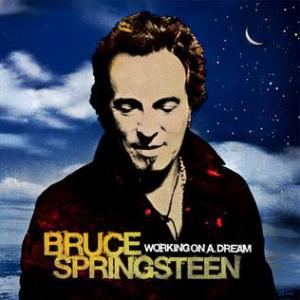
I’m gonna take a bet that of this album’s fans, Steven Van Zandt (“I’m a pop-rock-band guy. That’s all I am”) is one of the biggest. He’s stated that he sees this – the last Bruce Springsteen and E-Street album to date – as the logical end of a trilogy that started with The Rising with “a projection more toward the pop-rock form” achieved more completely on Working On A Dream.
I might be quoting more heavily on Mr Van Zandt than anyone else but that’s because Bruce is somewhat quiet about Working On A Dream in hindsight. Even in his own book it got just a fleeting mention. Perhaps he – like quite a few – consider it one without real staying power. Perhaps it was sheer timing that meant that Working On A Dream, the third-and-final album with Van Zandt & co would also be the least rewarding. Let’s face it; in the ten years preceeding its release Bruce had reunited the band and embarked on a huge tour, released The Rising, Magic, Devils & Dust, The Seegar Sessions, an anniversary edition of Born To Run, released The Essential compilation, toured the globe tirelessly and stepped into the political arena with the Vote For Change tour. A whirl of activity that by far eclipsed that of Bruce’s previous decade. It was probably time to take a break.
Instead, struck by inspiration and a writing spell that carried through from the final recording sessions for Magic, Bruce returned to the studio with Brendan O’Brien (one last time) and a core band of Max Weinberg, Roy Bittan and Garry Tallent (other members would be bought in to add their parts later) to catch, as he said, the “energy of the band fresh off the road from some of the most exciting shows we’ve ever done.”
One could argue that, with a Superbowl concert on the horizon the need for product was in mind and this one was perhaps a little under-cooked. One could argue that… could…
See, there are some songs here that I simply cannot connect to no matter how I try. The title track has never clicked. Yeah; it’s nice and pleasant but it just seems to lack spark or real weight and I think he’s tackled the theme better elsewhere (on Lucky Town especially). ‘Queen of the Supermarket’ simply should never have been and I had to wonder what a champion lyricist like Bruce was thinking with ‘Life Itself’ – “We met down in the valley where the wine of love and destruction flowed, there in that curve of darkness where the flowers of temptation grow”… do what, mate?
But. But. But. It’s not fair, though, to write it off or brush over it completely because this is Bruce Springsteen and (with the rare exception) you only tend to have to wait a second for a belter of a song to reveal itself and there is a lot to enjoy on Working On A Dream.
Take the opener; ‘Outlaw Pete’. I know it gets a bit of slack for being a bit overblown and borderline self-parody, but I still enjoy it (granted, I wouldn’t listen to it everyday) and I don’t think Bruce is exactly taking himself seriously with it. Yes it’s daft (“by six months old he’d done three months in jail”), yes it may well have borrowed from another song but it sets the scene – I really think that at this point it was a case that, rather than sweating over everything too much, the mood was “you know what? Fuck it, let’s give it a go”. Not to mention that when played live (though I don’t think it’s been touched since) Steve – a much underused player on stage these days – got to play the lead.
Right on it’s heals – ‘My Lucky Day‘ is another fast, blistering tune that, again, sounds like a blast was had recording it. Its fast, rawer sound almost at odds with the layers of overdubs and lush, huge 60’s sound that drapes so much of the album. Step past the next couple of momentum stallers and you get to the great sonic backdrop of ‘What Love Can Do’ and the swampy, blues-stomp of ‘Good Eye‘ a nice enough (though nothing that special) couple of tunes that sandwich ‘This Life’ – a more obvious Beach Boys’ aping sound you’d be hard pushed to find:
‘Tomorrow Never Knows’ jangles along quickly and without much to hang on to, as does ‘Surprise Surprise’. ‘Kingdom of Days’ is a genuinely warm one about love and ageing. The album’s most affecting track though is saved for last (if we exclude – still very good – ‘The Wrestler’ tacked on as a bonus).
‘The Last Carnival’ is seen by many as a follow up to ‘Wild Billy’s Circus Story’ from The Wild The Innocent & the E Street Shuffle. It is, more importantly, for Danny Federici who passed away in April 2008, the first member of the E Street Band to do so having played with Bruce for forty years. Danny had appeared with the band briefly over the previous Magic tour and did so last less than a month before his death. Bruce asked him what song he wanted to play – it was, of course, ‘Sandy’. In his book it’s clear that while Danny Federici was the only member of the band to drive him to violent rage, Bruce had a genuine love for the organ player and his death certainly rocked him, as he said in the eulogy: “After a lifetime of watching a man perform his miracle for you, night after night, it feels an awful lot like love.”
‘The Last Carnival’ is a beautiful send off. An immensely affecting farewell to a fallen brother. After opening to Jason Federici’s accordion, Bruce sings at the bottom of his range in a barely-suppressed choke and hush against minimal accompaniment “Where have you gone my handsome Billy?” before layered voices swell to a choir. It’s a moving send-off and ending to the last album featuring the full E Street Band*.
A couple of clunkers aside, while there’s nothing wrong with the majority of Working On A Dream it perhaps lacks the sharpness and punch of its immediate predecessor. That being said, in amongst some of the most ambitious production of his career (Rolling Stone gave it the default 5 star review, though none of its songs made their 100 Best Springsteen Songs list, wetting their knickers over its lush sound), Bruce was still capable of crafting a fair few beauties so that the good by far outweighed the bad.
Highlights: My Lucky Day, Kingdom of Days, The Last Carnival
Lowlights: Queen of the Supermarket
*Certainly their last full album. Songs that didn’t make the cut on this or its immediate predecessors and featured E Street (and Danny Federici) included High Hopes highlights ‘Down In The Hall’ and ‘The Wall’.
“Now down below and pullin’ on my shirt
I got some kids of my own
Well if I had one wish in this god forsaken world, kids
It’d be that your mistakes would be your own” Long Time Comin’
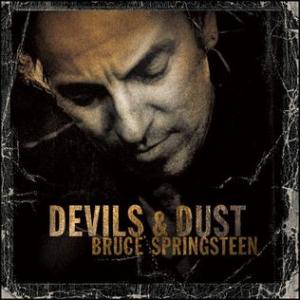
Let’s kick this one off with a small clarification – Devils & Dust (as with each that follows in this series) is a fine album. As strong a collection of songs as many could muster. From here on in (now that High Hopes is behind us) we’re really just talking personal preferences.
The outlier in Bruce’s ‘acoustic trio’, the songs on Devils & Dust aren’t as sparsely accompanied as they are on Ghost Of Tom Joad or Nebraska, nor are they as single-minded in their focus. Recorded after touring behind The Rising, this set was produced by Brendan O’Brien and mixes themes from politics to personal.
Many of the songs here go back to the Ghost Of Tom Joad tour – some even earlier -but the opening title track was new and is as fine a song as Bruce has ever written, a strong commentary on the Iraq war: “It is basically a song about a soldier’s point of view, but it kind of opens up to a lot of other interpretations.” The album and song were nominated for a few Grammy Awards (it won Best Solo Rock Vocal) and, performing the song during the broadcast he added a cry of “Bring ’em home” at the end before immediately turning and leaving the stage (missing his partial standing-ovation). It’s a great song.
There’s plenty of great tunes on Devils & Dust, even the older tunes revisited for the format work well and still stand (the mark of a good Springsteen song if you ask me) their ground. ‘All The Way Home‘ is particularly strong – written for and originally released by Southside Johnny in 1991 (on an album titled Better Days of all things) and is not even slightly acoustic, Bruce really steps into the lyric “I know what it’s like to have failed, baby with the whole world lookin’ on”.
One of my personal favourites on this one is ‘Long Time Comin” – a catchy, sins-of-the-father, redemption song that only suffers by it’s placing between ‘Reno’ and ‘Black Cowboys’:
Devils & Dust was the first Springsteen album to feature a Parental Advisory sticker and it wasn’t just for the ‘fuck it up this time’ in the ‘Long Time Comin’ either. It was most likely down to the album’s biggest talking point; ‘Reno’. To me, though, I find the song, like a couple of the others on here, just a bit ‘meh’. It seems like the minimal two-chord repetition and overly-heavy lyrics are too oppressive/dour and, in this instance, seem to be an awful lot of a build-up to hear Bruce sing about a man’s visit to a prostitute; “”Two hundred dollars straight in, two-fifty up the ass,” she smiled and said.” There’s nothing wrong with daring, there’s nothing wrong with those lyrics but it seems, to me at least, that the song isn’t really much to write home about in the first place and if it weren’t for those lines nobody would’ve really written about it all.
While there’s nothing wrong with a good ‘story’ song (‘Galveston Bay’ on Ghost of Tom Joad for example), there’s a few instances on Devils & Dust, like ‘The Hitter’ or ‘Jesus Was An Only Son’ where these near short-stories are too much for their minimal backdrops to retain attention. Take a look at the lyrics and you’ll see that some of these are blocks of paragraphs rather than verses and some (‘The Hitter’) are nine plus verses without a chorus. Don’t get me wrong; the lyrics aren’t bad at all (‘The Hitter’ is especially brutal) but it weighs the album down a touch more than the music and production can lift.
To me it’s not a good thing if a song can’t speak for itself. The inlay for Devils & Dust is filled with explanatory notes around many of these wordier tunes and, from what I’ve read, Bruce spent many a minute on stage during the solo tour for this one explaining the meaning / story behind a lot of the tracks – as can also be seen on the ‘Storytellers’ episode (and while that’s kinda the point it got a little frustrating as he’d almost pause during song to explain verse-by-verse).
That being said I reiterate that it’s a good album (again I’m sure there’s many who may say it’s their favourite) and contains some great tunes so I’ll drop the much-overlooked ‘Maria’s Bed’ here:
Highlights: Devils & Dust, All The Way Home, Long Time Comin’, Maria’s Bed, All I’m Thinkin About, Leah.
Lowlights: Reno, Black Cowboys, Jesus Was An Only Son.
“Well my soul checked out missing as I sat listening
To the hours and minutes tickin’ away
Yeah, just sittin’ around waitin’ for my life to begin
While it was all just slippin’ away. ” – Better Days
It’s an odd thing but the workaholic, perfectionist streak that was behind those arduous sessions for, say, Born To Run and the near-bankrupting sessions for The River that lead to those albums’ brilliance, can often lead to adding so much polish to something that you’re blinded to the turd underneath the shine. Just look at Human Touch. Far too much time and take-after-take on tracks that were second-rate for Bruce (don’t get me wrong, other artists have made long careers off of worse but Mr Springsteen set the bar higher for all including himself).
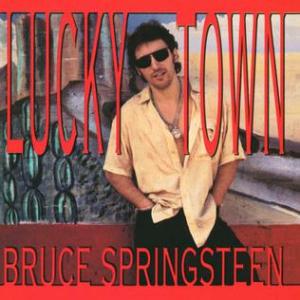
At the end of the sessions for Human Touch, Bruce felt he needed one more song. He wrote ‘Living Proof’ and hit a streak which bought another ten songs in rapid succession. All of them (with the exception of ‘Happy’) were released as Lucky Town.
When I first bought these two albums I did so at the same time – I believe it was after having bought a ‘double’ which contained both Nebraska and Darkness so they were always gonna struggle to compare – and, initially, it was (as with many others I’ve read) Human Touch that I preferred. Yet on repeated listens and with the passing of time it’s Lucky Town that I go back to more. I find it’s quiet and more-adult contemplations get better with time and experience.
There’s something so much lighter about it yet it’s so much more focused and the song-writing stronger and more convincingly true than on Human Touch. While I’ll skip ‘Leap of Faith’ and’Big Muddy’ the remainder aren’t too bad at all and some I’d even call great.
‘Better Days’ is a strong kick-off and one that captures the happiness and contentment in his new life and how he struggled to reconcile such feelings with his former life -“It’s a sad funny ending to find yourself pretending, a rich man in a poor man’s shirt…. a life of leisure and a pirate’s treasure don’t make much for tragedy” – and the dichotomy of how to write about it rather than his previous muses that Bruce spent the majority of Human Touch and a later, never to be released, album fumbling around.
The song that sparked the whole album off, ‘Living Proof’, is one that I came to appreciate more as I added more years to my own clock, especially with fatherhood. While the slightly too slick and heavy session musicians almost marr it, the production isn’t as overwhelming as on this albums’ sister and it’s hard to deny the genuine salvation Bruce had found in this himself, the same goes for ‘My Beautiful Reward‘. *
Perhaps the album’s most lasting export, though, is ‘If I Should Fall Behind’ which very quickly outgrew it’s relatively minor representation here and became a centrepiece of many a live show and no doubt features in a lot of fan favourite lists. A beautiful, hushed hymn to his wife as they began their new life together which manages to do that magical thing a good Bruce Springsteen song can do – take something personal to him and make it universal to all and, if you check the notes, it’s one of those in which he played everything (save the drums) himself ensuring a) it comes across as intended and b) isn’t marred by flat playing:
‘Souls of the Departed’ is a strong song, touching back to the themes of ‘Born In The USA’ – only this time spurred by the Gulf War and the LA Riots; “This is a prayer for the souls of the departed, those who’ve gone and left their babies brokenhearted, young lives over before they got started” only with added personal clout this time round as all Bruce, while tucking his son into bed, “can think of is what if it would’ve been him instead.” It’s a bitter, cynical and biting song. Oddly enough Bruce managed to spend the 80’s avoiding having his work inflected too much by popular sound trends and the big sound on ‘Born In The USA’ pushes the song forward and lifts it. On ‘Souls..’ the sound is big but it was almost dated by the time it was released. It’s one of those from this era that I’d so very love to hear with the clout of Max Weinberg and a searing lick from Nils. Oh well. Still, I think more tunes from Lucky Town have been played live in recent years than from its sister album.
In his book Bruce does mention how he auditioned a lot of session players for his new band. How he struggled to find – given how many musicians there must be per square metre in that place I do wonder how hard he looked – a drummer with sufficient skill and clout… But he was determined to try routes new so calling The band wasn’t on the cards. It’s perhaps telling how he now feels about the band he assembled and its reception given how scant a summary he gives; there’s no enthusiastic wrap-up of concerts given or even much commentary of how it was received.
To be honest, it’s probably that which stops this album going higher up the list. Some of the songs on here stand head and shoulders above later and earlier duds but it’s the overall sound and lack of richness that comes with most Springsteen albums that handicaps Lucky Town and the songs on it. The players may have been top notch (for all my comments Gary Mallaber is a fine drummer) but the chemistry and spark just feels that little bit hollower and the production has dated poorly.
I think that, with the release of Human Touch and Lucky Town, two very-slick, glossy albums with a production that almost buffed the (ironically) human touch from Bruce’s songs, a lot of fans that had been held enraptured since the early seventies stopped listening and many didn’t really pay much attention again.
It’s a shame, for on Lucky Town there are some real gems. As any artist who releases a double album (or two single ones on the same day) will no doubt face the commentary that the project would’ve worked better whittled down to a single disc. It’s certainly true here. Oddly I think Bruce’s entire decade would probably have been kicked off and gone differently, and regarded as such in hindsight, had he binned pretty much all of Human Touch, dropped the title track onto Lucky Town, swapped ‘Leap of Faith’ for ‘With Every Wish’….. I think every fan has probably done this but, perhaps, mine would go something like this:
Now I can imagine that for each of the albums that precede my ‘Most’ favourite in this series there’s plenty of people that will say “actually that’s my favourite..” to pretty much all of them. With the easy and obvious exception that is Springsteen’s early-nineties output. Given the scarcity with which the tracks are touched live I don’t think even Bruce cares much for them in retrospect.
Released on the same day in March 1992, neither Lucky Town or Human Touch have fared well with fans or critics. Perhaps it was the lack of E-Street support, perhaps it was the changing musical culture at the time but either way, I doubt that even the most die-hard will argue for their place in a Top Ten.
Of the two I find Human Touch the overall weakest link in Bruce’s mighty discography. These were songs that Bruce had been tooling around with for some time and had, in doing so, over-cooked. If you listen to The Christic Shows recorded in LA in 1990, many of the songs that would appear here can be heard in their early embryonic stages. They sound better. At the time it would’ve left fans eager to hear the finished result, excited by the change in direction with what sounded like some real personal stuff (though the sexually-charged ‘Red Headed Woman’ didn’t make the cut). Unfortunately when it came time to capture theses songs for release, the result was what’s now considered the nadir of Bruce’s output.
It’s not that there aren’t good songs on Human Touch it’s just that there aren’t enough of them and those that have the bones of a great song are lost under some truly awful production and sound, like ‘Soul Driver’, for example. When I do slip the cd into the car, it’s more likely that I skip through more than half of the album.
The story goes that Bruce – newly transplanted to LA – had a collection of songs that he was working on but couldn’t quite find the turning point that would bring them into a cohesive album. He wanted to continue the theme and practice of not employing the E-Street Band he’d started with Tunnel of Love and try a new approach. Then he met up with a similarly newly-moved Roy Bittan who showed him his new recording set up and synths before playing his former-Boss a few tunes he’d worked on. Inspired, Bruce went home, added a few parts and lyrics to those tracks and a long period trying to find the ‘sound’ and working with session players followed before the album was complete*.
Of those Bittan co-writes that made Human Touch ”Roll of the Dice‘ is Springsteen-by-numbers but without the heart and force of the E-Street band to lift it beyond over-glossed territory. On the other hand, ‘Real World’ is perhaps the most fully-realised of his ‘men and women’ concept that many had hoped for. There’s just not enough of it and the players and production still mar what should have been a classic.
While the production (the one and only time Roy Bittan received a credit for such) is very much of it’s time and the slick sound has never suited Bruce. It would be the last ‘rock’ album he’d release before he released that he wasn’t the right person to produce his music any more. The album does have some strong contenders, not least it’s classic title track, that stand up well to repeated listens. ‘With Every Wish’ is a great tune as is ‘I Wish I Were Blind‘. They’re more relaxed, less drenched in studio-session sound and are genuine, occasionally even tender tunes that, along with ‘Human Touch’ and ‘Real World’ are the most realised on the album. Indeed, some of his best lyrics can be found within the title track: “you can’t shut off the risk and the pain, without losing the love that remains”.
Unfortunately the remainder – to my ears – sound more like what a songwriter trying to write like Bruce Springsteen would create. They seem hollow-boned and attempts to cover the gaps with gloss and force (which may have worked with the E-Street) via top notch session players just fall flat. At the time it wasn’t so condemned but now, further on up the road, it’s blighted by dated guitar tones and synthesisers and drum beats that simply don’t measure up to Max.
Thankfully, Human Touch may have been the first release of the nineties from Mr Springsteen but from here it was only upwards in terms of quality and its sister release was a whole other story.
In the spirit of ‘what might have been’ – some of the tracks deemed not suitable for Human Touch would later appear on Tracks and, shorn of the production elements that blight it, sound (just a touch mind) a little better than those duffs rounding out the numbers here. I’d gladly swap ‘When the Lights Go Out’ for ’57 Channels’ and I still enjoy ‘Seven Angels’.
Highlights: Human Touch, Real World, With Every Wish, I Wish I Were Blind
Lowlights: Soul Driver, Man’s Job, 57 Channels and Nothin’ On, All Or Nothin’ At All
*Almost – he felt he needed one more song, wrote ‘Living Proof’ and instead dashed off enough tracks to make Lucky Town in just a few days.
I don’t think I’ve really delved into a long ‘series’ of posts on here before. However, after reading Bruce Springsteen’s Born To Run I was thrown into revisiting his albums, almost one-by-one as the book progressed and decided to try to share my thoughts on each – in a series.
It’s an undertaking as this is likely to include some twenty posts so thought I’d first offer up an intro so I can, with the next instalment, get straight to the chase. Now, any musician with a such a long career and discography and varied output is bound to have a number of “worst to best” type lists on them doing the rounds on various websites and Bruce is no exception.
This isn’t intended to be one of those. I’m not a music critic, this isn’t a site of critique more of personal thoughts and opinions. As such I’m going to be running through, in order (though not necessarily uninterrupted), my Least to Most Favourite Bruce Springsteen albums. It’s just that, personal favourites – I don’t lay claim to my judgement of one album’s quality to being universal or true. It’s supposed to be fun after all.
It’s also worth noting that as a Springsteen fan, while it might be among the ‘least’ end of the spectrum, any such album is still likely to be played a fair bit by me and held in overall good standing.
Woke today to the news that, on the 7th November, Leonard Cohen passed away at the age of 82. The Canadian singer, songwriter, poet and novelist had a long and and varied career that saw him pen some of the most revered songs ever put to tape. Taking his colours from the darker end of the palette his were songs that were often better known when sung by others but, in my own opinion, that merely highlighted the quality of his writing. It took a lot to make an arse of such great source material.
While not a huge fan, there’s perhaps just a couple of his albums in my collection (when you factor in that he released 14 studio albums that’s hardly representative), but few could argue that Mr Cohen was an excellent songwriter. Thanks to “Hallelujah” (on which I see Jim at Music Enthusiast has just posted) he’s probably one of the most covered / heard songwriters there is and yet it’s likely few have heard his own version of the song.
Some time ago on a blog almost now forgot I dropped a post citing Songs of Love and Hate as one of my 100 Essential Albums. I’ll share that post here, now, as it seems somewhat fitting:
I know it’s been said before and there’s no way it won’t be said again, and I also know that I’m likely to incur the odd spiteful comment or grimace from those true musos and aficionados that like to put things up on pedestals when I say that I concur with the sentiment that Leonard Cohen writes great songs, for other people to sing.
It sounds awfully popularist to say that Jeff Buckley’s version of “Hallelujah” is the better (if it wasn’t for the fact that it’s not my favourite JB song) and somewhat cliché to say I’d take Concrete Blonde’s version of “Everybody Knows (and I, surely cannot be alone in that) and that “Tower of Song” is better served by Nick Cave’s vocals. That’s not to say I don’t like Mr Cohen, far from it – nobody can question the man’s ability. It’s just that sometimes his voice doesn’t give the songs the life which that of another artist can breath into it.
That being said, there isn’t, however, a single song on Songs Of Love And Hate that I think is better suited to anyone but Leonard. From the moment his voice pours over the tumbling strings of “Avalanche” to the final “la” of “Joan of Arc”, this album, to my mind (and, hey, what’s this blog all about anyway?) is the perfect match for his voice.
Even “Diamonds In The Mine”, which often gets held up as a ‘what the hell is he doing with his voice?’ works for me – it brings to mind one of Bob’s bitter, angst-ridden, rants. While his voice isn’t in it’s natural key there’s no questioning the sincerity of the emotion it bellows.
The fact that he barely touches “Dress Rehearsal Rag” live because he found it so depressing just speaks volumes. The album itself is pretty damn far from cheerful, his voice aches with regret and despair throughout and for someone so seemingly at home with the bleak to come up with something that he himself finds depressing… I have to take my hat off to it.
For me thought there are two songs that define this album and warrant it’s inclusion on this list – “Avalanche” and, of course, “Famous Blue Raincoat”. The number of times I’ve found myself singing ‘New York is cold but I like where I’m living’ or ‘it’s 4 in the morning, the end of December’ and left them hanging in the air because, frankly, that song is damn near perfect in both it’s lyrics, the way it delivers such power from such relatively straightforward wordplay and a nagging melody. Which is why I love “Avalanche” too. A tumbling, cascade of guitar strung notes plunging you straight away into Cohen’s voice.
While it doesn’t contain his best songs, Songs Of Love And Hate does contain the best songs for himself.
To add a little more to this post I’ll include a couple of other favourites from Mr Cohen’s tower of song:
Not too long ago – when explaining the need for self-compiling cds/playlists for those artists who already had a compilation out in the world, I mentioned that compilations are strange thing. That you’re never going to please everybody with a selection (in the linear notes for The Essential, Bruce Springsteen suggests that “one man’s NYC Serenade is another man’s Rosalita”*) and that my choice of what I’d consider essential listening very rarely coincides completely with the ‘official’ compiler’s (usually because they’re doing so with a specific, marketing-dictated aim rather than just cherry picking).
There are some compilations, though, that are as close to perfect and essential as you can get. They do that rare thing of providing as solid, all-encompassing an overview as is possible in a dozen or so tracks in a manner that will provide a great entry-point for the uninitiated and give the already-converted a good career-spanner to listen to when they don’t feel like going through whole-albums. A good track-listing can also allow tracks to breath a little differently, have a better light shone on them than when otherwise buried on an album (see Long Time Comin’ on Springsteen’s Chapter and Verse – of which more to come later).
So I thought I’d kick this possible-series off with one of my favourite compilations, one that’s been keeping me steady company for a good sixteen years now; Asides from Buffalo Tom.
Now when it comes to recalling bands from Boston, I imagine those that get mentioned would include Aerosmith, The Cars, The J. Giels Band, Pixies, possibly even Dropkick Muphys and, of course Boston. I don’t know how many would pull up the trio of Buffalo Tom but, save for a bit of a break between 2000-2007, they’ve been a stalwart of indie-rock since their first album, the J Mascis produced self-titled effort, dropped in 1988.
After shifting song-writing gears for the 90’s, they became a pretty popular alt-rock band and yet, while Big Red Letter Day even managed to crack the top 20 over here, they never achieved the popularity their songs and music deserved. It is mind-boggling to me, and I’m sure others, that bands like The Goo Goo Dolls and Matchbox 20 got gargantuan levels of exposure while how-did-they-miss singles like “Taillights Fade” and “Mineral” remain songs I have to enthuse to people about as they’ve never heard ’em.
Of Buffalo Tom, I’ve read of them being described as “like a bar band fronted by an anxiously melancholic whiskey-fueled Alex Chilton” while even the too-cool-for-this Pitchfork said of them: “solo-ridden guitar-god aspirants Buffalo Tom: 1) named themselves after their drummer and Neil Young’s first band because it’d have been too much trouble to come up with anything really new; 2) played assorted variations on the strummy post-pop that filled collegiate airwaves throughout the 1980s because innovation is overrated; and 3) wrote sharply observed conversational lyrics because it was too hard to be obscure.”
This album came into my hands upon day of release thanks to my hearing “Taillights.. ” on a magazine sampler and seeing (just one of so many) highly-starred reviews against this comp. Having since gone back and accumulated the band’s discography, it’s still Asides From that gets the most plays (I’m genuinely surprised the disc hasn’t given out, the case certainly has). It contains the perfect selection of their finest from the 11-year period represented and the non-chronological sequencing makes this feel more like an album of absolute all-killer-no-filler than a compilation-by-rote. Early-cut “Birdbrain”, for example, is daft but is so full of hook as to be a barn-stormer and here rubs shoulders with the more bluesy-throat of “I’m Allowed”.
What such a track-listing also highlights is that, despite their lack of mainstream or commercial breakthrough, Buffalo Tom remained staggeringly consistent in terms of quality – album closer (and then final single) “Wiser” is one of their finest moments but here sits among plenty of equals – and remained ready and willing to bring it to every session.
While it isn’t going to break any new ground or make anyone wonder “how are they doing that?”, Asides From Buffalo Tom contains 18 very strong songs (even their cover of The Jams’ “Going Underground” is worth a listen) – in a way the fact that I’ve still yet to bump into anyone who shares this knowledge makes em feel just that little more ‘mine’. Still, I’m sharing it here and recommend – given how little it’ll cost – it to all.
After the release of Asides in 2000 (and the quickly-following Besides..), Buffalo Tom took a bit of a break – singer Bill Janovitz dropped another solo album, took up real estate, wrote a couple of books on The Rolling Stones – before getting back together and releasing Three Easy Pieces (2007) and Skins (2011). Both reveal the band remain consistently capable of a great tune and contain tracks that could easily sit alongside those on this best of – particularly You’ll Never Catch Him, Down and Don’t Forget Me (which features co-vocals from Tanya Donelly of another Boston band, Belly). There’s hints/rumour/suggestion of new Buffalo Tom music on the way and it’s something that I’m eagerly anticipating – a now long-term love for a band kicked of and continually fuelled by this compilation.
*or another combination – it, like all of my music collection, is currently sealed up in a box in the ‘spare’ room of my new house.
Since he was old enough to pull himself up and stand holding onto the shelves, my son would reach into the CD shelves that line our hall and pull out an album (or a handful) while I put on my shoes and zipped his coat of a morning. Initially because that’s what toddlers do but subsequently because he’d learn that when he thrust one into my hands odds were that I’d take it out with us and we’d listen to it during the drive – him to the child-minder and me onwards to the office – and the idea of choosing the music for the day appealed to him greatly.
Aside from the fact that he’s already forming favourites and calling out requests (“where’s that Dinosaur Jr?” “Foo Fighters please”) from the back seat before he’s three, it’s meant that as his physical development allowed him to do more than repeatedly grab clusters from the M/N area – he’s been selecting albums that I wouldn’t otherwise do so for myself and, in many instances, hadn’t listened to for years and giving me the impetus to spin things I hadn’t for some time.
Hence; revisiting.
Collapse Into Now
In 1997, a couple of years after a suffering a brain aneurysm on stage in Switzerland, and as the band were due to commence sessions for a new album, drummer Bill Berry told his band mates that he was leaving REM. In the seventeen years he’d sat on his drum stool behind Messrs Stip, Buck and Mills the four-piece from Athens, Georgia had gone from underground, college-scene heroes, broken through with Document and achieved major-label success and sales with Out of Time, Automatic For The People and assured permanent rotation wherever music videos are played with clips for ‘Everybody Hurts’, ‘Losing My Religion’ and, to their own chagrin, ‘Shiny Happy People’.
After announcing his intentions Berry added a caveat; he would only vacate his stool if the others agreed to carry on. As such, the publicity for the band’s next album Up often contained Stipe’s “I guess a three-legged dog is still a dog. It just has to learn to run differently” quote.
I’d gotten quite into REM at this point in time. While I’d played ‘Drive’ on the jukebox at a holiday camp one summer to the point that the guy working there ended up pulling the plug (to be fair he at least gave me my 50p back even if his ‘I think that song breaks it’ lie was weakly delivered0 – it was New Adventures In Hi-Fi that I held and still hold as a great album (‘Departure’, ‘Bittersweet Me’, ‘How The West Was Won and Where It Got Us’, ‘Electrolite’??!) As such Up was purchased by me on day of release. Sadly Berry’s departure also marked the point I pretty much started losing interest. Up has some good songs (3.5 at last count), Reveal was too stodgy and heavy-handed – and marked the last REM album I’d buy for some time – and Around The Sun (or what I’ve heard of it) had all the punch and staying power of a kitten’s fart. Save for the (Berry-co-written) single ‘Bad Day’ from the Warner Bros comp it seemed like the now-three-piece from Athens, Georgia weren’t going to be finding rotation on my stereo again.
But then…. perhaps tired of the inertia and lukewarm reception surrounding their output – Around the Sun had shifted under 240,000 copies in the US – and enthused by working with (finally) a new producer, REM engaged again and, working under tighter pressure and deadlines, released Accelerate; an aggressively upbeat and purposeful album that was, as one critic said, the “sound of a band having enjoyed a good word with themselves”.
For all it’s praise – and I’ve still not added it to my own shelves – Accelerate was a very single-focus album and lacked the subtleties that enthused their earlier and better tracks. I don’t think there was a single mandolin lick to be found. Still, it made me listen again so that, in 2011, when word of a new album and lyric videos for ‘Überlin’ and ‘Mine Smell Like Honey’ dropped, Collapse Into Now was one I bought on day of release.
Until this last week I hadn’t listened to it for a couple of years but each and every time I hear this album I find more to enjoy – that naggingly catchy riff that kicks off proceedings with ‘Discoverer’, the vocal power of ‘Oh My Heart’, the breaking out of that joyous chorus of ‘Mine Smell Like Honey’ or Eddie Vedder’s contribution to ‘It Happened Today’, the blast that is ‘All The Best’ (in which Stipe portends their plans with “it’s just like me to overstay my welcome”) or the blink-and-you’ll-miss-it joy of ‘That Someone Is You’:
Collapse Into Now may not be perfect but then no REM album is 100% (‘Star Me Kitten’, anyone? No, didn’t think so). It is their most consistent and successfully multi-faceted album for a long time and one in which the sheer weight of positives and the quality of the production outnumber its weaker points. Rather than simply play it fast as they’d done with Accelerate, the songs on this album are given space to breath, there are textures that harken back to their earlier work without sounding like re-treads and there’s an overwhelming sense that, once again, they’re enjoying what they do.
Once you’ve reclaimed your reputation – what do you do, though? With their deal with Warner Bros at an end, would they sign to an independent or will they make another massive-money deal? Will they continue this upward trend in quality with another album? With a seemingly-rekindled joy of playing live will they tour?
But they didn’t go for any of that. For it turns out that when they got together to record Collapse Into Now they did so with the idea of “going out on a high note.” And, in September 2011 (just five months after the album’s release) REM announced their decision to call it a day. With Collapse Into Now, to my ears at least and this is my blog after all, they did just that. After all, I doubt people would be clamouring for more if the last think they’d released had been ‘Leaving New York’.
Despite the record breaking temperatures we’re getting for this time of year, there’s an unmistakeable hint of autumn in the air.
It’s at this time of year that two songs which somehow (to my ears) manage to capture the sensation that summer has just slipped away come to mind and they’re both by the same guy – Bill Janovitz.
Summer is from Buffalo Tom’s fifth album Sleepy Eyed and they’d tried to move away from the polished sound of the previous album to something a little more live, in-the-studio feeling:
Best Route comes from Bill Janovitz’ most recent solo outing – a somewhat concept album about his hometown which had “got trapped in amber of nostalgia” . Whether it’s the timing signature, that electric guitar line, the undeniable warmth of that nostalgia when applied to the end of summer… I don’t know, but Best Route is the stand-out for me.


 Mumbling About...