The Dust That Falls from Dreams

91e3i+vVdTLI go back a bit with Louis de Bernières. Well, I say that – like most I started reading him thanks to Captain Corelli’s Mandolin – the first few lines of which were used as discussion point in an A-level English class in – I’d guess – ’97. The perfectly self-contained opening chapter, a beautifully written piece of charming prose, a (what I know now to be) typical de Bernières style light-hearted slice-of-life scene setter with a fantastic description of an inner ear as “an aural orifice more dank, be-lichened, and stalagmitic even than the Drogarati cave”.

I took the print outs containing that first chapter (Dr Iannis Commences his History and is Frustrated) home, passed it to my father and the book was soon in our home and passed into my hands following his. It’s a novel well-known, commented upon, discussed and dissected. As such I won’t here.

There followed the discovery of and lapping up of de Bernières’ South American Trilogy, earlier novellas and plays, the stop-gap Red Dog and, my personal favourite Birds Without Wings. 

Birds Without Wings arrived some ten years after the publication of de Bernières’ previous novel. But he isn’t a writer of small books; his novels are of epic proportion and scope.

It’s not too surprising, then, that The Dust That Falls From Dreams arrived another ten years after the publication of Birds... Not that he was idle. Between times there was A Partisan’s Daughter a (somewhat smaller though nonetheless impressive) novel set in more contemporary times and familiar locales and, in 2009, Notwithstanding – a charming, if non-consequential collection of semi-linked short stories all set in an English village of a certain southern England type and charm, populated by characters of a particular eccentricity.

Perhaps, in hindsight, those stories within Notwithstanding were perhaps something of an exercise. I’m inclined to see them as de Bernières – known for novels set in Greece, Latin America and Turkey – setting out his stall in ‘middle England’, gaining confidence in the styles and character types that would populate his next saga for, as we’re now aware, The Dust That Falls From Dreams is the first of a planned trilogy.

And so, to it.

The Dust That Falls From Dreams is every bit the opus I’ve been waiting for as a fan of de Bernières. Yes, some will complain that he’s switched a setting like Cephalonia or Cochadebajo de los Gatos for Kent, but arseholes to them. This is a novel of epic proportions and every bit as “de Bernières” as his previous five “big” novels.

Kicking off with death of Queen Victoria and the commencement of the Edwardian era, we’re introduced to the McCosh family as they hold a belated coronation party with their neighbours. With a sudden time-jump we’re off to the Georgian era and slap bang on the doorstep of the First World War.

Of all the writers to task themselves with chronicling this most heinous of periods, the upheaval and destruction it wrought, there are few who could do so as well as de Bernières (Sebastian Faulks’ Birdsong is, of course, another exemplary example) – bringing all too real the events both home and abroad that bought an end to an era and threw individuals into a torrid world where the sense of the individual was lost.

CJAjyIFWcAEeatZIn The Dust That Falls From Dreams de Bernières is at his best. The plot and author play with our fears and guesses and – as those familiar with the author will expect – deliver both uproariously funny and uplifting moments with one chapter before just as skilfully delivering gut-wrenching emotional blows to the heart in the next (this is the Great War, after all). I won’t dwell and deliver spoilers as to who de Bernières casts asunder but will say I felt the final one, unrelated to any ‘cast’ member was a little uneccessary and particularly crushing, especially after the soul hitting account of the Folkestone bombings. Though, in hindsight, this too shows the author’s mastery at engaging a reader and rendering you completely spellbound.

The McCosh girls’ visit to a local medium and the scenes that unfold add a welcome touch of the fantastical, hearkening back to the author’s Latin American Trilogy, and well-chosen historical references help set a thoroughly well realised setting in both time and place, home and abroad.

At times the characters could perhaps be considered a little two-dimensional (though I don’t recall too many layers being attributed to Don Emmanuel) but this is the start of a trilogy and I have little doubt that as the whole saga of the McCosh family unfolds in de Bernières’ magnificent style, all will become fully rounded and developed.

The Dust That Falls From Dreams is a saga that encompasses three families at one of the most dramatic times the World faced. It deals with a vast array of subjects beyond the core of love and death, picking up the politics of class and gender, religion and industrialisation as it goes.

While not quite up there with Birds Without Wings this may well be the start of something amazing as the saga continues and should well be considered a fantastic novel in its own right. I await the next instalment with high expectations.

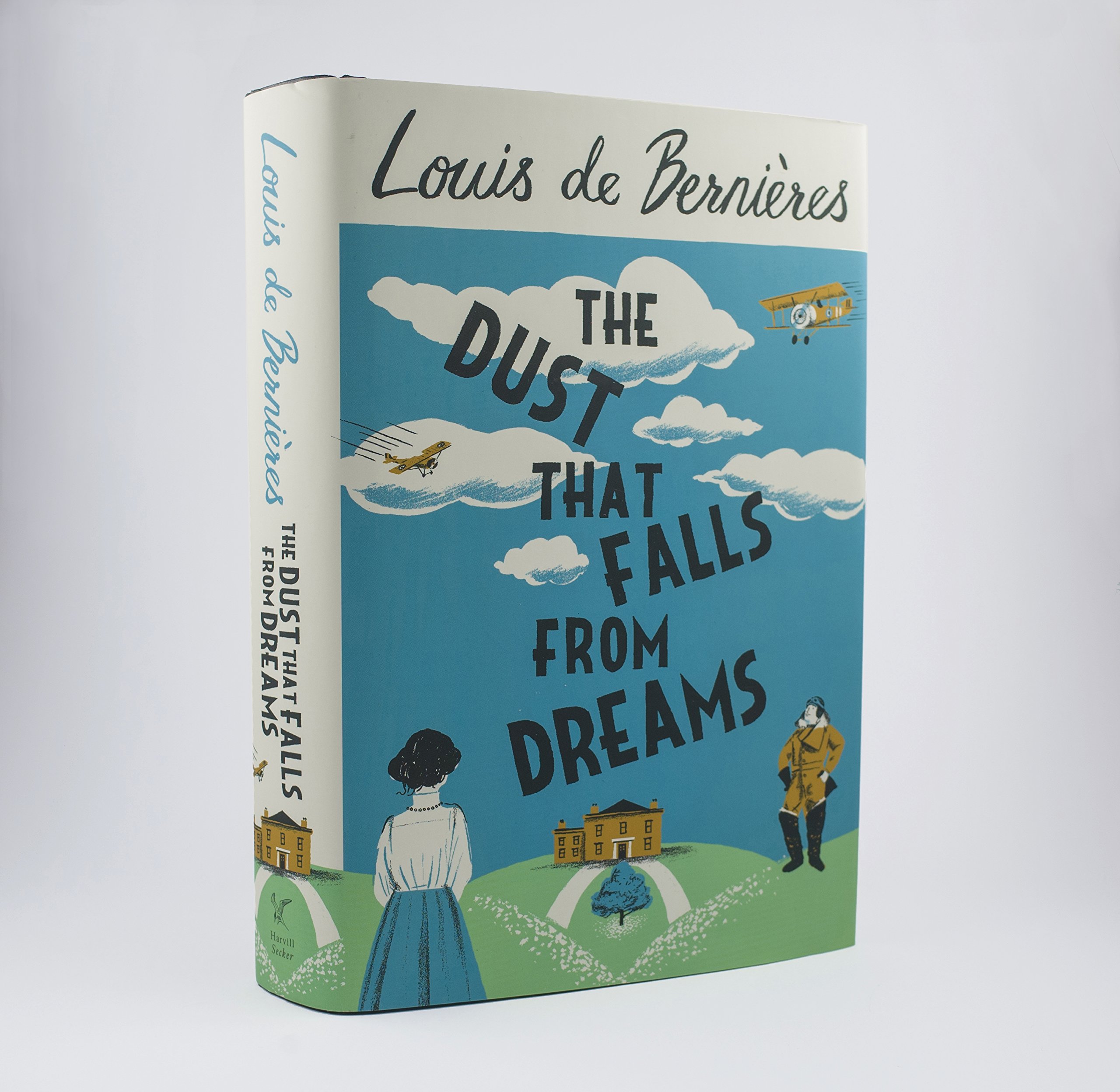
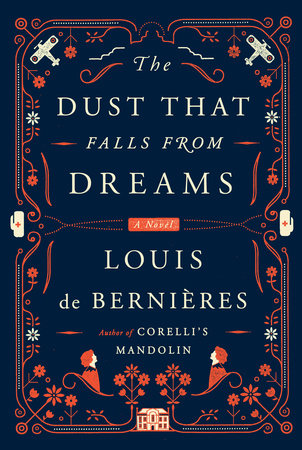
On a side note; why do we get lumped with such a cack cover image in the UK compared to the more attractive cover design they get in US?
9781101946480


Pirate Hunters

I can’t stand Johnny Depp. Thoroughly disliked the part of Pirates of the Caribbean film I saw and found no inclination to watch any more. I grew up with numerous pirate films on tv in the background, Errol Flynn prancing around with his skinny sword flailing in another “swashbuckling” adventure, enough to get bored with what Hollywood told us “pirates” were.

Now, though, now I find myself browsing for more information on pirates, particularly on one pirate – Joseph Bannister, captain of the Golden Fleece.

Why? Because I just read Pirate Hunters by Robert Kurson – the story of two men’s fight to find just that ship and it’s told with such a contagious delight and reverence for the period that it’s impossible not to be caught up in the thrill of the hunt and the enthusiasm. Pirates, real Pirates, have, like so many, been done a massive disservice by technicolor.

IMG_4893Let’s rewind, a little, to the late seventeenth century – the Golden Age of Piracy. Pirates operating out of Port Royal in Jamaica are in their prime – silver pieces of eight are bank rolling a city that would give Sodom and Gomarrah a run for their money. A time populated by those pirates whose names now echo down through the years. Enter into this one of history’s all-but forgotten Pirate greats – Joseph Bannister.

During an age where Pirates such as Henry Morgan, William Kidd and “Black Sam” Bellamy and even Blackbeard himself roved the seas, plundering the English and Spanish galleons for all their worth, you’d have to do something pretty balls-out brave and audacious to stand out. How about stealing the very-well-armed merchant ship you’d captained for years, recruiting a crew of pirates and embarking on a new career of piracy? How about robbing Spanish ships, getting caught, convincing the jury (made up of locals that benefited profusely from the local Pirates) to find you not-guilty and, while awaiting re-trail, get your ship re-sailed and sneak it out of Port Royal under the noses and huge gun batteries of the governor and go straight back into piracy? How about then being cornered by two massive Royal Navy frigates tasked with destroying you and, instead of surrendering, careen your ship, mount your guns on the land and engage them in a massive two-day battle that leaves them with many dead, out of ammunition and, in an event never-heard of, force the Royal Navy to slink away in retreat?

Well that’s what Bannister did. All that an more. While Bannister survived the encounter and made his getaway The Golden Fleece was essentially destroyed in the battle and sunk, never to be found.

Never, that is, until a pair of modern-day treasure hunters John Chatterton and John Mattera took on the task of locating the wreck and, in so doing, discover only the second pirate ship ever found and positively identified.

Robert Kurson’s Pirate Hunters is the story of that quest. It’s a story of two men consumed by one goal, pretty much at the cost (financial and otherwise) of all else.

I’d given little thought to such adventures. Never watched any Discovery Channel-style documentary on it, never really realised just how much was involved – how much dedication, expertise and strength both physical and mental was needed to prise relics from their resting places. Don’t get me wrong, I didn’t think you’d pull up a 17th Century ship by paddling off the beach with a scuba mask on, but the events portrayed in Pirate Hunters are intense. Along with what must be mind-numbing and frustrating days of combing the depths with a sonar and diving on every blip, there’s painstaking research in Spanish historical vaults, consultations with legendary modern-day treasure hunters and risking it all on hunches and gut-feelings. At one point Mattera finds himself ambushed by opportunistic robbers while driving down the wrong dirt-road and, later, both he and Chatterton are pursued by yet-another would-be-robber on a motorbike. There’s also the competition from other treasure hunters looking to get in first, fraying personal relationships and a ticking clock as political changes threaten to scupper Chatterton and Mattera’s pursuit for the wreck.

Kurson relays the events that lead to the discovery of The Golden Fleece as though they’re that of a thriller novel – there’s no reason the quote on the cover comes from Lee Child. The pace maintains a driving momentum and avoids lingering on the slower elements of the chase. It doesn’t hurt that Johns Chatterton and Mattera are practically the stuff of legend in their own rights – both of whose biographies would provide a gripping read – and Joseph Bannister and his history provide a thrilling back story. There’s a whopping of amount of insight into the world of pirates and discoveries of more than just shipwrecks – the motivation behind Bannister turning Pirate is a revelation into a world that Hollywood has practically rendered dull.

In Pirate Hunters, Kurson not only injects excitement and enthusiasm into the pursuit of The Golden Fleece but re-injects a sense of passion and true adventure into a period of history so easily nullified by over-exposure. As is so often the case, reality can be so much more interesting than fiction and no amount of Hollywood script writers can do justice to the era in such a way as Kurson has done in just a few hundred pages. As an account of a search for sunken wonder, Pirate Hunters is both compelling and factual – a well balanced mix of fact and gripping narrative. As a taster, an introduction to the fascinations of the Golden Age of Piracy… it’s even better.

Oh, and a big thanks to Elliott and Thompson for sending this my way to read.


He’s Back, and he’s Fuhrious

I’ll admit it – I bought this book after seeing the advert at a tube station and laughing at the pun “He’s back, and he’s Fuhrious”

Modern day Berlin. A man wakes up on a piece of scrub land in Berlin. He’s in full military uniform. He’s unaware how he got there and has trouble remembering anything of the previous day or two. He’s Adolf Hitler.

The Adolf Hitler.

IMG_4755So – Hitler has, somehow, been removed from the pages of history and deposited back among modern Germans. A world he expected to not exist: he had given orders for it to be burnt to the ground. He believes that he’s here due to the intervention of ‘fate’ and has been enlisted to save Germany, again, from the horror it – according to him -finds itself in.

Mistaken as an impersonator, a very intense one who refuses to break character, he finds himself taken in by a newspaper vendor conveniently located close to a television production company who buy into his act and line him up with a slot on a comedy tv show.

The humour here in Timur Vermes’ Look Who’s Back is both laugh out loud and extremely dark.

There’s a fantastic section early in where, having been caught in civvies while his uniform is cleaned, Hitler berates a young tv producer who had made a comment about Poland. Chastising him for his slovenly appearance, Hitler launches into a tirade, doubting that the young man even knows where Poland is, demands to know if he’s ever served in the army while doubting so as he clearly does not know where his uniform is. Hitler knows where his uniform is at all times, produces a ticket from his pocket and announces “it is at the dry-cleaners”.

There’s the suggestion that Hitler write a marriage / relationship advice book: “you could call it ‘Mein Kempf – With My Wife'”.

There’s the point that Hitler’s uniform is a little damp and, for some reason, smells of gasoline…

The combination of Hitler of old mixing with the modern world is funny but can run the risk of being a one-joke pony with diminishing results. So Vermes uses the voice of Hitler to take a satirical swipe at present day politics – Putin is admonished for appearing with his shirt off, Merkel mocked, the ideals of Germany’s Green party likened to some of his own and the Hilter of old rocking up on the doorstep of the current National Democratic Party and tearing them apart as pale imposters.

There are, however, two elements that stop this book from being a great one. Both are down to the fact that the character here isn’t fictional. It’s hard to imagine the real Hitler ever acclimatising and adapting to modernity quite as wilfully and quickly as he does – in order to propel it toward it’s function – here. The fact that he takes so easily to computers and smart phones enables all that follows and is necessary as such but isn’t quite plausible. That being said, suspend your element of disbelief and get past it, it’s a comedy after all.

And… therein lies the rub. It is a comedy, never lays claim to be serious. But while the book is clearly a satire and takes swipes at all things modern and politico, it does so from the eyes of one of History’s monster. As a bit of a history buff I’ve spent several years expanding my knowledge of World War 2 – not the dates and the statistics, the human stories. A large part of my bookshelves are given over to it. I’ve read the accounts of those who both witnessed, suffered and lost at the hands of this nasty entity and his followers.  Even if we are continually reminded that “the Jews are no laughing matter.”

There’s a theory that if you expose an audience to only one point of view, one take, one narrative for a certain amount of time, they’ll begin to find little ways to identify with that voice. To do so with Hitler is a very bold move. It works at times but the over-riding element here, especially given the lack of character change and arc (there’s no reason the real Hitler would consider any opinion other than his own so wouldn’t change), is that this is still told through the eyes of a man responsible for some of worst atrocities known to man.

As such Look Who’s Back fails to be completely laugh out loud throughout – it’s hard to laugh with abandonment at his admonishing of modern day Nazis for failing to to live up to the party when you know just what his version of living up to that party would be. But it is a very funny, satirical swipe at both how he rose to power in the first place and could, conceivably, do so again – anyone who’s been sickened by the rise of the petty, small-minded and similarly prejudiced Farage and his friends can see it’s not too much of a stretch after all.

This wasn’t quite what I was expecting, but there are plenty of laugh out loud moments and a few moments that make you think.

Girl In A Band

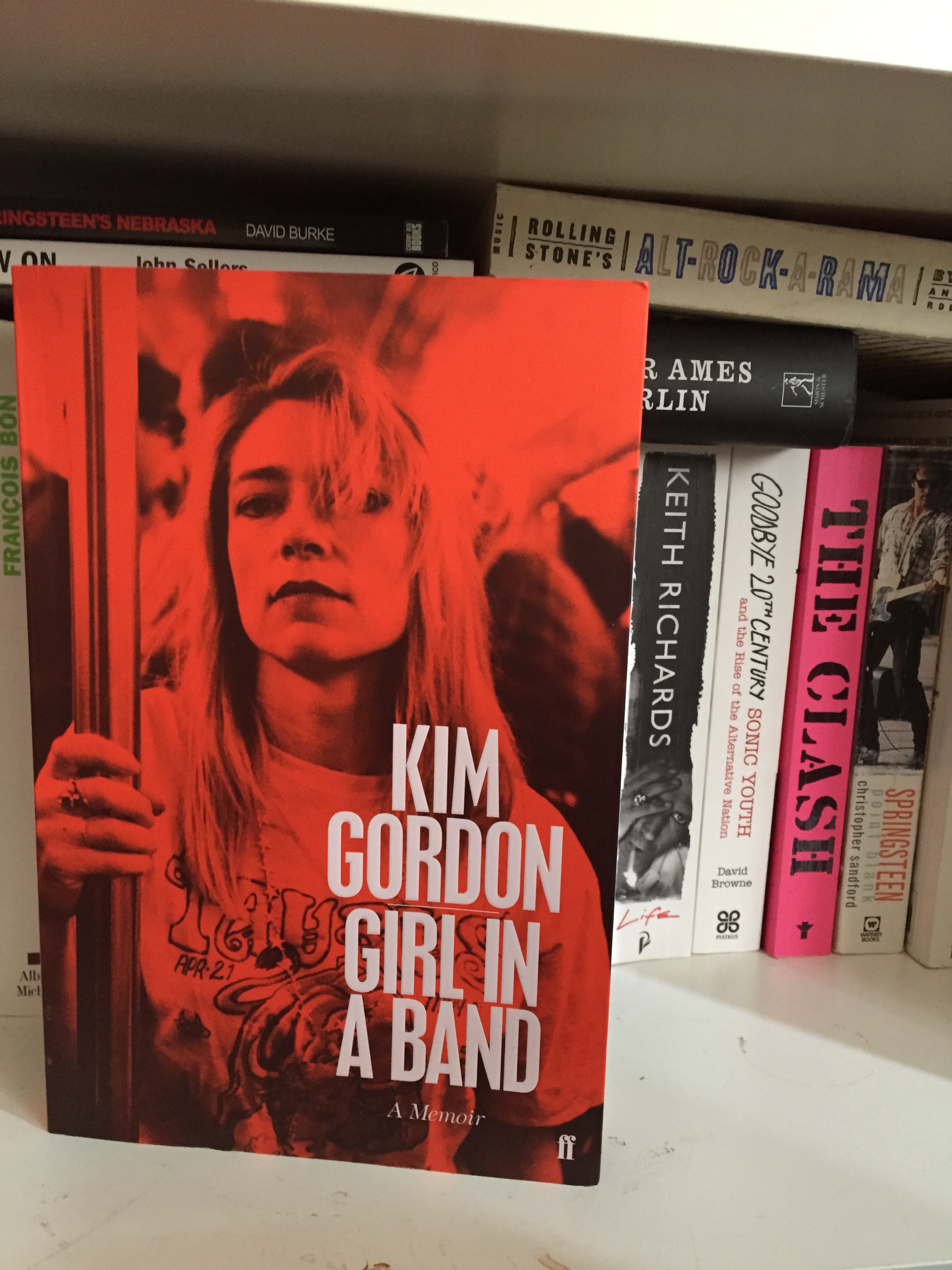
IMG_4834When Girl In A Band was released earlier this year I didn’t rush out and buy it. In fact, it was my wife that added this one to the collection and got to it first.

It’s safe to say that going in to this book I had mixed feelings. On the one hand; I love Sonic Youth and was anxious to gobble down more insights into the band, its working process and its body of work. On the other; Kim and Thurston’s split meant not only the end of Sonic Youth but a shift in focus whenever the band or either of them were mentioned in print. As such all press surrounding the release of Girl In A Band – including the excerpts printed in various publications – seemed heavier on that matter than the music.

It’s also safe to say that coming away from this book I have mixed feelings.

This is a memoir, after all. Says it right there in the title: Girl In A Band: A Memoir. So not an auto-biog in the traditional linear sense nor a “making of the album” type book. Further ‘nor’ is it a My Time In Sonic Youth book. No; it’s Kim Gordon’s memoir and to expect it to be solely on SY would be rude and demeaning as Ms Gordon’s life revolves around a whole lot more.

Gordon writes movingly about her early life and family – the terror inflicted upon her by her older brother and the greater terrors unleashed by his illness – and finding her way in the art world and path into music.

All that being said, though, Sonic Youth is/was a big part of Kim’s life and so does get plenty of page time too. Gordon is remarkably frank about her limited singing abilities – explaining that she asked Kim Deal to sing the harmonies on Little Trouble Girl as she, well, couldn’t – and offers insights into the writing / recording of many of SY’s tunes including my own favourite Tunic (Song for Karen).

There’s also plenty of revelations about life with the band – touring with Neil Young and its pitfalls, Kurt Cobain (a gentle yet tortured and manic soul here) and enough to suggest that Kim Gordon and Courtney Love don’t exchange Christmas Cards.

For all of the above I loved this book and would happily read it again.

Though as it’s a memoir and a recent one at that, the dissolution of Kim and Thurston’s marriage hangs heavy over the book. Hindsight often gets a few words in on recollections of earlier times and then there’s the break-up itself. It’s dealt with in, again, a remarkably frank manner – the discovery of text messages / emails from the Other Woman, attempts at counselling and repairing the marriage and, throughout, Kim’s own devastation.

It’s hard reading. Perhaps, to me, because the two had previously been more private about their relationship. When the announcement of their separation was made it was very quiet and via their label. In a world where celebrity couples can’t walk the dog alone without speculation appearing across the internet that their relationship is on the skids, it was a welcome relief for private matters to remain just that.

But then, as mentioned, this is her memoir and its her right to use the medium to set her version on the record, perhaps so as to never need do so again. It’s a little uncomfortable to read given just how open and forthright the sordid details of Thurston’s betrayal and the abrupt collapse of their marriage are laid bare – as though, perhaps, the disclosure was a little too full.

Nonetheless, Girl In A Band is a compelling read.

We Shall Inherit The Wind

Having gotten a taste for Nordic Noir I’ve now been given the opportunity to read the man hailed as one of the fathers of the genre – Gunnar Staalesen.

First published in 2010 in Norway, We Shall Inherit The Wind is the 18th novel in the Varg Veum series and now published in English by Orenda Books (if ever there’s a publisher to follow devotedly it’s Orenda Books) with translation by Don Bartlett.

We Shall Inherit the Wind BF AW.inddSet in 1998, Staalesen’s private investigator Varg Veum sits at the hospital bedside of his long-term girlfriend Karin as she battles life-threatening injuries bought about by the events surrounding Varg’s latest investigation.

From here Staalesen takes us back – by “barely a week” – to re-trace those events (when I re-read that line for this review I had to read it twice as so much is packed into just a few days). Given how we know where they lead, the edge of the seat is pretty much all you’ll occupy from here on in.

This ominous start leads us into a missing-persons case, with Veum pretty certain that the missing man – Mons Mæland – is already dead. Veum’s initial digging into Mæland’s affairs opens up a Pandora’s Box of questions with no clear answers. Every clue seems to point toward a more complex mystery which becomes all the more thrilling when Mæland is found dead – in a most dramatic fashion – and the plot thickens.

Location is key. While Veum operates out of Staalesen’s own Bergen, most of the action takes place on the fictitious Brennøy and nearby islands. We’re a little outside of the comfort-zone here, you got the sense that you’re out in the wilds on each occasion that Veum leaves Bergen behind, with civilisation just a little too far over the horizon – indeed, law and order needs to arrive via helicopter.

From experience I know how stunning Norway can be but this isn’t a summer holiday; this is autumn and Staalesen uses the isolation afforded by the setting to up the chill-factor. From the off, almost, the remote locations hang heavy with foreboding:

…the trees stood like dark monuments to a time when not only the mountains had to be clad but every tiny scrap of island skirted by the fjord. Accordingly spruces lined long stretches of the Vestland cost. No one had thinned the striplings, and no one had cut down the trees except the cabin owners who had desperately tried to clear themselves a place in the sun. It looked as if they had given up here ages ago.

So much to love in that paragraph alone… “dark monuments”…. “desperately tried”…  “given up here ages ago”… you almost have the “abandon all hope” sign nailed to the start of the chapter.

Far from being a run-of-the-mill who-dunnit, We Shall Inherit The Wind is an intense read, pulling in eco-terrorism, religious fanaticism, corruption both at corporate and local-government level, plot twist after plot twist and a cast of characters with plenty of secrets and hidden connections. Two, three, four times I thought I’d sussed out who was behind Mæland’s murder only to be left utterly open-mouthed by the final reveal with Veum keeping his cards close to his chest right until the bitter end. I’ll admit I also felt like I’d been emotionally sucker-punched come the end, having been so caught up in the mystery as to be left open for the impact of the human consequences.

Varg means “wolf” in Norwegian and the novel approaches the plot just as a wolf its prey; elements come together piece-by-piece, as the wolf slowly and assuredly stalks it prey Varg is a wise hunter, patiently letting events unfold with delicate pacing. Rather than rushing in and barrelling along at a frantic pace there’s long drives and ferry rides (the novel is set in the fjords of Norway, not down-town LA afterall), a stealthy gathering of every shred of evidence (and a lot of people’s cages rattled) before going in for the violent and bloody climax.

Gunnar Staalesen is clearly a master-at-work by now, having first introduced the world to Varg Veum back in 1977. The prose is richly detailed, the plot enthused with social and environmental commentary while while never diminishing in interest or pace, the dialogue natural and convincing and the supporting characters all bristle with life.

A multi-layered, engrossing and skilfully written novel, there’s not an excess word in We Shall Inherit The Wind. It’s a slow-building exercise in suspense that’s 100% addictive, one that gets you in the wolf’s jaws with the first few lines, sinks its teeth in and won’t let go until long after the finale.

After my first dip into the world of Varg Veum I’m left wanting more. With We Shall Inherit The Wind I’ve been afforded a snap-shot into the life of a very complex but nonetheless endearing and relatable character and anxiously await the next two instalments from my favourite publisher. Though I may search out the earlier two novels to have made it into English.

I’m one of the last stops on the blog tour for this novel so do check out those that have come before me including yesterday’s great interview with Staalesn at Nordic Noir and get your hands / kindle / e-reader / whatever on a copy of this hugely rewarding read via Orenda.

We Shall Inherit the Wind Blog Tour

Nothing Ever Happens Around Here

Careful; the smallest whiff of a spoiler is contained fleetingly herein.

Iceland.

If you’d asked me a couple of weeks ago what I associate with that country I’d have suggested a few bands like Sigur Rós, múm, Of Monsters and Men, Olafur Arnalds and that woman called Björk , Reykjavik 101, unpronounceable (by me) volcanoes and geysers. Oh, and the chap who sang “Ég á líf” at Eurovision a couple of years ago.

If you ask me the same question today I’ll add fjords, the herring boom, and great Nordic crime fiction to that list.

For in the last week I had the utmost pleasure of reading Snowblind by Ragnar Jónasson.

The fist novel in Ragnar Jónasson’s Dark Iceland series – almost up to its sixth installment in Iceland – has now been translated into and published in English by Orenda Books.IMG_4357

Snowblind introduces us to Ari Thor Arason – finishing his police training (after starting and dropping other pursuits including Theology) on-the-job having spontaneously accepted a posting in the northern town of Siglufjörður. It’s a posting that takes him hundreds of kilometres away from his home, his partner and his comfort zone. Plunging him into a small town where things aren’t quite as tranquil as they seem and a killer is on the loose.

Quiet and remote, Siglufjörður is a small fishing town only accessible via perilous mountain roads and a small tunnel seemingly carved out of the rock without a millimetre of excess width for as Ari Thor takes his first journey through the sense of a trap being sealed begins to sneak in – “it was a narrow single track…. carved through the mountainside more than forty years ago” with water dripping in the darkness from a ceiling unseen. Even on the other side the weather is starting to turn grim and oppressive (“every winter is a heavy winter in Siglufjörður”).

Still, what could go wrong?  Siglufjörður is an idyllic little community set amongst the mountains and fjord where – according to Police Inspector Tomas “nothing ever happens”.

Nothing that is except murders, manslaughter, literary theft, adultery, fugitives in hiding, drunk locals stumbling into the wrong house at night and seemingly not a character in the story without a history of loss and tragedy and, of course, the politics of local am-dram.

Having visited such small towns at the foot of a fjord (albeit in Norway not Iceland) in summer when the majesty of the scenery will steal your breath, I often wondered how different those imposing mountains would be when winter sets in and the calm of such detached living is replaced by a sense of being cut-off and encircled by thousands of metres of impenetrable nature. I need wonder no more; Ragnar Jónasson perfectly creates an atmosphere of dense, stifling claustrophobia, an impenetrable trap tightening with every falling flake, using geology to form a locked-room style setting with the imposing mountains and heavy snow falling in like a heavy, stifling blanket:

Claustrophobia had sneaked up on him, a feeling that had deepened as the snowfall around the station had become increasingly heavy. It was as if the weather gods were trying to construct a wall around the building that he would never be able to break through. He saw things around him grow dim and suddenly he found himself fighting for his breath.


Siglufjörður beset by snow

Siglufjörður beset by snow

The fact that Ari Thor – like the reader – is the only one not used to such environs deftly adds to the fish-out-of-water feeling, almost a “am I the only sane person here?” element adding to the tension.

Just as the winter snow falls gently at first but builds, the plot unfolds slowly; each of the character arcs expanding at their own pace, gently but intractably linking to each other and interspersed with snippets of a knife-point burglary so obviously doomed to a bad end that no matter how tranquil that which follows may be, a sense of foreboding and danger pervades.

For a debut novel, Snowblind is startlingly confident and sure-footed. The characters and dialogue all ring true, the plot is original and packed with plenty a surprise. Perhaps most pleasingly of all, Jónasson steers clear of hackneyed plot devices and reveals; while Ari Thor possess a talent for his work he’s no ‘instant wonder / super cop’ – in fact his inexperience lands him in a very dangerous position as he enthusiastically blunders into a confrontation with a killer, preventing any real chance of justice being served and only solves the novels main “who dunnit” by chance.

It’s clear that Ari Thor is a character that has plenty of space and potential to grow and that the sequel is currently in-translation by Quentin Bates (who deserves very positive praise for his translation of Snowblind) can only be considered great news. The first sliver of NightBlind is enough to have me hooked while confirming that Ragnar Jónasson is a writer with plenty more up his sleeve.

From it’s opening prelude, Snowblind steps back a couple of months to put the pieces in place, then assuredly and calmly expands into a compelling thriller that keeps you gripped throughout and delivers a final 1-2-3 punch of revelations that will leave your gob on the floor.

Get a hold of a copy today and check out the other stops on the blog tour.

snowbling-blog-tour-2

Ploughing Through and You Don’t Know Jack

Oops; another month slips by without a post. Life is a busy thing with a toddler. The library has continued to grow and while my to-read list grows I’m getting through some great books. This last month (and a few days) I’ve ploughed through four books of an evening / weekend crashtime – and, in the case of one; lunchtimes. Let’s discuss…. IMG_4323 A Christmas gift from my wife (presumably as I’ve often mentioned that nobody says ‘bastard’ or does repressed anger as brilliantly as JC), John Cleese’s autobiography So Anyway was an odd read.

Odd as Cleese is an undoubtedly funny man with a rich and varied career in television and film comedy from Pythons and hoteliers to barristers hankering after Jamie Lee Curtis and even a few straight roles to mix it up a bit. He’s also known for a rather torrid personal life – currently married to his fourth wife – and the odd disagreement / heated debate with other Pythons named Terry Jones. YET wordage is not handed over to any of these but for the passing reference and occasional “so this is where that sketch / idea / character” originated. More ink is spent retrospectively linking events in his life to theories he’d later discover in psychology books than it is on those years so many were sure to have expected coverage of.

But… it’s still a good read. It’s a slow starter – Cleese gives a (sometimes too) thoroughly detailed account of his childhood, school years and early education. We learn how he inexplicably started supported the Australian cricket team as a young child and wonder why we need to know this nugget of information. So Anyway… is as insightful as an auto-bio could be and provides a great arc of a young man finding his calling in comedy – albeit unintentionally at first – and the road that took him to Python. It’s clear that even pre-Python Cleese packed more into these 30 years than many a full-career bio that lines the bookshop shelves. The overwhelming sense though is one of “but what about…”.

One of the things I like about short story collections is the ease of which you can dip in and out, one story at a time as it were, without losing any narrative thread. The problem with short story collections though is that there is no narrative thread, they can jump from tone to tone, first-person to third person narrative and the quality can vary dramatically. You often feel that you’re reading a series of sketches – ideas that will later be fleshed out, trimmed down and slipped in in a minor role or re-worked into a different context in the writer’s novels.

This is certainly the case, in part, with Tales From The Underworld, a collection of short stories by Hans Fallada. While his novels are rich, tightly bound mines of quality, the short stories here are perhaps too obviously touch-points for his later works to be taken at face-value. References to Altholm (setting for A Small Circus) rub shoulders with portrayals of farmworkers suffering at the hands of the government, characters across different stories share names and petty criminals and criminal acts populate a number of these stories. The struggles to get by, scrape an existence and find succour in the arms of loved ones at the most austere of times form the binding theme between those stories gathered here.

That being said, Fallada is a vastly underrated writer and even the lesser of those stories within Tales From The Underworld is only judged so in comparison to his own more-fulfilled writing. A darkly humorous and at times devastatingly moving collection, the short stories here are sequenced chronologically and show Fallada refining his style and themes. The quality tails off toward the end, sadly, but when viewed in line with his own life add up to show an insight into his thinking and writing process.

Reading thrillers has become something of a pleasure again. I’d started to lean into the genre a while ago – then stopped. The same authors I’d started to enjoy started leaving me a bit tired – namely Jeff Abbott and Robert Ludlum. First two Bourne books; brilliant. Third book; awful. Any other Ludlum book I tried was achingly formulaic. First Jeff Abbott books I read – Panic, Fear, Run – cracking stuff. Then he started in with the Sam Capra series and my attention waned as it all became too obvious.

But then lately…. lately I’ve been getting more into it all again. So, first stop: The Ghost by Robert Harris. Many’s the time I’ve been wandering around the supermarket at lunch and have seen a number of cheap books and thought of buying to read during the lunch breaks. This was one of those. I paid just £1 for it having immensely enjoyed Fatherland and found the story behind its publishing intriguing – upon hearing that Tony Blair was to resign, Harris stopped what he was working on in order to write this and get it out ahead of Blair’s own memoirs.

The Ghost is equal parts thriller and political swiping at Blair; a ghost-writer is bought in to help former Prime Minister Adam Lang complete his memoirs following the death of his former assistant. Very much a dig at Labour, its cozying up to the US and involvement in the War on Terror, The Ghost is still a gripping and well written thriller with enough grip and cliff-hanger-shockers to be a bloody good read even without the political overtones – especially as the final reveal is so shocking it surely cannot be true or intended to suggest so. While I’m not about to rush out and start filling the H section of the book shelves with the spines of Mr Harris’ novels, it’s certainly well worth a read – especially at just £1. They ought to include it in the Meal Deal for that value. 

IMG_4327

So with an appetite for a good thriller and having found the film adaptation of the character to be fine enough for brain-off entertainment I decided it was time to indulge a long-harboured curiosity and meet Jack Reacher.

Being the stickler for order that I can be I wanted to start at the beginning so got hold of The Killing Floor and devoured it in just a couple of days (not bad considering I really only read before falling asleep or at lunch). There’s been so much praise lauded upon Lee Child and his one-man-army Reacher that I won’t attempt to do so. But: bugger me it’s a good book. I will say that I was hooked from the start and will happily and readily get hold of more instalments.

I won’t go the full-hog though, given that the 20th such book is about to be published. I can’t justify the expense or book shelf space. Sorry, Jack.

This high blood pressure’s got a hold on me…

IMG_4025Powerful things, dreams. David F. Ross’ The Last Days of Disco is bookended by two – the teenage fantasy of Bobby Cassidy racing around Monaco and the disturbed nightmares suffered by older brother Gary following his time in the Falklands War.

Quite the juxtaposition, but then an awful lot happens between the two points as we follow the lives (and dreams) of the Cassidy boys in early-80s Kilmarnock. Bobby – don’t ask to see his tattoos – and his best mate Joey Miller aim at avoiding the dole, school and the army by setting themselves up as the new kings of the mobile disco scene, becoming caught up in conflict with the local party-entertainment-mafia kingpin. Gary, meanwhile, pursues a career in the Army (in an attempt to make his father proud), eventually being caught up in the Falklands Conflict.

I was born in 1980. As such there is zero chance that I was politically aware (or aware of The Jam) at any point during Thatcher’s reign. I do, though, have many a memory of the TV news containing phrases such as “strikes”, of the threat of the IRA and not knowing what Gerry Adams’ voice sounded like, of Simon Weston appearing on various television shows and of the image of the Iron Lady herself holding court.

Accordingly, I’m often fascinated to see and read portrayals of those times that served as a backdrop to my own childhood that fill in the blanks, as it were. To learn that it wasn’t all He-Man, Trap Door or Roland Rat on TV and that the god-awful music on Top of the Pops, and that which Bruno Brookes played on a Sunday Evening, wasn’t the only kind being listened to.

Along with plenty of references to ‘proper’ music, Ross evokes a vivid portrait of urban blight under Thatcher rule: a family of seven (soon to be eight) “all living in a three-bedroomed, mid-block council flat….. the only flat in a block of six that didn’t have the windows boarded up”, interspersed with transcripts from TV interviews and newspaper reports for increased context.

But context is really all that such ‘grey’ is for as this is no sad-sack, misery-guts, woe-is-life under the Tory Battle-Axe read. Far from it.

The Last Days of Disco is a thoroughly enjoyable, uplifting and bloody hilarious book that’s shot through with a clear and knowledgeable devotion to music (“the beauty and power of the 45rpm” as the PR summary so succinctly puts it) and a wicked, wicked sense of humour.

I come close to choking on my coffee when Hamish picked up the microphone to speak only for “a bang. A blue flash. A high-pitched shriek. And then the still unamplified but now perfectly audible ‘Ah! Ya fuckin’ bastart hoor, ye!’” Not to mention his abduction-at-urinal-point (seriously; poor Hamish comes in for such a drumming I did start to wonder if the author had something against him at times). Nor to mention the laughs I had imagining Mr King’s repeated rants of barely-repressed anger at each play of Shakin’ Stevens… “Ah’m fuckin’ agreein‘ wi’ him an’ he calls me “a cheeky wee cunt”.'”

Throughout, Ross demonstrates a real skill when it comes to rendering situations life-like, be it the brilliantly-funny first encounter with Hairy Doug and the disarray he and his ‘python’ live in to the disturbing nightmares that haunt Gary following his experience in the Falklands –

 …he saw the crudely shaped limbs of what appeared to be tailors’ dummies sticking out of the marshes and the mud as he advanced – bayonet out – towards them.

As he got to them, they weren’t mannequins but real people; kids barely out of their teens just like him, crying for their mums. It was Gary’s job to silence them. As he stabbed at them they didn’t just fall and die like they did in The Longest Day. They grabbed desperately at the blade…. it took ten thrusts to silence the desperate screams of the third. All of them were so close to Gary he could feel their hot breath on his face.

A real talent with words is at work in these pages.

Location is a key character in many a novel and The Last Days of Disco is no exception. Small-town life in Ayrshire is wonderfully described with dialogue delivered in Kilmarnock vernacular adding to both sense of place and the general hilarity: “Ah’m Franny fuckin’ Duncan. Noo whit dae ye want. Ah’m in ma fuckin’ scratcher.'”

DSC_5361 David Ross 2010The main story arc is beautifully bolstered by a strong cast of supporting characters. From dubious party entertainers making phallic balloon animals and hapless van drivers to local gangsters (Fat Franny Duncan is one of those woefully unaware self-styled master villains so comedically-inept as to almost warrant his own novel), each with any number of laugh-out-loud moments.

Seemingly minor plot lines intersperse into one and eventually meet that of the main in a thoroughly unexpected and compelling way with Ross deftly blending together the build up of conflict in the Falklands with that of the Ayrshire mobile disco scene.

In all honesty, I did not expect a novel that started out with young Bobby Cassidy dreaming of Sally McLoy’s “tits jiggling away like jellies in an earthquake” to slowly and surely become such a multi-layered social / political-commentary with so many plot twists and turns nor for it to do so with such skill and depth, but bugger me if that’s not what it did.

In his first novel, David F. Ross has given us a heady blend of social realism, tragedy, humour and Paul Weller. There’s not a dull moment in these pages and I wholeheartedly recommend getting your hands on a copy pronto.

Check out the previous stop in the book tour for The Last Days of Disco at Euro Drama and keep an eye on Literature for Lads for tomorrow’s.

Thanks again to Karen at Orenda for sending me another cracking read and Liz Barnsley for inviting me to take part in the blog tour.

Last Days Banner1

While a lot of my favourite bands got started in the 80’s, the term “80’s music” to me still brings back nightmare like images of Duran Duran or Spandau-fecking-Ballet on Top of the Pops (not to mention the horror of Bros). Thankfully David F. Ross put together a quality (The Human League aside) playlist of those songs that brought about the book, you can check it out here: http://t.co/Pi5ReU5V16

Penguins, Presidents, Missing Digits, Cats and Time Travel

In my review of Juame Cabre’s outstanding Confessions, I mentioned that the novel gave me my first “book hangover.” I tried numerous times to start something fresh but could not get beyond a first paragraph.

So I turned to a book I’d been itching to read for some time from an author whose work I’d grown to love: The Gardener from Ochakov by Andrey Kurkov. B2AvSxRCcAEpAoN

Kurkov is perhaps best known for his 2001 work Death and the Penguin and its follow up Penguin Lost (I read these both as one piece in the collected ‘Penguin Novels’). These books bought him attention and comparisons aplenty. From Murakami to a modern-day Bulgakov. Subsequent novels expanded the canvas and character range yet met with a more muted response. But, let’s be honest, they’re asking too much. Even Bulgakov didn’t always hit the marks he hit in his masterpiece The Master and Margarita. Such tags are akin to branding any musician who appears with an acoustic guitar and a wordy hit as “the new Dylan”.

It’s inevitable, then, that those same critics will find fault in his subsequent work.

There are traits that you’ll find in the works of both authors but then you’ll find them in the works of many others, too: there’s an abundance of dark humour, satire, surrealism and the occasional talking animal and each can have a distinctly Soviet reference point – writing of times and people bound by communism and, later, the Iron Curtain and it’s echoes. Both are very much a joy to read too. Kurkov’s works are lighter (this isn’t meant as a negative in any way) and hugely accessible.

Perhaps the difference is that Bulgakov wrote at a time when the new oppressive rule of Russia was relatively fresh. Memories of a time pre civil-war highlighted the hardships the population was under. Kurkov’s novels are set in a post Iron Curtain world where the inhabitants of his story are coming to terms with the echoes of that time against the inbound surge of capitalism

From my point of view, there’s nothing “patchy” about his work since the Penguin books. I’ll go so far as to say The President’s Last Love is not only his best work to date but will stand up in my own Top Ten – a hugely original story with remarkable pacing and narrative structure and its mix of humour, tragedy and sublime absurdity is akin to that of an Eastern European DeBernieres.

His previous novel, The Milkman In The Night, was another tightly bound fantastical work with a plot involving a sleepwalker, a sniffer-dog, theft, a woman selling her breast milk, psychotic cats and, of course, plenty of misunderstandings.

The Gardener from Ochakov is another equally cracking read. Just read the back jacket:

5122y6UrH0L

What’s contained within these pages is a light-hearted, time travelling adventure with Kurkov’s patent and potent mix of realism and fantasy (though no animals in this one), with thrilling drama mixing deftly with the mundane details of life.

There’s also a satirical nod to those that idealise the past under Communist, Soviet rule – those that will say, with a shrug, things like “ah yes but everybody had a job then”.

Thoroughly enjoyable and highly recommended.

When the sky is torn…

Claymore Straker is a man on the edge. A civilian in a dangerous land at a dangerous time. Kidnapped, held at gunpoint and lead into the depths of Yemen to be given an ultimatum by a man believed to be behind a number of terrorist acts including one which resulted in the death of Straker’s colleague. The tension is palpable and it’s only a matter of time before the inevitable eruption as Straker makes his break…

Before the old man could react, Clay bought his left knee up hard, smashing the old guy’s pelvis. The Arab’s mouth opened, the first note of a groan hanging in space, truncated an instant later as Clay’s right fist smashed into his face. Clay felt the key go in, the give as a membrane flexed, heard the slight pop as it broke, then the sucking sound as he pulled back his fist, the key with it.

Lovely, right?

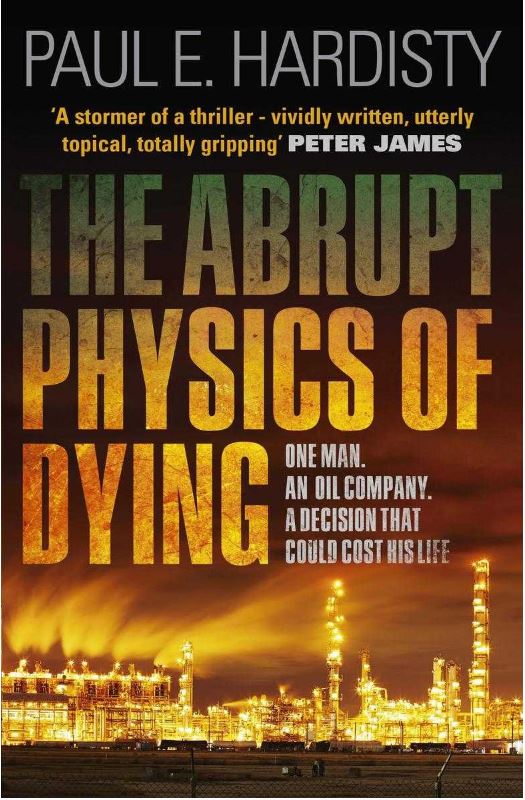
abrupt physics of dyingThis is the start of The Abrupt Physics of Dying by Paul E Hardisty. It’s also the point at which you realise you haven’t put this book down for four chapters and probably won’t until you’ve reached the last page.

Having worked around the world for 25 years as an engineer, hydrologist and environmental scientist, Hardisty survived a bomb blast in a cafe in Sana’a and was one of the last Westerners out of Yemen before the outbreak of the 1994 civil war. This should come as no surprise having read Abrupt Physics… as Hardisty details Yemen, the political climate and the science with an authority that’s never questionable and with a delivery that’s polished enough to make you wonder whether he hasn’t secretly been publishing thrillers under a different name for years.

Clay Straker is  trying to forget a violent past, working as a contractor for an oil company as it seeks to expand it’s grip and presence in Yemen. His job is simple – complete the environmental surveys in a manner that gets approval for Petro-Tex and pay off any locals that need their palms greasing to remain calm. Until he’s kidnapped, of course.

Held at gunpoint and with his friend / driver taken as hostage by a terrorist organsiation, Clay is tasked with finding out what’s causing a widespread illness among the local children.

Of course we know it’s got to be something to do with the oil company but the hows and whys lead us into a world of political and corporate corruption and greed, violence and conspiracy – all set in a country on the verge of being torn apart by terrorism and civil war.

As events unravel the plot is dotted with twists and people with questionable allegiances that will leave you guessing until the end all the while rooted in strong, compelling characters and attention to culture – with dialogue liberally sprinkled with local and Afrikaans phrases to add further to the sense of immersion.

Everything you look for in a good thriller is here in abundance: a brooding hero with a troubled past, faraway locations, shady characters with even shadier motives, a love-interest, taught dialogue, corporate and moral deceit, the underdog risking it all with potentially disastrous ramifications, plot twists and counter twists and, of course, a bit of action.

The violence comes hard, fast and often. Straker takes so many and so severe a beating at times it’s hard not to wince while reading and wonder just how much one man can take. However, unlike so many thrillers which rely purely on such violence and action, The Abrupt Physics of Dying is driven instead by a compelling plot and well-crafted story telling, with near-poetic descriptions in some of the most unlikely of places:

A tendril of blood trickled from the dead soldier’s neck, a thread unravelling, scrawling a strange calligraphy onto the sand.

That being said, I do think it could find itself with an honourable mention in the Literary Review’s Bad Sex In Fiction Awards for the line “She was as slick as a tidal flat in a flood tide”.

This isn’t a no-brain, thirst-for revenge type thriller. At the heart of The Abrupt Physics of Dying lies an exploration of just how far corporate greed will go in its neglect of morals. As Clay questions his own morals and values its hard not to do the same. The atrocities and body count not celebrated but lamented and the concern for the damage being wrought on the local population reads as genuine.

So: Thriller? Thriller with a conscience? Eco-thriller? Geo-political thriller? How about bloody good book? It’s all of these.

In his first book Hardisty has created a thriller as assured, gripping, well paced and finely detailed as they come.  There’s a sequel in the works, The Evolution of Fear. Judging by the first chapter included in ‘Abrupt Physics’, it can’t come soon enough. 2016 seems a long way off now.

A great first publication from Orenda Books from whom I’m sure more greatness will arrive.