Albums of my Years – 1983

1983… A Merman I Should Turn to Be…

Man, I’m slipping with these already and I’m only three in… In 1983 the Empire was defeated, Superman split himself in two to fight with himself and Tom Cruise created a new visual that would henceforth be associated with Bob Seger’s ‘Old Time Rock and Roll’…  Not that I was able to catch any of this on screen at the tender age of two or three.

Nor did I have any awareness of the music world in 1983. I’m sure I heard many a radio hit of the day from The Eurythmics’ ‘Sweet Dreams (Are Made of This)’ to Billy Joel’s ‘Uptown Girl’ in one way or another but my recollections of them are as likely or valid as that Orange Clown’s tax returns.

1983 saw Michael Jackson’s Thriller – released the previous year – hit the top of the charts in the US. It would spend 37 weeks there eventually. During which time CDs went on sale in America where the Beach Boys were banned from the Fourth of July festivities in Washington – then Interior Secretary (which apparently doesn’t involve dictating wallpaper and furnishing choices) James G Watts stated that rock bands attracted “the wrong element”.  Turned out President Reagan felt a bit cheesed off by the decision as he was a Beach Boys fan – Watt apologised and received a gift from the Pres – a plaster foot with a hole in it.

The Rolling Stones were quids in – not that they were strapped for cash, mind – as they signed a $28 million contract with CBS, a then-largest recording contract ever. Money isn’t everything, though – Jagger and Richards were increasingly stroppy with each other and, the following year, Mick would sign a solo deal with CBS and while the band would drop Undercover in ’83, it would be another 3 years until their first album under their new label and contract.

Both Mick Jones (The Clash) and Dave Mustaine (Metallica) got their marching orders this year. Some decisions made in 1983 worked out well – such as agreeing with the management-employee that said “yeah, Johnny Electric is a shit name, just call the band Bon Jovi” (or words to that effect).  Others didn’t work out so well – like an off-his-tits on cocaine Marvin Gaye, convinced that there were multiple plots to kill him, gave his father an unlicensed Smith & Wesson.38 special calibre pistol for Christmas. Must have been an absolute sod to wrap that.

Simon and Garfunkal called it quits, again, in 1983, as did Sly and the Family Stone, Humble Pie and The Who.  Meanwhile Bon Jovi, The Flaming Lips, Guided by Voices, The La’s, Red Hot Chili Peppers, Noir Désir and Nick Cave and the Bad Seeds all formed in 1983.

Dire Straits, following the success of Love Over Gold, released ExtendedancEPlay, which contained the worst song they ever committed to tape in ‘Twisting by the Pool’. Sonic Youth dropped their debut full-length, Confusion Is Sex – though, as much as I love Sonic Youth, I wouldn’t call it essential. This one is unlikely to be known to many as it barely made a ripple and, much like the band themselves, sank without a trace shortly thereafter but… a band called U2 released their third album War in 1983, with songs celebrating New Year and pointing out just how frustrating Sundays can be:

I wonder what they’re up to these days. Maybe they found a trade and took an apprenticeship somewhere….

ZZ Top dropped Eliminator, which catapulted them to MTV stardom, in March of ’83 while Pink Floyd released Roger Waters’ rant The Final Cut – needless to say it’s not my pick of the year. Mark Knopfler stepped away from the Dire Straits name for the first time with his first solo and soundtrack album Local Hero:

Men at Work’s Cargo – which featured the classics ‘Overkill’ and ‘It’s a Mistake’ – also arrived in 1983 as did, keeping in this blog’s wheelhouse, albums from REM (their debut Murmur) and The Replacements with their brilliant Hootenany on which they really started pushing away from their early punk sound and hinted at what was to come:

I think it’s fair to say there were a lot of solid albums in ’83 that I could quite happily feature on these ‘pages’ – Billy Joel (who I don’t often tip a hat to) released the hit-stacked Innocent Man – which I remember picking up on cassette at some point in time, Bob Dylan dropped back into non-religious music with the brillian Infidels and, much to the frustration of produce Mark Knopfler (who was having a busy ’83) left ‘Blind Willie McTell’ from its track listing while Tom Waits started his journey into the abstract with Swordfishtrombones.  Having boosted David Bowie’s Let’s Dance to a different level with his guitar playing earlier in the year, Stevie Ray Vaughan released, with Double Trouble, his phenomenal debut Texas Flood:

So what gets my pick for my favourite album of 1983…. well, there’s been a couple of their tunes on the entries to date but this the last year in which they could possibly feature because….

The Police – Synchronicity

Released pretty much bang on halfway through the year on June 17th, Synchronicity spawned 5 singles, all of which hit the Top 20 in the UK with the ubiquitous ‘Every Breath You Take’ hitting the top spot here and across the pond. It gained near unanimous praise in the press, interrupted Thriller‘s stay at the Top of the US chart as it traded places to notch up 17 weeks at number 1, picked up a Grammy Award, continues to be named as one of the best albums of the 80s and pop up in Best Albums lists but would be the band’s last.

It was recorded by a band already pretty much falling apart, watch any documentary or interviews with the members and you get an idea of the tensions that drove The Police.  The band members would record from different parts of the studio – Stewart Copeland (fucking awesome drummer) would drum from the dining room, Andy Summers in the studio itself (it was recorded on the Caribbean island of Montserrat, it’s a hard life) with Sting recording from the control room. Any overdubs were done one member at a time.

And yet it never sounds disjointed. Synchronicity is the sound of a band at the peak of their powers. NME’s review from the time described it as “a mega-band playing off glittering experimentation…. the music fuses intuitive pop genius with willfully dense orchestration so powerfully dense it stuns.”

And that’s why I rank Synchronicity as their finest – The Police were masterful songwriters yet, like so many other, they almost fought against it as if it were wrong to create perfectly crafted melodies – they came up in the punk movement so tried to hitch a ride on that scene’s energy, then there was the insistence of trying to shove reggae into the mix, with Sting’s god awful forced accent. I agree with Elvis Costello’s statement at the time: ‘Somebody should clip (him) round the head and tell him to stop singing in that ridiculous Jamaican accent.”

So while I love a huge amount of The Police’s music, Synchronicity, where they finally ditch all that and create beautiful melodies and textures – is the album that I happily sit and listen to all the way through. I can’t recall when I first heard it -growing up after it was released it feels like ‘Every Breath You Take’ has always been there, but even after hearing it so many times it never bores:

Though my favourite on this album is ‘Synchronicity II”, I love the drive and energy of the song and the fact that it’s couple to those lyrics; “Another suburban family morning, Grandmother screaming at the wall. We have to shout above the din of our Rice Crispies..” I can’t think of another song that mentions Rice Crispies or take its inspiration from Carl Jung…. and then references the Loch Ness monster.

The videos….  I think they were all by Godley and Creme (ex 10CC). A duo whose first music video was for their own single ‘An Englishman in New York’ (funny, that) who directed so many pivotal music videos of the 80’s which all had a distinct feel that connects to memories of my youth so vitally that it’s impossible for me to listen to these songs – pretty much the entire second half of this album was released as a single – and not be transported back to that time.

I’ll finish with ‘Wrapped Around Your Finger’ – the video for which spawned one of my favourite Andy Summers quotes and points out just how clearly the writing was on the wall for the band. Godley & Creme filmed it a little unusually – the music was played fast and Sting – who  loves the video “It’s incredibly atmospheric, and I think the set design is brilliant” – mimed at high speed so that when played at normal speed it gives a weird slo motion affect. Andy Summers pointed out: “I was kind of pissed off about that one. I’ve never been much of a fan of that song, actually. Sting got to shoot his part last in that video and made a meal of knocking all the candles out. Fuck him.”
Musical words…. A Top Ten Music Book List

Alrighty, lets see about combing the two usual focuses of this blog into one post –  music and books, books about music.

A good book about music or musicians isn’t as common as you’d think. There are shit loads of duffers out there – poorly researched and badly written fluff pieces. Some musicians who you’d expect a really good book out of tend to spend more time talking about their model railway collection than about the making of After The Gold Rush and some make it a little too obvious that they have an ulterior motive in a book release other than just a memoir – Kim Gordon’s Girl in a Band, for example.

But, there are some bloody belters out there and there’s a reason that a good chunk of my library is given over to a ‘music’ section. I’m sticking close to this blog’s wheelhouse here, obviously, but honourable mentions should go to The Rest is Noise: Listening to the Twentieth Century by Alex Ross and Peter Doggett’s There’s a Riot Going on: Revolutionaries, Rock Stars, and the Rise and Fall of 60s Counter-culture.

In no particular order, then, are my ten favourite music biogs / auto-biogs / books etc…

Pearl Jam – Twenty

Put out as part of the celebrations surrounding the band’s twentieth anniversary – the clue is in the title – which included a Cameron Crowe helmed documentary, CD, live album, two-day festival and short tour… Pearl Jam Twenty is a year-by-year oral history of the band’s career. Stuffed to the bindings with imagery and photos, this is as intimate and candid as you’ll get for Pearl Jam, notoriously shy of publicity and exceedingly unlikely to offer anything resembling an official biography. There’s a wealth of humour and details in here given the format and it’s fuelled many a post on this blog and every time I open it up to refresh my memory I end up absorbed again.

Keith Richards – Life

Did you know Mick Jagger started an autobiography? Sometime in the 80’s – presumably during the lull in Stones activity, he got quite far with his book but promptly forgot about it – when he was later approached by a publisher he could neither remember writing it or let it be published. Somehow, Keith Richards remembered even more and not only finished but published his autobiography, Life. Could have been something to do with the publisher giving an advance of $7m based on a short extract, but Life is an essential read for even a minor Stones fan like me. Yes there’s the thrills and vicarious spirit of rock ‘n’ roll excess – but it’s his honesty and unflinching and everlasting love for music that really comes across, you understand how he became known as the human riff. Worth following up with the Netflix doc on Keith too if you’re in the mood.

Mark Yarm – Everybody Loves Our Town: An Oral History of Grunge

This book is, frankly, immense. In its scope, its telling and impact. Just reading it you can feel how much work and love has gone into this telling of the Seattle music scene – from its origins to its current status. The highs (both natural and chemical) and lows – some of which are pretty fucking dark and were a real discovery for me – are all covered in a forthright manner that manages to remain factual and detailed while also a clearly affectionate chronicle, sometimes gossipy, often hilarious and regularly revealing. It can’t be easy to build a narrative from so many and often conflicting memories (The Melvins’ Buzz Osborne comes across as a bit of a contrary prick) but Yarm has created what can only be described as the Bible of the scene here.

Bob Dylan – Chronicles Vol. One

“I’d been on an eighteen month tour with Tom Petty and The Heartbreakers. It would be my last. I had no connection to any kind of inspiration. Whatever was there to begin with had all vanished and shrunk. Tom was at the top of his game and I was at the bottom of mine.”

Wait, what? Nobody was expecting it, but Bob Dylan’s Chronicles Volume One appeared like a revelatory bolt from the blue in 2004 after he got ‘carried away’ writing linear notes for planned reissues of Bob DylanNew Morning and Oh Mercy. The memoir – apparently the first of three (who know when) – is a detailed and candid insight into Dylan’s life, thinking and writing at the time of those three albums. The dejection and lack of direction he felt for his career while on tour with Petty is pre- Oh Mercy which, it turns out, came about thanks to Bono, an obscure singer with a little-known Irish band called U2* who, for some reason, Dylan showed the songs he’d started putting together and, while old Bob thought about burning them, suggested he call Daniel Lanois instead…

There’s a lot to discover in these three ‘vignettes’ considering the brevity of the periods covered and it’s a vital read for any Dylan fan. For a less personal and fuller Dylan read, Howard Sounes’ Down The Highway does a comprehensive and enjoyable job of telling Dylan’s story while keeping clear of the myth(s).

Speaking of stripping away the myth..

Peter Guralnick – Last Train to Memphis: The Rise of AND Careless Love: The Unmaking of Elvis Presley 

This isn’t a double-header, I’m not sneaking two books into one slot, both deserve a spot on this list but as you just can’t read one and not the other I’ll cover both in one go. I bought these books a long time before I got to reading them. I’m not a big fan of Elvis, I can quite quickly name a Top Ten but I don’t go deep with the King. These books do and I’d mark them as essential.

Last Train to Memphis does a magnificent job in detailing – and I mean detailing – the rise of Elvis Presley right up to the point where he’s shipped out to Germany in 1958. Where he’s from, who he was as a person, his love for music, getting started, this book is rich in detail and interview and a real eye-opener. Guralnick finds the truth behind what has become a much retold and embellished story that’s become so familiar that the truth of a poor young truck driver who loved nothing above his mother and music and came out of nowhere to become the biggest thing the world had seen is far too often forgotten. Take, as an example, the words of Marion Keisker, the secretary at Sun records who recognised something special in the polite teenager’s voice, words on the enigma surrounding Elvis: “He was like a mirror in a way: whatever you were looking for, you were going to find in him. It was not in him to say anything malicious. He had all the intricacy of the very simple.”

The degree to which Last Train to Memphis manages to deliver the real Elvis Presley makes Careless Love all the more affecting. Once again – the demise of Elvis’ career and the man himself are too often mistold and the stock of parody: fat Elvis dying on the throne trying to take a dump surrounded by hamburgers and tv sets….

Careless Love gets underway with Elvis’ time in the army in ’58 and chronicles the gradual unravelling of the dream that had burnt so bright in Last Train To Memphis and details in disturbing detail the complex playing-out of Elvis’s relationship with his plotting, money-grabbing and manipulative manager, Colonel Tom Parker. The lying Dutchman’s desperate attempts to stop Elvis returning to the road after his comeback special (he’d have less control of him on the road), his continual pushing of terrible movie after terrible movie, the appalling contract and commission he took which fuelled his greed…. it wasn’t drugs that did for Elvis if you ask me. Written with a grace and affection for its subject, Careless Love is the real deal, a true insight into the end of one of the biggest and misunderstood figures of the 20th century.

While neither made me run out and buy anything beyond the couple of compilations that sit on my shelves, both of these books changed how I thought about Elvis.

Oddly, looking back as I write this, it’s not an Elvis song that comes to mind here:

George Harrison – I, Me, Mine

My love for this book isn’t so much down to what’s revealed or any ‘shocking truths’ – this aren’t necessary really. Though apparently John Lennon was pissed off (it came out a few months before he was murdered) and claimed to be hurt as the book doesn’t refer to Lennon as being a musical influence. What I love is the warmth and feel of I, Me, Mine. My version is that which was published in 2002, not long after Harrison had passed, with a new forward from his wife Olivia.  The autobiography itself isn’t essentially long or detailed but it’s everything else about this book I love – the bounty of photos and the song lyrics- copies of handwritten lyrics included – with details on the writing of each: “‘What is Life’ was written for Billy Preston in 1969. I wrote it very quickly, fifteen minutes or half an hour maybe…. it seemed too difficult to go in there and say ‘Hey I wrote this catch pop sing; while Billy was playing his funky stuff. I did it myself later on All Things Must Pass.”


Aerosmith – Walk This Way

My first taste of musical bios is a pretty extreme one. I bought this when it came out (first edition hardback still sitting on my shelves looking rather well read) and I was really starting to get into Aerosmith. Written by Stephen Davis and the band, Walk This Way was the first official telling of the Aerosmith story, from the band members’ origins and the formation of the group through to its early rise and debauchery to its drug-fuelled collapse and nadir before being reborn via sobriety in the mid-80s – much is given over to this process and the resentment Tyler felt at the time, Perry being involved in the intervention while still using etc and the troubles that nearly caused another break up prior to Nine Lives.

Since publication three of members have written their own memoirs (oddly I’ve only read Steven Tyler’s) and have suggested that Walk This Way is perhaps a little… sanitised and glosses over a few things. Odd considering just how shocking some of what this covers …

Mark Blake – Pigs Might Fly: The Inside Story of Pink Floyd

I mentioned this one recently and I still believe it deserves a place in my Top 10. While there’s never likely to be as complete and comprehensive a Pink Floyd autobiography as desired – Nick Mason’s Inside Out comes close but is obviously his own story – as a) Gilmour and Waters don’t really get on and b) Syd Barrett and Richard Wright are no longer with us… Pigs Might Fly is a thoroughly detailed and researched ‘as close as you’ll ever get’.

Bruce Springsteen – Born To Run

Of course this is bloody well going to be on here. This is pretty much top of the list and sets a new benchmark for how autobiographies should be written. I wasn’t expecting this one to be written so well or so candidly. In my original review for this, which was extensive so I won’t go overboard here, I said: It is an absolute blast to read. Written completely solo and without the assistance of a ghost-writer, the voice is clearly that of Bruce – at times cuttingly honest, at others poetic and then written as though delivering a sermon from the stage on the LIFE SAVING POWERS OF ROCK AND ROLL!!! (yes, the caps-lock button is Bruce’s friend). Contained within its five hundred or so pages is the story of how a young man from a poor, working class family in the town of Freehold, New Jersey, fell in love with music, got a guitar, learned how to make it talk, refined his craft and cracked the code. It’s fascinating and joyous stuff.


*If there isn’t a tribute band called ‘Not You Too’ then I’ll bloody well start one.

Then and Now: Stereophonics

Then: A Thousand Trees

This is going back a bit…. August 1997, in fact. I remember hearing this tune on the legendary John Peel’s radio show as he was championing up -and-coming bands. Next chance I got I was in Richard’s Records – now long long gone – picking up the CD single in the days when they came with another 3 tunes on them and were worth collecting in their own right (but that’s another blog, surely).

For those unfamiliar with the Sterophonics, Jim, then they were three young Welsh lads, freshly signed to Richard Branson’s new V2 label, pushing out short, urgent songs with lyrics detailing gritty small-town life. Take this, their third single, which “was about rumours spreading around a very small town and somebody’s reputation being basically burned to the ground. It was a football coach who did some very untowards stuff with younger kids. He had his name celebrated in wrought iron outside the football pitch.”

While “it was basically about rumours in a very small environment crushing someone’s reputation” this, like most songs off their debut Word Gets Around were rooted in something real and were a little vital as a result.

Second album Performance and Cocktails contained more than a little of the same spark that infused their debut but started to slow things down too and signs of the ‘meat and potatoes’ rock were already sneaking in (‘Just Looking’). I caught them at Wembley Stadium in ’99 when they were one of the acts opening for Aerosmith and can confirm that then, at least, they could cut it live too.

Then I guess they got caught up in it all… the songs lost their focus, started to move toward acoustic, a cover of ‘Handbags and Gladrags’ took off… they began churning out what I’ve already referred to as ‘meat and potatoes’ – uninspired but does the job, I guess – music. I seem to remember seeing pictures of singer Kelly Jones stumbling bleary eyed out of bars with Ron Wood.. taking the stage at Isle of Wight festival in a white suit with ironed-flat hair.. the three-piece’s numbers swelled to five and then they fired their Keith Moon-style drummer, Stuart Cable. In keeping with tragic tradition Cable would be found dead in 2010 having drunk himself into a stupor and choked on his own vomit*.

I tuned out after their third album as they no longer appealed to my tastes. Several albums of by-the-numbers later..

Now: Fly Like an Eagle

I read an interview with Keith Richards around the same time as I was discovering the Stereophonics. In reply to a critique of then-new album Bridges to Babylon he pointed out that “the Stones aren’t here to break new ground, we’re here to be the Rolling  Stones.”

There’s something to be said for that, of course.

Some twenty plus years after their debut, the Stereophonics are still going. I wouldn’t say strong but they are still going. Hearing this on the radio last night, the DJ pointed out that the band is still working, still writing and are “still the Stereophonics” in that they haven’t stopped doing as they’ve always done, have never said “we’re going for  a disco sound on this one” or tried a concept album… They’re enjoying something of a renaissance as a result of the fact that a) they’ve been around so long and b) guitar-music is picking up place on the radio again.

But then, to keep doing something mediocre too… the reason nobody needs the Rolling Stones to break new ground is because they built a back catalogue of fucking belters. You can’t apply the same logic to all.

Every other year there’s a new Stereophonics album and every other year there’s the same ‘amazing new single’ and attempt at a little punch from them then everything sounds the same. There’s no real sentiment to it. I mean: “Hey hey, my my, everything’s gonna be alright, Hey hey, my my, everything’s gonna be just fine.” Ta, Kelly, I’d not caught up on my horoscope today.

If you like that, I guess, there’s nothing wrong with it but I find ‘Fly Like an Eagle’ symptomatic of all they’ve been doing lately – solid enough but uninspired and too often meandering instead of getting in and out.

I’m not going to be spending any time looking back at what I’ve missed on the strength of this one. Word Gets Around, however is always worth a listen.

*which you can’t dust for.

I wake up in the morning, just glad my boots are on: Bruce Springsteen – Western Stars

I read a line this morning that said “Springsteen sounds like an episode of Home Improvement if it was a song” and it’s thrown me off somewhat… I came here to work on a couple of the Bruce posts that are in the works and now all I can hear is Tim Allen going “uuuuuuuuAH?”

I will persevere though and talk about The Boss, specifically about his first new album in seven years, Western Stars.

I’ll be honest – at first I was nervous, apprehensive. Springsteen had been talking about his new ‘solo’ album* before he began his Broadway residency and the idea of an album that had been long-laboured over as with Human Touch made me wonder if it was ever going to see the light of day. Throw in producer Ron Aniello** and lack of E Street band…

I was wrong. Very fucking wrong. Western Stars is Springsteen’s strongest in a long time. Where it sits in terms of my Least to Most is still tbc but the songs on here are far and away some of his best story tunes to date.

Now a lot was said in the run up to the album’s launch, and still is being said, about the sound. How this album is supposed to be influenced by the southern-California  pop sound of the 70’s championed by Burt Bacharach or Glenn Campbell…. I don’t know a lot about that because, well; frankly it’s not something I’m all that familiar with. It is a different sound to what you might expect from Springsteen – there’s no snarling guitar or stomp on here. But… at the same time….. it’s not. Some of Springsteen’s later career highlights such as ‘Paradise’, ‘The Last Carnival’ or ‘The Devil’s Arcade’ found Bruce moving into more contemplative tunes with strings vs screaming guitars and the sounds on Working on a Dream had already hinted at a taste for the lush.

It was only a matter of time before he ditched the rock and tried the orchestra and there’s also a progression in his ‘solo’ album sounds, from Nebraska to Ghost of Tom Joad to Devils and Dust there were increasing embellishments on the sound from the initial ‘one man, a guitar and a four-track’ approach. Here we have the ‘solo’ album that is, in fact, one man, a producer, multiple guest musicians, former band members and several orchestras…

Yet it takes a little getting used to, this approach. Exactly one and two-thirds of a song, in fact. Opener ‘Hitch Hikin’ isn’t a success. From a lyrical point of view we’re good, it’s standard Bruce travelling-tune fare complete with reference to a ‘souped-up ’72’. Yet for a song with little weight to it, the production is way over the top – I’m looking at you Aniello – with strings and slobbered over it as though building to some cinematic climax that simply isn’t there. It’s jarring.

‘Wayfarer’ suffers a similar fate, at first. Lyrically we’re fine – love the line “Some folks are inspired sitting by the fire, slippers tucked under the bed, but when I go to sleep I can’t count sheep for the white lines in my head” – but the orchestral accompaniment here sounds as fake and appropriate as the tits on ‘Baywatch’. It doesn’t work. Until 02:30 that is. Bruce pushes his voice a little too hard and, instead of collapsing, everything comes together behind him – horns, strings and melody complete and, suddenly, it’s working together in a, yes, Burt Bacharach soundtrack style.

From here on in it gets good. Really good. Where this album works so very well is when the strings and music is minimal – used more as a graceful backdrop to what are some of Springsteen’s finest character and story songs with gentle sweeps of string and lap steel to move between verses and time as on the title track:

The tex-mex flavour of ‘Sleepy Joe’s Cafe’ lifts the pace a little while there’s a cadence to Bruce’s lyrical delivery that almost brings to mind the upbeat numbers on The River. Lead ‘singles’*** ‘Tuscon Train’ and ‘Hello Sunshine’ differ the least from Springsteen’s songwriting and sound – hell, one of them is a bloody ‘train’ song complete with steam train sounds at the end – but are nonetheless strong tunes.

The real highlights for me, though are songs like ‘Drive Fast (the Stuntman)’ – a deceptively simple gentle guitar strum and piano accompany the first lines before the orchestra joins gently to rise and fall with the story in gorgeous surges and rolling out like the soundtrack to a gritty short film****.  When the instrumental passages and orchestral accompaniment blend with – rather than being the focus – Springsteen’s lyrics and initial melody as they does with so many songs on here, Western Stars is a triumph.

Western Stars has met with near unanimous acclaim including critics that usually scoff at Springsteen and with good reason. It manages to be both a move in a different direction and familiar at the same time. The sheer strength of Springsteen’s songwriting on this album means that his songs are both immediate and reveal more on each listen as the sounds unfold beneath them – sounds which, while initially unexpected, suddenly make sense and you end up wondering why he hadn’t tried this earlier.

Whether we get to hear any of these live is another question – there’s no tour for Western Stars – after performing twelve million shows on Broadway the man’s entitled to a break I guess. Plus there’s now talk of a new E Street Band album being written and worked on at the end of the year. Then there’s the Tracks 2 and second Seeger Sessions album and….

We’ll see…

*only live releases have been credited to anything other than ‘Bruce Springsteen’

**case in point: High Hopes and Wrecking Ball are among Springsteen’s low points in terms of production and sound IMHO

***does anybody really do singles anymore?

****one of which is apparently due in autumn.

Albums of my Years – 1982

I actually have a memory from 1982 – and it can really only be 1982 or 83 -but it’s not music related. I can’t claim that I was sitting under a piano and singing Beatles songs in my second year on this planet.

So I have no memory of either hearing music or music news from 1982 such as that about the bloke from Birmingham , who’d already bitten the head off a dove in ’81, doing the same to a bat in January 1982. Of course he claimed he thought it was rubber but you’ve got to be fairly off your tits not to be able to tell the difference between a squeaky toy and a live mammal. 1982 wasn’t his year as he’d be arrested a couple of weeks later for taking a leak on something called The Alamo…

At the same BB King decided he didn’t need his record collection and donated the lot – some 7000 rare blues records. I suppose it saved money on IKEA Kallax units.

In March, Billy Joel came off his motorcycle and dinged himself up pretty good – he’d spend more than a month in hospital undergoing physio on his hand which must’ve gone well judging by the quality of The Nylon Curtain…

I don’t really care for Black Sabbath or Ozzy but he seems to have been dominated music headlines in ’82. His guitarist Randy Rhodes was killed when the plane he was in crashed after buzzing Osbourne’s tour bus. A few months later Ozzy would get married and, presumably, start bellowing “Sharon!”

Pink Floyd released the movie version of Waters’ diatribe The Wall which mixed the egos of Waters and director Alan Parker to mixed results.

My favourite bit of music trivia from 1982 though is the point at which, fearing poor ticket sales for a tour in support of Combat Rock, Joe Strummer was convinced to “disappear” – his manager suggested Strummer ‘vanish’ and stay in Texas for a couple of weeks. Instead, Strummer genuinely disappeared for a couple of months – choosing  to run the Paris marathon (he claimed his training consisted of drinking 10 pints of beer the night before) and “dick around” in France. The Clash were falling apart with tension – Topper Headon would be fired in ’82 thanks to his cocaine addiction – and Strummer would later say he regretted his vanishing act. Though he would later run the London marathon without any training too.

In 1982 it was goodnight from ABBA, Bad Company, The Blues Brothers (this was the year John Belushi died), The Jam and Blondie (until 1997 that is). Meanwhile American Music Club, A-Ha, James, Public Enemy, The Smiths, Swans and They Might Be Giants all formed in 1982.

So what dropped album wise in ’82? I’ve already mentioned a couple – The Clash dropped their best-selling album Combat Rock in July – it features their biggest singles too in ‘Rock the Casbah’ and the Stranger Things favourite ‘Should I Stay or Should I Go’ and the formidable ‘Know Your Rights’:

There were quite a few albums from artists that feature within this blog’s orbit in 1982 including the first Sonic Youth album and the debut EPs from both R.E.M and the Replacements – though neither could really, honestly, be called the band’s best work. Split Enz dropped Time and Tide in  April of ’82 and The Cure released Pornography shortly after. George Thorogood & The Destroyers released their fifth album, Bad to the Bone which continues to thrill me a considerable amount more than Thriller (also released in ’82) ever did. B-b-b-b-b-b-b-bad:

The year also saw the previously mentioned Nylon Curtain by Billy Joel which features one of my favourite tunes by the piano chap, ‘Goodnight Saigon’.

Kate Bush dropped her least commercial album, The Dreaming, which was full of highlights and served as the perfect bridge to The Hounds of Love… Prince released the extremely commercial and massive-selling 1999 while Neil Young pushed out Trans which was so noncommercial in its orientation that it was one of the albums used by his label Geffen in their lawsuit against him for producing wilfully unrepresentative and noncommercial material. Oh, and Aerosmith released the appropriately named Rock In A Hard Place. Well, I say ‘Aerosmith’… even Joey Kramer doesn’t consider it a proper entry in the band’s catalogue – “it’s just me, Steven, and Tom — with a fill-in guitar player.” It’s not entirely without merit – ‘Bolivian Ragamuffin’ has a real groove to get stuck on and both ‘Jailbait’ and ‘Lighting Strikes’ are decent tunes (the latter featuring Brad Whitford on guitar, presumably recording his rhythm parts on his walk to the door) but were I to tackle Aerosmith on a Least to Most… this would be the least.

Now in terms of albums that do feature high on my personal favourites list… Tom Petty and the Heartbreakers released Long After Dark which features ‘Straight into Darkness’, ‘ A Change of Heart’ and ‘You Got Lucky’.

And then there’s Nebraska. Once of Springsteen’s finest albums, his first ‘solo’ album and his most stark in terms of subject and sound…. it really, really should be the featured album on this list…. but I’ve written about it exhaustively as part of the Springsteen Least to Most series and rules are rules. So… it looks like a second entry on the list for one band:

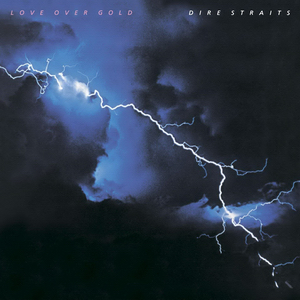
Dire Straits – Love Over Gold

It’s fitting really. For a while I questioned whether this should be the choice for this year but there’s a number of factors that mean Knopfler and co’s fourth album sits here for ’82; It’s an album I heard a huge amount of in my youth and growing up thanks to my Dad’s penchant for the band. So much so that down to the fact that his record had a skip on the “I’ve seen desperation explode into flames and I don’t wanna see it again” in ‘Telegraph Road’* that I got so used to that I still expect the skip when listening on CD or online.

As part of my debating whether to go with this album for 1982 I listened to it in full, again, and realised that I didn’t need to be questioning it – it’s not only a bloody strong album but it’s one that resonates with me on so many levels and is part of what formed my tastes moving forward. ‘Private Investigations’ was one of the first things I set about learning on guitar and will still go to from time to time – especially if I pick up the old ‘classical’ guitar out of the garage. Combined with ‘Telegraph Road’ it makes for a faultless Side A:

Love Over Gold is, to me, the final ‘classsic’ Dire Straits album. There’s still a very quintessentially English element about it and it’s sound and writing are less direct and radio-ready than the Brothers In Arms era that would follow. It’s the final of those early albums before ‘Money for Nothing’ threw them into bigger venues and TV sets around the world and the scale that would lead to Knopfler walking away began to build.

The music and sound benefits from the addition of Alan Clarke on keyboards – wider and more intricate sounds that mark a natural and real development on that of Making Movies – just listen to the interplay between the two on ‘Love Over Gold’:

The sheer power and length of the two songs that make up Side A do mean that trio on Side B are often overlooked, much as the album itself – sitting between Making Movies and Brothers In Arms – can be. But the title track,  ‘Industrial Disease’ and ‘It Never Rains’ are far from filler.

As much as I understand Knoplfer’s reasons for not attending the Rock and Roll Hall of Fame ceremony and his disinterest in reforming – I do wish that this era of the band (before it became about headbands and filling the largest venues) could get the revisit and attention it deserves.

*Side note/ pub quiz / music trivia point: Jon Bon Jovi, of all people, is also a Dire Straits fan – he was working at his cousin’s record studio (The Power Plant) when Making Movies – and has admitted to ripping off ‘Telegraph Road’ with ‘Dry County‘.


Oh, by the way, which one’s Pink?

I’ve spent the last couple of weeks lost in a very comfortable and enjoyable Pink Floyd trip.

It all started with an article in an actual printed music magazine that I bought for the first time in more years than I can count. Well written, the article in ‘Uncut’ detailed the years between Syd Barrett’s departure and the commencement of Dark Side of the Moon. How, in just four years they went from being Barrett’s backing band on songs like ‘Bike’ – via the addition of Gilmour – to writing what is arguably* one of the greatest albums of all time.

From there I needed more. So a quick search punt about on eBay and two quid later (yup, bargain) Mark Blake’s Pigs Might Fly: The Inside Story of Pink Floyd was in my hands for what would become a deep dive into the story and music of those five chaps from Cambridge**.

A good music biog is a hard thing to achieve***; for every Crosstown Traffic there’s at least five Scuse Me While I Kiss the Skys. Especially with a band so reticent to deal with the press during their peak as Pink Floyd were. Pigs Might Fly, falls firmly into the former camp. While not as painstakingly researched and deep as, say, Peter Guralnick’s Last Train To Memphis it documents in insightful detail how The Pink Floyd Experience (though there will always be debate on where and when the name formed) came together around the creative nucleus of Syd Barrett – enforcing my opinion that, at the time, it was really Barrett and Friends, the shocking and painful disintegration of the poor guy, Gilmour’s arrival, Waters’ gradual take over and journey up his own arse and efforts to shoot his own band in the kneecaps before Gilmour pulled it free and moved it forward for a final two albums.

There’s plenty in Pigs Might Fly to enjoy. While it eases up and speeds up as success takes hold – there’s no real detail on song creation etc beyond DSOTM – there’s plenty in terms of the crumbling relationships within the band. That the book takes a very neutral stance means it manages to point more effectively to just what a skid mark Waters became. Despite his later claims that none of the band came out of that period well, it’s abundantly clear that Gilmour, Mason and the revived Wright did an awful lot better than he did. It did make me chuckle that the late Barrett’s neighbour recalled a time in the late 80’s when Syd was heard shouting “Fucking Roger Waters! I’ll fucking kill him!”

Another highlight was the discovery of how the band dealt with a negative review for the album which was their then biggest step forward and into the realms of ‘new’ Floyd, Meddle – which Melody Maker’s Michael Watts (a long-time fan) described as ‘Muddle’ and featuring ‘vocals that verged on the drippy and instrumental workouts that are decidedly old hat’. When Watt’s took delivery of a parcel at his office a month later a he assumed it was a Christmas gift from some record company’s PR dept. Instead he found a bright red hardwood box with a lid held in place with a little catch. When he flipped the catch he jumped back as a spring-loaded boxing glove shot out, just missing his face. It was a Christmas gift from Pink Floyd.

While Pigs Might Fly now sits amongst the other music biogs in my library, I thought it worth running down my Top Ten Pink Floyd albums. I’m not up to doing another Least to Most series so I’ll make this a monster post and go for it now. This is in order and, as per all on here, is my own opinion rather than arguing it’s definitive.

More

The band’s first album without any involvement from Syd Barret and their first soundtrack album, More is a slight listen but one that’s still worth digging out. Somewhat scattershot in style – from their heaviest , Zep-like recordings to pastoral folk and abstract instrumentals, More contains a few nods of the directions the band would later take. Most important, though, is Gilmour coming out of his shell – free’d from this previous requirements to ape Syd’s parts, this is the first time he’s really let loose and ‘The Nile Song’ shows the way out of songs like ‘Interstellar Overdrive’ and toward the Gilmour / Waters collabs that would later prove so powerful.

Atom Heart Mother

While More pointed at any number of directions, it would be a while before Floyd followed them up. Umagumma doesn’t rank here because it’s two strong tracks are set amongst a quagmire of misfires. Atom Heart Mother, though, is a strong slab of music that, while there are still a couple of duds (‘Alan’s Psychedelic Breakfast’) is more consistent in quality and was the band’s first Number 1 album. The suite itself – mired by recording and production setbacks – is a 23 minute bombast (which Stanley Kubrick asked, and received a ‘no’, to use in A Clockwork Orange) that’s followed by some great early gems like Waters’ ‘If’ and Gilmour’s ‘Fat Old Sun’.

A Momentary Lapse of Reason

The first of two Gilmour-led Floyd albums is the weaker of the two but still a strong album. Having made the decision to push ahead with a Waters-less Pink Floyd was one thing, the legal battles and arguments that followed meant recording A Momentary Lapse of Reason a dogged process. Bringing in co-writers was no longer new for a Pink Floyd album and Gilmour used all the help he could with lyrics. But Gilmour was keen to avoid too many lyrics, telling the press that the last albums by the Waters-led Floyd had lost focus on music over words. He was also determinedly avoiding the use of a ‘concept’, Pink Floyd’s A Momentary Lapse of Reason is an odd beast as a result and is more of a collection of songs as a result – much like an album by most other bands so why it became a big deal is beyond me – and while some (‘Learning to Fly’ and ‘A New Machine’) sound rooted to 1987 – the distinctive Pink Floyd feel is still there in the mix and songs like ‘Sorrow’ punch in the Floyd’s old weight division.

Unfortunately, the pressure of carrying all the responsibility for Pink Floyd on his shoulders would push Gilmour deeper into use of cocaine and it would be some time before he could shake the weight.

The Wall

One of Pink Floyd’s best known and biggest selling albums doesn’t make the Top Five. The Wall is one of those albums that I always think is great but then – having revisited it so much again recently – realised that my version of The Wall is only five songs long and two of those are ‘Comfortably Numb’ because I always have to play that twice. The others – ‘Mother’, ‘Another Brick in the Wall (Part 2)’ and ‘Hey You’ are of such strength as to be outright classics. Thing is though, 4 out of 26 tracks is not a good ratio but these really are gold, proof that even when strained to the point of breaking the Gilmour / Waters partnership was one of songwriting’s finest.

The rest, though… for fuck sake, Roger, have a word with yourself before thinking we need to be tortured. Drop any of them on in isolation and tell me if ‘The Trial’ or ‘Vera’ have any place in the list of great Pink Floyd songs. That Roger demanded – and received – such control over The Wall as part of the agreement to drop legal actions shows just how much his project / vanity this album really is. It took Bob Ezrin to navigate it away from being Rogers’ rant and life story into something as near to generic as it became but The Wall and Waters’ determined dominance over sessions and direction that was the tolling of the bell for the band as it was (recording sessions saw Richard Wright booted out).

Obscured by Clouds

This is one of those gems of an album that is so often overlooked as to be criminal. Recorded in quick sessions against a ticking clock as the band were both on tour and in the midst of working up DSTOTM – working under pressure and without the time to indulge proved benefical: Obscured by Clouds contains some great tunes. The instrumentals – benefiting from the great leaps the band were making – contain touches of the album that would follow while songs like ‘Free Four’ and the brilliant ‘Wot’s… Uh the Deal?’ are classics. Yes, there are some songs best skipped but the ratio of solid to tosh puts this higher than The Wall in my listening rota.

Meddle

Overhead the albatross hangs motionless upon the air… Before Meddle, Pink Floyd were – as Nick Mason would later put it – in danger of being bored to death with their existing material. The direction their psychedelic roots had pointed on was hitting something of a dead end and they were reaching for a new sound. That new, now ‘classic’ Pink Floyd sound arrived on Meddle.  A trio of three cracking little tunes (best forget ‘Seamus’ to be honest) sandwiched between the bass-driven corker that is ‘One of These Days’ and the absolute epic ‘Echoes’ with Gilmour and Wright’s vocals blending perfectly. Meddle – and Echoes – is majestic, airy and introduces that sense of overworldliness that would be the benchmark of the classic Floyd sound. Oh, and it’s stuffed full of weird, dark sounds that punctuate it all – it’s the precursor to all that would follow and it’s sodding brilliant. “Give us a ‘ping’ Richard!”

Animals

I’ll be honest – it took me a long time to dig Animals. It didn’t hook me as much as the rest of the Top Five for some time but when it did…. oh boy. ‘Punk Floyd’ as one reviewer at the time put it, Animals is the bridge between the anger that was boiling up in some of Wish You Were Here‘s songs and the self-indulgent ranting of The Wall only clearly still with full band involvement and enjoyment. The music is stronger and rewards with each listen. Gilmour’s guitar work is amongst his finest and Waters’ lyrics are as on-point as they’d ever be:

“And after a while, you can work on points for style
Like the club tie, and the firm handshake
A certain look in the eye and an easy smile
You have to be trusted by the people that you lie to
So that when they turn their backs on you,
You’ll get the chance to put the knife in”

The Division Bell

The last studio album proper from Pink Floyd is one of their finest and much underrated. The Division Bell – recorded free of the legal stress and pressure of A Momentary Lapse.. is closer to the classic Floyd sound since anything pre-Animals, perhaps in part as some of Richard Wright’s vintage organs and instruments were hauled out from storage for use and, more likely, as the music was born out of long improvised jam sessions between the then three members of the band. With the exception of ‘Take it Back’ (tellingly the only song with music written with outside assist) there’s not a duff track on here.

I also seem to recall reading that at some point, with the road behind them, Gilmour approached Waters with the idea of his taking part on what he, rightly, believed would be the final Pink Floyd album. Waters’ response is the inspiration for the line in ‘Lost for Words’:

Wish You Were Here

Ok, look at that track list: ‘Shine On You Crazy Diamond’ in all it’s spectacular parts, ‘Have A Cigar’, ‘Wish You Were Here’… perfection. I’m not a huge fan of ‘Welcome to the Machine’ but I’ll take it over a thousand other songs any day. Much has been said of the appearance of Syd Barrett – shaven of eyebrows and hair and overweight – and none can agree if it really was while ‘Shine On..’ was being recorded.

Apparently Gilmour didn’t sing the vocals on ‘Have a Cigar’ because he couldn’t get on the same page as Waters’ anger at the music business…. the start of many a disagreement… so Roy Harper gladly volunteered. He told Roger at the time he’d take a lifetime season ticket to Lords which, despite his prompting, he never received. At one point years later he suggested that, based on the album’s success, he’d settle for (I think) £30k. He never got it, Roger was long gone up his own rectum by then.

The Dark Side of the Moon

It would be impossible for this to not be at number one. It would be impossible to sum this up sufficiently in a short manner too. This album has never failed to hold me and move me since I first heard it so many years ago.

Their most accessible concept – no anger or political ranting. It’s about the fears, worries and process of life. The band are at their peak in terms of songwriting and playing. Every decision made in terms of the sounds, the mix, the samples, even the fucking cover… is absolutely spot on. From Wright switching from the use of organ live to piano for the recording of ‘The Great Gig in the Sky’, to Gilmour winning out on having the voice recordings lower in the mix (Roger Waters took it upon himself to interview as many people as he could find and record their answers to a series of questions such as ‘when were you last violent?’ – the McCartney’s were recording in the same studio but their forced attempts at ‘funny’ answers failed to make the cut) and the choice of those voices. From the heartbeat that starts and ends the album to the beautiful interplay of lyrics about suddenly finding yourself ‘one day to closer to death’ and war ‘forward he cried, from the rear, and the front rank died’ to the dark, decidedly British, humour that keeps it on the right side up – I fucking love this album.


*In that you could try and say it isn’t but you’d have no leg to stand on.

**Well, three of them anyway – Nick Mason and Rick Wright being from Birmingham and Essex respectively but you get the idea.

***Upcoming blog on my preferred music biogs / reads

Spinning some new

In between working, reading the Pink Floyd biog, composing posts about Springsteen (2 in the works) and Dylan, pricing up a Jag and reading / writing fiction I also manage to listen to new music and notice that I’ve forgotten to post on here again.

So, in an attempt to fix the latter – here’s the new that’s been getting a lot of rotation of late:

The Pixies – On Graveyard Hill

Despite the fact that I love pretty much every Pixies album, for reasons various it was only a month or so back that I finally got round to listening to their 2016 album Head Carrier. Then, a few evenings back an email pings into my inbox and announces that they have a new one ready for later in the year and this beaut is available to hear now. It’s a sodding belter of a song.

Jambinai – Sawtooth

I picked up my copy of the new Jambinai album, Onda, yesterday from the same record store I discovered them in, it was only out on Friday but I’ve been enjoying this lead track for a bit now. Mixing  traditional Korean instruments with heavy, noisy guitars and a Nirvana-like rattly bass punch. I fucking love this band.

Big Thief – Cattails

I did something I hadn’t done in years last month and bought a physical copy of a music magazine – complete with a CD of music new and almost-new, hand-picked by The National as part of the press barrage surrounding their, inmho, naff new album. This one… isn’t the Big Thief song that was on their but it lead me to their new album U.F.O.F which has my hypnotised… it’s impossible to pin it down genre-wise but there’s something so… it’s a blissful thing with so much going on that’s perfect for sunny evening to spin, drift away listening  and remembering getting small to.

Sam Fender – Hypersonic Missiles

See… Sam Fender has been cropping up a lot on the one radio station I can stomach listening to these days. I’m gonna say this knowing how old it makes me sound – but this kid is only just 25. There’s a real power to his voice and he’s got some guitar and song-writing chops on him too, bit of Springsteen influence on this one (especially around the two minute mark)- amongst a bucket load of others – but this still fashions a sound of its own that I quite dig.

Gang of Youths – What Can I Do If the Fire Goes Out?

I listen to the radio in both an effort to wake myself up on the commute and not get stuck in a rut with music by discovering something new. I’ve discovered a fair few additions to my record collection that way and I’m enjoying these guys lately. There’s some dark stuff to their lyrics but they manage to get it into a beat and tune that makes for a good listen. I think ‘Let Me Down Easy’ was the one that broke Gang of Youths on radio both here and at home – they folks come from that land Down Under – and this one is another getting turned up in the car etc and, again, wears a Springsteen influence on its sleeve.

Bruce Springsteen – Tucson Train

Speaking of the Boss. There’s a new album due to hit my shelves a little later this month… ‘Tuscon Train’ is the third song released (do they do singles anymore?) ahead of Western Stars‘ release in a week or two (it’s already getting cracking reviews) and is easily my favourite thus far. Really looking forward to this one…

Albums of my Years – 1981

Argh, I’m already slipping on my fairly loose schedule.

I don’t remember anything of 1981. Given that I’d only been about a couple of months when it started that’s no real surprise.

Apparently though a fair old bit happened in 1981:

Steven Tyler – no doubt off his tits on several things at once – took a spill on his motorbike in January and had to spend a couple of months in hospital. Aerosmith itself was in pretty rough shape in 1981 anyway – Brad Whitford left the group a few months later after recording ‘Lightning Strikes’.

All-round butt of jokes and general butthead Phil Collins released his first solo album in February and proceeded  to somehow combine peddling beige musical tosh and raking in cash for years to come – glad I don’t remember that.

On March 27th, a dove was happily minding its own business and wondering why it hadn’t yet been released when some drunk bloke with his own name tattooed on his knuckles bit its head off.

Turns out those four blokes from Ireland did make a trip abroad – who knew?: U2 made their first (probably last too)US TV appearance on the ‘Tomorrow’ show in June, 1981. I wonder what happened to them?

The Buzzcocks, The Knack, Rockpile, Sam & Dave, Steely Dan and Paul McCartney and Wings all called it day in 1981 but the year also saw the ‘birth’ of 10,000 Maniacs, The U-Men, Talk Talk, Sonic Youth,  Metallica, and Hunters & Collectors.

There were also a lot of albums dropped during that year… Van Halen’s Fair Warning arrived in April but it’s a Roth album so doesn’t feature in my wheelhouse. The Cure’s third album Faith also dropped in April and there’s some cracking tunes on there. The Replacements’ first album Sorry Ma, Forgot to Take Out the Trash is a 1981 album that’s far from shabby….

As if to prove a point, The Joe Perry Project released its second album which featured the awesome ‘South Station Blues’:

The Rolling Stones heated up some left-overs and ended up with Tattoo You being received as one of their strongest in some time and the ubiquitous ‘Start Me Up.’ The Police were at it again and dropped the first-class Ghost in the Machine which features ‘Invisible Sun’, ‘Spirits In The Material World’ and the unimpeachable ‘Every Little Thing She Does is Magic’:

Oh, and that little group from Ireland actually made another album! I guess a few people must have watched them on TV in America as they released what must have been their final album, October in, well, October. I guess it’s that lack of imagination that stopped them catching on.

Thing is none of these necessarily jump up at me as being the obvious choice for my selection for 1981.

It would be  a tricky one to call, except an absolute classic was released in 1981:

Tom Petty and the Heartbreakers – Hard Promises

There’s a precious handful of albums to which the phrase ‘all killer, no filler’ can be applied. Hard Promises is easily one of them. I mean ‘A Woman in Love (It’s Not Me), ‘Something Big’, ‘Insider’, ‘Nightwatchman’, ‘You Can Still Change Your Mind’?! Oh, and then there’s the first song on the album:

Tom Petty and the Hearbreakers’ fourth album, Hard Promises is easily one of their finest and when you factor in that it was written under the pressure of the stardom that had been ‘gifted’ them after Damn The Torpedoes… it’s faultless really.

Petty didn’t mess much with the formula that had yielded gold on that album – he retained Jimmy Iovine (I’ve just realised this is the second album on this list he’s produced and we’re only two in) and he still had a shit load of great tunes in the tank too. Oh, and he went to war with his record label before he’d let them release it too – they wanted to  sell it for $9.98, a full dollar more than the usual price, and Petty was having none of it.

I came to this album far later than ’81 of course. A good couple of decades on, in fact, after I started blowing open Petty’s discography on the back of loving every track on Anthology: Through The Years – especially ‘The Waiting’ and, having picked up the six-disc Playback boxset, ‘Something Big’:

But when I did get to it, I spent a lot of time with Hard Promises.

It’s been a while since I was really able to sit and listen to Tom Petty after his untimely death in 2017. Listening to an album as varied and rich as Hard Promises – from the grooves of ‘The Nightwatchman’ to the fantastically jangly ‘Thing About You’ and the Stevie Nicks collab ‘The Insider’, it’s all the clearer just what the music world last when Mr Petty departed. Every song on this album is enthused with his unique craft and plainly obvious love of it all.

Hello Sunshine

Well, it happened. I thought it wasn’t going to, certainly not so soon after his ‘Vegas residency’ period but I woke this morning to the news that Bruce Springsteen’s new album Western Stars will drop in June.

Given that I was reading the news while dropping the kids off at the pool* it meant I’d pre-ordered before I stood up.

Recorded predominantly at his home studio in New Jersey, this – the first album of new material in five years (seven if you don’t count those heated up left overs of High Hopes), Western Stars, to cite Springsteen’s website: takes his music to a new place, drawing inspiration in part from the Southern California pop records of the late ‘60s and early ‘70s.

“This record is a return to my solo recordings featuring character driven songs and sweeping, cinematic orchestral arrangements,” says Springsteen. “It’s a jewel box of a record.”

Cover art (the first not to feature Bruce’s mug on it since The Ghost of Tom Joad) and track listing have dropped and the first ‘single’ has also been released (not that these things really exist anymore, do they?) too:

Good things:

It’s a return to story-telling Bruce
Album themes encompass a “sweeping range of American themes, of highways and desert spaces, of isolation and community and the permanence of home and hope”
David Sancious
No Tom Morello
It’s been a long time coming – this could go either way: Human Touch was laboured but rushed-releases could use better quality control
The song title ‘Chasin’ Wild Horses’ seems promising on its own to me
“Sweeping, cinematic orchestral arrangements”


Bad things:

Ron Aniello
No E Street Band

So… Am I excited? Fuck yeah, I’ve just finished another Bruce series that’s reminded me that there’s always a reason to tune in, even if there are warning signs production-wise.

*curious to see if that reference is known across the various blog-oceans

And in the quick of a knife, they reach for their moment… Springsteen’s Lyrics (Part 3)

Right, finally – Part Trois.

What started off as a two-part look at my favourite Springsteen’s lyrics grew into an easy three-parter as every time I worked on the list it grew when I remembered another lyric. I could have stretched this to four but this Springsteen Series is already long and it’s time to wrap it up. I reckon I’ve still got at least a couple of these BIG BRUCE BLOGS in the works though, so let’s move forward and get into the final part of this one, complete with playlist.

Seeds

“Well I swear if I could spare the spit, I’d lay one on your shiny chrome, and send you on your way back home”

When Bruce started expanding his lyrical framework beyond his immediate locales, his social and political consciousness began growing too. In place of songs about Jersey boardwalks and fortune tellers came lyrics about real people and their struggles in failing economies where ‘lately there ain’t been much work’. ‘Seeds’ is one of these early tunes to plow this awareness into his songwriting.  Oft-overlooked as it never made it to a studio album (it joins the list of those culled form Born In The USA*) and was only officially released on Live 1975-85 it would feature in Springsteen’s sets for a reason – it was a mainstay during the Reagan years and it would slip back into Springsteen’s set lists in 2009, when America’s economy started to circle the u-bend.

You can feel the anger in this one, another story of how betting everything on following the American dream (chasing the oil boom just after it went bust) fucked someone over, scathing lyrics set against a thumping E Street rhythm and heavy chords.

Human Touch, Better Days & Living Proof

“You can’t shut off the risk and the pain, without losing the love that remains”

“But it’s a sad man, my friend, who’s livin’ in his own skin, and can’t stand the company”

“Life is just a house of cards, as fragile as each and every breath as this boy sleepin’ in our bed”

It’s not cheating – to me these are both three great individual songs but their lyrics and arc belong in the same write-up.

They complete a story arc that’s clearly autobiographical and highlight one of those elements that – even when a large part of the album’s they’re on are tosh – makes Springsteen a great writer is that he’s able to take that look into himself,  and what’s in all of us, and carve it into something that you actually want to listen to.

At the end of the 80’s Springsteen’s first marriage was over and he’d already been fighting depression. The arc represented by these songs shows characters who – in ‘Human Touch’ – have been bruised by former experiences (‘so you’ve been broken and you’ve been hurt, show me somebody who aint’) but are still willing to lay it on the line for a second chance – but , as Springsteen put it: “to receive what love delivers, they have to surrender themselves to each other and accept fate.”

In Better Days those “characters return from broken love affairs and self-doubt and find the tempered optimism to take another shot,” – Bruce pointed out in ‘Songs’ – having “taken a piss, at fortune’s sweet kiss”, realised what passes by while you sit “listening to the hours and minutes tickin’ away” and find the redemption that’s out there.

There’s an undeniable sense of promise and positivity to the song and it doesn’t hurt that the lyrics are strapped to one of the better tunes in terms of production on the two albums.

Despite being the song that kicked off writing for Lucky Town, ‘Living Proof’ serves as the final chapter in a way as Bruce reflects on fatherhood and the joy and sense of completion that delivers – children being the living proof that “love is real. They are faith and hope transformed into flesh and blood.”

The song has meant more to me withe each passing year since my own son arrived “like the missing words to some prayer that I could never make” and will remain a lyrical favourite for just that reason. Springsteen obviously felt pretty similarly about it as it’s the sole song from Human Touch and Lucky Town to have been selected for the ‘autobiographical’ collection Chapter and Verse.

I think any of us that have every fought that black dog can recognise and appreciate Springsteen’s lyrics across these three tunes – that there is a light there if you’re willing to give it a shot but you gotta be willing to the chance – nor deny his right to apply this more personal light to his lyrics (even if the overall albums and production fall flat).

Last to Die

“Who’ll be the last to die for a mistake, whose blood will spill, whose heart will break”

Magic is one of Springsteen’s finest collections of songs and easily the strongest of his post-reunion albums. It’s certainly his angriest, with Springsteen’s rage against Bush and the cost of war on people – I think it was Bono who said that all of America is Springsteen’s hometown now – burning beneath the surface of so many of it’s tunes. ‘Gypsy Biker’ updates his ‘Nam song ‘Shut Out The Light’ with harsher consequence and ‘Last to Die’ takes takes it’s lyrics directly from John Kerry’s testimony on Vietnam – “How do you ask a man to be the last man to die in Vietnam? How do you ask a man to be the last man to die for a mistake?”

It’s packed with scathing, bitingly angry lines like ‘We don’t measure the blood we’ve drawn anymore, we just stack the bodies outside the door’ and ‘The wise men were all fools’ and strapped to the blazing sound of the E Street Band in its final peak.

Youngstown

“We sent our sons to Korea and Vietnam
Now we’re wondering what they were dyin’ for”

A stand-out story on an album resplendent with story songs and precise lyrics. ‘Youngstown’ tells the story of that Ohio town from the discovery of the ore that was “linin’ Yellow Creek” in 1803, through wars Civil, First, Second, Vietnam and Korean to the city’s decline as the arse fell out of the steel industry – “the yard’s just scrap and rubble .” The ‘Jenny’ in the chorus is also the nickname for the Youngstown Sheet and Tube Company’s Jeanette Blast Furnace – which shut down in ’77 (ta, Wikipedia).

There’s a real poetry to Springsteen’s telling of this potted history and the lyrics work both against the minimal backdrop of The Ghost of Tom Joad and when set alight by Nils Lofgren live:


Hey Blue Eyes

“In this house there’s just the dust of bones, the basement’s filled with liars
In this house our sons and daughters are spilled like wine.”

Technically the last ‘new’ Springsteen tune released and testament to the fact that he can still punch above the pack with this lyrics even when not amazing with anything musically, ‘Hey Blue Eyes’ is taken from the American Beauty EP that was released in 2014.

Springsteen has described the track and its allegorical lyrics as “one of my darkest political songs. Written during the Bush years, it’s a metaphor for the house of horrors our government’s actions created in the years following the invasion of Iraq. At its center is the repressed sexuality and abuse of power that characterized Abu Ghraib prison. I feel this is a shadow we as a country have yet to emerge from.”

The Last Carnival

“Moon rise, moon rise, the light that was in your eyes is gone away.
Daybreak, daybreak, the thing in you that made me ache has gone to stay ”

Danny ‘The Phantom’ Federici, founding member of the E Street Band, died April 17, 2008 after a three year fight with melanoma. Working On A Dream, Springsteen’s 2009 album, is dedicated to Federici and ‘The Last Carnival’ is both a reference to ‘Wild Billy’s Circus Story’ and a touching tribute to the first of the E-Street Band to slip this mortal coil.

“It started out as a way of making sense of his passing. He was a part of that sound of the boardwalk the band grew up with and that’s something that’s going to be missing now.”

Brothers Under The Bridge

“One minute you’re right there, and something slips”

A tune cut around The Ghost of Tom Joad though left off and included on Tracks – ‘Brothers Under The Bridge’ is a story about a homeless Vietnam veteran living beneath a bridge, with other homeless veterans, “who has a grown daughter that he’s never seen, and she grows up, and she comes looking for her dad. And what he tells her.”  At a time when Springsteen was like a factory churning out great short-story like songs against hushed backgrounds that wouldn’t hide bad lyrics, this is a stand out and one that sits with his finest ‘Nam songs –  with lines like ‘You were just a beautiful light, in your mama’s dark eyes of blue’ and that final line ‘something slips’.

Jungleland

“Beneath the city two hearts beat
Soul engines running through a night so tender”

Of-fucking-course it was gonna be on here. How can Springsteen’s most epic and well-loved ‘story’ song not be? I’ve been using its lyrics for the blog titles after all. There’s nothing that can be said about this one that hasn’t been said by better critics than I – all I’ll say is that you can pick any lyric on here and it’ll not only be gold but will be sung along to passionately by the entire crowed at any given Springsteen show it’s played at.

And….. playlist:


*One of those three posts in the pipeline