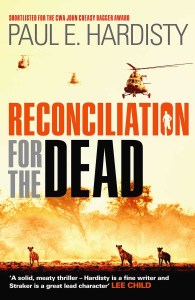
Blog Tour: Reconciliation for the Dead by Paul E Hardisty

From the PR: “Fresh from events in Yemen and Cyprus, vigilante justice-seeker Claymore Straker returns to South Africa, seeking absolution for the sins of his past. Over four days, he testifies to Desmond Tutu’s newly established Truth and Reconciliation Commission, recounting the shattering events that led to his dishonourable discharge and exile, fifteen years earlier.

It was 1980. The height of the Cold War. Clay is a young paratrooper in the South African Army, fighting in Angola against the Communist insurgency that threatens to topple the White Apartheid regime. On a patrol deep inside Angola, Clay, and his best friend, Eben Barstow, find themselves enmeshed in a tangled conspiracy that threatens everything they have been taught to believe about war, and the sacrifices that they, and their brothers in arms, are expected to make.

Witness and unwitting accomplice to an act of shocking brutality, Clay changes allegiance and finds himself labelled a deserter and accused of high treason, setting him on a journey into the dark, twisted heart of institutionalised hatred, from which no one will emerge unscathed.”

Here we are with the third volume in Hardisty’s Straker series and let’s get this out of the way now; they just keep getting better – Reconciliation for the Dead is a massive leap forward and the best of the three and I do hope there’s more to come. Don’t misunderstand; I thoroughly enjoyed both The Abrupt Physics of Dying and The Evolution of Fear but Reconciliation for the Dead is something else both as part of the Clay Straker family and as a novel.

At this point in time we’re a little ahead of the book’s publication date so I’ll be wary of giving away too much in terms of plot or spoiler. Instead I’ll say that Reconciliation for the Dead is a real genre-defier; at times action thriller, at times political intrigue, at others social commentary and at times literary fiction but BRILLIANT throughout. Hugely gripping, deeply moving, highly intelligent, and – as is a real hallmark of Hardisty’s work – a story with heart and conscience.

As detailed in the PR, this novel sees Clay return to his native South Africa to testify in front of the Truth and Reconciliation Commission – not so much for personal absolution but to lay out the truth on behalf of those unable to tell their stories. This isn’t one for the faint of heart; there are some intense scenes involved, bold and powerful revelations  from which Hardisty does not flinch. It’s practically impossible to run through just which atrocities we’re talking about here but we’re looking at the real nadir of human behaviour that’s let loose at times of war.  That so much of it is based on real events makes it all the more affecting.

The action scenes – into which you’re thrust pretty much from the get-go – are hugely immediate and crack along at a dizzying pace while retaining an intelligence that’s not all that common in the genre. For those who have read the previous novels Clay and Crowbar are both familiar characters – the events of Reconciliation for the Dead allow a far greater an understanding, filling in the gaps of a troubled and tortured history merely hinted at before.

This is a novel of actions and their consequences, of the past and its long shadow, the importance and cost of conscience and of the weight of regret. It makes for a gripping and compelling read. Hardisty’s writing, already accomplished – in my review of his first book I wondered if he hadn’t secretly been penning thrillers for years under an assumed name – is at it’s finest here; insightful, nuanced and intelligent and courageous; asking us all to examine our humanity and the cost of our actions.

Reconciliation for the Dead is as intense, thought provoking and hugely rewarding a read as it gets. Easily one of the best books of 2017. My thanks, as always, to Karen at Orenda for my copy of this book and do check out the other stops on the blogtour.


Blog Tour: Faithless by Kjell Ola Dahl

From the PR: “Oslo detectives Gunnarstranda and Frølich are back … and this time, it’s personal…

When the body of a woman turns up in a dumpster, scalded and wrapped in plastic, Inspector Frank Frølich is shocked to discover that he knows her … and their recent meetings may hold the clue to her murder. As he begins to look deeper into the tragic events surrounding her death, Frølich’s colleague Gunnarstranda finds another body, and things take a more sinister turn. With a cold case involving the murder of a young girl in northern Norway casting a shadow, and an unsettling number of coincidences clouding the plot, Frølich is forced to look into his own past to find the answers – and the killer – before he strikes again.”

Caution- a whiff of slight spoiler may be ahead…

So… today is my stop on the BlogTour for Kjell Ola Dahl’s Faithless and I’m not really sure where or how to start with a review for this one because it is so fucking good.

I suppose I could start by pointing out that I have zero prior familiarity with Kjell Ola Dahl’s work or the Oslo Detectives series into which this novel slots but it’s safe to say it’s not required. At no point while reading did I feel as though I was missing out on something vital in terms of plot or character arcs as Faithless has been so ridiculously well crafted as to work not only, I assume, as a fantastic continuation of a series but as a bloody strong stand alone novel too.

As for the plot… gripping and so brilliantly pieced together as to leave no question that this book would be put down until finish. Frølich, tired after an all-night surveillance pulls over a person of interest and discovers she’s carrying cocaine. She’s booked, reveals nothing, pays a fine and is set free. Frølich then meets her again when it turns out she’s engaged to an estranged friend with whom he’s recently reconnected. When she’s murdered just days later it’s all a little to close to home. The disarmingly calm and methodical investigations reveal a complex web that may or may not connect it to a decades-old murder and comes with plenty of surprises and twists.

The stately prose and style is that of a master (expertly translated by Don Bartlett); precise and clinical without a spare word and packing plenty of punch.

When it comes to the characters… as I said – I have no prior knowledge of this series (something I desperately need to fix) but in no way felt I was missing anything; Frølich, Gunnarstranda and all are perfectly rendered and genuine characters for whom any reader will root and find common ground.

To say Karen at Orenda has impeccable taste would be an understatement right now. A couple of years ago she introduced me to the work of Gunnar Staalesen, “one of the fathers of Nordic Noir” , and now here we are with yet another master of the genre on her list. Unbelievable amount of talent and beautiful prose. A real must read that I cannot enthuse enough about. Many thanks, again, to Karen for my copy and do check out the other blogs on the tour:

Blog Tour: The Man Who Loved Islands by David F Ross

From the PR:The Disco Boys and THE Band are BACK …In the early ’80s, Bobby Cassidy and Joey Miller were inseparable; childhood friends and fledgling business associates. Now, both are depressed and lonely, and they haven’t spoken to each other in more than ten years. A bizarre opportunity to honour the memory of someone close to both of them presents itself, if only they can forgive … and forget.

Absurdly funny, deeply moving and utterly human, The Man Who Loved Islands is an unforgettable finale to the Disco Days trilogy – a modern classic pumped full of music and middle-aged madness, written from the heart and pen of one of Scotland’s finest new voices.”

Last year I made the mistake of taking David F Ross’ The Rise of the Miraculous Vespas (review here) to read on a train. I say ‘mistake’ because it was so uproariously funny that I barely managed the self-control needed not to be that bloke in the Mr Bean sketch.

The Rise of the Miraculous Vespas was the story of  Max Mojo and his attempts to manage the titular band all the way to the top, Malcolm McLaren style and was, itself, a sort-of-but-not-quite sequel / parallel story to David F Ross’ The Last Days of Disco with which it also shared many a familiar character.

Here we are, now, with The Man Who Loved Islands; the final entry of the ‘Disco Days’ trilogy which manages that rare thing for a third installment* and proves to be the best of the bunch.

It seems strange to say this given that only a year seperates each of the books but David F Ross’ writing style has gotten better with every one and this is the finest to date. There is plenty of hilarty within these 302 pages, some of which will most likely make you guffaw out loud (if it doesn’t there is something wrong with you), whether it be the so very welcome return of Max Mojo or whether it’s Hamish May’s vocal track and experiences with Ibiza’s hidden societies. Though, true to his character, Max Mojo steals those scenes and the idea of him – unable to fully control the malign voice in his head – swearing it up on BBC Breakfast caused me plenty of amusement, though “get fuckin’ practisin’ … ye’se sound like fuckin’ Coldplay!” takes the biscuit for best putdown.

However, what struck me most about The Man Who Loved Islands was the poingnancy of Joseph and Bobby coming to terms with where life has lead them, that bittersweet coming to terms with the passing of time and its inevitibality – Bobby swearing bitterly about Calvin Harris or Joey loading himself up with medication and setting himself adrift in China – and it’s in this capturing of a gentle defeat and surrender that David F Ross is at his most compelling.

The Man Who Loved Islands is the best kind of reunion. Finding out where all those characters had gotten to and finding out that the chemisty and you loved about them in the first place is still there… brilliant. There are some deeply moving and genuinely heartbreaking moments but the power of friendship and a love for music runs strong throughout and for all of life’s sucker punches and poingnancy, I’d say The Man Who Loves Islands is ultimlately an uplifting story of hope. And a bloody funny one at that, too.

While it’s the end of the Disco Days trilogy I sincerely hope there’s more to come from David F Ross – if only for another chance for a virtual rummage through his music collection.

My sincerest thanks again to Karen at Orenda Books for my copy and do check out those over stops on the The Man Who Loved Islands blogtour.

*Of course the Godfather Part 3 Rule whereby the third of the trilogy is the weakest of the bunch doesn’t just apply to film. Take the three ‘proper’ Bourne novels – the third of those is best kept on a shelf for the rare occasion you find yourself without toilet roll.

Blog Tour: Six Stories by Matt Wesolowski

From The PR: “1997. Scarclaw Fell. The body of teenager Tom Jeffries is found at an outward bound centre. Verdict? Misadventure. But not everyone is convinced. And the truth of what happened in the beautiful but eerie fell is locked in the memories of the tight-knit group of friends who took that fateful trip, and the flimsy testimony of those living nearby.
2017.

Enter elusive investigative journalist Scott King, whose podcast examinations of complicated cases have rivalled the success of Serial, with his concealed identity making him a cult internet figure. In a series of six interviews, King attempts to work out how the dynamics of a group of idle teenagers conspired with the sinister legends surrounding the fell to result in Jeffries’ mysterious death. And who’s to blame…

As every interview unveils a new revelation, you’ll be forced to work out for yourself how Tom Jeffries died, and who is telling the truth.”

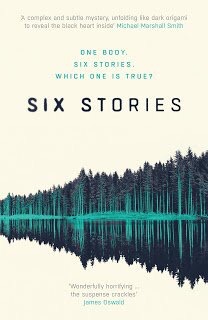
Right then, here we are with Six Stories, one of the most interesting books I’ve read in a while with something of a unique narrative approach – like a contemporary take on The Moonstone‘s multi-character narrative. One unsolved crime, six key stories as told, judgement free, to Scott King on his podcast  with listeners being left to form their own views on what happened – that’s the premise of ‘Six Stories’.  Six Stories, told as though an episode of said podcast, unravels the mystery of what happened to 15 year old Tom Jeffries who went missing one night on Scarclaw Fell before his body was discovered a year later.

Twenty years ago the death Jeffries had been ruled as ‘misadventure’ – his body having been eventually discovered in the mud of the Fell one night by Harry Saint Clemeny- Ramsay (who also adds a narrative thread in between the Six Stories) and his friends’ dogs  – but then what were Harry and his friends really doing out in the wild with their dogs, lamps and guns? Hunting? For what? Why had the body been missing for so long despite thorough searches at the time?

As each of the six stories unfolds we’re treated to more questions and intrigue, more revelations and head scratchers – thankfully ‘Scott King’ provides plenty of recaps and additional voices, corroborations from those outside the ‘six’ – for Six Stories is most definitely a very meticulously plotted and tightly wrapped story. Deeply engrossing and one that cost plenty of sleep – there’s so much here that made me flip back in the book to re-read earlier threads and some genuinely chilling moments that are capable of raising the odd goosebump or three and once you’ve gotten into the swing of the style it’s impossible to finish reading one ‘story’ and not want to plough straight into the next one to see what that character brings to the mix.

Those characters are all brilliantly written and their stories all so comprehensively well delivered – the multi-angle and narrator approach really keeps things rocking and gives adage to the notion that not every story is one-sided and events become increasingly detailed and multi-faceted with every witness’ version of events, though I will say these were either a pretty precocious bunch of 15-year-olds or I lived a sheltered existence. It’s strange but after you get into it – the first two ‘stories’ are not from any of the then-teenagers –  you really want to see how the Rangers have aged, what they’re like now after reading so much of what they were like then.

It’s hard to talk too much about Six Stories and its narrative style and how it goes on to deliver in spades without dropping an almighty spoiler but I will say that the final story and its revelation is an absolute belter and written / handled in such an accomplished manner as to leave the reader in no doubt that Matt Wesolowski is a  very much a  talent to keep an eye on.

Six Stories is a compelling and rewarding read with enough intrigue and mystery to keep you glued to the end. Thanks again to Karen at Orenda for my copy and do check out the other stops on the Blog Tour:

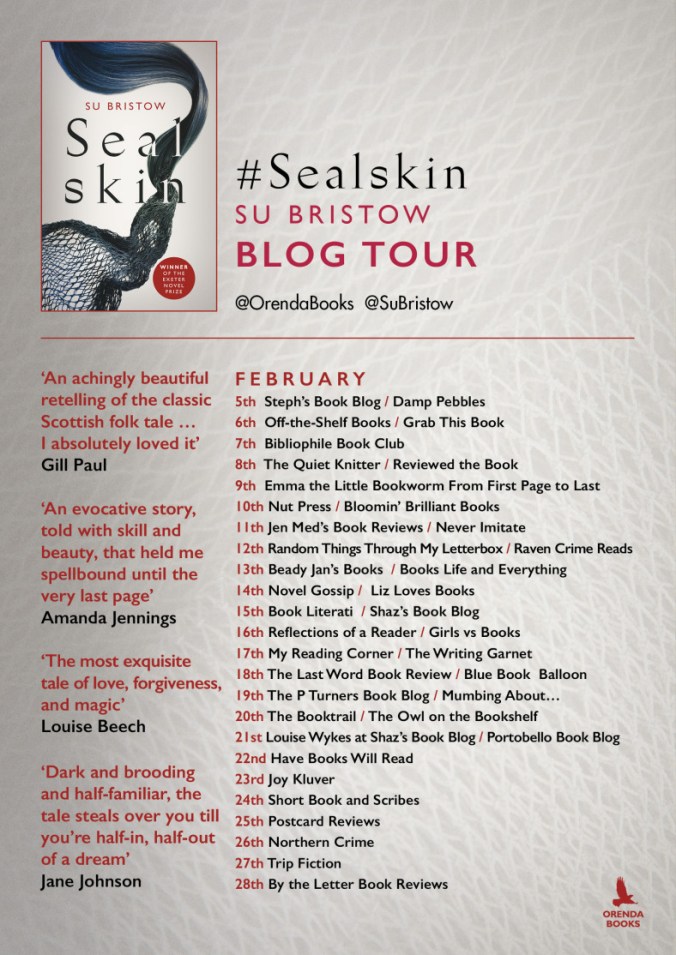
Blog Tour: Sealskin by Su Bristow

img_1900Sometimes a book will come along that hypnotises you just so and holds you so much under its spell that when it comes time to even attempt to do it justice in a review that it becomes pretty much impossible to put into words just how bloody good it is and those superlatives that are known merely prove inadequate. Su Bristow’s Sealskin is one of those books.

Winner of 2013’s Exeter Novel Prize, Sealskin is based on the legend of the selkies – seals who can transform into people. More specifically the legend of a fisherman who, one night at full moon, witnessed nine seals who came to shore, took off their skins and became beautiful young women dancing on the beach. In Su Bristow’s novel that fisherman watches the women dance and, unable to contain himself, makes a terrible mistake. That mistake has ramifications for both him, the young woman and the small fishing community where life is hard, the sea is all powerful and belief is as strong as fact.

So what could I say about this book now that it’s my turn on the blogtour? This book for which superlatives are not enough and others have heaped such well deserved praise on. What could I add?

I could say that it’s haunting, that it’s captivating and mesmerising. I could point out that Sealskin is one of the best things I’ve read and I could go on to say that Su Bristow’s narrative is so delicious that it pulls you slowly and completely into a story so satisfying and equal parts joyous and heartbreaking (utterly so) that it leaves you yearning for more and I could (should) also point out that when you do turn the final page the immersion within its world is so total that you will get withdrawal symptoms and find yourself looking around at your environment as if it were alien with an almighty book hangover.

I could say that I found this beautiful novel completely mesmerising that I barely put it down. I could mention that the characters are all so perfectly nuanced and full as to leave me wondering if this were legend or fact.

I could point out how Su Bristow’s portrayal of this bleak place’s calm, stoic acceptance of hardship and grief (“He could just remember his little sister, stumbling after him down the path, crying when she stung her hand on the nettles, laughing when he tickled her. She had it all to learn, too, when the fever burned her life away.”) is so much more affecting than anything I’ve read in some time.

I could say all of this but what I really want to say is that this Sealskin is such an absolute essential addition to any self-respecting book lovers’ collection that if you don’t love it there’s probably something wrong with you.

Yes, that’s what I’ll say: you need Sealskin by Su Bristow on your bookshelf. But only after you’ve read it and let it possess you.

I’ll also say a huge thanks again to Karen at Orenda for sending me a copy of this to review and for continuing to take chances on and publishing such bloody good literature.

sealskin-blog-tour img_1900

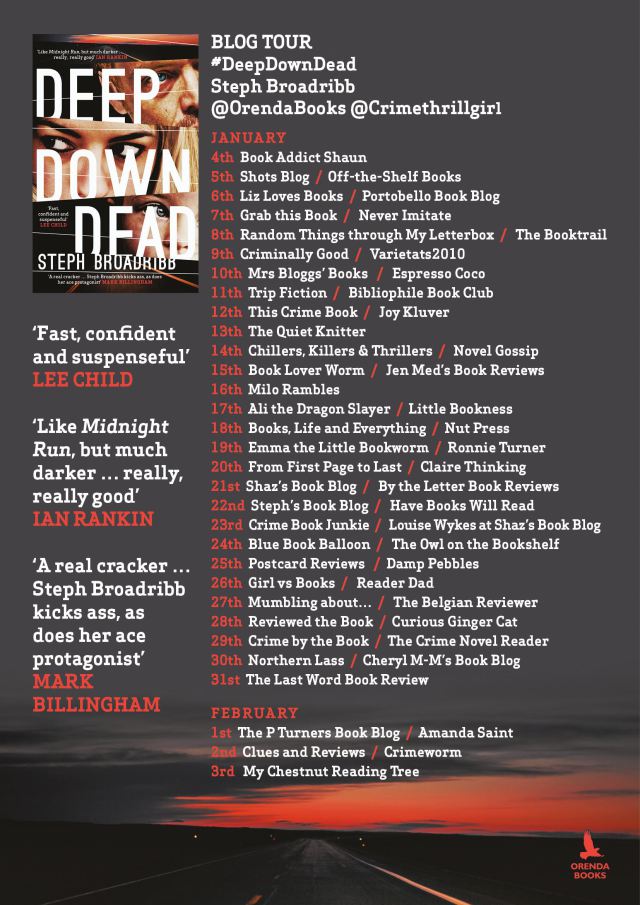
Blog Tour: Deep Down Dead by Steph Broadribb

From the PR: “Lori Anderson is as tough as they come, managing to keep her career as a fearless Florida bounty hunter separate from her role as single mother to nine-year-old Dakota, who suffers from leukaemia. But when the hospital bills start to rack up, she has no choice but to take her daughter along on a job that will make her a fast buck. And that’s when things start to go wrong.

The fugitive she’s assigned to haul back to court is none other than JT, Lori’s former mentor – the man who taught her everything she knows … the man who also knows the secrets of her murky past. Not only is JT fighting a child exploitation racket operating out of one of Florida’s biggest theme parks, Winter Wonderland, a place where ‘bad things never happen’, but he’s also mixed up with the powerful Miami Mob. With two fearsome foes on their tails, just three days to get JT back to Florida, and her daughter to protect, Lori has her work cut out for her. When they’re ambushed at a gas station, the stakes go from high to stratospheric, and things become personal.

Breathtakingly fast-paced, both hard-boiled and heart-breaking, Deep Down Dead is a simply stunning debut from one of the most exciting new voices in crime fiction.”

img_1586

This book cost me some sleep; once it gets going Deep Down Dead is an addictive read and one any fan of a good thriller will love. 

Now I look at the book on my shelves I’m surprised that it’s over 330 pages – it rips along with such a pace but then there’s an awful lot of good stuff packed into Deep Down Dead: a gritty female lead with more punch than a Klitschko brother and a back story that ensures you’re hanging to each page rooting for her while the plot has more twists and excitement than a ride at Winter Wonderland. That this is Steph Broadribb’s first novel makes that all the more impressive. 

A thoroughly enjoyable read with enough grip and twists to keep the reader hooked through to the end. A strong debut and I’m looking forward to the next chapter.

Thanks again to Karen at Orenda for my copy and check out the other stops on the tour.

ddd

Book Review: All the Light We Cannot See by Anthony Doerr

I’ve set myself a target / challenge of reading 40 books this year. It might seem like a few but I cleared 30 or so last year and I’m 3 down already. The first book I read in 2017 is going to take some beating though. It really cost me some sleep.

img_1467Some time last year I saw All the Light We Cannot See by Anthony Doerr on a table in the local (chain) bookshop. Immediately I was struck by the cover (I’m pretty sure a lot of others do judge books this way) even before I read the blurb on the back which well and truly got my interest. However; my TBR pile was already well stocked so it stayed on the table. Until it appeared under the Christas tree.

I’ve heard some people bemoan the historical fiction genre as limited and this has always baffled me. Aside from the opportunities offered by the ‘what if / alternative timelines’ explored by the likes of Fatherland, even small parts of history such as the Second World War offer a canvas so vast and wide as to be pretty much limitless in opportunities for invention and story while the gravitas of events is always going to add some emotional heft and that’s certainly the case with All the Light We Cannot See.

Thing is, with all that emotional heft and known touch points, it’s easy for historical novels to overdo it and try and hit every (see City of Theives) but that’s not the case here. While it’s clear from the get go that this is going to be an emotional novel – Marie-Laure is a blind girl whose mother died in childbirth while Werner and his sister Jutta are orphans in a harsh German mining town, Doerr doesn’t over egg the pudding. He doesn’t need to:

“Marie-Laure lives with her father in Paris near the Museum of Natural History, where he works as the master of its thousands of locks. When she is six, Marie-Laure goes blind and her father builds a perfect miniature of their neighbourhood so she can memorize it by touch and navigate her way home. When she is twelve, the Nazis occupy Paris and father and daughter flee to the walled citadel of Saint-Malo, where Marie-Laure’s reclusive great-uncle lives in a tall house by the sea. With them they carry what might be the museum’s most valuable and dangerous jewel.

In a mining town in Germany, the orphan Werner grows up with his younger sister, enchanted by a crude radio they find. Werner becomes an expert at building and fixing these crucial new instruments, a talent that wins him a place at a brutal academy for Hitler Youth, then a special assignment to track the resistance. More and more aware of the human cost of his intelligence, Werner travels through the heart of the war and, finally, into Saint-Malo, where his story and Marie-Laure’s converge.”

The story gets started with the night before the near destruction of Saint-Malo in 1944 before tracing the timelines of its two leads back to their childhoods and briskly bringing them to the present and to each other in one hell of a climax. Told in present tense, the prose is short and bullet sharp and keeps the momentum of the story ripping along, there’s no time to dwell on emotional impact (perhaps making it all the more hard-hitting when it comes) and there are moments when it’s clear that Doerr is himself wrapped up in the story and just letting it unfold and getting out of its way. An absolute joy to read.

A story of science and the power of radio, Nazi occupation, wonderment and the question of morality, All the Light We Cannot See by Anthony Doerr is a genuinely great novel- it’s a good thriller crossed with a damn good stab at great literature. It’s been pretty much highly received and won the 2015 Pulitzer Prize for Fiction (I’m also a big fan of the previous winner, Donna Tartt’s The Goldfinch).


2016 Between Covers

Here we are once again amongst the closing days of another year. This is certainly one year I’ll be glad to see the back off. I won’t go off-topic here or cross that line into putting too much of the personal up here but I will say 2016 was an utter bloody farce of a year.

However, as the days before the fat man with a beard drops down the chimney diminish, it’s also that time to share what I think were the best things I read during 2016.

Once again – save for a few weeks where I simply couldn’t read / take anything in – I read a lot this year – some amazing fiction new and old and plenty of fascinating non-fiction. There are some I’ve started but not finished (I do aim to finish Life and Fate in 2017) and some that still sit on the To Be Read pile.

This list, then, is my take on the best written word I consumed during 2016 and is in no particular order with the obvious exception…

Fiction

IMG_7211Jihadi: A Love Story by Yusuf Torpov

One of the first books I read this year and one that’s stayed with me throughout. Echoes of great writers can be found throughout but it’s truly marked by the unique voice of Yusuf Toropov who here has written an important novel of our time. In my review I said that  its a rare thing to find “a book that is so unarguably great that you find yourself telling everyone they should read it regardless of their usual choice of paperback writer. Jihadi; A Love Story by Yusuf Toropov is just such a book.” I stand by that.

Leaving Berlin by Joseph Kanon

A spy thriller set at the very start of the Cold War, as divisions and sides are drawn in a country still beset by the scars of war and trying to rebuild itself amongst the rubble. As much as I was fascinated by the historical element the plot equally gripped my attention and has sent me off down another path of reading with a couple of Cold War thrillers already en route to my letter box. Original review.

For Two Thousand Years by Mihail Sebastian

For completely personal reasons this book would already make the top ten. It was purchased while spending ten hours waiting for a plane at Gatwick airport ahead of a family holiday where it was hungrily consumed. I’d been searching for Sebastian’s work in English and this, published this year, did not dissapoint. Beautifully written and deeplu insightful and evokative. The knowledge of the tragedies that lay in store for Mihail Sebastian only make it all the more poignant. Original review.

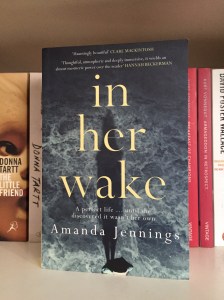
imageIn Her Wake by Amada Jennings

This book absolutely broke my heart. This book was so far from what I was expecting and so gripping that I honestly can’t see how it wouldn’t make this list. If everything you knew about yourself turned out to be a lie, that your whole life was built around a crime so devestating that lives have been ruined, what would you do? In Her Wake, is a real story of hope and courage. And, yes, the final revelation about Bella still guts me many months down the road.

Notes on a Cuff by Mikhail Bulgakov

Finding this book last year, and finally reading it in this, was such a joyous experience. I thought I’d read all that was available so to discover the stories in Notes on a Cuff was like stumbling upon gold dust. These stories, written in the early 1920s, show a real master finding his voice and revelling in the art and joy of writing. There are elements here that he’d perfect later in his career but it’s amazing to see just how brilliantly formed his work already was.

Purity by Jonathan Franzen

On each occasion (and it’s always an ‘occasion’) that a Franzen book is published I can’t help but think it won’t be as good as his previous novel. On each occasion I’m proven wrong. Easily his most accessible and equally amongst his finest work.

The Bickford Fuse by Andrey Kurkov

I’ve written before on just how much I love Kurkov’s work. Something of a cross between Bulgakov and a Ukranian Vonnegut, he weaves near-absurdist, satirical novels of the highest calibre. The Bickford Fuse from what I can tell, is an earlier book than any he’s yet published and was written in the final days of communism. A look at ‘Soviet Man’ told through a series of somewhat connected stories and characters that, while clearly written by the same author, is completely unique amongst his work printed thus far. Ambitious, multi-layered and hugely rewarding to read.

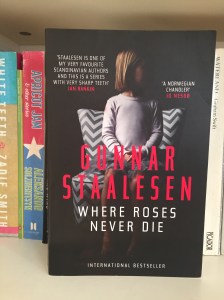
IMG_9197Where Roses Never Die by Gunnar Staalesen Favourite Fiction of 2016.

I read this in circumstances almost as perfect as possible yet I’m sure that had I read it in the middle of a cesspit as I sank down to the bottom I would have loved it just as much. Hugely gripping, deeply evokative and written without a spare word, Gunnar Staalesen is like the samauri of Nordic Noir – every masterful, well-practiced and skilful word strikes home hard. Staalesen is the master of his craft and it’s a big credit to the translation that there’s never any question of this when translated into English from the native Norwegian. Original review.

Non-Fiction

A book about the intelligence war was never not going to be my cup of coffee and when you factor in that it’s written by Max Hastings, The Secret War couldn’t get much better. Some real shockers in here and written in such a way as to ensure it never gets dull. It’s strange as it never caught my attention in school (more down to the education system at the time) but the Second World War has become the subject I’ve probably delved into most in terms of personal education. While I always enjoy a personal account – my interest being how normal people find themselves in extraordinary circumstance that I can’t comprehend rather than the ‘guns and glory’ stuff – the intelligence and spy / espionage war really fascinates me and this book is packed with detail.

In theory that should mean this would be the best NF book I picked up in a year but, then, this was the year that Bruce Springsteen published his autobiography.

Born To Run is the memoir every Bruce fan could have hoped for. He could’ve phoned it in. He could have gotten a ghost-writer to assisst and turn it into pristine prose. He didn’t. A deeply personal book, there’s more insight here than any such auto-bio I’ve read and all told in Bruce’s own voice. Revelations, inspiration and the salvation of music is all in here like one of his greatest songs. Original review.


Honourable Mentions…

The Dark Iceland series by Ragnar Jónasson is one of the most compelling and rewarding additions to the thriller genre and this year’s Black Out and Night Blind were both excellent – but impossible to choose a favourite.

I delved deeper into the Jack Reacher series this year with a good five books under my belt including the new (in paperback) Make Me which was a real strong contender and shake up of the character.

Yann Martell’s books are always going to suffer in comparisons to his famous book with the tiger but The High Mountains of Portugal was a good effort, if a little wayward at times, with a beautiful, heartbreaking evocation of absolute grief.

Epithany Jones by Michael Grothaus and The Exiled by Kati Hiekkapelto really should be on this list too…

Blog Tour: The Exiled by Kati Hiekkapelto

Is there a Finish expression for busman’s holiday?

From the PR:
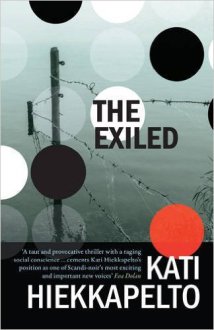
“Murder. Corruption. Dark secrets. A titanic wave of refugees. Can Anna solve a terrifying case that’s become personal?  
Anna Fekete returns to the Balkan village of her birth for a relaxing summer holiday. But when her purse is stolen and the thief is found dead on the banks of the river, Anna is pulled into a murder case. Her investigation leads straight to her own family, to closely guarded secrets concealing a horrendous travesty of justice that threatens them all. As layer after layer of corruption, deceit and guilt are revealed, Anna is caught up in the refugee crisis spreading like wildfire across Europe. How long will it take before everything explodes?”

41mxo4kt01l-_sx322_bo1204203200_I really need to get my hands on a copy of The Hummingbird, the first installment in Kati Hiekkapelto’s Anna Fekete series. Last year the second book The Defencless was one of my best reads of 2015  and, having just finished The Exiled it’s safe to say this is fast becomming one of my favourite series and Anna Fekete makes for a compelling lead character.

A fish out of water in Finland, Anna finds herself just as out of place back in her ‘home’ country – she’s lived abroad for so long now that the mannerisms, and even the language, are alien to her and Kati Hiekkapelto perfectly captures that strange sense of disconnect felt by those returning home from a different culture – specifically a ‘western’ one – and the seeming frustration at the change in how even the most straight-forward of things function differntly. It’s not obvious to all who haven’t witnessed or experienced it but there is a real change in the pace of life and priorities compared to more latin countries and it’s clear the author has done more than her homework here.

Kati does a wonderful job of evoking Serbia – the people, the mannerisms, the climate, the pastimes, even the social necessities and the odd (to Western eyes) importance placed on just those, along with Anna’s confused emotions on returning to her homeland – even if what she finds isn’t always to her liking there are certain sensations and memories that cannot be tainted and here come across beautifully. Ms Hiekkapelto’s skill, though, is in combining these rich evokations with a gripping and superbly paced plot. It’s one thing to paint a picture so vivid as to have the ready longing for another glass of homemade plum brandy, it’s another to write a genuinely engaging and taut mystery but it’s an art to get the two to work together seamlessly. That’s an art where Kati Hiekkapelto is most definitely skilled.

As much as I enjoy tearing though a fast-paced thriller, I love a good slow-burner and The Exiled more than delights; the writing is calm and effective – it draws you in with deceptive ease until you’re fully immersed in both place and plot with a great level of detail and characters and as determined to get to the bottom of the mystery as Anna Fekete herself.

One of the elements I enjoyed most about The Defenceless was Kati Hiekkapelto’s handling of important social themes and the same is true with The Exiled. Never more timely, the handling of the dehumanisation of refugees – even the nastily subtle manner in which the media decides they’re ‘immigrants’ rather than people fleeing absolutle terror – plays a central role in this novel; a pertinent message for our times as the Right seems to barrel it’s way through truth and humanity.

I thoroughly enjoyed The Exiled and can’t recommend it enough. Thanks again to Karen at Orenda for my copy and do check out the other stops on the blogtour:

finnish-invasion-blog-tour-banner


Book Review: The Mountain In My Shoe by Louise Beech

“A book is missing.

A black gap parts the row of paperbacks, like a breath between thoughts.”

love that opening.

Last year saw publication of Louise Beech’s How To Be Brave on Orenda Books. A thoroughly moving book that made my reads of the year list. What impressed me most was how its writer was unafraid to tackle emotional areas from which others might blanch while combining such insightful writing with a compelling story. She’s done it again.

I was more than happy and eager to read The Mountain In My Shoe when it was so kindly sent to me by Karen at Orenda. Life and this year being the utter shit that it has been, though, means I couldn’t do so straight away. My stop on the blogtour for this one was kindly populated by the author herself with a piece on adversity that’s well worth a read, here.

Now, though, I’ve not long turned the final page on this one and it’s time to get down my thoughts and I’ll try to do so without giving away too much. If I can…

From The PR: “A missing boy. A missing book. A missing husband. A woman who must find them all to find herself …

the-mountain-in-my-shoe-copy-275x423On the night Bernadette finally has the courage to tell her domineering husband that she’s leaving, he doesn’t come home. Neither does Conor, the little boy she’s befriended for the past five years. Also missing is his lifebook, the only thing that holds the answers. With the help of Conor’s foster mum, Bernadette must face her own past, her husband’s secrets and a future she never dared imagine in order to find them all.

Exquisitely written and deeply touching, The Mountain in My Shoe is both a gripping psychological thriller and a powerful and emotive examination of the meaning of family … and just how far we’re willing to go for the people we love.”

I seem to recall Louise Beech saying that in The Mountain In My Shoe she’d ‘accidentally’ written a thriller. If this is an accident then I’d be first in line to see what happens were she to set out to do so. I was thoroughly gripped and found myself turning through the pages with a speed that ought to have worried the binding. Contained within is a book that encompasses psychological thriller, emotional drama and gripping mystery.

As with How To Be Brave, there’s more than one voice telling a story in The Mountain In My Shoe: Bernadette, an abused housewife on the verge of leaving her controlling husband; Connor, a young boy who’s spent his life in the care system and The Book – Connor’s ‘life book’. The Life Book is Connor’s story updated by those that care for him – foster parents, social workers, teachers. I found this exceptionally moving – having just rediscovered my young son’s ‘My Story’ type book after moving and realising that, for Connor (and so many like him) life can deal some pretty harsh cards. A masterful touch from Mrs Beech.

The changing narratives and perspectives add a great depth to the story and each are handled convincingly and ring true. The Book is especially moving, upping the empathy for Connor and the suspense. It makes for painful reading at times but I’ve said this before and I’ll no doubt say it again; woe betide the author that goes for comfortable.

How To Be Brave and The Mountain In My Shoe are very different books and while there’s a few similarities (a diary and lifebook as narrative devices), there’s one undeniable thing they have in common; Louise Beech writes with an emotional honesty and bravery that elevates her work from the crowd. She writes in a way that just manages to cut to the core – especially as a parent – every single time. Brilliant.

Worth the wait, very highly recommended and thanks again to Karen at Orenda for another great book. Seriously, though, Karen; every time I think I’ve got my ‘Top Reads of the Year’ list sorted I open another book with the Orenda logo on its spine.