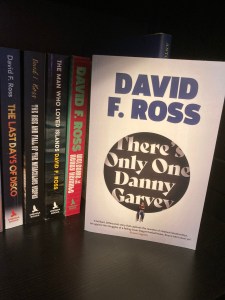
From the PR: “Danny Garvey was a sixteen-year old footballing prodigy. Professional clubs clamoured to sign him, and a glittering future beckoned.
And yet, his early promise remained unfulfilled, and Danny is back home in the tiny village of Barshaw to manage the struggling junior team he once played for. What’s more, he’s hiding a secret about a tragic night, thirteen years earlier, that changed the course of several lives.
There’s only one Danny Garvey, they once chanted … and that’s the problem. A story of irrational hopes and fevered dreams – of unstoppable passion and unflinching commitment in the face of defeat – There’s Only One Danny Garvey is, above all, an unforgettable tale about finding hope and redemption in the most unexpected of places.”
So, let’s get down to it: There’s Only One Danny Garvey is the fifth novel from David F Ross and if you haven’t read any of his books by now I’ve gotta ask; what’s been keeping you, ya bawbag?! David F Ross is one of the sharpest and funniest writers currently putting ink to page and There’s Only Danny Garvey may just be his best yet.
It’s exceedingly hard to combine an engrossing and well crafted story with genuine laugh-your-arse-off humour and still manage to pack an emotional punch – yet David F Ross seems to have found some secret recipe somewhere and pulls it off superbly in There’s Only One Danny Garvey. That he throws plenty of music and pop culture touch stones in – as per each of his novels to date – only makes it all the more enjoyable for me.
There’s so much to shout about in this one it’s hard to know where to start. This is an unreliable narrator like no other. It’s both razor sharp in its delivery and plot and warm and poignant in the details of the characters and community. It’s at once a poignant and evocative time machine back to a mid-nineties working-class community and a gripping slab of literary fiction. Oh, and it’s really, really fucking good.
While the sport – and the role it plays in the community – is at the heart of the novel, There’s Only One Danny Garvey is about lots more than just ‘the fitba’ and, even then, we’re a long way from the Scottish Premiership here. This is a novel of heart, of troubled pasts and dark secrets. A novel of families strained, tortured souls, loss and attempts at redemption. A novel of broken dreams and broken people, a novel with characters that’ll stay with you long after the final whistle has blown. It’s a touching and engrossing novel with one genuine “holy shit” moment after another when it clicks what’s actually happening and – when it turns that corner – really ups the ante. It’s a novel that’s brilliantly written, paced and bought to life; a game transformed by dazzling footwork, a beautiful pass and a precision shot on target into the back of the net. It’s a novel that really must be read.
My thanks to Karen at Orenda for my copy of There’s Only One Danny Garvey and to Anne Cater for asking me to take part in the blog tour.
“Much of Born In The USA was recorded live with the full band in three weeks. Then I took a break, recorded Nebraska and didn’t return to my rock album ’til later… Then brain freeze settled in.”
To read Springsteen’s biography Born To Run you’d almost believe that the writing and recording of the songs that made up Born In The USA was a relatively succinct period divided up into a couple of sessions and that the only songs that exist from the time graced the two albums it bore: Nebraska and Born In The USA.
Both Tracks, studio logs and his own Songs book tell a different story though. Between Bruce’s sitting down with “some books, a few scattered guitar picks, and a harmonica rack jostled with the crumbs of the afternoon’s lunch” and, importantly, a Paul Schrader script for a film called ‘Born In The USA’ and penning a song that he initially title ‘Vietman’ and the song hitting the airwaves were several years and a LOT of songs.
Following the decision not to release ‘Murder Incorporated’, and despite the idea of keeping studio costs down, Bruce headed back to New York’s The Hit Factory with The E Street Band from May – June of 1983, though without Van Zandt for the most part.
These final sessions were the end of an era, not realised let alone acknowledged at the time. Aside from the missing Van Zandt’s input, the last sessions for Born In The USA would be the last time Springsteen entered the studio with the full band for a long time to come and would be the last time in which songs would be written and then worked up and arranged with the band until 2020’s Letter To You. It’s also the point at which Springsteen’s prolific period of song writing began to slow and the security around the vault would tighten.
From May through June of ’83, though, Bruce and the band worked on more songs to add to the pile as Springsteen searched for the right sound and feel to make it an album. In fact, it looked like this was it and recording went straight into mixing in July and a possible track listing was born:
Side One:
Born In The USA
Cynthia
None But The Brave
Drop On Down And Cover Me
Shut Out The Light
Johnny Bye Bye
Side Two:
Sugarland
My Love Will Not Let You Down
Follow That Dream
My Hometown
Glory Days
Janey, Don’t You Lose Heart
This album doesn’t ring as cohesive as ‘Murder Incorporated’ ever did. Some of the songs come from the earliest sessions, some from Springsteen’s LA recordings and FIVE new songs from the May-June sessions all of which, as they were mastered, would either go on to serve as b-sides or appear on Tracks. However, songs like ‘Cynthia’ and ‘Janey, Don’t You Lose Heart’ (she still needed a shooter) aren’t his strongest from this period – Janey the better of the two – and their inclusion here, to me, is indicative that he was doubting the more direct, ‘pop’ leaning of the other material as they harken back more to his work of the previous decade than anything else from this period.\
The lack of cohesion was apparent to all and this version of the album was shelved. The mix and feel of Springsteen’s LA cuts jarring too much with the rest of the cuts. It was back to the studio, again, for another period of writing and recording from the end of ’83 into early ’84. However, it was at this point that ‘brain freeze’ kicked in and work ground to a halt.
Thanks to the increasing security on sessions and the vault the fruit of these last periods of writing and recording are harder to identify. But Springsteen suggests, in ‘Born To Run’ again, that these would have included ‘Bobby Jean’ and ‘No Surrender’ and, er, ‘Refrigerator Blues’, ‘Swoop Man’ and ‘Ida Rose (No One Knows) were also written write before then end of the album’s writing and recording period.
Recognising that Springsteen was at an impasse with his album – and, presumably, with the record label chomping away at his ear – Jon Landau stepped in. He did two things. First, he compiled what he thought were the best of the songs recorded into an eleven-song track list:
Side One:
Born In The USA
I’m Goin’ Down
Cover Me
My Hometown
Bobby Jean
Side Two
My Love Will Not Let You Down
Follow That Dream
Glory Days
Protection
Janey, Don’t You Lose Heart
I’m On Fire
I don’t dig this track list anymore than that created in July of ’83. The songs here are still missing something but it seemed to do the job of giving his charge a charge, if you will. For Springsteen, armed with his newly- recorded songs, then “circled back to my original group of songs. There I found a naturalism and aliveness that couldn’t be argued with. They weren’t exactly what I’d been looking for, but they were what I had.”
They weren’t exactly what I was looking for…. but they were what he had. To me, this suggests a sense of weariness perhaps. Realisation, maybe, that whatever it was he was looking for wasn’t going to be found and he needed to get something, anything, out? Even if it meant it wasn’t as realised to him as, say, Darkness On The Edge of Town was? It’s a sensation that’s gotten across in the album’s first single:
‘Dancing in the Dark’ came from a now-famous moment when Springsteen was told the album needed a ‘hit’ single to get it on fire on the radio. Tired and weary after what was three years plus of writing and recording for the album and having already stockpiled more songs for Disc Three of Tracks to be one of the strongest, Bruce told Landau that if he wanted it so much, he should it himself. Springsteen refers to the song as being “about my own alienation, fatigue and desire to get from inside the studio, my room, my record, my head…” It was the last song recorded for the album in February 1984.
Born In The USA changed Springsteen’s career. It pushed him from arenas to stadiums, muscle-bound and posing for the big screen projections to the cheap seats with hit after hit released from it. I’ve covered the album itself in more detail as part of my ‘Least To Most’ Springsteen series so won’t reiterate that which I’ve already covered. It may well have been his biggest but it’s far from my favourite and, with hindsight, Springsteen himself has certainly cooled toward it – it’s grab bag feel still apparent. But it did the job.
Following it would never be easy especially when you take into account the album’s arduous gestation period. Tunnel of Love, a far superior album, was a much more subdued affair and it would be another decade or two before Springsteen was comfortable finding his ‘rock’ voice again. The hesitancy and labouring over songs would also be borne out on the much-maligned Human Touch and his second-guessing over releasing albums would permeate through the next decade as there’s another rumoured album that sits abandoned in his vaults.
Perhaps it, like the wealth of songs recorded during Born In The USA‘s sessions, will see light on the in-the-works Tracks 2 project. Of those songs recorded and cut from the album we know of ‘Murder Incorporated’, ‘Pink Cadillac’, ‘Shut Out The Light’, ‘Johnny Bye-Bye’, ‘Stand On It’, ‘Janey, Don’t You Lose Heart’, ‘A Good Man Is Hard to Find (Pittsburgh)’, My Love Will Not Let You Down’, the brilliant ‘Wages of Sin’, ‘This Hard Land’, ‘Frankie’, ‘Cynthia’, ‘Lion’s Den’, ‘Car Wash’, ‘TV Movie’, ‘Brothers Under The Bridges (’83)’, Man At The Top’, Rockaway the Days’, ‘County Fair’ and ‘None But The Brave’. That’s 20 songs, for those who are counting.
But… those that haven’t been officially released?
Here’s the list, just as indication that there’s a HUGE amount still in the vault. Each of these, in some way, went into the making of the final album and it shows just how much Springsteen put into the sessions even if he never found what he was looking for:
PROTECTION
THE KLANSMAN
SEVEN TEARS
FUGITIVE’S DREAM
ONE LOVE
BETTY JEAN
UNSATISFIED HEART
LITTLE GIRL (LIKE YOU)
DELIVERY MAN
FOLLOW THAT DREAM
SUGARLAND
DON’T BACK DOWN
JAMES LINCOLN DEAR
RICHFIELD WHISTLE
YOUR LOVE IS ALL AROUND ME
STOP THE WAR
BABY I’M SO COLD
BELLS OF SAN SALVADOR
ON THE PROWL
NEBRASKA – E STREET BAND VERSION
ATLANTIC CITY – E STREET BAND VERSION
MANSION ON THE HILL – E STREET BAND VERSION
JOHNNY 99 – E STREET BAND VERSION
HIGHWAY PATROLMAN – E STREET BAND VERSION
USED CARS – E STREET BAND VERSION
OPEN ALL NIGHT – E STREET BAND VERSION
REASON TO BELIEVE – E STREET BAND VERSION
LOSIN’ KIND
FADE TO BLACK
ROBERT FORD
WILLIAM DAVIS
GUN IN EVERY HOME
COMMON GROUND (STAY HUNGRY)
TRUE LOVE IS HARD TO COME BY
I DON’T CARE
THE MONEY WE DIDN’T MAKE
JOHNNY GO DOWN
BODY AND SOUL
SAVIN’ UP
OUT OF WORK
LOVE’S ON THE LINE
CLUB SOUL CITY
HOLD ON (TO WHAT YOU GOT)
WORKIN’ ON IT
GONE, GONE, GONE / SEEDS
KING’S HIGHWAY
JUST AROUND THE CORNER TO THE LIGHT OF DAY
INVITATION TO YOUR PARTY
BAD BOY
GLORY OF LOVE
SHUT DOWN
100 MILES FROM JACKSON
ROLL AWAY THE STONE
SWOOP MAN
UNDER THE BIG SKY
REFRIGERATOR BLUES
IDA ROSE (NO ONE KNOWS)
NOW AND FOREVER / SUMMER ON SIGNAL HILL
That’s an additional 58 songs in varying forms of completion, mastering and circulation. With those already released and the 12 that made up Born In The USA‘s final track list and that gives us…. 90 songs. With the suggestion – that kicked off this series – from Max Weinberg that nearly 80 were recorded with the band… it’s likely that a few of these were either not recorded or never went beyond Bruce, a guitar and a basic recording.
With less songs written for Tunnel of Love – only an additional eleven on top of the album – and subsequent albums, Born In The USA was the end of Springsteen’s most prolific period of song writing, it even looks to have knackered him out for writing for some time to come. It – along with the missing album from the 90’s – represents one of the few remaining rich seams of work that have yet to tapped. Those efforts that didn’t make his later-career albums were cherry-picked for the hotchpotch High Hopes and they weren’t anything like as strong as those that made up The Promise or The Ties That Bind collections. So, here’s hoping we get to hear from both these periods soon because there are some fucking BELTERS awaiting mastering and release in this treasure trove:
From the PR:“Easter weekend is approaching, and snow is gently falling in Siglufjörður, the northernmost town in Iceland, as crowds of tourists arrive to visit the majestic ski slopes.
Ari Thór Arason is now a police inspector, but he’s separated from his girlfriend, who lives in Sweden with their three-year-old son. A family reunion is planned for the holiday, but a violent blizzard is threatening and there is an unsettling chill in the air.
Three days before Easter, a nineteen-year-old local girl falls to her death from the balcony of a house on the main street. A perplexing entry in her diary suggests that this may not be an accident, and when an old man in a local nursing home writes ‘She was murdered’ again and again on the wall of his room, there is every suggestion that something more sinister lies at the heart of her death…
As the extreme weather closes in, cutting the power and access to Siglufjörður, Ari Thór must piece together the puzzle to reveal a horrible truth … one that will leave no one unscathed.
Chilling, claustrophobic and disturbing, Winterkill marks the startling conclusion to the million-copy bestselling Dark Iceland series and cements Ragnar Jónasson as one of the most exciting authors in crime fiction.”
I’m not happy to be writing this review, not happy at all. This cannot be the end of the Dark Iceland series, surely. The compelling journey of Ari Thór, steered by the massively talented hand of Ragnar Jónasson, from rookie newcomer to seasoned Siglufjörður resident and police inspector has been an absolute pleasure to read. This can’t be the end. And yet, here we are.
The plot itself… well, the case looks to be a non-starter at first. Yet as keen as Ari Thór is to park it and focus on spending time with his son and work out his relationship with Kristín (oh how I longed for that to end differently), too many little things begin to pop up and Ari Thór knows something isn’t right. There’s something lurking behind the apparent suicide that he needs to know and, in unravelling that thread he begins to reveal a lot more than expected all the while wrestling with his desire to not be so involved with the case and his intrinsic sense of humanity and drive to discover the truth. It makes for a brilliant read.
One of the key elements in making the Dark Iceland series so addictive is Jónasson’s skill as a writer. He’s brilliantly adept at weaving a deep and intricately plotted mystery while simultaneously keeping the reader engrossed in Ari Thór’s own personal pressures in a way that makes Winterkill a gripping book.
Siglufjörður makes for a superb setting for a mystery novel: it’s both chilling and remote and even if it’s no longer as cut-off from the rest of Iceland as it once was you get the feeling that despite an additional tunnel and the ease with which, say, Ari’s old boss Tómas can be reached on the phone, there’s still a sense of isolation in the town that really adds to novel’s atmosphere, especially when the snow storms kick in. As with previous novels in the series, Jónasson populates Winterkill with a brilliantly vivid cast of characters that, were I to find myself in Siglufjörður, I would honestly expect to meet in the street. His portrayal of the grief-stricken mother is really powerful and the degree to which I know it will stay with me for a while is a testament to Ragnar Jónasson’s skill. It’s just so very well written.
What’s made the Dark Iceland series, and Ragnar Jónasson’s writing, standout and prove so enjoyable to read is how subtly your attention can be hooked by little details and how many doors these open for further exploration. Winterkill is no exception – in its gentle pacing, the plot touches on so many intrigues and characters as it builds up a real momentum, Jónasson expertly leading us along until a real ‘what the fu..’ shocker comes barrelling in and, in Winterkill, it’s a real shocker that will stay with you.
So, is this the end of the story for Ari Thór? There’s a little note from the author at the start of Winterkill in which Ragnar Jónasson points out that the story is for those fans that kept asking for one more Ari Thór story. I can’t help but think there’s a lot more to be told about Siglufjörður’s police inspector, what was the secret of his parents hinted at in previous books, for example? What will the growing number of people coming into the town mean for crime in a place where seemingly nothing happens but so much is going on? Who knows, maybe if we ask Ragnar enough…..
My thanks, as always, to Karen at Orenda Books (a continual source of high-quality fiction) for my copy of Winterkill and to Anne Cater for inviting me to take part in this blog tour.
“Halfway though recording the biggest record of my life, Steve Van Zandt left the band. I’ve always felt a combination of personal frustration, internal politics and unhappiness with some of my decisions led to Steve’s departure…. the timing must’ve felt to him like now or never. Looking back today, I think Steve would agree it didn’t have to be that way. We could’ve done it all, but we weren’t the same people then that we are today.”
In the summer of 1982, following the decision to release Nebraska as it was, Steve Van Zandt had visited Bruce in a New York City hotel room to discuss his role their creative partnership. Bruce, though, didn’t feel they were in a “partnership” and steered his ship his way, it’s how it had to be to work the way it did. Van Zandt wanted a more collaborative deal and greater involvement. It couldn’t be. So he bid farewell to E Street. Though a formal announcement wouldn’t be made until May 1984 and he’d grace the linear notes of Born In The USA, Van Zandt’s input from this point forward would be minimal.
I think Springsteen is perhaps more sensitive to feedback than he’d let on. Look at the mixed response that Human Touch and Lucky Town garnered – it meant he ended up ditching a complete album’s worth of material in the 90’s in favour of getting the band back together for a Greatest Hits, as though to remind the public of what they loved about him in the first place. The reaction to Nebraska surprised Springsteen. This quiet set of songs, so far from the sound of The River, was oft-cited as one of the year’s best albums by critics and, while many Springsteen fans were surprised by it, the positive feedback to what was essentially a series of demos meant Bruce paused in his push to Born In The USA‘s thumping beats.
After the release of Nebraska and his ‘Jersey Shore Bar Tour’, and best man duties at Van Zandt’s wedding, Bruce took off west. In search of sun and escaping the Jersey Devil over winter? Maybe. But as ’83 arrived, Bruce was already busy. Through winter he’d worked at ‘Thrill Hill Recording’ – his home studio in his Hollywood Hills studio (though in ’83 this wasn’t the ‘bourgeois house in the Hollywood hills’ bought ‘with a trunkload of hundred thousand dollar bills’) – with yet another album’s worth of material emerging. Only these weren’t of the ‘Glory Days’ ilk, these songs were closer to Nebraska in theme and approach.
Sandwiched oddly appropriately between the recently released ‘classic’ concerts and 2019’s Western Stars in my iTunes is a Springsteen bootleg called Unsatisfied Heart. These dozen songs of surprisingly good quality for something so desperately unofficial, all come from those sessions at Thrill Hill Recording over the winter of 82-83. There’s a longer, better take of ‘Johnny Bye Bye’ and ‘Shut Out The Light’ with ‘County Fair’ making its earliest appearance, but the rest… remain the stuff of vaults and bootlegs (and, perhaps, a Tracks 2, now we know that such a project is in development) and I’m very glad to have these in any form. Why? Well, some of these are among his most compelling to date, even 40 years on.
Take ‘The Klansman’ as an example: never performed live and only one take circulating but while the music is richer than the material on Nebraska (drum beats and synths appearing) the lyrics are pretty heavy “I was ten years old when my Pa said, “Son, some day you will see, when you grow to wear the robes like your brother and me”:
Songs like the two above along with tracks like ‘Richfield Whistle’ – a real hefty story song in the vein of some of The River‘s ‘down on their luck’ character songs – or ‘Sugarland’ are both lost for now in terms of official releases but represented a different tact for Bruce. These are more fleshed out in sounds and found him leaning more toward drum beats and synth sounds that he’d later take further, albeit after Born In The USA had died down and the E Street Band had been parked. It’s a shame but, as is often the way, Bruce was exploring every possible avenue on the road to his next album and was still in the midst of a prolific song writing period.
‘Follow That Dream’, though, seemed to stick out for Bruce and would appear on a few tentative album track lists. Springsteen took Elvis’ 1962 song, changed up the lyrics and rearranged the pacing, slowing it right down:
Having decided that a follow up to Nebraska wasn’t in the works just yet, Springsteen instead returned to the East coast with the idea of combining the work previously recorded with the E Street Band and the best of his Thrill Hill sessions and releasing an album called Murder Incorporated:
Born In The USA
Murder Incorporated
Downbound Train
My Love Will Not Let You Down
Glory Days
This Hard Land
Johnny Bye Bye
Frankie
I’m Going Down
Working On The Highway
I’m On Fire
It’s a stellar track list and he even went so far as to list ‘Sugarland’, ‘Follow That Dream’, ‘Don’t Back Down’, ‘One Love’ and ‘Little Girl (Like You)’ as probable b-sides. Whether or not tracks like the already pretty great ‘Don’t Back Down’ from the Thrill Hill sessions would’ve been re-recorded with the full band… we’ll never know but Murder Incorporated would’ve made one hell of an album. Let’s face it, ‘Born In The USA’ aside, any album with ‘Murder Incorporated’, ‘My Love Will Not Let You Down’, ‘This Hard Land’, ‘Downbound Train’ and ‘I’m On Fire’ on is gonna be a knockout.
Hell, for my money, it would’ve been a more consistent and less ‘grab bag’ album and I’d have rated it a lot higher than I do Born In The USA. Not feeling me? Try it:
See? It fucking kicks.
Instead, though, Bruce decided the timing wasn’t right and – despite the original plan behind getting a four-track to reduce studio time and cost – went for some more studio sessions instead, returning to New York’s Hit Factory in May 1983. Given that Steven Van Zandt – at that point known as ‘Miami Steve’ – was busy working on his second solo album – it would be the band’s first without him and their first sessions in nearly a year.
You’d think they were nearly there but a lot more songs, doubt and writer’s block lay ahead while a good couple of album’s worth of songs lay behind.
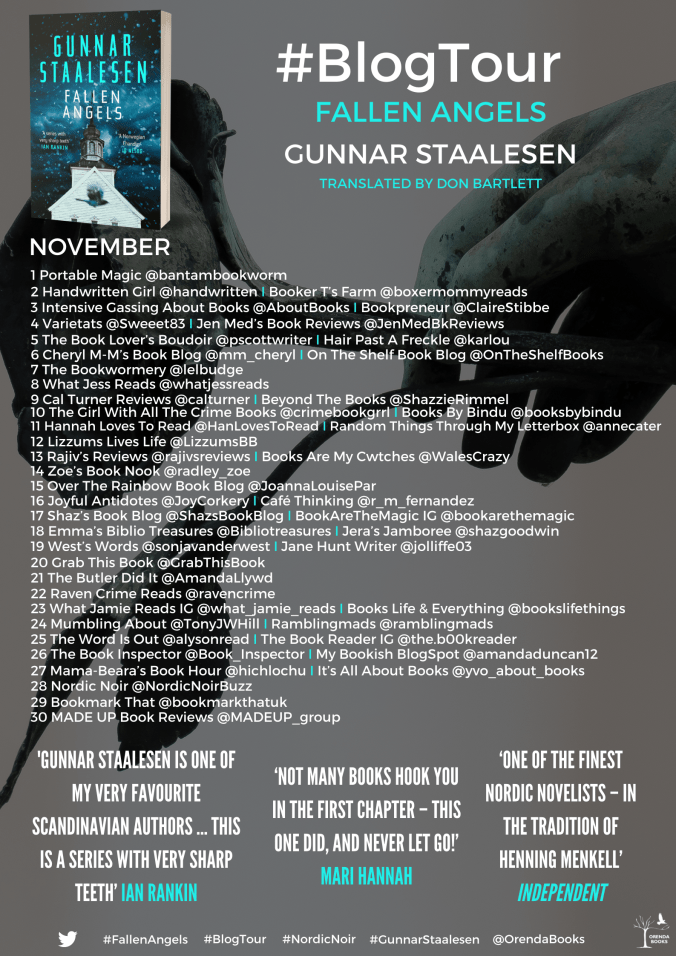
From the PR: “When Bergen PI Varg Veum finds himself at the funeral of a former classmate on a sleet-grey December afternoon, he’s unexpectedly reunited with his old friend Jakob – guitarist of the once-famous 1960s rock band The Harpers – and his estranged wife, Rebecca, Veum’s first love.
Their rekindled friendship is thrown into jeopardy by the discovery of a horrific murder, and Veum is forced to dig deep into his own adolescence and his darkest memories, to find a motive … and a killer.
Tense, vivid and deeply unsettling, Fallen Angels is the spellbinding, award-winning thriller that secured Gunnar Staalesen’s reputation as one of the world’s foremost crime writers.”
Okay, no preamble here let’s get straight to to the facts: Gunnar Staalesen is on a different level, an all-time great of of Nordic Noir and Fallen Angels is an astonishingly good novel that’s a shoe-in for the best read of 2020.
This is the seventh Staalesen novel I’ve read though is, in fact, the eighth Varg Veum book, originally published in Norway in 1989. Published now in English for the first time by the powerhouse and champion of great literature, Orenda Books, Fallen Angels won multiple awards upon release and was the novel that gave Staalesen his reputation as the father of the genre. Before there was Harry Hole or Kurt Wallander, before Inspector Van Veeteren or Mikael Blomkvis, Varg Veum was cracking complex and disturbing cases and Gunnar Staalesen was perfecting a style that’s about as good as it gets in literature.
Fallen Angels is a vital component to the Varg Veum series, both revealing a great deal about the Bergen investigator’s past while unravelling a chain of deception that will leave its mark on him for years to come. It’s as hard-hitting and powerful as they get when it comes to the key to the killings and there’s nobody who can wind up to a gut-punch that leaves you on your knees like Staalesen. This one hits harder than any I’ve read for some time.
The denouements in Gunnar Staalesen’s novels have never been anything less than knockout , you’re in the hands of a real master of the form here; every strand of the novel tying together and leading you through a beautifully crafted and increasingly intricate plot that doesn’t feel the need to rush or throw in the kitchen sink before delivering that final piece.
Reading a Varg Veum novel is always a real joy that I genuinely look forward to. Staalesen’s writing style and Varg’s methods are worth savouring every word, not a single on of which ever wasted. There’s a preciseness to his writing that’s deceptive because it takes a real skill to deliver something as rich and involved with an economy of words and Staalesen is just so incredibly talented it makes anyone who wrestles with the written word on the daily envious.
Varg Veum is one of those rare protagonists that I can’t get enough of. He’s an honest, yet flawed character with a moral compass that points true north and is driven by the right motivations, even when he’s not on the clock. There’s a real charm to Veum as a lead in a mystery, his is technique and style that’s compelling and his propensity for getting into more than his share of scapes in his determination to pick at threads people would rather leave buried makes for great reading. Combine that with a cast of equally compelling characters, a hugely complex plot, a good mix of humour, plenty of music references and plain brilliant prose and you’ve got a great book in your hands.
Fallen Angels is a slow-burning delight that packs an almighty punch. Expertly written and massively addictive. I cannot praise it enough. My thanks to Orenda for keeping my Guunar Staalesen addiction fed and to Anne Cater for inviting me to take part in its blog tour.
In January 1982, just a few months after the final show of The River Tour, recording sessions for Bruce Springsteen’s next album got under way.
These sessions fell right in the midst of Bruce’s most creative and prolific period. Just look at the sheer bounty of songs that were recorded and cut from Darkness… and The River. Each of those albums has received the lavish archival treatment with a load of previously unreleased gems seeing daylight for the first time – on top of those already released on Tracks!
Born In The U.S.A was no exception – according to Max Weinberg nearly 80 songs were recorded over the course of the entire. Springsteen and co-producer Chuck Plotkin have cited 70 but it’s likely that the Mighty Max Weinberg is counting those ten songs which made up Nebraska – as it’s almost impossible to separate the writing periods for the songs that made up the two albums’ sessions.
Yet while there’s a clamouring for it, it’s unlikely that Born In The USA will ever receive the same treatment as its predecessors. Springsteen has, with the distance of time, grown less effusive in his praise for it – “‘Born in the U.S.A’ more or less stood by itself. The rest of the album contains a group of songs about which I’ve always had some ambivalence” – and Tunnel of Love was a determined move away from the sound and scope of Born In The USA with subsequent albums shying further away from it’s naked, world-conquering ambition.
Either way you look at it, there were several versions of ‘an album’ that were ready to go before we got the Born In The USA we know today. So let’s take a look at ’em.
The story of how Nebraska, Springsteen’s out-of-left-field lofi masterpiece came to be has, by now, been well told. But let’s recap. Tired of spending time and money working songs up on the studio, Bruce got his hands on a 4-track recorder. How much money? Well, in the promotion for Letter To You he pointed out that “learning how to record, we spent all the money we had. At the end of The River album I had $20,000 in the bank.” Well known dodgy deals with former managers aside, considering the success of Born To Run, The Darkness and its tours…. something needed to change. Avoiding studio costs, he laid down some tunes on 3rd January 1982 and then took them to the E Street Band to get loud / flesh out / give some soul. Yet something wasn’t right. The songs didn’t suit the band sound. As Bruce states in ‘Songs’: “I went into the studio, brought in the band, rerecorded, remixed, and succeeded in making the whole thing worse.”
So, after walking around with it in his back pocket (so the story goes), Steven Van Zandt gave The Boss the nudge he needed and those songs were released as they were, mastered from the cassette to vinyl, as Nebraska.
The decision to release ten songs from his January tape was made in May 1982. Nebraska features ten songs. The January tape had – depending on whose account you take as gospel – 15 or 17 songs on it. Not all of the ‘Electric Nebraska’ sessions made things ‘worse’. For of those initial January 1982 tape, songs including ‘Born In The USA’, ‘Working On The Highway’ ‘Downbound Train’, ‘Pink Cadillac’ and a song then called ‘Down, Down, Down’ (to become ‘I’m Goin’ Down’) came about.
It will come as little surprise to realise that between January and May of 1982, Bruce had managed to put together two albums worth of material. He toyed with putting them both out as a double album – the acoustic Nebraska songs would make up one half, with the other ‘electric’ side made up of both reworked songs from the January tape and newer songs written since:
Side One
Side Two
BORN IN THE U.S.A.
WORKING ON THE HIGHWAY
MURDER INCORPORATED
DARLINGTON COUNTY
DOWNBOUND TRAIN
FRANKIE
DOWN, DOWN, DOWN (a.k.a. I’m Goin’ Down)
I’M ON FIRE
GLORY DAYS
THIS HARD LAND
MY LOVE WILL NOT LET YOU DOWN
Just look at that track list. As early as May 1982 Springsteen was ready to go with two albums. This first ‘what could have been’ Born In The USA already has seven of the twelve songs that would make the final album. But look at those others…. ‘This Hard Land’ is a stone-cold Springsteen classic, Max Wienberg’s favourite from the sessions and one that wouldn’t see the light until it was re-recorded 1995’s Greatest Hits. The original ’82 version is just as fine.
‘Murder Incorporated’ would have to wait with ‘This Hard Land’ until 1995’s Greatest Hits with ‘Frankie’ and ‘My Love Will Not Let You Down’ – both of which are absolute gems – a little longer for 1998’s Tracks for their day in the sun. Until then they were assigned to the vault as Springsteen continued working on the album, which wasn’t immediate.
Instead, the decision to release Nebraska ‘as is’ in 1982 effectively put a hold on recording sessions. Recording would have to wait as Springsteen oversaw the final preparations for Nebraska and would spend the summer on his ‘1982 Jersey Shore Bar Tour’ – making guest appearances throughout New Jersey. Given that Nebraska featured very little fanfare and wasn’t accompanied by a tour, the break in writing and recording may have been down to another factor: Steve Van Zandt was no longer a member of The E Street Band.
Springsteen would resume work on his next album in April 1983 but there would be a few more versions of Born In The U.S.A to go through before he was done.
From the PR: “In this beautiful, lyrical sequel to the critically acclaimed We Were the Salt of the Sea, Detective Moralès finds that a seemingly straightforward search for a missing fisherwoman off Quebec’s Gaspé Peninsula is anything but.
When an abandoned lobster trawler is found adrift off the coast of Quebec’s Gaspé Peninsula, DS Joaquin Moralès begins a straightforward search for the boat ’s missing captain, Angel Roberts – a woman in a male-dominated world. But Moralès finds himself blocked at every turn – by his police colleagues, by fisheries bureaucrats, and by his grown-up son, who has turned up at his door with a host of his own personal problems.
When Angel’s body is finally discovered, it ’s clear something very sinister is afoot, and Moralès and son are pulled into murky, dangerous waters, where old resentments run deep…
An exquisitely written, evocative and poetic thriller, The Coral Bride powerfully conjures the might of the sea and the communities who depend on it, the never-ending struggle between the generations, and an extraordinary mystery at the heart of both”
You know, there’s a time and a place for airport thrillers and, sure, I’ve read a fair few. But if we’re talking ‘thrillers’ and ‘mystery’, what I really enjoy is a good slow-burner of a novel, one with a bit weight and heft. Is The Coral Bride just such a good slow-burner? No: it’s a bloody great slow burner of a novel, one that’s rich in detail, great characters, intrigue and top-class writing.
This isn’t an action, bare-knuckle ride of a story. The plot is a deep, complex web that lures you in until you’re hooked on the line and find yourself a couple of hundred pages in and deep into the novel – fully committed to both the story and the world it inhabits.
The storyline… trying to establish who killed Angel Roberts (and why)… is wonderfully told and lifts the lid on so many family secrets and ‘what the hell?’s that there’s more than enough intrigue and side plots for two novels here. Every time I thought I had an idea of what had lead to Angel’s murder I was thrown off by another gentle revelation that not only serves as ‘twist’ but also unveiled another depth to explore.
Couple that to the drama that Moralès and his son are facing in their personal lives and you’ve got a real belter of a read. Thing is, and this is an important thing, you never feel that there’s so much going on you can’t keep up… Bouchard writes with an almost poetically deft hand that allows the story to flow like a gentle rolling tide rather than a full on assault. Detail building upon detail as a rich and impressively crafted story unfolds. It’s a genuine pleasure to read.
Roxanne Bouchard is a massively talented writer with a real gift for setting a scene and capturing an environment that immerses the reader deep into the heart of The Coral Bride‘s setting. She writes of Gaspé Peninsula, its people and environs with a real warmth and detail that’s evocative and captivating. This is really is a novel to soak in and savour.
I thoroughly enjoyed and recommend The Coral Bride. My thanks to Karen at Orenda Books for my copy and to Anne Cater for inviting me to take part in this blog tour.
It’s time for a little less conversation, a little more action, please. Steak knife! We were makin’ our way downtown, walkin’ fast, faces pass and we’re homebound, boot cut!, while Las Ketchup treated us to the Ketchup Song and Eminem asked us what we’d do if we had one shot, or one opportunity to seize everything we ever wanted. Dope dick! Avril Lavigne tried to reinvent how to wear ties AND the way we write ‘sk8er’ and ‘boi’ (the latter, oddly, seems to have stuck), pawn shop!, and Enrique Iglesias wanted to be our hero, baby. Con job! That’s right; it’s 2002! Oh, and the Red Hot Chili Peppers tried to say they’d be there, waiting for…
It was a strange year. I think that that the events and aftermath of 9/11 still cast a shadow. I dunno, it feels like it was a subdued year looking back at the music world. Plenty still happened – I mean, Nickleback left the stage at a festival in Portugal midway after their second song as a unimpressed audience sent a few rocks their way, Graham Coxon left Blur, Paul McCartney married his second wife Heather Mills (that would work out well – met her once, can’t say she was even slightly pleasant, in contrast to the ever-charming Paul), and Coachella returned to its two-day format. Normally not noteworthy in itself but 2002’s is: Dave Grohl played both days, the second with his Foo Fighters having already played the first with Queens of the Stone Age having drummed on their 2002 release Songs for the Deaf and toured behind the album. However, there was a lot of animosity amongst the Foos and the band were on the verge of splitting up (One by One languishing in an unfinished / unreleasable state and Dave enjoying being a drummer not a front-man again) – however, the band felt suitably delighted and bolstered by their Coachella set and decided to give both band and the album another go.
There were some pretty heavy farewells in 2002. Feeder’s drummer Jon Lee committed suicide, Dudley Moore died after years with a debilitatingly degenerative brain disorder, Dee Dee Ramon died from a heroin overdose, Lisa ‘Left Eye’ Lopes was killed in a car accident, The Who’s John Entwistle died after a heart attack and, December 22nd, Joe Strummer suddenly died due to an an undiagnosed congenital heart defect. He was 50.
On April 19th, after years of drug addiction and seemingly deliberate chasing to its logical conclusion, Layne Staley was found dead in his apartment. He weighed just 39kg and his partially decomposed body required identification by dental records. He’d kept away from people gradually isolating himself from everyone he knew over a period of years, emaciated, lost most of his teeth and several fingers. He’d died on April 5th – the same days Kurt Cobain 8 years previous – aged just 34.
It’s hard to think of music from the year that stands out. My obvious first ‘go to’ is Bruce Springsteen’s The Rising which was both a comeback of great proportions and Springsteen’s response to 9/11. I’ve covered it before as part of my Least to Most on the Boss but it’s still worth highlighting as one of the best of 2002’s albums.
Damien Rice’s O was released in 2002 as was Regina Spektor’s Songs and Alanis Moriessette’s Under Rug Swept – none of which were too shabby at all really. Paul Westerberg – free of major label input and big-name producers – turned in one of his strongest solo albums to date, Stereo (and released a counterpart Mono as his Grandpaboy alias which was just as bloody good).
Wilco released their epic Yankee Hotel Foxtrot on Nonesuch after Warner Bros. had refused to release it. It would be widely acclaimed and cited as one of the decade’s finest. Up yours Warner Bros., I guess. Following the enthusiastic reception to 2001’s ‘Green’ album, Weezer released Maladroit – the first to feature Scott Shriner on bass – a harder edged and absolutely belting album. Jerry Cantrell released his second solo album Degradation Trip, Sonic Youth the brilliant Murray Street which harkened back to longer, more experimental songs while feeling tighter and more structured, Red Hot Chili Peppers released By The Way and The Flaming Lips dropped Yoshimi Battles the Pink Robots.
Lifted or The Story Is in the Soil, Keep Your Ear to the Ground arrived from Bright Eyes in August and Interpol released their debut Turn On The Bright Lights. There was also new albums from Nada Surf with Let Go and Iron & Wine with the sublime The Creek Drank the Cradle. Foo Fighters’ One by One arrived via the thumping lead single ‘All My Life’ in October and the Queens of the Stone Age’s Songs for the Deaf was released in August. Tom Petty and the Heartbreakers released the lacklustre The Last DJ and Audioslave – which featured Chris Cornell members of Rage Against the Machine – released their powerful selt-titled debut Audioslave.
Godspeed You! Black Emperor released another genre-classic with Yanqui U.X.O. which did away with the field recordings and replaced them with pure, raw-sounding angry and epic post-rock. They’d go on hiatus shortly after its release and wouldn’t release another album for ten years.
Not calling it a day after taking a year-long break following the events of Roskilde and touring in support of Binaural, Pearl Jam returned in 2002 with Riot Act – an all-too-often overlooked album which gets stronger with each repeated listen. But, I’ve covered both that album and Pearl Jam’s ‘lost’ period pretty extensively already on this blog.
So… a bit of a quiet year on the release front from my wheelhouse but there’s one from 2002 that I continually put on and lose myself in:
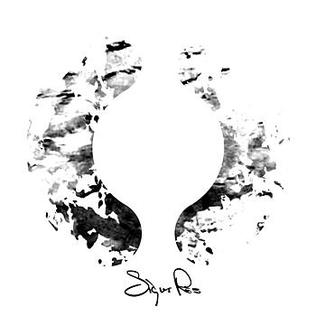
Sigur Rós – ()
How to talk about an album like ()… an album with no real title other than ‘brackets’ and with no official track titles?
Sigur Rós’ third album was a real surprise for many who were probably expecting a direct continuation of the work on Ágætis byrjun. In a way, it is. But it’s also perhaps the most left-field in their main catalogue. Now, of course, some seven years down the road from their last proper studio album as they busy themselves with releases of projects built around loops and programmed fractions of music it doesn’t seem so.
However, the reason I love () so much is the feel of this album. Back in 2002 I’d just caught on to the band on the strength of their previous album and remember getting hold of this new, I loved everything about it from it’s wonderfully minimal packaging and artwork to the click of distortion that opens and ends the album.
It’s split into two distinct halves – the first four tracks more ‘light and optimistic’ and I still get a sense of ‘aaahhh’ when ‘Untitled 1’ – or ‘Vaka’ as it would become known – kicks in all these years later.
Sigur Rós didn’t make any massive changes to their sound for () – those more dramatic shifts would come later – but the subtle adjustments, the gentle smoothing and make it seem like a more ethereal (and I hate using that word especially as so many use it when describing this band) sound than previously achieved or since as Takk would feel like it was a more logical follow up to Ágætis byrjun in a way. The success of that album, driven thanks to the success of ‘Hoppípolla’ means that () is often forgotten.
I kind of see Sigur Rós work like that of Pink Floyd’s – you know it was made by a group of people using traditional instruments and yet, somehow, it seems untouchable and slightly removed from the ordinary and it’s never been more apparent than on ().
Now that we’re back in the atmosphere with drops of Jupiter in our hair we can reflect on the year in which Travis wanted us to ‘sing, sing sing sing sing sing sing’, we got our freak on with Missy Elliott, Pink got the party started while Lifehouse were hanging by a moment (whatever the hell that means), we discovered that heaven is a halfpipe and Nelly wanted us to ride wit him. Yup; it’s 2001.
It’s that year the world got knocked off its axis in September and we’re still dealing with the fall out, the “War on Terror” began, an earthquake of massive proportions in India killed 20,000 people and Apple released iTunes.
At the Drive-In, Cast, Catatonia, L7, Elastica, Ride, Sunny Day Real Estate (again), and Anal Cunt all called it quits in 2001. Arcade Fire, Audioslave, The Dresden Dolls, Fall Out Boy, The Fire Theft, Jet, My Chemical Romance, M83, The Mars Volta and The Postal Service were amongst those bands forming this year. We also said goodbye to George Harrison in 2001. After fighting lung cancer, which had spread to his brain, George Harrison died at Paul McCartney’s house in LA on 29 November 2001. His ashes were scattered in the Ganges and Yamuna rivers in keeping with Hindu tradition. A concert – the Concert for George – would be held on the one year anniversary of his death as a celebration as his life and work.
So who released what? Any good albums arriving in 2001? Well, this was the year Jack Johnson released his first album, Brushfire Fairytales, John Frusciante revealed what it’s like To Record Only Water for 10 Days, Spoon released Girls Can Tell and Aerosmith released a bit of a stinker in Just Push Play.
Semisonic released their brilliant third, Dashboard Confessional pushed emo twee to new lengths with The Places You Have Come to Fear the Most (and, currently, final) album All About Chemisty, Ben Harper and Bruce Springsteen both released decent live albums (which don’t count on this list), Red House Painters released their last album Old Ramon and Neil Finn released his second solo album One Nil.
Colin Hay released his sixth solo album, Going Somewhere, Mogwai released the brilliant (there’s not a Mogwai album I don’t like) Rock Action and, sticking with post-rock, Explosions In The Sky released their second album Those Who Tell The Truth Shall Die, Those Who Tell The Truth Shall Live Forever. Released on September 4th the album’s artwork became a bit of an issue very quickly and picked up media attention as the liner notes of contain a picture of an airplane and the text “This Plane Will Crash Tomorrow”. Oh, and The Silver Mt Zion Memorial Orchestra & Tra-la-la Band may not have settled on the wording of their band’s name yet but released their second: Born into Trouble as the Sparks Fly Upward.
Mercury Rev released the superb All Is Dream, Bob Dylan continued his late-career comeback with Love and Theft, Ben Folds’s first solo album Rockin’ The Suberbs arrived in 2001 as did Tori Amos’ concept album Strange Little Girls, Eels’ Souljacker, Radiohead gave us the amazing Amnesiac, My Morning Jacket’s second At Dawn, Death Cab for Cutie’s The Photo Album, Bush’s lacklustre The Golden State and Incubus’ Morning View which contains the great lyric “the garbage truck beeps as it backs up and I start my day thinking about what I’ve thrown away”.
The Shins released Oh, Inverted World, The White Stripes kicked into a new gear with White Blood Cells and Tool gave us the beast that is Laterlus. We got a couple of slabs of the good ‘pop-rock’ from Weezer with their green Weezer and Jimmy Eat World’s Bleed American (which would soon be retitled).REM’s Reveal, the first point at which I went ‘meh’ with their studio albums, arrived in 2001 and Nick Cave and the Bad Seeds gave us the gorgeious No More Shall We Part and Sparklehorse the wonderful It’s a Wonderful Life.
When it comes to the albums released in 2001 that sit on my shelves, the one that’s probably been played the most and I think of as being of that year, it’s:
Ryan Adams – Gold
I know, I know; it’s both a pretty obvious choice and his name is somewhat… contentious these days, but Gold was an album that instantly made good on the promise of Heartbreaker and took him up a gear. It also contains a huge amount of cracking tunes.
The thing about Gold… I wouldn’t even say it’s Adams’ finest but it’s easily his most unabashedly open and accessible (and best selling) set of tunes that just goes down so easy but there’s so much more at work behind what initially sound like a simple set of tunes: take ‘New York, New York’ (the timing of its release and video was pretty fateful) with it’s gorgeous organ fills and horn section that kicks in at the end:
It’s such a warm and lush sounding album, the production perfectly suiting Adams’ then writing style that moves away from the stripped back sound of his solo debut Heartbreaker and makes use of major-label clout and carte blanche to make an album rich in arrangements that nods to some of those most hallowed of his influences, predominantly of the 70’s rock variety, while remaining distinctly contemporary and keeping such flourishes in-check so they don’t over-power. I listen to ‘Rescue Blues’ (which was featured, oddly, in the Owen Wilson film ‘Behind Enemy Lines’) and hear those gorgeous ‘You Can’t Always Get What You Want’ background singers:
Then there’s great songs like ‘La Cienega Just Smile’ which I’ve already highlighed, or ‘Firecracker’ or ‘Stars Go Blue’… it’s chock full of them.
There’s an argument that it suffers from CD bloat at 16 tracks but that in itself is down to the start of what would be a long, drawn-out bone of contention between Adams and his new label Lost Highway: Gold was envisioned as a double but the label weren’t having that. For all the freedom they allowed him in making the album and its sound that was too much for them. They took some of the tracks intended for ‘LP2’ and made a single disc, with the remainder put on a limited ‘bonus disc’ edition. A move Ryan would describe as “Fucking my fans over and making them pay extra for a record I wanted to be a double album. They counted that as one record.”
It was the start of a strange relationship – when they heard his intended follow up Love Is Hell they rejected it as being too uncommercial. The result was that Adams would record Rock ‘n’ Roll in two weeks (it showed) and Love Is Hell would be split into two separate EPs. When these proved successful, Lost Highway stuck em back together into a single album. When his deal with Lost Highway was complete – no doubt sped up by Ryan Adams releasing three albums within a seven-month period in 2005 – he’d form his own and point out that despite an already heavy back catalogue, there were more still that the label had said no to releasing.
However, all that (and a whole lot more) lay ahead. In 2001 Gold was the album that propelled Ryan Adams forward in his craft and into a lot more peoples’ record collection. It’s a great bunch of tunes that I still slip into the CD player nearly 20 years later and while its production soaks up cues from influences of decades prior and its lyrics remain universal, it has a very distinct 2001 feel to me.
See the tuna fleets clearing the sea out? Yeah, great. See the Bedouin fires at night? You do, cool. Now look at the stars, see how they shine for you? It’s 2000; the year that was for the ones who stood their ground, for Tommy and Gina who never backed down. It was the year LeAnn Rimes couldn’t fight the moonlight, Linkin Park were one step closer to the shape of the Backstreet Boys’ heart, Limp Bizkit wanted us to take a look around – probably because someone let the dogs out (though Shaggy assured us it wasn’t him) – and Eminem wrote us even if we still ain’t callin.
Lesson one of 2000: there was no millennium bug.
So, 2000: Prince saw in the new year by playing what he promised would be the last performance of ‘1999’ and Sharon Osborne promptly quit after three months as the Smashing Pumpkins’ manager “for medical reasons: Billy Corgan was making me sick.” Nice. It was also the year that CD sales reached their peak, apparently, with sales declining yearly ever since. In an effort to stop the rise of the alternative – downloads and mp3s – Metallica decided to sue Napster.
Rage Against The Machine were petering out – bass player Tim Commerford was arrested for climbing onstage at the MTV VMAs when their ‘Sleep Now In The Fire’ video lost out to Limp Bizkit. Apparently he was ‘just bored’ of the show. Not to worry though – NSYNC performed ‘Bye Bye Bye’. A month or so later Zach De La Rocha left RATM, he said the band’s “decision making process” had completely failed. They’d be back but they got out just in time – their bastard spawn genre ‘nu metal’ was making bands like Limp Bizkit, Papa Roach and Mudvayne monstrously dominant.
Ben Folds Five, Candlebox, Sceaming Trees and Smashing Pumpkins all joined Rage Against The Machine in calling it a day in 2000.
I think I did my bit for CD sales in 2000 – I was at university and doing the sensible and responsible thing of spending big chunks of my student loan instalments at the multitude of music shops in Canterbury at the time. So what’s worth grabbing from the stack from the start of the new millennium?
It was double-bubble from at least two bands in 2000. The Smashing Pumpkins graced us with two instalments of their ‘Machina’ albums: Machina / The Machines of God and Machina II/The Friends & Enemies of Modern Music with the first released traditionally and the latter – a double album packaged with 3 eps full of b-sides and alternative versions – released online only after plans for a physical release got buggered by legal wranglings. Both are better in retrospect than I remember but Machina / The Machines of God was definitely the strongest and stronger than Adore for my money.
The other double came from Everclear who released their two-parts of the same concept Songs From An American Movie Vol One: Learning How To Smile and Songs from an American Movie Vol. Two: Good Time for a Bad Attitude some four months or so apart. Another lesson in how one good album was sacrificed for the sake of two ‘ok’ albums it also pretty much killed off the original run of the band thanks to the fact that the band and label were still promoting Vol One when the second was released and songs from Vol Two were used in films so were then added back as bonus tracks to Vol One… it was a mess that meant both albums stalled and the band kinda stalled with em.
Lesson two of 2000: no two album concept releases.
Then again… one of two albums recorded at the same time, Radiohead’s Kid A was released in 2000. Wisely decided the material would be too dense if served up as a double, the sound of Kid A were a massive leap in a ‘definitely not OK Computer Part 2 direction. More samples, more loops, more processed guitars and disjointed lyrics. Having nearly been broken by the strain of touring and promoting OK Computer (see ‘Meeting People Is Easy’), Radiohead took a leaf out of Pearl Jam’s book and said ‘no’ a lot more: no singles, no videos, minimal promotion and photos. Garnering a massively mixed reception at the time, if you ask me: Kid A is a fucking triumph:
The Go-Betweens released their first album in 12 years, The Friends of Rachel Worth and Cat Power’s The Covers Record gave Chan Marshall a reprieve from the pressure of following up Moon Pix as she added her unique take on a series of classics from the Rolling Stones, Bob Dylan, Lou Reed and more.
2000 was another great year for the growing post-rock genre with the debut from Explosions In The Sky How Strange Innocence arriving – one of last year’s finest re-releases – along with Godspeed You! Black Emperor’s astonishing masterpiece Lift Your Skinny Fists Like Antennas To Heaven. Not content with releasing one of the genre’s finest albums to this day, some of Godpseed’s members kickstarted a new band, A Silver Mt Zion (now having swapped ‘A’ for ‘Thee’) with the release of another great album; He Has Left Us Alone but Shafts of Light Sometimes Grace the Corner of Our Rooms…
Things were happening out in Nebraska – Omaha based label Wichita was at the forefront of another ‘scene’ with releases in 2000 including Cursive’s Domestica and Bright Eyes’ Fevers and Mirrors. I listened to both again recently and it’s now Cursive’s that holds up stronger.
Warren Zevon figured Life’ll Kill Ya in 2000 – a return to new music and form – released just a couple of years before Zevon was diagnosed with mesothelioma. Aimee Mann released Bachelor No 2 and PJ Harvey gave us Stories From The City, Stories From the Sea. One that I found via ‘The Sopranos’ from 2000 and still enjoy is Kasey Chambers’ The Captain.
The Cure’s Bloodflowers was a real strong effort as was Eel’s Daisies of the Galaxy and Death Cab For Cutie’s We Have The Facts and We’re Voting Yes. Elliott released their album False Cathedrals in 2000. A band born of Slowdive, Mojave 3 released Excuses For Travellers and one of the most famous duos in music, The White Stripesdropped their second effort De Stijl. There were great albums to be found at the heavier end of the shelves with A Perfect Circle’s Mer De Noms, Queens of the Stone Age’s Rated R with its famous shopping list of drugs and the phenomenal Relationship of Command by At The Drive-In.
Two big guns in my collection released strong efforts in 2000: Pearl Jam released their much-overlooked Binaural, their first effort with a new producer after an amazing four-album run with Brendan O’Brien. But I’ve already covered that a couple of times. Sonic Youth released a similarly much-overlooked album: NYC Ghosts and Flowers. In 1999 a huge amount of the band’s gear – including guitars and effects pedals – was stolen in the middle of the night while they were on tour in California. Pretty much having to start from scratch after years of building up effects and tunings, NYC Ghosts and Flowers is a much more experimental album than expected and has aged really well. Oddly enough they’d join Pearl Jam for the start of the Binaural tour in 2000. By 2012 they’d managed to recover 8 of the guitars which were stolen.
Modest Mouse released an absolute classic with The Moon & Antartica, Coldplay arrived with Parachutes, Placebo began the climb down after two amazing albums with the ‘it’s ok’ Black Market Music and Jets to Brazil released another brilliant album with Four Cornered Night.
It’s interesting just how big a sway less than amazing feedback can have on artists used to being covered in praise. Take the reaction to Lucky Town and Human Touch – it pushed Springsteen’s confidence back so much he barely released anything else for the decade despite working a couple of albums’ worth of material in that time. On the plus side it drove him back to the E Street Band and the reunion tour that was still underway in 2000. Then there’s U2 – the response to Pop was such that the band pulled back on the experimentation and released a ‘Best Of’ of their first decade then chose 2000 for a ‘comeback’ with All That You Can’t Leave Behind. Songs like ‘Beautiful Day’ and ‘Stuck In A Moment That You Can’t Get Out Of’ helped it leap up to monster figures and drive them back to the adulation they’d grown accustomed to but listening back to it, it’s not aged as well and now as then I find it more ‘twee’ and too singular in its approach, like they were scared to give anything any of that bite they’d discovered in time for the 90s. They’d find it again by the next album though.
Speaking of comebacks, after a four year break taken up with soundtrack work, Mark Knopfler released Sailing to Philadelphia in 2000. Managing to both break away from yoke of Dire Straits while also recall some of its finer moments, Sailing to Philadelphia was probably the last time MK”s solo work received such attention, while Golden Heart found him wavering in direction, as if he was expecting to find the same level of success, this one sounds a lot more relaxed and confident in its boots and managed to set the template for what his solo work would be for a while to come and it’s a bloody solid album too.
So if it’s not Radiohead, Sonic Youth or Pearl Jam, what’s my pick for 2000?
Elliott Smith – Figure 8
You know, I listened to this again in its entirety yesterday. And probably a week or so before that too and goodness knows how many times since Elliott Smith released what would be his final album in April 2000. Listening to it now is not only a reminder of what a joyously great album it is but also a kick in the balls as it’s such a crying fucking shame that he’s no longer with us.
But back to the album. Between XO and Figure 8 Elliott Smith had moved from Brooklyn to LA where he’d play regular intimate and acoustic shows in bars around the Silver Lake area. You’d be forgiven then for thinking his next album would be a return to his former hushed sounds but then there’s a cover of the Beatles’ ‘Because’ that appeared on the ‘American Beauty’ (can anyone watch Kevin Spacey in that now?) soundtrack that was a better indication – Figure 8 is Smith’s lushest, most fully-fleshed sounding record with a big ‘Fab Four’ influence in its arrangements, instruments and textures while unmistakably Elliott Smith.
There’s something so much more…. positive and upbeat to Figure 8. It’s not as strong as XO but it’s a definite progression in sound and Smith’s writing was going from strength to strength. Listening to it I get the feeling he was really having fun in the studio and being able to build up his songs into these great arrangements, I’m sure that upset people who only wanted their Elliott Smith records to feature an acoustic guitar, but there’s so much to love about the sound of Figure 8.
It got in early but Figure 8 is one of the best albums of the 2000s, it’s both enjoyable and accessible while rewarding on multiple listens with so many little hidden elements that can be missed at first.