The poets round here don’t write nothing at all… Springsteen’s Lyrics (Part One)

Throughout my career I’ve been required to wrestle with the written word. Some days “thoughts arrive like butterflies” while on others it’s akin to wading through waist-deep mud with no solid ground in sight.

Perhaps that’s why I appreciate  a great lyric in a song, the knowledge that it doesn’t always come easy and what sounds so beautifully simply more likely than not took a lot of work and refinement. Meanwhile, my love for the written word has also meant that I always seek out those lyrics and love a good ‘story’ song.

Bruce Springsteen has written more songs than it’s possible to count. For every song that has been released on each album there’s a good five or six that didn’t make the cut and, even when they’re released on archival products such as Tracks, The Promise or The Ties That Bind, there are still countless others that remain locked in vaults.

From a songwriting point of view I’d rank Springsteen as one the greatest in terms of both qaulity and consistency – certainly equal to Dylan and, while he has just wrapped up his equivalent to a Vegas residency, Bruce has yet to resort to churning out nothing but albums of cover songs. His lyrics have tackled everything from the circus to war, New York to front line in Iraq , love, birth, death, cunnilingus and lobbing it up the wrong’ un.

So, I thought it was time to put together a list of my favourite Springsteen songs from a lyrical perspective. This is Part One with Two (and the Spotify playlist) to follow as time allows. While not necessarily my favourite Springsteen songs full stop, from a lyrical point of view, these take some beating. In no particular order….

The Wall

“I read Robert McNamara says he’s sorry”

Asking if Springsteen’s got any good ‘Nam songs is like wondering whether a bear defecates in wooded areas. From ‘Lost in the Flood’ to the tubthumping ‘Born In The USA’, you could easily make a great compilation album of his songs that use Vietnam as a touch stone, but for me the most poignant lyric is to be found on an album that’s otherwise stuffed with re-heated leftovers, melodies with stapled-on effects and Tom Morello wankfests. Yup; I’m talking about High Hopes. ‘The Wall’ is one of the most personal and affecting of Springsteen’s many Vietnam songs as Bruce – against minimal musical backdrop, sings a ‘short prayer’ inspired by the memory of his friend Walter Chichon, who taught guitar to Springsteen but would die in the Vietnam War at around the age of 19.

The deeper I get into Ken Burns and Lynn Novick’s The Vietnam War series the more I understand just how horrifying and wide-reaching it was and just why Springsteen – and others – found it such a source for lyrics and stories.

As such, the more I listen the more the line “I read Robert McNamara says he’s sorry” just kicks me each time. When parents like Carol Crocker say how they chose to have their sons buried at Arlington because she ‘feared that if he had been buried closer to home, she would claw her way into his grave to once again “feel his warmth.”‘ it’s hard to fathom that much pain and loss but, hey, McNamara says he’s sorry… “apology and forgiveness have no place here at all.”

Blood Brothers

“The world came chargin’ up the hill and we were women and men”

Springsteen wrote ‘Blood Brothers’ on the eve of working with the E Street Band again for the Greatest Hits album and it’s just full of great lines. He’s stated that it’s filled with ‘the ambivalence and deep affection of revisiting a relationship spanning twenty-five years’.  For me the lyrics feel like an acceptance of life’s inevitable changes, the trade off that’s required between fantasy and reality, of  how ‘the hardness of this world, slowly grinds your dreams away’, and ‘we lose ourselves in work to do and bills to pay’.

Yet it’s an optimistic song too, one of togetherness that was fitting for the band’s reunion and as a final song – some five years later – on their reunion tour, it’s almost like it became the story of the band’s friendship: “I’ll keep movin’ though the dark with you in my heart, my blood brother.”

The River

“Is a dream a lie if it don’t come true, or is it something worse”

The River, while an extension of the themes explored on Darkness on the Edge of Town,  marked a big change in Springsteen’s song writing: “my first attempt to write about the commitments of home and marriage.” While given a hard kick up the arse by the rockers, the album’s story songs are huge: ‘Point Blank’, ‘Stolen Car’, ‘Wreck on the Highway’… but ‘The River’ is just an out and out classic and one who’s lyrics are just so ridiculously well written it stands as his benchmark ‘story’ song for me.

Springsteen took his inspiration from reality – the crash of the construction industry in the late 1970’s and the impact it had on his sister and her family: “I watched my brother-in-law lose his good-paying job and work hard to survive without complaint”. This was the song that sold Springsteen to me when I first heard it on Greatest Hits, at the time I would’ve been reading Steinbeck for school and it felt like an extension of that classic American literature style story telling.  Springsteen had hit a rich vein for songwriting inspiration and would continue to tap into it with great results for the rest of his career.

Long Time Coming

“Well if I had one wish in this god forsaken world kids, it’d be that your mistakes would be your own”

Dating back to the Ghost of Tom Joad era, ‘Long Time Comin’ is one of the standout tracks on 2005’s Devils and Dust album. The song marks the first use of the word ‘fuck’ on any of his records (let’s not talk about ‘Reno’ here) in what is a great song about redemption that bounds along and is shot through with great, joy-infused lines – including a sly nod to his own past with “it’s me and you Rosie” – but it’s the “if I had one wish in this god forsaken world…” line about not passing your own baggage on that stands out for me.

Bruce felt so strongly about it that it was selected for the ‘soundtrack’ album to his autobiography Chapter and Verse and would – during his his Broadway show – explain that it was inspired by a visit from his father just before the birth of Bruce’s first child “to warn me of the mistakes that he had made and to warn me not to make them with my own children, to release them from the chains…  that they may be free to make their own choices and live their own lives.”

Racing in the Street

“Some guys they just give up living and start dying little by little, piece by piece”

What I really enjoy with Springsteen’s ‘archival’ releases like Tracks and The Promise is listening to earlier takes of songs and tracks that didn’t make the cut at the time and hearing him try out different lyrics, evolving them, seeing if they fit in this song, then that and then, finally, they appear fully polished on the album version.

‘Racing In The Street’ is one of the greatest songs on the best Springsteen albums, Darkness on the Edge of Town. I love the “give up living” but if you listen to the ’78 version of the song on The Promise, it’s not there. That great line doesn’t appear anywhere in ‘draft’ form, I get the impression it arrived like a bolt of lightning and really moves the song into a different place.

American Skin (41 Shots)

“If an officer stops you promise me you’ll always be polite, that you’ll never ever run away, promise Mama you’ll keep your hands in sight”

“I had the title and a few stray lines, an idea for a song about American identity, sitting in my workbook for six months…” It would, as with The Rising, take a tragedy to spur Bruce into writing a powerful song that would reaffirm his place as a songwriter able to tap into the public consciousness again. While the reunion tour had seen new songs like ‘Land of Hope and Dreams’ and even ‘Further On Up The Road’ show that Springsteen still had new songs up his sleeve, ‘American Skin’ was the one that showed he could still take a step back and then come up with something unexpectedly hard-hitting in its lyrical content and relevance. The lyrics are hard-hitting without being exploitative and remain evocative with repeated listens, best heard delivered live and never really captured effectively in the studio as the genie had already been let out of the bottle.

Born To Run

“Beyond the Palace hemipowered drones scream down the boulevard”

A first-person love letter to a girl called Wendy. A song about busting out and making a break “on a last chance power drive”. It’s a refined, more direct blast of power than Springsteen’s previous work. It’s got the same passion but there’s a sense of dread and more urgency in the need to escape than on, say, ‘Rosalita’,  but, for me, the album and song still contains as many evocative lines as those on its predecessor and there’s just something about that line… I mean, how many other rock songs or radio hits have used a phrase like ‘hemipowered drones’?

Rosalita (Come Out Tonight)

“Windows are for cheaters/ Chimneys for the poor/ Closets are for hangers/ Winners use the door”

Before there was ‘Born To Run’ there was ‘Rosalita’ and The Wild, The Innocent & The E Street Shuffle is just full of Bruce’s poetry in full swing. Shorn from the inhibitions of his debut and flowing wonderfully throughout, it’s tough to pick out anything specific but I love the humour of this, Springsteen’s autobiographical ‘getting out of town’ preview for his next album, and the poetry in…

Wild Billy’s Circus Story

“The runway lies ahead like a great false dawn”

‘Circus Story’ is stuffed to the rims with great lines. It’s a “black comedy” of a song in which Springsteen uses his memories of the circuses that would visit Freehold during his childhood to paint a romantic picture of “the seduction and loneliness of a life outside the margins of everyday life” like that of a musician on the road, say.

Atlantic City:

“Now our luck may have died and our love may be cold but with you forever I’ll stay”

For all the power and fun of The River‘s rockers, Springsteen’s next move would be to veer toward the more serious side of his song-writing, to tap further into those characters and ideas established in its story songs.

With Nebraska, Springsteen would create songs written quickly and recorded (as demos) with minimal musical backing. There’s a direct line between the sense of misfortune stories on The River and Nebraska – the young couple  who escape to Atlantic City only to continue to struggle and, in the line “with you forever I’ll stay” a continuation of Springsteen’s exploration of marriage and commitment that would thread through into Tunnel of Love‘s documentation of his own, an album which I think this lyric would be equally at home on,

Faith will be rewarded: Bruce Springsteen – Madison Square Garden, New York 2000

“The floor was a mass of smiles and swaying bodies, and as I watched, I thought ‘I can do this. I can bring this, this happiness, these smiles.’ I went home and called the E Street Band.”

Back when the music press was writing it up and even when I bought the live album that documented it – Live in New York City – I didn’t really understand just how big a deal Bruce Springsteen and the E Street Band’s Reunion Tour was.  I’d only really been listening Bruce for a few years at that point and was by no means a decades-long fan.

I was actually one of the generation of fans that made Bruce realise it was time to get the band back together again after a “two young kids” introduced themselves to him outside a pizza joint and expressed their dismay at having never seen the E Street Band live “I started realizing there was a sea of young people out there who never saw the greatest thing I did: PLAY LIVE… with the E Street Band”.

Here we are in 2018 – with a number of studio albums completed with E Street Band tours and shows further on and it’s clear how important that Reunion Tour was. For the decade leading up to it had been filled with two tours from Bruce. One with ‘The Other Band’ in support of Human Touch/Lucky Town and what became known as the ‘Shut The Fuck Up’ Tour for Ghost of Tom Joad. So when Bruce took to the stage with a full E Street Band in 1999 many, including the band themselves, weren’t sure how long it would last.

It had been 11 long years since the end of the Tunnel of Love tour and Steven Van Zandt hadn’t toured with the band since 1981. Questions abounded: was it a one-off? Was it just a nostalgia tour? Was there anything left in the tank? Would this be the start of a new chapter?

By the time the Reunion Tour reached New York in June 2000 for it’s grand finale – a ten-night, sold-out stand at Madison Square Garden – all of those questions had been answered. The E Street Band was firing on all cylinders, tighter than a duck’s arse and clearly a force to be reckoned with now and into the future. The set contained a healthy mix of classic ‘Jersey greaseball’ and ‘Mega’ Bruce along with a selection of Tracks‘ most euphoric moments and new songs to boot.

Songs from June 29th and July 1st would be chopped up and spliced into the ‘live’ album Live in New York City. Back in my Least to Most on Bruce I mentioned how this album suffered from “strange sequencing and fading out”. I stand by that. Until recently a real document of that tour and its closing stand has not been available. But, as Bruce and others, continue to use that weird old ‘Nugs’ service and release more individual shows to the public, I’ve added (thanks to Black Friday the best $4 I’ve spent) Madison Square Garden, New York City, July 1, 2000 to my collection and, let me tell you now: it’s fucking awesome.

Hearing the show from start to end, in full and uninterrupted is a new experience that highlights just how vital and powerful a performance it was. It would be a few tours before Bruce started abandoning setlists and taking requests so those core songs that it revolved around – ‘My Love Will Not Let You Down’, ‘Two Hearts’, ‘The Promised Land’, the fiery recasting of ‘Youngstown’ leading into ‘Murder Incorporated’ are all here as per Live in NYC but still fantastic and exuberant in their performance.

In fact I’d go so far as to say that now, with the benefit of understanding the band’s history, hearing the Van Zandt spotlighting ‘Two Hearts’ is even more rewarding.

There’s a stunning take on ‘Lost in the Flood’ which – it turns out – was the first time this one had been tackled since the Darkness on the Edge of Town tour. Tracks favourite ‘The Promise’ is met with a near-orgasmic reaction from the crowd after every verse and chorus and the guaranteed crowd pleasers ‘Badlands’, ‘Backstreets’ both ‘Born’s – though the USA in a heavily stripped-back slide-blues version closer to the take on Tracks delight as they always do. Given that Bruce almost cut all the classics from the set, wanted to stick more closely to Tracks material, makes you more grateful for Landau’s sage wisdom in guiding him toward doing what he does best. There’s also the introduction of Bruce as ‘rock and roll televangelist’ as he promises salvation though the power of rock and roll. Yes, it’s rehearsed and probably didn’t change night to night, but the band and the performances are so tight you can’t help but get caught up in it.

The sound of the band had changed too as this tour marked the point at which the guitars became more dominant. With both Van Zandt and Nils Lofgren in the mix now alongside Springsteen’s own teak-like tone and Patti Scialfa adding an extra rhythm the band shifted to a four-guitar attack which, when coupled with the power of Max Weinberg, makes this era sound so much heavier and more powerful than takes on previous live recordings. It fucking kicks.

But it’s the stuff that, for some bizarre reason, was left off that record that really shines a new light on these concerts. Springsteen chose to open this show with a new song – the Joe Grushecky co-penned ‘Code of Silence’  and dropped a pre-The Rising version of ‘Further On Up The Road’ later into the set. Of course, two other new songs were featured on Live in New York City and also feature here but there placing in the setlist is more natural. Tour anthem and ‘theme’ song ‘Land of Hope and Dreams’ is the penultimate song while ‘American Skin (41 Shots)’ came earlier on in the night than that album would lead you to believe. It’s one of Bruce’s finest and made for performing live -which is probably why it’s never been done justice in the studio – because it’s the reaction, the silence as attention is given then the cheers that greet this song and it’s meaning are always worth listening to:

‘Land of Hope and Dreams’ , with it’s message of inclusion and moving forward as one, had been played every night of the tour, usually the set closer. As he introduces the song here, Bruce says that he was “hoping that our tour would be the rebirth and the renewal of our band and of our commitment to serve you. I hope we’ve done that well this year and we´ll continue to try and do so…”

This show does’t end with ‘Land of Hope and Dreams’ though. Bruce saved the best for last. For the first time, the band would play ‘Blood Brothers.’ It’s a powerful and moving rendition and Bruce adds a new verse for the occasion and you can hear his voice break with tears. Unrehearsed and impromptu, he calls the band to stand with him and join hands as he sings these new words, in the video that was taken you can see Clarence wasn’t paying attention – he’s caught up in the emotion – and needs to be beckoned, It’s the perfect closer to the tour.

After a twenty-eight song set, packed with much crowd banter and preaching the band leave with a simple “we’ll be seeing ya”. They would be, even if that wasn’t 100% at that point, and would drop many a classic show propelled by great, stadium-ready new songs, but the sheer rediscovery of their power as a band, the promise of that which could lay ahead and the celebration of what they had accomplished make Madison Square Garden, New York City, July 1, 2000 an essential live album for fans and one that I know will be in frequent rotation for a while to come.


You don’t know Jack…

So there’s this thing that I’m sure can’t be unique to me and I really hope that someone reading this will confirm but: you know how you can initially be pretty into an artist / group only to lose interest completely then, years later, rediscover and wonder why the hell you dropped out?

One of those artists that fit in this category for me is Jack Johnson. Some time back in 2003/4 someone recommended I check out this dude who plays some pretty chill, cool stuff. Which I did and I quite enjoyed the two albums that Jack had then put out: Brushfire Fairytales and On and On. They had a nice laid back feel and some good acoustic guitar playing pushing some catchy lyrics and nice ideas. Felt like there was a promise of something better to come..

Come album  three, though, everybody and their radio playlist programming brother seemed to catch the Jack Johnson wave and you couldn’t turn the radio dial without hearing “I hope this old train break downs”. Then he went and made a soundtrack album for some film about a cartoon monkey and with my tastes at the time moving toward the heavier… I tuned out.

Cut to later… a decade-plus later in fact, and it turns out that cartoon monkey is a Curious one called George and my young son loves the film and keeps singing the songs from the soundtrack. So, being who I am I download the thing so we can listen to it in the car (it makes a nice change from The Muppets soundtrack ad naseum) and, what do you know, it actually floats my boat too. So I figure it’s time to see what else Jack had been up to since I tuned out. And, bugger; I find a lot that I dig in his last few albums. So much so, in fact, that they’re on quite a bit these days.

There’s no new ground being broken by Mr Johnson; he’s a retired-competitive surfer (he was the youngest surfer invited to the Pipe Masters but a pretty harsh accident a week later split his head open and ko’d his surf career) who still lives in Hawaii so he’s not about to bust out an OK Computer. Something of a renaissance man and very much active in environmentalism especially, appropriately enough, with a focus on the oceans. Jack Johnson delivers predominantly acoustic based tunes though increasingly embellished with electric guitars and organ with what Rolling Stone have summarised as a ‘Zen-master delivery and swaying-palm-tree melodic sense.’

Once upon a time.. yeah: that was not where my tastes were at. Now as I get older and mellower… well I’m digging it. The fact that my son now sings along to the tunes with me too, well that’s just the icing.

Oddly enough, during my recent rediscovery of Mr Johnson I found that I shared this awakening to his music with none other than Mr Vedder: “There was a point about two or three years ago when I was with Ben Harper. I said, ‘Okay, Ben, how about you and me chip in and get Jack a distortion pedal?’ And we had a little bit of a laugh, you know? But I thought about that a lot, and that was my fault that I wasn’t getting it. What he’s doing is real. As opposed to him getting a distortion box or opposed to him trying to be something else, it’s real. There are so many positive things that you get from listening to his records or seeing him live. I didn’t get it for a long time, but now I get it.”

I haven’t met Ben Harper, let alone chatted Mr Johnson with him. But I did talk to the same friend who’d initially recommended him to me and he had a more succinct response to my having tuned out so much enjoyable music for so long: “you bloody knob”.

So, to stop being a knob, here’s Five From Jack Johnson that I’ve been enjoying of late:

F-Stop Blues

Taylor

Constellations

The original of this is pretty strong but I wouldn’t be a Pearl Jam fan if I didn’t prefer this version.

To The Sea

I guess somebody did by him a distortion pedal.

Ones and Zeros


Current spins

With the Pearl Jam series complete, it feels like as good a time as any to take a look at what else has been going into the old ears of late because, having spent so long on a Pearl Jam bent, I’ve been listening to a shit load of different stuff these last weeks…

Crowded House – Private Universe

It took a while before I got round to it but I’ve been spending a lot of time with the first four Crowded House albums lately and enjoying every track thus far. Their album Together Alone is the standout for me and this song has had a fair few repeats.

Chastity Belt – Different Now

A recent purchase, Chastity Belt’s I Used To Spend So Much Time Alone is a great album that manages to feel like some lost 90’s gem while still sounding fresh and new.

Kurt Vile – Bassackwards

Because it’s one of the two long tracks that new album Bottle It In revolves around and those powder-blue discs have been getting a lot of spins since arriving on my shelves. This – and most of KV’s work – has got such a laid back vibe that you just kinda close your eyes and drift along to. Perfect music to get small to.

Bill Mallonee & The Vigilantes of Love – Resplendent 

This took me a while to get hold of. I heard this on one of those CDs that came free with a magazine some… 18 years ago. I don’t know much about Mr Mallonee but he’s not much about on the likes of Spotify etc so I had to track down a second hand copy of Audible Sigh the album this is from. I’m not usually one for this alt-country but I love a good ‘story’ song and the lyric “’til what you were meets what you’ve now become, grins and says “hey, haven’t we met”

Kate Bush- And Dream of Sheep

Back before she went completely off her rocker and long before she started spouting off about how wonderful that deranged fucktard Theresa May is… Kate Bush made some perfect music. One such example – Hounds of Love: one half the perfect pop album, the other, from which this is, a gorgeous concept suite about a person drifting alone in the sea at night.

And, finally…..

Bruce Springsteen – Racing in the Street ’78 

OK, so I’ve got a BIG BRUCE SPRINGSTEEN POST or 2, or maybe 3 in the making at the moment and so the Boss has been back on heavy spin and this song… this version… fuck but it’s good.

Least to Most: Pearl Jam – Let the Records Play

Here we are at the end of another (my third to date) Least to Most series.

What’s been learned:

That when I tackle this series on an album by album basis this is a pretty consuming mission when combined with that other thing called ‘life’. And yet I already find myself looking at my shelves and wondering who’s next (it’s not Bob Dylan, that’s for sure).

Pearl Jam are fucking awesome. But then that shouldn’t be a lesson to anyone.

For my money, these blokes were at their finest between 1993-1998.

I still think they have at least one great album in them despite recent evidence.

For those playing along at home, the Least to Most favourite list broke down like this:

10. Backspacer
9. Binaural
8. Lightning Bolt
7. Riot Act
6. Pearl Jam
5. Ten
4. Yield
3. No Code
2. Vs.
1. Vitalogy

That’s today. Well, that’s how I eventually settled the list (after five drafts). Ask me again in a few months that might change. Ask me again when the next studio album eventually drops and it may be all change again.

For my money, if you want a good single, cover-all bases Pearl Jam album you’ll struggle with just one disc but if you get your hands on the Vs. & Vitalogy re-release box you’ll get two of their best and Live at the Orhpeum Theatre which is a fierce, powerful live disc that captured the band live between the two albums and is packed with cuts from Ten and a few rarities too.

Still, for more of what I’d recommend, and as a tip of the hat to Jim over at Music Enthusiast whose playlists are the stuff of curator envy, here’s my Pearl Jam ‘essentials’ playlist wherein I try and cherry pick the best of the band’s ten studio (and one rarities) albums and still end up with sixty tunes. Play in order or play in random but, hopefully, enjoy:

Least to Most: Pearl Jam – “I’m already cut up and half dead”

Ok – I’m halfway through my run down of Pearl Jam’s ten studio albums so this feels like a suitable place to take a knee and have a look at those albums that bear the band’s name but wouldn’t feature in the list: the live and compilation volumes.

For those who have been playing along at home, those studio albums covered thus far:

10. Backspacer
9. Binaural
8. Lightning Bolt
7. Riot Act
6. Pearl Jam

Compilations

Now in terms of ‘Best Of’s and ‘Greatest Hits’ type releases this is going to be a real quick and succinct round up: there’s only one. Rearviewmirror (Greatest Hits 1991–2003) is a two-disc, contractual requirement, set that splits the band’s output into ‘Up’ and ‘Down’ volumes. I’m not too sure what the criteria for each of these is though as I would’ve pegged ‘Given To Fly’ and ‘Breath’ as being every bit as ‘up’ as ‘Corduroy’ but hey ho. As an introduction to Pearl Jam and for a good go-to in the car it’s pretty ideal and, in amongst the more well known songs are a few surprised inclusions while the presence of ‘Man of the Hour’ and ‘Yellow Ledbetter’ make for a solid compilation. It’s perhaps telling though that the vast bulk of this compilation (all but 5 of the 33 ) – . What’s more of note is that in the 15 years since the period this compilation covers there’s been just 3 studio albums  vs the 7 released in the 12 years it covers. Bloody slackers.

Live

Still, while we, as Pearl Jam fans, are in a relatively barren period for new studio material the band has become one the best live acts still regularly hitting the road and manages near-Springsteen length sets of ever-changing set lists. In the nearly three decades that separate their current tour and their first show at Seattle’s Off Ramp on October 22, 1990 their show has evolved from tight, intense performances to marathon like sets that run the gamut of tempos and mood with surprises and deep cuts thrown in among those ‘classic’ songs that were once the only songs they had in their repertoire.

So – does one of the most incredible live acts still in the game have a the appropriate incredible live album? Well, no, not really. Since their decision* to put out ‘Official Bootlegs’ of every show since 2000** there are approximately 18,000 live Pearl Jam albums out there….. not quite but almost. The bootlegs are perhaps the only way to get a real, highs, lows, warts and all document of a Pearl Jam show but unless you want to get lost in among them all there’s no real way to identify what will make one better than the other. For my money you can take you pick from any of the band’s 2006 tour and you’ll be hitting gold – peak performance and sets mixed with then-new material, classics and deep cuts.

However, in terms of the general, non-self released  front there’s still a good choice out there. Live on Two Legs was the band’s first such album and captured them on their 1998 tour in support of Yield – it’s probably the best one out there if you’re looking for a single-disc intro to the band I’d recommend it over the Rearviewmirror greatest hits set: there’s no ‘Alive’ or ‘Jeremy’ but you’ll get ‘Red Mosquito’, ‘Untitled’ and a ripping take on Neil Young’s ‘Fuckin’ Up’.

As part of their PJ20 celebrations, the band tried to recapture the success of their first live disc with another general-release live album – Live On Ten Legs. A little less tightly focused, this one compiles performances from their 2003–2010 world tours and, while the band are still undeniably tight and in charge, there’s a little more of a grab-bag feel to this one. The same could also be said of last year’s Let’s Play Two. Released as a ‘live’ album to coincide with the DVD of the same name, this one feels like a real missed opportunity – the band’s shows at Wrigley Field in 2016 had some really strong setlists but here Danny Clinch (who helmed the DVD) seems to have selected the weaker cuts and has structured it in such a way as to lose any real sense of flow or continuity. Still – there’s a great take on ‘Release’ and any show that opens with ‘Low Light’ gets a thumbs up from me.

Of course, if you want to go the full Live/1975–85  route then Live at the Gorge 05/06 – it’s a seven-disc document of the band’s three shows at the venue in 2005 and 2006. There’s a few repeats, of course, but there’s a lot of solid gold here and plenty of deep cuts.

If you want to get a good feel for Pearl Jam live – it’s got to be Live On Two Legs. However – if you’ve  got a little bit more time then you can’t go wrong with Live at Benaroya Hall. This two-disc set was recorded at the end of 2003 is a predominantly acoustic set (though Mike McCready often forgets that) which captures the band in a beautifully intimate setting and is packed with great takes on the well known, the lesser known and a few then-unreleased takes.

Odds and Sods

Pearl Jam’s b-sides were the stuff of legend. I remember, when I first got into the band, discussing songs like ‘Footsteps’ and ‘Hard to Imagine’ like they were lost gems. The band’s b-sides and rarities compilation Lost Dogs dropped in 2003 contains is a pretty decent collection of these. There’s the older classics already mentioned along with ‘Wash’ and ‘Alone’ along with newer cuts saved from the studio floor like ‘Down’ and ‘Otherside’. Those newer cuts – ‘Fatal’ is highlighted as producer Tchad Blake’s favourite from the Binaural sessions – serve more like the missing pieces that could have turned luke-warm albums into scorchers while some – ‘Sweet Lew’ and ‘Gremmie Out of Control’ – feel like padding and are really only for completists. As much as I give this one a regular spin, there’s a single disc’s worth of pure gold here amongst some ‘meh’.

But I’m omitting one thing. For the best of all of these – live cuts, studio solidity and rare deep stuff, one compilation is worth investment: Pearl Jam Twenty. Essentially a soundtrack to the Cameron Crowe film of the same name, Pearl Jam Twenty is a great listen. Predominantly a collection of live tunes, it combines more recent recordings with a take on ‘Alive’ from a show in 1990 when the band were still called Mookie Blaylock, a scorching ‘Blood’ from ’95 and early demos for tunes like ‘Nothing as it Seems’ and ‘Given to Fly’ to give a really strong, full-picture document of the band as it rounded off it’s second decade in business and remains on heavy rotation.

*An attempt to provide fans with a lower-priced, higher-quality recording of a show compared to the many bootlegs that were doing the rounds may not sound like the most business-savvy idea but they’ve shifted about 4 million of the things since 2000 – which is about 4 million copies shifted than Riot Act,

**Notable exceptions to the rule include the Roskilde Festival in which nine fans lost their lives.


Least to Most: Pearl Jam – Pearl Jam

“It’s the same everyday and the wave won’t break
Tell you to pray, while the devil’s on their shoulder”
World Wide Suicide

During the tour for Riot Act Pearl Jam began to take a lot of flack and boos for daring to play ‘Bu$hleaguer’. At Nassau Coliseum in Uniondale, New York, the reaction was particularly adverse but the band persevered and were emboldened by the reaction. As Jeff Ament said “I actually walked off stage and felt great. That was a brand-new experience. Killer. We got booed standing up for something we wholeheartedly believed in.” So much so, in fact, that Pearl Jam joined Bruce Springsteen, REM and a host of other bands on the Vote for Change Tour in 2004 in support of John Kerry’s Presidential run and, for a brief moment, it looked like the tide may turn against Bush.

However, come November 3, 2004, Vedder “didn’t get out of bed. However, while I couldn’t get myself out of bed, I heard that Springsteen on that day was making a call to someone he makes records with, saying ‘I have to make a record.'” When Vedder and Pearl Jam did get to the studio a few weeks later the tunes came out on fire: ‘Life Wasted’, ‘Comatose’, ‘Severed Hand’ and what would become ‘World Wide Suicide’ all came from the bands first sessions for their eighth studio album.

And yet… while there were a good dozen songs being worked up, it began to be clear to the band that, by early 2005, the album wasn’t on track to be ready by the end of the year.  “I think that came from the guys affording me the extra time to write, and my needing more time to write,” Vedder would later recall. There was also the fact that Vedder had a child during the process. So, for the first time in their history, Pearl Jam broke the album-tour-album-tour cycle and headed out on the road for a series of shows with no new music to promote. Realising that simply playing shows without the onus of promoting an album could prove a lot of fun, the shows from this tour sound like a band at its peak and they’d continue this practice in years to come. “We were separating the touring aspect of the band from the recording process. We could go out, be Pearl Jam, and tour.”

New songs would be debuted – ‘Gone’ was first played in Atlantic City the day after it had been written -and honed as well as written – Mike McCready demoed one of his finest songs, ‘Inside Job,’ on Vedder’s tape machine in South America – during the 2005 tour and the shows from this tour are well worth checking out.

When recording sessions got back under way and the new material began taking shape from the 25 songs written, it became clear that this was a very targeted album with Vedder’s lyrics aimed squarely at voicing his disgust at the Bush administration “through telling stories… an observation of modern reality rather than editorializing, which we’ve seen plenty of these days.”

It also started to look like album eight was turning into that divisive rock staple – A Concept Album. It was only sequencing that prevented it: “We tried one [sequence], and it just absolutely didn’t work. That was the one that told a story…. You could have tied it all in with a bit of narration… It was interesting to think, ‘Severed Hand’ – is that the same kid who ends up being the army reservist?”

When Pearl Jam released their eighth album in May 2006 it didn’t have a title – “In the end, we thought there was enough there with the title of the songs, so to put another title on the album would have seemed pretentious. So, really, it’s actually Nothing by Pearl Jam.” The album that fans would refer to as Avocado* was released on J Records – still a major, Sony-owned label (probably why it’s proven impossible to find videos to embed in this one, those litigious bastards) – and was their second produced by Adam Kasper. It’s their most aggressive, straight-ahead record since Vs, represented something of a comeback in terms of both quality and commercial appeal, launched a tour that I would argue captured the band at their absolute peak and – much like Vote for Change Tour alumni Springsteen’s ‘Bush album’ Magic – is a real late-career gem.

‘Life Wasted’, ‘World Wide Suicide’, ‘Comatose’ and ‘Severed Hand’ make for as hard a hitting opening series of tracks as the band have ever put to tape and bristle with a raw edge and determination that had been missing from the band for a couple of albums at this point. As Gossard said: “It doesn’t sound slick or that we polished it for too long. That’s the main thing, really, politics aside. The song just has some energy in it.”


Elsewhere on Pearl Jam, ‘Parachutes’ has a No Code vibe to it and it, along with ‘Come Back’ – the album’s sole ballad -and ‘Gone’ deal with more general, universal themes. Personally I love a huge amount of this album and think it’s the last consistently solid album the band have made to date – there’s not a song here that I’ll skip when playing and I still crank it up loud.

Granted; the diversity that made some of their earlier albums so compelling is missing, but the force and energy that enthuse this baker’s dozen of songs is undeniable. There’s a real ‘classic’ feel to this album and the tour that followed showed just how seamlessly these songs blend with the strongest elements of their back catalogue. Of the many Pearl Jam bootlegs in my collection, a good six or seven are from the 2006 tour and represent some of their finest shows – especially the five shows in Italy that would be captured on the Immagine in Cornice DVD and the Turin concert that featured the new album played through in its entirety.

I remember when Pearl Jam first dropped, having the distinct impression that it would be a ‘grower’. That’s definitely true. In the ten years plus that have passed since its release this album has certainly grown on me with every listen and new details appear with each investigation. I’m not sure why I don’t rank this one higher in the list – perhaps it is the lack of diversity in the sound. Then again: I’ve recently been spinning the 2017 remaster which was remixed by Brendan O’Brien which adds a significant amount of extra heft to the sound… but then I’m basing this on original versions otherwise I’d need to go back to the drawing board.

Highlights: ‘Life Wasted’, ‘World Wide Suicide,’ ‘Severed Hand,’ ‘Army Reserve,’ ‘Inside Job’.

*Mike McCready: “That symbolizes just kind of … Ed’s at the end of the process and said, ‘for all I care right now, we’ve done such a good job on this record, and we’re kind of tired from it. Let’s throw an avocado on the cover.’ I think that’s what happened, and our art director goes, ‘hey, that’s not a bad idea.’ I think we were watching the Super Bowl, and we had some guacamole or something.”

Least to Most: Pearl Jam – Riot Act

“Take the reigns, steer us toward the clear…”

A lot can happen in two years. I’ve written on the time between Binaural and Riot Act before but, to summarise: nine fans were killed during the band’s performance at the 2000 Roskilde Festival – an abrupt full stop which found Pearl Jam questioning if they could continue, friend and fellow ‘grunge’ icon Layne Staley died, Eddie Vedder went through a divorce and, external to the band, the terrorist attacks of 9/11 and the Bush administration shifted America’s landscape drastically.

Ahead of their first show following Roskilde, Eddie Vedder sat alone in his hotel room writing a song to “reassure myself that this is going to be all right.” ‘I Am Mine’, as Matt Cameron said, “has all the elements this band is known for: strong lyrics, strong hook, and a good sense of melody. It wasn’t a really tough decision to have that be the starting point for the record.”

Following the Binaural tour cycle, Pearl Jam took a short break – Matt Cameron’s Wellwater Conspiracy dropped it’s third album, Stone Gossard released the first ‘solo’ album from a Pearl Jam member (which he was in New York promoting on 9/11) and Vedder – having played five shows with Neil Finn and other musicians (later captured on the worth-checking-out Seven Worlds Collide) – disappeared off the grid for a year on a remote Hawaiian island where he connected with Boom Gaspar who was playing B3 at a musician’s wake. The two hooked up again a few days later and very quickly wrote an eleven minute tune that would become another key album track, ‘Love Boat Captain’.

When it came time to recording their new album, Pearl Jam chose to do so with Adam Kasper (who’s credits to that point included two albums for Foo Fighters, a Queens of the Stone Age album amongst others) at the suggestion of Matt Cameron as Kasper had also produced Soundgarden’s last album, Down on the Upside.

The resulting album is one of the lost gems in Pearl Jam’s catalogue. Riot Act has still – 16 years on – shifted less copies than Vs did in its first week alone. I know Pearl Jam fans who don’t know more than the couple of tunes that remain in modern setlists. As I’ve argued before and will continue to do so – they’re missing out. Stronger than BinauralRiot Act benefits from Vedder having banished his writer’s block and having a much broader and emotional range of subjects to draw on and, frankly, get angry about -though Vedder has said that “If you think about it, it’s all very confusing and overwhelming to try to grasp it and put it all down.”

The album kicks off with ‘Can’t Keep’ – a tune that Vedder had played on the ukulele during a couple of solo shows (and would record as such on his own Ukulele Songs a few years later) that Gossard heard and enthused would be “killer” with the full band treatment and became a slow-burning thumper with buzzing, treated guitars that feels like a No Code song and leads into what is now a quite rare thing: a full band composition, ‘Save You’.

With lyrics that tackle addiction and the pain and frustration of seeing a close friend waste their life, ‘Save You’ is Mike McCready’s only writing credit on Riot Act and came about when he was sitting down with Stone Gossard (who contributed a fair bit song-writing wise) and “had two ideas, and one idea I worked really hard on and thought it was totally great and then I played it for him, and he goes, ‘Well, that’s not…well that’s okay. You got anything else?’ And so, the other thing I had was the “Save You” riff, and he goes, ‘Oh, that’s cool.’ Ya know, so it’s…I was really built up to wanting to play this other song, and uh, nobody seemed to be very excited about it…”

‘Save You’ leans into the relentless, hard-edged rock sound that would blend seamlessly alongside tracks from Vitalogy as would the propulsive-beat driven ‘Green Disease.’ ‘Thumbing My Way’, meanwhile, is an acoustic ballad that showcases a change in direction for Vedder’s writing and is a clear signpost for what was to come with Into The Wild while ‘You Are’ is a personal favourite. Born out of expirmenting with a new drum machine that Matt Cameron had gotten hold of, it’s another great example of the band taking one member’s ideas and creating something memorable.

It would be impossible to talk about Riot Act without giving at least a passing mention to ‘Bu$hleaguer’. A dark, weaving satirical swipe, this was Pearl Jam at their most unambiguous politically and – while not much touched since – would regularly draw boos and jeers from certain clusters of the crowd when played live. Though even before the record was released there was no way to think Pearl Jam were Bush supporters so you’ve gotta wonder about the ‘shock’ it created.

Riot Act could very easily have been Pearl Jam’s greatest record. Reinvigorated and with a wealth of inspiration to draw on, there are some fantastic tunes on their seventh album (and there’s not many bands you can say that about). But… they should’ve taken a break. They sound a little tired and songs like ‘Ghost’ and ‘Help Help’ even sound tired. As much as I love the majority of Riot Act there are still 5 of its 15 songs I’ll skip more than listen through to and while that’s still a pretty signal to noise ratio (to borrow a phrase), when stacked against other works – it means it doesn’t quite reach the heights it could have done.

The odd thing is that had you cut those 5 songs and thrown in the ‘B’ sides recorded during these sessions – ‘Down’, ‘Undone’, and the brilliant ‘Otherside’ instead then Riot Act would have been one of their greatest albums.

However, there’s a sense of finality about Riot Act. In many ways it marks the end of a chapter for Pearl Jam – it would be four years before they’d release another album and, with Riot Act they completed their ‘studio’ obligations to Sony Music’s Epic Records with whom they had signed as Mookie Blaylock ahead of recording their debut Ten and, following their next tour, would take a much-needed break.

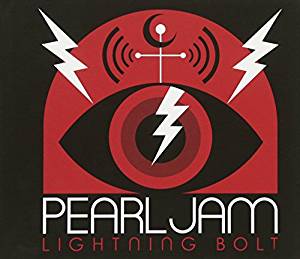
Least to Most: Pearl Jam – Lightning Bolt

“It’s a fragile thing, this life we lead
If I think too much I can get over-
Whelmed by the grace
By which we live our lives with death over our shoulders”
Sirens

Four years seperated the release of Backspacer and Lightning Bolt, Pearl Jam’s tenth (and, currently, most recent) studio album. A band that used to release an album every 18 months or so like clockwork had learnt to slow down and catch their breath between releases and tours.

In those four years the band was far from idle. There were re-releases / expanded editions of Vs and Vitalogy, a live album and the whole Pearl Jam Twenty celebration / lap of honour that included a Cameron Crowe helmed documentary, book, compilation (all very very good), two day festival and tour.

Oh – and a plethora of solo activity: Jeff Ament formed RNDM with Joseph Arthur and released and album as did his other side-project Tres Mts, Stone Gossard dropped a couple of Brad albums, Matt Cameron slipped back onto the drum seat for a little-known Seattle band called Soundgarden’s reunion, Mike McCready got in on a Mad Season reunion-of-sorts and formed Walking Papers with Duff McKagan (yes, that Duff McKagan) and even Eddie dropped a solo album, again ‘of sorts’, with Ukulele Songs (which is fine depending on your appetite for half an hour of Eddie and his uke).

Why do I mention all these solo projects in a review of a Pearl Jam band album, I don’t hear you ask. Well, for all the claims that these side projects help the band members bring more into album sessions and that may have been true in the 90’s when the band had couldn’t stand up for ideas falling out of their arses, I think it’s now the opposite case. When sessions for Lightning Bolt were delayed and interrupted by these commitments and solo tours I can’t help but feel that creative and energy levels were actually drained than recharged and the band’s tenth studio album kind suffered as a result.

But does that matter? Let’s face it: Pearl Jam are in a pretty unique position that few bands or acts reach. Twenty-two years into their life as a band they’re one of the greatest live draws still regularly touring, can sell out arenas, stadiums and ball-parks across the globe, their place and legacy are sealed and were – in 2013 and now – at the point where as long as their new album didn’t stink the place up like Pepé Le Pew and contained a good few songs to mix into the live set, will continue to be able to do so for years to come and keep their legacy intact even if it’s unlikely to bring any new fans into the fold.

Sill “everyone’s a critic looking back up the river” as the first words that ushered in Lightning Bolt point out and there’s a lot of strong material and a willingness to experiment and push boundaries within these forty-seven minutes that show Pearl Jam aren’t quite ready to rest on their laurels and are still trying to push their songwriting forward.

Lyrically, these are some of Vedder’s most accessible and direct, an extension of the approach begun on Backspacer (“For years, it was playing word games and expressing those emotions, but doing it in such a way that was cryptic and where Mark Arm from Mudhoney would still have some modicum of respect for me. But nowadays, it’s more like sitting down and writing a song, and whatever comes out, comes out.”) and musically it’s a lot more diverse than their previous album, with Stone Gossard referring to  “a slight return to some of the more sort of peculiar things we did, say, between No Code and Binaural.”

I really dig a huge chunk of Lightning Bolt and love that diversity in their sound, aptly beefed up by the physicality of Brendan O’Brien production. Take ‘Pendulum’ – how often to you get to hear Mike McCready using a bow on his guitar? – for a good start:

It’s a dark, broody beast that really doesn’t feel like the ‘by the numbers’ Pearl Jam you’d expect of a band this far into their recording career and works great live. It was a Gossard add Jeff Ament composition that even they didn’t expect Eddie to latch on to and work up into a band song. While we’re in the mid-section, ‘Pendulum’ is preceded by another Ament & Gossard composition and highlight, ‘Infallible’, whose groove and progression are like noting else in the PJ catalog and I love the directions the melody veers off in, with near-Beatles like passages :

A lot of attention pre and post release was given to ‘Sirens’ with due course. It’s one of the band’s finest. From a musical point of view, it’s a Mike McCready compostion (which I can never have enough of) inspired after attending a stop on Roger Waters’ ‘The Wall’ tour and wanting “to write something that would have a Pink Floyd type feel”. You can tell pretty much exactly which song he was cribbing from but when paired with Vedder’s most open and direct lyrics it’s elevated beyond ‘power ballad’ territory to a yearning ode on the fear of life’s fragility and our own mortality.

Of course, there are some more expected leanings on Lightning Bolt. ‘Mind Your Manners’ is a ripping, Dead Kennedys inspired rocker that finds Vedder back in angry mode and plays to their strengths, as does ‘Let The Records Play’ which threads a ‘power of spinning vinyl’ theme around a tasty Stone Gossard (this is very much a record for Stone fans) riff with great results.

Instead of a couple, Lightning Bolt produced a good half dozen songs that really add to Pearl Jam’s setlist (even if they’re not the ones that Ed scrawls onto a piece of paper ahead of a show) and any PJ playlist – including the one which will follow this series*. However, there are a few that don’t make the cut.

I still haven’t really clicked with ‘My Father’s Son’ and while ‘Lightning Bolt’ and ‘Getaway’, for example, are fine songs they don’t particularly add anything to pull this album further up in terms of its ‘go to’ placement in the band’s overall catalogue.

Vedder said of the writing that they’re continually trying to ” make not just the best Pearl Jam record, but just the best record.” While Lightning Bolt may not be the one, it is stronger than you’d expect of a band’s tenth album and finds the band not only playing to their strengths but still pushing in unexpected directions. As long as they continue trying to do so it’s worth checking in and always worth getting to a Pearl Jam show when they come to town.

Oh, and in terms of album closers, though, they went with a beauty on Lightning Bolt with ‘Future Days’.

Highlights: ‘Mind Your Manners’, ‘Sirens,’ ‘Infallible,’ ‘Pendulum,’ ‘Let The Records Play,’ Yellow Moon,’ ‘Future Days’.

Not-so highlights: ‘My Father’s Son, ‘Sleeping By Myself’.

*At this rate that may be a Christmas special

Least to Most: Pearl Jam – Binaural

“We’d rather challenge our fans and make them listen to our songs than give them something that’s easy to digest. There is a lot of music out there that is very easy to digest but we never wanted to be part of it.”

I have a real soft spot for Binaural: I got into the band a year after Yield so this was both the first Pearl Jam album I bought on day of release – as well as the singles for ‘Nothing As It Seems’ and ‘Light Years’ – and the album they were touring behind when I caught them live.

Not only that but I do genuinely believe that there are some real gems on Binaural that, due to its relative low commercial performance, don’t get the recognition they deserve. So much so that I’ve already blogged about this album in a lot more detail here.

But, for all that, in terms of where it sits in preference levels to the rest of the band’s discography – not all that high. Of the highs – this album has an unimpeachable mid-section of ‘Light Years’, ‘Nothing as it Seems,’ ‘Thin Air’ and ‘Insignificance’ but that section is buffered by some pretty dense sounds.

Some of this was on purpose, with the band’s decision to change things up with Tchad Black (as the band moved away from producer Brendan O’Brien for the first time since Vs) recording many of the album’s songs employ two microphones to create a 3-D stereophonic sound.

On some songs – notably ‘Of The Girl’ this layered, textured sound works wonders. Elsewhere, the sound quality and mixes just don’t feel right. Looking back, even band members have come to regard Binaural as an album marked by distractions and missed opportunities, a lack of focus that meant the album lacked the power it could have had.

Gossard, for his part, feels that they should’ve gotten more out of new drummer Matt Cameron – “It should have devastated in a way that Temple of the Dog devastated”. They just weren’t writing with him in mind. Jeff Ament goes further, believing that in cutting songs like ‘Sad’ and ‘Education’ “we look back and think we didn’t put some of the best songs on it.”

But, it was the band’s first venture into the studio with Matt Cameron and, while he made an immediate contribution to songwriting with ‘Evacuation’ (not one of the album’s strongest) and a few tracks left on the cutting floor, the in-studio chemistry wasn’t quite there. They were working with a new producer for the first time, Mike McCready was battling an addiction to painkillers that saw him absent from many a session and Vedder – also in the middle of a marriage breakdown – was plagued by a case of writer’s block that got so bad he had to be stopped from picking up an instrument and writing more music until he had completed lyrics to those songs already piling up and waiting for them. As the man himself told Spin magazine following the album’s release:

“It’s bad when you have writer’s block in the studio and you’ve got three songs without words and four days left. It pretty much happened on the last record. And the worst part was they were songs that I had written. I had written the music to “Insignificance” and “Grievance”. I just wasn’t happy with what I had so I kept working on it and scrapping it and staying up at night, playing piano melodies to make it be the best thing. And it worked, finally. That causes hell in a relationship, that’s all I’ll tell you”

Unfortunately, none of these are ingredients for a great album.

On the plus side – this meant more opportunity for contributions from other band members than on previous albums with three songs and lyrics written entirely by Gossard  ‘Thin Air’, ‘Of the Girl’ and ‘Rival’ alongside Ament’s ‘God’s Dice’ and ‘Nothing As It Seems’.

Binaural is, in many ways, a missed opportunity. Pearl Jam, for all their ‘year or no’ decisions that lead to a cessation of music videos, a reluctance to give interviews or -for a large chunk of time – playing at Ticket Master rep’d venues,  were still in the album-tour-album-tour-album cycle. It would be a while before they’d learn to take a break and I can’t help but wonder if, had they taken just a little longer between Yield and their next album to attend to their own personal lives and breath a little, if Binaural wouldn’t have been their greatest. The ideas are all here, the parts are all right there with em but the final execution just misses the mark.

But – it’s still very very much worth a listen and is one of the few albums for which I’ve broken my ‘if I already have it on CD I won’t by it on vinyl too’ rule for. Oh, and it also introduced Ukulele Ed with ‘Soon Forget’ – a song that, when he was still a baby, I would sing quietly (minus the uke) as a lullaby to my son at nights and, so, ranks as a real personal favourite.

Highlights: ‘Light Years, Nothing As It Seems, Thin Air, Of the Girl, Grievance, Sleight of Hand, Soon Forget

Not-so highlights: ‘God’s Dice’, ‘Evacuation’.