Least to Most: Pearl Jam – Riot Act

“Take the reigns, steer us toward the clear…”

A lot can happen in two years. I’ve written on the time between Binaural and Riot Act before but, to summarise: nine fans were killed during the band’s performance at the 2000 Roskilde Festival – an abrupt full stop which found Pearl Jam questioning if they could continue, friend and fellow ‘grunge’ icon Layne Staley died, Eddie Vedder went through a divorce and, external to the band, the terrorist attacks of 9/11 and the Bush administration shifted America’s landscape drastically.

Ahead of their first show following Roskilde, Eddie Vedder sat alone in his hotel room writing a song to “reassure myself that this is going to be all right.” ‘I Am Mine’, as Matt Cameron said, “has all the elements this band is known for: strong lyrics, strong hook, and a good sense of melody. It wasn’t a really tough decision to have that be the starting point for the record.”

Following the Binaural tour cycle, Pearl Jam took a short break – Matt Cameron’s Wellwater Conspiracy dropped it’s third album, Stone Gossard released the first ‘solo’ album from a Pearl Jam member (which he was in New York promoting on 9/11) and Vedder – having played five shows with Neil Finn and other musicians (later captured on the worth-checking-out Seven Worlds Collide) – disappeared off the grid for a year on a remote Hawaiian island where he connected with Boom Gaspar who was playing B3 at a musician’s wake. The two hooked up again a few days later and very quickly wrote an eleven minute tune that would become another key album track, ‘Love Boat Captain’.

When it came time to recording their new album, Pearl Jam chose to do so with Adam Kasper (who’s credits to that point included two albums for Foo Fighters, a Queens of the Stone Age album amongst others) at the suggestion of Matt Cameron as Kasper had also produced Soundgarden’s last album, Down on the Upside.

The resulting album is one of the lost gems in Pearl Jam’s catalogue. Riot Act has still – 16 years on – shifted less copies than Vs did in its first week alone. I know Pearl Jam fans who don’t know more than the couple of tunes that remain in modern setlists. As I’ve argued before and will continue to do so – they’re missing out. Stronger than Binaural, Riot Act benefits from Vedder having banished his writer’s block and having a much broader and emotional range of subjects to draw on and, frankly, get angry about -though Vedder has said that “If you think about it, it’s all very confusing and overwhelming to try to grasp it and put it all down.”

The album kicks off with ‘Can’t Keep’ – a tune that Vedder had played on the ukulele during a couple of solo shows (and would record as such on his own Ukulele Songs a few years later) that Gossard heard and enthused would be “killer” with the full band treatment and became a slow-burning thumper with buzzing, treated guitars that feels like a No Code song and leads into what is now a quite rare thing: a full band composition, ‘Save You’.

With lyrics that tackle addiction and the pain and frustration of seeing a close friend waste their life, ‘Save You’ is Mike McCready’s only writing credit on Riot Act and came about when he was sitting down with Stone Gossard (who contributed a fair bit song-writing wise) and “had two ideas, and one idea I worked really hard on and thought it was totally great and then I played it for him, and he goes, ‘Well, that’s not…well that’s okay. You got anything else?’ And so, the other thing I had was the “Save You” riff, and he goes, ‘Oh, that’s cool.’ Ya know, so it’s…I was really built up to wanting to play this other song, and uh, nobody seemed to be very excited about it…”

‘Save You’ leans into the relentless, hard-edged rock sound that would blend seamlessly alongside tracks from Vitalogy as would the propulsive-beat driven ‘Green Disease.’ ‘Thumbing My Way’, meanwhile, is an acoustic ballad that showcases a change in direction for Vedder’s writing and is a clear signpost for what was to come with Into The Wild while ‘You Are’ is a personal favourite. Born out of expirmenting with a new drum machine that Matt Cameron had gotten hold of, it’s another great example of the band taking one member’s ideas and creating something memorable.

It would be impossible to talk about Riot Act without giving at least a passing mention to ‘Bu$hleaguer’. A dark, weaving satirical swipe, this was Pearl Jam at their most unambiguous politically and – while not much touched since – would regularly draw boos and jeers from certain clusters of the crowd when played live. Though even before the record was released there was no way to think Pearl Jam were Bush supporters so you’ve gotta wonder about the ‘shock’ it created.

Riot Act could very easily have been Pearl Jam’s greatest record. Reinvigorated and with a wealth of inspiration to draw on, there are some fantastic tunes on their seventh album (and there’s not many bands you can say that about). But… they should’ve taken a break. They sound a little tired and songs like ‘Ghost’ and ‘Help Help’ even sound tired. As much as I love the majority of Riot Act there are still 5 of its 15 songs I’ll skip more than listen through to and while that’s still a pretty signal to noise ratio (to borrow a phrase), when stacked against other works – it means it doesn’t quite reach the heights it could have done.

The odd thing is that had you cut those 5 songs and thrown in the ‘B’ sides recorded during these sessions – ‘Down’, ‘Undone’, and the brilliant ‘Otherside’ instead then Riot Act would have been one of their greatest albums.

However, there’s a sense of finality about Riot Act. In many ways it marks the end of a chapter for Pearl Jam – it would be four years before they’d release another album and, with Riot Act they completed their ‘studio’ obligations to Sony Music’s Epic Records with whom they had signed as Mookie Blaylock ahead of recording their debut Ten and, following their next tour, would take a much-needed break.
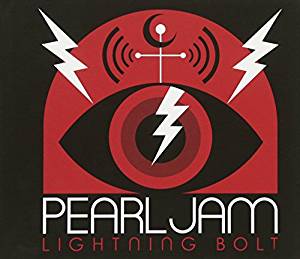
Least to Most: Pearl Jam – Lightning Bolt

“It’s a fragile thing, this life we lead
If I think too much I can get over-
Whelmed by the grace
By which we live our lives with death over our shoulders”
Sirens

Four years seperated the release of Backspacer and Lightning Bolt, Pearl Jam’s tenth (and, currently, most recent) studio album. A band that used to release an album every 18 months or so like clockwork had learnt to slow down and catch their breath between releases and tours.

In those four years the band was far from idle. There were re-releases / expanded editions of Vs and Vitalogy, a live album and the whole Pearl Jam Twenty celebration / lap of honour that included a Cameron Crowe helmed documentary, book, compilation (all very very good), two day festival and tour.

Oh – and a plethora of solo activity: Jeff Ament formed RNDM with Joseph Arthur and released and album as did his other side-project Tres Mts, Stone Gossard dropped a couple of Brad albums, Matt Cameron slipped back onto the drum seat for a little-known Seattle band called Soundgarden’s reunion, Mike McCready got in on a Mad Season reunion-of-sorts and formed Walking Papers with Duff McKagan (yes, that Duff McKagan) and even Eddie dropped a solo album, again ‘of sorts’, with Ukulele Songs (which is fine depending on your appetite for half an hour of Eddie and his uke).

Why do I mention all these solo projects in a review of a Pearl Jam band album, I don’t hear you ask. Well, for all the claims that these side projects help the band members bring more into album sessions and that may have been true in the 90’s when the band had couldn’t stand up for ideas falling out of their arses, I think it’s now the opposite case. When sessions for Lightning Bolt were delayed and interrupted by these commitments and solo tours I can’t help but feel that creative and energy levels were actually drained than recharged and the band’s tenth studio album kind suffered as a result.

But does that matter? Let’s face it: Pearl Jam are in a pretty unique position that few bands or acts reach. Twenty-two years into their life as a band they’re one of the greatest live draws still regularly touring, can sell out arenas, stadiums and ball-parks across the globe, their place and legacy are sealed and were – in 2013 and now – at the point where as long as their new album didn’t stink the place up like Pepé Le Pew and contained a good few songs to mix into the live set, will continue to be able to do so for years to come and keep their legacy intact even if it’s unlikely to bring any new fans into the fold.

Sill “everyone’s a critic looking back up the river” as the first words that ushered in Lightning Bolt point out and there’s a lot of strong material and a willingness to experiment and push boundaries within these forty-seven minutes that show Pearl Jam aren’t quite ready to rest on their laurels and are still trying to push their songwriting forward.

Lyrically, these are some of Vedder’s most accessible and direct, an extension of the approach begun on Backspacer (“For years, it was playing word games and expressing those emotions, but doing it in such a way that was cryptic and where Mark Arm from Mudhoney would still have some modicum of respect for me. But nowadays, it’s more like sitting down and writing a song, and whatever comes out, comes out.”) and musically it’s a lot more diverse than their previous album, with Stone Gossard referring to  “a slight return to some of the more sort of peculiar things we did, say, between No Code and Binaural.”

I really dig a huge chunk of Lightning Bolt and love that diversity in their sound, aptly beefed up by the physicality of Brendan O’Brien production. Take ‘Pendulum’ – how often to you get to hear Mike McCready using a bow on his guitar? – for a good start:

It’s a dark, broody beast that really doesn’t feel like the ‘by the numbers’ Pearl Jam you’d expect of a band this far into their recording career and works great live. It was a Gossard add Jeff Ament composition that even they didn’t expect Eddie to latch on to and work up into a band song. While we’re in the mid-section, ‘Pendulum’ is preceded by another Ament & Gossard composition and highlight, ‘Infallible’, whose groove and progression are like noting else in the PJ catalog and I love the directions the melody veers off in, with near-Beatles like passages :

A lot of attention pre and post release was given to ‘Sirens’ with due course. It’s one of the band’s finest. From a musical point of view, it’s a Mike McCready compostion (which I can never have enough of) inspired after attending a stop on Roger Waters’ ‘The Wall’ tour and wanting “to write something that would have a Pink Floyd type feel”. You can tell pretty much exactly which song he was cribbing from but when paired with Vedder’s most open and direct lyrics it’s elevated beyond ‘power ballad’ territory to a yearning ode on the fear of life’s fragility and our own mortality.

Of course, there are some more expected leanings on Lightning Bolt. ‘Mind Your Manners’ is a ripping, Dead Kennedys inspired rocker that finds Vedder back in angry mode and plays to their strengths, as does ‘Let The Records Play’ which threads a ‘power of spinning vinyl’ theme around a tasty Stone Gossard (this is very much a record for Stone fans) riff with great results.

Instead of a couple, Lightning Bolt produced a good half dozen songs that really add to Pearl Jam’s setlist (even if they’re not the ones that Ed scrawls onto a piece of paper ahead of a show) and any PJ playlist – including the one which will follow this series*. However, there are a few that don’t make the cut.

I still haven’t really clicked with ‘My Father’s Son’ and while ‘Lightning Bolt’ and ‘Getaway’, for example, are fine songs they don’t particularly add anything to pull this album further up in terms of its ‘go to’ placement in the band’s overall catalogue.

Vedder said of the writing that they’re continually trying to ” make not just the best Pearl Jam record, but just the best record.” While Lightning Bolt may not be the one, it is stronger than you’d expect of a band’s tenth album and finds the band not only playing to their strengths but still pushing in unexpected directions. As long as they continue trying to do so it’s worth checking in and always worth getting to a Pearl Jam show when they come to town.

Oh, and in terms of album closers, though, they went with a beauty on Lightning Bolt with ‘Future Days’.

Highlights: ‘Mind Your Manners’, ‘Sirens,’ ‘Infallible,’ ‘Pendulum,’ ‘Let The Records Play,’ Yellow Moon,’ ‘Future Days’.

Not-so highlights: ‘My Father’s Son, ‘Sleeping By Myself’.

*At this rate that may be a Christmas special

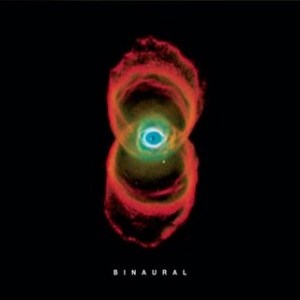
Least to Most: Pearl Jam – Binaural

“We’d rather challenge our fans and make them listen to our songs than give them something that’s easy to digest. There is a lot of music out there that is very easy to digest but we never wanted to be part of it.”

I have a real soft spot for Binaural: I got into the band a year after Yield so this was both the first Pearl Jam album I bought on day of release – as well as the singles for ‘Nothing As It Seems’ and ‘Light Years’ – and the album they were touring behind when I caught them live.

Not only that but I do genuinely believe that there are some real gems on Binaural that, due to its relative low commercial performance, don’t get the recognition they deserve. So much so that I’ve already blogged about this album in a lot more detail here.

But, for all that, in terms of where it sits in preference levels to the rest of the band’s discography – not all that high. Of the highs – this album has an unimpeachable mid-section of ‘Light Years’, ‘Nothing as it Seems,’ ‘Thin Air’ and ‘Insignificance’ but that section is buffered by some pretty dense sounds.

Some of this was on purpose, with the band’s decision to change things up with Tchad Black (as the band moved away from producer Brendan O’Brien for the first time since Vs) recording many of the album’s songs employ two microphones to create a 3-D stereophonic sound.

On some songs – notably ‘Of The Girl’ this layered, textured sound works wonders. Elsewhere, the sound quality and mixes just don’t feel right. Looking back, even band members have come to regard Binaural as an album marked by distractions and missed opportunities, a lack of focus that meant the album lacked the power it could have had.

Gossard, for his part, feels that they should’ve gotten more out of new drummer Matt Cameron – “It should have devastated in a way that Temple of the Dog devastated”. They just weren’t writing with him in mind. Jeff Ament goes further, believing that in cutting songs like ‘Sad’ and ‘Education’ “we look back and think we didn’t put some of the best songs on it.”

But, it was the band’s first venture into the studio with Matt Cameron and, while he made an immediate contribution to songwriting with ‘Evacuation’ (not one of the album’s strongest) and a few tracks left on the cutting floor, the in-studio chemistry wasn’t quite there. They were working with a new producer for the first time, Mike McCready was battling an addiction to painkillers that saw him absent from many a session and Vedder – also in the middle of a marriage breakdown – was plagued by a case of writer’s block that got so bad he had to be stopped from picking up an instrument and writing more music until he had completed lyrics to those songs already piling up and waiting for them. As the man himself told Spin magazine following the album’s release:

“It’s bad when you have writer’s block in the studio and you’ve got three songs without words and four days left. It pretty much happened on the last record. And the worst part was they were songs that I had written. I had written the music to “Insignificance” and “Grievance”. I just wasn’t happy with what I had so I kept working on it and scrapping it and staying up at night, playing piano melodies to make it be the best thing. And it worked, finally. That causes hell in a relationship, that’s all I’ll tell you”

Unfortunately, none of these are ingredients for a great album.

On the plus side – this meant more opportunity for contributions from other band members than on previous albums with three songs and lyrics written entirely by Gossard  ‘Thin Air’, ‘Of the Girl’ and ‘Rival’ alongside Ament’s ‘God’s Dice’ and ‘Nothing As It Seems’.

Binaural is, in many ways, a missed opportunity. Pearl Jam, for all their ‘year or no’ decisions that lead to a cessation of music videos, a reluctance to give interviews or -for a large chunk of time – playing at Ticket Master rep’d venues,  were still in the album-tour-album-tour-album cycle. It would be a while before they’d learn to take a break and I can’t help but wonder if, had they taken just a little longer between Yield and their next album to attend to their own personal lives and breath a little, if Binaural wouldn’t have been their greatest. The ideas are all here, the parts are all right there with em but the final execution just misses the mark.

But – it’s still very very much worth a listen and is one of the few albums for which I’ve broken my ‘if I already have it on CD I won’t by it on vinyl too’ rule for. Oh, and it also introduced Ukulele Ed with ‘Soon Forget’ – a song that, when he was still a baby, I would sing quietly (minus the uke) as a lullaby to my son at nights and, so, ranks as a real personal favourite.

Highlights: ‘Light Years, Nothing As It Seems, Thin Air, Of the Girl, Grievance, Sleight of Hand, Soon Forget

Not-so highlights: ‘God’s Dice’, ‘Evacuation’.

Least to Most: Pearl Jam – Backspacer

“But I am up riding high amongst the waves
Where I can feel like I
Have a soul that has been saved
Where I can feel like I’ve
Put away my early grave”

Let’s kick this off with a reminder of this series’ caveat – this is not a critical ‘worst’ situation and I can well imagine any of these albums being cited as a favourite by others.

In many ways it pains me to start this series off with Backspacer but it has to start somewhere and the band’s 2009 album is probably the least-played of their discography in casa Hill.

Why does it pain me? Like many I was very much hyped to grab this one when it dropped. The build up to it painted a strong picture of a revitalised band about to release an album that could sit amongst their strongest. 2006’s Pearl Jam (or ‘Avocado’) seemed to find Messrs Ament, Cameron, Gossard, McCready and Vedder back on focus and  firing on all cylinders and even the fickle media was back in their corner.

In fact, press leading into the recording dropped even more fuel for anticipation – for the first time since Yield Brendan O’Brien was at the helm. O’Brien had produced Pearl Jam’s cover of ‘Love, Reign o’er Me‘ for the (pretty pants) Adam Sandler film of similar title. They had a blast together and when it came time for a new studio album, the choice was a no-brainer. According to O’Brien, Pearl Jam “were ready to be, for lack of a better word, “produced” again” while Vedder told Rolling Stone “In the past, Brendan would say, ‘It’s a great song, but I think you should do it in a different key,’ and we’d say no. But now that we’ve heard Bruce has listened to his suggestions, I think we will too.”

It all pointed to ‘great’. And there is a lot of great stuff on Backspacer. Take first single ‘The Fixer’ as an example – it’s  pure hook, it’s almost pop-like in its sensibility. It’s fast, immediate and one of their best songs.

It’s also a great example of Pearl Jam’s collective song-writing chops. It takes its basics from a Matt Cameron demo (hence the odd timing signatures) which was worked up by Stone and Mike before Ed then worked on the arrangement ‘to get the parts he needed in the right place’ and tackled the lyrics. As such it’s one of only two tracks on the album with music composed by more than two members – Vedder wrote the lion’s share of Backspacer; all the lyrics and music for five of its eleven tracks.

According to Ament “Whatever wave Ed caught with [his soundtack for] Into the Wild has taken him to different places.” Those sole-Vedder creations areare among Backspacer‘s strongest – ‘Just Breath’ (which takes the opening chord from Into The Wild instrumental ‘Tuolumne’ and builds from there), ‘Unthought Known’, ‘The End’ and ‘Speed of Sound.’

Vedder’s lyrics on Backspacer are markedly more optimistic and politic-free after at least two previous records filled with barbs at the administration*. “I’ve tried, over the years, to be hopeful in the lyrics, and I think that’s going to be easier now,” Ed would tell press – whether that was down to a sense of calm in his personal life or a reflection on the end of the Bush era and the beginning of the Obama administration or both… it’s no bad thing. There’s a real joy and lightness that soars through some of Backspacer‘s finest moments that make it one of Pearl Jam’s easiest and most accessible albums to date.

So with all this good stuff to be said…. the reason Backspacer sits at the Least end of this list?

Essentially  – while this is true of a lot of albums in general – my version of it is a lot shorter than the actual album. There’s a good number of tracks that just don’t linger in the memory and as this is Pearl Jam’s shortest album, that doesn’t leave a whole lot left to spin. On average I’d say there’s five songs on here that are guaranteed a listen every time, possibly six which – on an 11 track album – splits it right down the middle.

There’s nothing ‘wrong’ with those songs but ‘Got Some’, ‘Supersonic’ etc are of the type that Pearl Jam have done better elsewhere in their catalogue and don’t offer sufficient hook to stick and, I’m sure, are cues to head to the bogs during concerts.

As for ‘Johnny Guitar’ – it’s the worst song Pearl Jam have committed to tape if you ask me (and it’s my blog so… ).  Ed was ‘inspired’ by seeing a Johnny Guitar Watson album cover… on the wall of a bathroom. If you ask me there should be a rule for songs about things you see in the crapper and that rule should be: don’t. Just don’t.

Backspacer arrived at an interesting time for Pearl Jam. Reinvigorated by the response to their 2006 album the band were on the cusp of their 20th Anniversary ‘lap of honour’ which had already begun with the re-release of Ten earlier in 2009 and would soon see further re-issues (expanded versions of Vs and Vitalogy) a new live album, a Cameron Crowe helmed documentary and soundtrack and a series of ‘summer’ tours that would focus on the band’s legacy rather than new material. Not that it wasn’t deserved, more that for a time, new music felt more of an afterthought. It would be four years before their next album.

Highlights: ‘The Fixer’, ‘Just Breath,’ ‘Amongst The Waves,’ ‘Unthought Known,’ ‘Speed of Sound,’ ‘Force of Nature.’

Not-so highlights: ‘Johnny Guitar’.


*I was very excited about the possibility of a righteously angry Pearl Jam album being the sole positive of a Trump presidency and still am even after ‘Can’t Deny Me‘.


Least to Most: Pearl Jam (Intro)

Am I really about to kick off a potentially lengthy series after what has been a year of sporadic posts at best? You bet your bollocks I am.

I’ve been toying with a way to pick up where my earlier posts on Pearl Jam’s ‘lost’ years left off and cover the band’s rise and ‘glory’ years in a way that didn’t simply regurgitate what had been written so many times before – and lining up another candidate for a Least to Most series* so, as the meme asks, why not both?

As per previous and future Least to Most this is not my attempt at a critical “worst to best”,  as this isn’t a site of critique. It’s mumblings of personal thoughts and opinions relating to music. As such I’m going to be running through, in order (though certainly not uninterrupted), my Least to Most Favourite Pearl Jam studio albums.

Of key importance to note with this series is that as a massive Pearl Jam fan, even if they’re among the ‘least’ end of this rundown, it’s a fair bet that there’s usually at least two of these albums in my car or on rotation at a given time.

Let’s spin those black circles…


*Pink Floyd will be up to bat soon… depending on how soon I can a) listen to Saucerful of Secrets and b) decide whether Piper At The Gates of Dawn really counts as a Pink Floyd album.

Out of Europe: Five From Spain

While those duplicitous, intellectually and morally deficient cockweasels that make up the spearhead of the government’s Brexit movement continue to flounder around like a freshly-neutered dog wondering what the hell he can now lick as the reality of both the consequences and legalities thunder down on them, I thought I’d take a look at the music of Spain.

I’ve been fortunate enough to see a fair bit of Spain and – while there are mixed emotions attached to part of it now – I’ve always loved being there. I’ve always found it a beautifully vibrant and colourful country, especially the Catalan areas I’ve spent time in, and from the Galician north-west to the Canary islands off the coast of Africa, I found warmth in both climate and people. And the food…..

As for the music, let’s go:

Héroes del Silencio – Entre dos tierras

NB: I don’t think the video is supposed to be as funny as it is. They may have been this earnest.

Héroes del Silencio – formed in the 80’s in Zaragoza – were BIG in Europe which, as per, means jack shit in England and they never crossed over. My wife, however, being from Europe ‘proper’ did know of them and dug them out of Spotify last year. One of Rock en Español most successful bands, they played big rock with a serious, capital R from the late 80’s up until 1996 when the singer went his own way. Rock en Español is a catch-all grouping for those ‘rock’ bands that sang in Spanish and precious few achieved success outside of Spanish speaking countries due to lack of promotion. Héroes del Silencio were signed to EMI and the album this track is taken from shifted well over 2 million copies alone. Not too shabby.

Spotify Link

Exquirla – Europa Muda

I’ve blasted this album out of my car and home speakers so much since picking it up earlier this year. Exquirla is the a surprise collaboration between Spanish post-rock band Toundra and flamenco singer Niño de Elche. The two acts met when they were both appearing at a festival in Cadiz (a city I love very much). This surprise collaboration yielded an album of intense post-rock with traditional guitar and flamenco vocals that’s hugely addictive, even if I haven’t got a clue what Senor de Elche is emoting about.

Spotify Link

Audiolepsia – Beatrix

One of the joys of the internet is the degree to which the discovery of new music from places so geographically distant and bands not affiliated with major labels is now possible. I also love the ability that it has created for bands who don’t have or don’t want major backing to get product out there in a grass-roots, DIY style and build a genuine fanbase. It’s meant I’ve been able to discover a huge amount and I found a real groundswell of post-rock / ambient flowing out of Barcelona – perhaps it’s the Catalan element. I can really go down the rabbit hole at times and the discovery of Aloud Music (who work with the equally brilliant Dunk!) is a dangerous one for my bank balance. Veering more toward the melodic end of the genre, along with Astralia, Audiolepsia are one of those bands who’s album Muses has been on steady spin since discover.

Spotify link

Triángulo de Amor Bizarro – De la monarquía a la criptocracia

They take their name from the New Order song Bizarre Love Triangle (but I won’t hold that against them) and were formed in the Galician city of A Coruña (again: another city I’ve visited). Highly praised by press and famous musicians from various quarters they’re renowned for powerful live performances and mix indie, post-punk and shoegaze into one heady combo.

Spotify link

Joaquín Rodrigo – Concierto de Aranjuez II: Adagio

Stepping away from the usual fare on this blog but there is zero possibility of talking Spanish music and not mentioning what is one of my favourite pieces of music.

It’s nothing revolutionary and is probably a very well-known piece yet there is something undeniably beautiful about the Concierto de Aranjuez, it’s one of the finest pieces of Spanish classical music and the Adagio moves me every time. I’ve had the joy of seeing this performed live by the Royal Philharmonic Orchestra with Rolando Saad on guitar. There’s no video of that particular combo, that’s Rolando Saad in the video, though but the Spotify link is to just that pairing. The moment at which the orchestra fulls into sweep around the 8 1/2 minute mark always gives me goosebumps.

Spotify link

Currently Spinning

Uh oh: it’s been a while since I mumbled about music… on here at least.

So I thought it was time to take a goosey at what’s been pinging around the old noggin of late.

Led Zeppelin – Ramble On

For some reason I’ve been on a real Zep kick of late. Not that you need an excuse to listen to what may be one of the greatest bands of all time but… if you can’t find something to like in Led Zeppelin’s immense back catalog there’s something wrong with you, go see a doctor.

Stevie Ray Vaughan – Texas Flood

Much in the same vein as the above… you never need a reason to listen to SRV, more like a reason not to. And there isn’t one.

The Black Crowes – If It Ever Stops Raining

How I’ve gone six years and not posted anything by this band is beyond me. So I recently found myself catching up with the Crowes’ work that I’d missed, including Lost Crowes – a collection of essentially two albums that were canned and stripped for parts on later discs. This one went on to find new legs in By Your Side‘s title track but the great bones of it are here and it seems right now that will never fucking stop raining on this sodding island.

Manic Street Preachers – International Blue

Been a while since I enjoyed a new Manics song… easily a decade. Still, I’ve been really enjoying hearing this one on the radio lately and it certainly stands up well to repeated listens.

Buffalo Tom – Freckles

Quite and Peace has had a lot of spins since arriving on my shelves last month and ‘Freckles’ is a real stand out.

Five From: Death Cab For Cutie

An attempt at a new feature wherein – in an effort to shake off the ‘lapsed’ status of postings – I proffer up five songs from an artist / band. Not a ‘Top Five’ as such more a potted selection should you be so inclined to check said act out….

Hailing from a Bellingham, Washington and undoubtedly influenced by the emo scene in nearby Seattle, Death Cab For Cutie have been putting out records for (gulp) 21 years now.

I got into them, like so many I guess, on the back of their widely acclaimed Transatlanticism. But then I stopped listening after the overexposure of Plans on the back of, I think, it featuring on some of those overly sappy, treacly, cheesier than a cheddar factory US teen-sitcom shows. However, in 2011 my wife surprised me with tickets to a DCFC show. I was expecting a lot of quiet acoustic numbers. Instead it was one of the best live shows I’ve seen – new material (the then-new Codes and Keys album) vastly more upbeat and superior to anything on Plans and songs that I didn’t know that meant I quickly went and picked up Narrow Stairs. The quality of those two albums (and the connection to a great night out) meant that Death Cab went up the play count list. Here’s five of those heavy rotation tunes that don’t sit in Spotify’s Top Five for DCFC:

Why’d You Want To Live Here

Title And Registration

This is the one that first got my attention and I still thoroughly enjoy it and Transatlanticism. That nagging little guitar line… I was quite chuffed when I sussed that one out.

I Will Possess Your Heart

Narrow Stairs is all too often dismissed and this song is immense with its build up of layers and pulsing rhythm – it kills live too.

You Are A Tourist

Viewed in retrospective, Codes and Keys is actually an intense break-up / pre-divorce album. Frontman Ben Gibbard had been married to Zooey Deschanel for a couple of years and was living the healthy life…. everyone labelled it his ‘happy’ album. But then the couple announced their seperation a few months later and lyrics like “If you feel just like a tourist/ In the city you were born/ Then it’s time to go/ And define your destination/ There’s so many different places to call home” take on a different meaning. Either way Codes and Keys is a bloody good album.

Little Wanderer

From their last studio album, Kintsugi. Not their strongest but a good effort and also the last to feature guitarist / occasional songwriter Chris Walla who’d been with the group from the start. With a new album strongly hinted at for this year, I’m looking forward to more.

Currently Listening

Here we are again. Another ‘series’ down and a couple brewing in the pot and time for a look at what (alongside continual listens to Lost In Kiev’s Nuit Noire) my auditory ossicles have been pinging on down the line of late.

The Mono Jacks – 1,000 De Da

This one was sent to my wife last week via our friend in Romania who gave me some ammo for my Out of Europe on that country and I’ve been listening to it and their new album pretty solidly since. My Romanian isn’t strong enough to offer a translation but I’m told it deals with a certain kind of… parental method that a lot of Romanians today can identify with and “represents our inner children yelling for freedom as we each carve our own paths in life”. The Mono Jacks describe themselves as sounding “between alternative rock and post-punk touches”. As the review on the band’s site says: “I’ve seen most of the British bands ploughing this particular furrow, and The Mono Jacks have better songs than pretty much all of them.”

Destroyer – Chinatown

Another example of strange ways to discover music…. I was looking at an album on Amazon a week or two back and down in the “recommended” type carousel I saw Destroyer’s Kapputt at £5 for a double lp. Out of nothing more than curiosity and intrigue after scanning the glowing reviews (numerous album of the year accolades and reviews like “an astonishing world in just nine songs” and “an open love letter to a vanished pop era: it’s unique and warm and beautiful” ) I checked it out on Spotify and was hooked and hit ‘buy’. Why it was so cheap I have no idea, but, to quote another review “a brilliant and accessible album that draws from the lush sounds of the early 1980s but never forgets the importance of songwriting”.

Band of Susans – Elizabeth Stride 1843-1888

Again – different ways of discovering music. I saw a book (I think on Instagram) that I thought might be interesting called ‘Gimme Indie Rock: 500 Essential American Underground Rock Albums 1981–1996.’ I downloaded a sample chapter and while it’s more a case of “author’s favourite 500..” the description of Band of Susan’s Here Comes Success got me intrigued and I’ve had this opening track on a lot since. There’s a really obvious late-80’s Sonic Youth element to it along with *that* guitar sound. This one actually sent me down one of those Wikipedia rabbit holes that lead to the Saucy Jacky postcard (“you’re a saucy one, Jack”). Apparently Leo Fender was a rabid fan – of Band of Susans not Jack the Ripper.

Pearl Jam – Release, 1994 Orpheum Theater, Boston, MA

Because Jim at Music Enthusiast has got me seriously considering delving deeper into a Pearl Jam series and because I need no excuse to listen to Pearl Jam I’ve been spinning the live disc that came with the Vs/Vitalogy box. In terms of Pearl Jam live albums it’s probably the finest ‘official’ release out there.

Bruce Springsteen – I’ll Stand By You Always

Again in preparation for a possible series / longer post… (my notebook is starting to fill up with these and I haven’t even touched on the 100 Essential Albums thing..) back when Springsteen was doing the promo rounds for his book he confirmed the existence of this one as having been written for, and turned down by the producers of that film about kids and magic. At the time he said that it was “very uncharacteristic of something I’d sing myself.” “It was something that I thought would have fit lovely.” Well, despite being locked down for over a decade it emerged this year on a bootleg set called Odds and Sods. Perhaps not suited for a kids movie as such it’s certainly a different take for Bruce and would probably rank quite highly on his ‘movie songs’ list. It comes from the start of a very prolific song-writing period for Bruce and while he currently squats on Broadway in another activity that keeps him from releasing any new material it’s worth a listen for fans.

In terms of where this sits with sessions and musicians…. It’s listed as “copyright June 13, 2001” so my guess is that it could be from the E Street sessions at Thrill Hill East of that spring – between the end of the Reunion Tour and the start of The Rising sessions later that year in Atlanta – that Springsteen considered fruitless but there’s so little on it in terms of ‘band’ sound that it could just as easily be a solo recording.

Least to Most: Foo Fighters, Part 3

Foo Fighters

It’s surprising the amount of stick Dave Grohl got for moving forward and making new music. Or, as some saw it, daring to make new music after the death of Kurt Cobain. As the man himself has often pondered – did they just expect him to stop? Music was all he’d done up until that point and he was only 25, why should he stop? In October of 1994, six months following Cobain’s suicide, Grohl booked some time at Robert Lang Studios in Seattle – where Nirvana’s final, aborted studio sessions had taken place (which yielded the demo of what would become ‘You Know You’re Right‘) earlier that same year – and recorded a fifteen-track demo, playing every instrument (save one guitar solo) himself.

Not sure where his future lay Grohl considered looking for another band with a vacant drum stool. One such stool had recently been vacated by Stan Lynch and there’s a great video of Grohl going full Animal with the Heartbreakers on SNL – “it was the first time I’d looked forward to playing the drums since Nirvana had ended.” Ultimately, though (and even after a couple of shows sitting on the vacant Pearl Jam drum stool*), Grohl wanted to give his ‘Foo Fighters’ project his attention as the demo tape he’d circulated was now picking up major label interest. The name was applied to the demo tape as Grohl wanted some anonymity post-Nirvana and to suggest that a group was behind the music.

Released in July 1995, there’s something wonderfully charming and warm about Foo Fighters. It’s very much a product of its time – the guitars are very grunge-like and loaded with the same levels of fuzz associated with Grohl’s former outfit but the songs quickly jump into more melodic and lighter routes and there’s an overwhelming sense of lightness and, yes, goofiness that wouldn’t be present on any other Foo Fighters release (likely down to the fact that the largely nonsensical lyrics were written 20 minutes before recording). It’s loaded with hook, charm and warmth and positivity. Though I have to wonder if I’m the only Foo Fighters fan that doesn’t care for ‘Big Me’.

Highlights: ‘This Is A Call’, ‘I’ll Stick Around’, ‘Alone + Easy Target’, ‘Good Grief’,’Floaty’

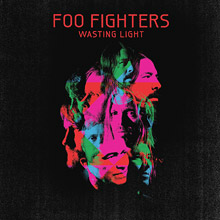
Wasting Light

Fuck but I love this album. This is the one instance in which the Gimmick behind it paid off in spades. In an effort to recapture some of the rougher sound of earlier Foo Fighters releases, Grohl decided that Foo Fighters Album 7 would be stripped of all the production bells and whistles that had been draped over Echoes, Silence, Patience & Grace and bought in Butch Vig and to record the entire album on analogue equipment in Dave’s garage.

At this point, though, it would be futile to expect such a process to result in a raw sounding record. It’s not like Dave Grohl has a small garage for that matter either. But, what makes Wasting Light such a late career highlight is that Vig captures a sense of purpose and drive in the band that had been lacking for at least three albums previous. It’s a big, anthemic rock record shorn of production sheen and filled with a sense of energy that comes from the fact that they recorded the entire album live and – with Pat Smear back in the ranks – a heavier, three-guitar strong attack.

From the off with ‘Bridges Burning’ powering into ‘Rope’ and ‘Dear Rosmery’ there’s no let up. Instead, when you’d expect it at track four, ‘White Limo’ has been described as “a blistering, paint-stripping thrash track” with Grohl’s vocals lost as he screams at what must be the top of his register. There’s no slowing down on Wasting Light. No ballads. ‘These Days’ looks like it’s gonna be that track until it turns into a thumping Foos classic that will no doubt rub shoulders with ‘Run’ and ‘Something From Nothing’ on the inevitable Greatest Hits 2. No, Wasting Light found a revitalised band firing with an energy and power few thought they had left in them and got me really paying attention to the band again and, depending on the day of the week, could just as easily sit right at the top of this list.

Highlights: ‘Bridges Burning’, ‘Rope’, ‘White Limo’, ‘These Days’,’Arlandria’, ‘Walk’.

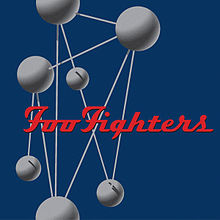
The Colour and The Shape

Twenty years on (gulp), the moment when the practically-throwaway ‘Doll’ gets torn apart by the arrival of ‘Monkey Wrench’ and The Colour and The Shape shifts into gear remains shit-the-bed-amazing. So good that the band themselves would give the formula another go and top it with ‘T-Shirt’ giving way to ‘Run’ on this year’s Concrete & Gold. That being said, while ‘Run’ is a great song, it doesn’t match the sheer power and fire of ‘Monkey Wrench’ – an absolute stone-cold classic. And it’s not the only one on the album for is home to a tonne of em: ‘Monkey Wrench’, ‘My Hero‘, ‘Walking After You’, ‘Enough Space’ and, easily their best song, ‘Everlong‘.

The Colour and The Shape was the first Foo Fighters album recorded as a group (although Grohl would end up re-recording the drum parts himself leaving drummer William Goldsmith little choice but to leave the band. He’d be replaced by Taylor Hawkins before the tour behind the album began) and is the most cohesive and consistent set of songs they’ve put to tape, still. After an extensive tour behind Foo Fighters, the band were coming together with Grohl emerging more confident in his role as singer and band leader – if you go back to ‘Monkey Wrench’ when he hits his final “one more thing before I quit” you can here that confidence screaming through. On the downside his first marriage was ending in divorce. This meant that, in place of the nonsensical lyrics on the first album, much of Grohl’s domestic strife was poured into the lyrics – ‘Everlong’ in particular is a strange mix up as it was written against both the collapse of his marriage and the beginning of a new relationship.

What makes this album stand out for me is that in between the staggering strength of the obvious hits, the songs that are so often forgotten are really bloody good too. Take ‘Enough Space‘ – watching ‘Back and Forth’ it’s clear how important this song was as one of the first new ones Grohl wrote for the band, with a tempo inspired by the jumping up and down of European audiences to heavier tunes. Or ‘My Poor Brain’ or ‘Wind Up’ or the best Foo Fighters album closer to date – ‘A New Way Home.’ These are great tunes and on any other album would be stand-outs. When put on an album stacked with killer classics they’re almost forgotten but prove that The Colour and the Shape is an album full of strengths (and ‘See You’ which, frankly, you can forgive).

Check out any review for a new Foo Fighters album and it will be this one that it gets judged against and with reason. The Colour and The Shape built the template of every song and direction the Foo Fighters would make yet remains their benchmark in terms of quality and consistency.

Highlights: All of it.

*Despite all the MTV (and Courtney fuelled) Nirvana vs Pearl Jam schtick the animosity between members really wasn’t there. Grohl sat in for two shows in Australia pre Jack-Irons and it’s been suggested that, having heard and recognised Grohl’s direction, they told him he’d be better doing it alone rather than playing for someone else. Eddie Vedder would actually premier two of the album’s songs on his radio show in 1995 as well as playing alongside Grohl in Mike Watt’s backing band – whose tour Vedder’s band Hovercraft were on along with Foo Fighters.