Albums of my Years – 1986

No 2019 roundup here – if I manage to keep to schedule  on these that one should arrive in late October.  Instead we roll past the halfway mark of my first decade: 1986.

It’s an odd year for music this one. I have vivid memory of the songs of this time – given that radio still plays a lot of them it’s no real surprise. I also have a clear memory of a walk home from school (we lived about 10 minutes’ walk from my primary school) and seeing a smashed cassette on the ground and having, at the time no idea who Bon Jovi were or why someone would have stomped on Slippery When Wet (my guess, now, is that they couldn’t hear ‘Without Love’ one more time without going loco).

Jon and his hairspray-loving mates didn’t really kick in over here in the same way as the US.  ‘Livin’ On A Prayer’ did hit the top ten later in the year but here the radio was ruled by songs like Madonna’s ‘Papa Don’t Preach’ (True Blue was released in June and went on to bonkers numbers in sales) and Surivor’s ‘Burning Heart’ or, even worse Diana Ross’ ‘Chain Reaction’ and Boris Gardiner’s ‘I Wanna Wake Up with You’ that still haunts my brain. The Communards’ take on  ‘Don’t Leave Me This Way’ saw off the horrors of Chris De Burgh’s ‘Lady in Red’ and Berlin’s ‘Take My Breath Away’ for the title of biggest single. Dark times on the radio.

The Rock and Roll Hall of Fame held its first induction ceremony in January ’86. The ceremony took place in New York and first inductees included Elvis Presley, Chuck Berry (inducted by Chuck devotee Keith Richards) along with The Everly Brothers, Buddy Holly, Jerry Lee Lewis, Little Richard and record producer Sam Phillips.

Bob Geldof picked up an award in ’86, he was awarded an Honorary Knighthood for his Band Aid / Live Aid work, though as he’s not a citizen of the Commonwealth he can never be Sir Bob…

In August, guitarist Bob Stinson was out of The Replacements, the group he founded, with the old ‘creative and personal differences’ explanation being wheeled out. Stinson preferred the faster, louder sound of the band’s earlier songs while Paul Westerberg’s growth as a songwriter was taking him down the quieter, introspective route with songs like ‘Here Comes a Regular’. Bob’s drug and alcohol abuse only made the situation worse.

Late September, Metallica were on tour in Sweden promoting Master of Puppets and members drew cards to determine which bunks on the tour bus they would sleep in. Bass player Cliff Burton won and chose to sleep in Kirk Hammett’s bunk. Next morning, as the sun rose, the driver lost control and the bus skidded and rolled over several times. The rest of the band were ok but Burton was thrown out of the window. The bus fell on him, pinning him  to the ground and killing him. While detectives would point to the lack of ice and the skid marks being exactly like ones seen when drivers fall asleep at the wheel, the driver was cleared of any fault. Burton would be replaced by Jason Newstead who would remain with the band until 2001.

It was goodnight from The Clash in ’86 as what was left of the band disbanded as did Men At Work, ELO and The Firm, the short-lived Paul Rodgers and Jimmy Page supergroup. However, The Afghan Whigs, Band of Susans, Boards of Canada, Manic Street Preachers, Slint, and two of Boston’s finest – The Pixies and Buffalo Tom all formed in 1986, putting the scales firmly in the positive.

There were a lot of album releases in 1986 but, in terms of what would fall in my listening orbit, it’s a slim entry of a year. Metallica’s Master of Puppets which contained not only the stonking title track but ‘Battery’ and ‘Orion’ arrived in March and Van Halen, now fronted by an actual singer called Sammy Hagar, dropped 5150 a couple of weeks later – it was the first of their run of four albums with Hagar, all of which would hit Number 1 on the charts. The glorified strip-club MC that previously fronted their band dropped his own debut Eat ‘Em and Smile in July.  While Dickhead Dave had Steve Vai, there’s no comparing to EVH, even when he’s in ballad-mode, the guy drips riffs and tricks:

In a similar arena-bound genre, Bon Jovi unleashed Slippery When Wet in ’86 with it going on to shift something like 30 million copies.  Meanwhile debuts this year came from Bruce Hornsby and the Range who, just for fun, said ‘get a job’, Big Black, Steve Earle and Crowded House whose strong, eponymous first album featured some absolute great tunes and one of their biggest singles to date:

Having dropped two belters in 1985 you’d be forgiven for expecting Hüsker Dü to take a breather but, instead they released Candy Apple Grey via their new major label Warner Bros. and shifted ever so-slightly enough from their hardcore punk sound to create what could be considered one of the first college-rock records. Former SST label-mates Sonic Youth released EVOL in 1986. It’s a real favourite of mine, possibly in the Top 5 of their albums – it’s their first with Steve Shelley on the drum stool and marks the turning point from the whole ‘no-wave’ to the sound they’d perfect over the next few years (1988 is pretty much a done-deal).

Bruce Springsteen topped the charts toward the end of 1986 with Live 1975 – 85. This (until then) career-documenting box set broke records for pre-orders and remains an absolute must in terms of both Springsteen’s catalogue and live records.. I mean I could feature this as it wasn’t covered in the Least to Most series but going for a live album would open up the ability to include compilations and … well I don’t think it can count. So, that leave:

Lifes Rich Pageant – REM

I got into R.E.M around the release of ‘E-Bow the Letter’ single in 1996. By that time it was impossible not to know who they were, this was after ‘Everybody Hurts’ and ‘What’s The Frequency, Kenneth?’ etc had been riding the airwaves for a few years but it was that song that properly hooked me when I heard it on the car radio one day.  From there, as with so many other bands, I went back and scouring and collecting the back catalogue and discovering R.E.M’s IRS albums was almost like finding the work of a different band.

My second-favourite R.E.M album behind New AdventuresLifes Rich Pageant was the band’s fourth and strips away the murky sound of Fables of  the Reconstruction for something dramatically more direct and punchy sounding – well, certainly in terms of early R.E.M.

The choice of Don Gheman as producer is an odd one – the dude was known for his work with John Mellencamp and you’d be hard-pushed to listen to ‘Jack and Diane’ and think ‘this is the sound those dudes who did Harborcoat need’ – but it works, even if they didn’t work together again. Songs like ‘Just a Touch’ and ‘Begin the Begin’ are the clearest beneficiaries and were the hardest the band had sounded at that point, paving the way for future tracks like ‘Drive’ and Accelerate:

Stripping away the deliberate cloud in the sound and opting for a crisper approach may have been down to the fact that Stipe was becoming increasingly confident as a singer and as a songwriter with lyrics that were now taking on political and environmental / ecological themes like the one-two punch of greatness that make up ‘Fall on Me’ and ‘Cuyahoga’, which are underpinned by Mike Mills’ harmonies and rolling bass lines:

For me this is the album where R.E.M step away from the fog and sound both contemporary and forward-thinking. While it sounds very much of the time it isn’t bound by it either. It’s riddled with the sounds and hallmarks of what would soon be pegged as the R.E.M sound but still sounds fresh and exciting some three decades plus later and when you listen to the great live albums the band have made, some of the biggest cheers are reserved for songs from early albums like Lifes Rich Pageant – because they’re brilliantly crafted nuggets written before all the weight of expectation that would soon greet every R.E.M album and remain highlights in a catalogue stuffed with great tunes.

My only issue with this album isn’t the apostrophe. It’s the fact that the track listing on the back of the album isn’t correct. It’s never been and has never been corrected either, it drove me bonkers at first and it still gets me each time I listen to it.

Albums of my Years -1985

1985…. I started school in ’85 and have some vague memories that break through the dust. Not many, mind. I know the year’s big film releases that would wind their way into heavy rotation in my VHS / DVD collections in years to come – Back to the Future, Fletch, The Goonies, Spies Like Us, Fletch and the amazing Subway – were fighting what was the year of Stallone at the Box Office as he flexed his way through Rocky IV and Rambo: First Blood Part II (doesn’t that make it Second Blood, or Still Bleeding?) just as Arnie’s biceps dominated Commando and Red Sonja and Bruce Springsteen’s guns were shown off across stadiums as Bossmania took hold and the tour promoting Born In The USA moved from arenas to stadiums as it went on to becoming the year’s biggest selling album.

Meanwhile as I was starting my reading journey with a book called ‘Look’ (I vividly remember this one; ‘look’ repeated throughout and with increasing frequency) I was no doubt singing along to whatever was playing on my Dad’s car radio – if my own son’s behaviour is a guide – which, in 1985 England meant Tears for Fears’ ‘Head Over Heals’, Paul Young’s ‘Every Time You Go Away’, maybe Madonna’s ‘Crazy for You’ and, undoubtedly, Dire Straits’ ‘Money for Nothing’ or ‘Walk of Life’* as they dropped their game-changer Brothers In Arms in 1985. Aside from catapulting the band to a new level, it was the first album to sell more copies on CD than vinyl, its high sound quality suiting the format having been recording entirely digitally.

Pretty sure that Paul Hardcastle’s ’19’ must have featured heavily on the radio that year, or ‘Top of the Pops’ as it’s stuck in my head like a MAGA hat on a redneck and I’m confident I wouldn’t have looked it out for myself:

‘Diamond’ or, as I like to call him, ‘Dickhead’ David Lee Roth decided his vaudeville style twattery and ego were best suited to a solo career and quit Van Halen in April of `85. Another ego to decide he was better off without a phenomenal guitarist was Roger ‘don’t call me easy-going’ Waters, who announced that Pink Floyd was “a spent force creatively” and would, upon realising that when driven by Gilmour it was anything but, spend many a year in legal battles for control of the band’s name (turns out it wasn’t his after all) and whatever else he felt he could bitch about.

After 1984’s ‘Do They Know It’s Christmas’ single questioned meteorological facts, Band Aid expanded into the massive Live Aid concerts in July 1985 with concerts at Wembley – for which, somehow, U2 managed to sneak their way onto the performer list – and Philadelphia. Presumably because if one crowd had been forced to suffer, it was only fair for the Yanks to endure too,  Phil Collins decided he needed to be at both, carbon emissions and jet fuel be damned, and used Concorde to get across the pond to help Led Zeppelin play their first show since Bonham’s death in what Page would later call a  “pretty shambolic” performance marred by more than a slap-head drummer.

Zeppelin were sued in 1985 by American blues singer Willie Dixon – he believed their ‘Whole Lotta Love’ was a little too similar to his ‘You Need Love’. It was settled out of court and the credits for that song on my copy of Led Zeppelin II are for Page, Plant, Bonham, Jones, Dixon.

On one side of the Atlantic, a bloke called Axl Rose and his mate Izzy Stradlin formed a new band called Guns ‘n’ Roses and found a guy from Hampstead, London in a top hat shop and decided he should play too. On the other side of the Atlantic – at a school in Abingdon, Oxford to be precise – five friends formed a band called On A Friday. The band was named after the day they got together to rehearse each week in their school’s music room. A few years later, still together and now with label interest, they decided to take a new name from a song ‘Radio Head’ on a Talking Heads album. I think it’s clear which of 1985’s new bands would make the better contribution to music.

Aside from the aforementioned Brothers In Arms – and I can’t give Dire Straits a third feature, 1985 gave birth to a number of sterling albums that would sit right in this blog’s wheelhouse. Tom Waits’ Rain Dogs dropped toward the end of the year and threw about every style Tom Waits could muster at the listener, continuing the direction he’d moved to with Swordfishtrombones.

The tail end of 1985 saw Aerosmith release their first album since the previous  year’s return of Perry and Whitford and their first for Geffen, the much overlooked Done With Mirrors. In hindsight this one gets a bum deal. It’s real strong album, perhaps their best since Rocks and their first since then – and their last – written without any outside songwriters. It’s got the same wise-cracking lyrics and riff-heavy tuneage as Permanent Vacation but without the Bruce Fairbairn polish that buffed that album into a mega-seller. Instead, Aerosmith turned to Ted Templeman to produce Done With Mirrors as the Van Halen producer wanted to capture the band’s  “out of control freight train” sound. He didn’t quite succeed though and poor packaging, interest and commercial returns meant many thought the writing was on the wall for the band…  rehab and a massive comeback lay head instead but there’s still a lot of good on Done With Mirrors.

Jesus and Mary Chain’s debut Psychocandy also appeared in November, with the absolute classic ‘Just Like Honey’ destined to be a heavy player on future playlists. Hüsker Dü managed to pop out two gems in 1985 which meant New Day Rising and Flip Your Wig gave us 29 cracking tunes like ‘New Day Rising’, ‘Celebrated Summer’ and ‘Makes No Sense at All’ – of the two I still spin New Day Rising more.

Another rising album from ’85 that could easily sit as the featured album for the year -Sonic Youth released their second album Bad Moon Rising in 1985. Still more noise than tune oriented, it’s a huge leap forward from Confusion Is Sex and it’s hear you can find, in the segues between songs and in the structures, the sound and style that would be (de)tuned to perfection across their next three albums onward. The Replacements Tim could so easily sit at the top of this list too. It’s a HUGE leap for the band and a fucking great album, easily a 4 1/2 out of 5 for me. The only duff moments for me are ‘Lay It Down Clown’ and I really don’t like ‘Dose Of Thunder’ but these are but fleeting, easily skipped down points on an album otherwise choking with gold like ‘Bastards of Young’ ‘Kiss Me On The Bus’ and ‘Left of the Dial’ to name but a few.

So where do we go from here for my ‘featured’ album of 1985, the one I’ve listened to most and associate so strongly with that mid-point of the decade? It might be a surprise, a bit of a curve ball from left field (is that the right phrase?) given the above but it’s…

Hounds of Love – Kate Bush

Kate Bush’s fifth album is, to me, the album of the year. It’s the one I’ve listened to most over the years and one I continually revisit.

I also get a kick out of the fact that, as it had been a good three years since her last album The Dreaming, which itself had failed to produce anything resembling a ‘hit’ single, Ms Bush had found herself subject to a ‘where are they now?’ style column just a week or two before she debuted the amazing ‘Running Up That Hill’:

Hounds of Love is an album of two halves. Side One is ‘Hounds of Love’ – a near-perfect ‘pop’ record (I use the ” because in ’85 pop veered from the sounds captured on Side One of this album to utter tosh, perhaps ‘grown up pop’ would b more accurate) while Side Two is ‘The Ninth Wave’ – a concept-piece  Ms Bush described as being about ” a person who is alone in the water for the night. It’s about their past, present and future coming to keep them awake, to stop them drowning, to stop them going to sleep until the morning comes.”

Now take a moment to consider just how perfect a collection of soon-to-be hits Side One is: ‘Cloudbusting’, ‘Hounds of Love’, ‘Big Sky’ and ‘Running Up That Hill (A Deal With God)’ would all be released as singles, all charting in the Top 40, three of them Top 20 and ‘Running…’ becoming her highest-charting single of the decade.

These were big, unabashed songs of drama and heart with the most sublime sound and production that, while very much of its time still sounds as evocative as it did 34 years ago. This is the wide-open panoramic sound that would be so wonderfully applied during this decade; pop sensibilities and sheen tied to songs of substance.

As for the second side… Just put the needle down and get absorbed. “The Ninth Wave was a film, that’s how I thought of it,” Kate would later tell BBC Radio 1 in 1992. Seven great tunes tied together by this concept that both work as a piece and individually:

The sound of Kate Bush loomed large in the 80’s. I know my Dad had a copy of The Whole Story – the compilation released in ’86 – which featured three songs from The Hounds of Love and it would get a lot of play, so these are sounds I absorbed and have stayed with me.

I got my copy of The Hounds of Love some years later. It’s an original pressing bought for less than a tenner somewhere before both the recent reissues and jump in record prices and I’ve spun the arse off it.

The now defunct Sounds magazine ran a review that summed it up: “dramatic, moving and wildly, unashamedly, beautifully romantic… If I were allowed to swear, I’d say that Hounds of Love is f***ing brilliant, but me mum won’t let me.”

It’s my blog and I can so I’ll say Hounds of Love is fucking brilliant – just pure bliss to listen to from start to finish. Yes, she may well have been (and could still well be) off her nut but that touch of crazy, wild abandon adds greatness to an album lush in sound and layers that just begs to have the needle dropped on it at each opportunity.

Albums of my years – 1984

Ah. Little behind here. Having just completed another rotation round the sun I realise I’ve now got approx 48 weeks to cover another 36 posts after this…. better get cracking then and crank these out with a little more regularity.

1984… I do have some memories; a walk to playgroup, some toys coming out of the murky mists of memory…. but I remember nothing of Once Upon A Time In America or The Terminator, Ghostbusters or even This is Spinal Tap. It would be many a year until I’d discover the year’s cinematic entries and how there is none, none more black.

While I’m pretty sure I would’ve seen or heard the news at some point that year, I can’t say I had any idea what it mean Elton John got married in February ’84… to a woman named Renate Blauel – though I’m sure it must’ve received plenty of press in the UK. Chrissie Hynde also got married in 1984, to Simple Minds singer Jim Kerr, they’d divorce in 1990, 2 years after Elton John.

Meanwhile in 1984, Frankie Goes To Hollywood’s ‘Relax’ topped the charts, despite it being banned on the BBC here, and began to infect American radio too and ‘The Power of Love’ would infest the charts before the year was out. Mick Fleetwood, presumably having snorted most of his money up his nose, declared bankruptcy in ’84. In October – just as I was gearing up to blow out a cake with four candles (one of the greatest comedy sketches ever) – a special report on Ethioipia’s famine was aired on the BBC. Bob Geldof was watching and was inspired to start up Band Aid and would put out “Do They Know It’s Christmas”,  within two months, it quickly became the fastest- selling single of all time in the UK despite it’s monstrous errors and condescension (it’s heart was in the right place). It would be respun three times over the coming decades and also be the basis for 1985’s Live Aid concerts.

In February of 1984 , Joe Perry and Brad Whitford attended an Aerosmith concert – oddly enough at Boston’s Orpheum Theatre. Perry had left the band in ’79 and Whitford in ’81. Their own solo careers having failed to ignite and Aerosmith itself in a downward spiral, the two would rejoin a few months later and the band would tentatively begin the process toward its comeback… though they’d have to stop a few bad habits first.

It wasn’t a good year for Rick Allen – well, it may have been a good year but New Year’s Eve was a bit shit: he lost control of his car, spun, hit a wall and was thrown from the vehicle, severing his left arm and giving rise to the joke ‘what’s got nine arms and sucks?’ The biggest bit of news, though, was likely the killing of Marvin Gaye at his father’s hand – with the unlicensed Smith & Wesson.38 special calibre pistol his son had given him for Christmas the previous year. It’s a really surreal and shocking story that’s worth reading up on.

Bands that called it a day included Jefferson Starship, Split Enz, King Crimson, Rainbow and Kansas. It was also fair well to Deep Wound, a hardcore band who’s members Lou Barlow and J Mascis would promptly form Dinosaur Jr – who joined Big Audio Dynamite, Bruce Hornsby & The Range, Live, Living Colour and one of the first ‘grunge’ bands Green River – which featured future Mother Love Bone, Pearl Jam and Mudhoney members-  in forming in 1984.

Van Halen kicked the year’s releases off in grand style with 1984 – easily the only time in which I can tolerate David Lee Roth for anything over 30 seconds. Bon Jovi released their self-titled debut with a cover photo which I’m sure still haunts all involved. David Gilmour dropped his second solo album About Face in 1984. I’ve heard it… it’s not going to be featured but if you’re curious what Mr Gilmour was up to after The Final Cut when he wasn’t shopping for snazzy blazers…

Stevie Ray Vaughan and Double Trouble’s second album Couldn’t Stand The Weather is a cracking collection as is Hüsker Dü’s Zen Arcade, also released this year. Metallica dropped their Ride The Lightning which featured the phenomenal ‘For Whom the Bell Tolls’ in 1984 and R.E.M dropped their stellar second album Reckoning:

Bryan Adams released Reckless in 1984 – it was the album that sent him into the massive sales category (for a while, at least). The album that contained ‘Summer of ’69’, ‘Run To You’, ‘Heaven’ and three further singles would go on to shift over 12 million  copies – one of which was the first CD I’d own some seven years later, given to me as either a birthday or Christmas present with a CD player in 1991 (I think it was ’91).

In researching this I also discovered that that little band from Ireland, U2, also released another album in 1984. Weird, I guess they must have saved up some money from their day jobs and booked some time in a little studio somewhere. They called it The Unforgettable Fire which I’d wager is a bit weird as I’d bet everyone has forgotten it. Nobody will have forgotten 1984’s big release – Bruce Springsteen’s Born In The USA arrived in June and has since sold more than 30 million copies. It spawned SEVEN top ten singles and heralded the start of Bossmania. It would be a strong contender for featured album but I’ve already written on it here and am currently working up a series of posts around it so it’s disqualified.

The Replacements’ Let It Be arrived in 1984 and I do love that album. I mean – ‘I Will Dare’, ‘Androgynous’, ‘Unsatisfied’ and ‘Answering Machine’ on one album?! But then I don’t really dig the daft stuff on here and anything with a Kiss cover on it isn’t going to sit at the top of my list…

So that really only leaves:

Prince and the Revolution – Purple Rain

Of those albums released in 1984 that aren’t Born In The USA, this is the one I’ve listened to most frequently and consistently. It’s impossible to remember the first time you’re aware of Purple Rain – the title song is one of those songs that’s seeming embedded in everyone’s memory from birth. You probably hear it a lot less than you think but because it’s so well known it seems one of the most played tunes ever, like certain Beatles and Stones songs… it’s a classic.

I am fairly certain that the first time that I sat and listened to Purple Rain front to back it was on wax; I distinctly remember a break between ‘Darling Nikki’ and ‘When Doves Cry’.

A soundtrack to a film I’ve still not seen, Purple Rain was Prince’s sixth album and was such a push forward in the makeup of tunes and production values and really put the little purple fella on the map – 1999 was big and went Top Ten but Purple Rain hit the top spot, cleared more than 25 million sales to date and still appears in Best Album lists the world over. With due cause – from the opening explosion and powerhouse performance of ‘Let’s Go Crazy’ to the climax and ‘bring the house down’ final, and title, track ‘Purple Rain’ there’s not a duff moment on it…. well ‘Computer Blue’ ain’t great.

It was ages before I realised ‘Let’s Go Crazy’ is one of his preaching songs – the ‘de-elevator’ is the Devil and even the opening ‘the afterlife’ spiel just get washed away in the exuberance of the song and his performance and Princes two guitar solos… what a way to kick off an album:

Then pushing straight into ‘Take Me With You’… yes it sounds today very much 1984 with it’s synths and breathless urgency but it’s the good 1984. And what about ‘Darling Nikki’?! Come on… when did you hear a song this good about that?

Apparently even this song – with it’s ‘masturbating to a magazine’ – has some of Prince’s religious preaching in; there’s some reverse vocals in there at the end that, if played the right way point out the little guy was doing alright because he knew ‘that the Lord is coming soon’. I’ve heard – and seen – the Foo Fighters covering this and in anyone else’s hands (Grohl’s included) it doesn’t work. Nobody could perform like Prince.

Prince was a one-off. Sure there were some duff moments in his catalogue but it’s extremely hard (I’d say there’s not one example) to point out a great artist who hasn’t realised a turd of a song or five. His passing has left a big hole in the musical soundscape both in terms of his output and his enigma. Though it does mean I can now embed videos of this tracks here and find him on Spotify. Purple Rain remains, for me, his greatest album and it’s the one that shot him into the stratosphere. I’d go so far as to say it’s one of those essential albums for any collection. To quote Stereogum: … Purple Rain is “Prince’s grand pop exclamation, a near-perfect marriage of worldview and sonic construction….. No one has made a record like this, before or since.”

Musical words…. A Top Ten Music Book List

Alrighty, lets see about combing the two usual focuses of this blog into one post –  music and books, books about music.

A good book about music or musicians isn’t as common as you’d think. There are shit loads of duffers out there – poorly researched and badly written fluff pieces. Some musicians who you’d expect a really good book out of tend to spend more time talking about their model railway collection than about the making of After The Gold Rush and some make it a little too obvious that they have an ulterior motive in a book release other than just a memoir – Kim Gordon’s Girl in a Band, for example.

But, there are some bloody belters out there and there’s a reason that a good chunk of my library is given over to a ‘music’ section. I’m sticking close to this blog’s wheelhouse here, obviously, but honourable mentions should go to The Rest is Noise: Listening to the Twentieth Century by Alex Ross and Peter Doggett’s There’s a Riot Going on: Revolutionaries, Rock Stars, and the Rise and Fall of 60s Counter-culture.

In no particular order, then, are my ten favourite music biogs / auto-biogs / books etc…

Pearl Jam – Twenty

Put out as part of the celebrations surrounding the band’s twentieth anniversary – the clue is in the title – which included a Cameron Crowe helmed documentary, CD, live album, two-day festival and short tour… Pearl Jam Twenty is a year-by-year oral history of the band’s career. Stuffed to the bindings with imagery and photos, this is as intimate and candid as you’ll get for Pearl Jam, notoriously shy of publicity and exceedingly unlikely to offer anything resembling an official biography. There’s a wealth of humour and details in here given the format and it’s fuelled many a post on this blog and every time I open it up to refresh my memory I end up absorbed again.

Keith Richards – Life

Did you know Mick Jagger started an autobiography? Sometime in the 80’s – presumably during the lull in Stones activity, he got quite far with his book but promptly forgot about it – when he was later approached by a publisher he could neither remember writing it or let it be published. Somehow, Keith Richards remembered even more and not only finished but published his autobiography, Life. Could have been something to do with the publisher giving an advance of $7m based on a short extract, but Life is an essential read for even a minor Stones fan like me. Yes there’s the thrills and vicarious spirit of rock ‘n’ roll excess – but it’s his honesty and unflinching and everlasting love for music that really comes across, you understand how he became known as the human riff. Worth following up with the Netflix doc on Keith too if you’re in the mood.

Mark Yarm – Everybody Loves Our Town: An Oral History of Grunge

This book is, frankly, immense. In its scope, its telling and impact. Just reading it you can feel how much work and love has gone into this telling of the Seattle music scene – from its origins to its current status. The highs (both natural and chemical) and lows – some of which are pretty fucking dark and were a real discovery for me – are all covered in a forthright manner that manages to remain factual and detailed while also a clearly affectionate chronicle, sometimes gossipy, often hilarious and regularly revealing. It can’t be easy to build a narrative from so many and often conflicting memories (The Melvins’ Buzz Osborne comes across as a bit of a contrary prick) but Yarm has created what can only be described as the Bible of the scene here.

Bob Dylan – Chronicles Vol. One

“I’d been on an eighteen month tour with Tom Petty and The Heartbreakers. It would be my last. I had no connection to any kind of inspiration. Whatever was there to begin with had all vanished and shrunk. Tom was at the top of his game and I was at the bottom of mine.”

Wait, what? Nobody was expecting it, but Bob Dylan’s Chronicles Volume One appeared like a revelatory bolt from the blue in 2004 after he got ‘carried away’ writing linear notes for planned reissues of Bob DylanNew Morning and Oh Mercy. The memoir – apparently the first of three (who know when) – is a detailed and candid insight into Dylan’s life, thinking and writing at the time of those three albums. The dejection and lack of direction he felt for his career while on tour with Petty is pre- Oh Mercy which, it turns out, came about thanks to Bono, an obscure singer with a little-known Irish band called U2* who, for some reason, Dylan showed the songs he’d started putting together and, while old Bob thought about burning them, suggested he call Daniel Lanois instead…

There’s a lot to discover in these three ‘vignettes’ considering the brevity of the periods covered and it’s a vital read for any Dylan fan. For a less personal and fuller Dylan read, Howard Sounes’ Down The Highway does a comprehensive and enjoyable job of telling Dylan’s story while keeping clear of the myth(s).

Speaking of stripping away the myth..

Peter Guralnick – Last Train to Memphis: The Rise of AND Careless Love: The Unmaking of Elvis Presley 

This isn’t a double-header, I’m not sneaking two books into one slot, both deserve a spot on this list but as you just can’t read one and not the other I’ll cover both in one go. I bought these books a long time before I got to reading them. I’m not a big fan of Elvis, I can quite quickly name a Top Ten but I don’t go deep with the King. These books do and I’d mark them as essential.

Last Train to Memphis does a magnificent job in detailing – and I mean detailing – the rise of Elvis Presley right up to the point where he’s shipped out to Germany in 1958. Where he’s from, who he was as a person, his love for music, getting started, this book is rich in detail and interview and a real eye-opener. Guralnick finds the truth behind what has become a much retold and embellished story that’s become so familiar that the truth of a poor young truck driver who loved nothing above his mother and music and came out of nowhere to become the biggest thing the world had seen is far too often forgotten. Take, as an example, the words of Marion Keisker, the secretary at Sun records who recognised something special in the polite teenager’s voice, words on the enigma surrounding Elvis: “He was like a mirror in a way: whatever you were looking for, you were going to find in him. It was not in him to say anything malicious. He had all the intricacy of the very simple.”

The degree to which Last Train to Memphis manages to deliver the real Elvis Presley makes Careless Love all the more affecting. Once again – the demise of Elvis’ career and the man himself are too often mistold and the stock of parody: fat Elvis dying on the throne trying to take a dump surrounded by hamburgers and tv sets….

Careless Love gets underway with Elvis’ time in the army in ’58 and chronicles the gradual unravelling of the dream that had burnt so bright in Last Train To Memphis and details in disturbing detail the complex playing-out of Elvis’s relationship with his plotting, money-grabbing and manipulative manager, Colonel Tom Parker. The lying Dutchman’s desperate attempts to stop Elvis returning to the road after his comeback special (he’d have less control of him on the road), his continual pushing of terrible movie after terrible movie, the appalling contract and commission he took which fuelled his greed…. it wasn’t drugs that did for Elvis if you ask me. Written with a grace and affection for its subject, Careless Love is the real deal, a true insight into the end of one of the biggest and misunderstood figures of the 20th century.

While neither made me run out and buy anything beyond the couple of compilations that sit on my shelves, both of these books changed how I thought about Elvis.

Oddly, looking back as I write this, it’s not an Elvis song that comes to mind here:

George Harrison – I, Me, Mine

My love for this book isn’t so much down to what’s revealed or any ‘shocking truths’ – this aren’t necessary really. Though apparently John Lennon was pissed off (it came out a few months before he was murdered) and claimed to be hurt as the book doesn’t refer to Lennon as being a musical influence. What I love is the warmth and feel of I, Me, Mine. My version is that which was published in 2002, not long after Harrison had passed, with a new forward from his wife Olivia.  The autobiography itself isn’t essentially long or detailed but it’s everything else about this book I love – the bounty of photos and the song lyrics- copies of handwritten lyrics included – with details on the writing of each: “‘What is Life’ was written for Billy Preston in 1969. I wrote it very quickly, fifteen minutes or half an hour maybe…. it seemed too difficult to go in there and say ‘Hey I wrote this catch pop sing; while Billy was playing his funky stuff. I did it myself later on All Things Must Pass.”


Aerosmith – Walk This Way

My first taste of musical bios is a pretty extreme one. I bought this when it came out (first edition hardback still sitting on my shelves looking rather well read) and I was really starting to get into Aerosmith. Written by Stephen Davis and the band, Walk This Way was the first official telling of the Aerosmith story, from the band members’ origins and the formation of the group through to its early rise and debauchery to its drug-fuelled collapse and nadir before being reborn via sobriety in the mid-80s – much is given over to this process and the resentment Tyler felt at the time, Perry being involved in the intervention while still using etc and the troubles that nearly caused another break up prior to Nine Lives.

Since publication three of members have written their own memoirs (oddly I’ve only read Steven Tyler’s) and have suggested that Walk This Way is perhaps a little… sanitised and glosses over a few things. Odd considering just how shocking some of what this covers …

Mark Blake – Pigs Might Fly: The Inside Story of Pink Floyd

I mentioned this one recently and I still believe it deserves a place in my Top 10. While there’s never likely to be as complete and comprehensive a Pink Floyd autobiography as desired – Nick Mason’s Inside Out comes close but is obviously his own story – as a) Gilmour and Waters don’t really get on and b) Syd Barrett and Richard Wright are no longer with us… Pigs Might Fly is a thoroughly detailed and researched ‘as close as you’ll ever get’.

Bruce Springsteen – Born To Run

Of course this is bloody well going to be on here. This is pretty much top of the list and sets a new benchmark for how autobiographies should be written. I wasn’t expecting this one to be written so well or so candidly. In my original review for this, which was extensive so I won’t go overboard here, I said: It is an absolute blast to read. Written completely solo and without the assistance of a ghost-writer, the voice is clearly that of Bruce – at times cuttingly honest, at others poetic and then written as though delivering a sermon from the stage on the LIFE SAVING POWERS OF ROCK AND ROLL!!! (yes, the caps-lock button is Bruce’s friend). Contained within its five hundred or so pages is the story of how a young man from a poor, working class family in the town of Freehold, New Jersey, fell in love with music, got a guitar, learned how to make it talk, refined his craft and cracked the code. It’s fascinating and joyous stuff.


*If there isn’t a tribute band called ‘Not You Too’ then I’ll bloody well start one.

I wake up in the morning, just glad my boots are on: Bruce Springsteen – Western Stars

I read a line this morning that said “Springsteen sounds like an episode of Home Improvement if it was a song” and it’s thrown me off somewhat… I came here to work on a couple of the Bruce posts that are in the works and now all I can hear is Tim Allen going “uuuuuuuuAH?”

I will persevere though and talk about The Boss, specifically about his first new album in seven years, Western Stars.

I’ll be honest – at first I was nervous, apprehensive. Springsteen had been talking about his new ‘solo’ album* before he began his Broadway residency and the idea of an album that had been long-laboured over as with Human Touch made me wonder if it was ever going to see the light of day. Throw in producer Ron Aniello** and lack of E Street band…

I was wrong. Very fucking wrong. Western Stars is Springsteen’s strongest in a long time. Where it sits in terms of my Least to Most is still tbc but the songs on here are far and away some of his best story tunes to date.

Now a lot was said in the run up to the album’s launch, and still is being said, about the sound. How this album is supposed to be influenced by the southern-California  pop sound of the 70’s championed by Burt Bacharach or Glenn Campbell…. I don’t know a lot about that because, well; frankly it’s not something I’m all that familiar with. It is a different sound to what you might expect from Springsteen – there’s no snarling guitar or stomp on here. But… at the same time….. it’s not. Some of Springsteen’s later career highlights such as ‘Paradise’, ‘The Last Carnival’ or ‘The Devil’s Arcade’ found Bruce moving into more contemplative tunes with strings vs screaming guitars and the sounds on Working on a Dream had already hinted at a taste for the lush.

It was only a matter of time before he ditched the rock and tried the orchestra and there’s also a progression in his ‘solo’ album sounds, from Nebraska to Ghost of Tom Joad to Devils and Dust there were increasing embellishments on the sound from the initial ‘one man, a guitar and a four-track’ approach. Here we have the ‘solo’ album that is, in fact, one man, a producer, multiple guest musicians, former band members and several orchestras…

Yet it takes a little getting used to, this approach. Exactly one and two-thirds of a song, in fact. Opener ‘Hitch Hikin’ isn’t a success. From a lyrical point of view we’re good, it’s standard Bruce travelling-tune fare complete with reference to a ‘souped-up ’72’. Yet for a song with little weight to it, the production is way over the top – I’m looking at you Aniello – with strings and slobbered over it as though building to some cinematic climax that simply isn’t there. It’s jarring.

‘Wayfarer’ suffers a similar fate, at first. Lyrically we’re fine – love the line “Some folks are inspired sitting by the fire, slippers tucked under the bed, but when I go to sleep I can’t count sheep for the white lines in my head” – but the orchestral accompaniment here sounds as fake and appropriate as the tits on ‘Baywatch’. It doesn’t work. Until 02:30 that is. Bruce pushes his voice a little too hard and, instead of collapsing, everything comes together behind him – horns, strings and melody complete and, suddenly, it’s working together in a, yes, Burt Bacharach soundtrack style.

From here on in it gets good. Really good. Where this album works so very well is when the strings and music is minimal – used more as a graceful backdrop to what are some of Springsteen’s finest character and story songs with gentle sweeps of string and lap steel to move between verses and time as on the title track:

The tex-mex flavour of ‘Sleepy Joe’s Cafe’ lifts the pace a little while there’s a cadence to Bruce’s lyrical delivery that almost brings to mind the upbeat numbers on The River. Lead ‘singles’*** ‘Tuscon Train’ and ‘Hello Sunshine’ differ the least from Springsteen’s songwriting and sound – hell, one of them is a bloody ‘train’ song complete with steam train sounds at the end – but are nonetheless strong tunes.

The real highlights for me, though are songs like ‘Drive Fast (the Stuntman)’ – a deceptively simple gentle guitar strum and piano accompany the first lines before the orchestra joins gently to rise and fall with the story in gorgeous surges and rolling out like the soundtrack to a gritty short film****.  When the instrumental passages and orchestral accompaniment blend with – rather than being the focus – Springsteen’s lyrics and initial melody as they does with so many songs on here, Western Stars is a triumph.

Western Stars has met with near unanimous acclaim including critics that usually scoff at Springsteen and with good reason. It manages to be both a move in a different direction and familiar at the same time. The sheer strength of Springsteen’s songwriting on this album means that his songs are both immediate and reveal more on each listen as the sounds unfold beneath them – sounds which, while initially unexpected, suddenly make sense and you end up wondering why he hadn’t tried this earlier.

Whether we get to hear any of these live is another question – there’s no tour for Western Stars – after performing twelve million shows on Broadway the man’s entitled to a break I guess. Plus there’s now talk of a new E Street Band album being written and worked on at the end of the year. Then there’s the Tracks 2 and second Seeger Sessions album and….

We’ll see…

*only live releases have been credited to anything other than ‘Bruce Springsteen’

**case in point: High Hopes and Wrecking Ball are among Springsteen’s low points in terms of production and sound IMHO

***does anybody really do singles anymore?

****one of which is apparently due in autumn.

Albums of my Years – 1982

I actually have a memory from 1982 – and it can really only be 1982 or 83 -but it’s not music related. I can’t claim that I was sitting under a piano and singing Beatles songs in my second year on this planet.

So I have no memory of either hearing music or music news from 1982 such as that about the bloke from Birmingham , who’d already bitten the head off a dove in ’81, doing the same to a bat in January 1982. Of course he claimed he thought it was rubber but you’ve got to be fairly off your tits not to be able to tell the difference between a squeaky toy and a live mammal. 1982 wasn’t his year as he’d be arrested a couple of weeks later for taking a leak on something called The Alamo…

At the same BB King decided he didn’t need his record collection and donated the lot – some 7000 rare blues records. I suppose it saved money on IKEA Kallax units.

In March, Billy Joel came off his motorcycle and dinged himself up pretty good – he’d spend more than a month in hospital undergoing physio on his hand which must’ve gone well judging by the quality of The Nylon Curtain…

I don’t really care for Black Sabbath or Ozzy but he seems to have been dominated music headlines in ’82. His guitarist Randy Rhodes was killed when the plane he was in crashed after buzzing Osbourne’s tour bus. A few months later Ozzy would get married and, presumably, start bellowing “Sharon!”

Pink Floyd released the movie version of Waters’ diatribe The Wall which mixed the egos of Waters and director Alan Parker to mixed results.

My favourite bit of music trivia from 1982 though is the point at which, fearing poor ticket sales for a tour in support of Combat Rock, Joe Strummer was convinced to “disappear” – his manager suggested Strummer ‘vanish’ and stay in Texas for a couple of weeks. Instead, Strummer genuinely disappeared for a couple of months – choosing  to run the Paris marathon (he claimed his training consisted of drinking 10 pints of beer the night before) and “dick around” in France. The Clash were falling apart with tension – Topper Headon would be fired in ’82 thanks to his cocaine addiction – and Strummer would later say he regretted his vanishing act. Though he would later run the London marathon without any training too.

In 1982 it was goodnight from ABBA, Bad Company, The Blues Brothers (this was the year John Belushi died), The Jam and Blondie (until 1997 that is). Meanwhile American Music Club, A-Ha, James, Public Enemy, The Smiths, Swans and They Might Be Giants all formed in 1982.

So what dropped album wise in ’82? I’ve already mentioned a couple – The Clash dropped their best-selling album Combat Rock in July – it features their biggest singles too in ‘Rock the Casbah’ and the Stranger Things favourite ‘Should I Stay or Should I Go’ and the formidable ‘Know Your Rights’:

There were quite a few albums from artists that feature within this blog’s orbit in 1982 including the first Sonic Youth album and the debut EPs from both R.E.M and the Replacements – though neither could really, honestly, be called the band’s best work. Split Enz dropped Time and Tide in  April of ’82 and The Cure released Pornography shortly after. George Thorogood & The Destroyers released their fifth album, Bad to the Bone which continues to thrill me a considerable amount more than Thriller (also released in ’82) ever did. B-b-b-b-b-b-b-bad:

The year also saw the previously mentioned Nylon Curtain by Billy Joel which features one of my favourite tunes by the piano chap, ‘Goodnight Saigon’.

Kate Bush dropped her least commercial album, The Dreaming, which was full of highlights and served as the perfect bridge to The Hounds of Love… Prince released the extremely commercial and massive-selling 1999 while Neil Young pushed out Trans which was so noncommercial in its orientation that it was one of the albums used by his label Geffen in their lawsuit against him for producing wilfully unrepresentative and noncommercial material. Oh, and Aerosmith released the appropriately named Rock In A Hard Place. Well, I say ‘Aerosmith’… even Joey Kramer doesn’t consider it a proper entry in the band’s catalogue – “it’s just me, Steven, and Tom — with a fill-in guitar player.” It’s not entirely without merit – ‘Bolivian Ragamuffin’ has a real groove to get stuck on and both ‘Jailbait’ and ‘Lighting Strikes’ are decent tunes (the latter featuring Brad Whitford on guitar, presumably recording his rhythm parts on his walk to the door) but were I to tackle Aerosmith on a Least to Most… this would be the least.

Now in terms of albums that do feature high on my personal favourites list… Tom Petty and the Heartbreakers released Long After Dark which features ‘Straight into Darkness’, ‘ A Change of Heart’ and ‘You Got Lucky’.

And then there’s Nebraska. Once of Springsteen’s finest albums, his first ‘solo’ album and his most stark in terms of subject and sound…. it really, really should be the featured album on this list…. but I’ve written about it exhaustively as part of the Springsteen Least to Most series and rules are rules. So… it looks like a second entry on the list for one band:

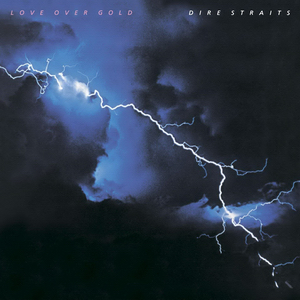
Dire Straits – Love Over Gold

It’s fitting really. For a while I questioned whether this should be the choice for this year but there’s a number of factors that mean Knopfler and co’s fourth album sits here for ’82; It’s an album I heard a huge amount of in my youth and growing up thanks to my Dad’s penchant for the band. So much so that down to the fact that his record had a skip on the “I’ve seen desperation explode into flames and I don’t wanna see it again” in ‘Telegraph Road’* that I got so used to that I still expect the skip when listening on CD or online.

As part of my debating whether to go with this album for 1982 I listened to it in full, again, and realised that I didn’t need to be questioning it – it’s not only a bloody strong album but it’s one that resonates with me on so many levels and is part of what formed my tastes moving forward. ‘Private Investigations’ was one of the first things I set about learning on guitar and will still go to from time to time – especially if I pick up the old ‘classical’ guitar out of the garage. Combined with ‘Telegraph Road’ it makes for a faultless Side A:

Love Over Gold is, to me, the final ‘classsic’ Dire Straits album. There’s still a very quintessentially English element about it and it’s sound and writing are less direct and radio-ready than the Brothers In Arms era that would follow. It’s the final of those early albums before ‘Money for Nothing’ threw them into bigger venues and TV sets around the world and the scale that would lead to Knopfler walking away began to build.

The music and sound benefits from the addition of Alan Clarke on keyboards – wider and more intricate sounds that mark a natural and real development on that of Making Movies – just listen to the interplay between the two on ‘Love Over Gold’:

The sheer power and length of the two songs that make up Side A do mean that trio on Side B are often overlooked, much as the album itself – sitting between Making Movies and Brothers In Arms – can be. But the title track,  ‘Industrial Disease’ and ‘It Never Rains’ are far from filler.

As much as I understand Knoplfer’s reasons for not attending the Rock and Roll Hall of Fame ceremony and his disinterest in reforming – I do wish that this era of the band (before it became about headbands and filling the largest venues) could get the revisit and attention it deserves.

*Side note/ pub quiz / music trivia point: Jon Bon Jovi, of all people, is also a Dire Straits fan – he was working at his cousin’s record studio (The Power Plant) when Making Movies – and has admitted to ripping off ‘Telegraph Road’ with ‘Dry County‘.


Spinning some new

In between working, reading the Pink Floyd biog, composing posts about Springsteen (2 in the works) and Dylan, pricing up a Jag and reading / writing fiction I also manage to listen to new music and notice that I’ve forgotten to post on here again.

So, in an attempt to fix the latter – here’s the new that’s been getting a lot of rotation of late:

The Pixies – On Graveyard Hill

Despite the fact that I love pretty much every Pixies album, for reasons various it was only a month or so back that I finally got round to listening to their 2016 album Head Carrier. Then, a few evenings back an email pings into my inbox and announces that they have a new one ready for later in the year and this beaut is available to hear now. It’s a sodding belter of a song.

Jambinai – Sawtooth

I picked up my copy of the new Jambinai album, Onda, yesterday from the same record store I discovered them in, it was only out on Friday but I’ve been enjoying this lead track for a bit now. Mixing  traditional Korean instruments with heavy, noisy guitars and a Nirvana-like rattly bass punch. I fucking love this band.

Big Thief – Cattails

I did something I hadn’t done in years last month and bought a physical copy of a music magazine – complete with a CD of music new and almost-new, hand-picked by The National as part of the press barrage surrounding their, inmho, naff new album. This one… isn’t the Big Thief song that was on their but it lead me to their new album U.F.O.F which has my hypnotised… it’s impossible to pin it down genre-wise but there’s something so… it’s a blissful thing with so much going on that’s perfect for sunny evening to spin, drift away listening  and remembering getting small to.

Sam Fender – Hypersonic Missiles

See… Sam Fender has been cropping up a lot on the one radio station I can stomach listening to these days. I’m gonna say this knowing how old it makes me sound – but this kid is only just 25. There’s a real power to his voice and he’s got some guitar and song-writing chops on him too, bit of Springsteen influence on this one (especially around the two minute mark)- amongst a bucket load of others – but this still fashions a sound of its own that I quite dig.

Gang of Youths – What Can I Do If the Fire Goes Out?

I listen to the radio in both an effort to wake myself up on the commute and not get stuck in a rut with music by discovering something new. I’ve discovered a fair few additions to my record collection that way and I’m enjoying these guys lately. There’s some dark stuff to their lyrics but they manage to get it into a beat and tune that makes for a good listen. I think ‘Let Me Down Easy’ was the one that broke Gang of Youths on radio both here and at home – they folks come from that land Down Under – and this one is another getting turned up in the car etc and, again, wears a Springsteen influence on its sleeve.

Bruce Springsteen – Tucson Train

Speaking of the Boss. There’s a new album due to hit my shelves a little later this month… ‘Tuscon Train’ is the third song released (do they do singles anymore?) ahead of Western Stars‘ release in a week or two (it’s already getting cracking reviews) and is easily my favourite thus far. Really looking forward to this one…

Hello Sunshine

Well, it happened. I thought it wasn’t going to, certainly not so soon after his ‘Vegas residency’ period but I woke this morning to the news that Bruce Springsteen’s new album Western Stars will drop in June.

Given that I was reading the news while dropping the kids off at the pool* it meant I’d pre-ordered before I stood up.

Recorded predominantly at his home studio in New Jersey, this – the first album of new material in five years (seven if you don’t count those heated up left overs of High Hopes), Western Stars, to cite Springsteen’s website: takes his music to a new place, drawing inspiration in part from the Southern California pop records of the late ‘60s and early ‘70s.

“This record is a return to my solo recordings featuring character driven songs and sweeping, cinematic orchestral arrangements,” says Springsteen. “It’s a jewel box of a record.”

Cover art (the first not to feature Bruce’s mug on it since The Ghost of Tom Joad) and track listing have dropped and the first ‘single’ has also been released (not that these things really exist anymore, do they?) too:

Good things:

It’s a return to story-telling Bruce
Album themes encompass a “sweeping range of American themes, of highways and desert spaces, of isolation and community and the permanence of home and hope”
David Sancious
No Tom Morello
It’s been a long time coming – this could go either way: Human Touch was laboured but rushed-releases could use better quality control
The song title ‘Chasin’ Wild Horses’ seems promising on its own to me
“Sweeping, cinematic orchestral arrangements”


Bad things:

Ron Aniello
No E Street Band

So… Am I excited? Fuck yeah, I’ve just finished another Bruce series that’s reminded me that there’s always a reason to tune in, even if there are warning signs production-wise.

*curious to see if that reference is known across the various blog-oceans

And in the quick of a knife, they reach for their moment… Springsteen’s Lyrics (Part 3)

Right, finally – Part Trois.

What started off as a two-part look at my favourite Springsteen’s lyrics grew into an easy three-parter as every time I worked on the list it grew when I remembered another lyric. I could have stretched this to four but this Springsteen Series is already long and it’s time to wrap it up. I reckon I’ve still got at least a couple of these BIG BRUCE BLOGS in the works though, so let’s move forward and get into the final part of this one, complete with playlist.

Seeds

“Well I swear if I could spare the spit, I’d lay one on your shiny chrome, and send you on your way back home”

When Bruce started expanding his lyrical framework beyond his immediate locales, his social and political consciousness began growing too. In place of songs about Jersey boardwalks and fortune tellers came lyrics about real people and their struggles in failing economies where ‘lately there ain’t been much work’. ‘Seeds’ is one of these early tunes to plow this awareness into his songwriting.  Oft-overlooked as it never made it to a studio album (it joins the list of those culled form Born In The USA*) and was only officially released on Live 1975-85 it would feature in Springsteen’s sets for a reason – it was a mainstay during the Reagan years and it would slip back into Springsteen’s set lists in 2009, when America’s economy started to circle the u-bend.

You can feel the anger in this one, another story of how betting everything on following the American dream (chasing the oil boom just after it went bust) fucked someone over, scathing lyrics set against a thumping E Street rhythm and heavy chords.

Human Touch, Better Days & Living Proof

“You can’t shut off the risk and the pain, without losing the love that remains”

“But it’s a sad man, my friend, who’s livin’ in his own skin, and can’t stand the company”

“Life is just a house of cards, as fragile as each and every breath as this boy sleepin’ in our bed”

It’s not cheating – to me these are both three great individual songs but their lyrics and arc belong in the same write-up.

They complete a story arc that’s clearly autobiographical and highlight one of those elements that – even when a large part of the album’s they’re on are tosh – makes Springsteen a great writer is that he’s able to take that look into himself,  and what’s in all of us, and carve it into something that you actually want to listen to.

At the end of the 80’s Springsteen’s first marriage was over and he’d already been fighting depression. The arc represented by these songs shows characters who – in ‘Human Touch’ – have been bruised by former experiences (‘so you’ve been broken and you’ve been hurt, show me somebody who aint’) but are still willing to lay it on the line for a second chance – but , as Springsteen put it: “to receive what love delivers, they have to surrender themselves to each other and accept fate.”

In Better Days those “characters return from broken love affairs and self-doubt and find the tempered optimism to take another shot,” – Bruce pointed out in ‘Songs’ – having “taken a piss, at fortune’s sweet kiss”, realised what passes by while you sit “listening to the hours and minutes tickin’ away” and find the redemption that’s out there.

There’s an undeniable sense of promise and positivity to the song and it doesn’t hurt that the lyrics are strapped to one of the better tunes in terms of production on the two albums.

Despite being the song that kicked off writing for Lucky Town, ‘Living Proof’ serves as the final chapter in a way as Bruce reflects on fatherhood and the joy and sense of completion that delivers – children being the living proof that “love is real. They are faith and hope transformed into flesh and blood.”

The song has meant more to me withe each passing year since my own son arrived “like the missing words to some prayer that I could never make” and will remain a lyrical favourite for just that reason. Springsteen obviously felt pretty similarly about it as it’s the sole song from Human Touch and Lucky Town to have been selected for the ‘autobiographical’ collection Chapter and Verse.

I think any of us that have every fought that black dog can recognise and appreciate Springsteen’s lyrics across these three tunes – that there is a light there if you’re willing to give it a shot but you gotta be willing to the chance – nor deny his right to apply this more personal light to his lyrics (even if the overall albums and production fall flat).

Last to Die

“Who’ll be the last to die for a mistake, whose blood will spill, whose heart will break”

Magic is one of Springsteen’s finest collections of songs and easily the strongest of his post-reunion albums. It’s certainly his angriest, with Springsteen’s rage against Bush and the cost of war on people – I think it was Bono who said that all of America is Springsteen’s hometown now – burning beneath the surface of so many of it’s tunes. ‘Gypsy Biker’ updates his ‘Nam song ‘Shut Out The Light’ with harsher consequence and ‘Last to Die’ takes takes it’s lyrics directly from John Kerry’s testimony on Vietnam – “How do you ask a man to be the last man to die in Vietnam? How do you ask a man to be the last man to die for a mistake?”

It’s packed with scathing, bitingly angry lines like ‘We don’t measure the blood we’ve drawn anymore, we just stack the bodies outside the door’ and ‘The wise men were all fools’ and strapped to the blazing sound of the E Street Band in its final peak.

Youngstown

“We sent our sons to Korea and Vietnam
Now we’re wondering what they were dyin’ for”

A stand-out story on an album resplendent with story songs and precise lyrics. ‘Youngstown’ tells the story of that Ohio town from the discovery of the ore that was “linin’ Yellow Creek” in 1803, through wars Civil, First, Second, Vietnam and Korean to the city’s decline as the arse fell out of the steel industry – “the yard’s just scrap and rubble .” The ‘Jenny’ in the chorus is also the nickname for the Youngstown Sheet and Tube Company’s Jeanette Blast Furnace – which shut down in ’77 (ta, Wikipedia).

There’s a real poetry to Springsteen’s telling of this potted history and the lyrics work both against the minimal backdrop of The Ghost of Tom Joad and when set alight by Nils Lofgren live:


Hey Blue Eyes

“In this house there’s just the dust of bones, the basement’s filled with liars
In this house our sons and daughters are spilled like wine.”

Technically the last ‘new’ Springsteen tune released and testament to the fact that he can still punch above the pack with this lyrics even when not amazing with anything musically, ‘Hey Blue Eyes’ is taken from the American Beauty EP that was released in 2014.

Springsteen has described the track and its allegorical lyrics as “one of my darkest political songs. Written during the Bush years, it’s a metaphor for the house of horrors our government’s actions created in the years following the invasion of Iraq. At its center is the repressed sexuality and abuse of power that characterized Abu Ghraib prison. I feel this is a shadow we as a country have yet to emerge from.”

The Last Carnival

“Moon rise, moon rise, the light that was in your eyes is gone away.
Daybreak, daybreak, the thing in you that made me ache has gone to stay ”

Danny ‘The Phantom’ Federici, founding member of the E Street Band, died April 17, 2008 after a three year fight with melanoma. Working On A Dream, Springsteen’s 2009 album, is dedicated to Federici and ‘The Last Carnival’ is both a reference to ‘Wild Billy’s Circus Story’ and a touching tribute to the first of the E-Street Band to slip this mortal coil.

“It started out as a way of making sense of his passing. He was a part of that sound of the boardwalk the band grew up with and that’s something that’s going to be missing now.”

Brothers Under The Bridge

“One minute you’re right there, and something slips”

A tune cut around The Ghost of Tom Joad though left off and included on Tracks – ‘Brothers Under The Bridge’ is a story about a homeless Vietnam veteran living beneath a bridge, with other homeless veterans, “who has a grown daughter that he’s never seen, and she grows up, and she comes looking for her dad. And what he tells her.”  At a time when Springsteen was like a factory churning out great short-story like songs against hushed backgrounds that wouldn’t hide bad lyrics, this is a stand out and one that sits with his finest ‘Nam songs –  with lines like ‘You were just a beautiful light, in your mama’s dark eyes of blue’ and that final line ‘something slips’.

Jungleland

“Beneath the city two hearts beat
Soul engines running through a night so tender”

Of-fucking-course it was gonna be on here. How can Springsteen’s most epic and well-loved ‘story’ song not be? I’ve been using its lyrics for the blog titles after all. There’s nothing that can be said about this one that hasn’t been said by better critics than I – all I’ll say is that you can pick any lyric on here and it’ll not only be gold but will be sung along to passionately by the entire crowed at any given Springsteen show it’s played at.

And….. playlist:


*One of those three posts in the pipeline

Albums of my Years – 1980

What’s this then?

Well: this year will feature my last birthday with a 3 at the start. So, I figured that, given my average posting frequency and to allow a post every week or so, I’d pick an album from each of the years I’ve been on this ride in the theory that this would leave me enough time to complete a 40 post series just as I hit 40.

I’ll be picking one album from each year that’s either a favourite, one that means something to me and has not been covered in these ‘pages’ thus far.

Sound alright? I am, of course, always happy to get feedback or recommendations for anything that I may have missed along the way – especially in those years when I hadn’t yet mastered walking.

So, let’s start from the top…

1980 saw a fair bit going on in the music world:

Paul McCartney kicked off his 1980 in jail in Japan when he was caught with some marijuana on him – they’d kick him out of the country two weeks later.

Don Henley also got in a bit of bother with the rozzers and drugs, albeit some harder substances when police hit the motherload in his house after a naked 16-year-old prostitute(!) had drug-related seizures and they found another 15-year-old girl(!!) tripping balls. He ended up with all kinds of charges which, oddly enough, didn’t end up as lyrical fodder for ‘Boys of Summer’…. ‘you got ya hair combed back and those quaaludes are kickin in, baby.’

Led Zepplin’s powerhouse drummer John Bonham’s wholehearted embrace of the rock ‘n’ roll lifestyle of excess reached its inevitable conclusion and he was found dead by bandmate John Paul Jones – the drummer having choked on his own vomit after downing several pubs worth of vodka. The band would disband a month or two later.

Back to Fab – John Lennon and Yoko Ono got busy recording Double Fantasy which dropped in November. But, just one month later, Lennon was entering the Dakota building when he noticed Mark Chapman standing nearby and nodded at him – presumably recognising him after Chapman had requested Lennon’s autograph earlier in the day. Moments later Chapman fired five shots at John Lennon’s back, from about ten feet away and 1980 drew to a close with 100,000 mourners holding a public vigil in Central Park for the murdered John Lennon.

Bit of an odd one to be born into, really. In terms of album’s released in 1980, it’s slim pickings from my wheelhouse.

Split Enz released the phenomenal True Colours (home to ‘I Got You’ and ‘Nobody Takes Me Seriously’ and a buttload of other crackers)…. The Police’s Zenyatta Mondatta dropped in October and it, too, is stuffed with corkers.

The Joe Perry Project released their first album Let the Music Do the Talking which included the stonking title track and a good dose of riff-heavy tunes and some fella from New Jersey released an ep called The River... and a group of young lads from Ireland dropped their debut Boy and promptly vanished into obscurity.

BUT: I can’t choose The River as the ‘1980’ album. As much as it’s my favourite release of the year I’ve already talked about it at length and I don’t want to repeat myself. So.. what does that leave? Scary Monsters? Meh. Sandinista! ? Nah… though ‘Police On My Back’ is a fucking belter!

How about:

Dire Straits –Making Movies

Knopfler and co’s third album, Making Movies dropped on October 17th 1980. The same day as Bruce Springsteen’s The River and just 11 days before I did.

Dire Straits actually ‘borrowed’ both Roy Bittan and Jimmy Iovine from Springsteen for Making Movies. Knoplfer had wanted Iovine as producer after hearing Patti Smith’s ‘Because The Night’ and Iovine helped get The Professor involved. Probably helped that they were pretty much next door – Making Movies was recorded at New York’s The Power Station at the same time as work on The River was wrapping up. – I’ve pondered before if the seeds for, or at least the title of, the Boss’ Tunnel of Love song were planted here, there’s no way he’d not listen to what his producer and piano player had been moonlighting on.. or even listened through the wall with a wine glass?

That oft-maligned trade rag Rolling Stone has this to say of Making Movies: 

“Making Movies is the record on which Mark Knopfler comes out from behind his influences and Dire Straits come out from behind Mark Knopfler. The combination of the star’s lyrical script, his intense vocal performances and the band’s cutting-edge rock & roll soundtrack is breathtaking—everything the first two albums should have been but weren’t. If Making Movies really were a film, it might win a flock of Academy Awards.”

To say I grew up with Dire Straits and Making Movies on in the background would be an understatement. Their love of the band was something that bonded my father and his best friend (my ‘Dutch uncle’) and it was continually played to the point that now, thirty some years later I still know every word on the majority of this album and still enjoy spinning it.

It’s the album that helped the band break out to a wider audience with ‘Romeo and Juliet’ did the business on radio. On yet another Springsteen connection (I know, I know) that beautiful guitar arpeggio? Go listen then go listen to ‘Jungleland‘ and the piano in the first verse. It wasn’t deliberate, Knopfler hit on it by pure chance while trying out a tuning with his National:

There’s nothing wrong with ‘Romeo and Juliet’ but my personal favourite is still the first tune on the album, the Tunnel of Love / Carousel Waltz combo. When you combine it with ‘Romeo and Juliet’ and ‘Skateaway’ I think you’ve got a pretty damn fine Side A there.

Side B isn’t too shabby. Granted ‘Les Boys’ wouldn’t be released today with it’s “Les Boys do cabaret, Les Boys are glad to be gay” lyrics but Knopfler’s guitar work is on form throughout, as with the tres-80s titled ‘Expresso Love’ and the charming ‘Hand in Hand’ which, for my money, points at sounds that would surface more on their next album Love Over Gold:

Still, what saves the album isn’t just what’s on it but what isn’t: ‘Twisting by the Pool’ was recorded during these sessions but was, thankfully, left off.