Least to Most: Pearl Jam – Pearl Jam

“It’s the same everyday and the wave won’t break
Tell you to pray, while the devil’s on their shoulder”
World Wide Suicide

During the tour for Riot Act Pearl Jam began to take a lot of flack and boos for daring to play ‘Bu$hleaguer’. At Nassau Coliseum in Uniondale, New York, the reaction was particularly adverse but the band persevered and were emboldened by the reaction. As Jeff Ament said “I actually walked off stage and felt great. That was a brand-new experience. Killer. We got booed standing up for something we wholeheartedly believed in.” So much so, in fact, that Pearl Jam joined Bruce Springsteen, REM and a host of other bands on the Vote for Change Tour in 2004 in support of John Kerry’s Presidential run and, for a brief moment, it looked like the tide may turn against Bush.

However, come November 3, 2004, Vedder “didn’t get out of bed. However, while I couldn’t get myself out of bed, I heard that Springsteen on that day was making a call to someone he makes records with, saying ‘I have to make a record.'” When Vedder and Pearl Jam did get to the studio a few weeks later the tunes came out on fire: ‘Life Wasted’, ‘Comatose’, ‘Severed Hand’ and what would become ‘World Wide Suicide’ all came from the bands first sessions for their eighth studio album.

And yet… while there were a good dozen songs being worked up, it began to be clear to the band that, by early 2005, the album wasn’t on track to be ready by the end of the year.  “I think that came from the guys affording me the extra time to write, and my needing more time to write,” Vedder would later recall. There was also the fact that Vedder had a child during the process. So, for the first time in their history, Pearl Jam broke the album-tour-album-tour cycle and headed out on the road for a series of shows with no new music to promote. Realising that simply playing shows without the onus of promoting an album could prove a lot of fun, the shows from this tour sound like a band at its peak and they’d continue this practice in years to come. “We were separating the touring aspect of the band from the recording process. We could go out, be Pearl Jam, and tour.”

New songs would be debuted – ‘Gone’ was first played in Atlantic City the day after it had been written -and honed as well as written – Mike McCready demoed one of his finest songs, ‘Inside Job,’ on Vedder’s tape machine in South America – during the 2005 tour and the shows from this tour are well worth checking out.

When recording sessions got back under way and the new material began taking shape from the 25 songs written, it became clear that this was a very targeted album with Vedder’s lyrics aimed squarely at voicing his disgust at the Bush administration “through telling stories… an observation of modern reality rather than editorializing, which we’ve seen plenty of these days.”

It also started to look like album eight was turning into that divisive rock staple – A Concept Album. It was only sequencing that prevented it: “We tried one [sequence], and it just absolutely didn’t work. That was the one that told a story…. You could have tied it all in with a bit of narration… It was interesting to think, ‘Severed Hand’ – is that the same kid who ends up being the army reservist?”

When Pearl Jam released their eighth album in May 2006 it didn’t have a title – “In the end, we thought there was enough there with the title of the songs, so to put another title on the album would have seemed pretentious. So, really, it’s actually Nothing by Pearl Jam.” The album that fans would refer to as Avocado* was released on J Records – still a major, Sony-owned label (probably why it’s proven impossible to find videos to embed in this one, those litigious bastards) – and was their second produced by Adam Kasper. It’s their most aggressive, straight-ahead record since Vs, represented something of a comeback in terms of both quality and commercial appeal, launched a tour that I would argue captured the band at their absolute peak and – much like Vote for Change Tour alumni Springsteen’s ‘Bush album’ Magic – is a real late-career gem.

‘Life Wasted’, ‘World Wide Suicide’, ‘Comatose’ and ‘Severed Hand’ make for as hard a hitting opening series of tracks as the band have ever put to tape and bristle with a raw edge and determination that had been missing from the band for a couple of albums at this point. As Gossard said: “It doesn’t sound slick or that we polished it for too long. That’s the main thing, really, politics aside. The song just has some energy in it.”


Elsewhere on Pearl Jam, ‘Parachutes’ has a No Code vibe to it and it, along with ‘Come Back’ – the album’s sole ballad -and ‘Gone’ deal with more general, universal themes. Personally I love a huge amount of this album and think it’s the last consistently solid album the band have made to date – there’s not a song here that I’ll skip when playing and I still crank it up loud.

Granted; the diversity that made some of their earlier albums so compelling is missing, but the force and energy that enthuse this baker’s dozen of songs is undeniable. There’s a real ‘classic’ feel to this album and the tour that followed showed just how seamlessly these songs blend with the strongest elements of their back catalogue. Of the many Pearl Jam bootlegs in my collection, a good six or seven are from the 2006 tour and represent some of their finest shows – especially the five shows in Italy that would be captured on the Immagine in Cornice DVD and the Turin concert that featured the new album played through in its entirety.

I remember when Pearl Jam first dropped, having the distinct impression that it would be a ‘grower’. That’s definitely true. In the ten years plus that have passed since its release this album has certainly grown on me with every listen and new details appear with each investigation. I’m not sure why I don’t rank this one higher in the list – perhaps it is the lack of diversity in the sound. Then again: I’ve recently been spinning the 2017 remaster which was remixed by Brendan O’Brien which adds a significant amount of extra heft to the sound… but then I’m basing this on original versions otherwise I’d need to go back to the drawing board.

Highlights: ‘Life Wasted’, ‘World Wide Suicide,’ ‘Severed Hand,’ ‘Army Reserve,’ ‘Inside Job’.

*Mike McCready: “That symbolizes just kind of … Ed’s at the end of the process and said, ‘for all I care right now, we’ve done such a good job on this record, and we’re kind of tired from it. Let’s throw an avocado on the cover.’ I think that’s what happened, and our art director goes, ‘hey, that’s not a bad idea.’ I think we were watching the Super Bowl, and we had some guacamole or something.”

Least to Most: Pearl Jam – Riot Act

“Take the reigns, steer us toward the clear…”

A lot can happen in two years. I’ve written on the time between Binaural and Riot Act before but, to summarise: nine fans were killed during the band’s performance at the 2000 Roskilde Festival – an abrupt full stop which found Pearl Jam questioning if they could continue, friend and fellow ‘grunge’ icon Layne Staley died, Eddie Vedder went through a divorce and, external to the band, the terrorist attacks of 9/11 and the Bush administration shifted America’s landscape drastically.

Ahead of their first show following Roskilde, Eddie Vedder sat alone in his hotel room writing a song to “reassure myself that this is going to be all right.” ‘I Am Mine’, as Matt Cameron said, “has all the elements this band is known for: strong lyrics, strong hook, and a good sense of melody. It wasn’t a really tough decision to have that be the starting point for the record.”

Following the Binaural tour cycle, Pearl Jam took a short break – Matt Cameron’s Wellwater Conspiracy dropped it’s third album, Stone Gossard released the first ‘solo’ album from a Pearl Jam member (which he was in New York promoting on 9/11) and Vedder – having played five shows with Neil Finn and other musicians (later captured on the worth-checking-out Seven Worlds Collide) – disappeared off the grid for a year on a remote Hawaiian island where he connected with Boom Gaspar who was playing B3 at a musician’s wake. The two hooked up again a few days later and very quickly wrote an eleven minute tune that would become another key album track, ‘Love Boat Captain’.

When it came time to recording their new album, Pearl Jam chose to do so with Adam Kasper (who’s credits to that point included two albums for Foo Fighters, a Queens of the Stone Age album amongst others) at the suggestion of Matt Cameron as Kasper had also produced Soundgarden’s last album, Down on the Upside.

The resulting album is one of the lost gems in Pearl Jam’s catalogue. Riot Act has still – 16 years on – shifted less copies than Vs did in its first week alone. I know Pearl Jam fans who don’t know more than the couple of tunes that remain in modern setlists. As I’ve argued before and will continue to do so – they’re missing out. Stronger than BinauralRiot Act benefits from Vedder having banished his writer’s block and having a much broader and emotional range of subjects to draw on and, frankly, get angry about -though Vedder has said that “If you think about it, it’s all very confusing and overwhelming to try to grasp it and put it all down.”

The album kicks off with ‘Can’t Keep’ – a tune that Vedder had played on the ukulele during a couple of solo shows (and would record as such on his own Ukulele Songs a few years later) that Gossard heard and enthused would be “killer” with the full band treatment and became a slow-burning thumper with buzzing, treated guitars that feels like a No Code song and leads into what is now a quite rare thing: a full band composition, ‘Save You’.

With lyrics that tackle addiction and the pain and frustration of seeing a close friend waste their life, ‘Save You’ is Mike McCready’s only writing credit on Riot Act and came about when he was sitting down with Stone Gossard (who contributed a fair bit song-writing wise) and “had two ideas, and one idea I worked really hard on and thought it was totally great and then I played it for him, and he goes, ‘Well, that’s not…well that’s okay. You got anything else?’ And so, the other thing I had was the “Save You” riff, and he goes, ‘Oh, that’s cool.’ Ya know, so it’s…I was really built up to wanting to play this other song, and uh, nobody seemed to be very excited about it…”

‘Save You’ leans into the relentless, hard-edged rock sound that would blend seamlessly alongside tracks from Vitalogy as would the propulsive-beat driven ‘Green Disease.’ ‘Thumbing My Way’, meanwhile, is an acoustic ballad that showcases a change in direction for Vedder’s writing and is a clear signpost for what was to come with Into The Wild while ‘You Are’ is a personal favourite. Born out of expirmenting with a new drum machine that Matt Cameron had gotten hold of, it’s another great example of the band taking one member’s ideas and creating something memorable.

It would be impossible to talk about Riot Act without giving at least a passing mention to ‘Bu$hleaguer’. A dark, weaving satirical swipe, this was Pearl Jam at their most unambiguous politically and – while not much touched since – would regularly draw boos and jeers from certain clusters of the crowd when played live. Though even before the record was released there was no way to think Pearl Jam were Bush supporters so you’ve gotta wonder about the ‘shock’ it created.

Riot Act could very easily have been Pearl Jam’s greatest record. Reinvigorated and with a wealth of inspiration to draw on, there are some fantastic tunes on their seventh album (and there’s not many bands you can say that about). But… they should’ve taken a break. They sound a little tired and songs like ‘Ghost’ and ‘Help Help’ even sound tired. As much as I love the majority of Riot Act there are still 5 of its 15 songs I’ll skip more than listen through to and while that’s still a pretty signal to noise ratio (to borrow a phrase), when stacked against other works – it means it doesn’t quite reach the heights it could have done.

The odd thing is that had you cut those 5 songs and thrown in the ‘B’ sides recorded during these sessions – ‘Down’, ‘Undone’, and the brilliant ‘Otherside’ instead then Riot Act would have been one of their greatest albums.

However, there’s a sense of finality about Riot Act. In many ways it marks the end of a chapter for Pearl Jam – it would be four years before they’d release another album and, with Riot Act they completed their ‘studio’ obligations to Sony Music’s Epic Records with whom they had signed as Mookie Blaylock ahead of recording their debut Ten and, following their next tour, would take a much-needed break.

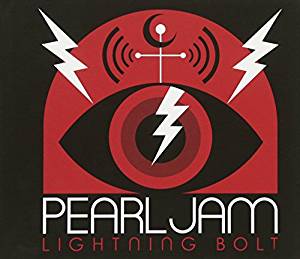
Least to Most: Pearl Jam – Lightning Bolt

“It’s a fragile thing, this life we lead
If I think too much I can get over-
Whelmed by the grace
By which we live our lives with death over our shoulders”
Sirens

Four years seperated the release of Backspacer and Lightning Bolt, Pearl Jam’s tenth (and, currently, most recent) studio album. A band that used to release an album every 18 months or so like clockwork had learnt to slow down and catch their breath between releases and tours.

In those four years the band was far from idle. There were re-releases / expanded editions of Vs and Vitalogy, a live album and the whole Pearl Jam Twenty celebration / lap of honour that included a Cameron Crowe helmed documentary, book, compilation (all very very good), two day festival and tour.

Oh – and a plethora of solo activity: Jeff Ament formed RNDM with Joseph Arthur and released and album as did his other side-project Tres Mts, Stone Gossard dropped a couple of Brad albums, Matt Cameron slipped back onto the drum seat for a little-known Seattle band called Soundgarden’s reunion, Mike McCready got in on a Mad Season reunion-of-sorts and formed Walking Papers with Duff McKagan (yes, that Duff McKagan) and even Eddie dropped a solo album, again ‘of sorts’, with Ukulele Songs (which is fine depending on your appetite for half an hour of Eddie and his uke).

Why do I mention all these solo projects in a review of a Pearl Jam band album, I don’t hear you ask. Well, for all the claims that these side projects help the band members bring more into album sessions and that may have been true in the 90’s when the band had couldn’t stand up for ideas falling out of their arses, I think it’s now the opposite case. When sessions for Lightning Bolt were delayed and interrupted by these commitments and solo tours I can’t help but feel that creative and energy levels were actually drained than recharged and the band’s tenth studio album kind suffered as a result.

But does that matter? Let’s face it: Pearl Jam are in a pretty unique position that few bands or acts reach. Twenty-two years into their life as a band they’re one of the greatest live draws still regularly touring, can sell out arenas, stadiums and ball-parks across the globe, their place and legacy are sealed and were – in 2013 and now – at the point where as long as their new album didn’t stink the place up like Pepé Le Pew and contained a good few songs to mix into the live set, will continue to be able to do so for years to come and keep their legacy intact even if it’s unlikely to bring any new fans into the fold.

Sill “everyone’s a critic looking back up the river” as the first words that ushered in Lightning Bolt point out and there’s a lot of strong material and a willingness to experiment and push boundaries within these forty-seven minutes that show Pearl Jam aren’t quite ready to rest on their laurels and are still trying to push their songwriting forward.

Lyrically, these are some of Vedder’s most accessible and direct, an extension of the approach begun on Backspacer (“For years, it was playing word games and expressing those emotions, but doing it in such a way that was cryptic and where Mark Arm from Mudhoney would still have some modicum of respect for me. But nowadays, it’s more like sitting down and writing a song, and whatever comes out, comes out.”) and musically it’s a lot more diverse than their previous album, with Stone Gossard referring to  “a slight return to some of the more sort of peculiar things we did, say, between No Code and Binaural.”

I really dig a huge chunk of Lightning Bolt and love that diversity in their sound, aptly beefed up by the physicality of Brendan O’Brien production. Take ‘Pendulum’ – how often to you get to hear Mike McCready using a bow on his guitar? – for a good start:

It’s a dark, broody beast that really doesn’t feel like the ‘by the numbers’ Pearl Jam you’d expect of a band this far into their recording career and works great live. It was a Gossard add Jeff Ament composition that even they didn’t expect Eddie to latch on to and work up into a band song. While we’re in the mid-section, ‘Pendulum’ is preceded by another Ament & Gossard composition and highlight, ‘Infallible’, whose groove and progression are like noting else in the PJ catalog and I love the directions the melody veers off in, with near-Beatles like passages :

A lot of attention pre and post release was given to ‘Sirens’ with due course. It’s one of the band’s finest. From a musical point of view, it’s a Mike McCready compostion (which I can never have enough of) inspired after attending a stop on Roger Waters’ ‘The Wall’ tour and wanting “to write something that would have a Pink Floyd type feel”. You can tell pretty much exactly which song he was cribbing from but when paired with Vedder’s most open and direct lyrics it’s elevated beyond ‘power ballad’ territory to a yearning ode on the fear of life’s fragility and our own mortality.

Of course, there are some more expected leanings on Lightning Bolt. ‘Mind Your Manners’ is a ripping, Dead Kennedys inspired rocker that finds Vedder back in angry mode and plays to their strengths, as does ‘Let The Records Play’ which threads a ‘power of spinning vinyl’ theme around a tasty Stone Gossard (this is very much a record for Stone fans) riff with great results.

Instead of a couple, Lightning Bolt produced a good half dozen songs that really add to Pearl Jam’s setlist (even if they’re not the ones that Ed scrawls onto a piece of paper ahead of a show) and any PJ playlist – including the one which will follow this series*. However, there are a few that don’t make the cut.

I still haven’t really clicked with ‘My Father’s Son’ and while ‘Lightning Bolt’ and ‘Getaway’, for example, are fine songs they don’t particularly add anything to pull this album further up in terms of its ‘go to’ placement in the band’s overall catalogue.

Vedder said of the writing that they’re continually trying to ” make not just the best Pearl Jam record, but just the best record.” While Lightning Bolt may not be the one, it is stronger than you’d expect of a band’s tenth album and finds the band not only playing to their strengths but still pushing in unexpected directions. As long as they continue trying to do so it’s worth checking in and always worth getting to a Pearl Jam show when they come to town.

Oh, and in terms of album closers, though, they went with a beauty on Lightning Bolt with ‘Future Days’.

Highlights: ‘Mind Your Manners’, ‘Sirens,’ ‘Infallible,’ ‘Pendulum,’ ‘Let The Records Play,’ Yellow Moon,’ ‘Future Days’.

Not-so highlights: ‘My Father’s Son, ‘Sleeping By Myself’.

*At this rate that may be a Christmas special

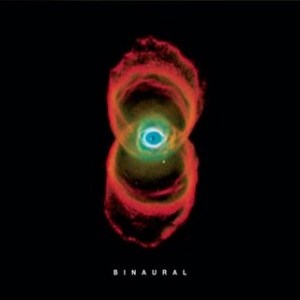
Least to Most: Pearl Jam – Binaural

“We’d rather challenge our fans and make them listen to our songs than give them something that’s easy to digest. There is a lot of music out there that is very easy to digest but we never wanted to be part of it.”

I have a real soft spot for Binaural: I got into the band a year after Yield so this was both the first Pearl Jam album I bought on day of release – as well as the singles for ‘Nothing As It Seems’ and ‘Light Years’ – and the album they were touring behind when I caught them live.

Not only that but I do genuinely believe that there are some real gems on Binaural that, due to its relative low commercial performance, don’t get the recognition they deserve. So much so that I’ve already blogged about this album in a lot more detail here.

But, for all that, in terms of where it sits in preference levels to the rest of the band’s discography – not all that high. Of the highs – this album has an unimpeachable mid-section of ‘Light Years’, ‘Nothing as it Seems,’ ‘Thin Air’ and ‘Insignificance’ but that section is buffered by some pretty dense sounds.

Some of this was on purpose, with the band’s decision to change things up with Tchad Black (as the band moved away from producer Brendan O’Brien for the first time since Vs) recording many of the album’s songs employ two microphones to create a 3-D stereophonic sound.

On some songs – notably ‘Of The Girl’ this layered, textured sound works wonders. Elsewhere, the sound quality and mixes just don’t feel right. Looking back, even band members have come to regard Binaural as an album marked by distractions and missed opportunities, a lack of focus that meant the album lacked the power it could have had.

Gossard, for his part, feels that they should’ve gotten more out of new drummer Matt Cameron – “It should have devastated in a way that Temple of the Dog devastated”. They just weren’t writing with him in mind. Jeff Ament goes further, believing that in cutting songs like ‘Sad’ and ‘Education’ “we look back and think we didn’t put some of the best songs on it.”

But, it was the band’s first venture into the studio with Matt Cameron and, while he made an immediate contribution to songwriting with ‘Evacuation’ (not one of the album’s strongest) and a few tracks left on the cutting floor, the in-studio chemistry wasn’t quite there. They were working with a new producer for the first time, Mike McCready was battling an addiction to painkillers that saw him absent from many a session and Vedder – also in the middle of a marriage breakdown – was plagued by a case of writer’s block that got so bad he had to be stopped from picking up an instrument and writing more music until he had completed lyrics to those songs already piling up and waiting for them. As the man himself told Spin magazine following the album’s release:

“It’s bad when you have writer’s block in the studio and you’ve got three songs without words and four days left. It pretty much happened on the last record. And the worst part was they were songs that I had written. I had written the music to “Insignificance” and “Grievance”. I just wasn’t happy with what I had so I kept working on it and scrapping it and staying up at night, playing piano melodies to make it be the best thing. And it worked, finally. That causes hell in a relationship, that’s all I’ll tell you”

Unfortunately, none of these are ingredients for a great album.

On the plus side – this meant more opportunity for contributions from other band members than on previous albums with three songs and lyrics written entirely by Gossard  ‘Thin Air’, ‘Of the Girl’ and ‘Rival’ alongside Ament’s ‘God’s Dice’ and ‘Nothing As It Seems’.

Binaural is, in many ways, a missed opportunity. Pearl Jam, for all their ‘year or no’ decisions that lead to a cessation of music videos, a reluctance to give interviews or -for a large chunk of time – playing at Ticket Master rep’d venues,  were still in the album-tour-album-tour-album cycle. It would be a while before they’d learn to take a break and I can’t help but wonder if, had they taken just a little longer between Yield and their next album to attend to their own personal lives and breath a little, if Binaural wouldn’t have been their greatest. The ideas are all here, the parts are all right there with em but the final execution just misses the mark.

But – it’s still very very much worth a listen and is one of the few albums for which I’ve broken my ‘if I already have it on CD I won’t by it on vinyl too’ rule for. Oh, and it also introduced Ukulele Ed with ‘Soon Forget’ – a song that, when he was still a baby, I would sing quietly (minus the uke) as a lullaby to my son at nights and, so, ranks as a real personal favourite.

Highlights: ‘Light Years, Nothing As It Seems, Thin Air, Of the Girl, Grievance, Sleight of Hand, Soon Forget

Not-so highlights: ‘God’s Dice’, ‘Evacuation’.

Least to Most: Pearl Jam – Backspacer

“But I am up riding high amongst the waves
Where I can feel like I
Have a soul that has been saved
Where I can feel like I’ve
Put away my early grave”

Let’s kick this off with a reminder of this series’ caveat – this is not a critical ‘worst’ situation and I can well imagine any of these albums being cited as a favourite by others.

In many ways it pains me to start this series off with Backspacer but it has to start somewhere and the band’s 2009 album is probably the least-played of their discography in casa Hill.

Why does it pain me? Like many I was very much hyped to grab this one when it dropped. The build up to it painted a strong picture of a revitalised band about to release an album that could sit amongst their strongest. 2006’s Pearl Jam (or ‘Avocado’) seemed to find Messrs Ament, Cameron, Gossard, McCready and Vedder back on focus and  firing on all cylinders and even the fickle media was back in their corner.

In fact, press leading into the recording dropped even more fuel for anticipation – for the first time since Yield Brendan O’Brien was at the helm. O’Brien had produced Pearl Jam’s cover of ‘Love, Reign o’er Me‘ for the (pretty pants) Adam Sandler film of similar title. They had a blast together and when it came time for a new studio album, the choice was a no-brainer. According to O’Brien, Pearl Jam “were ready to be, for lack of a better word, “produced” again” while Vedder told Rolling Stone “In the past, Brendan would say, ‘It’s a great song, but I think you should do it in a different key,’ and we’d say no. But now that we’ve heard Bruce has listened to his suggestions, I think we will too.”

It all pointed to ‘great’. And there is a lot of great stuff on Backspacer. Take first single ‘The Fixer’ as an example – it’s  pure hook, it’s almost pop-like in its sensibility. It’s fast, immediate and one of their best songs.

It’s also a great example of Pearl Jam’s collective song-writing chops. It takes its basics from a Matt Cameron demo (hence the odd timing signatures) which was worked up by Stone and Mike before Ed then worked on the arrangement ‘to get the parts he needed in the right place’ and tackled the lyrics. As such it’s one of only two tracks on the album with music composed by more than two members – Vedder wrote the lion’s share of Backspacer; all the lyrics and music for five of its eleven tracks.

According to Ament “Whatever wave Ed caught with [his soundtack for] Into the Wild has taken him to different places.” Those sole-Vedder creations areare among Backspacer‘s strongest – ‘Just Breath’ (which takes the opening chord from Into The Wild instrumental ‘Tuolumne’ and builds from there), ‘Unthought Known’, ‘The End’ and ‘Speed of Sound.’

Vedder’s lyrics on Backspacer are markedly more optimistic and politic-free after at least two previous records filled with barbs at the administration*. “I’ve tried, over the years, to be hopeful in the lyrics, and I think that’s going to be easier now,” Ed would tell press – whether that was down to a sense of calm in his personal life or a reflection on the end of the Bush era and the beginning of the Obama administration or both… it’s no bad thing. There’s a real joy and lightness that soars through some of Backspacer‘s finest moments that make it one of Pearl Jam’s easiest and most accessible albums to date.

So with all this good stuff to be said…. the reason Backspacer sits at the Least end of this list?

Essentially  – while this is true of a lot of albums in general – my version of it is a lot shorter than the actual album. There’s a good number of tracks that just don’t linger in the memory and as this is Pearl Jam’s shortest album, that doesn’t leave a whole lot left to spin. On average I’d say there’s five songs on here that are guaranteed a listen every time, possibly six which – on an 11 track album – splits it right down the middle.

There’s nothing ‘wrong’ with those songs but ‘Got Some’, ‘Supersonic’ etc are of the type that Pearl Jam have done better elsewhere in their catalogue and don’t offer sufficient hook to stick and, I’m sure, are cues to head to the bogs during concerts.

As for ‘Johnny Guitar’ – it’s the worst song Pearl Jam have committed to tape if you ask me (and it’s my blog so… ).  Ed was ‘inspired’ by seeing a Johnny Guitar Watson album cover… on the wall of a bathroom. If you ask me there should be a rule for songs about things you see in the crapper and that rule should be: don’t. Just don’t.

Backspacer arrived at an interesting time for Pearl Jam. Reinvigorated by the response to their 2006 album the band were on the cusp of their 20th Anniversary ‘lap of honour’ which had already begun with the re-release of Ten earlier in 2009 and would soon see further re-issues (expanded versions of Vs and Vitalogy) a new live album, a Cameron Crowe helmed documentary and soundtrack and a series of ‘summer’ tours that would focus on the band’s legacy rather than new material. Not that it wasn’t deserved, more that for a time, new music felt more of an afterthought. It would be four years before their next album.

Highlights: ‘The Fixer’, ‘Just Breath,’ ‘Amongst The Waves,’ ‘Unthought Known,’ ‘Speed of Sound,’ ‘Force of Nature.’

Not-so highlights: ‘Johnny Guitar’.

http://www.youtube.com/watch?v=1iIGCgw5yxQ


*I was very excited about the possibility of a righteously angry Pearl Jam album being the sole positive of a Trump presidency and still am even after ‘Can’t Deny Me‘.


Least to Most: Pearl Jam (Intro)

Am I really about to kick off a potentially lengthy series after what has been a year of sporadic posts at best? You bet your bollocks I am.

I’ve been toying with a way to pick up where my earlier posts on Pearl Jam’s ‘lost’ years left off and cover the band’s rise and ‘glory’ years in a way that didn’t simply regurgitate what had been written so many times before – and lining up another candidate for a Least to Most series* so, as the meme asks, why not both?

As per previous and future Least to Most this is not my attempt at a critical “worst to best”,  as this isn’t a site of critique. It’s mumblings of personal thoughts and opinions relating to music. As such I’m going to be running through, in order (though certainly not uninterrupted), my Least to Most Favourite Pearl Jam studio albums.

Of key importance to note with this series is that as a massive Pearl Jam fan, even if they’re among the ‘least’ end of this rundown, it’s a fair bet that there’s usually at least two of these albums in my car or on rotation at a given time.

Let’s spin those black circles…


*Pink Floyd will be up to bat soon… depending on how soon I can a) listen to Saucerful of Secrets and b) decide whether Piper At The Gates of Dawn really counts as a Pink Floyd album.

Least to Most: Foo Fighters, Part 3

Foo Fighters

It’s surprising the amount of stick Dave Grohl got for moving forward and making new music. Or, as some saw it, daring to make new music after the death of Kurt Cobain. As the man himself has often pondered – did they just expect him to stop? Music was all he’d done up until that point and he was only 25, why should he stop? In October of 1994, six months following Cobain’s suicide, Grohl booked some time at Robert Lang Studios in Seattle – where Nirvana’s final, aborted studio sessions had taken place (which yielded the demo of what would become ‘You Know You’re Right‘) earlier that same year – and recorded a fifteen-track demo, playing every instrument (save one guitar solo) himself.

Not sure where his future lay Grohl considered looking for another band with a vacant drum stool. One such stool had recently been vacated by Stan Lynch and there’s a great video of Grohl going full Animal with the Heartbreakers on SNL – “it was the first time I’d looked forward to playing the drums since Nirvana had ended.” Ultimately, though (and even after a couple of shows sitting on the vacant Pearl Jam drum stool*), Grohl wanted to give his ‘Foo Fighters’ project his attention as the demo tape he’d circulated was now picking up major label interest. The name was applied to the demo tape as Grohl wanted some anonymity post-Nirvana and to suggest that a group was behind the music.

Released in July 1995, there’s something wonderfully charming and warm about Foo Fighters. It’s very much a product of its time – the guitars are very grunge-like and loaded with the same levels of fuzz associated with Grohl’s former outfit but the songs quickly jump into more melodic and lighter routes and there’s an overwhelming sense of lightness and, yes, goofiness that wouldn’t be present on any other Foo Fighters release (likely down to the fact that the largely nonsensical lyrics were written 20 minutes before recording). It’s loaded with hook, charm and warmth and positivity. Though I have to wonder if I’m the only Foo Fighters fan that doesn’t care for ‘Big Me’.

Highlights: ‘This Is A Call’, ‘I’ll Stick Around’, ‘Alone + Easy Target’, ‘Good Grief’,’Floaty’

Wasting Light

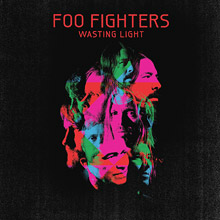
Fuck but I love this album. This is the one instance in which the Gimmick behind it paid off in spades. In an effort to recapture some of the rougher sound of earlier Foo Fighters releases, Grohl decided that Foo Fighters Album 7 would be stripped of all the production bells and whistles that had been draped over Echoes, Silence, Patience & Grace and bought in Butch Vig and to record the entire album on analogue equipment in Dave’s garage.

At this point, though, it would be futile to expect such a process to result in a raw sounding record. It’s not like Dave Grohl has a small garage for that matter either. But, what makes Wasting Light such a late career highlight is that Vig captures a sense of purpose and drive in the band that had been lacking for at least three albums previous. It’s a big, anthemic rock record shorn of production sheen and filled with a sense of energy that comes from the fact that they recorded the entire album live and – with Pat Smear back in the ranks – a heavier, three-guitar strong attack.

From the off with ‘Bridges Burning’ powering into ‘Rope’ and ‘Dear Rosmery’ there’s no let up. Instead, when you’d expect it at track four, ‘White Limo’ has been described as “a blistering, paint-stripping thrash track” with Grohl’s vocals lost as he screams at what must be the top of his register. There’s no slowing down on Wasting Light. No ballads. ‘These Days’ looks like it’s gonna be that track until it turns into a thumping Foos classic that will no doubt rub shoulders with ‘Run’ and ‘Something From Nothing’ on the inevitable Greatest Hits 2. No, Wasting Light found a revitalised band firing with an energy and power few thought they had left in them and got me really paying attention to the band again and, depending on the day of the week, could just as easily sit right at the top of this list.

http://www.youtube.com/watch?v=QkHp_JLtxck

Highlights: ‘Bridges Burning’, ‘Rope’, ‘White Limo’, ‘These Days’,’Arlandria’, ‘Walk’.

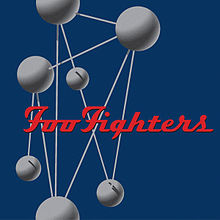
The Colour and The Shape

Twenty years on (gulp), the moment when the practically-throwaway ‘Doll’ gets torn apart by the arrival of ‘Monkey Wrench’ and The Colour and The Shape shifts into gear remains shit-the-bed-amazing. So good that the band themselves would give the formula another go and top it with ‘T-Shirt’ giving way to ‘Run’ on this year’s Concrete & Gold. That being said, while ‘Run’ is a great song, it doesn’t match the sheer power and fire of ‘Monkey Wrench’ – an absolute stone-cold classic. And it’s not the only one on the album for is home to a tonne of em: ‘Monkey Wrench’, ‘My Hero‘, ‘Walking After You’, ‘Enough Space’ and, easily their best song, ‘Everlong‘.

The Colour and The Shape was the first Foo Fighters album recorded as a group (although Grohl would end up re-recording the drum parts himself leaving drummer William Goldsmith little choice but to leave the band. He’d be replaced by Taylor Hawkins before the tour behind the album began) and is the most cohesive and consistent set of songs they’ve put to tape, still. After an extensive tour behind Foo Fighters, the band were coming together with Grohl emerging more confident in his role as singer and band leader – if you go back to ‘Monkey Wrench’ when he hits his final “one more thing before I quit” you can here that confidence screaming through. On the downside his first marriage was ending in divorce. This meant that, in place of the nonsensical lyrics on the first album, much of Grohl’s domestic strife was poured into the lyrics – ‘Everlong’ in particular is a strange mix up as it was written against both the collapse of his marriage and the beginning of a new relationship.

What makes this album stand out for me is that in between the staggering strength of the obvious hits, the songs that are so often forgotten are really bloody good too. Take ‘Enough Space‘ – watching ‘Back and Forth’ it’s clear how important this song was as one of the first new ones Grohl wrote for the band, with a tempo inspired by the jumping up and down of European audiences to heavier tunes. Or ‘My Poor Brain’ or ‘Wind Up’ or the best Foo Fighters album closer to date – ‘A New Way Home.’ These are great tunes and on any other album would be stand-outs. When put on an album stacked with killer classics they’re almost forgotten but prove that The Colour and the Shape is an album full of strengths (and ‘See You’ which, frankly, you can forgive).

Check out any review for a new Foo Fighters album and it will be this one that it gets judged against and with reason. The Colour and The Shape built the template of every song and direction the Foo Fighters would make yet remains their benchmark in terms of quality and consistency.

Highlights: All of it.

*Despite all the MTV (and Courtney fuelled) Nirvana vs Pearl Jam schtick the animosity between members really wasn’t there. Grohl sat in for two shows in Australia pre Jack-Irons and it’s been suggested that, having heard and recognised Grohl’s direction, they told him he’d be better doing it alone rather than playing for someone else. Eddie Vedder would actually premier two of the album’s songs on his radio show in 1995 as well as playing alongside Grohl in Mike Watt’s backing band – whose tour Vedder’s band Hovercraft were on along with Foo Fighters.

Least to Most: Foo Fighters, Part 2

Echoes, Silence, Patience & Grace

When touring the split-personality In Your Honor Foo Fighters would play two shows in each town / city – one big rock show in an arena and another in a smaller venue showcasing the quieter acoustic side of that album along with some re-readings of their back catalogue with an expanded line-up including a violinist, a pianist and former-Foo Pat Smear. The latter format would be captured in the lacklustre Skin and Bones and, at some point after the tour – as Dave Grohl tells it in ‘Back And Forth’ – the chief Foo was chatting with Clive Davis, boss of RCA (with whom the Foo Fighters have been since 1999) and expressed how great it would be if the Foos could be the band that did these different shows to demonstrate the different sides of their music and people could go to whichever appealed most and wouldn’t necessarily have to go to both. In what Grohl seems to have taken as a Svengeli comment (as opposed to, say, simply stating the bloody obvious), Davis replied “you can do both together” and the ‘Gimmick’ behind Foo Fighers Album 5 took root.

Taking In Your Honor‘s half-electric, half-acoustic approach and deciding to do it all on one album, often one song, meant that Echoes, Silence, Patience & Grace saw the Foo Fighters incorporating more instrumentation and styling detours than before and scoring plenty of scorchers along the way. Lead single and opener ‘The Pretender‘ is top-drawer Foos and still ranks as one of their best. ‘Let It Die’ – acoustics giving way to screaming power chords and Grohl at full wail – is the perfect meld of the two Foo dynamics and shows the formula working at its best and ‘Erase/Replace’ is another and holds up well ten years later. ‘Long Road To Ruin’ is standard Foo Fighter mid-pace that was killed by over-play, ‘Cheer Up, Boys (Your Make Up Is Running)’ (a working title that stuck) is a good, fun blast. Thing is, even with Gil Norton at the helm, it’s when the band stretches that the cracks show – ‘Summers End’, ‘Statues, ‘Home, ‘But, Honestly’…. they’re ‘ok’ but not quite the finished article they should be and there’s nothing about them to lodge in memory and the lack of power house riffs apparent in the first half of the album makes the closing third drag just a bit too long.

Still, I’d be the last person to fault a band or artist for trying to stretch themselves – to stand still is to go backwards and all that – and the efforts would yield fruit soon enough….

Highlights: ‘The Pretender’, ‘Let It Die’, ‘Come Alive’, ‘Erase/Replace’,’Cheer Up, Boys (Your Make Up Is Running).’

There Is Nothing Left To Lose

This is where I, and I’m sure plenty of others, came in. ‘Learn To Fly‘, it’s video and There Is Nothing Left To Lose broke the Foo Fighters to a lot of people and deservedly so though I can’t help but feel that, in the passage of time and the band’s continual evolution into STADIUM ROCK BAND, it’s often forgotten.

Just before the band would head out on tour for The Colour and the Shape, Pat Smear announced he wanted to leave. He hung around and continued to tour while the band found a replacement in Grohl’s former Scream bandmate Franz Stahl but, after that tour, Stahl too was fired. It’s clearly still a sore point for those involved but it would appear that writing for Foo Fighters Album 3 wasn’t working with Stahl. Feeling that the previous album’s recording sessions with Gil Norton were too arduous, Grohl decided to record the next one in his basement with the band as a three-piece – once Nate Mendel had quit for a day*.

Grohl has said of the sessions that “At that point it was me, Taylor and Nate and we were best friends. It was one of the most relaxing times of my whole life. All we did was eat chilli, drink beer and whiskey and record whenever we felt like it.” There Is Nothing Left To Lose feels like it was a blast to make. It’s got the energy and drive that would inform their later work but also retains the quirky charm of their earliest recordings. If I recall correctly there was an interview around the time where Grohl said he was focused more and more on melody too and there are times – ‘Aurora’, ‘Generator’, ‘Live-in Skin’ and the Police-like ‘Headwires’ when There Is Nothing Left To Lose is a great power-pop record. ‘Next Year’ and ‘Ain’t It The Life’ are great showcases for the band’s developing mellow side while ‘Stacked Actors’ and ‘Breakout’ are the obligatory harder edged cuts which, oddly, do nothing for me and seem positively out of place overall on this album.

http://www.youtube.com/watch?v=UG-O-2D9aXkhttp://www.youtube.com/watch?v=j1qQuSuQaHY

Highlights: ‘Learn To Fly’, ‘Headwires’, ‘Aurora’, ‘Next Year’,’Generator’

Concrete and Gold

I gave my first impressions on this one only recently and I still think it ranks up there as one of the band’s finest. Free of the gimmicks the band headed to a big studio, hired a producer and the only focus was on creating a shit load of good songs. They succeeded. When talking of Gil Norton’s involvement on Echoes, Silence, Patience & Grace, Taylor Hawkins said it had been the first time “Dave had to deal with someone in the room questioning all his ideas”. Between these two albums it would seem that nobody really questions Dave’s ideas when they needed to because Concrete and Gold is the Foo Fighters album they’d been trying to make for a long time – a heavy mother with plenty of diversity and reach but, more than on any other attempt, consistency and quality.

In the build up to its release, the PR machine latched on to Dave Grohl’s description of it being Motorhead taking on Sgt Pepper. Ryan Adams has called it their Revolver. Concrete and Gold doesn’t quite achieve the premise of its PR – though it does feature Paul McCartney – and is, at the end of the day, a Foo Fighers ROCK album. To quote my initial review “It does, however, stand apart in the Foo Fighters cannon and is the sound of the band playing to those highs and strengths its achieved during its ascent to stadium rock act while also stretching out enough sonically to both refresh its sound and offer a welcome hand to those fans like me that had begun to wonder if Dave Grohl had anything interesting left up his sleeves. Turns out he does.”

Highlights: ‘Run’, ‘Make It Right’, ‘The Sky Is A Neighbourhood’, ‘Dirty Water’,’Arrows,’ ‘Concrete and Gold’.

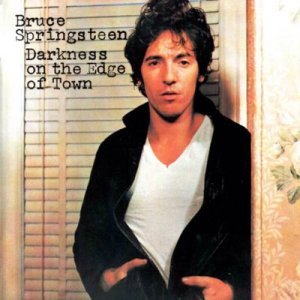
Least to Most: Bruce – Darkness on the Edge of Town

“For the ones who had a notion, a notion deep inside,
That it ain’t no sin to be glad you’re alive
I wanna find one face that ain’t looking through me
I wanna find one place,
I wanna spit in the face of these… BADLANDS!”

Here we go then; my favourite and most-played Bruce Springsteen album and likely up there as a favourite album full stop, Darkness on the Edge of Town.

The history surrounding Born To Run‘s follow up is well covered: following internal conflicts and examining of contracts, Springsteen and his former manager Mike Appel entered a legal battle that would prevent Bruce from recording any new material until its resolution in May 1977. It’s a strange one to consider given how successful Born To Run had become but, after the protracted break from recording, Springsteen found himself in a make-or-break situation for the second time in a row. He now needed to prove that a) he still had it and b) Born To Run wasn’t a fluke and, for the record company too, that he was a viable artist.

When he did hit the studio, Springsteen was overflowing with ideas and songs and the sessions for Darkness on the Edge of Town marked the first of many protracted recording periods where more songs would be recorded than released – as proven by the wealth of strong material left off the album and included on Tracks and The Promise. I could just as easily play ‘best non-album Darkness track’ to ‘best Darkness track’ such is the quality of the cut songs.

Acknowledging that the “music that got left behind was substantial”, Springsteen has said that ““Darkness was my ‘samurai’ record, stripped to the frame and ready to rumble.” In order to filter through the thirty plus songs – in a recorded and ready state, not to mention those in other stages – numerous ‘track listings’ and sequences were plotted* before the final selection and sequence was made ready for release in June 1978**.

As the now-released tracks show, the recording sessions found Bruce running through almost every conceivable structure – from gorgeous pop songs to old school R&B. When it came time to the crunch, though, the excess was cut, the songs were honed down to their essentials and the arrangements tight*** – a vast contrast to the Wall of Sound employed for Born To Run – with the songs recorded by the full E Street Band, tight and honed after touring since 1975, at once. Steve Van Zandt would earn a co-producer credit for helping Bruce tighten the arrangements.

Darkness on the Edge of Town is Springsteen’s best guitar album. Whereas Born To Run was written mostly at the piano, Darkness is clearly a six-string job and sees a return for those chops that had started to get space on The Wild, The Innocent… before being lost in the mix. Check out every live version of ‘Prove It All Night’ or the angst-driven ‘Adam Raised a Cain‘ or ‘Candy’s Room’:

http://www.youtube.com/watch?v=8jt5XdnHKcQ

Yes, the songs on Darkness are more serious – Springsteen, flush from Born To Run‘s success having returned home to find those he grew up with struggling with the blue-collar life he’d escaped had also weathered a lengthy and unpleasant lawsuit having realised that the wool had been pulled over his eyes- but they’re very well written and is perhaps the best example of his marrying the rousing (‘Badlands’) with the minimal (‘Factory’). Oh, and it also contains what I consider his finest lyrics on his finest song: “Some guys they just give up living, and start dying little by little, piece by piece”:

There’s a lot of fun on the album, too. I reckon if you get to a Springsteen show and they pull out a  rave-up on ‘Prove It All Night’ then nobody will be heading to grab a beer, they’ll be there singing along:

Darkness on the Edge of Town is Springsteen’s first album of maturity. It takes in and refines  everywhere he’d been and serves as a signpost for everything he’d go on to record later.

An album of defiance in the face of struggle that cracks along with an urgency and taut electricity. It’s my favourite Springsteen album and brings this Least to Most exploration of Bruce to an end.

http://www.youtube.com/watch?v=S8dCdiDk2ew

*A look through the (very much worth investment) box set The Promise: The Darkness on the Edge of Town Story will show just how many.

**Recording sessions were finished early January ’78 with mixing dragging on until late March with a number of mixes being toyed with and one (‘The Promised Land’) being changed as late as April.

***For evidence see the difference between Darkness‘ ‘Racing in the Street’ and ‘Candy’s Room’ vs ‘Racing in the Street (’78)’ and ‘Candy’s Boy’ from The Promise.

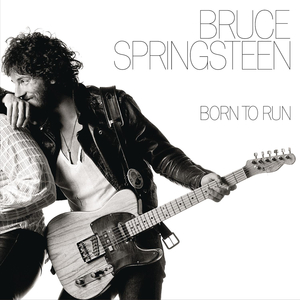
Least to Most: Bruce – Born To Run

“One day I was playing my guitar on the edge of my bed, working on song ideas, and the words ‘born to run’ came into my head… I liked the phrase because it suggested a certain cinematic drama that I thought would work with the music I was hearing in my head.”

There’s probably very little I could add to anyone’s knowledge or appreciation of Born To Run, an album that’s undoubtedly at the top of many a list and is very likely many people’s favourite album of all time. ‘Born To Run’ may have taken six months to write but it and Born To Run changed everything for Bruce, both in terms of sales / success and writing. This was the album that lived up to the promise of ‘Rosalita (Come Out Tonight)’, maintaining its excitement and drive “while delivering it’s message in less time and with a shorter burst of energy. This was a turning point, and it allowed me to open up my music to a far larger audience.”

It was this song that made sure the world would become aware of Springsteen in more ways than one. Neither his début or The Wild, The Innocent and the E Street Shuffle had achieved the level of success that would make a record company throw money for studio time at him. He had to write something that would get him his last shot. He may be somewhat flippant about its origins (if not its impact) now but writing ‘Born To Run’  in early 1974 got him that chance – it was recorded during touring breaks (with drummer Ernest ‘Boom’ Carter*) and an early mix was released to radio in November of the same year. It’s popularity on radio meant previous Springsteen singles began picking up more airplay and gave him validation to get to work on the rest of the album.

http://www.youtube.com/watch?v=f3t9SfrfDZM

Like, I’m sure, it was for many, ‘Born To Run’ was the first Bruce Springsteen song I was aware of. Specifically the 1987 video from a performance shot during Boss Mania. What strikes me most about the song, and the album as a whole, is the poetry of the lyrics. How many other FM rock songs used a lyric like the “the amusement park rises bold and stark” or “beyond the Palace, hemi-powered drones” found in ‘Born To Run’? And if we’re talking lyrics, let’s look at how the album kicks off:

“The screen door slams, Mary’s dress waves. Like a vision she dances across the porch as the radio plays.” Or what about the “One soft infested summer” of ‘Backstreets’ or ‘Jungleland’ with it’s “In a bedroom, locked. In whispers of soft refusal and, then, surrender”? Bruce may have claimed that “the poets down here don’t write nothing at all” (I’ll admit the double negative still bothers me some) but from a lyrical point of view, Born To Run saw the volley of words on Greetings.., the romance of The Wild, The Innocent… turn into something much more direct and universal (earlier characters and scenes were much more specific, that ‘screen door’ could be anywhere) and coupled with a new-found confidence from years of honing his act on the stage to produce some of Springsteen’s most evocative and memorable lines.

Work on the album is something of a legend in itself – Springsteen aware that it’s his make or break shot, agonising over takes and layering track upon track (there’s close to a dozen guitar tracks on the title song) as he struggled to explain the sounds he heard in his head, it lead to a changing of both studio location and began the changing of the guard with Appel vs Landau when the sessions got bogged down… or even the number of takes it took to get Clarence Clemons’ finest performance just right…

The thing is that such ardent efforts can sometimes lead to something that just sounds overworked**. In Born To Run though, it equals magic. You don’t hear what must have been a stressful session in those closing minutes of ‘Jungleland’ or the fact that it took nearly 14 months to record an album that fades out less than forty minutes later than a harmonica swept it in. What you hear is an album of meticulous detail and ambition underpinned by a songwriter hitting his stride and not holding back.

It’s packed with moments of magic – the intro of ‘She’s The One’*** giving away to the Bo Diddley beat that Springsteen admits he wrote just to hear Clarence blast all over, the jazzy film-noir intro for ‘Meeting Across The River’, the “hiding on the Backstreets” refrain, every single second of ‘Jungleland’ but especially it’s mid-point swing and ‘this ain’t over yet’ sax break….

Every song on this album works on its own. The biggest ‘hits’ from Born To Run – the title track, ‘Thunder Road’ ‘Jungleland’ – all stand as great songs in their own right but (and I urge you to go and do so) work best when played in sequence, they belong together. They ebb and flow as a story across one magnum opus and create one of the greatest albums ever made.

I will say, though, that it’s worth making sure that you get a decent master of this album. The first one I had… the remastering for CD was pretty crap. The version (that I guess is now in standard production) that came with the 30th Anniversary box really jumps out at you.

http://www.youtube.com/watch?v=Wk9bZuTOamg

*If you’re only gonna be on one Bruce Springsteen song….

**Ahem; Human Touch

***Bruce wasn’t even sure if he should put this one on the album