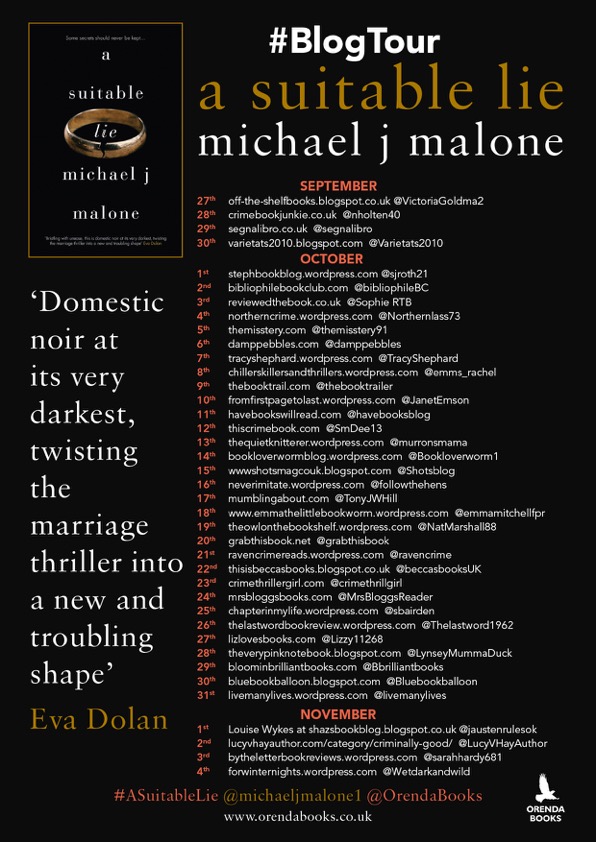
There’s no easy way to say this, Kubu. Your father’s dead. I’m afraid he’s been murdered.
Assistant Superintendent David ‘Kubu’ Bengu of the Botswana CID is back. His father, only recently diagnosed with Alzheimer’s, has been violently murdered. Who would murder a frail old man? Why was his father out alone? Who was he meeting?
A Death In The Family is the welcome return of Detective Kubu and this mystery from the writing team of Michael Sears and Stanley Trollip (writing as Michael Stanley) is another gripping instalment set beneath the hot African sun.
While the murder of his father leaves only questions, Kubu is not the policeman to find the answers – to his abject frustrations he is forbidden from investigating the case. Instead, Kubu is assigned to the apparent suicide of a government official. But, as he digs deeper, questions are raised over the involvement of Chinese mine-owners and foreign governments and it becomes clear that there is a lot more going on – as tensions over mine expansion in Shoshong (a town near Kubu’s ancestral home) explode into riots and violence, connections between the cases begin to appear.
What unfolds is a fantastically complex and artfully crafted plot that brings together political corruption, the incursion of foreign powers and companies in search of Botswana’s mineral wealth and the chilling, dangerous paths taken to satisfy greed.
Detective Kubu, in a genre stuffed to the bindings with great characters, is a real stand-out and fast becoming a firm favourite. In my review of Deadly Harvest I pointed out that it’s great to read such a warm character driven by a love of family (and biscuits). As such, Kubu’s grief and frustrations at not being involved in the case are compelling and thoroughly affecting; the authors create a vivid portrait of a genuinely loving family man wracked by the darkness of his father’s murder.
A Death In The Family is a great read that’s full of intrigue and delivers plenty of shock too. Thoroughly well-written and packed with convincing characters and settings. Not to mention it’s also a solid little introduction to rare earth mining.
I, personally, feel I’m somewhat on the back foot as this is already the fifth in the Detective Kubu series (the second to be published by Orenda). That’s more down to my hunger for more than anything else, though, as Messrs Sears and Trollip ensure that each of these instalments work brilliantly in their own right and there’s no need to have read its predecessors to enjoy A Death In The Family as I so thoroughly did.
A highly recommended book and one that rewards on every page.
Thanks, as always, to Karen at Orenda for my copy and do check out other stops on the blog tour.
Despite the record breaking temperatures we’re getting for this time of year, there’s an unmistakeable hint of autumn in the air.
It’s at this time of year that two songs which somehow (to my ears) manage to capture the sensation that summer has just slipped away come to mind and they’re both by the same guy – Bill Janovitz.
Summer is from Buffalo Tom’s fifth album Sleepy Eyed and they’d tried to move away from the polished sound of the previous album to something a little more live, in-the-studio feeling:
Best Route comes from Bill Janovitz’ most recent solo outing – a somewhat concept album about his hometown which had “got trapped in amber of nostalgia” . Whether it’s the timing signature, that electric guitar line, the undeniable warmth of that nostalgia when applied to the end of summer… I don’t know, but Best Route is the stand-out for me.
I will speak of a land that is mine, and for her I will risk appearing ridiculous, and I will love that which I am not allowed to love.
Mihail Sebastian is a very important writer, one of Romania’s finest and yet, possibly, lesser-known.
Born Iosif Mendel Hechterin 1907 to a Jewish family living in the town of Brăila on the Danube, Sebastian studied law in Bucharest before being attracted to literary circles and the ideas of intellectual groups (which included Mircea Eliade). He had a number of novels and stories published – including For Two Thousand Years – yet his timing was tragic; a Jew at the time when Europe, and Romania, saw an increase in anti-Semitism and the rise of fascism. Even amongst his friends Sebastian was seen as an outsider. Even more so when Eliade became a supporter of the Iron Guard.
From 1935-1944, undoubtedly one of the worst time periods to be of the Jewish faith in Europe, Eliade kept a journal – it detailed the growing and horrifying persecution he faced both from strangers and former friends and the anti-Semitism that was rife in Romania at the time. It caused uproar when it was eventually published in 1996 (having been previously been smuggled out of the country by his brother in the diplomatic pouch of the Israeli embassy in Bucharest and kept safe until Romania was no longer under Communist rule) as it shone a light on many a crime that had been quietly hidden and gained Sebastian a larger audience in the West thanks to its unflinching honesty.
I happened to find it, in English, one day some years ago in a bookshop in Bucharest – a few hours before my flight out. Thinking it might be more of a ‘war diary’ and with my interest in that field, I picked it up and was instantly hooked. For, alongside the fascinating accounts of how the writer pieced together the novel and plays he worked on during the period, the fact that a gentle, intelligent man who loved his country and it’s culture, was ruthlessly targeted, harassed and humiliated from all sides because of his faith left me aghast. It meant I stopped reading Eliade quite so keenly, too. In many a way it has drawn comparisons to Anne Frank’s diary.
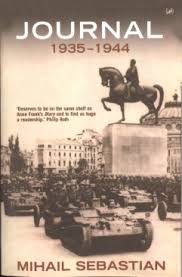
It left me with a thirst for more of Sebastian’s writing but I couldn’t find any of his work translated into English (there is a huge amount of literature from Romania that I’d love to see published in the UK). That was until, in bizarrely similar circumstances, I found this new (2016) translation of For Two Thousand Years during a long wait for a flight at Gatwick Airport.
It’s one of the best books I’ve read this year.
Written in a journal-like manner (though with more focus, of course, than a genuine journal), Mihail Sebastian’s For Two Thousand Years is, essentially, a story of what it means to be a Jew in Romania. A story in three parts, focusing first on the narrator’s tumultuous time at University in 1923 (when the constitution awarded citizenship to ethnic and religious minorities) where intimidation and violence was a daily part of simply trying to attend classes before moving ahead some six years to find the narrator moving ahead in his career then on to Paris before heading back to Romania.
At first the style is a little bewildering but, when framed in the context in which it is set, this becomes only more apt and well realised – a young man confronted with violence and setbacks struggling to understand and find his own way. As the narrator becomes more at ease with life with age and experience so too does the narrative change.
For Two Thousand Years is not only a brilliantly written story, framing some exceedingly important questions into its prose, but it’s disturbingly prescient with it’s dread of the future (it was published in 1934), predicting Vienna and the Anschluss as the tipping point. In this respect it’s also deeply moving for, with the benefit of historical hindsight, we know that the narrator’s fears that his work and dreams may amount to nothing and will likely be crushed by the changing socio-political landscape are more than accurate.
It – like Sebastian’s own journal – is an eye opener in terms of the treatment of Jews at the time. The narrator – as the author – remains proud of his fatherland, loves the Danube he grew up with and yet knows that he can never be truly considered Romanian. I wasn’t entirely surprised to learn from my mother-in-law that the novel had been banned in Romania for a long time.
Recalling how, for example, during military service, he is not permitted to take a shift of guard duty “since I might betray [the country] in the course of a night on guard duty.”
The resigned-to-fate manner of its conclusion becomes all the more evocative when viewed through today’s eyes and the knowledge of the trials and horrors that awaited those of his faith.
It’s hard, today and in my own privileged position and disregard for the petty ways in which we define people by the speck of dirt chance happened to place their birth, to imagine the world in which Sebastian lived; persecuted and prevented from being considered ‘of’ a country because of his faith. A such For Two Thousand Years insightful and compellingly searching novel and was well worth the wait to finally read.
Having survived the Second World War, during which time he was refused permission to work and was kicked out of his home and forced to live in a slum, Mihail Sebastian got a job as a lecturer at Bucharest University. Unfortunately, on the way to give his first lecture (on Balzac) on May 29th, 1945 he was hit by an army truck and died. My hope is that there was a lightness and optimism in his heart at the time at least.
Yet, I won’t end there, after all in both For Two Thousand Years and his own journal Sebastian refused to give in to melancholy and sadness. I’ll pick up the quote I started this entry with:
“I will speak of the Bărăgan and the Danube as belonging to me not in a legal or abstract sense, under constitutions, treaties and laws, but bodily, through memory, through joys and sorrows. I will speak of the spirit of this place, of its particular genius, of the lucidity I have distinguished here under the white light of the sun on the plain and the melancholy I perceive in the landscape of the Danube, drowsing to the right of the town, in the watery marshes.”
He thought the man was fast asleep
Silent, still and deep
Both dead and cold
Shot through
With bullet holes
This is an odd one and probably the least ‘cool’ track on this list which is strange and mumble-worthy in itself… Of all those bands revisited and touted as influences, given the remaster treatment and dusted off in the wake of nostalgia revivals, Dire Straits remained immune. Perhaps it was down to Knoplfer’s unfortunate headband / hair combo during the Money For Nothing era or that Harry Enfield sketch, or the over-presence of Sultans of Swing on the radio but, for a band that shifted over 100 million records (30 million shifted by Brothers In Arms alone), Dire Straits are still one of those bands that are sneered at though I’m sure there’s an awful lot of guitarists and bands influenced by Knopfler’s playing.
I’m willing to bet, though, that Knopfler himself couldn’t give a rat’s arse about it. Likely contributing to that lack of attention is the fact that, having quietly dissolved the group in 1995 having become uncomfortable with the scale of the tours and productions, Mark Knopfler has resisted any and every urge (if he even has them) to revisit the group having forged ahead with his solo career and no calls for the ‘Legend’ spot at Glastonbury are likely to change that.
I grew up with the sound of Dire Straits thanks to my Dad and the same is true of Knopfler’s solo material – it’s one of those common tastes we share. While I’m not a big enough fan to own anything beyond a Best Of comp I do know the songs and will keep an ear out when I hear them, if only for sentimental reasons. That and the fact that Knopfler’s guitar phrasing and tone is an absorbing an beautiful thing all by itself, especially on his solo albums. Shrangri La – Knopfler’s fourth solo record – is a different story though.
Recorded after a seven-month break from the guitar imposed by recovering from a motorcycle accident, I’d state this is my favourite thing Knopfler has put to tape and certainly his most-consistent. The slow-burn, blues tone is dominant, gone are the celtic/folk leanings of his earlier efforts and his laid back phrasing and story telling is leant to a much wider range of subjects including Elvis (Back To Tupelo), the founding of McDonalds (Boom Like That) and those uniquely British tales like the plight of the modern fisherman in The Trawlerman Song and the One-Armed Bandit Murder in what has to be my favourite Knopfler composition; 5.15am.
It’s an atmospheric tune that begins with a gentle strum that builds into a real bluesy tone as it tells both the story of the discovery of “one armed bandit man (who) came north to fill his boots”‘ body and its impact on the local coal-mining community where “generations toiled and hacked, for a pittance and black lung”.
The odd thing about blogging is that when you leave a gap and slip out of the habit it’s not immediately obvious how to get back in. It’s not like reading a book, say, where there’s a bookmark holding your place or Netflix to remind you which episode of House of Cards you’re on (I’ve just finished Season 2 and am hooked).
Once you lose the rhythm, it can be tricky to find the point / manner in which to re-engage. Or at least it is for me.
It’s not that I lost interest, I’ve just been away on holiday and disconnecting from it all.
So I’ll pop back in with a Currently Spinning job while wishing I was still enjoying the Spanish sun rather than the murk and drizzle of Kent.
I’m trying – and, I hope, achieving to some extent – to get a bit mellower / less uptight with certain things as I get older. I’m pretty sure that’s happening with music, at least. Otherwise I doubt I’d be currently listening to Ryan Adams’ 1989. I cannot say that I have ever knowingly listened to a Taylor Swift song nor that I would. As much as I do try to be less of a musical snob the manufactured, substance-less fluff of that world can still not find my ears open. I can say, though, that I love a lot of Ryan Adams’ work. Accordingly it’s been some time between release and – this week – my listening to his song-for-song remake/recasting of her most recent album.
Given my unfamiliarity with the source material I cannot compare. It’s a strange concept of an album; by all accounts Adams listened to the original during the breakdown of his own marriage and decided to recast it in a way that sheds new light on the song-writing (perhaps to appeal to grumpy old sods like me) and while he’s always had a way with a cover it’s odd to enjoy his genuinely emotive and distinctive take on these songs despite their having been written by writers-for-hire that have also penned tracks for Britney Spears, Lopez et al. Oddly, Adams himself has said that “the goal was to find a middle ground between the sound on Springsteen’s 1978 album “Darkness at the Edge of Town” and the Smiths’ 1985 album “Meat is Murder.””
On the one hand you could say it’s what happens when a prolific artist has his own studio and a lot of time on his hands. On the other it’s also what happens when one artist finds the work of another so compelling that they have to pay a tribute. It seems to have been quite polarizing in terms of reviews – from 5 star in The Telegraph to a 4/10 from Pitchfork – and thanks to Swift’s own following it’s odd that this will likely be his most exposed release.
Still, his voice and playing are continuing along the same quality evolution that was present on his last album and I can’t help but enjoy a lot of this album. Probably why the vinyl has just arrived on my desk as it graduates from a Spotify-only listen.
Dreaming, dreaming of how it’s supposed to be
But now this tunic’s spinning – around my arms and knees
I feel like I’m disappearing – getting smaller every day
But when I open my mouth to sing – I’m bigger in every way
I’ve mentioned before how huge Sonic Youth are/were for me. Every now and then I still get bummed when I realise that I won’t hear ‘new’ material from them again. That being said it’s not as though there’s a shortage of songs to listen to; 15 studio albums, 9 SYR instalments and a number of post-dissolve releases trickling through.
It’s close-to impossible for me to choose a favourite Sonic Youth album but when it comes to an individual song it’s always Tunic (Song for Karen). I can’t recall my first hearing of it – I have some idea it involved something being smoked – but I know I was instantly hooked.
Yes; it’s a song about Karen Carpenter. Kim Gordon has said ‘I was trying to put myself into Karen’s body. It was like she had so little control over her life, like a teenager – they have so little control over what’s happening to them that one way they can get it is through what they eat or don’t. Also I think she lost her identity, it got smaller and smaller.’ In the instrumental breakdown in the middle of the song Kim and J. Mascis are singing Carpenters songs – it’s buried deep in the mix but on the demo version (included in the 2005 Deluxe Edition) you can hear this more clearly.
The music certainly carries a dark edge appropriate to its subject matter but it’s pure hook and driving rhythm pinned down with guitar squeal. The collapse in the mid section, pulled out by the re-start of the drums and rhythm, is heaven to my ears.
..he ducked his own hand under his own coat, grabbing at nothing but air, but the two guys didn’t know that, and like the good range-trained shooters they were they went for their guns and dropped into solid shooting stances all at once, which braced their feet a yard apart for stability, so Reacher stepped in and kicked the lefthand guy full in the groin.
I was late getting to the Jack Reacher party. Perhaps because I took a long break from reading books that could be slotted into the ‘thriller’ genre or perhaps because I’m sometimes wary / sceptical of such one-character driven series. Of course that changed when I did pick upKilling Floor. I also admit I got into it the wrong way round having watched the Jack Reacher film first.
There’s been a lot said about Lee Childs’ character and a pretty good article that also covers why, perhaps, I was hesitant in picking up my first Reacher books (is it ‘low taste’?) but I am now hooked. I’ve since cleared seven and there’s an eighth sat on my bookshelves lined up as my next-but-one read.
I’ve got a couple of weeks holiday rapidly approaching so went on the hunt for some holiday reading and there isn’t really much better for that than Lee Childs’ work. So I grabbed Make Me and Nothing To Lose – I’m not reading them in order, really – but ended up making the mistake of scanning the first page of the latest. It’s a mistake as you really only need to scan the first paragraph and Child will have your attention and interest piqued. I hadn’t picked it up sooner as I’d thought it may be better to read the earlier books first and, honestly, wasn’t hugely taken with the prior effort, Personal. Either way, a couple of days later and I’d finished Make Me – number 20 in the Jack Reacher series.
Having not read even half of the series I can’t really pull the “best of the lot” or really cite favourites (though Persuader would take some beating) but I will say that Make Me is a bloody decent instalment and really does improve on Personal. It feels like a good solid Reacher novel and adds a lot more to the character than I was expecting and moves the character on in ways that have previously been missing.
Make Me starts off in what is now standard routine – Reacher finding himself, by chance, in the middle of a situation to which his sense of justice and skills and experience lend themselves. In this instance he’s climbed off the train at a town called Mother’s Rest out of idle curiosity over the town’s name. From here he’s pulled into another mystery, aided by another (in a long line) of women that he also takes a romantic interest in.
To be honest, though, that’s where the ‘norm’ finishes. The mystery in Make Me is a genuinely intriguing one and ends up going down some very, very dark roads. The humour is also a lot sharper and it did give me a good chuckle to find the one-man-army that is Reacher trying to get to grips with modern technology.
But, and here’s the thing, the Reacher of Make Me is a lot more human than previous entries have shown. There’s hints of, perhaps, a long-lasting relationship with Chang that perhaps even the author hasn’t decided where to take (given that Child writes without knowing exactly where the story is going and that the next Reacher novel is a step back in time) and we learn that Reacher can be injured in a fight by a single adversary.
Perhaps Child is aware that an audience can only see Reacher deliver the same lines (how often has Reacher had to explain his lack of permanent abode) and moves (there are, realistically, only so many ways to describer a head butt) so many times before losing interest. Perhaps he too wants to add more to the character and give him something other than an endless road and line of adversaries to smack about. Regardless, I thoroughly enjoyed Make Me and am looking forward to see where Child takes his character next. I’ll have to wait for the follow up to Night School to find out, I guess. Still with a new Reacher-per-year timetable, the wait won’t be too long after all.
EDIT: In looking back at this post I discovered that I had listed Gypsy Biker twice (a result of careless Copy and Pasting).
This is Jim’s fault. Specifically Jim at Music Enthusiast who recently, in what seems like one of those blog tags, ran up a list of his own twenty favourite Springsteen songs. It’s good list (and a blog well worth reading) and I think we share a few – it got me to then try and whittle down my own version. Then I looked at it and edited it. Then I looked at it again and edited again….
I did decide to limit myself to a maximum of two tracks from any one album and have omitted cuts from Tracks etc (I could easily put together a list of best non-album tracks). I don’t think this list is necessarily order-specific or concrete as it’s been adjusted a few times. But, right now….
Youngstown – Some of Bruce’s best works have a real sense of both time and location and they don’t get more specific than the “Here in north east Ohio, bank in eighteen-o-three” of Youngstown, the best track on The Ghost of Thom Joad and one that Nils Lofgren would set alight live come the reunion tour.
New York City Serenade – There were so many characters and street scenes thrown into Bruce’s first two albums that it’s hard to pick one stand-out but the sheer ambition of this track and its instrumentation, for anyone let alone a singer-songwriter on his second album, leaves my mouth open.
Worlds Apart – Another strong cut from The Rising, I love the blending of Middle Eastern vibes, Qawwali singersand the E-Street at full power, the thickness of the guitars under Brendan O’Brien’s production and the urgency of it all.
Gypsy Biker – I’ve written about this one before – and it’s call back to Shut Out The Light– but there’s something about this that, to me, means that of all Bruce’s later tracks enthused with anger at Bush etc this is the stand-out.
Downbound Train– Born In The USA is an odd album. It’s not Bruce’s best but then it does contain some of his best songs. Rubbing shoulders with I’m On Fire and No Surrender is this one. Bruce has many down-on-their-luck songs but this is one of my favourites.
Tunnel Of Love – Limiting choices from Tunnel of Love is as tough as limiting choices from Darkness On The Edge of Town. Both 5 Star albums. There’ll be some in honourable mentions but I’m a sucker for the line “Fat man sitting on a little stool”. As befitting a title track this one kinda contains the themes that run through the album as Bruce wrestled with the reality of his first marriage – “you me and all that stuff we’re so scared of” – and had the audacity to use it to power some of his most evocative songs. The gifted bastard.
Bobby Jean– One of the last songs written for Born In The USA – supposedly about his friendship with Steve Van Zandt, who was leaving the band… ” just to say I miss you baby, good luck goodbye”.
State Trooper – In 1999 I went and bought my second Springsteen album (after Greatest Hits had sat un-listened to for some time) – Nebraska. I’d just heard State Trooper play out over the credits of an episode of The Sopranos. It opened me up to what I’d missed about Springsteen the first time around and I’ve been hooked since.
Point Blank– Completed in ’78 and the first song Springsteen wrote after Darkness On The Edge of Town, Point Blank has been brilliantly described as “a song of shadows, of lives going nowhere, of broken relationships, and broken promises” and I can’t improve on that description.
Magic – The album, Magic, was a very strong late-career one for Bruce and a great follow up to The Rising. If only he and Brendan O’Brien had finished here. It was loaded with anger and barely-veiled hostility to the George W Bush era. This, then, is such a beautiful, slight and simple tune as to almost seem out of place. I’m also a sucker for Van Zandt’s mandolin on this.
Candy’s Room– One tricky part of this list was not going for every track on Darkness On The Edge of Town. Leaving aside the title track and Badlands, I love the tempo, the menace and the guitar on this track.
Jungleland – Was this Bruce’s last story song? I’ve got a suspicion that future such sagas would be written from a more personal perspective. Either way it’s arguably the best if only for the Big Man – especially when you imagine the agony of getting that take ‘just’ so.
Paradise – Bruce has a way of being able to evoke a real sense of pain and yearning. I don’t think it was there in his earlier work, as his voice changes he’s finding more ways of using it I guess. Thinking around this tracks like The Wall and Danny Federici tribute The Last Carnival come to mind. Paradise is so evocative of that yearning that I couldn’t listen to it for a while as I’d been misinformed as to just what it was about (somehow I’d been given the idea that it was specific to a man grieving for a drowned son) A song on the theme of loss – “I thought, ‘What do you miss?’ You miss the physicalness and the ability to touch somebody” – against the barest of backdrops serves to make this a late-career gem.
Lost In The Flood – The first in what I think of as a continual development on a theme that begins here, develops further with New York CitySerenade and concludes with Jungleland.
American Skin (41 Shots) – The caveat here being that it has to be the version from Live In NYC album, complete with Bruce’s “we need some quiet” when its message was painfully fresh and cutting and before Tom Morello got his hands on it and cut the tracks balls off.
One Step Up – That melody. That naggingly simple and catchy melody. “Mmm she ain’t lookin too married, and me well honey I’m pretending”. The best track on The Tunnel Of Love.
Born To Run – Because without this song or the album its from I doubt anybody would be compiling Best Of Bruce lists. That and the line “The amusement park rises bold and stark” is just ridiculously good.
Racing In The Street – “Some guys they just give up living, and start dying little by little, piece by piece. Some guys come home from work and wash up and go racing in the street”… I mean fuck that’s a lyric and a half there. Back that with the heavy, haunting melodrama of that piano and this one is unimpeachable. The ’78 version that graced The Promise is not only a belter in its own right but also serves to show just how much craft went into this track.
The River – Even before I went back to Nebraska and it all ‘clicked’ into place I loved The River. It’s just one of those songs that will always appear at the higher echelons of Springsteen lists.
Blood Brothers – In the early nineties Springsteen’s stock wasn’t at its highest; Human Touch and Lucky Town and the ‘other band’ tours hadn’t gone down as favourably as he’do hoped. There’s a mythical whole album that was recorded and scrapped. Then in 1994 he won an Oscar for Streets of Philadelphia and figured it was as good as time as any for a Greatest Hits album and got the E-Street Band back together to work up some older songs for it and a couple of new songs. Though fans would have to wait a few more years for a proper reunion and tour the sessions did yield two great news songs in Secret Garden and my favourite Springsteen track – Blood Brothers.
I was always a bit bemused by Bruce’s take on it in the linear notes: “It was good to see the guys”
Honourable Mentions: This Hard Land, Spare Parts, Thunder Road, She’s The One, Radio Nowhere, For You, Fade Away, I’m On Fire, With Every Wish.
In 1989 after touring behind Bug, escalating tensions and frustrations lead to Lou Barlow being booted out of Dinosaur Jr. He should have seen it coming; when the group first played together they were called Mogo and the seemingly shy and reticent guitar-shredder Mascis wasn’t upfront, the frontman was Charlie Nakajima who lasted precisely one show after using that stage as a platform for a lengthy anti-police tirade. Appalled by Nakajima’s actions but “too wimpy to kick him out” (J’s words not mine), Mascis instead asked drummer Murph and bassist Barlow to form a new band without Nakajima.
Despite his slacker vocals and aforementioned demeanour, Mascis was something of a control-freak with whom communication was a continual burr. By the time of Barlow’s dismissal they’d created a trilogy of legend-forming and hugely influential albums and had begun to scratch at commercial success with songs like Freak Scene and their cover of the Cure’s Just Like Heaven. What followed for Dinosaur Jr was a major-label deal, the subsequent change in mix/production dynamics with lyrics and vocals being pushed higher in the sound, getting caught up and buoyed forward by the changed landscape formed by Nirvana’s Nevermind, the departure of drummer Murph, their most commercially successful album and song in Without A Sound and Feel The Pain before the seemingly inevitable drop-off in sales, major-label disinterest and J’s retiring of the band name in 1997.
After a few solo Mascis records (under the name J Mascis and The Fog) and Barlow taking swipes at J in numerous Sebadoh songs, the unexpected happened; the “classic” line-up reformed in 2005 for a tour promoting the reissue of their first three albums. Even more unexpectedly; the reunion held all the way to the studio for release of the first album of Dinosaur Jr’s Third Act; Beyond. Whether it be down to the mellowing out that time, age and even parenthood bring, better communications or just the ease in pressure that comes from realising they’re not expected to make a “Smash Hit Album” but they’ve now outlived both their first ‘classic’ run of ’84-’89 and the band’s major label period of ’90-’97 and are still going strong.
Give A Glimpse Of What Yer Not – as with the three albums that have preceded it – makes a formidable mix of the band’s early heaviness and the tighter, song-oriented structure that came with the major label sound to create a perfect balance off fuzz-heavy riffs and deft melodies all underpinned by J’s trademark soloing and softly-spoken, stoner-like vocals.
Stripping back a touch on the spread of sound featured on 2012’s I Bet On Sky, Give A Glimpse Of What Yer Not is a much taughter and fiercer sounding affair. Opener Goin’ Down tears through at break-neck pace and the following Tiny rips along at a cracking pace and clocks in at just 3:12 of precise intent – cramming in heavy riffs, rolling bass lines, thundering drums and J’s solo without an inch to spare.
Those Mascis solos do take the spotlight throughout but with due cause and never sounding too heavy-handed in their placing. When I mumbled about I Bet On Sky I mentioned that albums of Dinosaur Jr Act 3 are of a formula, with anticipation for the inevitable guitar break but that “his guitar tone is beatific. His phrasing and fluidity mean that when each song breaks it’s more like being wrapped up in a warm blanket.” This still holds; Mascis’ guitar is still the star attraction on Give A Glimpse Of What Yer Not, especially on I Walk For Miles and I Told Everyone.
In the interests of democracy or as proof as to how far they’ve come in terms of dissipating tensions – Barlow gets a couple of his tracks on each of the band’s latest albums. Here Love Is… stands out as the strongest, it’s structure calling to mind Led Zep’s III era folkiness before giving way to Mascis’ guitar while it and the album closer Left/Right are both stronger, more comfortable-sounding tunes than any of his which have graced albums since Beyond. Whereas on previous albums they’ve been something of a sore thumb and almost halted the flow, here they slip in gel more cohesively than every before.
The band are clearly getting on well and working together better than ever before and while the ‘if it ain’t broke’ adage can certainly apply to many of the tracks here, songs such as Lost All Day and, particularly, the changing dynamics of Knocked Around show that Dinosaur Jr remains a band willing to stretch its sound and try new ground rather than generate a few more tracks to drop in between Forget The Swan and Lung during the payolah tours.
I’ve yet to catch them live – I wondered recently how they tackle the subject of playing those songs recorded during Barlow and Murph’s absence from the band. Do they include them or do they go the Van Halen route of pretending a huge part of the band’s history and it’s most commercially successful and wider-known tracks don’t exist (in my mind and a little off-topic I’d call this route as stupid a decision as getting Roth back in the fold in the first place was but then the idea of Diamond Dave trying Right Now is as farcical as any part of his hammy vaudeville act) or do they let bygones be bygones and go for the crowd-pleasers? I was very glad then, to see, thanks to SetListFM, that their set lists from recent tours include a good mix of old, mid and new era tracks. I suppose it’s further testament to just how well they’re getting on.
I digress…
I’ve had this album for just a couple of days now but it hasn’t left my CD player since then (I’ll have to wait a little longer for the vinyl) and cannot see a way this doesn’t make the Best Of 2016 list.
Don’t know why this one has been going around and around my head the last couple of days. Could be down to having the phrase “Black Out” in there after putting a book review together and it morphing into “back out” in my head and just as likely down to having been spinning the new Dinosaur Jr album today.
Either way there’s something hugely addictive about this track and the ease with which J Mascis blends into Kevin Dew’s song that I can’t shake and haven’t been able to for some eight and a half years now since it dropped in 2007.
Blimey…. 2007 doesn’t feel like it should be nine years ago. For context it made it onto Rolling Stone’s Best 100 Songs of the Year list which also included the then-new Radiohead track ‘Weird Fishes/Arpeggi’, Arcade Fire’s ‘Keep the Car Running’, Springsteen’s ‘Long Walk Home’ yet also had Rhianna’s ‘Umbrella’ at number 3. Go figure.
Oh well.
Anyway, the most frustrating thing about having this stuck in my head is that I cannot for the life of me find it in my collection. Whether I (or toddler-sized fingers) accidentally knocked it out of my iTunes or the CD has done a bunk, I don’t know.