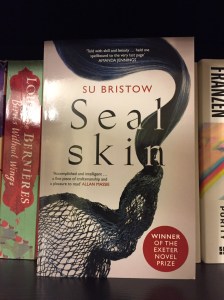
Sometimes a book will come along that hypnotises you just so and holds you so much under its spell that when it comes time to even attempt to do it justice in a review that it becomes pretty much impossible to put into words just how bloody good it is and those superlatives that are known merely prove inadequate. Su Bristow’s Sealskin is one of those books.
Winner of 2013’s Exeter Novel Prize, Sealskin is based on the legend of the selkies – seals who can transform into people. More specifically the legend of a fisherman who, one night at full moon, witnessed nine seals who came to shore, took off their skins and became beautiful young women dancing on the beach. In Su Bristow’s novel that fisherman watches the women dance and, unable to contain himself, makes a terrible mistake. That mistake has ramifications for both him, the young woman and the small fishing community where life is hard, the sea is all powerful and belief is as strong as fact.
So what could I say about this book now that it’s my turn on the blogtour? This book for which superlatives are not enough and others have heaped such well deserved praise on. What could I add?
I could say that it’s haunting, that it’s captivating and mesmerising. I could point out that Sealskin is one of the best things I’ve read and I could go on to say that Su Bristow’s narrative is so delicious that it pulls you slowly and completely into a story so satisfying and equal parts joyous and heartbreaking (utterly so) that it leaves you yearning for more and I could (should) also point out that when you do turn the final page the immersion within its world is so total that you will get withdrawal symptoms and find yourself looking around at your environment as if it were alien with an almighty book hangover.
I could say that I found this beautiful novel completely mesmerising that I barely put it down. I could mention that the characters are all so perfectly nuanced and full as to leave me wondering if this were legend or fact.
I could point out how Su Bristow’s portrayal of this bleak place’s calm, stoic acceptance of hardship and grief (“He could just remember his little sister, stumbling after him down the path, crying when she stung her hand on the nettles, laughing when he tickled her. She had it all to learn, too, when the fever burned her life away.”) is so much more affecting than anything I’ve read in some time.
I could say all of this but what I really want to say is that this Sealskin is such an absolute essential addition to any self-respecting book lovers’ collection that if you don’t love it there’s probably something wrong with you.
Yes, that’s what I’ll say: you need Sealskin by Su Bristow on your bookshelf. But only after you’ve read it and let it possess you.
I’ll also say a huge thanks again to Karen at Orenda for sending me a copy of this to review and for continuing to take chances on and publishing such bloody good literature.
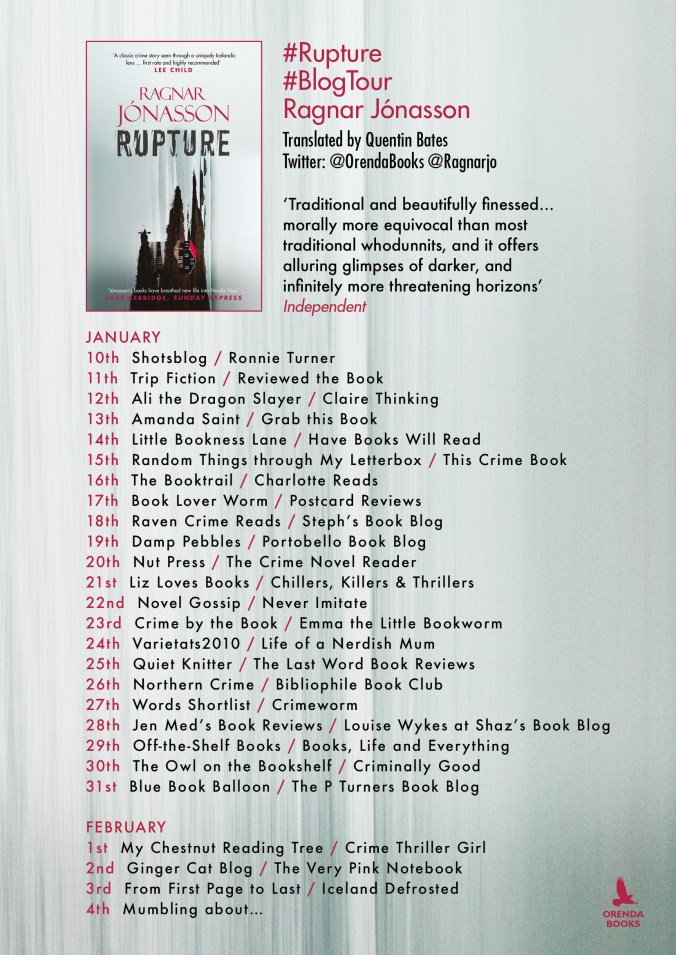
The calm, secluded Icelandic town of Siglufjörður is even more quiet than usual; the sudden illness and death of a visitor means the town is in quarantine.
For Ari Thór this is not necessarily a bad thing – he and Tómas are now the lone members of the police force, splitting shifts between them. But he’s not keeping idle. A local man, Heddin, asks him to look into a decades-old mystery: in 1955 two young couples moved to the isolated and otherwise uninhabited Hedinsfjörður. Their attempts to forge a new life come to disturbing end when one of the women dies after consuming poison, help too far away to reach her in time. The case was never solved and suicide considered the accepted explanation. Heddin, the son of one of the couples and born in Hedinsfjörður himself, has been given an old photograph that may prove something more sinister occurred in that desolate fjord – for, holding the infant Heddin in his arms, an unknown man smiles back at the camera.
Who is the man in the photo? Does he have anything to do with the death of Heddin’s aunt? What really happened out on that bleak fjord? Unable to leave town, Ari is assisted in his investigations by Ísrún, a news reporter (introduced in Black Out) who’s chasing a case of her own.
Isrun’s case is a far more complex and multi-faceted one that brings together a child abduction, murder and political ambition that is at times genuinely chilling and nerve-wracking. The hurried, freedom of her movement in Reykjavíkfurther emphasising the cooped-up restraint of Siglufjörður as both she and Ari Thór discover just how far the actions of the past can reach into the present.
The splitting of action in Rupture allows Ragnar Jónasson to really flex his skills as a writer; equally strong in both establishing a slow burning mystery in Siglufjörður and a gripping, fast-paced thriller of a story in Reykjavík, each complex and packed with enough intrigue and revelation to ensure the pages of Rupture are turned with speed.
With many a well known series character there’s not much of an unknown quality about them. Their history and character traits are pretty quickly established and it’s seeing how these known elements handle changing situations that make for so many of their books. Everyone knows, for example, how a Jack Reacher type will respond in a given situation or whether a Harry Hole type will pick up a drink or not. What makes the Dark Iceland series so bloody addictive is that this isn’t the case with Ari Thór; glimpses and insights into his past and character are revealed with each book (the violent jealousy in Black Out or the truth of his parents hinted at in Night Blind) but the whole remains hidden so as to make the character of its lead as much a mystery as the crimes themselves and keep the reader coming back to the police station in Siglufjörður.
Rupture is a fantastic book, another brilliant instalment in the Dark Iceland series which is itself a vital addition to both the thriller genre and any discerning bookshelf. I cannot recommend this enough.
Thanks again to Karen at Orenda for my copy and do check out the previous stops (I seem to have the honour of closing it) on the Rupture blog tour.
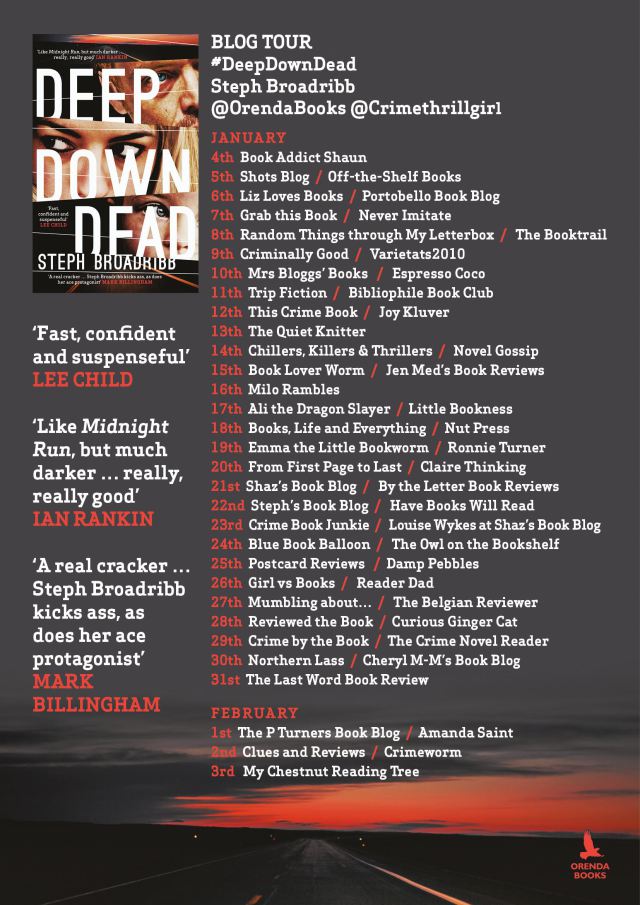
From the PR: “Lori Anderson is as tough as they come, managing to keep her career as a fearless Florida bounty hunter separate from her role as single mother to nine-year-old Dakota, who suffers from leukaemia. But when the hospital bills start to rack up, she has no choice but to take her daughter along on a job that will make her a fast buck. And that’s when things start to go wrong.
The fugitive she’s assigned to haul back to court is none other than JT, Lori’s former mentor – the man who taught her everything she knows … the man who also knows the secrets of her murky past. Not only is JT fighting a child exploitation racket operating out of one of Florida’s biggest theme parks, Winter Wonderland, a place where ‘bad things never happen’, but he’s also mixed up with the powerful Miami Mob. With two fearsome foes on their tails, just three days to get JT back to Florida, and her daughter to protect, Lori has her work cut out for her. When they’re ambushed at a gas station, the stakes go from high to stratospheric, and things become personal.
Breathtakingly fast-paced, both hard-boiled and heart-breaking, Deep Down Dead is a simply stunning debut from one of the most exciting new voices in crime fiction.”
This book cost me some sleep; once it gets going Deep Down Dead is an addictive read and one any fan of a good thriller will love.
Now I look at the book on my shelves I’m surprised that it’s over 330 pages – it rips along with such a pace but then there’s an awful lot of good stuff packed into Deep Down Dead: a gritty female lead with more punch than a Klitschko brother and a back story that ensures you’re hanging to each page rooting for her while the plot has more twists and excitement than a ride at Winter Wonderland. That this is Steph Broadribb’s first novel makes that all the more impressive.
A thoroughly enjoyable read with enough grip and twists to keep the reader hooked through to the end. A strong debut and I’m looking forward to the next chapter.
Thanks again to Karen at Orenda for my copy and check out the other stops on the tour.
I’ve set myself a target / challenge of reading 40 books this year. It might seem like a few but I cleared 30 or so last year and I’m 3 down already. The first book I read in 2017 is going to take some beating though. It really cost me some sleep.
Some time last year I saw All the Light We Cannot See by Anthony Doerr on a table in the local (chain) bookshop. Immediately I was struck by the cover (I’m pretty sure a lot of others do judge books this way) even before I read the blurb on the back which well and truly got my interest. However; my TBR pile was already well stocked so it stayed on the table. Until it appeared under the Christas tree.
I’ve heard some people bemoan the historical fiction genre as limited and this has always baffled me. Aside from the opportunities offered by the ‘what if / alternative timelines’ explored by the likes of Fatherland, even small parts of history such as the Second World War offer a canvas so vast and wide as to be pretty much limitless in opportunities for invention and story while the gravitas of events is always going to add some emotional heft and that’s certainly the case with All the Light We Cannot See.
Thing is, with all that emotional heft and known touch points, it’s easy for historical novels to overdo it and try and hit every (see City of Theives) but that’s not the case here. While it’s clear from the get go that this is going to be an emotional novel – Marie-Laure is a blind girl whose mother died in childbirth while Werner and his sister Jutta are orphans in a harsh German mining town, Doerr doesn’t over egg the pudding. He doesn’t need to:
“Marie-Laure lives with her father in Paris near the Museum of Natural History, where he works as the master of its thousands of locks. When she is six, Marie-Laure goes blind and her father builds a perfect miniature of their neighbourhood so she can memorize it by touch and navigate her way home. When she is twelve, the Nazis occupy Paris and father and daughter flee to the walled citadel of Saint-Malo, where Marie-Laure’s reclusive great-uncle lives in a tall house by the sea. With them they carry what might be the museum’s most valuable and dangerous jewel.
In a mining town in Germany, the orphan Werner grows up with his younger sister, enchanted by a crude radio they find. Werner becomes an expert at building and fixing these crucial new instruments, a talent that wins him a place at a brutal academy for Hitler Youth, then a special assignment to track the resistance. More and more aware of the human cost of his intelligence, Werner travels through the heart of the war and, finally, into Saint-Malo, where his story and Marie-Laure’s converge.”
The story gets started with the night before the near destruction of Saint-Malo in 1944 before tracing the timelines of its two leads back to their childhoods and briskly bringing them to the present and to each other in one hell of a climax. Told in present tense, the prose is short and bullet sharp and keeps the momentum of the story ripping along, there’s no time to dwell on emotional impact (perhaps making it all the more hard-hitting when it comes) and there are moments when it’s clear that Doerr is himself wrapped up in the story and just letting it unfold and getting out of its way. An absolute joy to read.
A story of science and the power of radio, Nazi occupation, wonderment and the question of morality, All the Light We Cannot See by Anthony Doerr is a genuinely great novel- it’s a good thriller crossed with a damn good stab at great literature. It’s been pretty much highly received and won the 2015 Pulitzer Prize for Fiction (I’m also a big fan of the previous winner, Donna Tartt’s The Goldfinch).
Here we are once again amongst the closing days of another year. This is certainly one year I’ll be glad to see the back off. I won’t go off-topic here or cross that line into putting too much of the personal up here but I will say 2016 was an utter bloody farce of a year.
However, as the days before the fat man with a beard drops down the chimney diminish, it’s also that time to share what I think were the best things I read during 2016.
Once again – save for a few weeks where I simply couldn’t read / take anything in – I read a lot this year – some amazing fiction new and old and plenty of fascinating non-fiction. There are some I’ve started but not finished (I do aim to finish Life and Fate in 2017) and some that still sit on the To Be Read pile.
This list, then, is my take on the best written word I consumed during 2016 and is in no particular order with the obvious exception…
Fiction
Jihadi: A Love Story by Yusuf Torpov
One of the first books I read this year and one that’s stayed with me throughout. Echoes of great writers can be found throughout but it’s truly marked by the unique voice of Yusuf Toropov who here has written an important novel of our time. In my review I said that its a rare thing to find “a book that is so unarguably great that you find yourself telling everyone they should read it regardless of their usual choice of paperback writer. Jihadi; A Love Story by Yusuf Toropov is just such a book.” I stand by that.
Leaving Berlin by Joseph Kanon
A spy thriller set at the very start of the Cold War, as divisions and sides are drawn in a country still beset by the scars of war and trying to rebuild itself amongst the rubble. As much as I was fascinated by the historical element the plot equally gripped my attention and has sent me off down another path of reading with a couple of Cold War thrillers already en route to my letter box. Original review.
For Two Thousand Years by Mihail Sebastian
For completely personal reasons this book would already make the top ten. It was purchased while spending ten hours waiting for a plane at Gatwick airport ahead of a family holiday where it was hungrily consumed. I’d been searching for Sebastian’s work in English and this, published this year, did not dissapoint. Beautifully written and deeplu insightful and evokative. The knowledge of the tragedies that lay in store for Mihail Sebastian only make it all the more poignant. Original review.
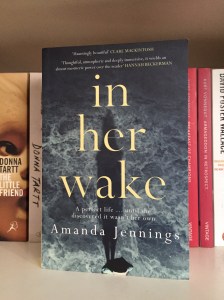
In Her Wake by Amada Jennings
This book absolutely broke my heart. This book was so far from what I was expecting and so gripping that I honestly can’t see how it wouldn’t make this list. If everything you knew about yourself turned out to be a lie, that your whole life was built around a crime so devestating that lives have been ruined, what would you do? In Her Wake, is a real story of hope and courage. And, yes, the final revelation about Bella still guts me many months down the road.
Notes on a Cuff by Mikhail Bulgakov
Finding this book last year, and finally reading it in this, was such a joyous experience. I thought I’d read all that was available so to discover the stories in Notes on a Cuff was like stumbling upon gold dust. These stories, written in the early 1920s, show a real master finding his voice and revelling in the art and joy of writing. There are elements here that he’d perfect later in his career but it’s amazing to see just how brilliantly formed his work already was.
Purity by Jonathan Franzen
On each occasion (and it’s always an ‘occasion’) that a Franzen book is published I can’t help but think it won’t be as good as his previous novel. On each occasion I’m proven wrong. Easily his most accessible and equally amongst his finest work.
The Bickford Fuse by Andrey Kurkov
I’ve written before on just how much I love Kurkov’s work. Something of a cross between Bulgakov and a Ukranian Vonnegut, he weaves near-absurdist, satirical novels of the highest calibre. The Bickford Fuse from what I can tell, is an earlier book than any he’s yet published and was written in the final days of communism. A look at ‘Soviet Man’ told through a series of somewhat connected stories and characters that, while clearly written by the same author, is completely unique amongst his work printed thus far. Ambitious, multi-layered and hugely rewarding to read.
Where Roses Never Die by Gunnar Staalesen Favourite Fiction of 2016.
I read this in circumstances almost as perfect as possible yet I’m sure that had I read it in the middle of a cesspit as I sank down to the bottom I would have loved it just as much. Hugely gripping, deeply evokative and written without a spare word, Gunnar Staalesen is like the samauri of Nordic Noir – every masterful, well-practiced and skilful word strikes home hard. Staalesen is the master of his craft and it’s a big credit to the translation that there’s never any question of this when translated into English from the native Norwegian. Original review.
Non-Fiction
A book about the intelligence war was never not going to be my cup of coffee and when you factor in that it’s written by Max Hastings, The Secret War couldn’t get much better. Some real shockers in here and written in such a way as to ensure it never gets dull. It’s strange as it never caught my attention in school (more down to the education system at the time) but the Second World War has become the subject I’ve probably delved into most in terms of personal education. While I always enjoy a personal account – my interest being how normal people find themselves in extraordinary circumstance that I can’t comprehend rather than the ‘guns and glory’ stuff – the intelligence and spy / espionage war really fascinates me and this book is packed with detail.
In theory that should mean this would be the best NF book I picked up in a year but, then, this was the year that Bruce Springsteen published his autobiography.
Born To Run is the memoir every Bruce fan could have hoped for. He could’ve phoned it in. He could have gotten a ghost-writer to assisst and turn it into pristine prose. He didn’t. A deeply personal book, there’s more insight here than any such auto-bio I’ve read and all told in Bruce’s own voice. Revelations, inspiration and the salvation of music is all in here like one of his greatest songs. Original review.
Honourable Mentions…
The Dark Iceland series by Ragnar Jónasson is one of the most compelling and rewarding additions to the thriller genre and this year’s Black Out and Night Blind were both excellent – but impossible to choose a favourite.
I delved deeper into the Jack Reacher series this year with a good five books under my belt including the new (in paperback) Make Me which was a real strong contender and shake up of the character.
Yann Martell’s books are always going to suffer in comparisons to his famous book with the tiger but The High Mountains of Portugal was a good effort, if a little wayward at times, with a beautiful, heartbreaking evocation of absolute grief.
Epithany Jones by Michael Grothaus and The Exiled by Kati Hiekkapelto really should be on this list too…
Is there a Finish expression for busman’s holiday?
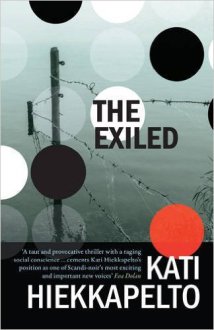
From the PR: “Murder. Corruption. Dark secrets. A titanic wave of refugees. Can Anna solve a terrifying case that’s become personal?
Anna Fekete returns to the Balkan village of her birth for a relaxing summer holiday. But when her purse is stolen and the thief is found dead on the banks of the river, Anna is pulled into a murder case. Her investigation leads straight to her own family, to closely guarded secrets concealing a horrendous travesty of justice that threatens them all. As layer after layer of corruption, deceit and guilt are revealed, Anna is caught up in the refugee crisis spreading like wildfire across Europe. How long will it take before everything explodes?”
I really need to get my hands on a copy of The Hummingbird, the first installment in Kati Hiekkapelto’s Anna Fekete series. Last year the second book The Defencless was one of my best reads of 2015 and, having just finished The Exiled it’s safe to say this is fast becomming one of my favourite series and Anna Fekete makes for a compelling lead character.
A fish out of water in Finland, Anna finds herself just as out of place back in her ‘home’ country – she’s lived abroad for so long now that the mannerisms, and even the language, are alien to her and Kati Hiekkapelto perfectly captures that strange sense of disconnect felt by those returning home from a different culture – specifically a ‘western’ one – and the seeming frustration at the change in how even the most straight-forward of things function differntly. It’s not obvious to all who haven’t witnessed or experienced it but there is a real change in the pace of life and priorities compared to more latin countries and it’s clear the author has done more than her homework here.
Kati does a wonderful job of evoking Serbia – the people, the mannerisms, the climate, the pastimes, even the social necessities and the odd (to Western eyes) importance placed on just those, along with Anna’s confused emotions on returning to her homeland – even if what she finds isn’t always to her liking there are certain sensations and memories that cannot be tainted and here come across beautifully. Ms Hiekkapelto’s skill, though, is in combining these rich evokations with a gripping and superbly paced plot. It’s one thing to paint a picture so vivid as to have the ready longing for another glass of homemade plum brandy, it’s another to write a genuinely engaging and taut mystery but it’s an art to get the two to work together seamlessly. That’s an art where Kati Hiekkapelto is most definitely skilled.
As much as I enjoy tearing though a fast-paced thriller, I love a good slow-burner and The Exiled more than delights; the writing is calm and effective – it draws you in with deceptive ease until you’re fully immersed in both place and plot with a great level of detail and characters and as determined to get to the bottom of the mystery as Anna Fekete herself.
One of the elements I enjoyed most about The Defenceless was Kati Hiekkapelto’s handling of important social themes and the same is true with The Exiled. Never more timely, the handling of the dehumanisation of refugees – even the nastily subtle manner in which the media decides they’re ‘immigrants’ rather than people fleeing absolutle terror – plays a central role in this novel; a pertinent message for our times as the Right seems to barrel it’s way through truth and humanity.
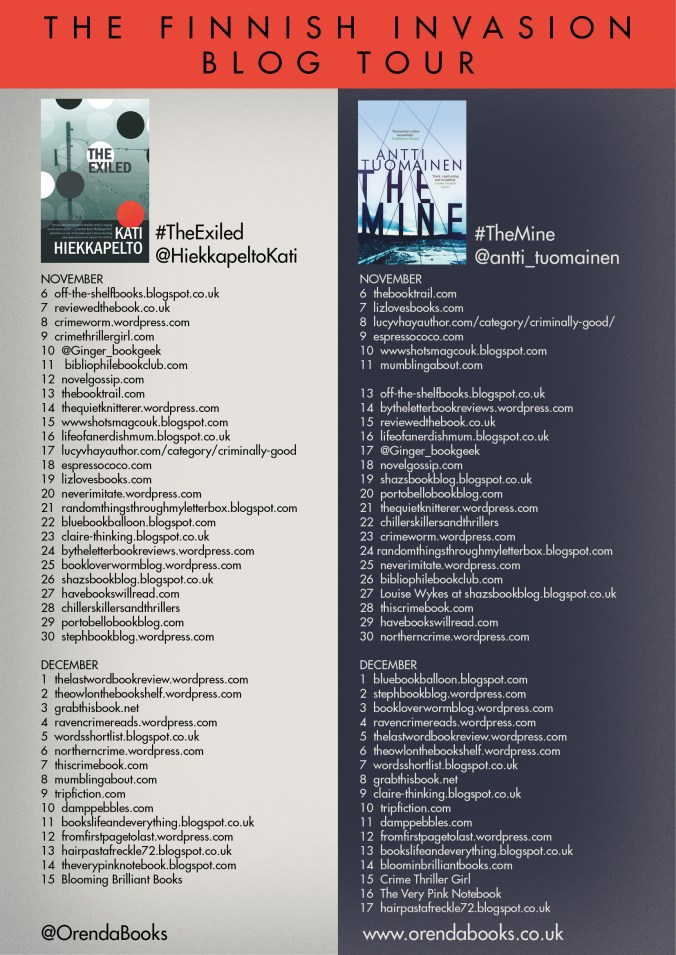
I thoroughly enjoyed The Exiled and can’t recommend it enough. Thanks again to Karen at Orenda for my copy and do check out the other stops on the blogtour:
A black gap parts the row of paperbacks, like a breath between thoughts.”
I love that opening.
Last year saw publication of Louise Beech’s How To Be Brave on Orenda Books. A thoroughly moving book that made my reads of the year list. What impressed me most was how its writer was unafraid to tackle emotional areas from which others might blanch while combining such insightful writing with a compelling story. She’s done it again.
I was more than happy and eager to read The Mountain In My Shoe when it was so kindly sent to me by Karen at Orenda. Life and this year being the utter shit that it has been, though, means I couldn’t do so straight away. My stop on the blogtour for this one was kindly populated by the author herself with a piece on adversity that’s well worth a read, here.
Now, though, I’ve not long turned the final page on this one and it’s time to get down my thoughts and I’ll try to do so without giving away too much. If I can…
From The PR: “A missing boy. A missing book. A missing husband. A woman who must find them all to find herself …
On the night Bernadette finally has the courage to tell her domineering husband that she’s leaving, he doesn’t come home. Neither does Conor, the little boy she’s befriended for the past five years. Also missing is his lifebook, the only thing that holds the answers. With the help of Conor’s foster mum, Bernadette must face her own past, her husband’s secrets and a future she never dared imagine in order to find them all.
Exquisitely written and deeply touching, The Mountain in My Shoe is both a gripping psychological thriller and a powerful and emotive examination of the meaning of family … and just how far we’re willing to go for the people we love.”
I seem to recall Louise Beech saying that in The Mountain In My Shoe she’d ‘accidentally’ written a thriller. If this is an accident then I’d be first in line to see what happens were she to set out to do so. I was thoroughly gripped and found myself turning through the pages with a speed that ought to have worried the binding. Contained within is a book that encompasses psychological thriller, emotional drama and gripping mystery.
As with How To Be Brave, there’s more than one voice telling a story in The Mountain In My Shoe: Bernadette, an abused housewife on the verge of leaving her controlling husband; Connor, a young boy who’s spent his life in the care system and The Book – Connor’s ‘life book’. The Life Book is Connor’s story updated by those that care for him – foster parents, social workers, teachers. I found this exceptionally moving – having just rediscovered my young son’s ‘My Story’ type book after moving and realising that, for Connor (and so many like him) life can deal some pretty harsh cards. A masterful touch from Mrs Beech.
The changing narratives and perspectives add a great depth to the story and each are handled convincingly and ring true. The Book is especially moving, upping the empathy for Connor and the suspense. It makes for painful reading at times but I’ve said this before and I’ll no doubt say it again; woe betide the author that goes for comfortable.
How To BeBrave and The Mountain In My Shoe are very different books and while there’s a few similarities (a diary and lifebook as narrative devices), there’s one undeniable thing they have in common; Louise Beech writes with an emotional honesty and bravery that elevates her work from the crowd. She writes in a way that just manages to cut to the core – especially as a parent – every single time. Brilliant.
Worth the wait, very highly recommended and thanks again to Karen at Orenda for another great book. Seriously, though, Karen; every time I think I’ve got my ‘Top Reads of the Year’ list sorted I open another book with the Orenda logo on its spine.
Boddice, a crime lord looking over his shoulder for good reason, has assembled an unlikely band of misfit crooks. Their job is to steal a famous diamond worth millions, known as The Dark Side of the Moon. Despite the odds, the crew is self-serving squabbles and natural incompetence, the plan progresses. As events build to an explosive climax no one really knows who is playing who. Full of twists and turns and laugh-out-loud moments, this is a hugely enjoyable romp entirely from the criminal’s point-of-view, with not a single cop in sight.
An odd one, this; Dark Side of the Moon by Les Wood is essentially a crime story with not a whisper of the police. Instead what we get is a crime lord falling down the pecking order of Glasgow’s underbelly, desperate to pull off a big job and secure his place at the top of the table. A gang of petty criminals and hard men all under his thumb / at his mercy. The world’s most valuable diamond and a plot to steal it against tough security and odds with no experience and no real clue what the hell is going on.
Gritty, at times uproariously funny and populated by some truly memorable characters Dark Side of the Moon is more than a madcap heist story – for one thing there’s an undercurrent of sadness throughout. It’s a grim, blighted reality that these characters live in and it’s pulling them all down. Strangely, though, this meant I ended up having genuine sympathy for some of them despite the fact that these are some pretty nasty people. It’s a mark of real talent that Les Wood manages to draw out compassion for someone as brutal and hardened as Prentice – even after Kyle’s dog story.
Like the hard-men it portrays, this book gets its punches in early and doesn’t relent. Maybe it’s the continual influx of bad news that this year has heralded but I’m finding myself increasingly immune to shock, yet there are parts of Dark Side of the Moon that caused me to swear and put the book down for a moment or three (though never for long as I was hooked) so powerful are parts of it. I’ve not been able to look at a can of emulsion paint the same way since.
But don’t get me wrong – this isn’t a bleak book that’s hard to read. Noooo… far from it. I love a book that challenges and I thoroughly enjoyed reading Dark Side of the Moon. Les Wood finds the perfect balance between vividly portraying the dark underworld, humour and thrill with pacing that keeps the book surging along, building up to a terrifyingly gripping and bloody crescendo of a climatic scene that both quashed expectations and left my mouth agape.
Deliciously dark and hugely entertaining, The Dark Side of the Moon is a great novel and I’m very surprised that this is Les Wood’s first. Very grateful to Freight Books for sending this one my way and wholeheartedly recommended.
I tell you, moving house knocks it out of you. Still, sometime between my birthday a couple of weeks back and popping it back up on a new shelf, I found the time to tear through Bruce Springsteen’s autobiography Born To Run (it was never going to be called anything else, was it?).
It is an absolute blast to read. Written completely solo and without the assistance of a ghost-writer, the voice is clearly that of Bruce – at times cuttingly honest, at others poetic and then written as though delivering a sermon from the stage on the LIFE SAVING POWERS OF ROCK AND ROLL!!! (yes, the caps-lock button is Bruce’s friend). Contained within its five hundred or so pages is the story of how a young man from a poor, working class family in the town of Freehold, New Jersey, fell in love with music, got a guitar, learned how to make it talk, refined his craft and cracked the code. It’s fascinating and joyous stuff.
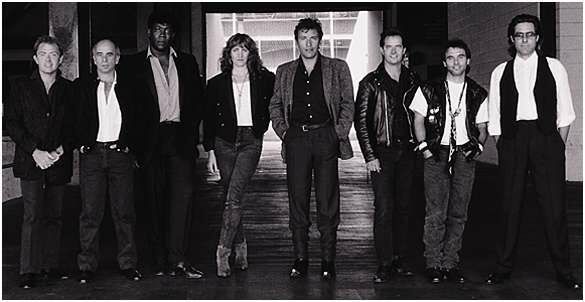
This being a memoir / auto-biography, the story is going to be somewhat one-sided. This is Bruce’s version. So while in Born To Run, Bruce describes the recording of Tunnel Of Love, for example,by writing that Bob Clearmountin ‘tidied up’ his playing so it sounded as if he knew what he was doing, it’s Peter Ames Carlin’s 2012 Bruce that fills the picture out by pointing out that Bruce and Bob actually used samplers, drum machines and synths to create a lot of the music and then bought in members of the band to “beat the machine” – if they did the part was recorded, if not… well not every member of the E-Street featured and not every member of the band were impressed by the process but then Bruce is the Boss, a fact he gently underlines on a number of occasions in the pages of his own book; “I’d declared democracy and band names dead after Steel Mill. I was leading the band, playing, singing and writing everything we did. If I was going to carry the workload and responsibility, I might as well assume the power”.
The part of the book that deals with the period before the release of Born In The USA is both the largest and juiciest. There’s a wealth of information about the source of Bruce’s art, his influences and his decisions. These were lean times – it wasn’t until after The River tour that Bruce had anything resembling financial success thanks to lawsuits and recording costs inflated due to his infamous perfectionism – and there’s a huge amount of detail as to what drove him to take certain choices with his music. While there’s no real breakdown of what inspired each and every song (that already exists in Songs) there’s a great amount of revelations to be found.
Bruce is surprisingly candid when it comes to more personal elements too. I was a little surprised by some of his descriptions of his fellow E-Streeter’s – especially the late Danny Federici – but then his undeniable love for these band-members is also evident as his heartbreak at their passing.
Many of the column inches covering this book in the press have been at pains to mention that Mr Springsteen is equally revealing when it comes to his struggles with depression. Having managed to suppress what he describes as a consequence of the same mental plagues suffered by his father through years of working and touring, Bruce’s own depression came jumping up into his face . He is very open with his fight with and its effect on both him and his loved ones. As a fellow sufferer of that Black Dog it’s inspiring to read. His relationship with his father as a young man – while hinted at in song – is revealed in a much deeper and, at times, darker light and there’s a real sense of emotion and release when, post diagnosis with Paranoid Schizophrenia, Bruce’s father becomes a softer man and the two find some form of closure.
Part of not embracing the full ‘rock star lifestyle’ means that there’s not a huge amount of rock star stories to be found here and you’d be forgiven for skimming a go-nowhere Frank Sinatra story or those chapters (yep) dedicated to horse riding and Bruce’s equestrian escapades. Indeed, post-USA the structure is more vignettes than linear bio and some of those don’t really feel all that vital but, then, Bruce spent the larger part of that time period between E-Street lives building and raising his family and seeking a sense of calm that had previously alluded him so I’d hardly argue that this is a fault.
But there is still plenty to enjoy in the latter section of the book including some real eye-openers even post-USA. Bruce shines a little more light on the ‘missing’ album from the period between ‘Streets of Philadelphia’ and Greatest Hits – it was another ‘men and women, relationships’ themed album but steeped in that minimal, loops and beats sound he’d employed for SoP. During a drive with Roy Bittan, his trusty piano player mentioned that perhaps it was the lyrical content of this new music that audiences were having trouble connecting to. Unable to find a unifying voice and sound for it, the album was shelved “and there she sits” – ‘Secret Garden’, ‘Missing’ and ‘Nothing Man’ would see the light of day. Bruce may have shot The Professor down but it dawned soon enough – he’d lost his ‘voice’. Post Greatest Hits he went to find it and that’s why Ghost of Tom Joad is more of an important album than that subtle masterpiece may have been considered: “the songs on it added up to a reaffirmation of the best of what I do. The record was something new, but was also a reference point to the things I tried to stand for and still wanted to be about as a songwriter.”
Particularly interesting and surprising – given how logical and inevitable it must have seemed to all outside of Bruce’s head – is that up until the last minute, he still doubted whether reuniting the E-Street Band was the best move – not feeling the fire despite the band’s force, initially building a set list that drew heavily from Tracks and eschewed hits and classics (fuck but I’d love to hear that set!) It wasn’t until the fifty or so fans that had stood outside the rehearsals trying to hear the sounds drifting out were let in to watch that Bruce felt the spark.
Given the level of detail assigned to the writing and recording of earlier works, it’s a little surprising and perhaps disappointing that the post E-Street reformation era isn’t deemed sufficiently interesting to warrant the same treatment. The Rising onwards saw Bruce’s career and popularity reborn after a lacklustre nineties yet the six albums recorded since are breezed over – with the exception of Bruce noting how disappointed he was that Wrecking Ball did not garner the impact and attention he felt these songs warranted. From my point of view and deviating slightly that’s down to the fact that his and Ron Anellio’s attempts to sound sonically relevant and ‘now’ detracted from the quality of the song writing. That being said it was surprising to read the candour with which Bruce realised that, after years of doing so, he simply wasn’t the right person to record or produce his music any more.
Despite the slightness of its third act – I guess if he’d been as thorough here the book would’ve been simply too long as well – Born To Run is, without question, one of the best musician’s autobiogs I’ve read. Hugely insightful, informative and written with a trueness of voice that equals Bruce’s finest music, it’s an essential read for any fan and a bloody important one for anyone with even a passing interest.
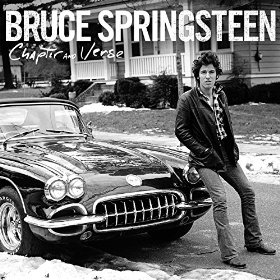
Released to accompany the album is Chapter and Verse. Given that it took close to twenty-five years and eleven albums for Bruce to release his first Greatest Hits and in the twenty years that followed there were another three such compilations to the six studio albums… it’s hard to believe that another new compilation were needed to do so, it does kinda reek of cash-grab.
Of the eighteen tracks on Chapter and Verse, thirteen have already been released many in the same order on other compilations. That’s not to say the songs aren’t required listening – any album that contains ‘The River’, ‘My Father’s House’, ‘Born To Run’ and ‘The Rising’ is easily going to stand strong. In some respects the running order here is more beneficial than other instances – lifting ‘Long Time Comin” from it’s sandwiching on Devils And Dust‘s weaker tracks really allows it to shine. But, given that fans will already have either the existing compilations, the albums these tracks are culled from or both, it’s hard to argue a case for their recompiling.
So – the big USP of Chapter and Verse comes down to this; the first five songs have not been released previously and pre-date Bruce’s recording career with Columbia. But are they worth shelling out for? In a couple of words, sorry but not really…. These songs are notable for the progression they represent (even the jump in style between the two cuts from Springsteen’s first band The Castiles) but, ultimately are only being heard because who one of their members went on to be. The Steel Mill song ‘He’s Guilty (The Judge Song)’ is a standard southern-blues stomper recorded in San Francisco as the band tried to use California to break out of Jersey-only stardom but highlights what Bruce himself realised; for every Allman Brothers Band there were a hundred Steel Mill’s and there’s little here to distinguish them above the pack. The exception, though, is The Bruce Springsteen Band’s ‘The Ballad of Jesse James’ which, of the five ‘new’ tracks is the keeper.
For myself, and I’d wager a few others, I’d rather the previously-unreleased material shone some light on either the E-Street Band’s take on Nebraska (that the fabled Electric Nebraska exists in its entirety is confirmed in Born To Run) or Bruce’s shelved album from the nineties… so I’ll drop one such track here – ‘Waiting On The End of the World’, written for that album and taken a stab at with the E-Street Band at the time of Greatest Hits which, for my money, is still the best Springsteen comp.
If you are still looking for music to ‘accompany’ the reading of Born To Run, there’s a Spotify playlist that Bruce (or someone on his team, most likely) put together containing all songs referenced and important:
A hitman. A journalist. A family torn apart. Can he uncover the truth before it’s too late?
Caution: a tiny, tiny (revealed early anyway so not that huge) spoiler could be found in this review.
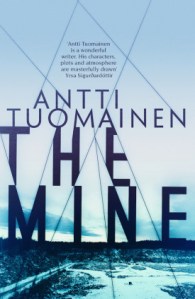
From the PR: “In the dead of winter, investigative reporter Janne Vuori sets out to uncover the truth about a mining company, whose illegal activities have created an environmental disaster in a small town in Northern Finland. When the company’s executives begin to die in a string of mysterious accidents, and Janne’s personal life starts to unravel, past meets present in a catastrophic series of events that could cost him his life.
A traumatic story of family, a study in corruption, and a shocking reminder that secrets from the past can return to haunt us, with deadly results … The Mine is a gripping, beautifully written, terrifying and explosive thriller by the King of Helsinki Noir.”
I’m writing this review as closely to finishing the book as possible; I’ve not long turned the final page on Antti Tuomainen’s fantastic The Mine and relished every second of reading it. The pacing and style are brilliantly effective; calmly drawing you in until you realise you’re practically up to your knees in Finnish snow and up to your neck in a complex mystery and there’s no way you’re gonna want to leave this story even after the last page is turned.
Antti Tuomainen does a crackingc job of evoking a sense of place and the remote setting of most of the action – the isolated mine sits in Northern Finland, snowbound, dangerously cold and practically deserted – adds to both the sense of dread and the intensity.
I love a good, complex conspiracy in a book and The Mine delivers this in spades. Taking on some heavy and important themes, this is, indeed, an intelligent thriller, hugely gripping and immensely rewarding.
While I might not have liked Janne as a character – perhaps because his own work-first, family-second approach is so at odds to my own – his determination to get to the bottom of the story is contagious and this is another of Orenda’s recent publications that was ripped through at a pace.
The sub-plot surrounding Janne’s hitman father Emil is perhaps my favourite part of this book. Here is a man who takes life for a living – in manners described in some darkly delicious scenes – yet his own calm, pedestrian manner are so counter-intuitive as to the preconceived, literary portrayals of such characters as to be utterly fascinating. Here he is calmly throwing a man off a balcony to his death, here he is just as calmly and routinely browsing through books in a bookshop, here calmly snapping someone’s neck mid-run. It’s handled so fantastically and as though run-of-the-mill that he might just as well be – as he initially tells his son – working in HR.
That Emil’s calm, mild-mannered and thorough manner of carrying through his own occupation contrasts with Janne’s investigative urgency is a great device, especially as the older-man, now so-removed from such concern for taking life, is returning to his son almost as he himself is on the precipice of throwing away his family – giving Janne a much a warning not to repeat mistakes, that it’s the people that matter in life – just adds to the overall richness of this multi-faceted book.
A huge thanks to Karen at Orenda for sending me yet another ripper of a read, encouragement to check out the other spots on this Finnish Invasion blog tour and a wholehearted recommendation to go and get your hands on Antti Tuomainen’s The Mine.
 Sometimes a book will come along that hypnotises you just so and holds you so much under its spell that when it comes time to even attempt to do it justice in a review that it becomes pretty much impossible to put into words just how bloody good it is and those superlatives that are known merely prove inadequate. Su Bristow’s Sealskin is one of those books.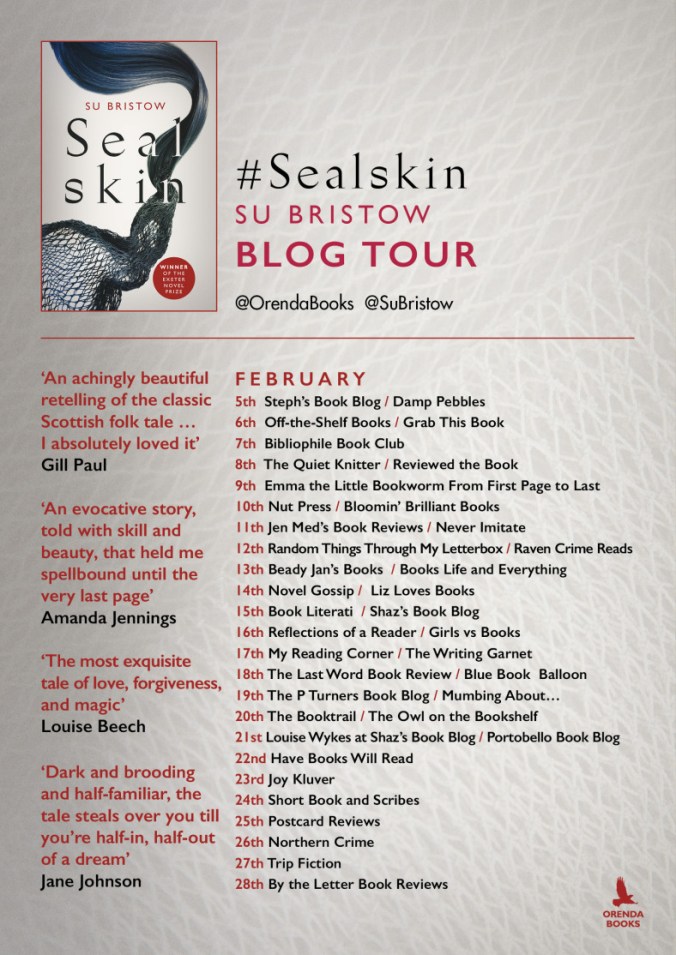







 Mumbling About...