Black Out

Think of Iceland and you’ll no doubt think of geysers, calm, tranquil fjords… perhaps even volcanic eruptions. Crime and murder will probably not be one of those connections that springs to mind. The same is certainly true for Evan Fein, an American tourist, as he searches for Grettir’s Pool, an ancient stone-flagged hot bath, down narrow roads and scanning country lanes and farm gates. What awaits Evan, though, isn’t a relaxing dip in steaming water, it’s a dead body, a man brutally beaten to the point that he is “practically unrecognisable,” “where there had been an eye, there was now an empty socket.”
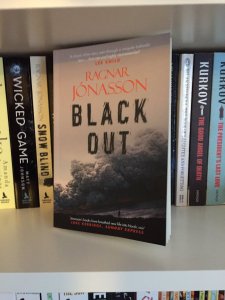
CnGralHXgAA9a6pThis is the start of Black Out, the latest instalment in Ragnar Jónasson’s Dark Iceland series to be translated into English and published by Orenda Books and it’s bloody good to be back in Siglufjörður once again. Black Out sits second in the Dark Iceland series and picks up after the events of Snow Blind; Ari Thór, while now more at peace in the town, is dealing with the fallout of his confession of infidelity to his girlfriend, Kristín who herself is now living a short distance away in the neighbouring Akureyri. The Inpector, Tómas, is debating his own future in the town after his wife’s move south to Reykjavik and Hlynur is dealing with the chilling consequences of his past.

It’s into this state of distraction that the news of the murder is dropped and Ari Thór and Tómas set about investigating the victim’s connections to the town – the only real starting point is that the victim, Elías, was part of a crew working on the new tunnel. Tómas is far from thrilled at the opening of the tunnel, worrying what it will bring into the town. Strangely enough, the more that Ari Thór digs into the storied past of some of the residents it’s clear that even without infrastructure upgrades, Siglufjörður holds many a disturbing secret. Some people know exactly what Elías was involved in but nobody is talking and so much remains hidden despite the 24-hour light of the Arctic summer that the police are in the dark.

That contrast of tones – darkness in the shadows of an otherwise idyllic scene – is what makes that creeping sense of dread so much more powerful and chilling as, piece-by-piece, the clues come together and the quiet town of Siglufjörður becomes the epicentre of a taught, methodically plotted story involving money laundering, sex-trafficking, child abuse, rape and murder. Be warned – Black Out gets very dark.

This time around it’s not just the Siglufjörður police that are trying to crack the case; Isrun, a news reporter is also chasing down and finding her own leads as she races for an exclusive. The introduction of Isrun means that Jónasson is able to add further elements to the story and take the reader further afield to Reykjavik (shrouded in a volcanic ash cloud) and the politics and rivalries of the newsroom. I’ll avoid going further in terms of Isrun’s involvement in the investigations or her own motivations to avoid spoilers but I will say that it was a genuine surprise and a welcome change up, further evidencing that Ragnar Jónasson’s writing is anything but formulaic. She’s also another thoroughly great and compelling character.

Jónasson has a gift when it comes to crafting memorable characters. Ari Thór, while not always likeable, is given increasing depth and dimension with every instalment and his relationship with Kristín gives greater insight as well as further developing her own character. Somewhat sadly, of all the threads surrounding the main narrative, it’s the sub-plot surrounding Hlynur that is perhaps the most gripping and while having already read Night Blind means I knew where it would lead, was nonetheless genuinely affecting and moving.

Weaving together all the sub-plots of such a multifaceted story could prove challenging yet Ragnar Jónasson makes it seem effortless – while his history of translating Agatha Christie novels into Icelandic means he’s no stranger to mystery writing, it’s his own voice and skill that makes Black Out and the Dark Iceland series one of the most compelling and rewarding additions to the thriller genre. Each instalment delivers more and leaves the reader in eager anticipation for the next. The first snippet of the next instalment (included at the end of Black Out) had me checking the door was properly locked and bolted. Not something I’ve done since I read The Snowman. A series and author well deserving of the highest praise. Very much looking forward to more.

Huge thanks once again to Karen at Orenda Books for my copy and I do wholeheartedly recommend Black Out.

Turning More Pages

Another couple of months and another chunk is taken out of the continually growing TBR pile.

Time doesn’t appear to be my friend of late for blogging larger reviews (life takes priority) so I’m gonna try and wrap up a few of those books whose spines I cracked over the last month or so.

The Amber Shadows is a 2016 release  (it’s not all that often I read books so close to their publish date) that I found via the author’s twitter – Lucy Ribchester’s book (her second) is set in 1940’s Bletchley Park and she’d been sharing some of those once-classified documents from home of Britain’s codebreakers during World War II  that had served as research for the novel. That’s enough to get my interest. The Amber Shadows is certainly well-researched and manages to give a very convincing account of the time and place without over-doing it to the point of stereotyped clichés as some do. The plot – Honey Deschamps works in Hut 6 transcribing decrypted signals from the German Army when she begins receiving mysterious packages of amber – is certainly promising and the writer is able to keep the reader guessing. The conclusion left me a little unsatisfied but, in retrospect, it’s certainly in keeping with the period in which it’s set in terms of how, with the second world war raging and life having taken on a different value, it may well have played out.

IMG_9417

The Sisters Brothers by Patrick DeWitt had been sat on my shelves for at least a year before I picked it up at the start of the month. I’d seen it in the hands of numerous travellers a few years back on a cruise and in many a list at the time so thought nothing of grabbing it for £1.99 in Sainsburys. Though I obviously didn’t think to read it either. I can only say I was stupid. It’s a brilliant book. A real ripper that I tore through hungrily. Many a review have likened it to a noir-ish Coen brothers story and I’d happily agree. Another book I’m glad I finally got around to reading and just in time it seems as Mr DeWitt has a new book out.

Jo Nesbo’s Harry Hole is, I guess, a name that isn’t one typo away from being obscene in its native Norwegian. The Redbreast is my third Harry Hole read (well out of sequence) and fifth Nesbo novel. I was hesitant to read this after my disappointment with Head Hunters but I needn’t have been. While not as genuinely terrifying as The Snowman or quite in possession of its writer’s realised style, this third Hole novel not only works as a good stand-alone instalment but also serves up plenty of fodder for the Oslo detective to tackle in later novels and it’s a good indication as to how both the character and series develop- having now read three of which at random I do know think I’ll be better served reading them in order, though.

Reading things in order brings me to the couple of Discworld novels I re-read last month. My gradual rebuilding of my Terry Practchett collection is going nicely – I’ve also finally added and reread Men At Arms and travelled back via Guards! Guards!– if slower down to my decision to purchase and read on a less specific order than chronological. As such I’m not merely going to Waterstones and buying new (not to mention my disliking of the new cover art) but popping into used book stores and looking for specific titles – Pyramids is next on my list – or seeing what they have (there seems to be an abundance of The Hogfather). I hadn’t read either Mort or Sourcery more than the one reading I gave them at least a decade and a half ago. As such it was great to rediscover how delightfully dark the humour in Mort is and laugh as Death attempted to understand what it is to be human. I can’t, in all honesty, say quite the same for Sourcery as it took me a few false-starts to get through this one. It lacks the spark and momentum that his earlier and later novels would have and, looking at where it sits in publishing order, perhaps Sir Terry was reaching the point where he was running out of fuel for the Wizards / Witches / Rincewind stories. Indeed he’d soon branch out into other character and story arcs to populate the Disc. That’s not to say Sourcery is without its charms or humour but I’d be surprised if it was listed as anyone’s favourite of the Discworld novels.

Where Roses Never Die

I’m going to come right out and say this at the start; Gunnar Staalesen is rapidly becoming one of my favourite writers and this is based purely on only the two Varg Veum books of his I’ve read – We Shall Inherit The Wind and, now, Where Roses Never Die.

With that in mind it was an absolute, relished delight to sit down at the start of May while away on holiday, overlooking a lake and armed with a fresh cup of coffee and no distractions (napping toddler), delve into Where Roses Never Die and another lesson in Nordic-Noir from the master.

IMG_9197In September 1977 a three-year-old girl, Mette Misvær is playing in the sandpit outside her home. When her mother, having been distracted, looks out the window to check on her daughter, Mette has disappeared. The tiny community – a model suburb – of Nordas is devastated. The police search everywhere but their enquiries produce nothing. Mette is never found.

Fast-forward almost 25 years and, as the statute of limitations approach, Mette’s mother approaches PI Varg Veum. She’s never been able to believe that her daughter is gone, the loss has haunted her and she’s desperate for answers. Veum is in no real shape to take a case, he’s still reeling from the aftermath of We Shall Inherit The Wind. But he takes the case – if only to rebuild his depleted bank balance – and begins to unravel a web of secrets and lies that lurk beneath the surface of a seemingly tranquil, idyllic little community.

As a parent the subject matter is a bit of an emotional punch as it plays directly into your worst fears (not the only book in Orenda’s stable to do so, I might add) but, having been writing Varg Veum novels since 1977, Staalesen knows how to navigate these waters and not let the reader drown and the energy and pull of Varg keeps it moving. It’s a haunting story and Staalesen plots it brilliantly, expertly bringing together seemingly unrelated events and characters into a revelation that’s an absolute shocker. That final revelation is a pretty dark one to say the least so I’m going to avoid going into plot for risk of giving anything away but, in the same way as the previous novel, the reveal here left me reeling. I can’t think of a more satisfying thing to get from a book than to be so genuinely floored by it.

Where Roses Never Die is superbly paced and with a story so intricately weaved together and with so many dark secrets pulled into the light you find yourself wondering what’s going on behind every drawn curtain. Characters are pulled from all shades of society and the moral spectrum and all believable – there are some for whose fate the reader can’t help but become invested in.

But these novels are more than gripping mysteries waiting to be unravelled, they’re glimpses into the life of one of Nordic-Noir’s greatest character’s; Varg Veum. If the ending of We Shall Inherit The Wind left the reader feeling battered then it sure as hell knocked Varg for six – he’s spent the years between “on the longest and darkest marathon” of his life . Veum is an immensely human and likeable character – he’s not always popular and very few are happy to see him twice but he’s driven by a sense of justice and finding out the truth, regardless of who’s feathers are ruffled. He, too, is, flawed – marked by a past and haunted his own mistakes. But even here, Staalesen’s mastery means that while there have been detectives nursing a battle with alcohol before it’s rarely so wonderfully evoked as within these pages:

Then I lifted the aquavit glass and drank deeply. For a second or two I had to close my eyes. I was sailing into a harbour I had left much too long ago, and on the quay stood people I hadn’t seen for years, who received me with cheering so quite that I could hear my pulse throbbing in my ears.

Staalesen’s prose is a master-class in efficiency, with minimal strokes he paints a complex plot that draws you into Veum’s world. Varg isn’t an all-action thriller detective, there’s no Reacher-style arms-behind-back fights here. No, Veum piece-by-piece pulls apart the web of lies, misdirection and secrets in his quest to discover what happened to Mette and as he slowly and methodically stalks the truth, so too does Staalesen’s prose until you’re immersed in a wonderful, enveloping narrative that holds you firmly in its grip until the final revelation – and long beyond finishing the last page too. More than just a personal favourite, Gunnar Staalesen is the absolute master of this genre and reading his work is a delight.

Translation is a tricky beast. It can make or break a book and Staalesen’s words are in very safe hands with Don Bartlett. With translations for Nesbo and Knausgaard to his name, Bartlett remains the translator of choice for Norwegian masters and his deft hand here ensures that Staalesen’s narrative and tone flows naturally.

There’s no question that if I were to put stars here there’d be five of them for Where Roses Never Die and, while we’re only just at the halfway mark for the year, it’s easily one of – if not the – best books of 2016.

I’m itching for more Varg Veum and will now (tbr pile allowing) make my way back through those available in English. Do get a hold of Where Roses Never Die – a big thank you to Karen at Orenda for mine – and check out the other stops on the blog tour.

Roses Never Die Blog tour

Deadly Harvest

Last month I found myself engrossed in an article about an albino who was forced to flee his home in Cameroon because his albinism made him a target – a target for those who believe they have special powers. It means that across Africa, in countries like Cameroon, Tanzania, Malawi and others, Albinos are killed and mutilated for the parts of their body. It’s an eye-opening article, not least because, from my sheltered seat and lifestyle, I found it so shocking to believe that, in other parts of the world, people still genuinely believe in the power of the Witch Doctors and that people run the risk of being abducted and killed for muti.

IMG_9187Then Karen at Orenda Books sent me a new novel to read- Deadly Harvest by Michael Stanley. Set in Botwsana, it tackles just that subject.

A young girl on her way home gets into a car with a mysterious man – she’s never seen again. Months later Samantha Khama – a new recruit to Botwsana’s Criminal Investigation Department – picks up the ‘cold case’, suspecting the girl was killed for muti. Then another girl disappears in similar circumstances. Witness, her devastated father, is just getting over the loss of his wife and the loss of his daughter, too, proves too much and pushes him down a dark path in search for revenge – it’s a path that leads him to accidentally and unknowingly blowing open a much larger case which brings corruption, politics and the plight of AIDS into the novel’s scope . When the investigation gets personal, Samantha enlists opera-loving wine connoisseur Assistant Superintendent David ‘Kubu’ Bengu to help her dig into the past. As they begin to discover a pattern to the disappearances, there is another victim – an albino man – and Kubu and Samantha are thrust into a harrowing race to uncover the true identity of the man behind the killings and bring the murders to an end.

Don’t let me mislead – I’m eager to point out here that muti in itself is not such an evil thing. It, more often than not, is nothing more than traditional herbal medicines (and, occasionally, the odd animal product) which is likely no more offensive than something you might pick up in Holland & Barrett (perhaps even less so). Sometimes though, it does get darker and can contain human elements. That darkness runs through Deadly Harvest like a potent undercurrent. Botswana is a modern country yet here amongst those living their daily lives are many who are still in thrall to Witch Doctors, the old ways and superstition – serving as a shackle as the country tries to progress and issuing a genuine, palpable threat to so many. Without repeating myself, it’s hard to conceive of such a world from the sheltered seat of the reader yet Deadly Harvest does a great job of bringing that terror, that monster in the dark, to life. Make sure your door is locked before reading this one at night.

It is a fantastic book. That it’s rooted in a disturbing reality makes it all the more powerful and important. Events unfold at a relatively leisurely pace but are interspersed with moments of palpable tension and a sense of foreboding as the Witch Doctor tightens his grip on those in his thrall as the police begin closing in. There’s plenty of humour in here too and events in Kubu’s own family life make for a great read.

I like Detective Kubu (not just because there’s usually a pack of cookies in my desk too, which reminds me….) – he’s a genuinely warm character with a stable, loving family life that’s almost an oddity in the world of crime novels. It’s nice to see a character who is fighting a battle with his waist line rather than one with alcohol / self-destructive habits and makes him an immediately more relatable character and one I very look forward to reading more of. In fact, all characters in Deadly Harvest are well written and convincing, many of which have back stories and character arcs that you know are going to make for intriguing stories as the Detective Kubu series continues (Deadly Harvest is the fourth and the fifth – A Death In The Family – is due soon).

The writer, Michael Stanley is, in fact, the writing team of Michael Sears and Stanley Trollip. Both Sears and Trollip were born in South Africa and on a flying trip to Botswana, they watched a pack of hyenas hunt, kill, and devour a wildebeest, eating both flesh and bones. That gave them the premise for their first mystery, A Carrion Death, which introduced Detective ‘Kubu’ Bengu of the Botswana Criminal Investigation Department. I’ve read books set in many a location but never one set in Botswana. It meant that this was one of those books that sent me off to that search engine beginning with G to discover more – always a good thing. Messrs Sears and Trollip write of Botswana with an authority that places the reader firmly in the location. They do a great job of weaving in genuine social concerns both in terms of the country’s political climate, the divide between wealthy and poor and the growing threat of AIDS and its devastating impact on families. The writers have a clear gift both for story-telling and hooking a reader – I was asking myself throughout as to just how the killer had lured the girls into his car so easily and the final reveal left me going back through wondering how I’d missed those clues that Kubu had put together. A genuinely intriguing and rewarding read.

Thanks again to Karen at Orenda for continuing to send me such high-quality novels and inviting me to be a part of this blog tour for Deadly Harvest. Do get a hold of the book if my review has any sway and check out the other stops below:

Deadly Harvest Blog tour


Epiphany Jones

Tonight I’m having sex with Audrey Hepburn. Audrey’s breasts are different from the last time we fucked; they’re bigger, not as a firm. There’s a hint of a stretch mark on the left one. The leading lady is bent over, gripping the bedpost.”

….and so begins one of the most impressive and original books I’ve read to date. Michael Grothaus’ Epiphany Jones is a blisteringly sharp and biting novel that will drop jaws with every revelation.

A precis from the jacket / pr:

IMG_9108Jerry has a traumatic past that leaves him subject to psychotic hallucinations and depressive episodes. When he stands accused of stealing a priceless Van Gogh painting, he goes underground, where he develops an unwilling relationship with a woman who believes that the voices she hears are from God. Involuntarily entangled in the illicit world of sex-trafficking amongst the Hollywood elite, and on a mission to find redemption for a haunting series of events from the past, Jerry is thrust into a genuinely shocking and outrageously funny quest to uncover the truth and atone for historical sins.

Yep; one hell of a premise. Michael Grothaus expertly treads the line between outright hilarity and darkly disturbing, maintaining sufficiently steady a balance to keep readers gripped without . That’s not to say it doesn’t shock and appal – indeed, despite the sputter-your-coffee opening this novel is definitely not one for the light-hearted. Without wanting to give too much away, Epiphany Jones runs the gamut – from celebrity-porn addiction (which if you’ve read Grothaus’ journalism you’ll know isn’t all that fictional), the vacuity of Hollywood and the obsession with celebrity culture to moments which touch upon the very worst of humanity and some that are genuinely shocking in their brutality.

It takes a very brave writer to take his audience down those roads and a very gifted one to do so in such a way as to keep them with him. From the opening chapter it’s clear that Grothaus is just such a writer. He knows how to get a reader hooked and hooked in such a manner as to hold them, no matter how dark the road is going to get. The plot leads in gently – Jerry, king of the asides, is a celebrity-porn obsessed guy who also happens to suffer from psychotic hallucinations who goes from a mundane life working behind the scenes at Chicago’s Art Institute (when he’s not taking me-time breaks with Variety) to a violent life on the run that leads him to blowing open an international child sex-trafficking ring. Humour helps (if my First Aid training didn’t teach me not to put fingers down a choking person’s throat then this book did), as does the brilliant pace and the fact that the characters are brilliantly realised and intriguing enough to get you fully invested in them. As the plot unfolds there is so much to take in that it’s impossible to not want to see it through, Grothaus baits the narrative with enough mystery and intrigue to keep you desperate for more with each jaw-dropping revelation leading to another.

Back when I took my Literature degree I took what many considered an odd choice and wrote my dissertation on the use of humour in the works of Hemingway and Steinbeck. Yeah because books like The Grapes of Wrath and A Farewell To Arms are known fodder for stand-up routines. But, you see, we need to laugh when dealing with heavy stuff. How many times do you need to hear “laughter is the best medicine” or see examples of gallows humour when we’re trying to cope with darkness? Just as Papa mixes his comedy with vulgarity or Steinbeck peppers his dialogue with left hands covered with Vasoline, in Epiphany Jones, too, the humour is key – from the dry observations to the occasional slapstick, it’s how Grothaus manages to pull you through and keep you with him. It’s how he helps lure you down into darker waters – by the time it gets real dark over the Mexico border, for example, you know you’re already in good hands –  and yet it never threatens to take away from the seriousness of just what is being exposed. It even manages to ensure that while he’s not top of the likeable list at the start of the book, the reader develops an increasing soft-spot for Jerry and will share in his devastation at the end. Indeed, don’t be fooled; when the jokes stop Grothaus can hit you with an emotional and dramatic punch like the best of them. Here, too, are occasions when you may need to put the book down to truly process what you’ve just witnessed.

Everything is in here – from gripping pace to outright shock, from murder to birth, abuse to revenge and from comedy to tragedy. Epiphany Jones is a very, very clever, tightly-knit book that delivers more depth, pacing and reading pleasure than most and an ending that leaves you with just as many questions and “now what?”s as it does conclusions. I can’t recommend it enough.

My thanks, again, to Karen at Orenda who’s selection of genre-defining novels ensures that my bookshelves and To Read pile contain brilliant books – for sending me Epiphany Jones and do check out the rest of the blogtour.

Epiphany Jones Blog tour


The Evolution of Fear

Clay arched his back, lined up the man’s head, and with every joule of energy he could summon, whipped his neck forward.

Clay’s forehead made contact with the man’s nose. The cartilage collapsed as if it were raw cauliflower.

Just shy of three months after the events The Abrupt Physics of Dying and Paul E Hardisty’s Claymore Straker is again fighting for his life within paragraphs of the start of The Evolution of Fear.

IMG_8434Since The Abrupt Physics… Clay has been in hiding – there’s a price on his head and he’s wanted by the CIA for acts of terrorism. However, his hiding in Cornwall is short-lived following the discovery that Rania, the woman he loves, has disappeared, his friend has been brutally murdered and the arrival of mercenaries out to claim the reward on his head means there’s nowhere to hide.

Betrayed, hunted and desperate to find Rania before those hunting him get to her, Clay makes his way to Istanbul (via an expertly detailed sea crossing) and then on to Cyrpus. This isn’t a pleasure cruise, though. Far from it; soon Clay is entangled in a complex and increasingly dangerous web of power-play, political subterfuge and land-grabbing involving some genuinely corrupt and abhorrent figures, the Russian mafia, an old enemy out to settle scores and some sea turtles. Yes, sea turtles; just as the heart that beat at the centre of The Abrupt Physics.. was about the impact of such corporate greed on the local environs and innocents, here too we’re shown to just how extreme and bloodthirsty a length power can corrupt.

The plot is incredibly well thought-out and complex – given that it’s set in 1994 I often found myself wondering if I wasn’t reading fact over fiction. There is everything in here from the aforementioned political corruption and land-grabbing to flashbacks to past war crimes and emotional drama all with twists and counter twists, yet at no point does it feel over-stuffed; Hardisty does a wonderful job of giving you just enough information at the right time to keep it detailed without bogging down in redundant trivia, thus maintaining a pace that rips along like a great thriller should.

Action sequences abound, yet here they’re great, dirty and gritty scenes – think Bourne over Ethan Hunt – compelling and convincing. The locations are described vividly enough to immerse you in them, characters are strong and well fleshed-out and Hardisty writes with an expertise when it comes to the settings and the facts around which the events are choreographed.

The thriller genre is a crowded one and stuffed to its bindings with action set-pieces and broody sods as lead characters. What elevates Haridsty above the pack is the sheer quality of his writing, the intelligence and complexity of the plot and the strong, brilliantly crafted character of Claymore Straker.

Straker is a man beset with demons and riddled with guilt over his past. Not many lead characters are as affectingly human as Clay. Yes, he’s a tough bloke and one you’d want on your side in a scrap. Yes he has a violent and morally questionable past, but – and here’s why you care about the character – Clay is trying, really trying, to do the right thing and become the honourable guy he wants to be, even at risk to his own life. Haunted by his actions in South Africa, Clay is terrified that he’s driven by the same motives of his compatriot – the brilliantly drawn Crowbar – who simply loves to kill. It’s that struggle to do the right thing, against increasingly stacked odds, that makes Clay Straker a memorable character to root for.

There’s a quote on the cover of The Evolution of Fear from Lee Child: “A solid, meaty thriller – Hardisty is a fine writer and Straker is a great lead character”.

Nobody would want to argue with the man behind Jack Reacher and on the strength of both The Abrupt Physics of Dying and The Evolution of Fear it’s impossible to do so – in fact I’m going to state outright that Mr Child has some serious competition here; Straker well and truly holds his ground against that one-man army. It beggars belief that this is only Paul E. Hardisty’s second book – this is as tough, taut, high-octane and powerful as the best and with a level of intelligence that pulls it heads and shoulders above the pack.

Once again, if stars were to be sat at the bottom of my reviews there’d be five of them right here. Sequels / second instalments are a tough act to get right, The Evolution of Fear picks up where the first book left off and turns everything up louder.

The blog tour for The Evolution of Fear is reaching its end and I’m very grateful to Karen at Orenda for asking me to take part and recommend checking out those entries that have preceded my stop as well as tomorrow’s with CrimeBookJunkie – and getting hold of this fantastic book.

Evolution of Fear Blog tour 2

In Her Wake

imageHeads-up; the tiniest whiff of a spoiler may be contained in the following.

Who are you? What is it that makes you you? Is it something pre-programmed by genetics or are those things that make you ‘you’ environmental; nature vs nurture? What if the person you thought you were, those experiences that shaped you, turned out to be a lie? Would you still be ‘you’?

The question is one that sits at the heart of Amanda Jennings’ fantastic In Her Wake as Bella discovers that everything she thought she was is a lie…

We join Bella as she’s heading home to her mother’s funeral with her husband, David. It’s clear from the off that Bella’s childhood hasn’t been simple – with “memories of bolted doors and claustrophobic loneliness”- and that her marriage is pretty far from ideal too. Her brief interactions with her father, Henry, are short and stilted and end with his asking for forgiveness – there’s a real sense of something ominous lurking beneath the surface from the off.

When Bella finds Henry dead one morning in his study, having slit his wrists the night before, his guilt-ridden suicide note finishes with what has to be the most pedestrian manner of delivering something earth-shattering; “Elaine and I are not your real parents. We didn’t adopt you and we didn’t foster you. Your real mother is a woman named Alice Tremayne.”

I admit this bomb of a revelation spun me around – In Her Wake very quickly became a different book to what I was expecting and held me in its thrall as Bella, determined after being essentially a prisoner to one controlling influence or another all her life to find out what she’s missed out on, seeks out in search of her real life.

Reality, though, has a frustrating way of being a little out of sync with expectations and what awaits Bella is somewhat removed from the idyllic reunion she hopes for. Instead she has to come to terms with the dark reality of what having a child abducted can do to a family and her mother, who’s depression at her loss sent her into a catatonic state requiring 24/7 care from Bella’s older sister – all the while struggling to put together the dreamed-of vs reality and the identity struggle between who she thought she was, the person she could have been, actually is and wants to become.

In Her Wake is a beautifully written book. With a real sense of warmth and genuine twists and turns of plot. Utterly compelling from first page until last it is a truly original story.

Cornwall is painted with suitably loving and almost poetic prose and serves as a mirror for the positivity and light Bella feels toward her new life vs her old. Indeed when the two do clash it’s against thebackdrop of a storm.

The characters all ring true and are given a good sense of dimension and Bella is a compelling and convincing voice for the first-person narrative.

Of course, first-person narrative has it’s limitations when it comes to delivering a fully rounded take on a story. So Amanda Jennings peppers the narrative with diary-like entries chronicling just how Henry and Elaine came to take the path they took. It gives these characters a greater fleshing-out and, while not justifying or condoning, offers some form of explanation as to how two people can become so adrift as to abduct a child. I’d argue that it’s more effective than it would have been had such details been discovered first-person as it allows the reader to form their own take without that characters’ filter. It also means the reader has a greater sense of empathy for Bella, knowing just how traumatic a start she had in life and truly pulls you in, giving greater emotional resonance when viewing third-person, almost bearing silent witness to some truly shocking events – it’s so compelling and emotionally gripping that you can’t help but remain transfixed and desperate for more – more details, more understanding and more truth with each piece of the puzzle drawing a gasp as it’s revealed, especially when it comes to the final reveal about Bella.

And here’s the thing; with that final revelation about Bella, In Her Wake broke my heart. Absolutely laid waste to it. I had to stop reading for a day or so. I haven’t read something so emotionally powerful and affecting in some time. The last time I think I’ve been hit quite so hard was possibly by Juame Cabré’s Confessions.

Don’t get me wrong, though; I thoroughly enjoyed this book and for all the heartbreak it is, at its heart, a genuinely wonderful story of hope. No matter how dark the past the future can still be a bright and welcoming place.

I wholeheartedly recommend reading  In Her Wake and am very grateful to Karen at Orenda for my copy and inviting me to take part in the blog tour. If I was in the habit of dropping stars against reviews there’d be five right here. Do, of course, please check out the other stops on the tour.

In Her Wake Blog tour

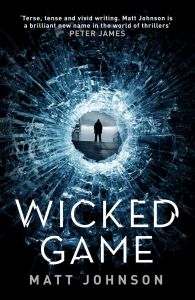
Wicked Game

unspecifiedIt may be strange – especially as I’ve often bemoaned those that don’t read outside of or exclude genres from their reading – but the home-grown, UK-based thrillers have never been something that have appealed to me. Perhaps it’s my own mundane interaction with the local constabulary or TV shows likes The Bill or Motorway Traffic Cops (or whatever it’s called) but I’d not really seen the potential for a gripping read there in comparison to – say – an alcoholic Norwegian detective hunting murderers in the snow or – say (again) – one-man armies called Jack chasing justice in other far-flung places….

But…. then there’s Wicked Game by Matt Johnson. And it changes that preconception I’d held and it’s a wonderful thing when a book can do that.

Wicked Game finds Robert Finlay as he leaves the Royal Protection team and heads back to uniformed Police work in his search for a quiet, normal, life with his wife and their young daughter.

Let’s be honest; no character in a book or film that’s looking for such a thing gets it – we all know how many detectives get pulled into stopping Armageddon just days before retirement and are all too well aware that Sergeant Murtaugh is “too old for this shit”. We know from the off, then, that trouble is coming down the track for Robert, especially after the explosive start to the novel, and Wicked Game doesn’t disappoint when it comes to the drama. Finlay is far from the standard ex-army turned police officer he’s lead others to believe – he’s an ex-SAS officer with a troubled past that’s now kicking down the door to his longed-for quiet life and demanding his attention. Police officers are being killed. Police officers from his own SAS regiment. Secretive meetings with MI5 follow, luring him in – then there’s an attempt on his own life and it quickly becomes clear that these murders won’t stop until either Finlay or the killer are stopped…. but what’s the motive behind the murders? Why is Finlay a target and who can be trusted?

Far from a standard game of cat and mouse, Wicked Game is a surprisingly complex mystery and one that reaches back in time to bring the old enemies of the past into the terrifying now with an array of action sequences, cliff-hangers and surprises that make for a great read.

The narrative split between first and third person works well (Finlay’s voice is a convincing narration and lends plenty of emotional ballast to the story too) as well as very effective in keeping the reader gripped – especially as the tension grows and those third-person characters such as Grahamslaw are in possession of information Finlay isn’t at crucial, life-threatening points.

They say write what you know and it’s clear that Matt Johnson is writing from experience (having served as a soldier and with the Met for 25 years). When it comes to detailing the action and police-side sequences, as it were, Johnson’s knowledge and insight give the novel a real sense of authenticity. He does a great job of delivering some very real and genuine sequences populated by characters underscored by a convincing authority and precision that can only come from actually knowing those people such characters are likely composites of.

But there’s more than just that insider knowledge and attention to details at play here and it’s that which makes Wicked Game well worth a read – Matt Johnson has a very real talent and gift for thriller writing. Wicked Game cracks along at a great pace with plenty of gripping and original plot twists and turns with a finale that wouldn’t be out of place in a book with a protagonist called Reacher.

With Wicked Game Matt Johnson skilfully weaves together these two facets to create a compellingly gritty and convincingly real thriller.

Thanks to Karen at Orenda Books for my copy and do check out the other stops on the Wicked Game blog tour:

Wicked Games Blog tour

Leaving Berlin

It’s a strange thing and one that’s most likely a result of the level of History taught in school during my education but great swathes of modern, post-war European history remained a mystery to me until very recently.

For entirely personal reasons I’m learning increasingly more about the history of Eastern Europe and what happened behind The Wall, as it were (on that note I sincerely recommend Revolution 1989: The Fall of the Soviet Empire) and am continually fascinated by what I discover.

One hole in my knowledge, though, is the period between the end of the Second World War and the formation of those two distinct countries that I grew up aware of: East Germany and West Germany. It may be down to education but then there’s also the fact that so little was allowed to be known about what happened in certain countries behind the Iron Curtain but there was, at least, an awareness of two distinct halves of Europe and, in particular, Berlin.

I’m oddly fascinated, for example, how the West managed to retain its ‘half’ of a capital city so deep in the Eastern ‘half’ of the country and the logistics therein.

There’s the fact that Berlin was on the receiving end of a very large battering from all members of the Allies in the closing stages of the war. There’s the period when it was divided in two like the rest of Germany and half fell under the GDR while the other ‘the west’. But there’s a knowledge hole that exists around that in between period; the time when a city was on its knees, its citizens still reeling from the destruction and the two opposing factions were still carving it up.

IMG_7753Leaving Berlin by Joseph Kanon goes a long way to both illuminating that period and creating an itch for more. It’s also one of those happy instances in Waterstones where you need another book to take advantage of the “Buy One Get One Half Price” deal and it the book you grab out of curiosity rather than having sought it out turns out to be a brilliant whim.

Set in 1949 Leaving Berlin finds writer Alex Meier returning to Berlin from America where he’d fled the Nazis in 1934. The official line is that – as a treasured author – he’s been invited to return by the Soviet authorities to help establish cultural future of the Socialist country. In fact he’s returned only to allow him to return to America. Persecuted for his communist beliefs during the McCarthy witch-hunts, he’s made a deal with the young CIA; return to East Berlin and act as their agent in order that he might return a patriot and be reunited with his son.

Except, of course, it all goes a bit tits-up for him from the off when his CIA contact is killed and he finds himself in a deadly game of espionage and counter espionage.

The dialogue, particularly, is great but the pacing and twists of the plot are fantastic.  What stands out for me, though, is how much more compelling it becomes as a result of its setting. With the war and its events still in people’s memories normality is a distant concept and so what people did during and just what they’ll do to survive after is a huge factor. Just as the lines between the city are in a state of confusion, so too the lines between who to trust. There’s a strange sense of surrealism throughout as a new normality attempts to establish itself yet is still surrounded and hindered by the physical (large swathes of the city remain piles of rubble, there’s power outages) and psychological aftermath of the war that mirrors that of Alex upon his return to such a city after living in California, out of the way of the destruction.

I’ve not read anything by Joseph Kanon before but I’ll certainly be on the lookout to do so on the basis of this. It’s also time to find what I can to plug this hole in knowledge too.

There’s ghosts in the towers, smearing honey on the lawns

IMG_7210

To say I love music would be an understatement. I’d bring up that Nietzsche quote but it’s been overused. I also love good fiction and the impossible quest to get my fill of both means storage is becoming an increasing problem. But the two very rarely mix well. There are precious few strong novels about music. It could well be because the reality would be considered too unbelievable as fiction (have you read Keith Richards’ Life?) and capturing the magic and power in making music without coming across heavy on the cliché can be tricky. For every Almost Famous and Great Jones Street there’s a Young Person’s Guide To Becoming A Rock Star.

However; The Rise & Fall of the Miraculous Vespas can now be added to that short list of great books about music.

Taking us back to Kilmarnock in the early 80’s, David F Ross presents the story of The Miraculous Vespas, a band formed and driven by their manager, Max Mojo, who – via some hard graft, a great song and couple of crucial run-ins with Boy George (though it’s still hard to believe there was a time when he wasn’t simply another ‘celebrity DJ’/talent-show judge with a highly questionable head tattoo) – manage to crack the top of the charts with their song It’s A Miracle (Thank You), taking us along for their ride to the almost-top.

However, this is more than a bitingly funny account of a young band’s quest for immortality –  there’s also the gang-war that’s running alongside as local gangs work to pull a fast-one over a big Glasgow crime family and come away clean. As every bit as compelling as the fortunes of The Miraculous Vespas, the McLarty storyline is a gripping and, at times, brutally violent and thrilling slab of gangster rivalry that wouldn’t be out of place in an early Bob Hoskins film (here I’m talking The Long Good Friday rather than the one with the cartoon rabbit).

Told with the occasional retrospective interjection from a modern-day Max Mojo, The Rise & Fall of the Miraculous Vespas is an absolute belter of a book that’s populated by an amazing array of characters. There’s a couple of familiar faces from The Last Days of Disco including Fat Franny Duncan (of whom this installment paints a softer image and, surprisingly, has one of the novel’s most genuinely touching scenes) but you’re never given to think there’s too many characters as Ross balances the story expertly amongst the cast as their roles, the rise of the Vespas and the McLarty saga come together into a brilliantly thought out and well executed – not to mention bloody funny – conclusion.

Chief amongst these new characters is the aforementioned Max Mojo. A heady blend of hair dye, a passion for music, lithium compounds and a dermination to live the Malcolm McLaren quote, that sits on the books jacket, that Rock ‘n’ Roll is “… that question of trying to be immortal”. If only he could get control of the voice in his head. Mojo is one of the most original and brilliant characters I’ve seen in fiction for some time and has probably given me more laughs than many.

Much like his first book, The Last Days of Disco, David F Ross paints a fond picture of this time despite the obvious shafting the region (where didn’t?) was taking under Thatcher. Times are tough – especially for the crooks – yet there’s an optimism shot through this time and you can’t help but shake the feeling that – for some – that fabled ship may just be about to come in. Ross does a great job of painting a truly encompassing picture of the era – the impending Miner’s Strike, the end of the Falklands Conflict and racism all help set the scene – while his use of regional dialect places the reader firmly in place as well as making for some of the funniest insults and dialougue I’ve read.

If I had a quid for every time this book sent me to Spotify to play a track I’d have… well, I’d probably have about £20 but the fact is that with references to tracks by Orange Juice, The Clash, Big Star and, of course, Paul Weller, The Rise & Fall of the Miraculous Vespas has got one of the best soundtracks you’ll find in fiction .

Social commentary, gang war, relationship ups and downs, interband relationships, Spinal Tap moments, humour and heartbreak and the power of music; it’s all here. There’s a lot going on in this book and David F Ross, an author to watch, injects it all with an genuine passion for music, an  unquestionable talent as both a writer and storyteller and, above all, a wicked sense of humour; The Rise and Fall of the Miraculous Vespas is uproariously funny. So many times I had to stop as I was laughing so hard I was turning into the annoying commuter in Mr Bean. Just the prologue, the creation of Max Mojo if you will, had me in stitches ( “…hands absolutely bastart achin’ fae they nails”). And as for the assumption that Hairy was Hairy Doug’s first name and the consequences for his partner…. well. If this book doesn’t make you laugh then, frankly, there’s something wrong with you.

David F Ross’ The Disco Days trilogy is due to be wrapped up with The Man Who Loved Islands. I for one can’t wait to get my hands on that.

Thanks again to Karen at Orenda for my copy and getting me onto the Blogtour, check out the other stops, and get hold of The Rise & Fall of the Miraculous Vespas as soon as you can.

Vespas blog tour banner