Just look at the list of Beatles songs that are his… If I Needed Someone, Taxman, I Want To Tell You, Within You Without You, Something, Piggies, that perennial herald of warmer weather Here Comes The Sun and While My Guitar Gently Weeps(!) to name but a few…
Granted, he happened to be in band with two other blokes who were quite handy with a tune so songs that would otherwise have been guaranteed single selections weren’t considered worthy enough. So instead of a scathing swipe at HMRC and a catchy-as-the-flu hook or a beauty of a tune about the dangers of overloading your brain with too many ideas at one time they released the one where the drummer intoned about living in a questionably-coloured underwater boat.
Still, after a couple of non-traditional solo releases while the band were still active, when the Beatles officially called it a day in 1970 (Lennon had called it quits the previous year) the foot had been taken off the hose pipe for George and he released the triple album All Things Must Pass – itself a gorgeous song that the rest of the Beatles had passed on (the berks) – in October.
All Things Must Pass is full to the brim with great songs, some of George’s very best are here: I’d Have You Anytime, My Sweet Lord, Isn’t It A Pity, What Is Life, All Things Must Pass, Ballad of Sir Frankie Crisp (Let It Roll) and, of course, Beware of Darkness.
Beware of Darkness has some pretty dense and dark imagery in the lyrics, wonderfully offset by some beautiful yet complex instrumentation (with a shift from G major to G sharp minor that really shouldn’t work but does so brilliantly) and George’s genuinely affirming words. Harrison was himself on a perpetual quest for peace and, religion aside, his spirituality and the solace he seeks to find within it are at the forefront in this one and whether you get on that wave yourself or not there’s no denying the sincerity of his vocal.
I can’t express how much I love this song, to be honest. It’s one of my go-to tunes when I hear that black dog barking in a far off field and is one of my own coping techniques when I worry it might get closer. I’ll drop this on and then, if it’s one of those days, follow it up with another Harrison related tune from the Python boys.
Undoubtedly a song that’s all over the airwaves and social media today but…. this post was in the works already and it seems fitting enough to push it through now.
Heading home yesterday evening I flipped open twitter and caught the rumours of Prince’s death before confirmation from his publicist changed it into a breaking news story. Shocking doesn’t do it justice.
It’s hard to recall the first Prince song I heard / knew. He was everywhere in music in the 80’s and into the 90’s. Nobody had such a prolific period of constant hits and a career-long streak of strong music.
I do know, though, that Purple Rain remains an ice-cold slab of perfection. There’s not a track on the album I skip. From the hit singles it generated to the breathlessness of Take Me With U, the brilliance of Darling Nikki and the pure Prince audacity-fuck censorship of its lyrics there’s just so many moments of genius on it you could lose count. No wonder it’s shifted upwards of 20 million copies.
For me though, the album, and Prince’s highlight is it’s opening track – Let’s Go Crazy.
It encapsulates everything that the album holds all contained in one four-and-a-half minte track – there’s the exultant chorus, the near-gospel backing vocals, urgent synths, and, of course, Prince’s startling guitar chops (for further evidence watch the little guy in the hat break this cover out of mundaity). This has been a go-to song for me for a long time, those times when the day has been a pile of cack, it’s time for Let’s Go Crazy. It’s impossible to not be uplifted by it, with the sermonising intro with it’s “Dearly beloved…” (boy have I seen that a lot on twitter today) and it’s rousing “and if the elevator tries to bring you down… go crazy; punch a higher floor”. Yeah… Prince is probably trying to evangelisize us with this one but, fuck me, it’s as catchy and brilliant as they come. It’s a pure rush of excitement listening to it especially when – in album format – it breaks into the start of Take Me With U and its opening drum solo.
Thanks to the Purple One’s very tight hold on his copyrights and sharing etc it’s hard to find a video to put here (or one that will stay active for longer than a fart) but let’s try:
Compilations are a funny thing. You’re never going to please everyone but, in theory, you need to give a good reason for existing fans to buy (and a hastily recorded or re-recorded track not considered good enough for the previous album doesn’t count) and enough solid quality to give a career-overview for new / cursory fans to get hooked.
Some people go as far as to turn their nose up at them. Yet I’ve used a ‘Best of’ to get into a fair few bands over the years (Asides from Buffalo Tom remains one of my most-played discs).
When it comes to grabbing compilations from bands I already hold the back catalogue of, I don’t tend to go the Best Of or Introduction To route. Especially on those groups or individuals that are no longer active. Yet I’ll still want a compilation – especially for car use – for those times I don’t particularly want to listen to just one specific album. The problem is, though, that my choice of what I’d consider essential listening very rarely coincides completely with the ‘official’ compiler’s (usually because they’re doing so with a specific aim rather than just cherry picking). So that’s when the old adage “if you want a job done right do it yourself” comes into play and I’ve a fair few of these home-made comps so far.
With the use of Spotify I can even share these here.
So here we go with the first.
Oddly enough the need for a self-compiled disc of The Beatles doesn’t quite fit the ramble above. I don’t own anything from their back catalogue (with the exception of The Magical Mystery Tour). Yet their output is so large that there’s a number of different compilations out there, again each with a different purpose – 1 obviously the chart-toppers, The Past Masters and Anthology seemed too wide-ranging for a good, succinct compilation. 1962-1966 and 1967-1970 came closest but again contained a lot of stuff that I didn’t really care for and when you consider the pricing of all releases Fab Four themed… no thanks. It’s worth noting that this compilation was created before they deigned to allow their songs available via iTunes and streaming so the borrowing of CDs to create this was necessitated (and no piracy was involved) – to be honest though I’d still do so as the idea of paying the required for the whole still makes me flinch.
I’m not a huge Beatles fan. I like a lot of their songs a lot, though, and enjoy them more as I get older, yet I could quite happily never hear some of their earlier stuff again.
So, my choice of Beatles tracks, and the compilation that I’ve kept in my car for some years now also serves as a “my favourite Beatles songs” list – all wrapped around the centrepiece of the amazing While My Guitar Gently Weeps… *
*Yes; George was the best Beatle. You might argue but you’d be wrong.
It was Come Pick Me Up that I heard first. Again on a monthly music magazine’s free CD. It seems a lifetime ago that I clogged my bookshelves with the print of the music press but there was some golden discoveries made there nonetheless and Ryan Adams’ first album was one.
As such I grabbed his second album Gold upon day of release. It’s one of those aiming-for-great albums that, while it doesn’t quite make it, you can’t help but feel the quality and ambition and think, fuck, there’s a whole lot of talent and potential here that’s only going to get better. But then the hype for this ‘next best thing’ derailed the train and it was some time before the dust settled, if it ever did.
Now Adams’ musical career, it’s ups and downs (though Rock ‘n’ Roll isn’t too bad), battles with Lost Highway and directions has been well and better documented elsewhere so I won’t assume that I can do is justice. There’s a few versions of Ryan Adams – there’s the alt. country of his début Heartbreaker, there’s the Cardinals-leading swagger of Cold Roses, the hushed acoustics of Ashes & Fire and even the heavy metal of Orion – all of which seemed to meld (save the latter) in the confident and hugely accessible recent, self-titled album.
For me, though, it’s those seemingly-simple but gently and subtly sneaky songs like Come Pick Me Up (with lyrics like “I wish you would, come pick me up, take me out, fuck me up, steal my records, screw all my friends….) that lure the listener in to something darker lurking beneath the surface that are his best.
My favourite is La Cienega Just Smiled.
Such a gentle, growing melody. Instantly hooking and soothing but there’s so much more there. The imagery is instantly simple and casual “on with the jeans, the jacket and the shirt” but then there’s the lines like “I’m too scared to know how I feel about you now” and “one breaks my body and the other breaks my soul”… all brushed off with “see you around”.
Ryan Adams has an arsenal of songs about being broken by love and/or drink/drugs but none of them, to my mind (and it’s my blog) as beautifully crafted and affecting as this:
Somewhere back in time when I started this blog I mentioned that I was toying with a post on the ultimate Pearl Jam set-list.
Pearl Jam live are a wonderful thing. Gallingly, though, I’ve only seen them live once. They seem to have now joined the list of great bands that consider playing at Milton Keynes and Leeds as a UK tour – what happened to the rest of the country? – and have given up playing at Wembley Arena (where I saw them on the Binaural tour).
A year or so back I read a great piece that stated: “Pearl Jam is known as one of the best live acts in its arena-filling weight class. After only fitfully listening to new Pearl Jam albums for more than a decade, seeing the band live reignited my interest in listening to them again. Pearl Jam will remain interesting to people for as long as it is able to tour.”
I genuinely believe that there’s not many acts that can touch them live in terms of quality, consistency and pure excitement. And, while I’m unlikely to be in the audience any time soon (their 25th Anniversary trek this year is limited to US/Canadian shows) there’s still plenty of opportunity to enjoy them live thanks to the unusual decision they took back in 2000 – the same tour I caught them on – to release an “official bootleg” of every (with a couple of exceptions) show to offer fans the opportunity to get a good-quality audio of each concert for a reasonable price.
Now…. given how many shows they play a year and that it’s been going for close to 16 years… that’s a lot of shows to choose from. I’m gob-smacked at the idea that some people own the lot.
I’ve got…. a few. Physically; just the show that I attended. I can always claim I’m on a Pearl Jam album that way.
On the iPod, however… well that’s a different story.
There’s probably a dozen or so. Some purchased legitimately and others… in the truer nature of Bootlegs. And each one of them is different and worth having in their own right. See, the thing is I got given the amazing PJ20 book one year – along with the DVD and soundtrack – and there’s mention of so many great shows that it’s impossible not to at least check some of the more significant ones out. Like the 2003 show in Uniondale when the band were heckled for their performance of Bushleaguer:
Which pisses Vedder off so much it’s apparent in the cover of The Clash’s Know Your Rights that follows.
I also have the trioofshows they played at the Tweeter Center in Boston that same year where they used the opportunity to play every song they’d played on the tour to at that point over the course of the three shows; 82 originals and 12 covers with only one repeat….
But to get to the original point; I’ve been hunting for that recording that, to me, represents the ultimate set list.
Back in 2012 (pre-Lightning Bolt), Eddie Vedder let a fan club contest winner choose the setlist for a show. Now the set that Brian Farias – for it was he – chose was pretty good. He even managed to get Vedder to play Bugs for only the second time. But it’s a big challenge, really… how to find the right balance.
I, for example, would want to hear a lot of deeper cuts. But then, looking back at the quote up top of this ramble, how would that play at a show when not all in attendance know every Pearl Jam song. So you do have to mix in the ‘hits’ as it were and – while I don’t always listen to it – Better Man always gets the crowd going and becomes something else live than on record.
Then there’s the case that Pearl Jam don’t do Greatest Hits tours and are usually touring in support of a new album. So what of the newer songs make the grade and still manage to keep the crowd going. In all honesty I wouldn’t really pluck a show from the Backspacer tour because I don’t really feel a lot of tracks from that album worked in that context.
Lightning Bolt, however, was a much stronger effort and there was a lot of stuff I was itching to hear live. Factor in the fact that the band were in great shape and playing better than ever, there’s a lot of gems to be found in the Lightning Bolt tour bootlegs.
So I think I’ve now been able to find the ‘perfect’ set list / bootleg. Well, sort of. Because there’s two.
Worchester, MA, October 15th 2013 is a 32 song strong set that packs in Leash (not as ferocious as I’d love to hear it played but I’ve yet to find a recording that does play it quite as strong as it could be and this one has a great story that precedes it), Red Mosquito and Man of the Hour along with newer cuts like Swallowed Hole and Infallible along with the tour-set-list regulars Mind Your Manners and Sirens. The energy picks up after a quieter start and there’s a great performance of Nothing As It Seems, Fatal gets a play in the first Encore and Crazy Mary makes an appearance. Oh, and Last Kiss.
(I love the moment at about 1:35 where someone realises it’s Leash and gives a joyous yelp)
Set: Release, Long Road, Elderly Woman Behind The Counter In A Small Town, Lightning Bolt, Mind Your Manners, Hail, Hail, Sirens, Even Flow, Nothing As it Seems, Swallowed Whole, Red Mosquito, Whipping, Corduroy, Infallible, Got Some, Save You, Leash, Let The Records Play,
Do The Evolution, Better Man.
Encore 1: Man Of The Hour, Yellow Moon, Fatal, Just Breathe, Spin The Black Circle, Unthought Known, Porch.
Encore 2: Last Kiss, Crazy Mary, Alive, Sonic Reducer, Indifference.
Meanwhile the tour closer at the Key Arena in Seattle on December 3rd finds the band in an even stronger form, the energy is high and they’re playing to a home-crowd. So tracks like Let Me Sleep, In My Tree and Pilate get pulled out, there’s better banter, Breath, State of Love and Trust, a story from Ed of how he was nearly lost at sea, Chloe Dancer / Crown of Thorns, Pendulum opens and Mike McCready playing Van Halen’s Eruption into Yellow Ledbetter brings the show to a close after 37 songs.
Turns out there’s a video of the whole show ‘out there’ which I’ll leave here as long as it lasts:
Set: Pendulum, Nothingman, Elderly Woman Behind The Counter In A Small Town, Interstellar Overdrive, Corduroy, Lightning Bolt, Mind Your Manners, Given To Fly, Pilate, Garden, Getaway, Even Flow, Sirens, In My Tree, Do The Evolution, Unthought Known, Black, Let The Records Play
Spin The Black Circle, Lukin, Better Man.
Encore 1: After Hours, Let Me Sleep,Future Days, Daughter, Chloe Dancer, Crown Of Thorns, Breath, State Of Love And Trust, Porch.
Encore 2: Supersonic, Got Some, Rearviewmirror, Alive, Kick Out The Jams, Eruption, Yellow Ledbetter.
So yeah; I think, between those two it’s as close to a perfect set-list / show recording as you’ll get. A good mix of the deeper cuts, the crowd pleasures, strong new material and plenty of Vedder’s stories and not a heckle in ear-shot.
Although I’ve not yet heard the show with No Code played in full or…..
To say I love music would be an understatement. I’d bring up that Nietzsche quote but it’s been overused. I also love good fiction and the impossible quest to get my fill of both means storage is becoming an increasing problem. But the two very rarely mix well. There are precious few strong novels about music. It could well be because the reality would be considered too unbelievable as fiction (have you read Keith Richards’ Life?) and capturing the magic and power in making music without coming across heavy on the cliché can be tricky. For every Almost Famous and Great Jones Street there’s a Young Person’s Guide To Becoming A Rock Star.
However; The Rise & Fall of the Miraculous Vespas can now be added to that short list of great books about music.
Taking us back to Kilmarnock in the early 80’s, David F Ross presents the story of The Miraculous Vespas, a band formed and driven by their manager, Max Mojo, who – via some hard graft, a great song and couple of crucial run-ins with Boy George (though it’s still hard to believe there was a time when he wasn’t simply another ‘celebrity DJ’/talent-show judge with a highly questionable head tattoo) – manage to crack the top of the charts with their song It’s A Miracle (Thank You), taking us along for their ride to the almost-top.
However, this is more than a bitingly funny account of a young band’s quest for immortality – there’s also the gang-war that’s running alongside as local gangs work to pull a fast-one over a big Glasgow crime family and come away clean. As every bit as compelling as the fortunes of The Miraculous Vespas, the McLarty storyline is a gripping and, at times, brutally violent and thrilling slab of gangster rivalry that wouldn’t be out of place in an early Bob Hoskins film (here I’m talking The Long Good Friday rather than the one with the cartoon rabbit).
Told with the occasional retrospective interjection from a modern-day Max Mojo, The Rise & Fall of the Miraculous Vespas is an absolute belter of a book that’s populated by an amazing array of characters. There’s a couple of familiar faces from The Last Days of Disco including Fat Franny Duncan (of whom this installment paints a softer image and, surprisingly, has one of the novel’s most genuinely touching scenes) but you’re never given to think there’s too many characters as Ross balances the story expertly amongst the cast as their roles, the rise of the Vespas and the McLarty saga come together into a brilliantly thought out and well executed – not to mention bloody funny – conclusion.
Chief amongst these new characters is the aforementioned Max Mojo. A heady blend of hair dye, a passion for music, lithium compounds and a dermination to live the Malcolm McLaren quote, that sits on the books jacket, that Rock ‘n’ Roll is “… that question of trying to be immortal”. If only he could get control of the voice in his head. Mojo is one of the most original and brilliant characters I’ve seen in fiction for some time and has probably given me more laughs than many.
Much like his first book, The Last Days of Disco, David F Ross paints a fond picture of this time despite the obvious shafting the region (where didn’t?) was taking under Thatcher. Times are tough – especially for the crooks – yet there’s an optimism shot through this time and you can’t help but shake the feeling that – for some – that fabled ship may just be about to come in. Ross does a great job of painting a truly encompassing picture of the era – the impending Miner’s Strike, the end of the Falklands Conflict and racism all help set the scene – while his use of regional dialect places the reader firmly in place as well as making for some of the funniest insults and dialougue I’ve read.
If I had a quid for every time this book sent me to Spotify to play a track I’d have… well, I’d probably have about £20 but the fact is that with references to tracks by Orange Juice, The Clash, Big Star and, of course, Paul Weller, The Rise & Fall of the Miraculous Vespas has got one of the best soundtracks you’ll find in fiction .
Social commentary, gang war, relationship ups and downs, interband relationships, Spinal Tap moments, humour and heartbreak and the power of music; it’s all here. There’s a lot going on in this book and David F Ross, an author to watch, injects it all with an genuine passion for music, an unquestionable talent as both a writer and storyteller and, above all, a wicked sense of humour; The Rise and Fall of the Miraculous Vespas is uproariously funny. So many times I had to stop as I was laughing so hard I was turning into the annoying commuter in Mr Bean. Just the prologue, the creation of Max Mojo if you will, had me in stitches ( “…hands absolutely bastart achin’ fae they nails”). And as for the assumption that Hairy was Hairy Doug’s first name and the consequences for his partner…. well. If this book doesn’t make you laugh then, frankly, there’s something wrong with you.
David F Ross’ The Disco Days trilogy is due to be wrapped up with The Man Who Loved Islands. I for one can’t wait to get my hands on that.
Could be because – following an unexpected dance along in HMV – my son has adopted Glory Days as his current favourite and I end up putting it on in the car in the mornings and so listen on after dropping him off. Could be. Could also be that (High Hopes aside) there’s such a volume of great songs that not many an artist can compete.
Today it’s all about American Skin (41 Shots).
It’s a funny one, or three, really.
Live In NYCwas probably the first ‘new’ Springsteen album I bought after getting into him. While not the most comprehensive live album it’s a great snapshot of the reunited E-Street Band at the peak of their performance for that tour and captures one of his then most contraversial songs, American Skin (41 Shots) in the most appropriate of settings – Amadou Diallo was gunned down by police officers in New York.
It’s an important song both socially and in terms of Bruce’s catalogue. Prior to it’s debut the only ‘new’ music played on the tour that wasn’t from Tracks was familiar Brooooce territory – Code of Silence, Land of Hope and Dreams and an early Further On Up The Road – but for American Skin (41 Shots) found the socially aware voice that he’d been lacking. It’s angry, it’s well crafted, it’s bitter and brooding, it’s tight, it’s got a fantastic guitar lead and solo from Bruce and explodes in all the right places and stands amongst his best tunes to this day.
It went down one of two ways – fans loved it. The police were pissed off. They called for a boycott of his shows after he premiered it in Atlanta. Fuck ’em; he bought it to Madison Square Garden with him and it was recorded on the accompanying album.
Then in order to get it played he recorded a studio version of the song in 2001 for radio (when it was still a relevant outlet). It’s a strong version. For one thing it’s the E-Street Band as was that first bought the song to life. It lacks the spark and passion of the live version but that’s to be expected. It’s still solid, though, and convincing in it’s message and sentiment and still has Bruce’s lead guitar:
Then, bafflingly and frustratingly to many, he stated that and so re-cut it for High Hopes. When I say re-cut I really mean that in letting Ron Aniello over-egg the pudding with needless he pulled the passion out of it, allowed Tom Morello to staple a piss-poor 80’s power ballad solo in place of his own and had Clarence Clemons’ sax swapped out for one performed by C’s nephew Jake. He stated that the song had never been ‘presented’ officially on a studio album. And I believe that everybody said “so?!” Neither has Seeds but he didn’t let Morello wreck that. It’s got the same structure, the same lyrics and build up but it just feels like a pale imitation, especially when it comes to the climax.
The 2000 studio version is streets ahead of the High Hopes version but the ultimate take is still the live recording from NYC….
… for years I’ve been mishearing that lyric as “flea bit beat-up monkey”, what the hell is a peanut monkey?!
Anyway….
I’m not a huge Rolling Stones fan. But there’s a lot of Rolling Stones songs that I love.
Monkey Man is one of em.
Id say I have a handful of Stones albums – a couple of compilations, Their Satanic Majesties Request, Sticky Fingers and Exile… I couldn’t say that I’ve listened to them all that much – more a cherry picking of tracks. Until I read Life by Keith Richards.
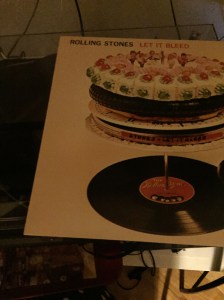
But… in that imported-non-event Black Friday and the subsequent weekend of discounts, my local chain music store (if I can I still buy independent but we’re all on a budget) dropped the price on a handful of albums – going so far as to slap “1 purchase per customer” on them as if the £5 discount was as monumental as a signed cover – and I grabbed Let It Bleed.
It’s already been round the turn table a good three or four times. I’ve often sought it out and for three reasons: Monkey Man, Gimme Shelter and You Can’t Always Get What You Want. Any album with those on it is automatically elevated to great status.
One of my favourite song writers – Mr Bill Janovitz of Bufallo Tom – is a huge Stones fan. He’s even written a couple books; a 33 1/3 on Exile On Main Street and one called “Rocks Off: 50 Tracks That Tell the Story of the Rolling Stones”. I don’t know that I could list 50 songs of theirs that I enjoy, probably a dozen or so.
“I used to work with a salesman who wore a Rolling Stones tongue-logo tie every day. His Stones were the Stones of “Satisfaction,” “Start Me Up,” and even (yuck) “She Was Hot”—huge arena-rock songs with instantly recognizable guitar-riff intros. Then there is the Stones fan of the classic-rock variety—the “Under My Thumb” and “Jumping Jack Flash” fan for whom the group, and the world, ceased to matter around 1968. My Stones are more about “Moonlight Mile,” “Monkey Man,” “Gimme Shelter,” “Rocks Off”—tracks that have the rambling, wide-open blues and rock sound that the band perfected in the 1970s. All three of us will devour Bill Janovitz’s “Rocks Off: 50 Tracks That Tell the Story of the Rolling Stones.”
I fall in the middle – my favourite tracks are, for the most part, of that “rambling, wide-open blues and rock sound that the band perfected in the 1970s.”
So, in the spirit of Top 10s (if it was Top 5 there’d be very little that wasn’t on Let It Bleed) and lists…. they are, in no real order:
Can’t You Hear Me Knocking
It’s not Brown Sugar, nor is it Sway or Dead Flowers… the standout track on Sticky Fingers, to my ears, is Can’t You Hear Me Knocking. I first heard this when it was used in Tedd Demme’s drug-smuggling, Scorsese-like Blow (more on Scorsese and the Stones to come of course) . I love the nasty, dirty-feeling power of that guitar riff, the breakdown and resolve of the saxophone (the hugely talented Bobby Keys appears on so much of their best work) and the fact that the breakdown happened, according to Mick Taylor because “toward the end of the song, I just felt like carrying on playing. Everybody was putting their instruments down, but the tape was still rolling, and it sounded good, so everybody quickly picked up their instruments again and carried on playing. It just happened, and it was a one-take thing.”
It’s a powerful, swaggering monster of a Stones song that contains every element of that blues rock sound that they nailed down so hard and perfectly in the Seventies.
Gimme Shelter
Another belter and, of course, also used in a few films – Goodfellas being the most memorable for me. Mick Jagger has said of it that “That’s a kind of end-of-the-world song, really. It’s apocalypse”. I read that Keith came up with the tune while stuck indoors as it was pissing down outdoors, meanwhile Mick was off filming Performance in which he beds down with Keith’s then-girlfriend Anita Pallengberg. Keith was just starting to use heroin and the anxiety and dread are palpable in the tune and it’s just a glorious tune that – while Satisfaction, Start Me Up or Brown Sugar might be the most well known – is undoubtedly their best.
Monkey Man
So; I’m a flea bit peanut monkey…. Whatever that means. The lyrics here are filled with snarl and bite (“I’ve been bit and I’ve been tossed around by every she-rat in this town”), the guitars even more so with Keith giving it some hard bluesy blasts, the piano is cracking and, like so much on Let It Bleed, pinned down by some ominous, urgent sense of menace. While Jagger’s line of “I hope we’re not too messianic or a trifle too satanic” is a classic, for me it’s all about the yell of “I’m a MONKEY…….”
You Can’t Always Get What You Want
For me, one of the best few seconds of any tune comes 50 seconds into the last Stones song of the Sixties. The choir finishes, the acoustic guitar has a few seconds alone and then the French horn pipes in with what could easily be considered a lament to the decade and the first chapter of the band’s life – the song was essentially all Mick in creation, Keith was beginning his journey into heroin addiction and Brian Jones was practically gone. And yet… it’s hopeful. Despite the universal doom and gloom Jagger sings of the song comes across as a near-rousing song of hope. The gorgeous arrangement, the keys, the horns, the shuffle of the drums and the kiss-off of the chorus “you just might find, you get you need” sung with a joyous sounding choir.
She’s A Rainbow
This is here almost entirely for personal reasons – it’s a song loved by my wife and I and played during our wedding – but it’s still a great Stones tune. Undoubtedly the prettiest thing they ever did and really the only one on Their Satanic Majesties Request that stands up on repeated listen. The delicate, pastoral piano, the shakes of the tambourine and then the dissonant breakdown with sharp, stabs of strings and the lewd “she comes in colours…” If the album was their attempt to take on Sgt. Pepper this song shows they could have knocked the Beatles into a hat and then jumped on it.
Their Satanic Majestieswas a turning point in a way probably not intended. However, from here they went into an unbroken run of classics up to and including Exile On Main Street and kicking off with Beggars Banquet, featuring…
Street Fighting Man
To me, more so than Sympathy for the Devil, this one marks the start of the next chapter for the Stones. The lyrics came after a massive anti-war protest Jagger had witnessed, there’s no electric guitar on it with Keith building layer upon layer of distorted acoustic (via a cassette recorder!) and Brian Jones adds sitar and tamboura into the mix, keeping it rooted in the Sixties.
Thru and Thru
Ah Thru and Thru… Perhaps not the most obvious choice and I’d be surprised if it turned up in too many critical lists but this is my list and I love this. I first heard it when used on an episode of the Sopranos and the subsequent soundtrack. That it’s a Keith-sung number threw me off at first as I didn’t realise it was a Stones song. I love the slow build up, the layered vocal of “waiting on a call from you…” and Keith’s bluesy growl (though the ‘love as a takeaway’ lyric might not be his best). You know the subtle strings, build up and minimal guitar is going to break, has to break – especially with the thunder-crack drums appearing around the two minute mark – and yet the build up continues perfectly for more than half of the song and when the full-band does kick in, it’s glorious.
Mother’s Little Helper
“What a drag it is getting old….” An absolute ripper of a song about pill-popping mothers all wrapped up in under three minutes with a gleeful “oi” at the end. I continually find myself singing that opening line.
Wild Horses
Yeah, yeah… but it had to be on the list really. But it’s only lately that it’s snuck in there (over, say, Honky Tonk Woman) for me. Why? Because I read that Keith had written the chorus for his infant son as they were about to head off on tour. As a father I know that sentiment all to well. That it’s also among the best examples of how Mick and Keith wrote together – Keith had the riff and chorus, Mick added the rest (supposedly his relationship with Marianne Faithful going into his lyrics) and the pair of them sharing the mic for the chorus. The music is that most Gram Parsons inspired acoustic strum Keith had down at the time andsounds like it could sit on the Almost Famous soundtrack, underpinned with some beautiful electric lines and piano and is so well known it really won’t benefit from my prattling on about it.
Paint It, Black
Of course you can’t have any kind of Best Of list for the Stones and not have this song. That drone, that sinister sitar (Brian Jones’ legacy, to me, is in how much of their early work he got that instrument into), the drums and those lyrics that would no doubt inspire only Bailey knows how many ‘moody’ emo lyrics –
“I look inside myself and see my heart is black
I see my red door I must have it painted black
Maybe then I’ll fade away and not have to face the facts
It’s not easy facing up when your whole world is black”
Even if, according to Keith, it was written as a bit of a joke, they penned a classic here. Aftermath is the first Stones album to benefit entirely from the Jagger / Richards song-writing partnership, a move which meant Brian Jones got a tad bored with guitars and began exploring instruments like the sitar. This song is the perfect summation of the early-Stones’ parts.
I’ve tried writing around this track as a post a few times and stalled. So let’s give it another pop…
As mentioned in my recent mumbling about Last Days of April’s latest On A Sea Of Clouds, I don’t recall how / when I first heard the band. I do, however, remember very vividly first hearing Aspirins and Alcohol. Or, at least, the first tumble of chords that kick it off – sitting in on a friend’s band practice when it was light-heartedly suggested as an exception to the “no covers” rule and the first twenty seconds or so of it were blasted through.
It’s certainly one of the Swedish band’s best songs and I’ve got fond memories of getting my request for it granted at small gig in a local venue (courtesy of a casual acquaintance at the time with the promoter).
There’s something immediate and arresting in the urgency of this song’s start that never fails to hook. It’s a very bitter track lyrically – I remember reading a review that said something along the lines of how Last Days of April used to write about every possible angsty teenage relationship and this one certainly fits that; just read the comments on the SongMeanings page. Hell, you can imagine goodness-knows how many ’emo’ kids agonising over this as if it were MY. SONG.
But get beyond that. It’s a belter, first and foremost. A massive rush and charge and I love the bitter, sarcasm in the lyrics and the “that’s nice…” kiss-off. It’s certainly a highlight on the album Angel Youth – which also includes a stellar second-half kicking off with the harpsichord-lead Make Friends With Time.
The band moved on from this sort of lyrical content pretty soon and gradually evolved into a more ‘mature’ sound – which has reached the point of lap-steel tinged Americana on their latest album – but this is certainly a call back to a time when labels like Deep Elm and Bad Taste were the ones with the rosters to watch and it was all so serious.
Ah, Last Days of April; now here’s a band that should be known to a much wider audience.
How and when I first came across this band I cannot entirely recall – I recall the name being one of those that were bartered about by a few of those friends of mine back a decade or so ago (before the internet was what it now is) amongst which music tip-offs were traded continually and all were keen to turn another on to a great band – Deep Elm / Bad Taste Records’ rosters supplying plenty of fruit…. think Appleseed Cast, American Football etc.
I can recall sitting in on a friend’s band practice when the guitar player hit the opening chords of Aspirins and Alchohol (of which I shall write more in another post) and getting hooked.
This Swedish band – which has now evolved into a somewhat rotating cast of musicians around core singer/songwriter/guitarist Karl Larsson – has been steadily releasing music since 1997 and evolving with each addition to the catalogue. Having been along for the ride since If You Lose It (and having caught a couple of shows in intimate venues), I’ve relished the band’s continued progress.
Arriving three years after their last effort Sea of Clouds marks a continuation of their sound’s evolution and Larsson’s maturity as a singer and songwriter.
Since Might As Well Live – the album which I think marks the end of the original LDOA sound – Larsson appears to have become an artist of second halves. Both Gooey (see the extremely catchy ‘Forget About It’ and ‘Why So Hasty’) and 79 (‘Lily’ and ‘Feel the Sun Again’) have reserved their best moments for Side B. That’s not to say these albums are only worth playing on one side, more that Larsson appears to stretch out and push beyond the simple pop structure. It’s then that the real fun is to be had.
The same is most definitely true of Sea of Clouds; it’s on those songs where Larsson is pushing beyond the sounds of his earlier records that the best songs are found. ‘The Artist’, ‘The Way Things Were’ are charming and straight-forward, ‘Oh Well’ a little more contemplative than LDOA of old and then we get to ‘The Thunder and the Storm’ – a stately tune underpinned by some superb playing that finally lets loose and propels the song into something else altogether. ‘Someone For Everyone’ is probably the most LDOA sounding song on the album but it’s the title track that holds it altogether.
‘Sea of Clouds’ is likely to become one of the songs I listen to most this year. A real slow-burning bruiser of a song, the title track is the best thing on here. A huge leap in songwriting from his earlier material, Larsson’s voice here is both wiser and more assured than ever as it’s given room to lament over a rolling-dark-cloud like backing with some sublime guitar flashes.
There’s a line in ‘America’ from Gooey: “I can’t go back to you, America” which has proven strangely prophetic as it seems that, starting with 79 and continuing here, Larsson has very much been under the thrall of America – specifically Americana. Where once LDOA albums tore past in a frenzied rush of fiercely strummed electric guitars, drums and songs about everyone’s love life, here the songs are of a calmer, more mature nature, embellished instead with delicate acoustic guitar layered with lapsteel – even a bit of honky-tonk on ‘Get You’.
A much more sedate and contemplative record than I was expecting but a strong and compelling collection of songs that’s not only impressive on first listening but suggestive of a real grower in Sea of Clouds. Hopefully it won’t be another three year wait until the next instalment.