In another perfect life….

Holy crap balls.

As the caption says “SURPRISE! Run. Our new song. Video directed by Dave Grohl. Turn it up”

Foo Fighters dropped a new song (their first new music since 2015) this lunch time – whether it’s from an upcoming album hasn’t been confirmed but after another new song was played live recently and given that the band have a very heavy touring itinerary lined up with a few festival dates in the mix it would be a very safe bet.

I’m a few repeated listens down the line already and I’m really enjoying this one. Better than anything on Sonic Highways. It’s ambitious, catchy as the flu and bloody good. The video is a blast too.


Times of Trouble

I’ve been a little numb the last few days and wondered if I should even say something about events, if there could be anything I can even add in something so seemingly self centred as a blog especially as it wanders into the more personal than music / books but…

In the wake of Chris Cornell’s shocking departure my wife sent me over an article – some years old, I should add, rather than one of those disgustingly inappropriate “wrap Eddie in bubble wrap” statements of late – on “How Eddie Vedder survived“. It’s a good article – more about how he lost the tortured element and found a sort of coping mechanism rather than getting lost. But it touched on something my wife knew nothing of: the Roskilde tragedy in 2000 when nine Pearl Jam fans were killed, crushed to death as the crowd rushed forward.

As I tried to explain the events I still found recalling them upsetting. I remember when the news broke, how I – and I’m sure all fans – felt so horrified. I’d seen the band exactly one month previous and to know that fellow fans had lost their lives in an environment in which you always felt welcome and relaxed- lost in music with fellow fans – seemed so impossible. The idea that nine people who had gone out to watch their favourite band wouldn’t be going home, that there would be nine empty beds, nine families lost beneath the tidal wave of grief… it seemed so impossible.

A horrible accident. A tragedy that shook the music loving world and nearly ended the band*. Then, a little under two years ago in Paris, a city that for a year or so was like my second home, 89 people were murdered at an Eagles of Death Metal Concert. No accident, part of a series of terrorist attacks in the city in which another 41 people would be killed.

Just a day  or two after talking about Roskilde with my wife, on Tuesday morning I woke up and, like, most other mornings, checked the news while waiting for the kettle to boil. I’ve never been to Manchester. I don’t think I’ve ever heard an Ariana Grande song but this… this shouldn’t be happening. The idea that you could go out to a music concert and not be safe, not come home…. it should be unspeakable.

Now, I’m struggling to write this because we’re now at the point where it’s gone from being 22 dead to learning the names of those people killed. Learning that an eight year old girl was taken from her family. That parents waiting in the lobby for their excited children to come out of the concert were killed. That teenagers, still children, filled with joy and love for music and the experience of seeing their favourite musician live, many experiencing a concert for the first time, were killed. It absolutely breaks my heart.

I grew up at a time when the IRA were very much active and civilians were being killed by their bombs. I remember my father trying to explain what and why these things were happening, the senselessness of it. The media wasn’t so full throttle / constant exposure as it is now but I do remember the real threat of it – they bombed Manchester, too, in ’96, the biggest bomb the UK had seen since WWII but their phone warnings ahead had meant that 75,000 were evacuated and nobody died. I remember a lack of public waste bins when the International Railway station in my hometown was opened for fear of IRA bombs being planted ( I think Prince Charles was due to open it and, since Lord Mountbatten had been killed by the IRA he was a conceivable target).

When the news broke on Tuesday morning my own young son was fast asleep and I – like I’m sure countless others – worry about the world he’s growing up in. I worry about what, when he gets just a little older, he’ll see in the news now that it’s so all pervasive and how I’ll struggle to explain the senselessness of it all. I do hope that I won’t have to but I’m not naive enough to believe that.

What I do hope, though, is that when I explain these things to him – be it as historical or, as I dread, current – that I’m able to point to how people react and respond as (aside from the usual stupid suspects) they are doing so now, and did then, in the face of terror; not with anger and violence but with a sense of coming together in support and strength. Not giving in and living in fear, shying from what we love, but in holding hands and standing up.

With such thinking I’m impressed and heartened that – just as in Paris in 2015 – in the days following, bands and artists continue to take the stage and audiences and music lovers continue to come together and experience live music. It’s a hard thing to do. The natural instinct being to hide, I suppose. I imagine every parent who’s bidding their children a “safe and fun night” as they head out to a show will do so being that little bit more anxious for a while to come.  Just as Pearl Jam still routinely call a halt to proceedings if they think it’s getting too aggressive in the ‘pit’ and implore the crowd to take a step back and make sure everyone is safe, concert goers will be more vigilante of their surroundings but it must carry on. Music and the love for it creates a community – as this and so many other blogs illustrate – and that’s never as clear or better experienced than at a concert. Long may it continue.

As Sgt Esterhaus would say,  “Hey, let’s be careful out there.”

*The band had made many a plea for the crowd to take a step back and, realising something was wrong, stopped playing. It was too late. Nine fans had been killed in the crush and bodies were being passed over the barricades. The remainder of the band’s European tour was cancelled and, for a while, they considered retiring. They couldn’t conceive how to go on after something so tragic had happened. The Danish Police even tried put the blame on the band for “encouraging the rush”. Vedder would ‘disappear’ for a year following the completion of the US leg of the tour but he and other band members would – and still do – reach out to the family members of those lost. When the band regrouped, the (not all as bad as it’s remembered) Riot Act album would feature two songs about Roskilde – ‘I Am Mine’ and ‘Love Boat Captain’ – as well as ‘Arc’ which features only Eddie’s voice, nine layers of it, as a lament for those lost.

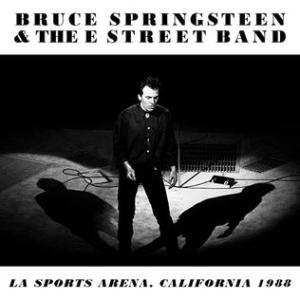
Bruce Springsteen – LA Sports Arena, California 1988

Just when I thought I was out… they pull me back in!

How? Well with a facebook post announcing that as it’s Mother’s Day in the US, Springsteen’s live archive series was available for half price – I’m still not sure I see the connection with the two but what the hell, I’d toyed with the idea of downloading one for a while and while the £ to $ ratio is a bit up and down depending on Maggie May or Putin’s Cock Holder, it still meant the idea of downloading a full concert for less than £4 was too good an opportunity to miss.

Which means that after something of a Bruce diet I found myself scrolling through the available shows and settling upon one from 1988 – from the Los Angeles Sports Arena, April 23rd to be precise. A 31 song setlist for less for around 10p a song.

Why this one, and not – say – the earlier peak-period concerts from, say ’75 or ’78? I reckon Hammersmith Odeon, London ’75 and the live concerts captured on The Promise: The Darkness on the Edge of Town Story, not to mention Live/1975–85 do a pretty good job of covering that era while anything post re-union I fancy hearing is also well documented with the Live In New York City and Hyde Park releases. The thing about all of those post-Tunnel Of Love releases, though, is that not a single tune from that album is represented. Given that I believe these represent some of his best, most insightful songs of his career, getting a high-quality concert from that era seemed like a no-brainer for me.

So.. with that in mind; is it any good? First thing – the sound quality is spot on and I only plumped up for the basic MP3s. And, having spent a couple of days with it now I can tell you that yes, it bloody well is good. I wouldn’t call it an essential live album but it’s a fascinating and at times brilliant concert and I would call it essential listening for a Bruce fan.

I say fascinating because the Tunnel of Love Express Tour found Bruce in a transitional phase. He was seemingly tired of the E Street and Bruuuuuce of old and was trying – perhaps in an interest to keep himself interested as much as give the audience something different – to mix things up. The venues were smaller than the megadomes of Bossmania and songs that had been setlist staples were culled in place of obscure b-sides (opener ‘Tunnel of Love’ was followed not by a crowd-shaker like ‘Badlands’ but by the weaker* ‘Be True’) and covers, band members were shuffled into different places – Max Weinberg was moved from centre to the side and Patti Scialfa was bought to a more prominent position, becoming more of a foil than Clarence Clemons. The positioning and role of Patti Scialfa caused much conversation at the time for obvious reasons.

Oh and, in a further effort to distance the work and tour from his former music, Bruce added a horn section – The Horns of Love. Those horns aren’t something I enjoy listening to, I’ll be honest. They trample all over ‘Adam Raised A Cain’ and their toots and parps over ‘Dancing in the Dark’ and ‘Glory Days’ don’t do anything for me. I reckon it would be a while before Bruce really figured out how to add the extended horn section into his live set-up**.

The shows on this tour were also stripped of on-stage spontaneity and the setlists were much more rigid. There’s also some strange moments – very rehearsed and repeated nightly – that make for odd listening. Whereas Live 1975/1985 featured the “Bruce’s Vietnam Dodge” story or tales about his relationship with his father, LA Sports Arena, California 1988 features a surreal 8-minute long ‘caper’ with Bruce and Clarence sitting on a park bench talking about ‘adult’ subjects such as marriage and kids in the build up to a horn-addled  All That Heaven Will Allow’. In fact the video below shows just that scene as well as the fact that it’s the same routine every night***.

But but but. Do not get me wrong. This is still a great live show. It’s fucking Springsteen after all and even with the sense of drama and fascinating confusion that shadow it this set is bloody good. Just check out the track listing:

Set One
“Tunnel of Love”
“Be True”
“Adam Raised a Cain”
“Two Faces”
“All That Heaven Will Allow”
“Seeds”
“Roulette”
“Cover Me”
“Brilliant Disguise”
“Spare Parts”
“War ”
“Born in the U.S.A.”

Set Two
“Tougher Than the Rest”
“Ain’t Got You”
“She’s the One”
“You Can Look (But You Better Not Touch)”
“I’m a Coward”
“I’m on Fire”
“One Step Up”
“Part Man, Part Monkey”
“Backstreets
“Dancing in the Dark”
“Light of Day”

First Encore
“Happy Birthday to Roy Orbison”
“Born to Run”
“Hungry Heart”
“Glory Days”
“Rosalita (Come Out Tonight)”

Second Encore
“Have Love, Will Travel”
“Tenth Avenue Freeze Out”
“Sweet Soul Music”
“Raise Your Hand”

Yes; that is ‘Roulette’ sitting in there rubbing shoulders with a searing version of ‘Seeds’. Yes; that’s 8 songs from Tunnel of Love and they all hold their ground with some of the heavy weights of Bruce’s catalogue, specifically the meld of ‘Ain’t Got You’ into ‘She’s the One’. Video again taken from another night but…

There’s no ‘Thunder Road’ or ‘Badlands’ and ‘Born To Run’ is the acoustic recasting that would also feature on the Chimes of Freedom EP later that year but, with his desire to present his newer music in a more serious, less Bruuuuce light seemingly sated toward the end of the second set, Springsteen’s classics deliver in the same crowd delighting way they always did and will – ‘Backstreets’ is dedicated to the fans and they react accordingly and when ‘Rosalita’ kicks in the roof is torn off (Bruce making a point by singing “you don’t have to call me lieutenant Rosie.. But. Don’t. Call. Me. BOSS”). The songs from Tunnel of Love were already well known to the audience – the album had been out a good six months by now – and cuts such as ‘Brilliant Disguise’, ‘One Step Up’ and even ‘Two Faces’  are met by rapturous applause and, with the band now well broken in on the tunes and their roles (this was still only Scialfa and Nils Lofgren’s second tour), delivered as strong as the deeper cuts. ‘Spare Parts’, once its oh-so-80s piano intro is done, rips along like the scorcher it is on record.

Tunnel of Love was a near-perfect album that captured Bruce at his most insightful and human. The tour that followed marked not only the live casting of these songs but an artist trying to recast himself too. This tour would be the last time he would play with the E Street Band until 1999, he would shortly divorce his wife and begin a lasting relationship with Patti Scialfa, spend time attending to his personal life and his inner turmoil, taking a five year break from his career in the process. As such LA Sports Arena, California 1988 makes for a fascinating and captivating listen capturing the end of an era, the closing of the first chapter of Bruce Springsteen and the E Street Band. I’ll be listening again for sure, £4 well spent.

*In comparison to the wealth of B-Sides he could’ve chosen but then I believe it was part of the ‘relationships’ theme of the show.

**I still don’t think they’re necessary. Live the E Street Band is one of the unstoppable, unbeatable things that doesn’t need padding out. It tears the roof off when in no-frills mode.

***Again, nothing that new, I read a piece in Rolling Stone from the Magic tour rehearsals that detailed that all of the gestures and interactions are pre-rehearsed rather than ad-libbed but then that’s not an 8 minute ‘bit’ involving a park bench.

New Songs from Old Friends

Crikey; I thought 2017 would be a slower one for new releases than last year but here we are while the year is still fairly young and the pre-orders for new albums are starting to tempt…

Leaving aside Radiohead revisiting OK Computer (because we’ll come to that soon enough) there’s shiny new albums (or white or indies-only clear) confirmed from a few old favourites  with new tracks already buzzing in the ears.

The National – The System Only Dreams in Total Darkness

It’s been four years since Trouble Will Find Me. Four. ‘The System Only Dreams in Total Darkness’ is, aside from a title like  Philip K Dick novel, more direct and immediate than anything on that album – no slowburn, just aggressive and urgent – and is the first release from Sleep Well Beast due in September.

Mogwai – Coolverine

Also dropping in September is Mogwai’s just-announced Every Country’s Sun. The untouchable Glaswegian post-rock legends are on a real flyer at the moment with a good five years of solid releases following 2011’s Hardcore Will Never Die, but You Will – soundtrack Les Revenants (2013), Rave Tapes (2014), compilation Central Belters (2015) and soundtrack, again, Atomic (2016) proving essential additions to my collection. Always good for track name’s Every Country’s Sun – along with the already shared ‘Coolverine’ features tracks called ‘Brain Sweeties’, ‘1000 Foot Face’ and ‘Don’t Believe The Fife’. Cannot wait.

The War On Drugs – Thinking of a Place

While there’s no album confirmed or named, it can only be a matter of time before the follow up to 2014’s hypnotising Lost In The Dream is announced. If this teaser is anything to go by it’s going to be great.

Pearl Jam – Again Today

So I’m not even familiar with Brandi Carlile but her 2007 album The Story has been covered by a variety of artists fora sort of 10 year celebration called Cover Stories with all proceeds going to War Child UK. Pearl Jam have contribute their take on ‘Again Today’. The original is a much quieter thing whereas Seattle’s finest hit it at full speed.  While it’s a cover it’s good to hear something new from Pearl Jam as the ticking clock continues to put distance between now and their last album and they’re definitely one of those bands with a knack for a good cover (almost a post in itself).

Out of Europe: A French Top Five

So as the news arrives that France has decided not to vote in a fascist president* (even if 11 million of them did vote for one –  what the fuck mes amies?) I thought that I’d revisit the Top Five / Out of Europe format with a quick list of those songs – a sort of “this is what we’re saying goodbye to” from those countries that will remain part of the EU long after our pathetically ego-driven and pig-ignorant leader has ripped us from it.

Already covered: Sweden

France is, of course, our closest neighbour. Living down in Kent I’ve always been aware of that proximity and, when I worked down by the coast I’d see it on a daily basis, the rising of the North’s cliffs and coast on the horizon, often pulling up for lunch, looking at it across the Channel and wondering about the culture that dwelt over such a small stretch of water and just how close, within reach exploring it was. It was my first taste of wanderlust.

As it would happen, I ended up spending a large amount of time in France and Paris a few years later as my wife was still living there for the first year or so of our relationship. As such, while you end up with mixed feelings about any country / place you spend a lot of time in, I hold many a fond memory for the place and most of these songs are tied up in that.

So…. in no particular order and trying to cover as good a spread of genres as possible….

Noir Désir – Lost

Yeah…. so; this kind of enters into the whole separation of art from artist and whether you a) can and b) is the art more important than the artist. Given that everything Noir Désir recorded preceded Bertrand Cantat’s violent and fatal assault of his girlfriend** it should be the case that one of France’s biggest rock band’s work remains free to stand alone but it’s a heavy shadow that’s been cast over it. Still, as I’ve said before – I wasn’t aware of this when I got into the band and I still enjoy the music as it reminds of me of my time there, having discovered them while sat in traffic in Paris and listening to the radio. This one comes from their final album des Visages des Figures, a more brooding affair than previous efforts but a successful one.

MC Solaar  – Nouveau western

A genius recasting of Serge Gainsbourg et Brigitte Bardot’s 1968 classic French song ‘Bonnie and Clyde’ – that song itself reportedly based on a poem Bonnie Parker had written moments before she and Clyde Barrow were gunned down. MC Solaar – or Claude M’Barali to give him his full name – was one of the first to get rap through to the mainstream in France. ‘Nouvaeu Western’ tackles racism and colonialism, is catchy as hell and features an absolutely brilliant video.

M83 – Kim & Jessie | Air – All I Need

If we’re talking French electronic music (and not discussing Jean-Michel Jarre) there’s got be three bands that will come up: Daft Punk, Air and M83. I like a bit of Daft Punk but couldn’t really say I listen to any of it enough to warrant a place for it here. M83’s ‘Kim & Jessie’ had me hooked from the opening with those monumental electric drum hits. There’s something so surging, nostalgic and warm about this song that’s irrefutably good. Air’s ‘All I Need’ from their first album Moon Safari (nearly 20 years old ffs) has a similar effect on me, just bliss.

Yann Tiersen – “J’y suis jamais allé”

Man I could probably fill another post with rambling about French films and their soundtracks and may well do at a later date when you know… procrastination allows.  I’d have to talk about Eric Serra’s soundtrack work and give off gas about Subway or how addictive I find from Enae Volare from Les Visiteurs and….  Let’s get this list finished first though.  Probably the most well known soundtrack and most obviously ‘French’ of the lot though is this piece from the mighty Yann Tiersen’s second album Rue des cascades as it would go on to feature in his soundtrack for Amelie five years later, catapulting it and Tiersen to a much greater audience. I still love it though, cliché as it may be.

This is, of course a quick list – ie; those that came to me first. If I sat down and gave it more thought then a) this would never get finished and posted and b) I would likely swap a few but then….

Honourable mentions:

Yael Naim – Paris

Alain Bashung – J’écume

Charlotte Gainsbourg – 5:55

Eric Serra – Guns and People

*I’m trying (clearly not completely succeeding) to avoid politics on this blog but I will say that while I celebrate any victory over far-right, holocaust-denying fascism I don’t believe Macron is a strong result either and the thing with his wife….. forget about it.

**Cantat was sentenced to 8 years in prison for Involuntary Manslaughter and was released on parole having served 4. During his time in prison his house was burnt down. After his release – much protested by the band made a brief attempt at returning but the guitarist called it quits citing  “emotional, human and musical differences” with Cantant and the band announced it was done. Cantant has continued in music though this remains a controversial discussion point in the musical press and community.

Colin Hay…

“All around is anger, automatic guns
Death in large numbers, no respect for woman, or our little ones
I tried talking to Jesus, but he just put me on hold
Said he’d been swamped by calls this week
And He could not shake his cold…”

This was going to be another instalment in the “Tracks” series I started sometime ago -and have added to sporadically since -about Colin Hay’s ‘Beautiful World’. Except that every time I listen to ‘Beautiful World’ I end up cueing up another Colin Hay song and another… so I thought I’d have a bit of a ramble about and around the fella and his music. Or the bits of it that I know / like at least.

You see and there’s something so mellow and addictively charming about Colin Hay’s work that it’s something of a go-to when I feel the need to chill a bit and feel the air going in… and out… It’s also something of an uncomplicated palate cleanser as I wind down after the Springsteen marathon. He’s a bloody fine acoustic player and has a way with a song that’s both simple and affecting as well as a fair bit of humour. Perhaps it’s also the Australia connection to it that I enjoy like so many other things from Down Under.

Born in Scotland before moving to Australia with his family when he was in his teens, Colin Hay is perhaps best known to many for the pop-rock / new wave band he formed with his new mates; Men At Work. Aside from their ubiquitous hit ‘Down Under’, Men At Work rode the wave of interest in all things antipodean in the 80’s and scored international hits with songs like ‘Who Can It Be Now?‘ and ‘Overkill’ – of which Colin Hay would make a cracking acoustic version during his solo career:

Which is probably how Colin Hay solo found a larger audience courtesy of his playing it throughout an episode of ‘Scrubs’.  Hay went solo after Men At Work called it quits in 1985, his first album on his own following a couple of years later. Like all band leaders who go solo, it took him a while to find his own way, as Wikipedia has him saying: “After Men at Work, for the better part of a decade, I was stumbling around being unfocused. It was pre-internet, I really had to try to find my audiences by going out on tour. Men at Work really didn’t build a foundational audience. We came in as a pop band with enormous radio success; once that goes away and the band breaks up the audience tends to go away with it. You’re left with what you want to make of it. ”

Another Zach Braff vehicle – the 2004 film ‘Garden State’ – is where I, and I’m sure countless others, first became aware of Colin Hay, though. The film and its high selling (1.3 million copies) soundtack features Hay’s haunting ‘I Just Don’t Think I’ll Ever Get Over You’:

The song itself is from Hay’s 1998 album and my favourite of his, Transcendental Highway. It’s on this album – and it’s predecessor Topanga – that Hay really finds his voice as a solo artist. He even manages – with ‘My Brilliant Feat‘ – to muse on his former success and current situation; “A jack to a king and back, then you have to pay to play”. There’s not a bad tune on it and every album since has been what I’d call ‘solid’ to ‘pretty bloody good actually’, each delivering a few nuggets to add to the iPod at least. Occasionally bordering on ‘adult contemporary’, more often acoustic with wry lyrics and always offering proof that Mr Hay has a way of creating a catchy tune.

So, along with those included above I think I’d also give a shout out to those tunes gathered below.

Least to Most: Bruce – Darkness on the Edge of Town

“For the ones who had a notion, a notion deep inside,
That it ain’t no sin to be glad you’re alive
I wanna find one face that ain’t looking through me
I wanna find one place,
I wanna spit in the face of these… BADLANDS!”

Here we go then; my favourite and most-played Bruce Springsteen album and likely up there as a favourite album full stop, Darkness on the Edge of Town.

The history surrounding Born To Run‘s follow up is well covered: following internal conflicts and examining of contracts, Springsteen and his former manager Mike Appel entered a legal battle that would prevent Bruce from recording any new material until its resolution in May 1977. It’s a strange one to consider given how successful Born To Run had become but, after the protracted break from recording, Springsteen found himself in a make-or-break situation for the second time in a row. He now needed to prove that a) he still had it and b) Born To Run wasn’t a fluke and, for the record company too, that he was a viable artist.

When he did hit the studio, Springsteen was overflowing with ideas and songs and the sessions for Darkness on the Edge of Town marked the first of many protracted recording periods where more songs would be recorded than released – as proven by the wealth of strong material left off the album and included on Tracks and The Promise. I could just as easily play ‘best non-album Darkness track’ to ‘best Darkness track’ such is the quality of the cut songs.

Acknowledging that the “music that got left behind was substantial”, Springsteen has said that ““Darkness was my ‘samurai’ record, stripped to the frame and ready to rumble.” In order to filter through the thirty plus songs – in a recorded and ready state, not to mention those in other stages – numerous ‘track listings’ and sequences were plotted* before the final selection and sequence was made ready for release in June 1978**.

As the now-released tracks show, the recording sessions found Bruce running through almost every conceivable structure – from gorgeous pop songs to old school R&B. When it came time to the crunch, though, the excess was cut, the songs were honed down to their essentials and the arrangements tight*** – a vast contrast to the Wall of Sound employed for Born To Run – with the songs recorded by the full E Street Band, tight and honed after touring since 1975, at once. Steve Van Zandt would earn a co-producer credit for helping Bruce tighten the arrangements.

Darkness on the Edge of Town is Springsteen’s best guitar album. Whereas Born To Run was written mostly at the piano, Darkness is clearly a six-string job and sees a return for those chops that had started to get space on The Wild, The Innocent… before being lost in the mix. Check out every live version of ‘Prove It All Night’ or the angst-driven ‘Adam Raised a Cain‘ or ‘Candy’s Room’:

Yes, the songs on Darkness are more serious – Springsteen, flush from Born To Run‘s success having returned home to find those he grew up with struggling with the blue-collar life he’d escaped had also weathered a lengthy and unpleasant lawsuit having realised that the wool had been pulled over his eyes- but they’re very well written and is perhaps the best example of his marrying the rousing (‘Badlands’) with the minimal (‘Factory’). Oh, and it also contains what I consider his finest lyrics on his finest song: “Some guys they just give up living, and start dying little by little, piece by piece”:

There’s a lot of fun on the album, too. I reckon if you get to a Springsteen show and they pull out a  rave-up on ‘Prove It All Night’ then nobody will be heading to grab a beer, they’ll be there singing along:

Darkness on the Edge of Town is Springsteen’s first album of maturity. It takes in and refines  everywhere he’d been and serves as a signpost for everything he’d go on to record later.

An album of defiance in the face of struggle that cracks along with an urgency and taut electricity. It’s my favourite Springsteen album and brings this Least to Most exploration of Bruce to an end.

*A look through the (very much worth investment) box set The Promise: The Darkness on the Edge of Town Story will show just how many.

**Recording sessions were finished early January ’78 with mixing dragging on until late March with a number of mixes being toyed with and one (‘The Promised Land’) being changed as late as April.

***For evidence see the difference between Darkness‘ ‘Racing in the Street’ and ‘Candy’s Room’ vs ‘Racing in the Street (’78)’ and ‘Candy’s Boy’ from The Promise.

25 Years of Alive

Blimey… 25 years?

Where does time go? Anyway, a quick share in between editing other posts: I’m loving this video that  Kevin Shuss (Pearl Jam’s videographer) put together to celebrate Pearl Jam’s induction into the Rock and Roll Hall of Fame (thoughts here).

Pearl Jam are right up there at the top of my Unimpeachables list (I ought to write that list down really). I’ve been listening to the Vs/Vitalogy box (and the live album included) in the car for the last week or so and given that I believe this era  represents peak Pearl Jam I was most definitely heartened by the band’s published response to the ‘drummer debacle’ that had been stirred by their induction*:

This brings three things to mind:
1. Just how many years I’ve been loving this band.
2. They are a decent bunch of guys really
3. It’s been three and a half years since Lightning Bolt! What the fuck, guys? Get your arses in the studio already ffs.

*Though I, and many, are certainly not impressed by their cropping out of former drummers when it comes to photos on social media etc.

Least to Most: Bruce – Born To Run

“One day I was playing my guitar on the edge of my bed, working on song ideas, and the words ‘born to run’ came into my head… I liked the phrase because it suggested a certain cinematic drama that I thought would work with the music I was hearing in my head.”

There’s probably very little I could add to anyone’s knowledge or appreciation of Born To Run, an album that’s undoubtedly at the top of many a list and is very likely many people’s favourite album of all time. ‘Born To Run’ may have taken six months to write but it and Born To Run changed everything for Bruce, both in terms of sales / success and writing. This was the album that lived up to the promise of ‘Rosalita (Come Out Tonight)’, maintaining its excitement and drive “while delivering it’s message in less time and with a shorter burst of energy. This was a turning point, and it allowed me to open up my music to a far larger audience.”

It was this song that made sure the world would become aware of Springsteen in more ways than one. Neither his début or The Wild, The Innocent and the E Street Shuffle had achieved the level of success that would make a record company throw money for studio time at him. He had to write something that would get him his last shot. He may be somewhat flippant about its origins (if not its impact) now but writing ‘Born To Run’  in early 1974 got him that chance – it was recorded during touring breaks (with drummer Ernest ‘Boom’ Carter*) and an early mix was released to radio in November of the same year. It’s popularity on radio meant previous Springsteen singles began picking up more airplay and gave him validation to get to work on the rest of the album.

Like, I’m sure, it was for many, ‘Born To Run’ was the first Bruce Springsteen song I was aware of. Specifically the 1987 video from a performance shot during Boss Mania. What strikes me most about the song, and the album as a whole, is the poetry of the lyrics. How many other FM rock songs used a lyric like the “the amusement park rises bold and stark” or “beyond the Palace, hemi-powered drones” found in ‘Born To Run’? And if we’re talking lyrics, let’s look at how the album kicks off:

“The screen door slams, Mary’s dress waves. Like a vision she dances across the porch as the radio plays.” Or what about the “One soft infested summer” of ‘Backstreets’ or ‘Jungleland’ with it’s “In a bedroom, locked. In whispers of soft refusal and, then, surrender”? Bruce may have claimed that “the poets down here don’t write nothing at all” (I’ll admit the double negative still bothers me some) but from a lyrical point of view, Born To Run saw the volley of words on Greetings.., the romance of The Wild, The Innocent… turn into something much more direct and universal (earlier characters and scenes were much more specific, that ‘screen door’ could be anywhere) and coupled with a new-found confidence from years of honing his act on the stage to produce some of Springsteen’s most evocative and memorable lines.

Work on the album is something of a legend in itself – Springsteen aware that it’s his make or break shot, agonising over takes and layering track upon track (there’s close to a dozen guitar tracks on the title song) as he struggled to explain the sounds he heard in his head, it lead to a changing of both studio location and began the changing of the guard with Appel vs Landau when the sessions got bogged down… or even the number of takes it took to get Clarence Clemons’ finest performance just right…

The thing is that such ardent efforts can sometimes lead to something that just sounds overworked**. In Born To Run though, it equals magic. You don’t hear what must have been a stressful session in those closing minutes of ‘Jungleland’ or the fact that it took nearly 14 months to record an album that fades out less than forty minutes later than a harmonica swept it in. What you hear is an album of meticulous detail and ambition underpinned by a songwriter hitting his stride and not holding back.

It’s packed with moments of magic – the intro of ‘She’s The One’*** giving away to the Bo Diddley beat that Springsteen admits he wrote just to hear Clarence blast all over, the jazzy film-noir intro for ‘Meeting Across The River’, the “hiding on the Backstreets” refrain, every single second of ‘Jungleland’ but especially it’s mid-point swing and ‘this ain’t over yet’ sax break….

Every song on this album works on its own. The biggest ‘hits’ from Born To Run – the title track, ‘Thunder Road’ ‘Jungleland’ – all stand as great songs in their own right but (and I urge you to go and do so) work best when played in sequence, they belong together. They ebb and flow as a story across one magnum opus and create one of the greatest albums ever made.

I will say, though, that it’s worth making sure that you get a decent master of this album. The first one I had… the remastering for CD was pretty crap. The version (that I guess is now in standard production) that came with the 30th Anniversary box really jumps out at you.

*If you’re only gonna be on one Bruce Springsteen song….

**Ahem; Human Touch

***Bruce wasn’t even sure if he should put this one on the album

Least to Most: Bruce – Tunnel of Love

“Then the lights go out and it’s just the three of us
You me and all that stuff we’re so scared of”

In June 1984 Bruce Springsteen released Born in the USA. It was the most successful album in America in 1985 (the year following its release), shifted over 30 million copies, spawned SEVEN Top Ten singles, saw Springsteen shift from selling out arenas to stadiums and launched Boss Mania. Just as America’s celluloid heros took the form of muscle-bound Vietnam vets, a gym-enhanced Springsteen preached his own unique take of Heartland Rock to the masses from the radio to stages around the world and MTV as Bruce embraced the video format.

So how do you follow that? If you’re Bruce Springsteen, you demur from the expected. Exhausted and, according to many a report, changed by the success of USA (how you could you not be?), Springsteen took something of a break by his standards and focused on his personal life. At the peak of Boss Mania, Bruce met and married actress Julianne Phillips and sought the settled down personal life that had thus far eluded him. He kept a low profile living on the west coast for a year then, in 1986, logged a series of solo sessions in his home studio, Thrill Hill West. But, with a market and fan base hungry for new product, those sessions were abandoned and focus shifted to preparing his first live album. Live 1975-1985 was released against advance orders of 1.5 million.

As 1987 got under way Bruce headed back to New Jersey and began work on his next studio album, cutting three songs in one day. This time round, though, the writing took a different direction and most of the recordings were completed alone and with little involvement from the E Street Band*. Springsteen made a conscious decision to step back from the bombast.

“I really enjoyed the success of Born in the U.S.A., but by the end of that whole thing, I just kind of felt “Bruced” out. I was like “Whoa, enough of that.” You end up creating this sort of icon, and eventually it oppresses you….So when I wrote Tunnel of Love, I thought I had to reintroduce myself as a songwriter, in a very noniconic role. And it was a relief.”

Tunnel of Love is often referred to as the point at which Bruce began writing about men and women in relationships. That’s certainly not true – he’d been doing so for most of his career – only those relationships were more ‘fairytale’ (bleak or joyous) and told from the somewhat distant standpoint of the loner image Springsteen’s previous lack of commitment in the arena had afforded him. No; Tunnel of Love is Springsteen’s first set of truly nuanced, intricate, intimate and mature relationship songs that handle adult relationships and, yes, chiefly, marriage.

In focusing on his own relationship and putting those thoughts to song, Bruce created his most personal album to that point. It was clear that for the most part, these songs – besieged by inner demons – were based on personal experience. Of course, this inward focus didn’t please all. When he played the opener (the sparse ‘Ain’t Got You’) to Steven Van Zandt, it led to one of the biggest fights the pair had had- “I’m, like, ‘What the fuck is this?'” recalls Van Zandt. “And he’s, like, ‘Well, what do you mean, it’s the truth. It’s just who I am, it’s my life.’ And I’m like, ‘This is bullshit. People don’t need you talking about your life. Nobody gives a shit about your life. They need you for their lives. Thats your thing. Giving some logic and reason and sympathy and passion to this cold, fragmented, confusing world – that’s your gift. Explaining their lives to them. Their lives, not yours.'”

For an album opener, Ain’t Got You, is an odd one. I imagine it was sequenced in that way to give as clear an indication as possible that this isn’t Born in the USA 2. But it’s ‘Tougher Than The Rest‘ that sets the tone for the album – layered, synthesiser-heavy sound with a bit of menace and shot through with personal lyrics.  For my money (and my blog), that personal insight adds a truth and grit to these songs that had erstwhile been absent from Springsteen’s relationship songs and look for a larger goal. No longer do Bruce’s characters jump in a car and go looking for a promised land, Tunnel of Love (as with Nebraska) finds them dealing with the fact that the answers to their troubles lie with themselves. In ‘Cautious Man’ Bill Horton even heads down to the highway but “when he got there he didn’t find nothing but road”.

The album isn’t entirely without the sheen and polish that would lure radio, though and Springsteen threads his quieter, more subdued and introspective songs around a roster of FM-friendly tunes. The album’s centre piece ‘Brilliant Disguise‘ (which Springsteen has referred to as containing the real crux of the album in its lyrics) was a Top Five hit and a further four of its songs were released as singles** including the album’s sole out-and-out rock tune ‘Spare Parts. Personally, my favourite of those is ‘One Step Up’ – that simple but effective melody that ticks away throughout just clicks perfectly for me.

Given the events that followed its release, Tunnel of Love is mostly viewed as Springsteen’s ‘divorce album’ – he’d soon part ways with both his wife and the E Street Band – and so it tends to be signposts for this that are looked for in the lyrics. Certainly ‘One Step Up’ with “we’ve given each other some hard lessons lately
but we ain’t learnin” fits that mould but to single-track the album in such a way would be way off as it’s much more of a multi-dimensional album than that. Songs like ‘All That Heaven Will Allow’ and ‘Valentine’s Day’ are those of a man still looking for the salvation of love (“They say he travels fastest who travels alone, but tonight I miss my girl mister tonight I miss my home”).

Still, with the hindsight of history, the gruff “Thanks Juli” in the liner notes, it’s going to be hard for Tunnel of Love to be seen as anything other than an insight into the state of the Springsteen’s marriage. Slipping into the jet stream from Boss Mania meant that Tunnel of Love did well upon release though Springtseen’s own attempts to pare down the hysteria, the hushed atmospherics of the album and the retreat from the limelight that followed has meant that this has become one of his most over-looked albums and one barely touched upon live any more. Perhaps that’s down to it’s meaning for Springsteen himself – as Bob Dylan said of his own similarly-themed album Blood On The Tracks: “A lot of people tell me they enjoy that album, it’s hard for me to relate to that. You know, people enjoying that type of pain.”

For me Tunnel of Love is one of Springsteen’s very best – that’s why it’s up here in the list as it’s listened to so very often. Lyrically I don’t believe he’s ever been so sharp and insightful. Yes, the production is a little 80’s but it’s nowhere near as over punched as USA – hell, at times the vocals are clearly cut in a small room – and there’s so much more to this album than often considered and more revealed with each listen and the passing of time and experience. One summary I found while putting this together gets it right on the nail so I’ll finish with that and urge all to give this gem a fresh spin: “The songs are about men and women who flirt, have sex, fall in love, get married, get bored, have sex with other people, and wind up stuck in the middle of that dark night from the second disc of The River.”

*While Tunnel of Love was the first real studio album to name the band, the E Street barely feature – Clarence Clemons’ sax is missing completely and his only credit is for backing vocals on ‘When You’re Alone‘ (I guess he’s somewhere in the mix). It marked as big a change to his established sound as Nebraska did and was part of Springsteen’s belief that he’d achieved all he could with the E Street Band’s sound – even on the following tour he swapped positions around to try and mix things up.

**Though not all were released in every territory, Springsteen perhaps wary of over exposure following USA.