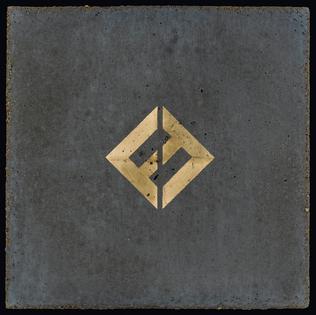
First Impressions: Concrete and Gold – Foo Fighters

This bloke from the Foo Fighters looks a bit like the drummer from that band Nirvana, doesn’t he?

Despite the PR, expecting the Foo Fighters to break new ground in 2017, some two decades plus into a career that has seen the band grow from a one-man project to stadium-filling rock heavyweights, would be optimistic to say the least. Since In Your Honour Dave Grohl, however, seems determined to try so we fans have been offered our Foo in separate acoustic and electric discs, a ‘serious musicians’ flavour, with ‘raw analogue’ toppings* and with added documentary options on the side. It’s still been Foo, though, no matter how much Mr Grohl has tried to spice it up. Not that there’s anything wrong with that, mind, but, after There Is Nothing Left To Lose, there’s nothing that really sets aside, say, ‘The Pretender’, ‘All My Life’ or even ‘Rope’ as having been on different albums no matter the supposed narrative rules that rock’s smiliest ambassador has sought to apply to them.

Take Sonic Highways as an example – despite the concept and execution, there was nothing, really, to show in terms of sound or execution that differentiated its nine songs from any of the bands other mediocre cuts**. It’s as though there’s no concept or production technique that could change the established loud-quiet-loud-louder and colossal thump of the Foo Fighters at this stage of their career.

I found the concept behind Sonic Highways increasingly odd given how much time and effort the band had put into building their own studio (Studio 606 West) and HQ less than a decade before and seemingly abandoned after two albums – Wasting Light was recorded in Grohl’s garage. In fact, when Grohl declared that he already knew how the next Foo Fighters album would be recorded and that it was something so exciting that no band had ever done before…. I groaned a little inside. Why couldn’t they just get in their studio – or any studio – and apply themselves to the songs not to achieving some wacky concept?

Thanks to PJ Harvey, it seems, I’ve got my wish. Turns out that Dave Grohl’s ‘big idea’ for Foo Fighters Album 9 was to set up a studio on stage at the Hollywood Bowl and record it live in front of a 20,000 strong crowd. Shame, then, that discovering that PJ Harvey’s The Hope Six Demolition Project had been recorded in the same manner (albeit a far more English approach via an art installation in Somerset House) took the shine off the idea for him.

Instead Dave did what he describes as the most unexpected thing for his band to do and took the Foo Fighters into a big studio – EastWest Studios – and hired a producer to oversee their next album, gimmick-free. Well, I say that… this wouldn’t be a Foo Fighters album in the 21st Century if there wasn’t some form of ‘gimmick’ involved, would it? This time it’s the involvement of producer Greg Kurstin. Picked by Grohl for his work with his own band The Bird and the Bee, Kurstin is perhaps better known for his work with acts like Kelly Clarkson, Sia, Lily Allen, Ellie Goulding, Pink and that moaning banshee’s god-awful radio-melter ‘Hello’. Given the combination of a pop and rock heavyweight’s, the ‘gimmick’ of Concrete and Gold is that it’s being pitched as sounding like “Motörhead’s version of Sgt. Pepper.”

So…. does it? Of course it fucking doesn’t. Don’t be daft. But….. it takes a very very good stab at doing so and feels pretty much unlike anything else Dave and his merry men have done before. Yes, the sound is unmistakeably Foo but this time around the band are stretching out in ways they haven’t before and deliver plenty of unexpected and, frankly, great twists to deliver an album that offers  psychedelic, prog-metal, abstract, heavy and, yes, Beatles-esque shades against a Foo Fighters sound that is, for the first time in a long time, suitably balanced and mixed by a producer.

Kicking off with a short throwaway ripped apart by a heavy rocker will inevitably draw comparisons to The Colour and the Shape but ‘T-Shirt’, for all it’s brevity, is a superior song to ‘Doll’ and pushes Concrete and Gold‘s confidence and palette front and centre and – even after maybe a hundred listens at my son’s request – ‘Run’ is an out and out fucking BEAST that ranks as one of the Foos’ best:

‘Make It Right’ offers more than the straight-ahead rocker it initially suggests itself to be, there’s a funk of a groove behind it, unexpected chord changes and a surprising slab of background harmonies that when combined bring, to my mind that is, Aerosmith’s Draw The Line*** album. Initially I’d been slightly less impressed by ‘The Sky Is A Neighbourhood’ when catching the videos of its live reveals but the album version, along with many of the tracks here, shows that – despite their straight ahead live mode – on Concrete and Gold the Foos have actually become a studio band with plenty of unusual-for-Foo song structures and production choices that blend so well. Take the strings that slip so unobtrusively into ‘The Sky…’ as to change a song type they’ve churned out many a time before into something that genuinely lifts skywards.

‘La Dee Da’ falls into the same category for me – I wasn’t impressed by it’s live rendering but, away from the bludgeoning and sonic flattening of radio too, on Concrete and Gold I ‘get it’. If it’s Fab Four you’re after, there’s one of em on ‘Sunday Rain’ – as Taylor Hawkins is too busy singing this spacey (seriously, check out his ‘Range Rover Bitch‘) rocker, Sir Paul McCartney plonked down the drums. Sequentially it’s a good fit because, to my ears, the preceding ‘Happy Ever After’ makes me think of ‘Blackbird’ or one of Macca’s early solo melodies.

‘Dirty Water’ is an early favourite for me; it brings forth sounds of both early Foo Fighters, a playful lightness and airy feel (and, again, some real Beatles tinges) but is bolstered by something sharper and more focused that comes from both a more practised song craft and production that, despite its length, it remains on track and charm. In that respect it serves as a strong summary of the album as a whole.

Concrete and Gold doesn’t quite achieve the premise of its PR but show me an album that does. It does, however, stand apart in the Foo Fighters cannon and is the sound of the band playing to those highs and strengths its achieved during its ascent to stadium rock act while also stretching out enough sonically to both refresh its sound and offer a welcome hand to those fans like me that had begun to wonder if Dave Grohl had anything interesting left up his sleeves. Turns out he does.

I hadn’t pre-ordered this one but I’m already on my third listen of Concrete and Gold and haven’t skipped a track left. For all his efforts to make a ‘concept’ of an album, Dave Grohl has, when he wasn’t even trying to, created a fucking belter of a Foo Fighters album that works not just track-by-track but as an album in itself. Well worth a listen or three.


*I’ll put this out there: Wasting Light is the best Foo Fighters album to date.

**Concept over substance unfortunately applies to the album and I wouldn’t slip any of its tracks onto a ‘Best of’ comp.

***Underrated.

Currently Listening

Tuesdays after a Bank Holiday Weekend are the new Monday. Nobody likes them.

Outside of Pimsleur’s Basic Romanian, here’s the skinny on what’s going into my ears lately:

The War on Drugs – Up All Night

The new album A Deeper Understanding is the thing of beauty that expectations had it as. Adam Granduciel’s nasal voice is akin to a softer, more tuneful Dylan with tasteful restrain over bleating, the guitars shimmer and shred and the whole thing is polished off with a sun-kissed production right out the Tunnel of Love playbook. As one review states, it’s not just that it’s “one of the best rock albums in years, but that the music itself is so expansive and enveloping that it feels like it should be everywhere.” It’s bliss.

Rebekah Del Rio- No Stars

I can’t tell you anything about Rebekah Del Rio as I know nothing about her. All I know is that this song, well her voice and delivery more to the point, has held me hypnotised since I heard / saw it on an episode of the current revival of Twin Peaks.

Biffy Clyro- Living Is A Problem Because Everything Dies

Since they popped up in that Shuffle The Music thing I’ve been listening to this one a lot, partly also because my wife listens to it a fair bit too.

Death Cab For Cutie- We Looked Like Giants

Following another “Top Five” text convo I’ve been listening to Transatlicism in the car recently in between my Romanian lessons.

Hold Steady- The Swish

The Hold Steady are a new discovery for me having read about them everywhere else I took a while to tune in. I’m starting at the first album Almost Killed Me and like what I’m hearing thus far. I was finally swayed by the review for it that said “The Hold Steady are one of the most convincing rock bands to emerge in recent years, a can-crushing throwdown of unadulterated aggression and ear-splitting amps.”

Out of Europe: An Irish Top Five

Of all the stupidity and upheaval that the colossal butt-fuck of an idea called ‘Brexit’ that so many fools were goaded and misled into voting for is likely to cause, one of the biggest potential quagmires is the border between Northern Ireland and the Republic of Ireland, thrown into even greater murk by that soulless banshee May’s desperate tactic of clinging to power by giving a massive bung to the D.U.P in utter disregard to the issues it throws up with the Good Friday Agreement.

As such I thought it fitting for this Out of Europe series to draw up a quick Top Five from Ireland who, while we continue to be lead blindfolded into a dead end, will remain in the blissful embrace of Europe. And, as we’ll be tearing Northern Ireland down with us, acts from that island’s north east tip don’t qualify.

My Bloody Valentine – Only Shallow

Formed in Dublin in 1983(!), My Bloody Valentine’s opus Loveless took two years to record (that’s nothing, it would be 27 years before they followed it up) and its extensive production costs got them dropped from their label but, fuck me, it’s amazing.

God Is An Astronaut – Forever Lost

A post-rock band who’s sound, according to that fabled source Wikipedia, “employs elements of electronic music, krautrock, and space rock.” I cannot for the life of me remember how I found them but I’d often listen to their second album – which this is from – at the gym.

Damien Rice – Rootless Tree

Success is often a real fucker. Look at what it did to Kurt Cobain. Damien Rice seems similarly unimpressed by it. When songs like ‘Canonball’ and ‘Blower’s Daughter’ pushed his solo debut O into so many peoples’ cd collections he withdrew and pushed against the tide. He’d only wanted to make the one album but his label pressed him into releasing 9 (from which this is taken) which leaned a little darker and met massively mixed reviews. It would be another 8 years before he dropped anything else. I like the line “fuck you, fuck you, love you and all we’ve been through.”

The Frames – Revelate

Dublin’s Glen Hansard is a busy chap. Aside from a solid solo career and frequent touring supporting and playing with Eddie Vedder he’s part of the folk-rock duo The Swell Season and continues to front the Irish rock band The Frames which he started in 1990. Oh, and he acts too – he starred in the film ‘Once’ and some other film called ‘The Commitments‘.

U2 – Until The End of the World

This band is certainly more of a cult act, probably little-known outside of Ireland. Despite what I can only assume are poor-to-middling sales they’ve been around a while now occasionally flirting with some good write-ups in the local press, bad haircuts and have even played a few venues outside of their native Dublin despite their singer’s clearly shy and introverted demeanour.

Honourable mentions to the blues of Rory Gallager and The Cranberries’ Dreams

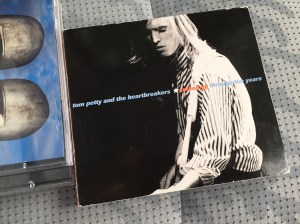
Great Compilations: Anthology: Through The Years, Tom Petty and the Heartbreakers

In keeping with the general sense of procrastination that pervades my attempts at a series of posts, it’s been a while since I first chewed over kicking off this one, looking at those great compilations in my collection. Those that are as close to perfect and essential as you can get. That do that rare thing of providing as solid, all-encompassing an overview as is possible in a dozen or so tracks in a manner that will provide a great entry-point for the uninitiated and give the already-converted a good career-spanner to listen to when they don’t feel like going through whole-albums.

These are inevitably some of the most well played volumes on my shelves and have served as starting points that have introduced me to many a loved band.  That’s certainly the case with Tom Petty and the Heartbreakers’ Anthology: Through The Years.

Back in 2000 I didn’t really know much of Mr Petty’s back catalogue and was looking for a suitable entry point. It’s worth pointing out that while the chaps from Gainesville, Florida have certainly enjoyed some success in Europe and the UK specifically, they’re a much more American proposition than, say, Springsteen, so it’s understandable that at the tail-end of my teens I was unaware of the bulk of their songs. Fortunately I was still in the habit of reading a monthly music magazine* and just as Uncut had turned me on to other bands, it was the stuffed-with-praise review for the upcoming Anthology: Through The Years compilation that meant I parted with cash.

It’s also worth pointing out that there was already a pretty serviceable Greatest Hits album available but, for some reason, that 1993 release never appealed. Perhaps it was the cover, perhaps it was the inclusion of ‘Something In The Air’** .. who knows but Anthology: Through The Years was my introduction to the music of Tom Petty and the Heartbreakers beyond the ubiquitous ‘Free Fallin’.

Now, here’s the thing with the songs on here; I didn’t know the vast majority of them and yet after one listen they felt like old friends. Like songs I’d known for years. Petty has a way of crafting instantly memorable and catchy-as-a-cold tunes that’s very rare and highly addictive. Yeah, everyone and his dog knows ‘Free Fallin’ but to hear ‘The Waiting‘ or ‘Mary Jane’s Last Dance’ for the first time is to know them as the classics they are; once they’re in your system they stay there.

The track listing is as perfect as you can get without a nitpicking committee. Despite it’s being released in 2000, there’s nothing here really newer than ’95 so the discs are divided up to cover the two ten-year periods from their ’76 début, the format better serving the band’s impressive catalogue than a single disc ever could.

The first disc, spanning ‘Breakdown’ to ‘Change of Heart’ pulled my attention first and probably still gets more plays. This one was the discovery for me, classics like ‘American Girl’ (I’d not watched ‘Silence of the Lambs’), ‘Even the Losers‘, ‘Refugee’ all tearing into my ears and the beautiful ache of ‘The Wild One, Forever’.

The second disc is stuffed to burst with FM classics – five from Full Moon Fever and a handful from Into The Great Wide Open that are always going to sound good whether they’re being played to a stadium or via a car stereo in traffic. For me, though, the real draw are songs like ‘Mary Jane’s Last Dance’, ‘Waitin’ For Tonight‘, ‘It’ll All Work Out’ or ‘The Best of Everything’ from the sublime Southern Accents.

Looking at the track listing for this is almost like picking out an ideal set list and there’s not much more you could look for in a compilation.

It was an odd time for release, one year on from the under-appreciated Echo*** and not featuring a single track from that release. I’m sure ‘Room At The Top‘ could’ve fitted nicely on here.  They even dusted off a previously unrecorded tune from 1977 to add something for the completests with ‘Surrender’ but couldn’t find room for anything from that one. In hindsight the eight year gap between the lacklustre The Last DJ and return-to-form Mojo would’ve been the ideal place for such a retrospective. In fact they did release a four-disc live compilation that served just that purpose.

I’ve gone on to stock my shelves with a fair amount from Tom Petty both solo and with the Heartbreakers. If I’m being picky I’d wonder – as Cameron Crowe’s linear notes do – whether there could be space for a track from Wildflowers or even from She’s The One but then it’s hard to imagine a better summary of the Heartbreakers’ then 25-year career than this one.

Instead of copying and pasting the tracklisting, I’ll drop the whole thing via Spotify.

I’ll end this one with the tune I think is the real glaring omission, the perfect title track from Southern Accents:

*A habit long-since abandoned.

**Overplayed and I’m still not that much of a fan of it. Though the remastered version in 2008 swapped it out for ‘Stop Draggin’ My Heart Around’ so I can’t be alone in that.

***Petty’s divorce album.

Currently Listening

Mondays are nobody’s friend. Here’s a few more of those current and (mostly) new spins that are going through my ears of late and today.

alt

The War On Drugs – Strangest Thing

Another song released ahead of the incoming A Deeper Understanding album and another beautific slice of guitar driven wonder from The War on Drugs. I’m starting to think that the new album might be more addictive than Lost In The Dream‘s vibe was.  Adam Granduciel’s voice has more than a hint of Dylan’s nasality and the sound and that guitar work…. gorgeous.

Broken Social Scene – Halfway Home

Broken Social Scene’s new album Hug of Thunder is not only an excellently titled slab of alt-rock but is real testament as to what a large musical collective (between six and nineteen members at times) can do when coming back off a break without disappearing up their own rectums like a certain other large musical collective beginning with A and ending with rcade Fire seem to have done.

Waxahatchee – Never Been Wrong

I got 2013’s Cerulean Salt using my itunes voucher haul but kinda forgot about Kate Crutchfield’s music since in the tide of more new music and discoveries but am now enjoying her new album Out In The Storm.

Radiohead – I Promise

OKNOTOK the OK Computer revisit is just sublime. In amongst the remastered original album and wealth of b-sides there’s three unreleased tunes all dating to the period between The Bends and OK Computer.

‘I Promise’ is the stand out of those for me. First showcased while they were opening for Alanis Morissette (yup, you read that right), the band didn’t think ‘I Promise’ was strong enough or that it didn’t fit vibe for OK Computer, left it and didn’t play it again for a couple of decades when, they played it again last month and Thom York said “What a bunch of nutters we were, and probably still are. One of the things — one of the crazy things we did — was not release this song, because we didn’t think it was good enough.” At the time it probably would have taken over the radio but it’s so atypical of where they were and were heading and was too pure pop and sunlight in comparison. It didn’t fit then but now, as one review puts it, it’s like “an exquisitely faded Polaroid.”

Out of Europe: A Romanian Top Five

Here we are, over a year from that colossal outpouring of Stupid that was the Leave vote and with all the idiocy that has fallen out of the government in its tailspin and while all the polls and surveys now indicate that the general consensus amongst us Brits is “holy shit that was a big fucking mistake, STOP STOP STOP” the stupidity continues.

So as we look to be the first country since Greenland to shoot itself in the face in the name of political turpitude, I thought it was as good a time as any to shift the focus of this series to one of the EU’s most recent members, a country to whom I owe so much and have a huge amount of love for despite its contradictions, my second-home in Europe as it were; Romania.

I can’t include one of the precious few songs sung in Romanian I know for even though Zdob și Zdub sing in the language, they’re from the neighbouring Moldova. So ‘Everybody in the Casa Mare‘ will have to remain a ‘linked-to’. I’m also anxious to use this one to show that the Romanian scene is far more than the ‘traditional folk‘ music associated with the country.

This post has been a little longer in gestation than many. My wife, having left the country a fair old amount of time ago, hasn’t kept up with its music and so we reached out to a friend who runs a concert promotion company out of Bucharest and a couple on here are her recommendations. OneDay is a self-financed, independent effort aimed at promoting Romanian new music and introducing emerging international bands to the local concert scene. Pretty cool, right? She’s been involved in getting some pretty big names to the country and is always championing new Romanian music.

As such this post has been something of a voyage of discovery for me, opening my ears to a huge and varied music scene in the country – I’m next heading over in September and am hoping to hit up a few record shops as well as getting back into the mountains.

But I’ll start this list with the first bit of ‘alt/rock’ in Romanian I heard, via my wife….

Omul Cu Şobolani – Depresia toamna-iarna ’06-’07

So, I have no idea whether Omul Cu Şobolani  (I believe they were formed in București) are ‘cool’ back in Romania anymore of it’d get me ‘ugh’ looks in a record shop but this group keep it simple – one guitar, bass, drums and vocals. It was the first bit of rock I heard from the country and I still enjoy it.

Greetings Sugar – Drunken revelations (with Bogdan Serban)

This one came via the recommendations list. These guys also hail from and describe themselves as a “dark hearted band from Eastern Europe”. There’s something of The National / Interpol to the vocals on this, their second single. ‘Drunken Revelations’ is the follow up / over half to their début single – Greener – also worth checking out.

Fine, It’s Pink – Waiting for You

Fine, It’s Pink (another from the list) hail from  Iași and categorise themselves with phrases like “electronic bluesy dream pop” and  “electronica post indie”…  I love the mix of different elements in this one topped off by those vocals.

Fluturi Pe Asfalt – Nu crezi că pot?

Now we come to the discoveries… That ‘Related Videos’ feature on YouTube can also be a blessing for it’s where I found Fluturi Pe Asfalt. This four-piece from Cluj-Napoca (Romania’s second biggest city) tick off so many things I love in music: soaring guitars, mood, thumping drums, post-rock elements, a BIG sound… I’ve been rinsing their bandcamp page for listens (not everything is on YouTube and Spotify isn’t as international as it would like to think) and once I’ve finally worked out how to shift my iTunes over to the new Mac at home I’ll be hitting the purchase button.

We’ve also switched back to Romanian too. The language (I hang my head at my limitations with it) suits the genre, I think and, for those who’s Romanian is as bad as mine – “Nu crezi că pot?”means “Don’t You Think I Can?”

Pinholes – Poza

These guys describe themselves as “alternative rock band with influences that vary from post/art-rock to shoegaze and post-punk.” Again – I’m really getting into this and there’s something about the dark, brooding tone to this, the thumping drums  that I love and, again, tick so many boxes for me. Oh, Poza = Picture.


Love is a tower: Pearl Jam’s “Lost Years” 2000-2005 (Part Two)

A little over month on from the tragedy at the 2000 Roskilde Festival, Pearl Jam returned to the stage as the North American leg of their Binaural tour got under way. In a hotel room ahead of the first post-Roskilde show in Virginia, Vedder wrote a song  called ‘I Am Mine’ to “reassure myself that this is going to be all right”.

It’s a Pearl Jam playing to its strengths song – strong hook and melody with affirming lyrics. As Mike McCready says: “It’s kind of a positive affirmation of what to do with one’s life. I’m born and I die, but in between that, I can do whatever I want or have a strong opinion about someting.”

The tour – which would include a Tenth Anniversary show in Las Vegas featuring the debut of Vedder’s take on Mother Love Bone’s ‘Crown of Thorns’ – would wind down back in Seattle in November. The Binauarl tour also saw the commencement of Pearl Jam’s on-going Bootleg series – every show (with the exception of Roskilde) would be recorded and released as “official bootlegs” in a move designed to prevent fans being fleeced for inferior recordings of their shows. It’s move that’s since been taken up my many an artist. Instead of going back to work on a new album, Pearl Jam took a year off.

2001 saw Vedder join a list of musicians in playing five shows with Neil Finn (later captured on the worth-checking-out Seven Worlds Collide), Matt Cameron’s Wellwater Conspiracy release its third album and  Stone Gossard break cover as the first member of Pearl Jam to put out a solo album under their own name. Bayleaf was released on September 11th, Gossard was in New York doing press for it when to hikacked airliners were crashed into the World Trade Center.

When Pearl Jam returned to action in 2002 the world had changed both internally and externally. The band wanted to address these themes in their music even if “Universal themes aren’t easy to come up with when you’re just a guy and a typewriter and a guitar.”  In the aptly named Riot Act they would do their damndest and created a record full of great tunes that received barely any attention even amongst Pearl Jam fans. I know many a fan who can cite every lyric on Vitalogy but wouldn’t know a word of ‘Green Disease’ and it’s a real shame as there’s a direct line between the two.

Riot Act is an album that clearly benefits from having five songwriters with strong contributions from all. Vedder had returned from his place in Hawaii with both a mohawk (which worked perfectly for his induciton of the Ramones into the Rock ‘n’ Roll Hall of Fame*) and a new band member – Boom Gasper – with whom, on their first night of playing together he had written ‘Love Boat Captain’.

For my money the Adam Kasper produced Riot Act is a stronger album than Binaural. It’s tougher, it’s heavier with hook and Vedder is clearly pissed off. Take ‘Green Disease’ – a propulsive, guitar driven rocker that would’nt have been out of place on Vitalogy that tackles the culture of greed. Or ‘Can’t Keep’ – a tune that Vedder bought in as a ukelele demo that became a multi-layered slow burner with buzzing guitars that brings back memories of No Code while the punk-edged ‘Save You’ is thrashed along on a Mike McCready riff while  Eddie Vedder sings of the anger felt watching a loved one losing themselves to addiction.

For me other highlights are ‘Bu$hleaguer’,  ‘You Are’ and Vedder’s ‘Thumbing My Way’. It’s a clear signpost to where Ed was heading as a songwriter and mark the acoustic-driven direction that would come to fruition on the Into The Wild soundtrack and songs on Backspacer and Lightning Bolt that would allow the songwriter the confidence to be direct and open in his lyrics. Stone Gossard feels the song is his bandmate “getting into an acoustic singer-songwriter thing in a way that you always knew that he could. ”

You Are‘ is one of the strangest sounding songs Pearl Jam have put to tape. A really different vibe that was born out of expirmenting with a new drum machine that Matt Cameron had gotten hold of, it’s another great example of the band taking one member’s ideas and creating something memorable.**

The reception to Riot Act wasn’t that positive when it dropped in November 2002. Press was less than luke-warm and sales weren’t strong. Without a radio-friendly ‘hit’ airplay for those songs released as singles was blink-and-you’ll-miss-it. Nonetheless, in 2003 the band headed out onto the road for the first time in close to three years.  With setlists that changed nightly and made use of their extensive back catalogue and covers repetoire, the tour was a success by any measure but, for the first time, saw the band court contreversy and receive more than a few boos thanks to the inclusion of ‘Bu$hleageur’. I’ve covered this before but it’s a noteable – this dark, weaving satirical swipe at George W Bush drew negative reponses and walkouts through the tour (seriousy – did you think Pearl Jam were fucking Republicans who like blind marching to war?) but it reached a head at the Nassau Coliseaum in Uniondale:

Jeff Ament: “I was totally fine with it. I was ready to go out and open up with that fucking song every night I wasn’t going to be a part of something and then take it back. We recorded the song and put it on a record, and that’s how we felt.”

Riot Act was Pearl Jam’s last studio album for Epic Records. They rounded out 2003 with the release of Lost Dogs – a compilation of b-sides that featured many fan favourites and strong songs from the era covered in these posts such as ‘Down‘ and ‘Otherside’ – as part of their contractual obligations.

In 2004 Pearl Jam joined the VoteFor Change Tour in support of John Kerry. Live At Benoraya Hall, a mainly acoustic (thankfully McCready doesn’t seem to have gotten that memo and bought his full arsenal) set recorded the previous year was released in July and features songs from Binaural and Riot Act sitting alongside deeper cuts and ‘hits’. In this setting these songs shine and their place in Pearl Jam’s back catalogue feel established rather than those of albums that are outliers in the discorapthy as they’re so often regarded.

The final release of this period for Pearl Jam was, fittingly, a summary; the obligatory (again likely contractual) Greatest Hits. A neat little package that rounded up the rockers and the ballads in an Up disc and a Down disc with some tasty remastering of Ten tracks by Brendan O’Brien. It’s a solid compilation and I’ll still drop it in the car fairly regularly – but started a trend that continues to this day much to the chagrin of many a fan; the cropping of images to remove Dave Abbruzzesse from the picture.

2005 saw the band break the album-tour-album-tour cycle and head out for a tour without new music to promote. Just getting out and playing to audiences for the fun of it. It was a master stroke. While work was underway on the album that would become 2006’s Pearl Jam (then the longest period between albums), Pearl Jam are one of the greatest live bands still actively playing and while radio interest and sales may never recover from the 2000-2005 lull and changing mainstream, as long as they continue to put out albums of strong songs that delight live they’ll be relevent to a very sizeable audience.

I’ll finish here with the ‘new’ song on Benoroya and Greatest Hits. Written for Tim Burton’s ‘Big Fish’ it was a pretty moving song in its orginal context but after personal events last year I can’t listen to it without getting a little moist in the eye.  That’s got to be the sign of a good song if it’s that affecting and from 2000 – 2005 Pearl Jam wrote a shit load of good songs.


*Vedder, clearly drunk, doesn’t give a fuck. In a speech that’s just brilliant he rags on Disney and tells the crowd to fuck themselves. I can’t recall where but someone said when Jann Wenner dies his afterlife will consist of being stuck in the audience for eternity https://www.youtube.com/watch?v=8Oi-SKOqVHA 

** ‘The Fixer’, Pearl Jam’s most instantly accessible and lyrically direct song from Backspacer is another example of a Matt Cameron riff becomming something else in the band’s hands.


And wherever we might go: Pearl Jam’s ‘Lost Years’ 2000-2005 (Part One)

In February 1998 Pearl Jam released Yield. It marked something of a comeback for them; it was more straight-ahead than the wilfully restrained No Code, saw the band release their first music video since 1992 and, with the Ticket Master battle lost, marked a return to full-scale touring (documented on Live On Two Legs, released that November). At one sound check that autumn they recorded a song for that year’s fan club Christmas single*. When it began picking up airplay on radio the following year Pearl Jam’s cover of ‘Last Kiss’ soon went into heavy rotation and ended up hitting No. 2 on the charts, giving them their biggest hit to date.

They ‘d be entitled to take a break at this point, to catch their breath and attend to life off the road but then at this point they hadn’t quite learnt how to do that** and they carried on into the new millennium and a period which would see acclaim and sales diminish further than they had with the release of No Code and events that nearly marked the end of the band.

As companies the world over and religious sects and cults realised that the ticking of the clock into a new millennium meant neither massive technological meltdowns, raptures or Armageddons weren’t happening, all was not well in the Pearl Jam camp. The band’s not-so-secret weapon Mike McCready was battling addiction to painkillers and sessions for Binaural were marked by his absence as well as Eddie Vedder – who, though intensely guarded about his personal life, was experiencing both the worst case of writer’s block he’d encountered and divorce. As such, Vedder has since referred to the recording of Binaural as being “a construction job”.

Perhaps they should have taken that break. I mean, after all, Binaural shifted less than Yield and has still to make the million mark and Riot Act has still moved less than half of what Vs shifted in its first five days alone. Are they that bad? No, in short, they’re not. In fact I’m here to argue that for both the uninitiated and the initiated (I still know Pearl Jam fans that haven’t listened to Riot Act), there’s some real gems to be found in this era.

I’ll hold up Binaural‘s first single ‘Nothing As It Seems’ as an example. Written by  bass player Jeff Ament, it started as a very dry, basic demo. He took it to McCready and told him that for the song to happen, the guitarist would need to go to town on it. He did.

Now perhaps I am a little biased in my views as Binaural was the first ‘new’ Pearl Jam release since I’d gotten into the band but I do love this song and while it’s most definitely a headphone album (thanks to the binaural recording technique you’ll need both buds in), live this one, like so many others, comes into its own and McCready’s work on it is guaranteed a rapturous response.

For my money – and I remember the surprised face on the tube on the way to see the band at Wembley when I voiced this opinion to those I was travelling with – Binaural is very much a second-half album. The faster songs that open it don’t quite suit the recording technique even with Brendan O’Brien’s mixing efforts but the second half, from ‘Light Years’ (itself a lovely song and one I’m always surprised by when it comes up on playlists – ‘how could I forget this one?’) on contains some of the juiciest things the band have put to tape.

Insignificance‘ is up there with ‘Corduroy’ as one of the band’s best mid-tempo rockers and I remember it ripping the roof off Wembley Arena. ‘Soon Forget’ marked the introduction of Vedder’s ukulele and cleared his writer’s block, ‘Of The Girl‘ – which started out as a bluesy riff from Stone – is the best use of the binaural recording technique on the album and ‘Sleight of Hand’, a mediation on being stuck in a routine and dissatisfied with one’s life,  is the realisation of the band’s most art-rock aspirations with its effects and wall-of-sound blasts in the chorus:

In hindsight the band have come to regard Binaural as an album marked by distractions and missed opportunities, a lack of focus that meant the album lacked the power it could have had. Gossard, for his part, feels that they should’ve gotten more out of new drummer Matt Cameron – “It should have devastated in a way that Temple of the Dog devastated”. They just weren’t writing with him in mind. Jeff Ament goes further, believing that in cutting songs like ‘Sad’ and ‘Education’ “we look back and think we didn’t put some of the best songs on it.”

Indeed – released later on Lost Dogs – songs from the sessions like ‘Fatal‘, ‘Education’ ‘Sad’ would certainly have added a different angle to the album than, say, ‘God’s Dice’.

Upon release  Binaural was received pretty favourably by the press and while the sales weren’t what they were used to be and radio had already shifted what little focus it had given the band to acts incorporating the scratch of turntables into rock, Pearl Jam did what they’ve always done – headed out onto the road. A tour of North America was lined up but, first, they’d venture to Europe to play a series of arena shows – I caught them when they played Wembley in May –  and festivals including Pinkpop in the Netherlands and to Denmark to play the Roskilde festival.

During ‘Daughter’ the 50,000 strong crowd continued to surge forward. The band had made many a plea for the crowd to take a step back and, realising something was wrong, stopped playing. “It was chaos,” Vedder has said. “Some people were yelling ‘thank you.’ Others, who weren’t in bad shape, were running up and saying ‘hi.’ Then someone was pulled over, laid out and they were blue. We knew immediately it had gone on to that other level.”

Eight young men aged between 17 and 25 had been killed in the crush and bodies were being passed over the barricades as the band and fans stood and watched in horror. A ninth man would die in hospital five days later.

The remainder of the European tour was cancelled and, not knowing how to move forward, the members of Pearl Jam considered retiring. 


*Since 1991 the band have released a fan-club-only single every holiday season (with the exception of 1994)

**When Jack Irons joined the band he was both impressed and surprised by their work ethic. Work on No Code had kicked off during a heat wave and immediately after a massive show. Iron’s was understandably knackered and, frankly, fancied a rest. The band didn’t yet know the importance of doing so and were too keen to keep pushing forward with the momentum and energy of the tour.

Currently Listening

Righty ho.

There’s a lot going in my ears at present so I thought I’d drop a few on here while working on a couple of longer pieces and ahead of the inevitable ‘Holy Shitballs OKNOTOK Is Amazing’ post* and share what’s been cropping up regularly in the mix as it were.

Pearl Jam – Of the Girl (Instrumental)

I’m putting together a post about Pearl Jam, specifically their fallow period from 2000-2005 and I think Binaural often gets a bad rap. There’s a lot going on in the songs as this instrumental take of ‘Of The Girl’ from the PJ20 soundtrack shows.

The War On Drugs – Holding On

Because there is a new War On Drugs album dropping this year and this is the first single from it. Shame that the wax looks to be what I’d consider over-priced.

The Appleseed Cast – The Waking of Pertelotte/On Reflection

I don’t think I’ve touched on this band here so far. I can’t get enough of the Low Level Owl albums these days (even if they passed me by first time) and I love, LOVE Josh “Cobra” Baruth’s drumming. These are two seperate tracks that open Volume 1 but are best experienced flowing together as intended .

The Kinks – I’m Not Like Everybody Else

So many great Kinks songs to chose from…. this is a Ray song sung by Dave. It was a b-side to ‘Sunny Afternoon’ but the version I keep listening to was from their final release To The Bone and I first heard it and got hooked via ‘The Sopranos’. **

Fleetwood Mac – Albatross

Because a) this is a great tune to listen to when the sun is shining and b) early / Peter Green’s Fleetwood Mac   > Rumours Fleetwood Mac.

*I dropped needle on it once and confirmed I need a new stylus. Until that arrives….

** See also: ‘Living On A Thin Line‘.

A (strange) Twist of Fate…

You know it’s strange how if two people visit the exact same place at the exact same time they won’t have the same experience or see the same things.

Case in point: earlier in the year we took a drive a little further along the coast than usual to Margate. Now, I knew there was a fairly fabled record shop in the town and I was curious to check it out. I remember the vibe, the range and the purchases I made and having to run down the street with the little guy in my arms hoping the food place on the corner would have a toilet he could use.

My wife remembers the music that was playing, I don’t. She shazamed it and it keeps appearing on our Spotify as she listens to it while working at home. So I start listening to it…

Now here we are at the twist of fate element because as much as I’m enjoying the album – Space Echo: the Mystery Behind the Cosmic Sound of Cabo Verde* – the story behind it, the ‘mystery’ is one of my favourite ever.

It’s 1968; a ship leaves Baltimore harbour headed for Rio de Janeiro. It’s a calm, steady sea, the containers it carries are safely secure and this March sailing should not be noteworthy. Except, later that same day, the ship vanishes. Disappearing from radar without a trace.

São Nicolau

Skip forward to a few months later and the villagers of Cachaço on the island of Sao Nicolau, Cabo Verde -an archipelago of 10 volcanic islands 350 miles off the coast of Western Africa – are appropriately gobsmacked and confused when they find… a ship. Somehow marooned, the crew nowhere to be seen. Oh, I should probably point out that they were gobsmacked and confused because Cachaço is 8km inland from the coast.

After much back and forth between the village elders and local authorities it’s decided that the containers should be opened and a team of welders arrive on the scene, getting to work while the locals await with baited breath – presumably still scratching their heads and wondering where the hell this fucking great big ship came from. Well, the only certainty is that it came from Baltimore, having set sail in March of that year. We know that because of it’s cargo. Turns out it’s containers are full of gear from Korg, Moog, Farfisa, Hammond and Rhodes which had been en route to an exhibition in Rio de Janeiro (the first such of its kind) before it mysteriously vanished.

We’re talking hundreds and hundreds of the very latest and best  keyboards and synths available at the time. Seemingly fallen from the sky, into a village with no electricity. In fact, this is what was believed to be the origin of the ship; “fell from the sky”. Aside from the bloody great big crater that had appeared underneath the field it was in, those physicists and scientists drafted in to explain it came up with the same theory! Then, perhaps less scientifically, I don’t know – you have to remember that this was 1968 – someone claimed there were ‘cosmic’ particles on the ship’s hull. Apparently the bow also showed evidence of extreme heat. You know; like a meteor that had fallen to earth.

Amílcar Cabral

Origins aside – the cargo was commandeered by the local police and stored in a church. I imagine at the time the locals were more than a bit disappointed – a bounty of seemingly amazing treasure falls in their lap and a) the lack of electricity makes it useless and b) the fuzz decide to lock it all up.

Now, in 1968 Cabo Verde was still, along with Portuguese Guinea, a colony of Portugal. A chap called Amílcar Cabral and a group of fellow Cape Verdeans and Guineans were fucking furious about this to say the least. Some years prior they’d formed the  African Party for the Independence of Guinea and Cape Verde (PAIGC). Acts of sabotage eventually erupted into full scale conflict and the  Guinea-Bissau War of Independence in 1963. This would eventually lead to Cabo Verde and Guinea-Bissau achieving independence.

So, back to Cabo Verde and that shit load of synths. At this point large tracts of Guinea-Bissau are, despite the presence of Portuguese troops and authority figures, under PAIGC control. Not so much Cabo Verde but the writing is starting to show on the wall. Amílcar Cabral** decides ‘arseholes’ to the police commandeering the haul. He announces that they should be distributed equally amongst those schools on the islands that had electricity.

Overnight a generation of young children got their hands on the very latest musical equipment. According to the legend any of those children that came into contact with the equipment inherited amazing musical abilities. I’ll take that with a pinch of salt but then I’m something of a cynical bastard. I’d say it’s more likely down to kids having a much stronger and untarnished sense of rhythm. Either way the effects of this sudden take up – according to the label behind the release, at least – had a massive role in inspiring the explosion of electrified sounds that emerged from Cabo Verde following its independence in 1975.

All these instruments helped bring to life and modernise traditional, indigenous fold music – some of which had been forbidden under Portuguese governance – and enthusing them with salsa-beats, trippy, futuristic sounds and rhythms that made for a truly unique and compelling sound that’s brilliantly compiled on Space Echo: the Mystery Behind the Cosmic Sound of Cabo Verde. As a bonus it makes for a great listen while the summer sun and heat is burning away too.

Now that is one hell of an origin story, isn’t it?! A whole musical scene and shift and generations turned on to and absorbed by music by one of the strangest twists of fate.

I’ll drop a few below along with the Spotify link for the album, should you be so inclined. Well worth an explore.


*Perhaps a little out of the usual Alternative / Rock stuff you may be used to expecting on this blog but variety and life’s spices and all of that…

**Amílcar Cabral, born in 1924, was a well-educated agricultural engineer. A poet, theoretician who turned revolutionary and became one of Africa’s leading anti-colonial leaders whose legacy would reach far and wide long after his assassination in 1973.