Least to Most: Pearl Jam – Vitalogy

“This song is about… uh… people who don’t have taste but they like us anyway. It’s called ‘Not For You'”

If Vs. was the sound of Pearl Jam taking control, Vitalogy, released just a year later, is the sound of the band giving a big middle finger to anyone who hand’t got the message yet. Rougher, rawer and more eclectic than anything they’d either released to date or since with songs born out of jam sessions as the communication between band members started to falter, with “eighty percent of the songs were written 20 minutes before they were recorded” according to Stone Gossard. It’s stripped down, it’s lean and uncompromising and marks the first time Pearl Jam would really start to experiment. It’s rife with hostility and tension aimed both outward and inward as, three albums in, cracks began to show within relationships to the point that, while Gossard thought of quitting, drummer Dave Abbruzzese would actually be let go as sessions wound down.

Again – it shouldn’t be good. It shouldn’t be cohesive but it’s not only good: it’s their finest album yet – in my opinion and this is my Least to Most after all. As 1993 tumbled into 1994, Pearl Jam were hitting their songwriting peak and the songs on Vitalogy bristle with an energy that wouldn’t be matched again for a while and certainly not with the level of consistency found here.

The songs here form the template for all Pearl Jam songs to come – there’s the balls-out angry and heavy, there’s the flexing of creative / experimental muscle, the achingly poignant and the perfect mid-tempo. All summised in one rough-hewn gem of an album.

So – you want the balls-out angry and fast? Take that opening volley of songs:’Last Exit’, ‘Spin the Black Circle’ and ‘Not For You’:

As middle fingers to the label go, Pearl Jam chose ‘Spin the Black Circle’, much to Epic’s dismay, as the first single from Vitalogy. “See this needle, Oh see my hand, Drop, drop, dropping it down, oh so gently, here it comes, touch the flame, turn me up, won’t turn you away” is an homage to vinyl and was supposed to sound completely different – it’s a Stone Gossard riff that Vedder first heard at the wrong pitch: “I had come up with something in my truck with the tape player in my hand, but then I realized it was playing at a superhigh pitch. I turned it down, and it was really slow. I was like ‘Oh, fuck.”

‘Not for You’, meanwhile is as openly blunt and angry about the co-opting of the alternative scene as the band would be – save for the time Jeff Ament spotted Marc Jacobs and Anna Sui (who had released a ‘grunge’ line of clothes) and “I went down and did a fake fashion twirl and went ‘Hey Marc, what do you think of this for the next line?’ ” It’s hard to comprehend now in a way but I guess when Ricky Martin is cast on General Hospital as a clone of you – you’re gonna get pissed off. It also burns through ‘Corduroy’ (perfect mid-tempo) with it’s line “they can buy but can’t put on my clothes”:

Both ‘Not for You’ and ‘Corduroy’ are sole Vedder compositions. Vitalogy – dipping back to those inner band tensions mentioned – marked the first Pearl Jam album where Vedder’s songs would by far outweigh those of the other members. Half of the songs here (you can’t really count ‘Aye Davanita’ or ‘Hey Foxymophandlemama, That’s Me’ as songs) are marked as Vedder / Vedder on the lyrics / music front.

Vedder’s “it wasn’t a hostile takeover” caused issues in the group. Stone Gossard was said to have considered leaving as he was no longer the guy who made the final decisions on tunes and vacated his role as mediator within the group (something which Dave Abbruzzese has credited to his departure). With hindsight Jeff Ament has stated that it was simply a case that Vedder was working harder at writing songs than the rest of the band – McCready would enter rehab to receive treatment for alcohol and cocaine abuse during sessions too. “I still don’t know if he was consciously exerting wanting to take over the band or take the reins or the the power. I think it was more like, ‘Hey, man, I’ve got seven complete songs here. What do you guys have?’ and we only had little riffs or two-parter things.”

Of those Vedder / Vedder songs are the achingly poignant Immortality and, of course, one of the band’s most well known:

I’ve probably heard this song live on the numerous shows I have in my iTunes. These days when it’s played live it’s not really the same song but the original is still an out and out classic especially considering its troubled and lengthy gestation as a Pearl Jam studio song. Vedder, fearing it was too raw and direct in terms of emotion, was never happy with how it had been recorded (the band had first tried getting it on tape for Vs.) and, at one point, came close to giving it to Chrissie Hynde to record instead. As it is he changed the final mix for ‘Betterman’ right at the last.

The creative: perhaps too wary of releasing quite so many obviously strong and high-pedigree songs on one album, Pearl Jam used Vitalogy to drop some of their, frankly, weirdest shit to date too. So, following up the beautiful Ament / Vedder collab, ‘Nothingman’…

… is ‘Pry To’

While what could have been a one-two-punch knockout of ‘Betterman’ and ‘Immortality’ is softened by the slotting of ‘Aye Davanita’ between them – it’s “just screwing around” with chanted non-lyrics that O’Brien looped. Then again, there’s something charming about ‘Bugs’ which Vedder, suffering from poison at the time, plays an off-tune accordion.

Then again, perhaps I’m overthinking it. Maybe they really just did like those interludes. But let’s look at it this way: if Vitalogy had been stripped of those and released as a ten track album comprising of songs like ‘Corduroy’, ‘Betterman’, ‘Nothingman’, ‘Last Exit’, ‘Spin the Black Circle’ etc… even with the lean produciton behind them, there’d have been no real way for them to get away from it or say no so easily.

As it is, glorious rough-hewn warts and all, Vitalogy is my favourite Pearl Jam album.
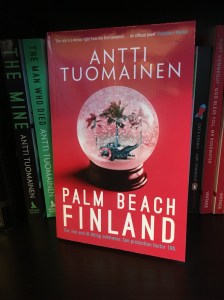
Blog Tour: Palm Beach, Finland by Antti Tuomainen

From the PR: “Sex, lies and ill-fitting swimwear … Sun Protection Factor 100

Jan Nyman, the ace detective of the covert operations unit of the National Central Police, is sent to a sleepy seaside town to investigate a mysterious death. Nyman arrives in the town dominated by a bizarre holiday village – the ‘hottest beach in Finland’.

The suspect: Olivia Koski, who has only recently returned to her old hometown. The mission: find out what happened, by any means necessary. With a nod to Fargo, and dark noir, Palm Beach, Finland is both a page-turning thriller and a black comedy about lust for money, fleeing dreams and people struggling at turning points in their lives – chasing their fantasies regardless of reason.”

I’m gonna put my hands up at the start; It’s tricky to write this review. Not because I have any issue with the book but, in a style that wouldn’t be at all out of place in Palm Beach, Finland, I managed to misjudge the alignment of saw blade and protector and put some deep new grooves into the the tips of fingers and thumb of my right  hand. As such typing is a little hit and miss so you’ll have to excuse any typos I miss while editing.

Palm Beach, Finland is a ridiculously good book. Combining dark and slapstick humour with a bit of Scandinavian Noir for what is easily one of my favourite reads of the year -much as The Man Who Died was one of last year’s top five reads.

It’s kind of like a whodunnit in reverse, really. We, as readers, learn both the motive and guilty parties within the opening pages. The fact of the matter is, though, that the murder and circumstance are so bizarre that the rest of the town – and the National Central Police – can’t solve the case and the rest of the novel follows their exploits in doing so. Oh and the continued exploits of the guilty parties as, in their efforts to carry out the simplest of crimes, only cause further hilarity and confusion. It also helps that the victim of the murder is revealed, in retrospect, to have been every bit as hapless as his accidental killers.

Such an approach could make for a very quick story but Tuomainen keeps things interesting by throwing in a burgeoning, albeit every bit as hilariously clumsy as the crime, romance and another far more dangerous character who’s trying to get to the bottom of the murder; the victim’s brother. Who happens to be a professional hit man.

Tuomainen is clearly an author who knows how to write characters. This is the third of his novels I’ve had the pleasure to read and each has been populated with characters that convince and ring true. That he peoples Palm Beach, Finland with characters so earthed in reality – including the failed rock-star dreams of Chico to Jorma Leivo’s desperate hatred of humidity that drives him to create the most absurd of holiday resorts – makes it all the more brilliant and its humour even more darkly delicious.

The book is also dripping with fantastic secondary characters each with their moments of hilarity. My favourite, though is Nyman’s boss – Muurla. Every scene with Muurla made it tricky for me to contain my laughter and the story – to which Nyman pays zero attention – that ended with “The toilet door is ajar too. Teija is in there. She’s got short cropped hair and there she is having a piss standing up. I leave the box of chocolates on the table and wander off into the Old Town in Stockholm. Charming place, lots of history and good food” cost me a mouthful of good coffee.

A big crime in a small town and, in the case of some of the characters, small minds. Palm Beach, Finland is every bit as funny and obscure as the holiday resort around which the plot revolves. Absurd, hilarious and thoroughly compelling, Antti Tuomainen has given us another fantastic slice of Finnish fiction that should be at home on as many book shelves as possible. It also deals very heavily in Bruce Springsteen references which is always going to get a thumbs up from this reader.

My thanks, always, to Karen at Orenda Books for my copy and Anne Cater for inviting me to take part on this blogtour.

Least to Most: Pearl Jam – VS

It wasn’t intended or planned but  – Pearl Jam’s Vs. was actually released 25 years ago today on October 19th, 1993. Crikey.

Back in 1993 in those wonderful days when a certain orange idiot was merely an occasional media presence and music news came periodically rather than by-the-second with inside access and selfies and… yep, I’m coming up on a birthday too so am feeling a sense of reminisce for those days of my youth when this was what new music sounded like.

To say I love Vs. would be a solid bet. It’s at number 2 on this list, today. Tomorrow it could be number 1. So here are lot of reasons why I think Vs is just the mutt’s nuts.

It was huge but in the lexicon of Pearl Jam’s discography and longevity is now something of a forgotten album, falling between the cracks between Ten and the shift in gears and stepping back from the spotlight that Vitalogy (yes, spoiler alert, more on which to follow) and wars with Ticketmaster would herald. At the time of release it set a new record for most copies of an album sold in its first week (950,378) and would hold that for five years*.

Dave Abbruzzesse is all over this album. Dave Abbruzzesse was an odd fit in terms of personality but an unimpeachable drummer for Pearl Jam. At a time when Eddie was struggling with the onslaught of fame and trying to step back and the band seemed at their most painfully angsty/earnest, Dave Abbruzzesse just wanted to enjoy the success. A Rolling Stone profile written that year, the drummer would point out that “when I was younger and I heard about a band selling a million records, I thought the band would get together and jump up and down for at least a minute,” he says with a wide-open East Texas laugh, “and just go, ‘Wow, I can’t believe it.’ But it doesn’t happen that way [in this band]. Me, I flip out. I jump up and down by myself.”

At the time this wasn’t where messrs Vedder, Ament, Gossard and McCready were. Well, definitely no Ed Vedd who was painfully serious at the time. It’s hard to judge, of course, because I’ve never written an album that sells millions of copies within a year, but I think the judgement of peers for doing so (Fugazi, Cobain** etc) perhaps made the band afraid of lightening up and desperate to appear more serious. For my money, Abbruzzesse’s inability to not smile and appear an amiable chap in band photos stopped the band disappearing up it’s own bum at the time.

As a drummer he was an immense tour de force and his drumming is what pushes Vs. along and is missing from these songs when performed live. Oh, and he also wrote the music for ‘Go’:

Go is about Eddie’s truck – well, apparently. While it sounds like it’s probably about something more serious, the lyrics were apparently written about Vedder’s truck – the band were making serious money but not spending or living like ‘rock stars’ – which he would often sleep in an effort to stay feeling ‘hungry’ and would often stall and threaten to quit.

Vs. is one of their most on target / consistent albums to date. The aforementioned Rolling Stone article, written before the album’s name was decided, stated that “Pearl Jam is the band’s turf statement, a personal declaration of the importance of music over idolatry.” Vs feels like a mission statement. It’s the most straight-ahead and consistent of tone album in their catalogue, rivaled, oddly enough, only by Pearl Jam. From the opener ‘Go’ via ‘Animal’, ‘Blood’ and ‘Leash’ to the closing ‘Inidfference’, there’s little deviance in style and minimal experimentation, a lot of fierce rockers and aggression thrown in. And every song is strong.

There’s barely a break in pace between the opening salvo of ‘Go’ and ‘Animal’ – save for the acoustic driven ‘Daughter’ which is hardly a slow song, and ‘Elderly Woman Behind the Counter In A Small Town’ (the very title of which is an outright joke at the band’s own habit of one-word song titles) – which makes ‘Indifference’ so much more of a powerful closer.

It was the beginning of saying “no” for part of Pearl Jam’s mission statement and way of coping with the assault of getting so big so fast was to push back. They began to saying no and taking control in an effort to prolong the band’s lifespan. The video for ‘Jeremy’ had become so ubiquitous at the time that the band, particularly Ament, were fighting hard against their songs being remembered only as a video. Having drawn the line at allowing a video for ‘Black’, they  started realising they could say no to requests. Requests like ‘can you raise Eddie’s vocals?’, ‘can you choose a director for a video?’ ‘can we schedule an interview with…?’ would be met with ‘no’s and ‘not really’s from here on in and Vs. feels like an aggressive stab at forging a new path.

Collaboration rules, or at least it did at the time of Vs. Only two of the twelve cuts on Vs. are sole Vedder compositions. Much like Ten before it, most of Vs was written as a collaborative effort with Vedder providing the lyrics. Perhaps this is why so many of the songs are as strong as they are: tighter than a duck’s arse after touring behind Ten and brimming with ideas, most of the songs on the album were born out of jam sessions with as much recorded live as possible. As Stone Gossard pointed out:  “I think we allowed things to develop in a more natural, band-oriented sort of way, rather than me bringing in a bunch of stuff that was already arranged.” It feels organic and it feels like a real band album and benefits from a lot more involvement in songwriting from Mike McCready too, take ‘Glorified G’:

‘Glorified G’ is a direct mocking of Dave Abbruzzesse but he dominates it nonetheless. ‘Glorified G’ – based on a McCready riff – was another song born out of a collaborative jam session but it’s anti-gun stance was born out of Vedder’s reaction to Dave’s ownership: “I was at a band rehearsal and just started writing down these things the guys were talking about. The band were having this conversation and I just took down the dialogue. One of the band members had just bought a gun. It was the drummer, actually. Ask him about it.”

So, if you asked Dave he’d have said: “I told our manager that I just bought a coupla guns and he told Jeff, and at rehearsal Jeff kinda blurted it out. And Eddie went, ‘Whaaaat, you bought a GUN?’ And I said, ‘In fact, I bought two,’ which ended up as the opening line of the song. I think it’s fair to say Eddie was pretty outraged.”

The odd thing is that this song rocks because of Abbruzzesse’s power. Even live – check out the performance on the Live at the Orpheum that accompanied the rerelease of this album and Vitalogy – he’s ON. Whether Vedder’s angered swipe at him either motivated him to play harder out of ‘fuck you too’ or he was just too easy going to really give a fuck we’ll never really know.

It is rammed with some of their best and most well-loved songs. Seriously, take a look at that track list and see how well received songs like ‘Go’, ‘Animal,’ ‘Blood,’ ‘Immortality’ are when they’re played live and you’ll see that the songs on Vs. are many a fan’s favourite. I just wish they’d bust out ‘Leash’ more.

‘Rearviewmirror’ – every single second of it. Live, now, it’s become something else and verses are often missed but ‘Rearviewmirror’ is one of Pearl Jam’s finest songs. Ridiculously catchy for a song supposedly about suicide it’s driven along by a hugely proppulsive riff from Vedder and, again Abbruzzesse’s drumming. Plus, as an added bonus you can hear Dave throwing his sticks against the wall at the end of the song as he grew increasingly frustrated by producer Brendan O’Brien’s (this was his first time producing a Pearl Jam record) constant pressure on him. There’s also a story that he ended up punching a hole in his snare drum and throwing it off a cliff. It’s worth it, though:

There’s a lot to love about Vs. and I can’t find anything to fault it on. If you’re nitpicking you might, in the same way as you would with Pearl Jam,  bemoan the lack of experimentation or single-focus on this one but the songs here are just so tight, confident and strong that you could only really do so for as long as it takes for ‘Go’ to give way to ‘Animal’.

*Technically it still holds that record as from 1998 (when it was broken by Garth Brooks) SoundScan started counting first week sales as opposed to first five days but that’s a technicality.

**Yes, Nirvana sold a tonne of records too but he famously decried Pearl Jam’s music as commercial / jock music


Blog Tour: Trap by Lilja Sigurdardottir

From the PR: “Happily settled in Florida, Sonja believes she’s finally escaped the trap set by unscrupulous drug lords. But when her son Tomas is taken, she’s back to square one … and Iceland.

Her lover, Agla, is awaiting sentencing for financial misconduct after the banking crash, and Sonja refuses to see her. And that’s not all … Agla owes money to some extremely powerful men, and they’ll stop at nothing to get it back.

With her former nemesis, customs officer Bragi, on her side, Sonja puts her own plan into motion, to bring down the drug barons and her scheming ex-husband, and get Tomas back safely. But things aren’t as straightforward as they seem, and Sonja finds herself caught in the centre of a trap that will put all of their lives at risk…

Set in a Reykjavík still covered in the dust of the Eyjafjallajökull volcanic eruption, and with a dark, fast-paced and chilling plot and intriguing characters, Trap is an outstandingly original and sexy Nordic crime thriller, from one of the most exciting new names in crime fiction.”

OK: once again I’m at the point of wondering how the hell to review a book without giving away any spoilers. I’ll start at the beginning – the beginning of the trilogy of which Trap is the second part, that is. Last year’s Snare was a thoroughly clever thriller that managed to mix a fiendishly complex web of subplots with a real  emotional punch thanks to a cast of characters that made you question the lines between ‘right’ and ‘wrong’. Trap takes everything that was great about Snare – which was plenty – and ratchets it up a level… or five.

While Snare was definitely a compelling read, it was very much a laying of foundations and, as such, reading it is kind of a perquisite for fully understanding Trap as it’s here that everything really kicks off and in the second installment in Lilja Sigurdardottir’s Reykjavik Noir Trilogy it’s on from the word go and doesn’t let up until the last page. Hugely compelling and addictive (I spent many a late night glue to this one), Trap does not pull any punches and blends the tenderness of its characters’ emotional motivations with the brutal reality of the world of drug smuggling to staggering affect. Throw in the white-collar crimes and corruption of the Icelandic financial crash and you’ve got a real page-turner on your hands that delivers on all levels.

Lilja Sigurdardottir has a real talent and manages to weave some fantastically complex plots together without losing any of the momentum and populates them with characters so well written as to generate a genuine emotional investment in them from the reader – especially, of course, when it comes to Sonja and Tomas. Which was an odd one for me as for the vast majority of Snare I found it hard to develop any sympathy for her given her actions. Again I’m really trying not to give anything away but  as the plot of this trilogy deepens and increasing levels of deception and back stabbing are revealed along with the reality of other characters’ actions and just how much of a, pardon the pun, trap Sonja was lead into,  it’s impossible not to get hooked and caught up in the web of lies and emotional manipulation. And as for Bragi and his motivations… well, it’s a need to read.

Trap is a powerful follow-up to Snare and I’m really looking forward to the final chapter of the trilogy.  My thanks as always to Orenda Books for my copy and to Anne Cater for inviting me to take part in this blogtour.

Book Review: Dear Mr Pop Star by Derek & Dave Philpott

From the PR: “For more than a decade, Derek Philpott and his son, Dave, have been writing deliberately deranged letters to pop stars from the 1960s to the 90s to take issue with the lyrics of some of their best-known songs. They miss the point as often as they hit it.

But then, to their great surprise, the pop stars started writing back…

Dear Mr Pop Star contains 100 of Derek and Dave’s greatest hits, including correspondence with Katrina and the Waves, Tears for Fears, Squeeze, The Housemartins, Suzi Quatro, Devo, Deep Purple, Nik Kershaw, T’Pau, Human League, Eurythmics, Wang Chung, EMF, Mott the Hoople, Heaven 17, Jesus Jones, Johnny Hates Jazz, Carter the Unstoppable Sex Machine, Chesney Hawkes and many, many more.”

Derek Philpott – and his son Dave – have clearly got too much time on their hands. Let’s face it: who hasn’t listened to a song with a questionable lyric or message and wanted to ask, say, just how much of Summer of ’69 was feasible given that Mr Adams would only have been 9 years old at the time. But it’s not like any of us have actually taken the time to take any pop stars to task on the matter.

Well, Derek and Dave Philpott have taken the time to do so. Obviously not all of them have responded but many did.

In amongst the sarcastic “thank you for your observation” openers – like Carol Decker’s “I recently found your letter. It had got lost in the substantial
fan mail I still receive along with requests for my underwear” –  there are some exceedingly funny and genuinely interesting responses from the artists ‘Mr Philpott’ writes too. Take the fact the response from Mott the Hoople’s Verden Allen as an example in which he responds to the request to “clarify how, oh, man, you may question the need for TV when you got T.Rex.” – its nothing to do with Marc Bolan.

Of course, it’s not just the letters back from the musicians that make for great reading but – questions surrounding the lyrics and songs aside – the letters from Messrs Philpott are bloody funny too with many an obscure and surreal story causing a good coffee splutter. And, in that way, Dear Mr Pop Star makes for an ideal coffee table book for anyone who loves either a good laugh or music and especially both.

My thanks to the authors – whoever they may really be – for taking the time out from questioning Del Amitri to ask me to read their book, I thoroughly enjoyed it.

Least to Most: Pearl Jam – No Code

“It’s a record that is semi-unprofessional. We were just kind of winging it and trying stuff that maybe didn’t quite work… But you listen to it ten years later and go, ‘Fuck! That’s jamming!'”
Stone Gossard

July 12th 1995, in the middle of a heatwave in Chicago (one that accounted for 739 heat-related deaths in five days), Pearl Jam were feeling the itch. The night before they had played a massive 31-song set to 47,000 fans at the city’s Soldier Field and wanted to make the most of the energy from the show (and Vitalogy tour), they entered a studio at Chicago Recording Company to lay down some songs for their next album. No rest for the wicked. Jeff Ament would later admit that “I don’t think we’d quite figured out how to schedule ourselves at that point.” They were there for a week with songs like ‘Off He Goes’ and ‘In My Tree’ coming from those sessions.

Recording proper for No Code picked up in the start of 1996 and marked the start of a tense period for the band. For one thing, Jeff Ament didn’t know that work was underway until three days into sessions and “wasn’t super involved with that record on any level.” Meanwhile there were persistent rumours of a power-struggle within Pearl Jam – that Eddie was taking control of the band over Stone and Jeff with Ament even walking out of sessions on several occasions on what he perceived as Vedder’s stifling of his own writing. Whereas the bass player now says that “really what was happening was that Ed was bringing in complete songs and nobody else was. The cream was floating to the top.”

Vedder was hitting new pay dirt as a songwriter – writing increasingly personal and reflective songs as well as making jumps in his melody and hook writing. ‘Off He Goes’ is actually a song as an apology for his being a shit friend.

A look at the songwriting credits shows that a large chunk of No Code‘s songs are all-Vedder and the singer was behind every lyric with the exception of Stone Gossard’s ‘Mankind’.

Meanwhile the band were still playing shows. Jack Irons pointed out that “It was difficult to tour and play these shows that were two or three hours long and then force ourselves to produce something in a studio,” while Brendan O’Brien (behind the desk for his third Pearl Jam album) would also add that “Ed’s typically the guy who finishes off the songs…But by the end of No Code, he was so burnt, it was so much work for him.”

Why were the band so tired? It could be down to the strain of the Vitalogy tour – this was their first without playing Ticketmaster venues which meant a huge amount of work went into organising every show, something that Gossard stated took the fun out of being in the band. It could be the fact that in 1995 the band, minus Vedder, had backed Neil Young on his Mirror Ball album and European tour. It could also be the fact that this was the band’s fourth album in just five years – No Code and Ten were both released five years apart to the day – and they simply hadn’t stopped since.

BUT. But but but…. No Code is, despite all this, a fucking awesome album and one that is bristling with their finest songs. It’s not a first-listen album. It was the third Pearl Jam album I bought as I’d love ‘Red Mosquito’ so much after hearing it on Live on Two Legs – this was pre-Amazon and when you could only really get what the music shop had in on a given day or order specific titles – and it took me a while to grow to love this album as much as I do but every time I do I hear more and more that blows me away.

The only reason I don’t say out-and-out that this is their finest is that I genuinely feel the sound-quality detracts from these songs. It could be the fact they were deliberately trying to take the commercial edge off (Kurt Cobain and In Utero have a lot to answer for) or – as Brendan O’Brien would point out – the issues and technical hiccups from working at Stone Gossard’s Studio Litho. But the songs sound restrained, even tired – no real surprise. Mike McCready would later say “I think we kind of rushed it a little bit” as the songs were more jam-session than finished but his and Vedder’s ‘Present Tense’ is easily in my Pearl Jam Top Five and always elicits a suitable rapturous response when played live:

Oddly enough, when the band almost re-made No Code with Yield  a couple of years later with a deliberately accessible sound and more sharing of the songwriting, the sound was perfect but the songs weren’t quite as strong.

Speaking of strong, No Code isn’t all experimentation. There’s a volley of some of Pearl Jam’s fiercest rockers on amongst its thirteen tracks with Hail Hail’, ‘Lukin’ and ‘Habit’.

From it’s hushed opener ‘Sometimes’ – compared to the forceful openings of the three previous albums – to the roaring ‘Habit’ and ‘Lukin’ via the tribal rhythms of ‘In My Tree’ and up to the sedate closer ‘Around The Bend’, No Code is Pearl Jam’s most diverse record and one of their strongest collection of songs. If only the sound / mix were as clear as it deserved to be this would be top of this list every day for me.

Spinning The New… 2

Taking a momentary pause from the Pearl Jam series for, as those playing along at home may have sussed our, the final three all dropped between 1993 and 1996 and I thought it was time to take a quick gander at the newer stuff spinning right now.

This is fairly genre-specific. I’m not about to jump any sharks and start discussing Eminem’s ‘diss track’ (this is something that baffles me as a concept) or even start talking about the new Paul McCartney stuff (some of the worst material I’ve heard from the former Fab that didn’t involve frogs). While I have heard the new Smashing Pumpkins track I must have dozed off listening to it so it’s not going to be appearing here.

Mogwai – We’re Not Done Yet (End Title)

Another year another new Mogwai album. Well, sort of. These dons of post-rock have seemingly hit a real stride in terms of output as there’s a been a release per year of late alternating between ‘studio’ and ‘soundtrack’ album. Their soundtrack albums are different to their ‘own’ as the music is, obviously enough, written to suit someone else’s vision / story but each have been strong and worth additions to their catalogue (take Atomic as a prime example). Kin the film would appear to be destined to be seen by nobody: a box office and critical bomb. Kin the soundtrack should be heard by many – it’s a great, moody, sci-fi soundtrack that feels like it could just as easily blend into the background on Stranger Things (yes, I’m a very recent convert all binge-watched up to speed).

Jim James – Just A Fool

Back in 2015 My Morning Jacket were talking up the possibility of a very quick follow up the then-new The Waterfall on the back of how much material they’d written and recorded in those sessions. It hasn’t happened and can’t see it happening any time soon. Instead we got three solo albums from Jim James: one patchy, one a continuation of his covers project and this year’s Uniform Distortion which I picked up from the record store while collecting my pre-order of Kin. Uniform Distortion feels actually like a very fine MMJ album and is well worth exploring.

Kurt Vile – Loading Zones

There’s a new Kurt Vile album dropping later this year and I’ve already got it on pre-order. I got hooked on Vile’s sound following Smoke Ring For My Halo. There’s something hypnotic about Vile’s sound and once you’re hooked.. well.

J Mascis – See You At The Movies

Oddly enough, there’s a direct line between Dinosaur Jr’s J Mascis and Kurt Vile in terms of style and sound and the two have often shared a track. It’s fitting, then, that Mascis has a new solo record dropping this autumn too – his solo work is less wall-of-sound guitar than the Dino albums but he’s started mixing his trademark guitar solos and shredding into his folksier / acoustic solo stuff to strong results so I’m looking forward to Elastic Days – also on pre-order from my not-quite local dealer.

Least to Most: Pearl Jam – Yield

“There was probably a middle period where we didn’t write so much. The middle records. Maybe the third record, I think I was just writing a bunch of songs on guitar myself. But now it’s, like, a total collective. It’s all of us in there with our hammers and claws, banging it out.”
Eddie Vedder

There’s so much to love about Pearl Jam’s fifth studio album, Yield. As Vedder was keen to point out at the time of the album’s release – it marked a return to a more collaborative approach to songwriting that had been missing (though not perhaps to the degree as that opening quote suggests) from the band’s previous two albums. In fact, Yield features only two songs solely written by Vedder, making it their most collaborative effort since Vs and one that would only later be matched by Pearl Jam.

So what changed? “I remember there being a stressful conversation, bordering on an argument…. we had to tun a corner on people relating to whatever they wrote as being a song, and not just a riff. It had to have space. It had to have to allow another part, which might potentially be an important part.” It took a while, from Vedder’s point of view, but by the time of Yield, drummer Jack Irons noticed a a movement toward having everybody participate more.” Ed’s call for more complete ideas to be bought to the table – I’m guessing that penning a fifth album in six years was starting to feel daunting- meant that for the first time on a Pearl Jam album (with the exception of No Code‘s ‘Mankind’) the “all lyrics by Eddie Vedder” label was missing: Gossard and Amend both contributed two songs apiece with music and lyrics, including one of my favourite Pearl Jam songs, ‘Low Light’ – a Jeff Ament composition:

All this means that the album has a real blend of styles yet remains one of their most cohesive and accessible albums. Partly, if not totally looking at the couple that followed sound-wise, to the decision to ultimately get Brendan O’Brien involved again. Well… turns out it wasn’t their decision and that’s something else I love about this album.

When they wound down touring behind No Code and began writing the material for their next album (they’d still not mastered taking a break) the guys knew they wanted the album to be more accessible but wanted to produce it themselves. Turned out O’Brien wasn’t impressed – “I remember getting on a conference call… they said they were going to make the next record a little more listener friendly. But then they said ‘We want to try it on our own and maybe bring you in at the end to help us finish it am mix it’. And I said ‘What?! Listen! I helped you on this last record. I went through all that with you guys to get to this. And now you’re telling me you want to make a more commercial-sounding record without my help? You’re out of your mind!”

So enraged was O’Brien that he demanded they tell him in person why they thought it was a good idea to go it alone, got on a plane to Seattle the next day. They sat round a kitchen table, talked it out and then started working. He wouldn’t go home for a few weeks. Perhaps like that it sounds a bit arrogant but there’s no denying the band had done their best work with O’Brien and he deserved a shot, not only that but the band were also glad of his involvement: “I’m very glad Brendan flew up. I’m glad we didn’t produce Yield ourselves… to have someone you respect that has equal or better ears than you. I don’t know if we would have had that perspective at the time,” Mike McCready would later recall.

For his involvement – McCready’s songs on Yield included one of Pearl Jam’s finest moments, a tune that the album almost centres around:

Coming out of a dark time in his life and, feeling that it was behind him, was penning tunes that “were kind of celebratory. ‘Given to Fly’ musically was kind of that statement. That’s why there’s all the peaks and valleys in it.” It, and Vedder’s ‘Wishlist’ is one of the band’s most beloved songs. It’s also one that I would sing as a lullaby to my son when he was just a baby – the fact that he’s at school now as I write this makes me treasure this song all the more and only highlights how personal my connection to this batch of songs is. It’s a funny old thing, music, and how much it can tie itself to your memories.

Back to the ‘so many things to love’ – for some reason the birth of this song itself makes me smile: McCready had some studio time booked with a mutual friend and invited Vedder to join (“It looked like a boring ‘Hard Copy’ that night, so I dediced to go in the studio”) and ‘Wishlisht’ “popped out” – originally twice as long with a lot more ‘wishes’ but it’s a real example of the organic way in which so much of Yield seems to have come about.

In a way, Yield is an album of ends and beginnings. This was the band’s last album of the 90’s and feels like it contains some of the last vestiges of their earlier ‘rough / raw’ edges like the tough ‘Brain of J’ and ‘Pilate’ and the blistering ‘Do The Evolution’ that marked the band’s return to offering a music video for the first time since a clip had been made for ‘Oceans’ – Jeff Ament had said at the time “Ten years from now, I don’t want people to remember our songs as videos.” That being said, the band themselves didn’t appear in the video:

‘Do The Evolution’ came about in the same way as ‘Wishlist’ – though with guitarist Stone Gossard finding Vedder in the studio with no weekend plans and wanting something on the album that was a little more rock other than ‘Brain of J’ – itself a holdover from 1995.

It was also the band’s last album with Brendan O’Brien for a while – he wouldn’t get the call to sit behind the big desk for another ten years – and the last with drummer Jack Irons. Having quietly battled a bipolar condition since his midtwenties, the drummer had since said good bye to his medications and found that touring wasn’t going to work with his approach to getting healthy naturally after suffering through a ‘major manic episode’ during the Australian tour to promote Yield: “I stuck to my guns, but, unfortunately, that meant not being in Pearl Jam anymore. It wasn’t that simple. I was really not well.”

So, some seven / eight years after drumming on the demo tape that was sent to Vedder and a little under a year since Soundgarden split, Matt Cameron got asked “what are you doing this summer?”, learnt 80 songs in under two weeks and took up residence on Pearl Jam’s drum seat.

I think Jack Irons is an often underrated drummer for Pearl Jam. Perhaps overlooked as a place-holder between their BIG TWO: Dave Abbruzzese and Matt Cameron. Not only was he an amazing referral service in slipping Vedder the original demo tape but he had a real propulsive drum sound as well as a real interest in experimenting and pushing the envelope – what he would call his ‘weird suff’. But check out the drums throughout No Code and Yield and there’s a very distinct difference in styles that drives those tunes on in a different direction:

The somewhat reluctant return to the music video format that ‘Do The Evolution’ marked and the determined embrace of a more accessible sound seemed to look like some of the angst that the band had carried with them since their initial era was beginning to thaw and so, Yield also feels like the ushering in of the new ‘mature’ Pearl Jam that we know today. Hell, tired of the slog that was the No Code tour the promotion of Yield would mark the band’s return to full scale touring and use of Ticketmaster. It was as though the band had started to feel more like reaching out after spending so long saying ‘no’.

It worked: ‘Given To Fly’ was a prominent feature on the radio (it topped what those crazy Americans call the ‘Mainstream Rock Charts’ for six weeks) with second single ‘Wishlist’ faring strong too. Yield tore up the charts when it was released and while it didn’t hit the top spot it beat No Code in first-week sales and the subsequent tour was such a success that the band capture it on their first – and still finest – live album Live On Two Legs.

There’s nothing to find fault in on Yield – although I don’t have as much fondness for ‘Red Dot’ and ‘Push Me / Pull Me’ as I do the rest of the album. I also love the fact that, having seemed to push the bulk of their Ten audience away for so long, that by the time the band finally released the commercial sounding album that audience had been waiting for,  it had stopped listening. This was one for those that had stayed in touch. Here they sound free – as though for the first time they’ve shaken off the cloud of trying not to make an album that sounds like Ten 2.

Why is this number four and not number one? We’re now at the point where there’s really nothing between these albums and, on any given day, I could just as easily proclaim Yield Pearl Jam’s finest album – especially if I’d just listened to it. But, when I drew up the list for this series, it sits here and that feels pretty ok still.

Highlights – All of it.

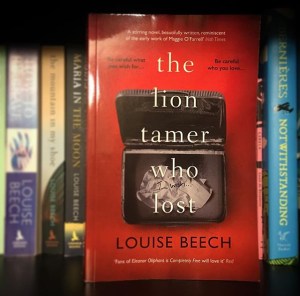
Book Review: The Lion Tamer Who Lost by Louise Beech

From the PR: “Be careful what you wish for…  Long ago, Andrew made a childhood wish, and kept it in a silver box. When it finally comes true, he wishes he hadn’t… Long ago, Ben made a promise and he had a dream: to travel to Africa to volunteer at a lion reserve.

When he finally makes it, it isn’t for the reasons he imagined… Ben and Andrew keep meeting in unexpected places, and the intense relationship that develops seems to be guided by fate. Or is it? What if the very thing that draws them together is tainted by past secrets that threaten everything?

A dark, consuming drama that shifts from Zimbabwe to England, and then back into the past, The Lion Tamer Who Lost is also a devastatingly beautiful love story, with a tragic heart…”

Hmmm… once again I find myself sitting here wondering how to review a book and how to review one as enjoyable and brilliantly written as The Lion Tamer Who Lost without giving away any spoilers.

I think I’ll start by saying that Louise Beech is a sod. I’ve used the analogy before but reading one of Louise’s novels is akin to watching a Pixar film: you know (or you bloody well should by now) that there’s gonna be an emotional punch to the gut coming up and you start with your guard up but she’s so good at pulling you into the story and the characters that you’re so immersed in it that you forget and then it really flaws you. Only this time she does it twice!!

This is not a bad thing. In fact, there is not a single bad thing about The Lion Tamer Who Lost. I thoroughly enjoyed every page and, once again, Louise Beech refuses to shy away from subject matters that other writers may fear to touch.

For a non-thriller (I have no idea what ‘genre’ most novels are these days nor do I care to) there’s a huge amount of mystery and suspense in The Lion Tamer Who Lost and it really keeps you gripped  – from the moment it’s hinted at – “He came here for the now. For this. He surveys again the new and beautiful land. Every day, every moment, he tries to hard not to think about…” – in the opening pages it’s a case of “what? what is it???” and a real desire to find out exactly what Ben escaped in England even as you’re drawn into the ongoing drama unfolding in Zimbabwe.

As to how Louise Beech reveals ‘it’… it’s clear she’s really hit her stride as a writer now. The narrative ducks and dives between moments of drama and revelation in the past and present and across different character voices as fragments become whole and viewpoints become fully rounded and the whole story is woven masterfully together.

Oh and it’s bloody funny too and charming and warm throughout, written with real attention to character detail and little nuances that make these more than just entries on a page (or Kindle or whatever you substitute print, binding and bookshops for 😉 ) and really helps you get pulled in to the story and root for a positive outcome for them – lookout: here comes that Pixar Punch from Mrs Beach!

Put simply, The Lion Tamer Who Lost is a bloody brilliant, absorbing and compelling read that will knock you sideways with its emotional honesty and power. I genuinely look forward to the next novel from Louise.

My thanks, as always, to Karen at Orenda Books – a purveyor  of nothing but the finest fiction – for my copy.

Least to Most: Pearl Jam – Ten

“It all just fell together. No one really compromised toward each other at all. It was kind of a phenomenon, in a way. We’d all played music for six, seven, eight years and been in different bands, and we were feeling something that we’d never really felt before, with all the honesty and the way it was all coming out.”

Here we go then – the one where it all started. It would be somewhat redundant to try and offer one of my semi-reviews of such a well known and covered album so this one’s more about my relationship with Ten.

First, though; a quick, potted history on how Pearl Jam and Ten came to be…. On March 16th 1989 Andrew Wood was found in a comatose state by his girlfriend after od’ing on heroin. A prominent figure on the nascent Seattle music scene, Wood was the lead singer of Mother Love Bone a band which he’d formed with a drummer called Regan Hagar and two other blokes called Jeff Amend and Stone Gossard – both already established figures on the ‘scene’ thanks to their former band Green River, a band that could quite credibly claim to be the first ‘grunge’ band. Mother Love Bone had earlier signed to PolyGram and were awaiting the release of their album Apple. Three days after Wood’s overdose he was removed from life support and was shortly pronounced dead.

Wood’s death was a blow to the scene. In a way it was the first turning point and the wake up call to the reality of drug abuse that it hadn’t yet experienced -but that’s a different post. Gossard and Ament were devastated. Stone ducked out of sight and began writing harder edged music and began jamming with local guitarist Mike McCready who, in turn, realised they were on to something and encouraged Stone to reconnect with Jeff Ament. The three put together an eight song instrumental demo tape – with McCready’s former bandmate Chris Friel drumming on a couple and Matt Cameron, in a strange twist of fate, on the rest – to send out to find a permanent drummer and singer.

In the late summer of 1990, Ament and Gossard travelled to LA and gave a copy of their demo to Jack Irons hoping the former Red Hot Chili Peppers drummer would join their band. Irons couldn’t – he’d just signed up to a tour with another band in the name of guaranteed income for his just-about-to-start family but agreed to pass it on to any singers he knew. Turns out he knew a guy called Eddie Vedder who could hold a note…

Ten and Nevermind (released a month after Pearl Jam’s debut) became cultural phenomenons and ushered in a wave of commercial success and radio airplay that had been hitherto unknown to alternative rock and represented the breaking of the damn for the ‘grunge’ scene. It’s sold more than 13 million copies and remains the band’s calling card – their most commercially successful album and, in many case, the only album by the band that some people own.

And… I can’t blame those people for whom Ten represents the sole Pearl Jam marker in their collection. I mean – take a look at that mid-section: ‘Even Flow’, ‘Alive’, ‘Why Go’, Black’, ‘Jeremy’, ‘Oceans’ in one six-song burst. As debuts go, Ten is up there with the finest.

It’s one of hell of an addictive entry drug. I vividly remember my first taste in what was either late ’98 or early ’99. I’d tried to buy Yield not long after it came out based on a shite load of good reviews I’d read but the shop didn’t have the actual CD in – this was one of those places that displayed the cases which you’d take to the till and pay for before they pulled the disc from a little cardboard sleeve behind the counter in an effort to reduce theft – and bought OK Computer instead and had that avenue of sound opened up instead. But, sometime later, during my first year at Uni I dropped into a now long gone local independent called Ricard’s Records and picked up Ten and Live on Two Legs (again based on reviews). Both would serve as great entry drugs but it was Ten I first slipped into my car’s CD player that day and sat there hooked as the brief interlude of ‘Master/Slave’ gave way to the force of ‘Once’. That power, the dynamics and then Vedder’s voice! By the time I got to Pearl Jam I’d already had the misfortune to hear all the imitators before hearing the dude that stated that way of singing. And what was he singing? ‘I admit it’? ‘I am livid’? The inlay offered no real help.

I listened to it three times before letting it move on to the next tune and already knew I had a new favourite song. I’d later discover that ‘Once’ formed part of the Momma-Son trilogy with ‘Footsteps’ and ‘Alive’ – the three songs that Vedder put lyrics and vocals to from Jeff and Stone’s demo and that it, the middle of the trilogy, was about a man’s descent into madness and becoming a serial killer. All I knew then was that it fucking rocked my speakers out and I had it cranked up enough to pick up the “You think I got my eyes closed but I’m lookin’ at you the whole fuckin’ time…” mumble in the break down.  Then there’s ‘Even Flow’… I mean yeah sure now I’ve heard it more times than I care to but hearing that for the first time.. and ‘Jeremy’, I mean, shit; this is the good stuff:

Not to mention ‘Black’ – the ballad that every ballad they’d later put out would be benchmarked against. I remember hearing that and just… you know it all connects. Yes there’s a degree of angst/cliche to all that early Pearl Jam and Seattle stuff that doesn’t necessarily age well but then, just seven years or so removed from its release, it still sounded fresh and genuine. It’s one of those things that warmed Kurt Cobain to them, eventually; Vedder really fucking means it. He’s not going through the motions.

But beyond those clutch of songs that everyone knows and still receive regular radio play closing on three decades on – the deep cuts on Ten are the best – ‘Oceans’, ‘Garden’ and ‘Release’ are what sealed the deal for me. The whole father-son thing was a big thing for Vedder in those early Pearl Jam records and it was all over this one: “Oh dear Dad, can you see me now?  I am myself, like you somehow. I’ll wait up in the dark, for you to speak to me. I’ll open up.. Release Meeee… Release meeeeeee” I mean yeah you could eat the angst with a spoon but – again – the force in that performance.

I fell headlong into consuming as much of this new-to-me band as I could and it all starts with Ten.  So…. why is it not at number one for me or higher up this list? Essentially: I don’t think Ten is representative of the band. The diversity and experimentation that would be the highlights of their studio albums hadn’t yet really began and while they’d played a fair few shows by the point they recorded the dynamic and tightness of the band wasn’t 100% there.

Not only that but I think the production and mix of Ten robs the songs of a lot of their punch. It’s all sort of lost in a kind of wash. In my digital ‘shelves’ I’ve got a boot labelled “First Week Rehearsal Demos” and, accuracy of the label aside, the versions of the same songs on that are a lot rawer and more powerful. Even Eddie’s vocals sound a little odd on the finished Ten compared to both demos and early live shows… even compared to his tracks on Temple of the Dog‘s ‘Hunger Strike’.

The band themselves obviously weren’t that keen on the final sound – they wouldn’t work with Rick Parashar on their next album and their next, long term producer Brendan O’Brien would be pestered by Jeff Ament to remix Ten for years before finally doing so in 2009, as Jeff stated: “somewhere in the late nineties, I found a rough mix tape of Ten. I played it on cassette and that’s when I started saying, ‘we have to remix Ten.’ It would usually happen after we’d been in a club or something, and we’d hear a song from it. It was like “Ugh! This is killing me!” At one point, I told Brendan I’d pay him to just do a version for me so if I had to listen to a song to relearn it or whatever, I’d hear the proper version.”

Essentially, very soon after recording, the songs from Ten took on a new harder, faster sound than what was captured and it very soon ceased to be a reflection of the band Pearl Jam were on their way to becoming. So, as much as I love Ten as the entry point into a long-lasting love of the band and the songs on it are faultless – it’s the live versions of those songs and O’Brien’s remix that I reach for more than my battered cd of the original studio album.