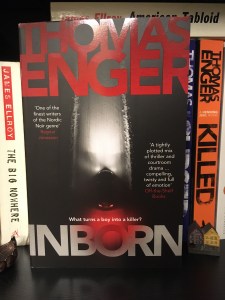
Blog Tour: Inborn by Thomas Enger

From the PR: “When a teenager is accused of a high-school murder, he finds himself subject to trial by social media … and in the dock. A taut, moving and chilling thriller by one of Nordic Noir’s finest writers.

When the high school in the small Norwegian village of Fredheim becomes a murder scene, the finger is soon pointed at seventeen-year-old Even. As the investigation closes in, social media is ablaze with accusations, rumours and even threats, and Even finds himself the subject of an online trial as well as being in the dock … for murder?

Even pores over his memories of the months leading up to the crime, and it becomes clear that more than one villager was acting suspiciously … and secrets are simmering beneath the calm surface of this close-knit community. As events from the past play tag with the present, he’s forced to question everything he thought he knew. Was the death of his father in a car crash a decade earlier really accidental? Has his relationship stirred up something that someone is prepared to kill to protect?

It seems that there may be no one that Even can trust.

But can we trust him?

A taut, moving and chilling thriller, Inborn examines the very nature of evil, and asks the questions: How well do we really know our families? How well do we know ourselves?”

CAUTION: A tiny whiff of a spoiler is contained within..

Thomas Enger’s Inborn has a fantastic opening. By this I really don’t mean the rest of it isn’t worth the trees it’s printed on, far from it.. but that opening murder, bloody hell. Johannes Eklund is a teenager with a bright future who happened to be in the wrong place at the wrong time. His attempt to flee and his final moments make for as powerful an opener as I’ve read this year: a vividly brutal murder where you feel the fear and panic as it consumes Johannes, made all the more powerful as, beyond being a particularly violent end, it’s happening to a kid in his teens.

After the initial hook and shock Inborn is a real slow burner at first as Enger lines up all the pieces – aided by nicely employing different narratives- and then there’s a moment about a third of the way in where it caught me and I wasn’t able to put it down until the early hours of the morning when I’d finished the whole thing with each of my “ah so he/she’s the killer” assumptions blown apart as soon as they’d formed.

Thomas Enger, as anyone who’s read his Henning Juul books will agree, has a real knack for writing parents dealing with the murder of their child in a way that’ll punch you right in the guts and those scenes in Inborn – parents rendered numb and desperate with grief – are particularly affecting.

Much as with his Henning Juul series, Inborn slowly but surely unravels a compelling and intricate web of lies that have been lurking beneath the surface of this small town. I was thoroughly gripped as the reason Mari Lindgren ended her relationship with Even was revealed – even if (here’s that SPOILER), in the end, it had nothing to do with her murder after all.

The characters that populate Inborn are richly detailed and the fact that they made me feel old shows how well written the teen characters are. The gits. As great as the Even narrative and character is, the stand out for me is Yngve Mork. The local policeman, barely coming to terms with the recent death of his wife is a beautifully written character that I could happily go through a series of novels.

Inborn is a thoroughly engrossing and rewarding read with plenty of sharp turns and surprises to ensure you stay hooked to the end. Exceedingly well written, brilliantly plotted and wholeheartedly recommended.

My thanks, always, to Karen at Orenda Books for my copy and to Anne Cater for asking me to take part in this blog tour.
Blog Tour: Big Sister by Gunnar Staalesen

From the PR: “PI Varg Veum receives a surprise visit in his office from a woman who introduces herself as his half-sister, and she has a job for him. Her god-daughter, a nineteen-year-old trainee nurse from Haugesund, moved from her bedsit in Bergen two weeks ago. Since then no one has heard anything from her. She didn’t leave an address. She doesn’t answer her phone. And the police refuse to take her case seriously.

Veum’s investigation uncovers a series of carefully covered-up crimes and pent-up hatreds, and the trail leads to a gang of extreme bikers and to a shadowy group, whose dark actions are hidden by the anonymity of the Internet. And then things get personal…

Chilling, shocking and exceptionally gripping, Big Sister reaffirms Gunnar Staalesen as one of the world’s foremost thriller writers.”

When it comes to reading there is no greater pleasure than getting stuck into a new Gunnar Staalesen book.

The problem, mind, is how to review a book like Big Sister without a) simply repeating ‘amazing’ emphatically and b) giving anything away. So I’ll talk, in general terms, about just how much I loved this book.

There is something just so fantastically absorbing about Staalesen’s work that I’m always longing to read more. To me it’s like enjoying a good mug full of coffee, you have to take your time with it and savour every moment before you get the kick. It’s not a fast-paced thriller; Staalesen’s prose is a much calmer affair that lures you in and immerses you in its mystery. A real slow-build but with not a single spare word – it’s the writing of a master at play, really. Richly detailed yet concise, tightly-plotted fiction that effortlessly packs more punch and weight than novels three times its page count.

One of the things I really enjoy about Staalesen’s narrative style is the way in which he – and Veum – casts a wide net out at the start of the story and slowly hauls it in, revealing little ideas and avenues of intrigue, some which lead nowhere but others which lead off into some fascinating places before Veum discovers the particular line of investigation which brings them together and solves the case. As Veum himself says: “when I stumble over some peripheral information during a case, an investigation I’m doing, my experience is that it might well end up having some significance.”

Big Sister is no exception to this – some of the leads he follows reveal some really dark stuff this time round, mind (though anyone familiar with the last three novels would argue that that’s nothing new), but it all slowly and deliberately creates a huge web of connections between the lives of the characters that manages to show just how far-reaching and devastating events that were thought long-since buried can become. It means that when the truth is realised it hits you like a tonne of bricks.

Reading a new Staalesen novel is like catching up with an old friend, getting a glimpse into Varg’s life for a few weeks at a time to see how life is treating Bergen’s almost-only PI. Veum is a refreshingly human character in the genre, flawed (though I don’t think he touched a drop of aquavit in this one) and – particularly as his age advances – vulnerable. It’s impossible not to root for him. It’s great that Big Sister really managed – as the 18th novel in the series – to reveal something new about such an established character and his past and I thoroughly look forward to seeing if that particular thread is picked up on in the next book.

It’s impossible to do a novel like Big Sister justice in a review. I fucking loved it but, then, I’ve loved every novel I’ve read thus far by Staalesen and I really need to get my hands on those novels pre We Shall Inherit The Wind that have been translated into English too. Every time I think I’ve read the best book I will in a year, Orenda drops a new Gunnar Staalesen that jumps straight to the top of the list. As such, my thanks to Karen at Orenda both for my copy and continuing to publish such wonderful fiction and to Anne for inviting me to take part in this blogtour. Always a pleasure, never a chore 😀


Blog Tour: The Louisiana Republic by Maxim Jakubowski

From the PR: “New York, and the world, have been transformed by an unexplained global catastrophe now known as ‘the Dark’.

Once a modest researcher, (don’t recall if I gave character an actual name; if so, please insert) has now become an involuntary detective.

When he is recruited by her elder sister to find the missing daughter of a local gangster in a city in chaos where anarchy and violence are just a step away, he soon discovers the case is anything but straightforward and compellingly close to home.

Compromising photographs and the ambiguous assistance of a young woman with ties to the criminal gangs lead him to New Orleans, which has seceded from the rest of America in the wake of the Dark.

A perilous journey down the Mississippi river, murderous hit women and sidekicks, and the magic and dangerous glamour of the French Quarter become a perilous road to nowhere and to madness in his quest for the amoral daughter, his own lost love and his sanity.

Will he find the missing women or lose himself?”

Crikey. Where to start with a review on this one.. perhaps I should proffer up the ‘warning’ that accompanied the description of The Louisiana Republic when I was invited to read and review it:

“Please be aware! The novel is quite ‘harsh’ and should be avoided if you are more into the ‘cozy’ area. If you enjoyed Epiphany Jones by Michael Grothaus, this may be for you! There are strong erotic elements”

Now initially I only got as far as ‘if you enjoyed Epiphany Jones‘ before replying in the positive. I loved that book and I love a book that challenges and takes me out of my comfort zone so I was, of course, interested – it wasn’t the ‘erotic elements’ that got me. Especially when I read the note from the author that he “published 10 novels under a pen name in another genre during the last five years, many of which ended up on the Sunday Times Top 10, but under a female pseudonym (as imposed on the publishers by supermarkets and chains!), so this book is quite important to me, and have a lot to say about it.”

So: does The Louisiana Republic deliver such an intriguing sell? In short: yes, very much so.

In not so short: oh, fuck yes! The Louisiana Republic is a massively addictive book which delivers on so many levels. While there is certainly some heavy and strong stuff in here that would warrant a ‘not for the weak of knee’ it’s not there for shock factor alone and  serves to add both punch and horror in all the right places.

The story itself is set to a familiar narrative – a PI on the search for an elusive truth if only for self-satisfaction – yet Jakubowski throws in plenty of twists and counters to keep you glued as it becomes increasingly complex and multifaceted. There are so many different elements at play that it’s a real delight as things start to come together. In fact I’d go so far as to say that the ploy of using a familiar trope is a very clever sleight of hand on the writer’s part, for what really sets The Louisiana Republic apart and makes it so compelling is setting just that trope against a backdrop as jarring as that created by ‘the Dark’.

Jakubowski’s portrayal of a dystopian near-future, a decade after  the world had been deprived of technology, the internet and electronic data is fantastic. There’s no didactic, heavy-handed or soap-opera style explanations, The Louisiana Republic pulls you into its world and gradually reveals a very realistic, convincing and shocking world where, post-technology, society has nearly (that’s what makes it so believable, I think – the blending of the retained ‘norms’ with the dystopian) broken down – cities divided into different fiefdoms, violence and primitive, base urges satisfied at whim.

It would be impossible to pigeonhole The Louisiana Republic into one genre – it’s got elements of noir, there’s some hard-boiled Chandler-esque grit, deliciously dark humour, plenty of and some mysticism that made me think of Eliade and then there’s the dystopian future element thrown in to add more to the mi along with plenty of boxes ticked in the ‘thriller’ category…. so; shocking thriller? urban noir? dark comedy? dystopian road trip novel?  Brutal gut-punch commentary? It’s all of these and it’s very very bloody good.

My thanks to Anne Cater for inviting me take part in this blogtour and for my copy of The Louisiana Republic – published by Caffeine Nights.

Blog Tour: The Ice Swimmer by Kjell Ola Dahl – Guest Post

Like any avid reader and devourer of the written word I carry a continually evolving ‘wish list’ with me (it’s on my phone) to refer to whenever I find myself in a bookshop. At the top of that list are a couple of authors represented by name only. These are authors where it’s a case of wanting to get hold of anything they’ve written.

Kjell Ola Dahl is amongst those authors. He’s one of the godfathers of the Nordic Noir genre and since I was introduced to his Oslo Detectives series with last year’s Faithless I’ve been anxious to read my way though his back catalogue. This year’s The Ice Swimmer (review to follow) is another ridiculously good installment in the series – absorbing and masterfully written.

As such I’m delighted, as part of the blogtour for The Ice Swimmer (out on ebook now and paperback April 30th via the wonderful Orenda Books) to host a guest post from the author himself. So I’ll shut up and get out of the way…


My first novel was a police procedural, and I didn’t reflect much on the implications of this choice at that time. I was inspired by writers like Ed McBain, who wrote about Steve Carella and a collective of police officers solving crimes in the 87th precinct in a fictive city called Isola. One thing I liked about those books was that McBain wrote about the full collective. The readers got to know many of the police officers. And when McBain changed the main protagonist in some books, Steve Carella was always there, although not always at the front of the action. McBain even chose criminals for protagonists in some of his books.

After publishing Lethal Investments I did not stay with my police officers, and I went on to write other things. The second book in the Oslo Detectives series was published years after the first one. But then I said to myself, you cannot stop at two: A trilogy is the thing. So I was quick this time and published the third book in the series a year later. But after that novel – The Man in the Window – I returned to my old sins, writing other things.

This year in Norway, I will publish the ninth book in the Oslo detectives series. I still write other things in between – fiction, non-fiction, short stories, crime fiction – and I always write under my own name. Ed McBain used a lot of pseudonyms: Richard Marsten, Hunt Collins, Curt Cannon, Ezra Hannon and more, and not one of these names was his own! Privately he called himself Evan Hunter. And even the name Evan Hunter was a pseudonym: his Christian name was Salvatore Albert Lombino. It is like one of those Russian dolls. Inside every name, new ones would pop up. I guess Mr Hunter/Lombino himself had some sort of system for the use of names. His production was huge.

The use of pseudonyms is a widespread habit among writers – especially writers of crime fiction. Even Georges Simenon used a lot of them. And the truth is, I don’t really understand why.

Many of my fellow writers use their series to explore their one and only protagonist. I stick to the method of Ed McBain. I explore my collective. The protagonist in the Ice Swimmer is Lena Stigersand, a female police officer in her mid-thirties. She was not present in the first book in the series, and first appeared with minor roles in the two novels previous to the Ice Swimmer. Even if she is the protagonist in The Ice Swimmer, there is one super protagonist in the series – Mr Gunnarstranda. In fact, everything in the series rotates around him, and he has developed over the years. He is no longer as grumpy as he was in the first book. And these days he is more into jazz music than he was to begin with. I think it is because I know him better now. But he is still a widower. And he still doesn’t have a first name. That is a fact. I have never dared to suggest a first name for him. I fear he won’t like my suggestions very much. Personally, I think that shows how strong he is as a character. He is still mysterious to me, which means that he will still be able to surprise me. It also tells me that I will write more about him. I am still curious about his whereabouts and especially curious about his first name. But I doubt I will ever find out what it is.


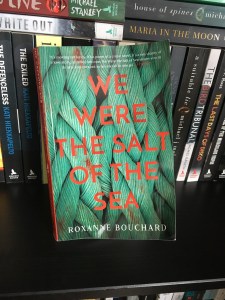
Blog Tour: We Were the Salt of the Sea by Roxanne Bouchard

From the PR: “As Montrealer Catherine Day sets foot in a remote fishing village and starts asking around about her birth mother, the body of a woman dredges up in a fisherman’s nets. Not just any woman, though: Marie Garant, an elusive, nomadic sailor and unbridled beauty who once tied many a man’s heart in knots. Detective Sergeant Joaquin Morales, newly drafted to the area from the suburbs of Montreal, barely has time to unpack his suitcase before he’s thrown into the deep end of the investigation.

On Quebec’s outlying Gaspé Peninsula, the truth can be slippery, especially down on the fishermen’s wharves. Interviews drift into idle chit-chat, evidence floats off with the tide and the truth lingers in murky waters. It’s enough to make DS Morales reach straight for a large whisky… ”

When I was sent the above description for We Were the Salt of the Sea (big thanks to Anne Cater) and asked if I’d like to take part in the blog tour, I leapt at the chance. There was something about it – aside from it having the unimpeachable Orenda logo on its spine – that suggested I’d love it.

So, let’s cut to the chase: did I love it? Oh hell yes! We Were the Salt of the Sea is an absolute, slow-burning masterpiece. A thoroughly absorbing and mesmerising read that draws you into both its story and setting and leaves you wanting to linger long after the last page.

It could be because I’ve always had a fondness for the sea and for harbours but it’s also a case that Roxanne Bouchard writes so compellingly of the Gaspé Peninsula, its people and environs that I found myself wondering about heading out to that remote spot. Though, as Bouchard conveys with almost poetic grace, the sea is far from calm and what it gives it takes. There were times when reading We Were the Salt of the Sea that I was left stunned by the tragedies and hardships many of this novel’s characters have borne with such stoic acceptance. It’s in the detailing of these lives and the slow unfolding of these stories and it’s characters’ lives that We Were the Salt of the Sea stands out – this is more exceedingly well crafted literary fiction than fast paced thriller.

But there is very much a mystery at the heart of We Were the Salt of the Sea,  and with a narrative that – as the blurb says – sees interviews and leads into Marie Garant’s death fade “into idle chit-chat” and events and eccentricities overtake avenues of investigation, the reader is in a unique position: on the one hand you’re after more of the insights into the lives of, say, Vital Bujold (who’s back story damn near broke my heart) but then, on the other, you also share the frustrations of DS Joaquin Morales as an outsider trying to break through just those distractions and find the truth.

It’s a very cleverly and beautifully written book and one with a reveal which, I don’t mind admitting, I did not see coming. Without dropping any spoilers I can honestly say that I did not for one moment suspect either the correct person or scenario, and it’s not all that often that that occurs. I was just too bloody happily caught up and entranced by everything We Were the Salt of the Sea has to offer – fantastic, deeply compelling characters, a great story and brilliant prose. Very highly recommended.

My utmost thanks, again, to Anne Cater and Orenda Books for my copy of We Were the Salt of the Sea and do check out the other stops on this blogtour.

Page turning, 2018 Part 1

I read a lot last year. I cleared 41 books in total, surpassing my target by 1. So, did I extend my target for this year? No, I’m going for 40 again – it seems like a good target and I don’t think I’d necessarily find more reading time in my days to get another 10 in.

That being said, I’m already off to a strong start to the year with 7 down and 2 on the go at the moment.

Oddly enough, there’s a bit of a theme that ties three of these four – and at least another four on the TBR for the next couple of months – together that wasn’t necessarily intended but Martin Cruz Smith’s Gorky Park was the first of the year and probably set the ball rolling.

Gorky Park was one of those books I’d often see in bookshops and ponder its contents before moving on but, this time, I read the back and took it home. An absolute 5 Star book – well deserving of the attention and praised it received. A crime thriller set in Soviet Union during the Cold War, Gorky Park reads more like literary fiction than your standard thriller and is so thoroughly engrossing and, in Arkady, powered by a great character – I’m genuinely glad that this one evolved into a series of novels and will  be adding the following instalments (along with everything Ellroy’s) to my longer term reading list.

Trying to vary my reading I thought I’d take a stab at a ‘classic’ early on this year and ended up continuing a theme. One Day In The Life of Ivan Denisovich by Alexander Solzhenitsyn is set in a Soviet labour camp in the early 1950s and follows the single day of one of the prisoners – Ivan Denisovich. Ivan’s deep into a 10 year sentence for ‘spying’ – he’d escaped his German captors during the war, made it back to his lines and was arrested as a spy. Solzhenitsyn had first-hand experience of the Gulag system and it adds a sense of weight and truth to this novel (if you’re up for a heavier read his Gulag Archipelago is a game-changer). It’s a short but intense read and noteable as it was one of the first accounts of Stalinist repression to have been published (less than 10 years after Old Whiskers’ death).

Of course, there’s always a need for something lighter and, as my Discworld collection slowly grows toward completion, I’ve usually got a Terry Pratchett novel ready to reread for the first time in at least a decade. I had – again – forgotten just how painfully funny The Last Continent is. First published in 1998, that means it had been two decades since I’d last read it and, as I had the briefest of memories of it and remembered nothing of its plot it was akin to reading it for the first time. Pratchett’s parody of Australian culture and media touch-points – Priscilla, Queen of the Desert, Mad Max, Crocodile Dundee all get a warm roasting – easily sits as one of his funniest and most accessible reads. The invention of Vegemite and Australian slang, in particular, had me chuckling into the night.

Back in 2016 I read Joseph Kanon’s Leaving Berlin. It’s a great novel, a cold-war thriller set in Berlin as the divide was going up. Another book-shop spotting, this year’s Defectors again finds Mr Kanon setting his work in the cold war, this time – spotting that them yet? – in Moscow. As the title suggests, Defectors tackles the theme of the defections in the 1950s / 60s and, specifically, what came next. A former CIA agent, Frank Weeks slipped the net and escaped to Moscow and, over a decade later, sends word to his brother, Simon, that he – and the Soviet State – wish to publish his memoirs and wants to use Simon’s publishing house to do so.

Leaving aside the twists of the plot for fear of giving anything away, where Defectors excels is in the depiction of life for those former ‘field agents without a field’ – living in a strange suspended state, a  sort of prison within the larger prison of the Soviet Empire. Technically ‘free’ to be yet only allowed to travel to enclosed dacha complexes, use certain stores and continually monitored. Kanon manages to fill his story with sufficiently realistic and historically accurate details to make it ring true without overdoing it and slowing down the momentum – this is a thriller after all. Kanon clearly an author whose back catalogue now warrants investigation.

Up next: more Russian classics, some World War Two diaries and some new novels from Nordic Noir’s godfathers…

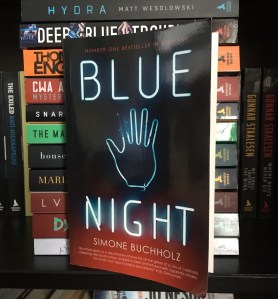
Blog Tour: Blue Night by Simone Buchholz

From the PR: “After convicting a superior for corruption and shooting off a gangster’s crown jewels, the career of Hamburg’s most hard-bitten state prosecutor, Chastity Riley, has taken a nose dive: she has been transferred to the tedium of witness protection to prevent her making any more trouble. However, when she is assigned to the case of an anonymous man lying under police guard in hospital, Chastity’s instinct for the big, exciting case kicks in.

Using all her powers of persuasion, she soon gains her charge’s confidence, and finds herself on the trail to Leipzig, a new ally, and a whole heap of lethal synthetic drugs. When she discovers that a friend and former colleague is trying to bring down Hamburg’s Albanian mafia kingpin single-handedly, it looks like Chas Riley’s dull lifeon witness protection really has been short-lived…”

Aside from a tiny bit of wear on the cover, my copy of Blue Night is pretty much pristine. There are no pages with creased corners from place marking and no cracks in the spine. Why? Because this book did not spend long in my hands. I tore through Simone Buchholz’ novel so fast as to not to leave a mark on a book that left plenty of impression on its reader. So hungrily did I rip through these 180 pages or so of tightly packed, immensely well plotted fiction that I found myself carried forward by such momentum as to be disappointed when it finished.  Not disappointed by the contents in any way whatsoever! No: disappointed that there wasn’t immediately more, more and more!

Blue Night is also deceptive – it might be a short read and require fewer trees than many but it packs in way more into its pages than many a pulp-and-ink-hungrier book manages. Between the covers (another tip of the hat to Orenda – has anyone mentioned just how many great covers come out of this publisher?) is a rich, tightly woven plot that’s brimming with intrigue and with plenty of back story woven in, compelling characters and a great approach to narrative… oh, and it all rips along at one hell of a pace.

As I’m a) an early stop on this tour and b) pretty out of touch with social media of late I haven’t seen all too many reviews for Blue Night just yet (I’m fortunate enough to have been sent a proof copy) but aside from expecting to see unanimous praise for Simone Buchholz I imagine there’ll be plenty of comparisons to other authors as time progresses so I’ll get in there early and say that I won’t draw any: Buchholz’ writing style is original and she delivers a fantastic story in a unique voice that’s a welcome blast of fresh air and a great start to the year’s reading.

I thoroughly recommend Blue Night – thanks, again, to Karen for my copy and do check out the other stops on the blogtour.

38, 39, 40…. 41! Pages Turned

I thought it was going to come down to the wire but I managed to hit my, strictly self-imposed, challenge of reading 40 books in 2017 and even managed to squeeze in an extra for added bonus points.

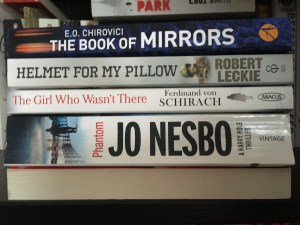
Oddly, aware of the looming ‘deadline’ I still pulled the hefty Phantom by Jo Nesbo from the the TBR pile to kick off the final stretch. Continuing the Harry Hole saga in chronological progression from The Snowman  I’m enjoying every instalment more than the last and Phantom was a real gripper for every one of its 550 or so pages, taking every element of the Hole saga to date and turning them up to 11. As he develops as a writer, Nesbo manages to take an almost literary-fiction style approach to the thriller genre, layering in so many different sub-plots and factors as to really mark his work out as a leader in the field.

Ferdinand von Schirach’s The Girl Who Wasn’t There is very much a book of two halves, so very distinctly different in terms of narrative style that I had to double check it was still the same story. It had been on the shelves for a year or so after my wife read it with my occasionally eyeballing it and I’m very much glad I decided to read it, if only based on the thinking that it’s slightness would enable me to reach my goal. Instead I discovered that it’s one of those deceptive short-novels, with so much packed in as to feel like a larger read. A beguiling an beautiful slow-burn of a first half coupled to a completely bat-shit crazy, what the fuck is going on, fast paced thriller of a conclusion.

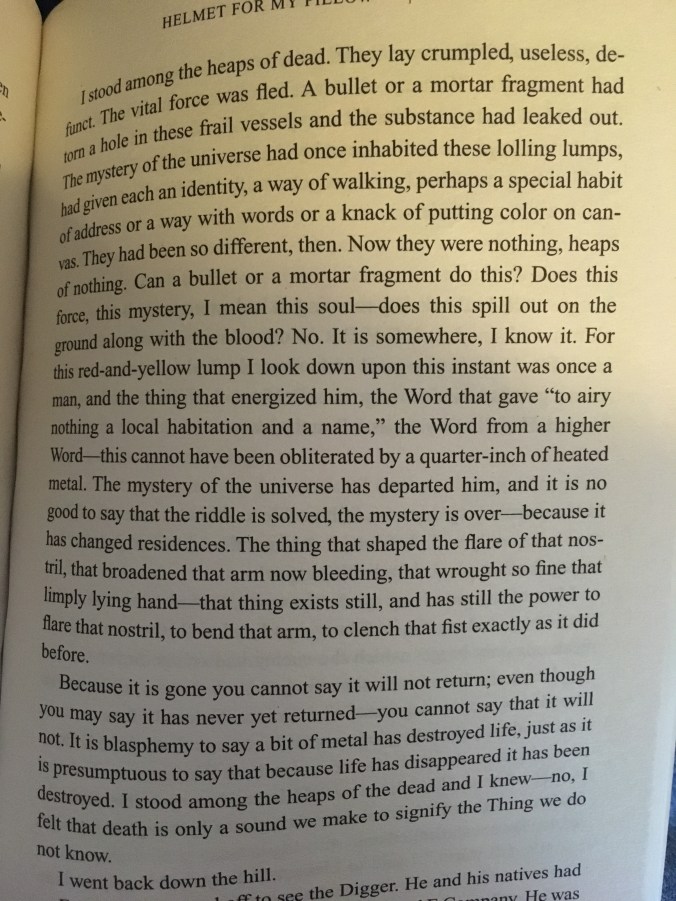
With two weeks remaining in the year I thought I’d round out the 40 with the only non-fiction of the year (something of a rarity in itself) – Robert Leckie’s Helmet for my Pillow. As a big fan of HBO’s Band of Brothers and having read the material that informed that show too, I thought I’d do the same with 2010’s The Pacific. While not as absorbing, to me at least, as Band of Brothers there was an intensity about The Pacific which meant I quickly bought the books that had informed it…. and let them sit on my shelf as I never got round to them. Having been left aghast at the perception of his war by South Pacific – Robert Leckie put pen to paper to give an unflinchingly honest and occasionally harrowing description of his experience as a Marine during the Second World War. What I look for in such a book isn’t the “guts and glory” – that sort of thing doesn’t appeal to my near-pacifist mentality – it’s the accounts of normal people who find themselves in an extraordinary situations unimaginable to those of us who live in a sheltered, comfortable world (due, thinking about it, to their actions).

Helmet For My Pillow, clearly the work of a literary man, makes for a shocking read at times but I found it compelling throughout and deeply human. It certainly ranks up high in the list of those memoirs of this era I’ve read*. Leckie manages to find the humanity in what were deeply dehumanising circumstances. Particularly striking for me was this passage:

But, with the festive break from work affording more reading time I managed to clear Leckie’s book with time to spare and got started on book 41 of 2017, a gift from my wife, The Book of Mirrors by EO Chirovici, a Romanian author. Turns out this one was something of a big deal in the publishing world back in 2015 – this is Chirovici’s first novel in English and was snapped up by publishers in 23 countries, landing him a likely seven-figure sum just in publishing deals ahead of its actual publication in 2017. After all that hype is it any good? Yes, in short. I thoroughly enjoyed it even if, for the first session or two with it I was still feverish and ended up with it going round in circles in my head. It’s a simple enough whodunit that explores the reliability of memory but Chirovici delivers it with a lot of narrative play, a lot of psychological twisting and turning and a nice leaning on good old mystery and thrill.

I’ve hedged my bets for 2018 and not extended my aim beyond trying for 40 again.


*Iron Coffins by Herbert A. Werner ranks as my favourite and Alan Deere’s Nine Lives probably rubs shoulders with the U-Boat commander’s account.

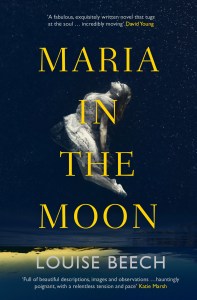
Blog Tour: Maria in the Moon by Louise Beech

From the PR: “‘Long ago my beloved Nanny Eve chose my name. Then one day she stopped calling me it. I try now to remember why, but I just can’t.’

Thirty-two-year-old Catherine Hope has a great memory. But she can’t remember everything. She can’t remember her ninth year. She can’t remember when her insomnia started. And she can’t remember why everyone stopped calling her Catherine-Maria.
With a promiscuous past, and licking her wounds after a painful breakup, Catherine wonders why she resists anything approaching real love. But when she loses her home to the devastating deluge of 2007 and volunteers at Flood Crisis, a devastating memory emerges … and changes everything.

Dark, poignant and deeply moving, Maria in the Moon is an examination of the nature of memory and truth, and the defences we build to protect ourselves, when we can no longer hide…”

Ok, I’m starting to think the best way to approach Louise Beech’s novels is with the same level of trepidation with which I watch a Pixar film; just when you’re settled in with the characters and plot she manages to completely sucker punch you emotionally. This is certainly true of last year’s The Mountain In My Shoe and it’s most definitely true of Maria In The Moon, Louise Beech’s latest novel and one which – on the strength of her previous two efforts (well, published efforts as this was written first) – I’d looked forward too with eager anticipation. Of course she managed to completely wreck me again.

Hang on, that sounds almost like a conclusion – let’s back up a bit. How does Louise Beech manage to leave me – and, from what I’ve seen of other reviews for this book – her readers feeling like they’ve been watching the opening ten minutes of Up? Well, first she creates characters that live and breath within the pages of her novels. This isn’t a crime thriller or one waiting to be turned into a Tom Cruise movie – Louise Beech deals in real people battling against circumstance and struggle that few should have to face (I say this because each of her three novels to date has done so so brilliantly). This means that Catherine Hope (great surname choice, considering) becomes an immediately relatable and human figure for whom we as readers almost immediately begin to feel empathy. She’s funny, kind and plagued with doubt and has a gaping hole in her life thanks to her father’s early death. Yeah, it’s impossible not to let your heart go out to Catherine – especially as a parent – when Louise so effectively portrays the grief and turmoil that entered Catherine’s life at a young age.

But Catherine has another gap in her life. There’s a vast period of her life that she can’t remember that becomes apparent – because how do you know you’ve forgotten something if you’ve forgotten it? – when she’s asked to recall what happened when she was nine. Of course, nobody puts up a mental block because something amazing happened and we need to forget just how happy we were so we know that there’s a trauma at the centre of Catherine’s memory block but, given that her father had died before that period, we too are at a loss for a) what it could be and b) just how bad it has to be that the death of her father remains in her memory but this doesn’t.

Of course, Louise Beech knows how to write a story so we’re not about to get the answer immediately – besides, suppressed memories don’t just return to you because you file a reveal request with yourself. Catherine’s journey to discovery takes us on one hell of a ride and by the time the reveal comes slamming home like a wrecking ball, I doubt any reader will not be desperate for both answers and for Catherine to catch a break.

And, yes, that reveal is a wrecking ball. It was hard to read and will alter your breathing, this isn’t a bad thing; I’ve said before that a writer that’s scared to challenge shouldn’t be writing and Louise Beech is not scared to do so. Yes, it’s something that’s been dealt with in fiction before and no doubt will gain but few writers manage to handle this subject and its impact as well as this. I’m not going to give a spoiler here but I will say that it did leave me feeling gutted and bare and that’s because of both the subject matter and Louise’s skill at both leading the way to the reveal and unfolding it at exactly the right moment – she doesn’t go overboard, there’s no hacky dramatics or cheap-movie moments, just genuine honest and true emotion and deftness of hand, allowing events and characters to play out. This – as I’ve said before – is where Louise Beech stands apart, writing with an emotional bravery and honesty that few others can or do and delivers something that, because you’re so caught up in the character and because it’s written so honestly, hits fucking hard.

Again; don’t get me wrong – this isn’t a book that’s all emotional wreckage. Maria In The Moon is also very funny, immensely charming, engrossing and bloody well written and will stay with you for some time. So, yes, in a way, my opening summary still holds and, in the same way I still check out a Pixar film I’ll do the same with the next novel to be penned by Louise Beech and recommend doing the same.

Thanks again to Karen and Orenda Books for my copy, no-thanks to “sorry not sorry” Louise Beech for wrecking me again and do check out the previous stops on the BlogTour.

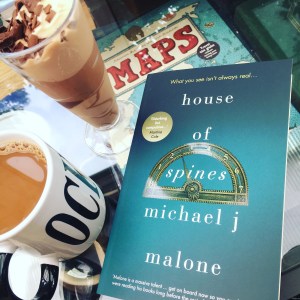
Blog Tour: House of Spines by Michael J Malone

From the PR: “Ran McGhie’s world has been turned upside down. A young, lonely and frustrated writer, and suffering from mental-health problems, he
discovers that his long-dead mother was related to one of Glasgow’s oldest merchant families. Not only that, but Ran has inherited Newton Hall, a vast mansion that belonged to his great-uncle, who it seems has been watching from afar as his estranged great-nephew has grown up.

Entering his new-found home, it seems Great-Uncle Fitzpatrick has turned it into a temple to the written word – the perfect place for poet Ran. But everything is not as it seems. As he explores the Hall’s endless corridors, Ran’s grasp on reality appears to be loosening. And then he comes across an ancient lift; and in that lift a mirror. And in the mirror … the reflection of a woman…

A terrifying psychological thriller with more than a hint of the Gothic, House of Spines is a love letter to the power of books, and an exploration of how lust and betrayal can be deadly…”

So, here we are with the latest novel from Michael J Malone and, I’ll be honest, after getting into House of Spines I did have to double check that this is the same Michael J Malone who wrote last year’s A Suitable Lie for Malone – as one glance at the man’s ‘cv’ will attest – is a very talented chameleonic writer clearly with “over 200 published poems, two poetry collections, six novels, countless articles and one work of non-fiction” to his name.

Whereas A Suitable Lie was something of a domestic-noir thriller with a twist on spousal abuse, House of Spines is very much a psychological thriller with heavy horror overtones and mystery that brings to mind the likes of Rebecca. Its setting in an old, practically empty and isolated manor really upping the opportunity to give Ran and the reader a real sense of the willies with the jarring jolts between Ran’s seclusion in the house and visits back to the modern world in the local village lending a further sense of disconnect between the ‘real world’ and the events back at Newtown Hall.

It’s a brilliantly conceived and well played mystery by Malone too, so thoroughly absorbing that’s impossible not to get caught up in and it’s impossible to express how so without given away a tiny bit of the plot so I’m gonna have to say that the next paragraph contains a SPOILER ALERT.

They say that if you’re only exposed to one narrative for so long you’ll eventually try and find ways to identify with it and find a sort of kinship (a sort of literary Stockholm perhaps) and this is true of House of Spines and Ranald. You get completely caught up in his viewpoint (even though it’s not told first-person) and, thus, in his struggles between distinguishing reality from fantasy and feeling completely in the dark on so many key points. For in the same way that his cousin has lead him a merry dance and played on Ran’s mental state so, too, is the reader left uncertain as to what is reality and what is the effect of Ran’s own mental state with so many puzzle pieces kept from view or merely hinted at with other characters holding on to key facts or leaving me exasperatingly frustrated at their seeming vow of silence on them. I can’t tell you the number of times I wanted to take a character and shake em by the lapels and scream “just sodding well tell him what the hell you know!”

I didn’t seen the final reveal coming, any of them for this is a mystery of many facets, and that’s always a good thing and the final sentence – in true horror style, managed to give me a chill. But then there’s so much going on for such a relatively novel it’s a wonder that it does all get resolved. From Ran’s own parental background, Newtown Hall and his Great-Uncle Fitzpatrick’s history to the current cousin-related concerns and it’s to Malone’s credit that the novel never feels over-stretched and these story lines are not only given all the space and to breath and come to fruition but are so ably wrapped up within the novel’s pages without feeling in the least bit rushed.

House of Spines is a cracking read that combines a real mystery with a genuinely touching and emotionally affecting story that, at times, makes you really feel for Ranald (and others without wanting to give anything else away) and one that I thoroughly recommend.

My thanks again to Orenda Books for my copy and inviting me to take part in this blogtour.